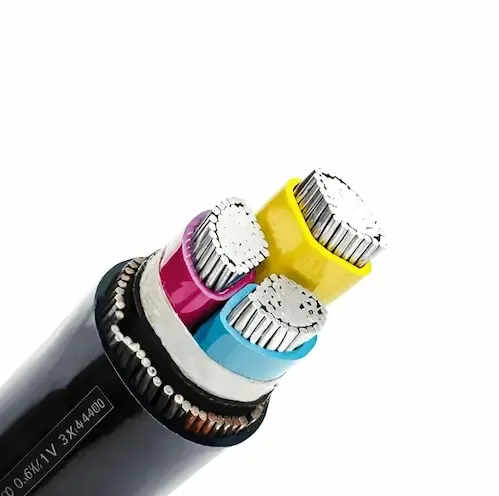
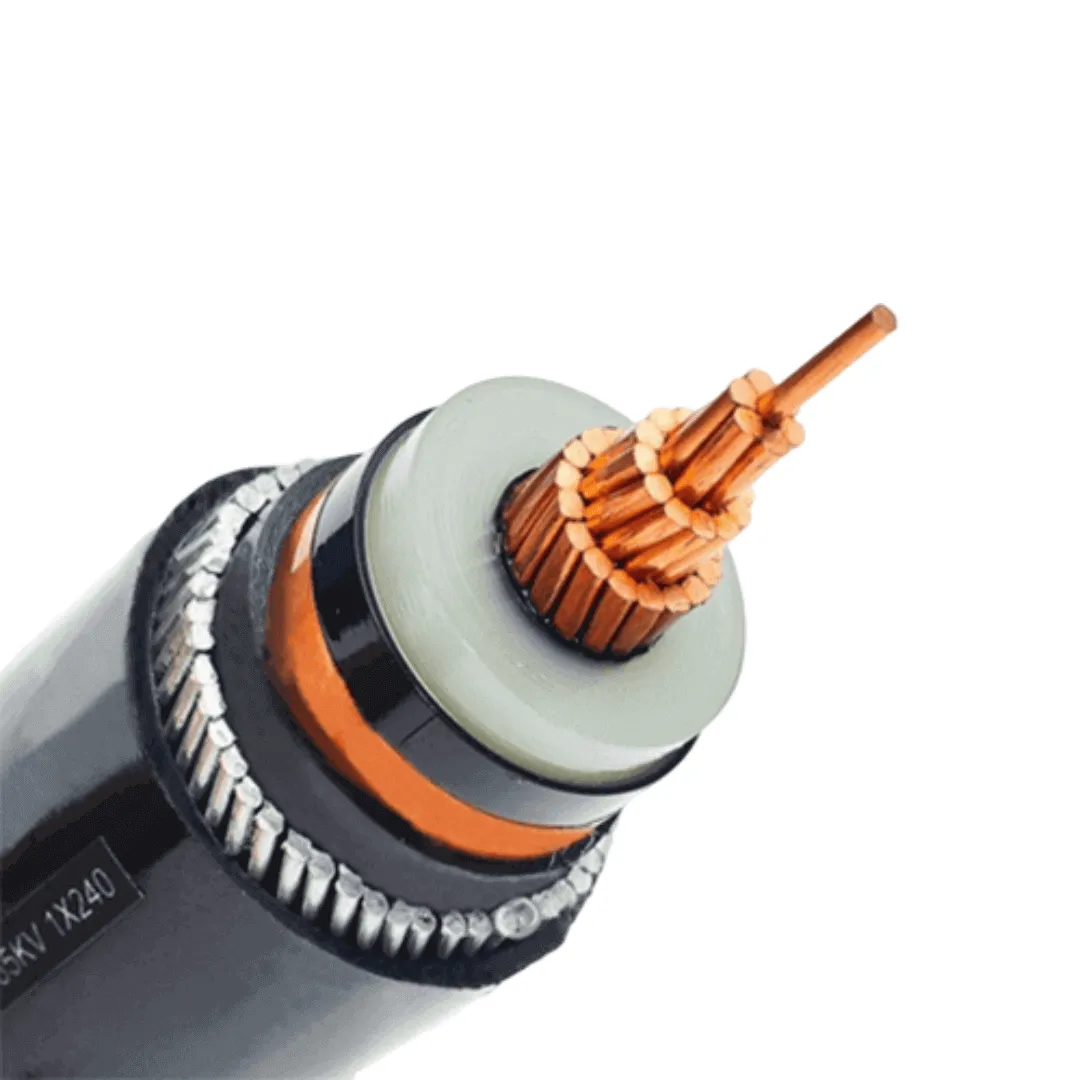
Key Takeaway
Compare underground power cable types by voltage (1kV–35kV) and soil condition. XLPE vs PVC, SWA vs STA armour, burial depth charts, thermal derating per IEC 60287. Request factory-direct quote within 24h.
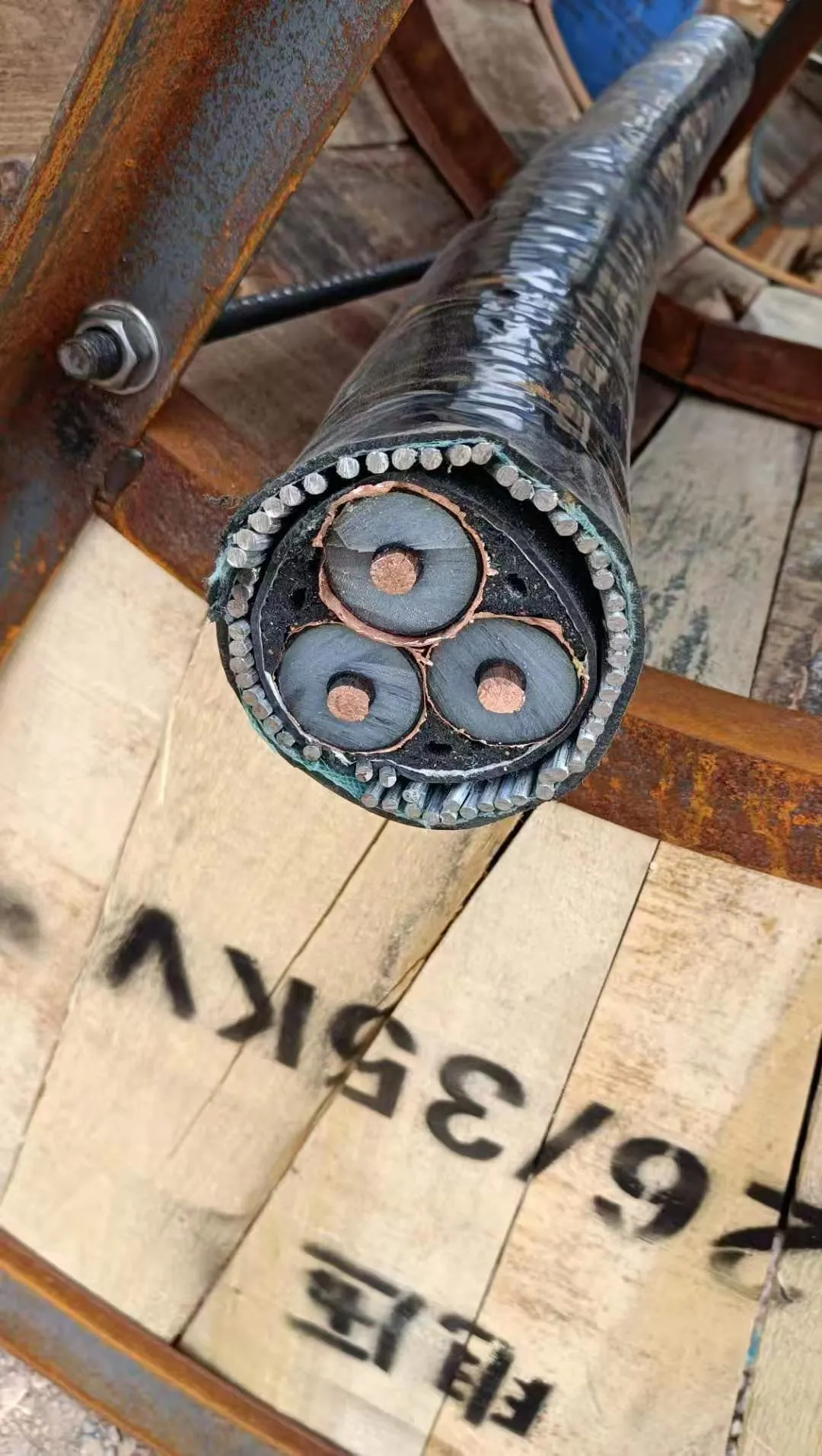
Underground power cables form the backbone of modern electrical infrastructure. From residential subdivisions to industrial zones, from urban networks to rural electrification — burying cables underground eliminates overhead line exposure to weather, falling trees, vehicle strikes, and aesthetic objections.
But underground cable systems demand more from the cable itself. Buried cables must withstand soil pressure, moisture ingress, ground movement, thermal cycling, and decades of continuous operation without accessible inspection. This makes cable selection, specification, and installation technique critical for long-term reliability.
This guide covers everything you need to know about underground power cables: cable types and construction, voltage ratings, installation methods, depth requirements, jointing techniques, and what to look for when sourcing from a manufacturer. We produce the full range of underground cables at our factory in Henan, China — one of the top XLPE cable manufacturers — certified to IEC 60502, GB/T 12706, BS 5467, and SANS 1507.
Why Underground Cable? Advantages Over Overhead Lines
The global trend is clear: utilities, developers, and industrial projects increasingly specify underground cable even when overhead lines are feasible. Here's why:
Reliability:
- Immune to wind, ice, lightning strikes, and falling trees
- No exposure to vehicle collisions or crane contact
- Fault rate 3-5× lower than equivalent overhead lines
- Reduced maintenance requirements after installation
Safety:
- No exposed live conductors at accessible height
- Eliminates electromagnetic field (EMF) concerns at ground level
- No clearance restrictions for vehicles or construction equipment
- Reduced fire risk in bushfire-prone areas
Aesthetics and land use:
- No visual impact on landscape or property values
- No easement width restrictions (cable corridor is narrow)
- Compatible with dense urban development
- Allows full use of land surface above cable route
Limitations to consider:
- Higher initial installation cost (3-10× overhead for equivalent voltage)
- Longer fault location time (not visually inspectable)
- Lower current rating per unit cost (due to thermal constraints of soil)
- More complex jointing and termination
- Longer repair time when faults occur
For most urban distribution (up to 33kV), the reliability and safety benefits justify the cost premium. For transmission voltages (66kV+), the decision is project-specific.
Underground Power Cable Types
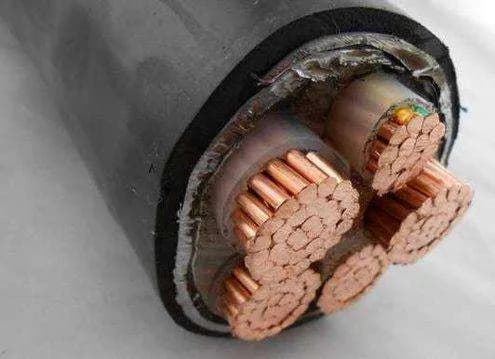
Underground cables are classified by insulation type, voltage rating, and armour configuration. Here are the main types used globally:
1. XLPE Insulated Underground Cable
The dominant choice for modern underground installations worldwide.
XLPE (Cross-Linked Polyethylene) insulation provides superior thermal performance, allowing continuous operation at 90°C conductor temperature — 20°C higher than PVC. This translates to 15-30% higher current capacity for the same conductor size, or smaller cable for the same rating.
Key properties for underground use:
- Excellent moisture resistance (minimal water absorption)
- High dielectric strength maintained over decades
- No thermoplastic flow under soil pressure or thermal load
- Wide temperature range: -40°C to +90°C continuous
- 30-40 year design life in properly installed conditions
Voltage range: 0.6/1kV to 500kV
Standards: IEC 60502-1 (up to 1kV), IEC 60502-2 (1kV-36kV), IEC 60840 (30-150kV)
Chinese designations:
- YJV — Cu/XLPE/PVC unarmoured
- YJV22 — Cu/XLPE/STA/PVC (steel tape armoured)
- YJV32 — Cu/XLPE/SWA/PVC (steel wire armoured)
For detailed XLPE cable specifications and size charts, see our insulation thickness and conductor tables.
2. PVC Insulated Underground Cable
Lower cost option for low-voltage applications where thermal rating is not critical.
PVC (Polyvinyl Chloride) insulated cables are simpler and cheaper to manufacture. They remain widely used for secondary distribution, street lighting, and domestic connections where load levels don't justify XLPE.
Key properties:
- Continuous conductor temperature: 70°C (vs 90°C for XLPE)
- Good chemical resistance
- Easier to strip and terminate than XLPE
- Lower cost per metre
- Acceptable moisture resistance for ducted installations
Limitations underground:
- Lower current rating (smaller thermal margin)
- PVC can absorb moisture over very long periods, degrading insulation
- Less suitable for direct burial without duct in wet ground
- Shorter expected life than XLPE (20-25 years vs 30-40)
Voltage range: 0.6/1kV (rarely used above 3.3kV)
Chinese designations:
- VV — Cu/PVC/PVC unarmoured
- VV22 — Cu/PVC/STA/PVC (steel tape armoured)
- VV32 — Cu/PVC/SWA/PVC (steel wire armoured)
3. Paper Insulated Lead Covered (PILC) Cable
Legacy type — still in service but rarely specified for new installations.
PILC cables use oil-impregnated paper insulation with a lead sheath for moisture barrier. They dominated underground networks from the 1920s through the 1980s. Millions of kilometres remain in service worldwide.
Why they've been replaced:
- Heavier and more difficult to install than polymeric cables
- Lead sheath is an environmental concern
- Jointing requires specialist skills and more time
- Oil migration in sloped terrain can cause dry-out failures
- Manufacturing is more complex and expensive
You may still encounter PILC when:
- Connecting to existing legacy networks
- Working in jurisdictions that haven't fully transitioned
- Specifying cables for industrial environments with severe chemical exposure (lead provides excellent chemical barrier)
4. EPR (Ethylene Propylene Rubber) Insulated Cable
Niche applications where flexibility and thermal cycling tolerance matter.
EPR insulation is a thermoset rubber with excellent flexibility and resistance to thermal cycling. It's used where cables must accommodate ground movement, thermal expansion, or require frequent reconnection.
Key properties:
- Continuous rating: 90°C (same as XLPE)
- Superior flexibility — easier to handle in tight spaces
- Better resistance to water treeing than standard XLPE
- Higher cost than XLPE
- Used primarily in nuclear plants, ships, and mining
Voltage range: 0.6/1kV to 36kV
Comparison Table: Underground Cable Insulation Types
| Property | XLPE | PVC | EPR | PILC |
|---|---|---|---|---|
| Max continuous temp | 90°C | 70°C | 90°C | 70°C |
| Short-circuit temp (5s) | 250°C | 160°C | 250°C | 160°C |
| Moisture resistance | Excellent | Good | Excellent | Excellent (lead) |
| Flexibility | Stiff | Moderate | Excellent | Very stiff |
| Typical voltage range | 1-500kV | 1-3.3kV | 1-36kV | 1-132kV |
| Service life | 30-40 yr | 20-25 yr | 30-40 yr | 40+ yr |
| Relative cost | Medium | Low | High | High |
| Modern installations | ✅ Standard | ✅ Budget | Niche | ❌ Legacy |
Armour Types for Underground Cables
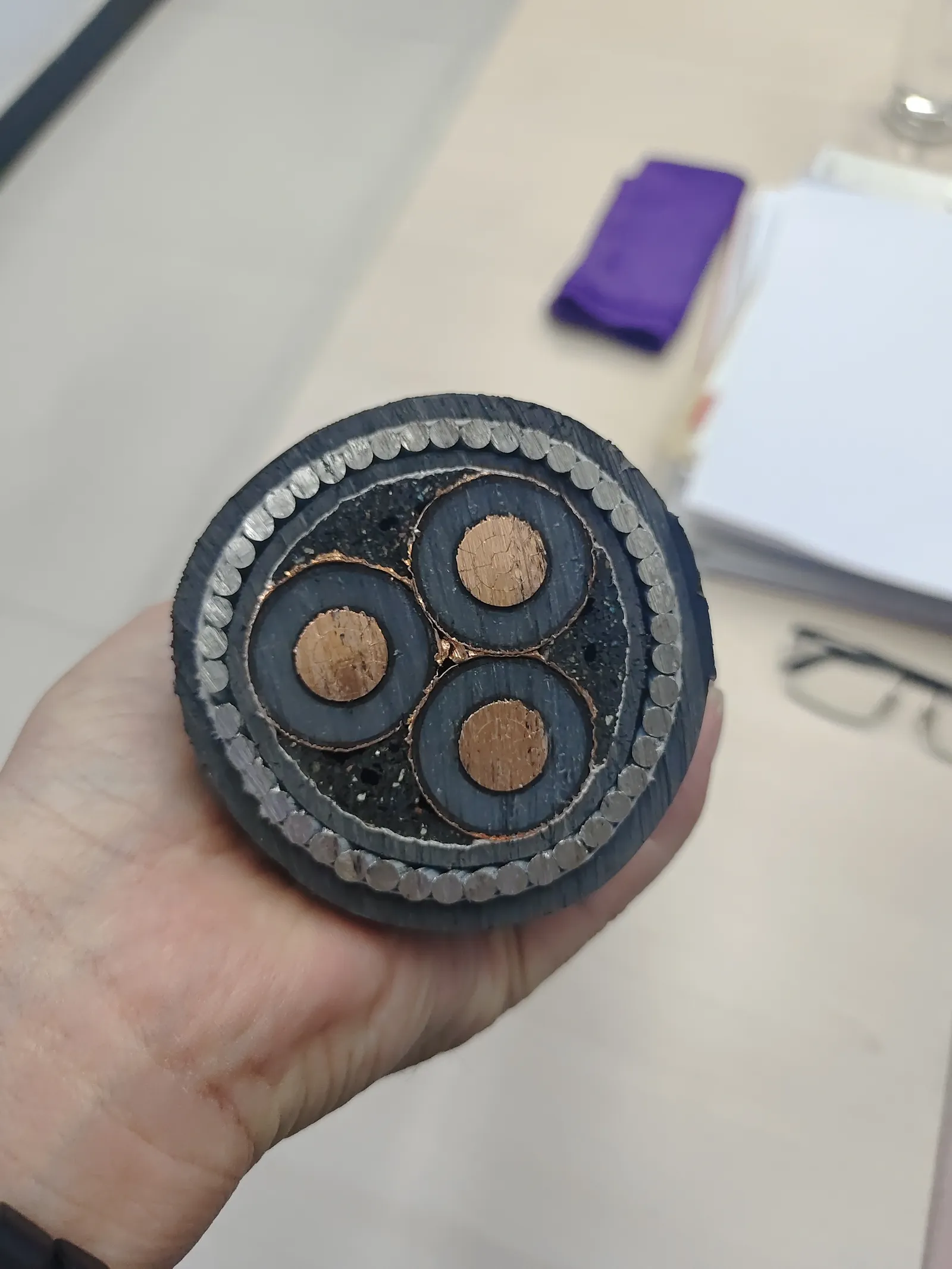
Armour is not optional for direct burial. It provides mechanical protection against:
- Spade strikes during future excavation
- Ground pressure and soil movement
- Rodent damage
- Impact from rocks in backfill
For detailed armoured cable specifications including full size charts, see our 4 Core Armoured Cable guide.
Steel Wire Armour (SWA)
The default choice for direct burial underground cables.
SWA uses galvanized steel wires (1.25-3.15mm diameter) laid helically around the cable. It provides:
- Radial crush protection
- Longitudinal tensile strength (critical during installation pulling)
- Excellent rodent resistance
- Impact protection
Use SWA when:
- Direct burial without protective duct
- Cable route crosses unstable ground
- Installation involves long pulling distances
- Vertical sections exist in the route
- Maximum mechanical protection is required
Browse our full range of SWA armoured cables with specifications and pricing.
Steel Tape Armour (STA)
Lighter alternative when tensile strength is not needed.
STA uses two overlapping galvanized steel tapes wound in opposite directions. It provides:
- Radial crush protection
- Rodent resistance
- Lower weight and cost than SWA
Use STA when:
- Cable is laid flat with no pulling force
- Installation in pre-laid duct or trough
- Multi-core cables in stable soil
- Weight reduction matters for transport
Aluminium Wire Armour (AWA)
Required for single-core AC cables to avoid eddy current heating.
When single-core AC cables carry high current, ferromagnetic armour (steel) would experience significant eddy current losses, reducing cable rating and generating heat. AWA eliminates this by using non-magnetic aluminium.
Use AWA when:
- Single-core cables above 50mm² carrying AC
- Weight reduction is a priority
- Corrosion resistance matters (aluminium performs better than steel in some soils)
Underground Cable Specifications by Voltage Class
Low Voltage (0.6/1kV) — Most Common Underground Cable
Used for:
- Secondary distribution from transformers to consumers
- Street lighting circuits
- Industrial plant power distribution
- Housing estate main feeders
Typical specifications:
| Configuration | Conductor Range | Armour | Application |
|---|---|---|---|
| 4×16mm² Cu SWA | 4-core copper | SWA | Residential feeder (80A) |
| 4×95mm² Cu SWA | 4-core copper | SWA | Commercial building supply (197A at 1.2 K·m/W) |
| 4×240mm² Cu SWA | 4-core copper | SWA | Industrial main supply (510A) |
| 3×185+1×95mm² Cu SWA | 3-phase + neutral | SWA | Large commercial (435A) |
| 1×300mm² Cu SWA | Single core | AWA | High-current parallel runs |
| 4×300mm² Al SWA | 4-core aluminium | SWA | Long feeder (cost optimized) |
Current ratings (4-core Cu/XLPE/SWA, direct buried at 0.8m, 20°C soil):
| Size (mm²) | Current Rating (A) | Voltage Drop (mV/A/m) |
|---|---|---|
| 16 | 100 | 2.8 |
| 25 | 130 | 1.8 |
| 35 | 160 | 1.3 |
| 50 | 190 | 0.93 |
| 70 | 240 | 0.63 |
| 95 | 290 | 0.46 |
| 120 | 335 | 0.36 |
| 150 | 380 | 0.29 |
| 185 | 435 | 0.23 |
| 240 | 510 | 0.18 |
| 300 | 580 | 0.15 |
Reference conditions: IEC 60287, 20°C soil, 1.0 K·m/W thermal resistivity, 0.8m depth
Medium Voltage (3.6/6kV to 21/35kV)
Used for:
- Primary distribution (substation to substation)
- Industrial plant main incoming supply
- Wind farm collector cables
- Urban ring networks
- Long-distance rural electrification
For comprehensive medium voltage cable data, see our MV Cable 11kV 33kV guide.
Typical specifications:
| Voltage | Configuration | Conductor Range | Typical Application |
|---|---|---|---|
| 6/10kV | 3×70mm² Cu | 35-300mm² | Urban distribution |
| 8.7/15kV | 3×120mm² Cu | 50-400mm² | Suburban primary |
| 12/20kV | 3×185mm² Cu | 70-500mm² | Industrial incoming |
| 18/30kV | 1×240mm² Cu | 95-630mm² | Sub-transmission |
| 21/35kV | 1×400mm² Cu | 120-800mm² | Long-distance primary |
Key design differences from LV:
- Semi-conducting screens mandatory (conductor + insulation)
- Metallic screen required (copper wire or tape) for fault current return
- Thicker insulation (3.4mm at 6/10kV up to 9.0mm at 21/35kV)
- Partial discharge testing required
- Single-core preferred above 18/30kV
Installation Methods for Underground Cables
Method 1: Direct Burial
The most common method for distribution cables.
The cable is laid directly in an excavated trench, surrounded by fine material, with mechanical protection above.
Standard trench construction (IEC / BS / local codes):
| Layer | Description | Purpose |
|---|---|---|
| Backfill | Native soil, compacted in layers | Restore ground surface |
| Warning tape | Yellow/red PE tape "CAUTION: ELECTRIC CABLE BELOW" | Alert future excavators |
| Cover | Concrete tile, brick, or PVC cover strips | Mechanical protection |
| Sand/sifted soil | 75-100mm above cable | Protect from sharp objects |
| Cable | Laid flat (multi-core) or in trefoil (single-core) | — |
| Sand/sifted soil | 75-100mm below cable (cable bed) | Protect from stones, even support |
| Trench bottom | Flat, graded, no sharp objects | — |
Minimum burial depth (typical requirements):
| Location | LV Cable | MV Cable | HV Cable |
|---|---|---|---|
| Footpath/lawn | 0.5m | 0.8m | 1.0m |
| Road crossing | 0.8m | 1.0m | 1.2m |
| Agricultural land | 0.7m | 0.9m | 1.2m |
| Open country | 0.6m | 0.8m | 1.0m |
Always verify against local authority requirements — many jurisdictions exceed these minimums.
Advantages of direct burial:
- Lowest installation cost
- Best thermal dissipation (cable in direct contact with soil)
- Highest current rating for given cable size
- Simple construction
Disadvantages:
- Cable must be armoured (SWA preferred)
- Difficult to replace cable without re-excavation
- Not suitable for congested service corridors
- Soil thermal resistivity directly affects rating
Method 2: Ducted Installation
Preferred for urban areas, road crossings, and future expandability.
Cables are pulled into pre-installed ducts (typically 100-160mm HDPE or PVC pipes). The duct provides:
- Mechanical protection (unarmoured cable can be used)
- Future cable replacement without excavation
- Multiple circuits in same trench
- Protection under roads and paved areas
Duct sizing:
| Application | Recommended Duct ID | Cable Fill Ratio |
|---|---|---|
| Single LV cable | 100mm | ≤45% |
| Single MV cable | 125mm | ≤45% |
| Multiple LV cables | 150mm | ≤40% |
| Spare duct (future) | 100-125mm | Empty |
Installation considerations:
- Maximum pull length without intermediate access: 100-150m (depending on cable weight and bend radius)
- Pulling tension limit: 50 N/mm² (copper conductor area)
- Use cable-rated lubricant for all pulls
- Seal duct ends after installation to prevent water ingress and gas migration
- Derate current rating by ~15-20% vs direct burial (reduced thermal dissipation)
Method 3: Cable Trough / Trench
For industrial plants and substations with multiple circuits.
Pre-cast concrete or GRP troughs with removable covers. Cables are laid on supports or trays within the trough.
Advantages:
- Easy access for inspection and maintenance
- Simple to add or replace cables
- Good for areas with frequent modifications
- Unarmoured cable acceptable (trough provides protection)
Disadvantages:
- Higher initial cost than direct burial
- Requires drainage provisions
- Current rating affected by grouping and restricted ventilation
- Cover must be load-rated for vehicle crossing
Method 4: Horizontal Directional Drilling (HDD)
For crossings where open-cut is impossible — rivers, railways, motorways.
HDD installs a duct (or bundle of ducts) along a drilled path beneath the obstacle. Cable is then pulled through the duct.
Typical applications:
- River and canal crossings
- Railway crossings (where open-cut shutdown is impractical)
- Motorway crossings
- Crossings through contaminated ground
Considerations:
- Minimum depth: typically 3-5m below riverbed or 2m below rail/road
- Cable must withstand pulling force and duct friction over extended length
- Thermal rating may be affected by deep burial
- Specialist contractor required
Underground Cable Jointing and Termination
Joints and terminations are critical points in any underground cable system. They must maintain the same electrical, mechanical, and environmental performance as the cable itself.
Straight Joints (Splices)
Used when cable lengths exceed drum capacity, or at route changes where separate pulls are required.
Low voltage joints:
- Heat-shrink or cold-shrink kits
- Resin-cast joints for wet locations
- Mechanical connectors (shear-bolt or compression)
- Completed in 30-60 minutes by trained jointer
Medium voltage joints:
- Pre-moulded rubber joints (push-on type)
- Heat-shrink joints with stress control tubing
- Cold-shrink joints (silicone rubber)
- Require strict cleanliness — contamination causes partial discharge
- Completed in 2-4 hours by specialist jointer
Cable Terminations
Where underground cable connects to overhead line, switchgear, or transformer.
Indoor terminations (MV):
- Heat-shrink stress control
- Separable connectors (elbow type for ring main units)
- Plug-in bushings for transformer connection
Outdoor terminations (MV):
- Porcelain or polymer outdoor terminations
- Extended creepage path for pollution resistance
- Stress cone for electric field control
Soil Thermal Resistivity: The Hidden Factor
Underground cable rating depends heavily on how well the surrounding soil conducts heat away from the cable. This is measured as thermal resistivity (K·m/W).
Typical values:
| Soil Type | Thermal Resistivity (K·m/W) |
|---|---|
| Wet sand/gravel | 0.5-0.7 |
| Damp soil (normal) | 0.8-1.2 |
| Dry soil | 1.5-2.0 |
| Very dry sand | 2.5-3.5 |
| Chalk/limestone | 0.8-1.5 |
| Concrete duct surround | 0.8-1.0 |
| Thermal backfill (CBS) | 0.5-0.7 |
Impact on cable rating:
Using 4×95mm² Cu/XLPE/SWA as example (per BS 7671 Table 4E4A / IEC 60287, 4-core, direct burial, 20°C ground):
- Soil at 1.0 K·m/W: ~215A
- Soil at 1.2 K·m/W: 197A (BS 7671 reference condition)
- Soil at 2.0 K·m/W: ~165A (−16%)
- Soil at 2.5 K·m/W: ~150A (−24%)
Mitigation for poor thermal soils:
- Use controlled backfill (CBS — Cement Bound Sand) around cable
- Specify larger conductor to maintain required rating
- Increase spacing between parallel circuits
- Reduce burial depth where code permits
- Install thermal monitoring for critical circuits
Cable Selection by Soil & Climate Condition
Different project environments demand different cable specifications. Below is a practical selection guide based on real-world soil and climate conditions, with current rating adjustments calculated per IEC 60287.
Arid Desert Regions (Middle East, North Africa, Australia Outback)
Soil characteristics: Dry sand, thermal resistivity 2.5–3.5 K·m/W, ambient soil temperature 35–45°C at burial depth.
Impact on cable rating:
- A 4×95mm² Cu/XLPE/SWA cable rated 197A at BS 7671 reference conditions (20°C, 1.2 K·m/W) derates to approximately 130–145A in desert conditions (40°C soil, 2.5 K·m/W)
- That is a 25–35% reduction from catalogue values
Recommended approach:
- Oversize conductor by 1–2 steps (e.g., use 150mm² where 95mm² would suffice in temperate soil)
- Specify CBS thermal backfill (0.7 K·m/W) for at least 300mm around cable
- Consider deeper burial (1.0m+) where soil temperature is lower at depth
- XLPE insulation mandatory (PVC’s 70°C limit leaves almost no thermal margin)
- Request IEC 60287 rating calculation from manufacturer for your specific conditions
Typical markets: Saudi Arabia, UAE, Qatar, Iraq, Egypt, Libya, Western Australia
Tropical Wet Regions (Southeast Asia, West Africa, Central America)
Soil characteristics: Saturated clay or laterite, thermal resistivity 0.7–1.2 K·m/W, ambient soil temperature 25–30°C, high water table.
Impact on cable rating:
- Wet soil is thermally favorable — a 4×95mm² Cu/XLPE/SWA cable retains approximately 190–210A (only 3–8% derating from 1.0 K·m/W reference)
- However, moisture creates different risks: corrosion, water treeing in insulation, flooding of joints
Recommended approach:
- Standard conductor sizing usually adequate (thermal conditions are good)
- Specify PE outer sheath rather than PVC for superior moisture barrier in permanently wet ground
- Use resin-filled joints rated IP68 (not heat-shrink alone)
- Ensure galvanised steel wire armour for corrosion resistance — request additional bitumen coating if soil is acidic (pH < 5)
- Drainage at joint bays essential
- Verify cable route is above maximum flood level or use ducted crossings
Typical markets: Philippines, Vietnam, Indonesia, Myanmar, Nigeria, Ghana, Cameroon, Panama
Temperate Regions (Europe, Coastal China, Southern Australia)
Soil characteristics: Mixed clay/loam, thermal resistivity 1.0–1.5 K·m/W, ambient soil temperature 10–20°C.
Impact on cable rating:
- Standard IEC 60287 reference conditions apply with minimal derating
- 4×95mm² Cu/XLPE/SWA achieves full catalogue rating of approximately 197–215A
Recommended approach:
- Standard cable specifications per IEC 60502/BS 5467 are appropriate
- Focus on installation quality rather than oversizing
- Seasonal variation is small — winter soil may give 5–10% bonus capacity
Typical markets: UK, Netherlands, Germany, coastal China, South Africa (Cape region), New Zealand
Rocky/Mountainous Terrain
Soil characteristics: Fragmented rock, gravel, variable thermal resistivity (1.5–2.5 K·m/W depending on air gaps), risk of mechanical damage from sharp rock edges.
Recommended approach:
- SWA armour essential (not STA) — steel wires resist point loads from rocks
- Import fine sand or CBS for cable bed and surround (minimum 100mm all around)
- Consider thicker outer sheath (2.5mm+ rather than standard 1.8mm) for abrasion resistance during installation
- Where rock blasting is needed for trench, clear all sharp fragments before cable laying
- Mechanical protection tiles/covers above cable
Typical markets: Ethiopia, East African highlands, Andes (Peru, Ecuador), Northern Pakistan, Afghanistan
Permafrost & Cold Climate
Soil characteristics: Frozen ground 6–9 months, thermal resistivity varies with freeze/thaw cycle (1.0 K·m/W frozen, 1.5+ when thawed with air pockets), ground heave/settlement cycles.
Recommended approach:
- XLPE insulation is cold-rated to -40°C (PVC becomes brittle below -5°C)
- Install during thawed season only
- Allow slack at joint positions to absorb ground movement
- Consider duct installation for frost-heave zones (duct absorbs movement, cable stays straight)
- Burial depth must exceed maximum frost penetration depth
Typical markets: Russia, Kazakhstan, Mongolia, Northern Canada, Scandinavia
Coastal & High Salinity Zones
Soil characteristics: Salt-saturated sand/clay, highly corrosive (pH variable), thermal resistivity 0.7–1.0 K·m/W (wet), electrical conductivity of soil affects sheath voltage.
Recommended approach:
- Specify PE outer sheath (superior chemical resistance vs PVC)
- Consider AWA (aluminium wire armour) instead of galvanised SWA — aluminium resists salt corrosion better than steel in coastal environments
- All metallic components (glands, terminations, earth connections) must be marine-grade stainless or galvanised + protected
- Cathodic protection may be required for long cable routes in highly saline ground
- Sheath voltage calculations per IEC 60287-1-1 Annex should account for low soil resistivity
Typical markets: Coastal Middle East, Pacific Islands, Caribbean, Mediterranean coast, Maldives
Underground Cable Testing
After installation, cables must be tested to verify installation integrity:
Pre-commissioning Tests
Low voltage cables:
- Insulation resistance: ≥1 MΩ per core at 500V DC (IEC recommendation)
- Continuity: verify all conductors and armour connections
- Phase identification: confirm correct rotation
Medium voltage cables:
- Insulation resistance: ≥100 MΩ at 5000V DC
- DC hi-pot or VLF (Very Low Frequency) withstand test
- Partial discharge measurement (preferred over DC for XLPE)
- Sheath integrity test: 5kV DC applied between armour/screen and earth
Ongoing Maintenance Testing
- Insulation resistance trending (annual)
- Tan δ (dissipation factor) measurement for MV cables
- Partial discharge mapping for critical circuits
- Thermal monitoring (fiber optic DTS for HV circuits)
Common Installation Mistakes to Avoid
-
Insufficient cable bed preparation — Sharp rocks in trench bottom puncture outer sheath, leading to corrosion and eventual failure
-
Exceeding minimum bending radius — Causes insulation cracking or conductor damage. Remember: 15× OD for armoured cable
-
Improper backfill compaction — Subsidence creates voids around cable, causing hot spots where heat cannot dissipate
-
Ignoring thermal resistivity — Assuming standard soil conditions in areas with dry sand or fill material leads to overheated cables
-
Missing warning tape — Future excavation without knowing cable location is the #1 cause of underground cable damage
-
Poor joint workmanship — 80% of underground cable failures occur at joints, not in the cable itself
-
Exceeding pulling tension — Over-tensioning during installation stretches conductors and damages insulation, creating long-term weak points
-
Not sealing duct entries — Water floods into duct runs and sits against cable, accelerating ageing
Sourcing Underground Power Cable from China
When procuring underground cables for international projects, key factors to verify:
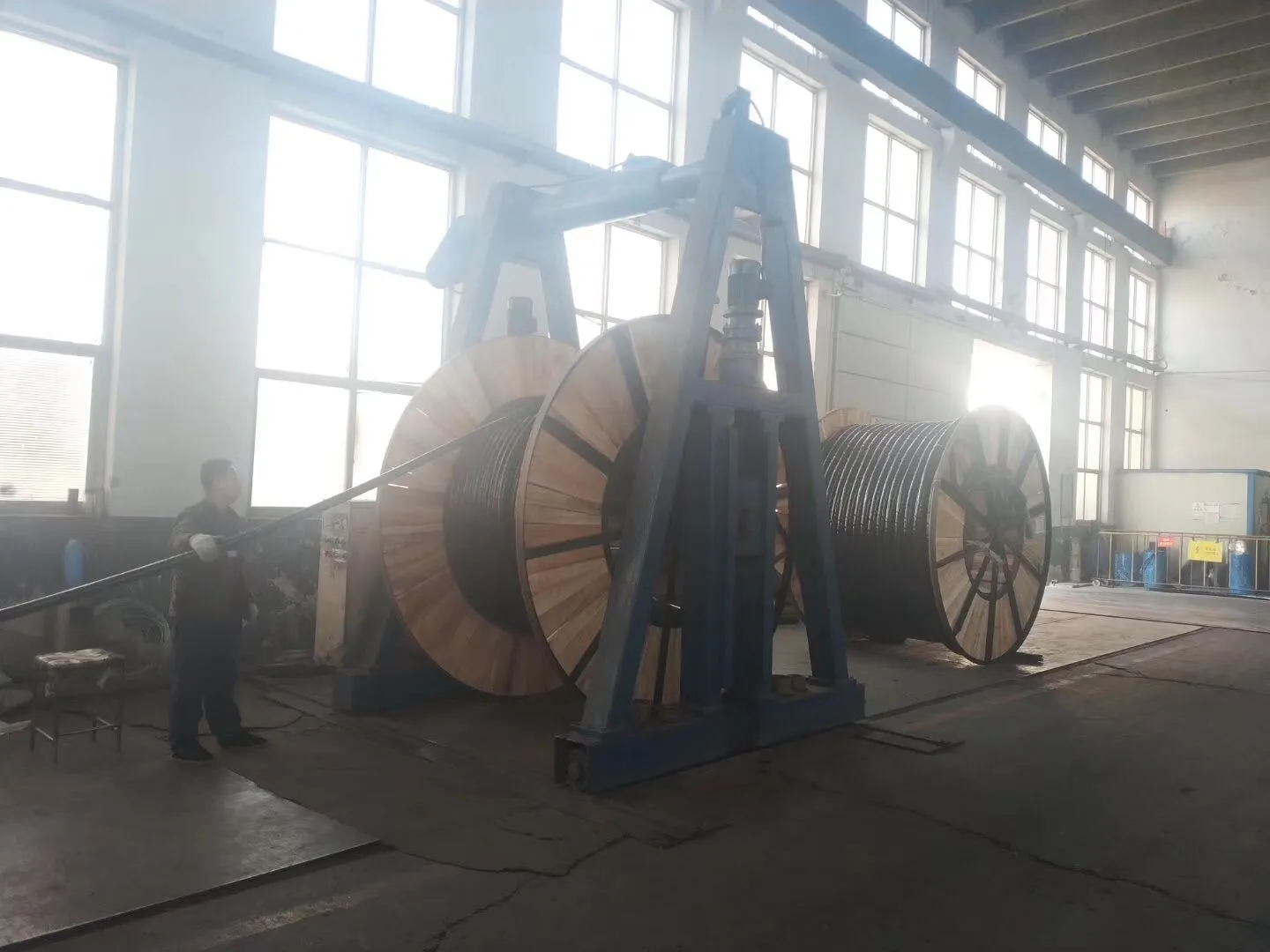
Manufacturing capability:
- CCV (Catenary Continuous Vulcanization) line for consistent XLPE quality
- In-house armouring lines (SWA and STA)
- Testing laboratory with partial discharge capability (for MV)
- Production capacity matching your delivery schedule
Quality assurance:
- IEC 60502 type test reports (verified by independent lab)
- CB scheme certificate for international market acceptance
- Material traceability (XLPE compound source, copper cathode grade)
- Routine test capability per contract specification
Export experience:
- Familiarity with your national standard (BS, NFC, SANS, AS/NZS)
- Correct cable marking and colour coding per destination country
- Drum size and weight compatible with your handling equipment
- Documentation package (test certificates, material certificates, packing list)
Our factory produces underground cables for projects across Africa, Middle East, Southeast Asia, and Latin America. We hold IEC type test certificates and export under BS 5467, NFC 33-226, SANS 1507, and other national standards.
Underground Cable Standards by Region
| Region | Standard | Voltage Class | Key Requirement |
|---|---|---|---|
| International | IEC 60502-1/2 | 1–35kV | Base reference for most markets |
| UK & Commonwealth | BS 5467 / BS 6622 | LV / MV | BS 7671 installation depth rules |
| France & Francophone Africa | NFC 33-220 / 33-226 | LV / MV | Aluminium conductor common |
| Southern Africa | SANS 1507 / SANS 10198 | LV–MV | SABS approved cable required |
| Middle East | GSO IEC 60502 / ESMA | LV–MV | High thermal resistivity derating |
| Australia & NZ | AS/NZS 1429.1 | LV–MV | Specific marking requirements |
Frequently Asked Questions
What type of cable is used underground?
For modern installations, XLPE insulated cables with steel wire armour (SWA) are the standard choice for direct burial. The SWA provides mechanical protection against accidental damage, while XLPE insulation gives superior moisture resistance and thermal performance. For ducted installations, unarmoured XLPE cable is acceptable since the duct provides mechanical protection.
How deep should underground power cable be buried?
Minimum depth varies by voltage and location: typically 0.5-0.6m for LV cables under footpaths, 0.8m under roads, and 0.8-1.0m for MV cables. Always check local authority requirements — many jurisdictions specify greater depths. The cable should sit on a prepared bed of fine sand, with protective covers and warning tape above.
Can PVC cable be used underground?
Yes, for low-voltage applications. PVC armoured cables (VV22/VV32) can be direct buried, though they have lower thermal rating than XLPE (70°C vs 90°C continuous). PVC is more susceptible to long-term moisture absorption, so XLPE is preferred for critical circuits or wet ground conditions.
What is the lifespan of underground power cable?
XLPE insulated underground cables have a design life of 30-40 years when properly installed and not overloaded. Actual life often exceeds this — many cables installed in the 1980s remain in service. Key factors affecting life: soil conditions, thermal loading, quality of joints, and whether the cable operates within its rated temperature.
How are underground cable faults located?
Fault location uses a combination of techniques: time-domain reflectometry (TDR) for cable breaks, thumping (high-voltage pulse) combined with acoustic detection for insulation faults, and electromagnetic tracing for route identification. Modern techniques can locate faults to within 1-2 metres accuracy.
What is the difference between SWA and STA for underground cable?
SWA (Steel Wire Armour) uses round steel wires providing both crush protection AND tensile strength — essential for direct burial and installation pulling. STA (Steel Tape Armour) uses flat steel tapes giving crush protection only, without tensile strength. For underground direct burial, SWA is the standard choice. STA is acceptable only for flat, ducted installations. See our detailed SWA vs STA comparison.
Is armoured cable required for underground installation?
For direct burial: yes, armour is strongly recommended and often required by code. The armour protects against accidental mechanical damage from future excavation, rodents, and ground movement. For cable in ducts or troughs with removable covers, unarmoured cable is acceptable since the duct/trough provides the mechanical protection.
What is the depth requirement for 11kV underground cable?
Per IEC and most national standards, 11kV (medium voltage) underground cable requires minimum 0.8m depth under footpaths and 1.0m under roads. In agricultural land, 0.9m minimum is typical to clear plough depth. Some utilities specify 1.0m minimum regardless of location for MV cables. The cable should have sand surround, protection tiles, and route marker tape at 150mm below surface. Always confirm with the local distribution network operator (DNO) or authority having jurisdiction.
How does soil type affect underground cable current rating?
Soil thermal resistivity directly determines how much heat can dissipate from a buried cable. Wet sand (0.7 K·m/W) conducts heat well, allowing full current rating. Dry sand (2.5–3.0 K·m/W) insulates heat, forcing a 25–35% derating from catalogue values. The IEC 60287 standard provides the calculation method. For projects in arid regions, always request manufacturer rating calculations specific to your soil conditions rather than relying on generic catalogue ratings.
Can underground cable be installed without a trench (trenchless)?
Yes. Horizontal Directional Drilling (HDD), pipe jacking, and micro-tunnelling allow cable duct installation without open-cut trenching. These methods are used for river crossings, railway crossings, road crossings, and environmentally sensitive areas. The cable is pulled through a pre-installed HDPE duct after drilling. Cost is higher than open-cut but often required where surface disruption is not permitted. Maximum HDD length for cable installations is typically 500–1000m depending on duct size and ground conditions.
Interested in this product?
Get Underground Cable Specifications & PricingRelated Resources
- SWA Cable Applications: Underground, Industrial & Commercial — Complete application guide for steel wire armoured cable across all sectors
- 3-core and 3+1 sizing for buried runs — full spec chart 1.5 to 800mm²
- 11kV Cable Size Chart & Current Ratings — Complete 11kV cable sizing reference
- Which insulation suits wet ground — PVC vs XLPE vs EPR vs LSZH
- SWA Steel Wire Armoured Cable — Dedicated SWA cable specifications and supply
- 7-step cable import process — Complete procurement guide
- Cable Size Chart: mm² to AWG with Ampacity Tables — Universal sizing reference
- Mining Cable for Underground Operations — Specialized cables for underground mining applications
- Power Cable Products — Browse our full range