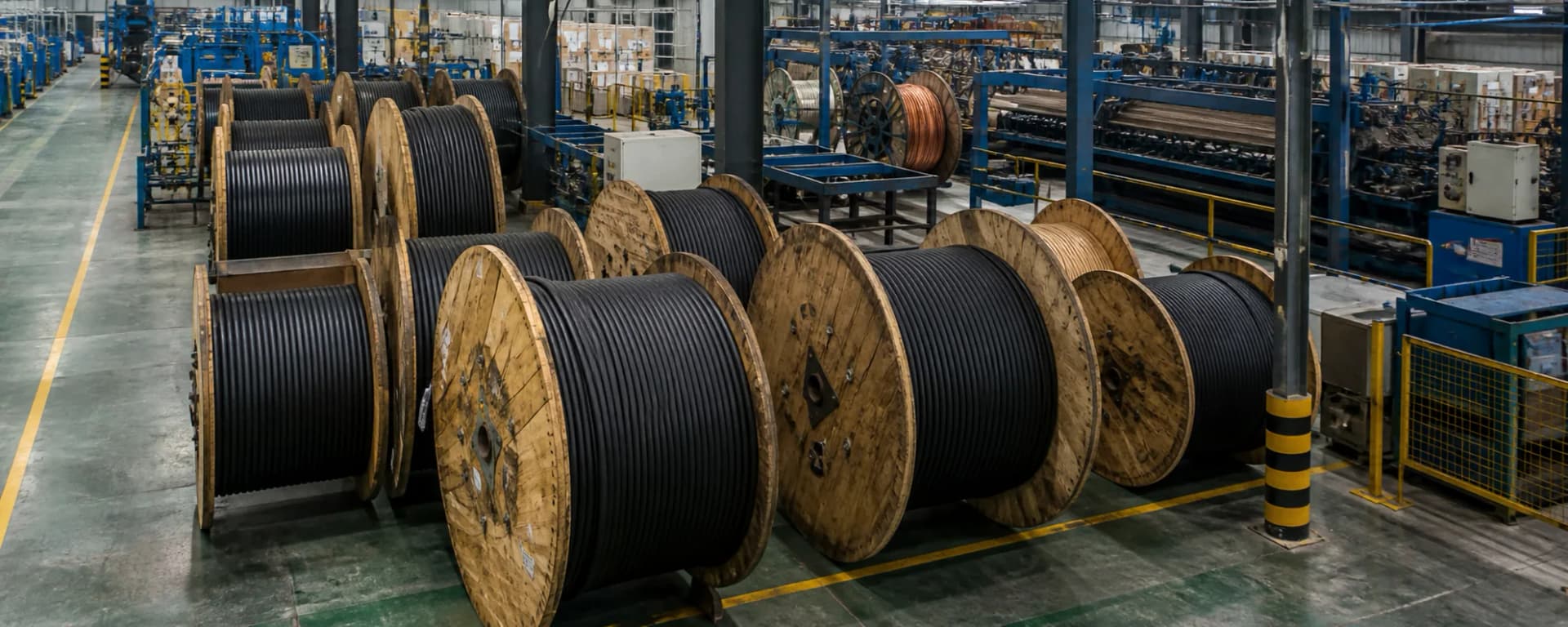
Kenya Electricity Market Overview
Kenya is East Africa's largest and most dynamic economy, with a population of 55.3 million (World Bank, 2023) and an electricity sector that has undergone rapid transformation over the past decade. The country has achieved one of the fastest electrification rates in Sub-Saharan Africa, with national electrification rate reaching approximately 75% in 2023 (Kenya National Bureau of Statistics), up from 32% in 2013. This progress has been driven by aggressive government programmes, particularly the Last Mile Connectivity Project, which has connected millions of previously off-grid households to the national grid.
Kenya Power and Lighting Company (KPLC) operates the national distribution network, serving over 9 million customer connections across the country. Kenya's installed generation capacity reached 3.3 GW in 2023, with over 90% from renewable sources including geothermal (863 MW at Olkaria) and hydropower. Kenya generates over 90% of its electricity from renewable energy, with increasingly wind energy (the 310 MW Lake Turkana Wind Power project being the largest in Africa). This renewable energy leadership drives continued investment in transmission and distribution infrastructure to evacuate power from generation sites to demand centres.
In 2023, Kenya imported US$55.7 million worth of insulated wire and cable products (HS code 8544, UN Comtrade) — reflecting the country's significant and growing cable infrastructure needs.
Key Drivers of Cable Demand
Last Mile Connectivity Project: The government's flagship electrification programme continues to connect remaining unelectrified households within existing transformer radius. The Last Mile Connectivity Programme targets 6.7 million new connections between 2017 and 2026, driving sustained demand for distribution cables and overhead conductors. This programme requires enormous volumes of ABC cable for low-voltage distribution, service drop cables, and associated hardware. Phase 3 and subsequent phases target increasingly remote areas with challenging terrain.
Kenya Power Network Expansion: KPLC is expanding the medium-voltage (33 kV and 11 kV) feeder network to serve growing peri-urban areas and industrial zones. This requires ACSR and AAC overhead conductors for new lines, XLPE cables for underground sections, and transformer connections.
Geothermal Expansion (Olkaria and Beyond): The Geothermal Development Company (GDC) and KenGen are developing new geothermal fields, each requiring MV and HV cable connections from power plants to the KETRACO transmission network. The Menengai and Suswa geothermal prospects will add hundreds of megawatts.
Lake Turkana Wind Power (310 MW, KSh 70 billion / ≈US$680 million): Africa's largest wind farm, commissioned in 2019, represents the single largest private investment in Kenya's history. The 365-turbine facility near Lake Turkana connects to the national grid via a 438 km, 400 kV KETRACO transmission line, demonstrating the scale of cable infrastructure required for Kenya's renewable energy programme.
Standard Gauge Railway (SGR) Corridor: The Mombasa-Nairobi SGR and its planned extensions to Naivasha and beyond require signalling cables, power cables, and communication cables along the corridor, plus distribution infrastructure for railway towns and stations.
Nairobi Expressway and Urban Infrastructure: Nairobi's rapid urbanisation drives demand for underground MV cables, street lighting cables, and building wiring for commercial and residential developments. The Nairobi Expressway, Two Rivers, Tatu City, and Konza Technopolis all require complete electrical infrastructure.
Industrial and Export Processing Zones: Athi River EPZ, Naivasha Industrial Park, and other special economic zones require reliable power supply with MV cable networks and industrial-grade LV distribution.
Market Characteristics
Kenya's cable market is characterised by strong regulatory oversight through KEBS (Kenya Bureau of Standards), competitive tendering through KPLC and KETRACO procurement systems, and increasing quality consciousness driven by network reliability targets. Chinese cable manufacturers are well-established suppliers to the Kenyan market, with multiple factories holding KEBS certification and KPLC type-test approval.
The market operates primarily through established importers and KPLC-approved contractors who procure cables for government-funded projects. Large orders are typically tied to specific project phases with defined delivery schedules coordinated with KPLC's construction programme.
Kenyan Standards and Certification Requirements
Kenya maintains a rigorous standards framework for electrical cables, administered by the Kenya Bureau of Standards (KEBS). Compliance is mandatory for all imported cables, and KPLC enforces additional type-testing requirements for utility-grade products.
KEBS Kenya Standards (KS) for Cables
Kenya's national standards for electrical cables are designated as KS IEC series, directly adopting IEC international standards:
- KS IEC 60502-1 — Power cables with extruded insulation for rated voltages 1 kV to 3 kV
- KS IEC 60502-2 — Power cables for rated voltages from 6 kV up to 30 kV
- KS IEC 61089 — Round wire concentric lay overhead electrical stranded conductors
- KS IEC 60227 — PVC-insulated cables for voltages up to 450/750 V
- KS IEC 60228 — Conductors of insulated cables
- KS IEC 60889 — Hard-drawn aluminium wire for overhead line conductors
- KS 2710 — Specification for aerial bundled cables (ABC)
KEBS Certification (Diamond Mark / ISM)
All electrical cables imported into Kenya must obtain either a KEBS Import Standardization Mark (ISM) or comply with the Pre-Export Verification of Conformity (PVoC) programme:
-
Pre-Export Verification of Conformity (PVoC): Every cable shipment must be inspected and certified at the country of origin before shipping. KEBS-appointed inspection agents (SGS, Bureau Veritas, Intertek) issue a Certificate of Conformity (CoC) after document review and physical inspection.
-
Certificate of Conformity (CoC): Required for customs clearance at Mombasa port. Without a valid CoC, goods will be detained and may be re-exported at the importer's cost.
-
Diamond Mark (Optional): For manufacturers seeking premium market positioning, the KEBS Diamond Mark certifies ongoing compliance with Kenya standards. This requires factory audit, product testing, and annual surveillance. We maintain KEBS Diamond Mark certification for our primary cable product lines.
Our factory holds valid KEBS product certifications and has an established relationship with PVoC inspection agents. We coordinate the inspection and certification process for every shipment, ensuring documentation is complete before vessel departure.
Kenya Power (KPLC) Type Testing Requirements
For cables destined for KPLC network projects, additional type-testing requirements apply beyond KEBS certification:
- KPLC Type Test Report: Cables must have valid type test reports from a KPLC-recognized laboratory (KEMA, CESI, or equivalent international laboratory with ILAC accreditation)
- KPLC Material Specification Compliance: Conductor dimensions, insulation thickness, and overall construction must match KPLC's technical specifications precisely
- KPLC Approved Supplier Registration: Manufacturers supplying through KPLC-approved contractors benefit from established product approval
We maintain type test reports from internationally accredited laboratories that satisfy KPLC's requirements for all our standard products supplied to the Kenyan market.
Shipping Logistics: China to Kenya
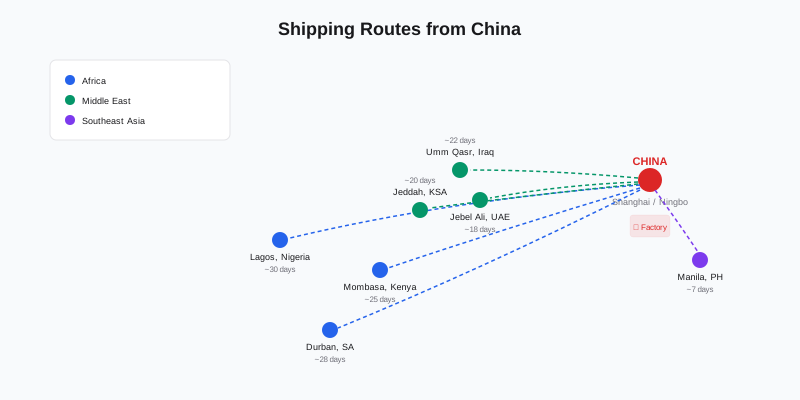
Kenya's primary import gateway is Mombasa port, which also serves as the entry point for landlocked countries in East Africa (Uganda, Rwanda, South Sudan). We have extensive experience shipping to Mombasa with established routing and customs clearance procedures.
Departure Ports
Our factory in Henan Province connects to major Chinese ports with regular sailings to East Africa:
- Qingdao Port — Primary departure port, good frequency on East Africa routes
- Shanghai Port — Alternative with competitive rates and direct service options
- Ningbo Port — Used when specific carrier schedules are advantageous
Arrival Port: Mombasa
Mombasa Port (Kilindini Harbour) is Kenya's sole major seaport and handles virtually all containerised cargo entering the country. The port has undergone significant expansion and modernisation, including the new Kipevu Oil Terminal and container terminal upgrades. Key details:
- Modern container handling facilities with improving turnaround times
- Connected to Nairobi and inland cities via SGR cargo service and road
- ICD (Inland Container Depot) at Embakasi, Nairobi for deferred clearance
- Naivasha ICD for cargo destined for western Kenya and transit countries
Transit Time
Typical ocean transit times from China to Kenya:
| Route | Transit Time |
|---|---|
| Qingdao → Mombasa | 20–25 days |
| Shanghai → Mombasa | 22–27 days |
| Ningbo → Mombasa | 22–26 days |
We recommend allowing 23 days for transit planning purposes, plus 7–14 days for customs clearance at Mombasa port. For cargo cleared at the Nairobi ICD via SGR, add 2–3 days for rail transit from Mombasa.
Container Loading
Cable drums are loaded into standard 20GP or 40GP containers. Typical loading configurations for Kenya orders:
- ACSR/AAC conductors: 18–22 tonnes per 20GP on wooden or steel drums
- ABC cable: 15–18 tonnes per 20GP depending on conductor size
- XLPE power cable: 15–20 tonnes per 20GP depending on cross-section and voltage class
- Building wire: 18–20 tonnes per 20GP (light cable on compact drums)
We provide full container loading plans and weight certificates as required by shipping lines and Kenyan customs.
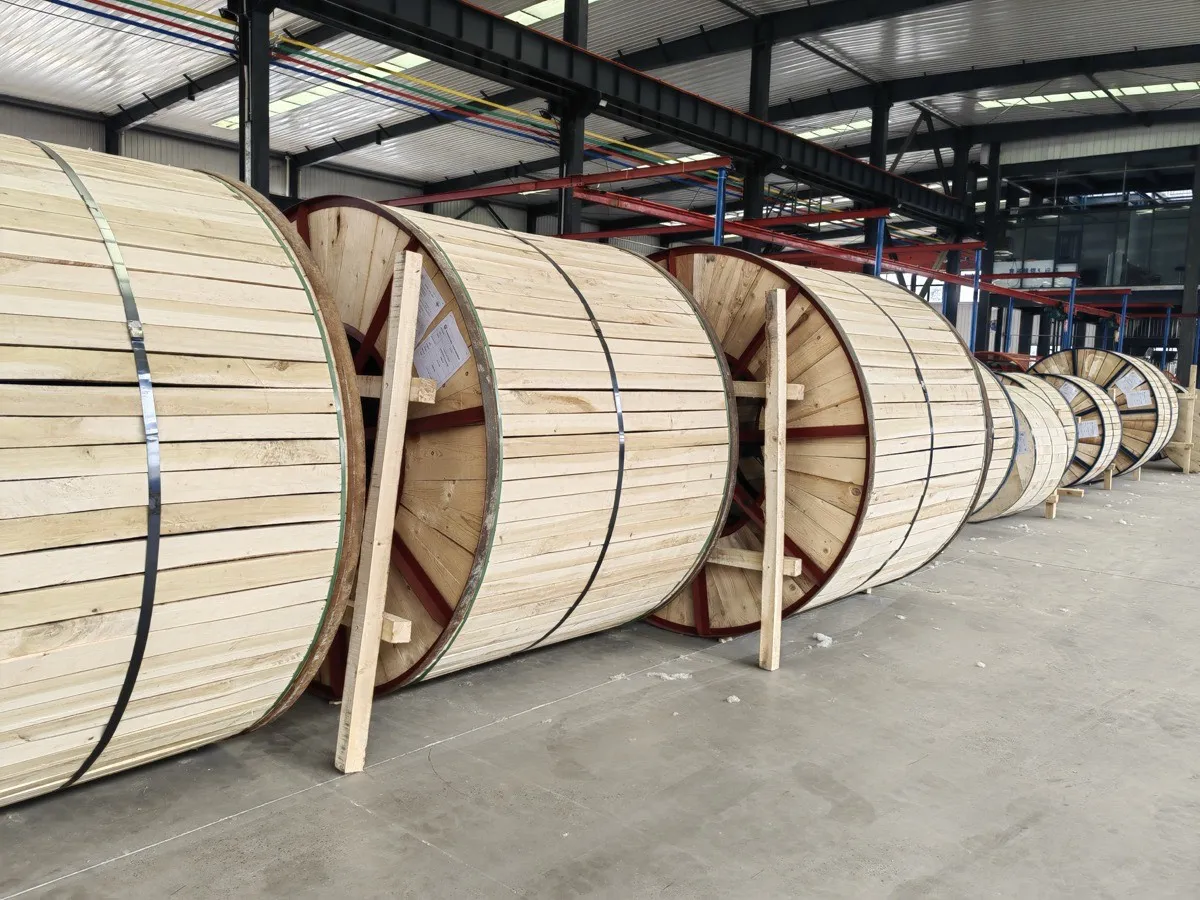 Container loading at factory — all drums weighed and secured for Mombasa port
Import Duty and Taxes
Cable imports into Kenya are subject to the East African Community (EAC) Common External Tariff:
- Import duty: 25% CIF value on HS 8544 (EAC Common External Tariff)
- Railway Development Levy: 2% CIF value
- Import Declaration Fee (IDF): 3.5% CIF value
- VAT: 16% (applied on CIF + duty + levies)
- KEBS inspection fees: Included in PVoC charges
Note: Certain raw material imports (bare conductor for local assembly) may attract lower duty rates under specific tariff headings. We advise clients on optimal HS code classification to ensure correct duty application.
Kenya's relatively higher import duty structure means that competitive factory pricing is essential for maintaining viable landed costs. Our factory-direct pricing eliminates trading company margins, helping Kenyan importers maintain competitive positioning.
Most Demanded Cable Products in Kenya
Based on our shipping history and current market requirements, the following products represent the highest demand for Kenyan projects:
1. AAC and ACSR Overhead Conductors
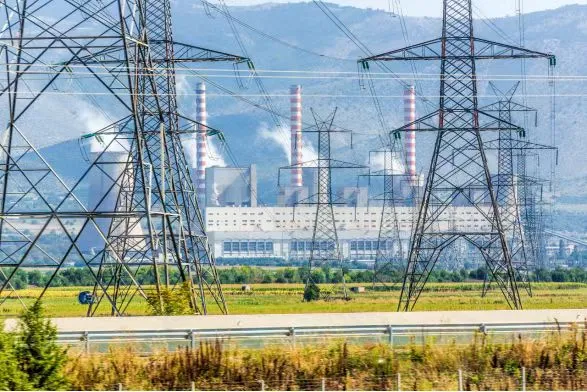
Application: KPLC medium-voltage line extensions (33 kV and 11 kV), rural electrification feeder lines, KETRACO transmission projects, industrial supply lines.
Overhead conductors remain the backbone of Kenya's electricity distribution network, particularly outside of Nairobi and major urban centres. The most commonly specified sizes for Kenya:
- ACSR Rabbit (50/8 mm²) — 11 kV distribution lines (most common single product)
- ACSR Dog (100/16 mm²) — 33 kV primary feeders
- ACSR Weasel (30/7 mm²) — LV lines and short extensions
- AAC 50 mm² to 150 mm² — Urban distribution where corrosion resistance is preferred
- AAAC 70 mm² to 150 mm² — Coastal areas (Mombasa, Malindi) for superior corrosion resistance
All conductors are manufactured to KS IEC 61089 with full compliance to KPLC standard specifications for mechanical and electrical properties. Each drum is supplied with a manufacturer's test certificate covering DC resistance, breaking load, lay ratio, and wire diameter measurements.
2. ABC (Aerial Bundled Cable) for Last Mile Connectivity
Application: KPLC Last Mile Connectivity Project, low-voltage distribution in informal settlements, theft-reduction programmes, peri-urban electrification.
Aerial Bundled Cable has become the default choice for low-voltage distribution in Kenya's electrification programme. ABC eliminates the safety risks and theft vulnerability of bare overhead conductors in densely populated areas. KPLC specifies ABC for virtually all new LV connections. Key specifications:
- 3×70+54.6 mm² ABC (3-phase + neutral messenger) — Main LV distribution
- 3×50+35 mm² ABC — Secondary distribution
- 3×35+25 mm² ABC — Short feeders and branch lines
- 2×16 mm² and 4×16 mm² — Service connection cables
- 1×16 mm² — Individual service drops
Our ABC cable is manufactured to KS 2710 and IEC 60502-1 / NFC 33-209 with XLPE insulation on aluminium phase conductors and an uninsulated AAAC neutral messenger wire. The cable is designed for installation on wooden poles using standard ABC hardware (suspension clamps, anchor clamps, insulation piercing connectors).
ABC is our single highest-volume product for the Kenyan market, with regular monthly shipments to support the ongoing Last Mile project phases.
3. XLPE Medium-Voltage Cable (11 kV and 33 kV)
Application: Underground urban distribution in Nairobi and Mombasa, industrial park supply, substation interconnection, solar farm collector cables.
As Kenya's urban areas densify, KPLC is increasingly installing underground MV cable networks. The shift from overhead to underground is particularly evident in Nairobi's CBD, Westlands, and emerging commercial nodes. Required specifications:
- 11 kV (6.35/11 kV) 3-core 70 mm² to 300 mm² Al/XLPE/SWA/PVC
- 11 kV single-core 150 mm² to 400 mm² Al/XLPE/PVC (for substation connections)
- 33 kV (19/33 kV) single-core 150 mm² to 500 mm² Al/XLPE/HDPE
- 33 kV 3-core 95 mm² to 185 mm² Al/XLPE/SWA/PVC
All MV cables are manufactured and tested to KS IEC 60502-2 with routine testing including partial discharge measurement (≤5 pC), AC voltage withstand at 3.5U₀ for 5 minutes, and conductor resistance verification. Type test reports from internationally accredited laboratories are maintained for all standard configurations.
4. Armoured LV Cable for Building and Industrial Distribution
Application: Commercial buildings, industrial installations, residential compounds, institutional facilities (hospitals, schools, government buildings).
Steel Wire Armoured (SWA) cable is the standard choice for buried and fixed LV distribution in Kenya. Common specifications:
- 4-core 16 mm² to 300 mm² Cu/XLPE/SWA/PVC (copper for commercial/institutional)
- 4-core 25 mm² to 400 mm² Al/XLPE/SWA/PVC (aluminium for cost-sensitive installations)
- 2-core and 3-core armoured cable for specific applications
- Single-core 185 mm² to 630 mm² for main incoming supplies
Manufactured to KS IEC 60502-1 with Class 2 stranded conductors, XLPE insulation, galvanized steel wire armour, and PVC outer sheath in black. Complete with KEBS compliance documentation.
5. Building Wire and PVC Cable
Application: Residential wiring, commercial building internal distribution, contractor wholesale supply.
The construction boom in Kenya's urban centres drives consistent demand for building wire:
- Single-core PVC insulated cable (1.0 mm² to 16 mm²) for conduit wiring
- Twin and earth cable (1.5 mm² to 4.0 mm²) for domestic installations
- Flexible cable (3-core and 4-core) for appliance connections
- Flat submersible pump cable (3-core) for borehole installations
All building wire meets KS IEC 60227 with copper conductors, PVC insulation, and appropriate colour coding per Kenya wiring regulations.
Kenya Project Sectors and Applications
Last Mile Connectivity Programme
The Last Mile Connectivity Project is the single largest driver of cable demand in Kenya. Funded by the Government of Kenya with support from the African Development Bank (AfDB) and World Bank, the programme aims to achieve universal electricity access. Cable requirements include:
- ABC cable in massive quantities (hundreds of thousands of kilometres)
- ACSR conductors for MV line extensions to reach new transformer locations
- Service drop cables and connection accessories
- LV distribution cables for densified areas where ABC cannot be installed aerially
We have been a consistent supplier of ABC and ACSR conductors for contractors working on Last Mile phases, with the capability to deliver multiple container loads per month to maintain project construction schedules.
Geothermal and Renewable Energy
Kenya's position as a global leader in geothermal energy creates specialised cable demand:
- MV cables (33 kV) connecting geothermal power plants to the national grid
- Control and instrumentation cables for power plant internal systems
- Cables rated for high ambient temperatures near geothermal wells
- Solar farm cables for Kenya's growing solar generation capacity (Garissa Solar, Malindi Solar)
- Wind farm cables (internal MV collection networks)
Transport Infrastructure
The SGR corridor and associated developments require:
- Signalling and communication cables for railway systems
- Power cables for station and depot electrical installations
- Street lighting cables for railway towns
- LV and MV distribution for new settlements along the SGR route
Real Estate and Commercial Development
Nairobi's real estate market continues to expand, with major developments including:
- Tatu City (mixed-use development, 5,000 acres)
- Konza Technopolis (Kenya's smart city project)
- Two Rivers, Garden City, and other commercial complexes
- Housing developments by public and private developers
Each development requires complete electrical infrastructure from MV supply cables through LV distribution to building wiring.
Quality Assurance and Testing
Our quality assurance system meets the requirements of KEBS certification and KPLC technical specifications:
- ISO 9001:2015 certified quality management system
- IEC CB Scheme certificates for power cable product lines
- KEBS Diamond Mark certification for core product ranges
- CNAS-accredited laboratory testing (in-house and third-party)
- Full routine testing per KS IEC standards on every production drum
- Type testing with valid reports from internationally accredited laboratories
Test Reports Included with Every Shipment
- Conductor DC resistance test (per KS IEC 60228)
- Insulation resistance test
- AC high-voltage withstand test (routine test voltage per applicable standard)
- Partial discharge test (for MV cables, ≤5 pC at specified voltage)
- Dimensional checks (conductor diameter, insulation thickness, sheath thickness, overall diameter)
- Mechanical tests (tensile strength, elongation at break for insulation and sheath)
- Hot set test (for XLPE insulated cables)
Pre-Shipment Inspection
Every Kenya-bound shipment undergoes Pre-Export Verification of Conformity (PVoC) inspection by KEBS-appointed agents. We coordinate the full inspection process:
- Notify the inspection agent (SGS/Bureau Veritas/Intertek) upon production completion
- Provide test reports, certificates, and product documentation
- Facilitate physical inspection at our warehouse
- Obtain Certificate of Conformity (CoC) before container loading
- Include CoC in shipping documentation package for customs clearance
This established process ensures smooth clearance at Mombasa port without delays or additional testing requirements.
Why Choose China Cable Factory for Kenya Projects
Last Mile expertise: We understand KPLC specifications for the Last Mile Connectivity Project intimately. Our ABC cable and ACSR conductors are produced to exact KPLC-approved specifications without deviation.
KEBS certified: We hold active KEBS certification and maintain established relationships with PVoC inspection agents for smooth documentation processing.
Competitive pricing at scale: Kenya's 25% import duty means that factory-direct pricing is essential for viable project economics. We eliminate trading company markups to help importers maintain competitive positioning.
Reliable supply: For ongoing programmes like Last Mile, we maintain production capacity for regular monthly shipments. Consistent supply keeps project construction teams active and avoids costly work stoppages.
East African market knowledge: We understand the specific specifications, conductor sizes, and cable constructions that Kenya Power and Kenyan contractors require. No unnecessary back-and-forth on technical details.
Mombasa logistics experience: We ship regularly to Mombasa port and understand the customs clearance process, ICD options, and inland transit logistics for Kenya-bound cargo.
Get a Quote for Your Kenya Project
Whether you are a KPLC-approved contractor procuring cables for the Last Mile project, an importer serving the Kenyan electrical wholesale market, or a developer requiring MV and LV cable infrastructure for a new project — we are ready to support your requirements with KEBS-certified, KPLC-compliant cable products.
Request a quote today:
- WhatsApp: +86-134-6102-4180 — Fast response, send your specifications directly
- Email: sales@chinacablefactory.com — For formal RFQ documents
- Contact Form: Submit your requirements — We reply within 24 hours
What to include in your inquiry:
- Cable type and specification (standard, voltage rating, conductor size, construction)
- Quantity required (metres or kilometres)
- Delivery port (Mombasa) or inland delivery point
- Project name and timeline
- Any specific testing or certification requirements
- KPLC tender reference (if applicable)
We provide detailed quotations including FOB and CIF Mombasa pricing, production schedule, shipping plan, and PVoC documentation timeline. Our team communicates in English and is available via WhatsApp for real-time project coordination.
Interested in this product?
Request a Free Quote for Kenya