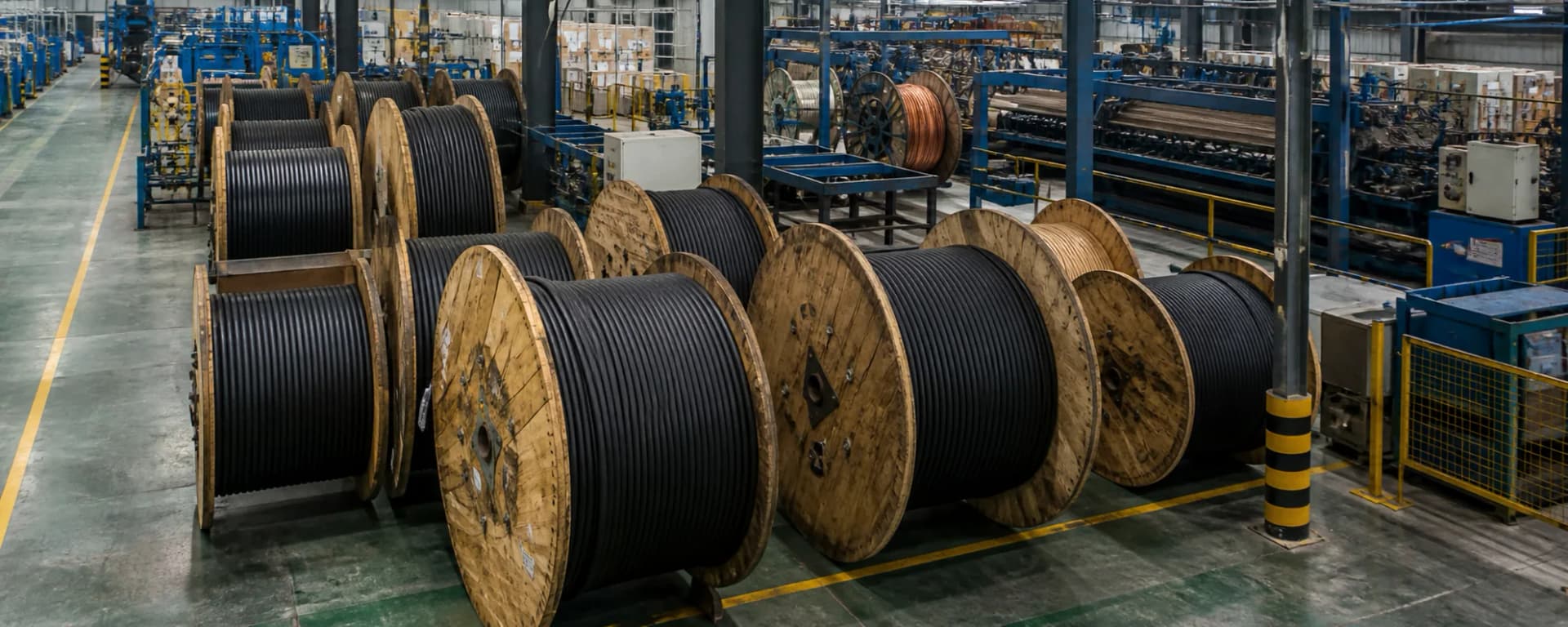
Iraq Electricity Market Overview
Iraq's electricity system is defined by two decades of conflict, underinvestment, and extraordinary demand growth. With a population of 45.1 million (World Bank, 2023), Iraq cannot generate enough electricity to meet its own needs despite possessing some of the world's largest oil and gas reserves. Installed generation capacity reached approximately 30 GW in 2022 (IEA), yet peak demand regularly exceeds 35,000 MW in summer — when temperatures in Baghdad, Basra, and the southern governorates routinely surpass 50°C and air conditioning becomes a survival necessity. Electricity access is near-universal at approximately 100% (World Bank, 2022), but the quality and reliability of supply remain severely inadequate.
The gap between supply and demand is filled by expensive imported electricity from Iran and Turkey, private diesel generators that cost consumers many times the grid tariff, and widespread load shedding that can exceed 12 hours per day in some areas during summer peaks. The World Bank and Iraqi government estimate that the electricity crisis costs the economy tens of billions of dollars annually in lost productivity, health impacts, and generator fuel costs.
Recognizing this, Iraq has committed to a grid reconstruction and expansion programme valued at over $10 billion, targeting both generation capacity additions and — critically — the transmission and distribution infrastructure required to deliver power reliably. This programme drives enormous, sustained demand for cable and conductor products across all voltage levels.
Key Drivers of Cable Demand
Grid Reconstruction Programme: The Iraqi Ministry of Electricity's master plan addresses the catastrophic state of transmission and distribution infrastructure. Decades of conflict destroyed transmission towers, substations, and cable routes. Looting stripped conductors from lines across multiple governorates. The reconstruction programme requires wholesale replacement and new construction of transmission and distribution networks throughout the country. In 2023, GE Vernova signed a US$3 billion contract with Iraq's Ministry of Electricity to add 7 GW of new generation capacity and service 14 GW of existing plants (Reuters) — underscoring the scale of investment flowing into the sector.
Transmission Network Rebuild: Iraq's 400 kV and 132 kV transmission backbone suffered extensive damage. ACSR conductors for overhead lines, XLPE cables for urban substations, and submarine/river-crossing cables are all needed in large volumes. The State Company for Electricity Transmission is executing multiple simultaneous projects across all regions.
Distribution Rehabilitation: The Electricity Distribution Companies in Baghdad, Basra, and other governorates face networks with losses exceeding 50% in some areas — a combination of technical losses from undersized and damaged conductors and non-technical losses from unmetered connections. Network rehabilitation requires medium-voltage XLPE cable, low-voltage armoured cable, and overhead conductors.
Oil and Gas Infrastructure: Iraq produces over 4.5 million barrels of oil per day, with plans to increase production further. Oil field electrical infrastructure — from wellhead power supply to processing facility distribution — requires armoured cables rated for extreme heat, direct burial in desert conditions, and hazardous area applications. The Kurdistan Region's oil sector adds additional demand.
Kurdistan Region Development: The Kurdistan Regional Government (KRG) maintains its own electricity system and has been investing in generation and distribution infrastructure independently. Erbil, Sulaymaniyah, and Duhok all have active grid modernization programmes.
Housing and Urban Development: Post-conflict reconstruction has generated massive housing development across Iraq. Government housing programmes and private development in Baghdad, Basra, Najaf, and Erbil require complete electrical infrastructure from medium-voltage feeders to building wiring.
Import Dependence
Iraq imports virtually all of its cable requirements. Domestic cable manufacturing capacity is minimal and insufficient for the volumes required by the reconstruction programme. China, Turkey, and Iran are the primary source countries for cable imports. Based on UN Comtrade mirror data (world exports to Iraq), Iraq imported approximately US$870 million worth of insulated wire and cable in 2022 (UN Comtrade, HS 8544), with Turkey, Jordan, UAE, Iran, and China as the top supplier countries. Chinese manufacturers have gained significant market share due to competitive pricing, ability to meet large volume requirements, and growing familiarity with Iraqi procurement processes.
Iraqi Standards and Certification Requirements
Iraq's standards and certification landscape for electrical cables is less formalized than many markets, reflecting the disruption of institutional capacity over decades of conflict. This creates both flexibility and risk — understanding the practical requirements is essential.
Standards Framework
Iraq does not maintain a strong independent standards body for electrical cables in the way that countries like Nigeria (SON) or Pakistan (PSQCA) do. Instead, procurement specifications rely primarily on:
- IEC 60502-1 — Power cables with extruded insulation, rated voltages 1 kV to 3 kV
- IEC 60502-2 — Power cables for rated voltages from 6 kV to 30 kV
- IEC 61089 — Round wire concentric lay overhead electrical stranded conductors
- IEC 60228 — Conductors of insulated cables
- IEC 60332 — Tests on electric cables under fire conditions
- IEC 60331 — Tests for fire resistance (required for oil field applications)
The Central Organisation for Standardisation and Quality Control (COSQC), Iraq's national standards body, references IEC standards in its framework but enforcement is primarily through procurement specifications rather than market surveillance.
Ministry of Electricity Specifications
The Iraqi Ministry of Electricity (MoE) issues technical specifications for each procurement tender. These specifications typically:
- Reference applicable IEC standards for the product category
- Specify additional requirements for ambient temperature rating (often 50°C or 55°C ambient)
- Require type test reports from accredited laboratories (ILAC-recognized)
- Include environmental requirements specific to Iraqi conditions (dust, UV, extreme heat)
- May specify conductor temperature ratings of 90°C continuous for XLPE (standard) but derate conservatively for desert ambient conditions
Practical Certification Requirements
For most cable procurement in Iraq, the following documentation package satisfies tender requirements:
- ISO 9001:2015 certificate from an accredited certification body
- Type test reports from CNAS, KEMA, or equivalent ILAC-accredited laboratory
- Routine test reports for each production batch
- Material certificates for conductors (aluminium, copper) with chemical analysis
- IEC CB Scheme certificate (where applicable)
We maintain all of this documentation current and formatted for Iraqi tender submissions. Our team has experience with the specific documentation formats required by Iraqi MoE procurement, KRG Ministry of Electricity, and international EPC contractors operating in Iraq.
Oil Sector Requirements
Oil field cable procurement follows international oil company standards in addition to IEC:
- Cables must carry relevant fire performance certification (IEC 60332-3 for flame propagation, IEC 61034 for smoke density)
- Hazardous area installations require cables certified to relevant IEC 60079 standards
- Temperature ratings must account for the combination of high ambient (50°C+) and current-carrying capacity requirements
- International oil companies (IOCs) operating in southern Iraq and Kurdistan typically require cables from pre-qualified vendor lists
Shipping Logistics: China to Iraq
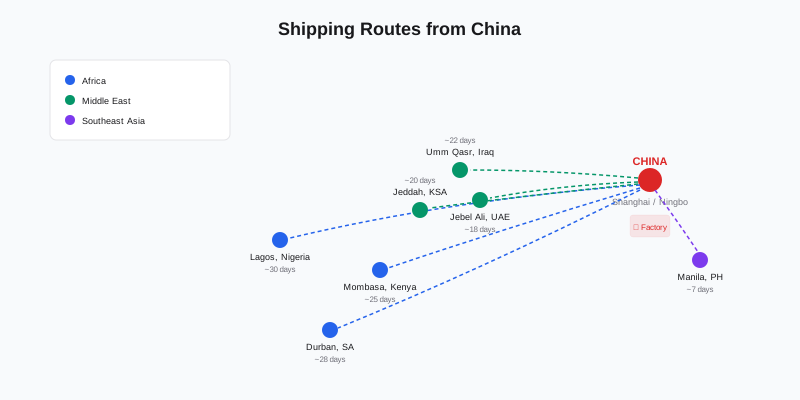
Iraq's primary port access is through Umm Qasr in the far south, near Basra. The shipping route passes through the Strait of Malacca, across the Indian Ocean, and into the Persian Gulf — a longer transit than South or Southeast Asian destinations but well-served by regular vessel services.
Departure Ports
We ship to Iraq from the following Chinese ports:
- Shanghai Port — Primary departure port with the most frequent services through the Persian Gulf.
- Qingdao Port — Alternative with good connections to Middle East routes.
- Ningbo Port — Used when vessel schedules or rates are advantageous.
Arrival Port: Umm Qasr
Umm Qasr Port is Iraq's main deep-water commercial port, located near Basra at the head of the Persian Gulf:
- Umm Qasr North — Handles containerized cargo, primary terminal for cable drum containers.
- Umm Qasr South — Additional capacity, sometimes used for project and break-bulk cargo.
- Khor Al-Zubair — Nearby port facility used for bulk and heavy project cargo.
For Kurdistan Region and northern Iraq, some buyers route cargo through:
- Mersin or Iskenderun (Turkey) — Then overland through the Ibrahim Khalil border crossing into Kurdistan. Adds complexity but may be faster for Erbil/Sulaymaniyah-bound cargo.
- Aqaba (Jordan) — Then overland through western Iraq. Used less frequently for cable.
Transit Time
Ocean transit from China to Umm Qasr:
| Route | Transit Time |
|---|---|
| Shanghai → Umm Qasr | 20–25 days |
| Qingdao → Umm Qasr | 22–27 days |
| Ningbo → Umm Qasr | 20–25 days |
Allow additional time for port clearance at Umm Qasr, which can be unpredictable. We recommend planning 25–30 days for transit and 14–21 days for customs clearance and inland transport, depending on destination governorate.
Container Loading
Standard container configurations for Iraq-bound shipments:
- ACSR/AAC conductors: 18–22 tonnes per 20GP container
- XLPE power cable: 15–20 tonnes per 20GP depending on voltage class
- Armoured cable: 16–20 tonnes per 20GP
- Control/instrumentation cable: Multiple drums per container, weight varies
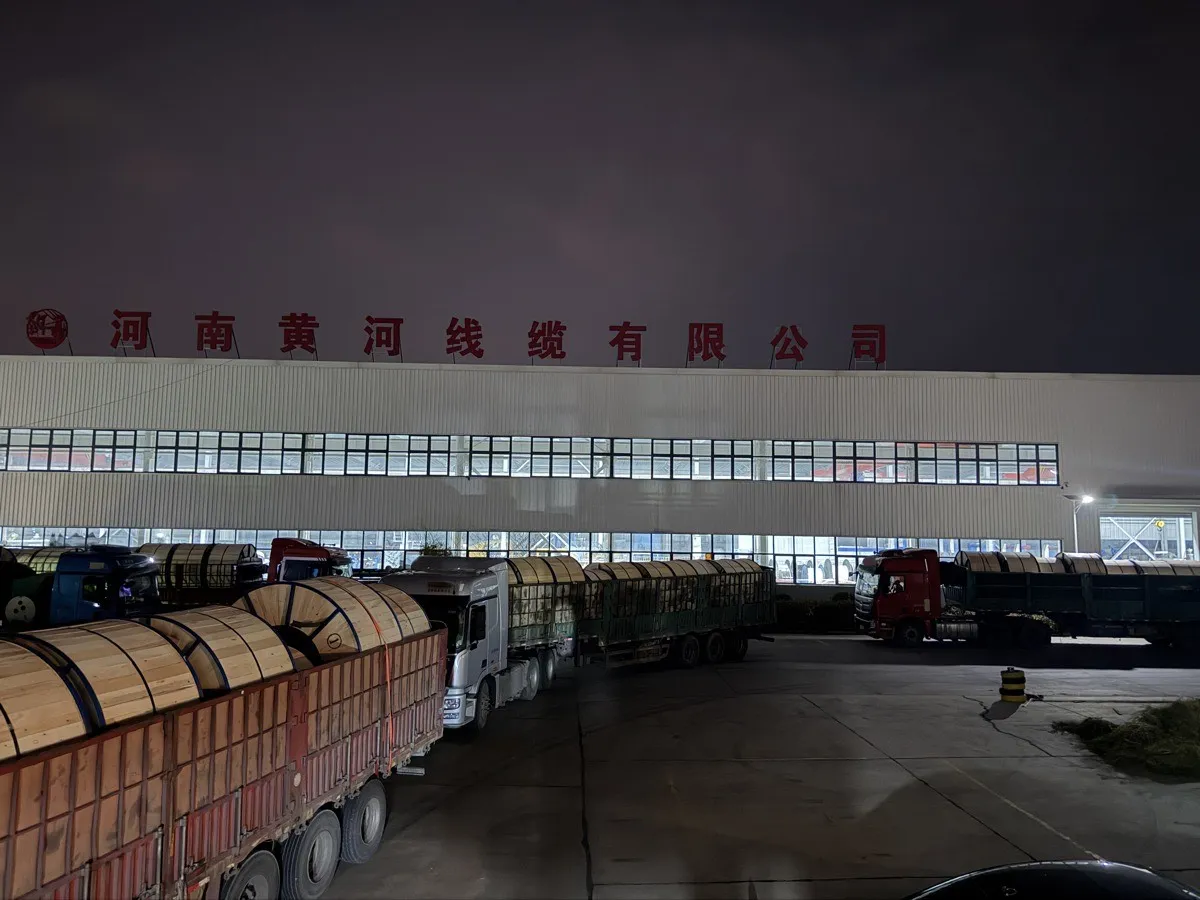 Container ready for shipment to Umm Qasr Port, Iraq
Import Procedures
Iraq's import procedures involve:
- Customs Duty: 5% for most cable products (Iraq maintains relatively low tariff rates)
- Reconstruction Levy: Variable surcharge on certain import categories
- Port handling fees and terminal charges at Umm Qasr
- Certificate of Conformity: Required for regulated products; issued by inspection companies (SGS, Bureau Veritas, Intertek) based on documentation review and/or physical inspection
For Kurdistan Region imports via Turkey:
- KRG customs procedures may differ from federal Iraqi customs
- Transit documentation through Turkey requires coordination
- We can arrange through our Turkish logistics partners
We provide complete commercial documentation (commercial invoice, packing list, certificate of origin, test certificates) formatted for Iraqi customs requirements and LC negotiation.
Most Demanded Cable Products in Iraq
Iraq's demand profile is shaped by two forces: grid reconstruction at all voltage levels, and oil/gas sector infrastructure. The following products represent our highest-volume categories for the Iraqi market:
1. XLPE Medium-Voltage Cable for Grid Reconstruction
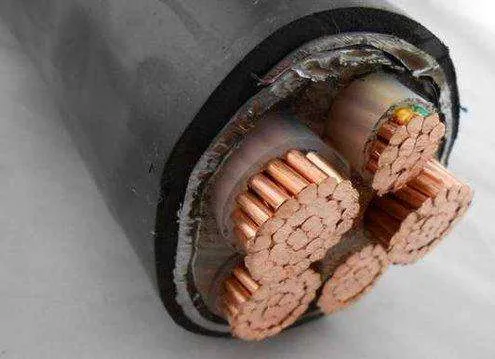
Application: Urban underground distribution (11 kV, 33 kV), substation interconnection, new residential development, industrial zones.
Iraq's distribution companies are rebuilding urban networks that were destroyed or degraded by conflict. New residential developments (government housing programmes in Baghdad, Basra, Najaf) require complete MV infrastructure built from scratch. XLPE cable is the standard choice — its high temperature rating is essential in a country where ground temperatures can exceed 40°C in summer. Key specifications:
- 11 kV single-core 70 mm² to 400 mm² Cu/XLPE/PVC (copper screen)
- 11 kV 3-core 50 mm² to 240 mm² Cu/XLPE/SWA/PVC
- 33 kV single-core 95 mm² to 630 mm² Cu/XLPE/PVC (metallic screened)
- 33 kV single-core 150 mm² to 500 mm² Al/XLPE for longer distribution routes
Temperature considerations: Standard XLPE cable is rated for 90°C continuous conductor temperature with a 30°C ambient assumption. In Iraq, where ambient temperatures routinely reach 50°C and buried cable route temperatures may exceed 40°C, derating must be carefully calculated. We provide full derating tables for Iraqi ground and ambient conditions with every quotation, ensuring cables are sized correctly for actual installed conditions.
All medium-voltage cables are triple-extruded with semiconductive conductor screen and insulation screen applied in a single pass for void-free insulation. Partial discharge tested at 1.5 Uo with acceptance level ≤5 pC.
2. ACSR Conductors for Transmission Rebuild
Application: 400 kV and 132 kV transmission lines, 33 kV overhead distribution feeders, rural overhead network reconstruction.
Iraq's transmission system suffered catastrophic damage from conflict — tower destruction, conductor theft, and years without maintenance. The State Company for Electricity Transmission is rebuilding the 400 kV backbone and 132 kV sub-transmission network simultaneously. This requires ACSR in quantities that strain global supply. Commonly specified sizes:
- ACSR Cardinal (550 mm²) — 400 kV twin-bundle transmission
- ACSR Zebra (400 mm²) — 400 kV and 132 kV transmission
- ACSR Panther (200 mm²) — 132 kV lines
- ACSR Dog (100 mm²) — 33 kV distribution
- ACSR Rabbit (50 mm²) — 11 kV overhead distribution
All manufactured to IEC 61089 with galvanizing to IEC 60888 Class A minimum. For Iraq's arid conditions, Class A galvanizing is typically sufficient (unlike coastal or tropical environments requiring Class B). Complete mechanical testing — rated breaking strength, stress-strain curves, creep data — provided per tender requirements.
3. Armoured Cable for Oil Field Applications
Application: Oil well power supply, oil processing facility distribution, pipeline cathodic protection, field camps, and associated gas infrastructure.
Iraq's oil sector operates in extreme conditions: ambient temperatures above 50°C, sand and dust, direct burial in desert terrain, and proximity to hydrocarbons requiring fire-safety rated cables. Armoured cables for oil field use must be engineered for this environment. Standard specifications:
- 4-core 16 mm² to 300 mm² Cu/XLPE/SWA/PVC (0.6/1 kV) — General oil field distribution
- Single-core 95 mm² to 630 mm² Cu/XLPE/AWA/PVC — High-current feeders (aluminium wire armour for single-core to avoid magnetic heating)
- Fire-resistant cables (IEC 60331 compliant) — For safety-critical circuits in processing facilities
- LSZH (Low Smoke Zero Halogen) sheathed cables — For enclosed spaces and platforms
Heat resistance: For oil field applications where cables may be exposed to direct solar radiation plus high ambient temperature, we specify XLPE insulation (90°C continuous, 250°C short-circuit) and can provide EPR (ethylene propylene rubber) insulation for applications requiring greater flexibility at elevated temperatures.
Mechanical protection via galvanized steel wire armour (SWA) provides crush and impact resistance for direct burial in rocky desert terrain without additional duct or protection.
4. Low-Voltage Distribution Cable
Application: Urban LV networks, housing development distribution, commercial building supply, transformer secondary cables.
Iraq's distribution companies are rebuilding low-voltage networks from transformer secondary to consumer meter. The destruction and subsequent informal reconstruction during years of conflict left many areas with undersized, unsafe, and overloaded LV networks. Formal rehabilitation requires:
- 4-core 35 mm² to 300 mm² Al/XLPE/SWA/PVC — Underground LV feeders (aluminium for cost efficiency)
- 4-core 25 mm² to 185 mm² Cu/XLPE/SWA/PVC — Higher-load commercial areas
- 2-core and 4-core service cables for consumer connections
- Concentric neutral cables for direct-buried residential distribution
XLPE insulation is strongly preferred over PVC for Iraq due to the high ambient temperature — PVC insulation derates significantly above 30°C ambient, while XLPE maintains full rating up to 40°C ambient with proportional derating above that.
5. Overhead ABC Cable
Application: Urban and peri-urban LV distribution, loss reduction, safety improvement in dense residential areas.
In Iraqi cities, densely packed housing with narrow streets makes bare overhead LV conductors both dangerous (electrocution risk from sagging lines) and vulnerable to illegal connections. ABC cable addresses both concerns. Iraqi distribution companies are increasingly specifying ABC for new LV construction and rehabilitation:
- 3×70+54.6 mm² — Main LV feeders
- 3×50+35 mm² — Secondary distribution
- 3×35+25 mm² — Residential branch circuits
The XLPE-insulated phase conductors provide important safety benefits in Iraq's environment where dust storms reduce clearances and accidental contact risk is elevated.
Extreme Heat Considerations for Iraq
Iraq's climate demands specific engineering attention for cable selection and installation. This is not a minor detail — incorrect cable specification for Iraqi conditions can lead to premature failure, reduced capacity, and safety risks.
Ambient Temperature Reality
- Summer peak air temperature: 50–54°C in Basra, Baghdad, and southern governorates
- Ground temperature (1 m depth): 35–42°C in summer depending on soil type and location
- Direct solar radiation: Surface temperatures on exposed cables can exceed 70°C
Impact on Cable Specification
Conductor sizing: Cables must be derated for the actual installed ambient temperature. A cable rated for 400 A at 30°C ambient may only carry 320–340 A at 50°C ambient. We calculate derating per IEC 60287 using Iraq-specific thermal parameters and provide corrected ampacity tables with every quotation.
Insulation selection: XLPE (cross-linked polyethylene) is the only appropriate insulation for medium-voltage applications in Iraq. PVC-insulated MV cable — still occasionally specified by error in some tenders — cannot perform reliably at Iraqi ambient temperatures. XLPE's 90°C continuous rating provides adequate thermal margin even in the harshest summer conditions.
Outer sheath: PVC outer sheath is standard but must be formulated for UV resistance if the cable is exposed to direct sunlight. For direct burial, standard black PVC sheath with carbon black UV stabilization is sufficient.
Armour galvanizing: Iraq's arid climate is actually favorable for steel armour longevity — the low humidity means corrosion rates are minimal compared to tropical or coastal environments. Standard Class A galvanizing per IEC 60888 is sufficient for most Iraqi installations.
Our Approach
We do not simply sell standard-specification cables for installation in Iraq. Our technical team reviews installation conditions with the buyer and provides:
- Derating calculations per IEC 60287 for the specific ambient and ground temperatures at the installation site
- Conductor size recommendations that account for actual Iraqi conditions (not European 30°C assumptions)
- Installation guidelines for cable laying in desert conditions (backfill thermal resistivity, cable spacing)
- Material specifications appropriate for UV exposure, dust, and temperature cycling
Oil and Gas Sector Cable Supply
Iraq's position as one of the world's largest oil producers creates a distinct cable demand category with specialized requirements.
Southern Iraq Oil Fields
The Basra region — home to the supergiant Rumaila, West Qurna, Zubair, and Majnoon fields — drives massive cable demand for:
- Wellhead and artificial lift power supply (typically armoured LV cable, direct buried)
- Central Processing Facility (CPF) internal distribution (MV and LV)
- Produced water handling systems
- Gas gathering and compression facilities
- Field camp and accommodation power supply
Kurdistan Region Oil Sector
The KRG's oil sector, while smaller than southern Iraq, maintains active procurement for:
- Production facility electrical infrastructure
- Export pipeline associated facilities
- Field development projects in Shaikan, Taq Taq, and other producing assets
Cable Requirements for Oil Sector
Beyond standard power cables, oil field applications demand:
- Fire performance: IEC 60332-3 Category A (flame propagation) and IEC 61034 (smoke density) for cables in enclosed or semi-enclosed spaces
- Hazardous area suitability: Cables entering Zone 1 or Zone 2 areas must meet relevant construction requirements
- Mechanical protection: Enhanced armour for areas with vehicle traffic or mechanical equipment
- Chemical resistance: Outer sheath resistant to hydrocarbon splash and oilfield chemicals
We supply complete cable packages for oil field projects, including power distribution cables, control cables, instrumentation cables, and fire-resistant cables — all specified and tested for the demanding conditions of Iraqi oil field operations.
Quality Assurance and Testing
Our quality system is structured to meet the requirements of Iraqi government procurement, international EPC contractors, and oil company vendor qualification:
- ISO 9001:2015 certified quality management system
- IEC CB Scheme certificates for power cable product lines
- CNAS-accredited laboratory testing (ILAC MRA recognized)
- Full routine testing per applicable IEC standard on every production drum
- Type testing current for all voltage classes and product families
Testing for Iraqi Requirements
For Iraqi Ministry of Electricity and oil sector procurement, we provide:
- Complete type test reports per IEC 60502-2 (MV cables) including partial discharge, impulse withstand, and heating cycle tests
- ACSR type test reports per IEC 61089 with full mechanical characterization
- Fire performance test reports per IEC 60332-3 and IEC 61034 for oil field cables
- High-temperature performance data demonstrating cable suitability for 50°C ambient operation
- Accelerated ageing test data demonstrating long-term XLPE stability
Third-Party Inspection
We accommodate pre-shipment inspection by any agency nominated by Iraqi buyers or their EPC contractors:
- SGS (commonly used for Iraqi government procurement)
- Bureau Veritas
- Intertek
- Lloyd's Register (common in oil sector procurement)
- TUV (for European EPC contractor requirements)
Many Iraqi government tenders require pre-shipment inspection at the factory by a nominated inspection agency. We provide dedicated inspection facilities, witness testing scheduling, and full cooperation with inspector requirements.
Kurdistan Region Market
The Kurdistan Region of Iraq (KRI) operates a semi-autonomous electricity system managed by the KRG Ministry of Electricity. The region's relative stability compared to central and southern Iraq has enabled more consistent infrastructure investment.
KRG Grid Development
- Erbil city modernization: Underground cable conversion in commercial districts, new substation construction
- Sulaymaniyah expansion: Distribution network extension to new residential areas
- Duhok infrastructure: Grid connection of new tourism and commercial development
- Inter-city transmission: 132 kV reinforcement between major KRG cities
Procurement in Kurdistan
KRG procurement operates somewhat independently from federal Iraqi procurement. Key differences:
- KRG may accept supplier qualification documentation directly without requiring federal ministry approval
- Import logistics can route through Turkey (Mersin → Ibrahim Khalil border crossing) for faster delivery to Erbil
- Payment terms and LC arrangements may differ from federal procurement
- English and Kurdish/Arabic documentation are both accepted
We serve both federal Iraqi and KRG procurement channels and can adapt our documentation and logistics to either pathway.
Why Choose China Cable Factory for Iraq Projects
Volume capacity for reconstruction scale: Iraq's grid rebuild requires cable volumes that strain many suppliers. Our factory's production capacity can sustain the continuous, large-volume shipments that Iraqi reconstruction projects demand.
High-temperature engineering: We don't sell standard cables into Iraq and leave derating as the installer's problem. Our technical team specifies for actual Iraqi conditions — providing correctly sized cables that perform reliably at 50°C ambient without premature degradation.
IEC compliance without adaptation: Iraq specifies IEC standards directly. Our products are manufactured and tested to IEC from the outset, with type test reports from ILAC-accredited laboratories that meet Iraqi tender documentation requirements.
Oil field cable expertise: Armoured, fire-resistant, and LSZH cables for hazardous environments are standard production items. We understand the additional testing and certification requirements for oil and gas installations.
Flexible logistics: Whether shipping through Umm Qasr for southern/central Iraq or routing through Turkey for Kurdistan, we manage the logistics chain appropriate to your destination.
EPC contractor experience: Major international EPC contractors operating in Iraq (for both power and oil sectors) work with our factory. We understand their procurement systems, vendor qualification requirements, and documentation standards.
Get a Quote for Your Iraq Project
Whether you are an EPC contractor executing grid reconstruction, an oil company developing field infrastructure, a distribution company rehabilitating urban networks, or a supplier supporting Iraq's reconstruction programme — we are ready to support your requirements.
Request a quote today:
- WhatsApp: +86-134-6102-4180 — Fast response, send your specifications directly
- Email: sales@chinacablefactory.com — For formal RFQ documents and tender support
- Contact Form: Submit your requirements — We reply within 24 hours
What to include in your inquiry:
- Cable type and specification (standard, voltage rating, conductor size, construction)
- Installation conditions (ambient temperature, direct burial depth, soil type if known)
- Quantity required (metres or tonnes)
- Delivery terms (FOB Shanghai, CIF Umm Qasr, or DAP to specific location)
- Project timeline and required delivery date
- Any specific testing, inspection, or fire rating requirements
- Whether shipment is for Kurdistan (routing through Turkey may be preferred)
We provide detailed quotations including technical compliance statements, derating calculations for Iraqi conditions, production schedules, and shipping plans. Our team supports both English and Arabic documentation requirements.
Interested in this product?
Request a Free Quote for Iraq