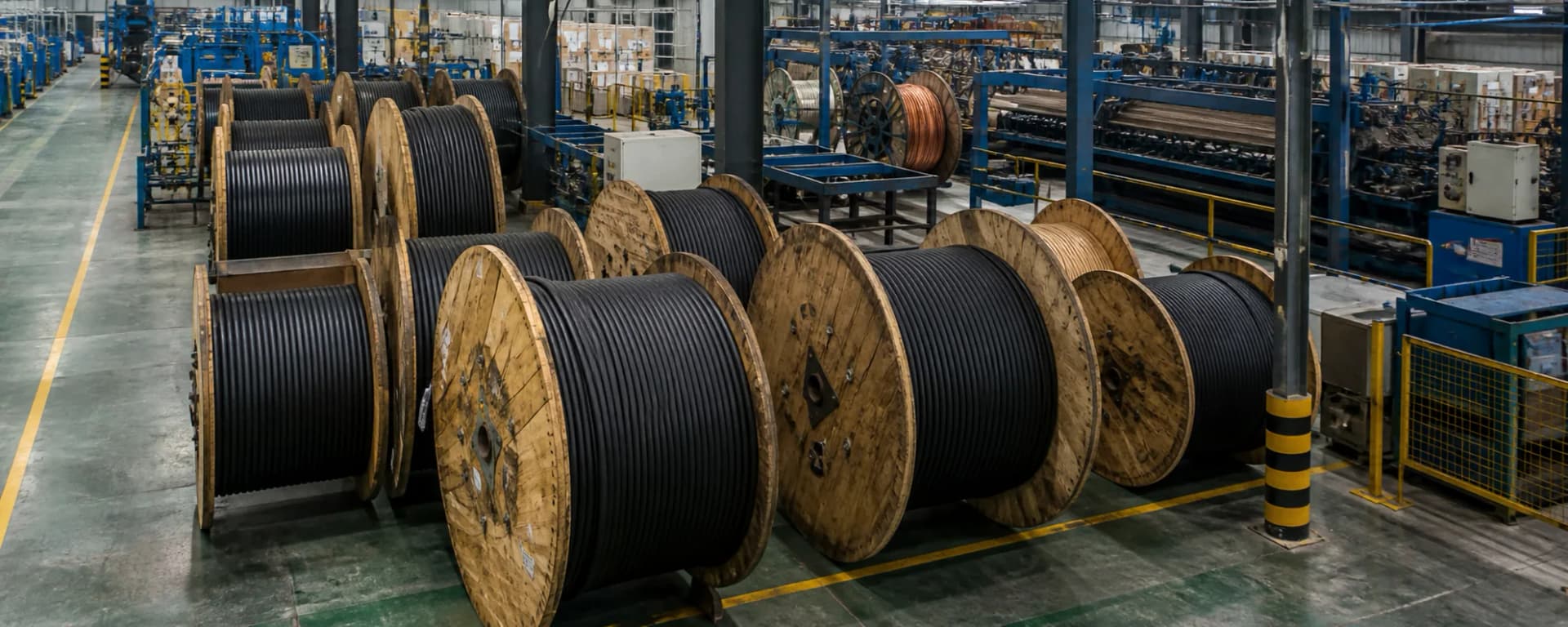
Philippines Electricity Market Overview
The Philippines is one of Southeast Asia's fastest-growing economies, with a population of 115 million (World Bank, 2023) spread across more than 7,000 islands. This unique archipelago geography creates extraordinary challenges for electricity distribution — and extraordinary demand for reliable cable products.
The Philippine power sector serves approximately 27 million customer connections through a liberalized market structure governed by the Electric Power Industry Reform Act (EPIRA). Total installed generation capacity reached 26.3 GW in 2023 (DOE Philippines), with significant expansion planned under the Philippine Energy Plan 2020-2040. Peak demand regularly approaches system limits, particularly during the hot dry season (March–May). Electricity access stood at 94.8% of the population as of 2022 (World Bank). The Department of Energy projects that the country will need to add 40,000+ MW of new capacity by 2040 to sustain economic growth.
The Electrification Challenge
Despite significant progress, the Philippines has not yet achieved 100% household electrification. The National Electrification Administration (NEA) oversees 121 Electric Cooperatives (ECs) that serve rural areas across the archipelago. As of recent data, sitio-level (sub-village) electrification still lags in remote island communities. The government's total electrification programme continues to drive demand for overhead conductors, ABC cables, and distribution transformers.
Key factors driving cable demand in the Philippines:
Typhoon Damage and Network Reconstruction: The Philippines experiences an average of 20 typhoons per year, with 5–8 making landfall as destructive storms. Super Typhoon Yolanda (Hainan, 2013), Typhoon Rolly (2020), and Super Typhoon Odette (Rai, 2021) each destroyed thousands of kilometres of distribution lines. Post-typhoon reconstruction requires massive volumes of conductors and cables, often on compressed timelines.
Electric Cooperative Network Expansion: The 121 ECs continuously expand their service areas to connect unelectrified barangays (villages). These expansion projects require overhead conductors (ACSR, AAC) for medium-voltage feeders and ABC cable for low-voltage distribution, particularly in typhoon-exposed areas.
Industrial Zone Development: The Philippine Economic Zone Authority (PEZA) manages over 400 special economic zones requiring underground power distribution infrastructure. Major industrial estates in Cavite, Laguna, Batangas, Cebu, and Clark require XLPE power cables for reliable industrial power supply.
Renewable Energy Buildout: The Renewable Energy Act mandates aggressive RE targets. Solar farm construction, wind farm interconnection, and mini-hydro projects across the islands drive demand for specialized cables including solar PV cable, submarine cable for inter-island connections, and MV collector cables.
Import Dependency
The Philippines is a major cable import market. The Philippines imported US$1.33 billion in electrical cable and wire in 2023 (UN Comtrade, HS 8544), with China accounting for approximately 40% of supply. This makes it one of the largest cable import markets in Southeast Asia. The Bureau of Philippine Standards (BPS) and Philippine National Standards (PNS) framework governs the quality requirements for imported electrical cables. Cable imports enter primarily through Manila ports but also through Cebu and other regional ports for Visayas and Mindanao projects.
Philippine Standards and Certification Requirements
The regulatory framework for electrical cables in the Philippines is administered by the Bureau of Philippine Standards (BPS) under the Department of Trade and Industry (DTI). Compliance is mandatory for all cables sold or installed in the country.
PNS / IEC Standards
Philippine National Standards (PNS) for electrical cables are largely adopted from IEC standards:
- PNS IEC 60502-1 — Power cables with extruded insulation, rated voltages 1 kV to 3 kV
- PNS IEC 60502-2 — Power cables rated 6 kV to 30 kV
- PNS IEC 61089 — Round wire concentric lay overhead electrical stranded conductors
- PNS 35 — Wires and cables (general requirements, PVC insulated)
- PNS IEC 60228 — Conductors of insulated cables
- PNS 497 — Low-voltage aerial bundled cables (ABC)
- Philippine Electrical Code (PEC) — Installation requirements, references NEC/IEC
Our factory maintains full IEC certification through the CB Scheme, which provides direct alignment with PNS adopted standards. Test reports from our CNAS-accredited laboratory are accepted by BPS for import clearance.
BPS Product Certification (PS Mark)
The Bureau of Philippine Standards operates the Philippine Standard (PS) Mark certification scheme:
-
Product Testing: Cables must be tested by a BPS-recognized laboratory against the applicable PNS standard. Our IEC CB test reports serve as the foundation for this evaluation.
-
Factory Inspection: BPS or its designated body may conduct factory audits to verify quality management systems and production processes. Our ISO 9001:2015 certification and established QMS satisfy these requirements.
-
Import Commodity Clearance (ICC): For regulated products, importers must obtain an ICC from BPS before bringing cables into the country. The ICC certifies that the products meet applicable PNS standards.
-
PS License: For ongoing supply relationships, manufacturers can apply for a PS License that covers multiple shipments of the same product line.
We support our Philippine distributors and importers through the entire certification process, providing:
- Complete IEC CB test reports
- Factory audit documentation
- ISO 9001:2015 certificates
- Product specifications aligned to PNS requirements
- Sample cables for verification testing if required
Energy Regulatory Commission (ERC) Requirements
For cables supplied to Electric Cooperatives and distribution utilities, the Energy Regulatory Commission may have additional procurement requirements, including competitive bidding processes and pre-qualification of suppliers. We maintain documentation packages tailored for EC procurement requirements and can provide references from successful Philippine projects.
Shipping Logistics: China to Philippines
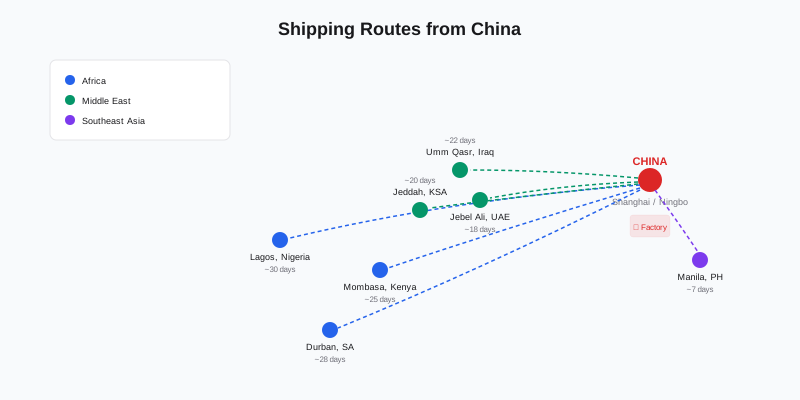
The Philippines' proximity to China provides a significant logistics advantage compared to African or South American markets. Shorter transit times mean faster project delivery and lower inventory carrying costs.
Departure Ports
We ship to the Philippines from the following Chinese ports:
- Shanghai Port — Largest port with highest vessel frequency to Manila
- Ningbo-Zhoushan Port — Excellent for southeastern China production, competitive rates
- Xiamen Port — Close proximity, frequent sailings to Manila and Cebu
- Qingdao Port — For combined shipments from northern production facilities
Arrival Ports
- Manila International Container Terminal (MICT) — Primary port for Luzon-destined cargo
- Manila North Harbor — Domestic and regional distribution
- Cebu International Port — For Visayas projects
- Subic Bay Freeport — For Clark/Subic economic zone projects
- Davao Port — For Mindanao deliveries
Transit Time
Ocean transit from China to Philippines is among the shortest for our export markets:
| Route | Transit Time |
|---|---|
| Shanghai → Manila | 5–8 days |
| Xiamen → Manila | 3–5 days |
| Ningbo → Manila | 5–7 days |
| Shanghai → Cebu | 7–10 days |
| Qingdao → Manila | 7–10 days |
The short transit time allows for rapid replenishment and reduces the need for large buffer stocks in Philippine warehouses.
Container Loading and Packaging
Cable drums are loaded into 20GP or 40GP containers with proper bracing and dunnage for sea transport:
- ACSR/AAC conductors: 18–22 tonnes per 20GP on wooden or steel cable drums
- ABC cable: 16–20 tonnes per 20GP
- XLPE power cable: 15–20 tonnes per 20GP depending on voltage class and cross-section
- Building wire (THHN/TW): Packed in cartons on pallets, maximizing container volume
All cable drums are wrapped in waterproof material for moisture protection during ocean transit, particularly important given the Philippines' humid climate.
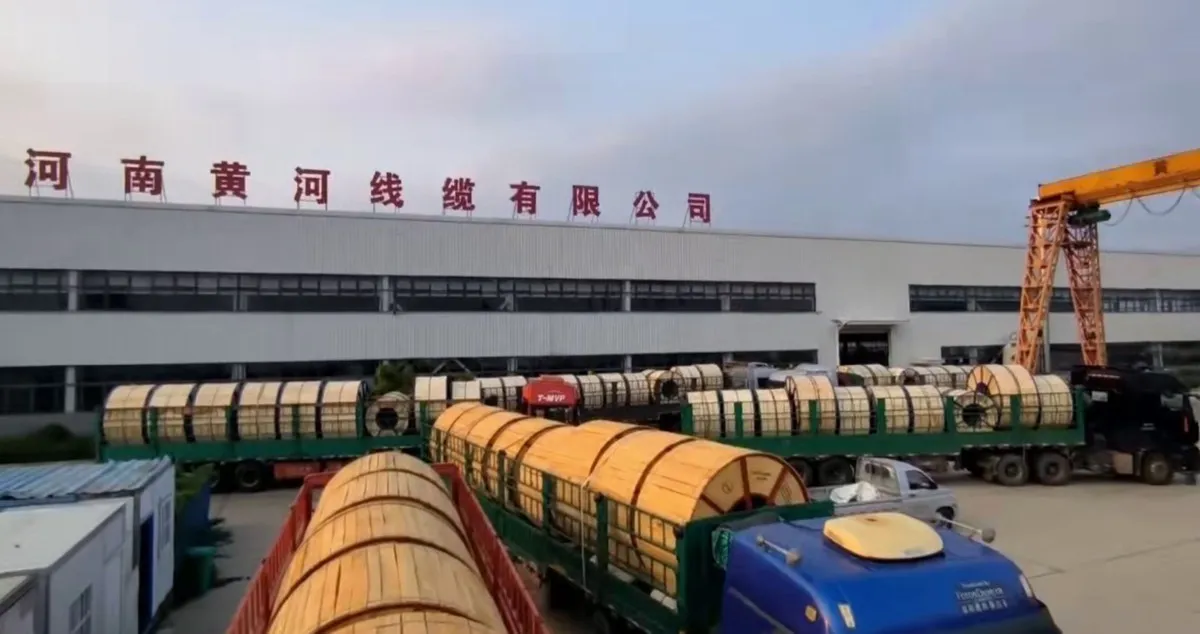 Waterproof-wrapped cable drums ready for shipping to Manila, Philippines
Import Duty and Taxes
Cable imports into the Philippines are subject to the following charges:
- HS 7614 (Aluminium conductors, bare): 3% MFN on HS 8544
- HS 8544.49 (Insulated cables ≤1000V): 5% import duty
- HS 8544.60 (Cables >1000V): 3% import duty
- Value Added Tax (VAT): 12% on dutiable value + duty
- Import Processing Fee: Various minor charges
The Philippines maintains relatively moderate import duties on electrical cables, reflecting the country's infrastructure development priorities and import dependency. We provide detailed landed cost calculations with every quotation.
Most Demanded Cable Products in Philippines
The Philippine market has distinct product requirements shaped by its tropical climate, typhoon exposure, archipelago geography, and rapid industrialization.
1. ABC Cable (Aerial Bundled Cable) for Typhoon-Prone Areas
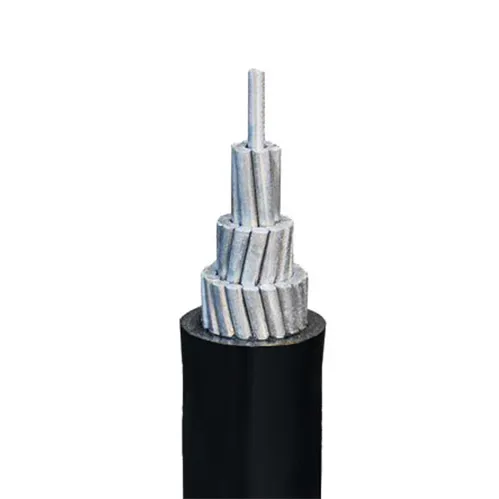
Application: LV distribution in typhoon corridors, coastal communities, Electric Cooperative service areas.
ABC cable is the single most important cable product for the Philippine market. After every major typhoon, Electric Cooperatives and utilities must reconstruct thousands of kilometres of distribution lines. ABC cable offers critical advantages over bare conductor in typhoon conditions:
- Wind resistance: Bundled configuration reduces wind loading and galloping compared to spaced bare conductors
- Reduced tree-contact faults: Insulated conductors prevent short circuits from falling branches and vegetation contact
- Faster restoration: Simpler installation on remaining poles, fewer cross-arms needed
- Lower maintenance: Reduced exposure-related degradation in salt-spray coastal environments
Most commonly specified ABC configurations for Philippine ECs:
- 3×35+50 mm² (3-phase + neutral messenger) — Standard residential feeder
- 3×70+50 mm² — Higher-capacity trunk feeders
- 3×95+70 mm² — Main distribution backbone
- 2×6 mm² to 2×16 mm² — Service drop cables
- Duplex/Triplex/Quadruplex service drops per NEC/PEC requirements
We manufacture ABC cable to PNS 497 / IEC 60502-1 / NFC 33-209 standards with XLPE insulation on phase conductors and a bare AAAC neutral messenger designed for the mechanical loading conditions common in Philippine typhoon zones.
Typhoon-rated design: Our ABC cable designs account for the wind speed parameters specified by Philippine utilities (typically up to 250 km/h for critical areas), with appropriate sag-tension calculations provided with every order.
2. XLPE Power Cable for Industrial Zones and Distribution
Application: PEZA economic zones, industrial estates, utility underground distribution, commercial buildings.
The Philippines' rapid industrial growth creates sustained demand for medium-voltage and low-voltage XLPE power cables:
Medium-voltage (6.6 kV to 35 kV):
- Single-core 35 mm² to 630 mm² Cu/XLPE/PVC — Substation feeders
- 3-core 50 mm² to 300 mm² Cu/XLPE/SWA/PVC — Underground distribution in economic zones
- 13.8 kV cables for industrial power distribution (common Philippine utility voltage)
Low-voltage (0.6/1 kV):
- 4-core 16 mm² to 300 mm² Cu/XLPE/PVC — Building risers and feeders
- 4-core armoured (Cu/XLPE/SWA/PVC) — Direct burial and outdoor applications
- Single-core 50 mm² to 500 mm² — Panel board feeders and bus duct alternatives
All manufactured to PNS IEC 60502-1/2 with XLPE insulation rated for 90°C continuous operation. Our XLPE cables use triple extrusion (conductor screen, insulation, insulation screen) for MV grades, ensuring consistent partial discharge performance.
3. ACSR / AAC / AAAC Overhead Conductors
Application: 69 kV and 138 kV transmission lines, 13.8 kV and 34.5 kV distribution feeders, EC line extensions.
Overhead bare conductors remain essential for the Philippines' extensive aerial distribution and sub-transmission network. The most demanded specifications:
- ACSR Penguin (125 mm²) — Standard 69 kV transmission
- ACSR Partridge (135 mm²) — 69 kV and 138 kV lines
- ACSR Drake (403 mm²) — High-capacity transmission
- AAC 50–200 mm² — Distribution feeders in non-coastal areas
- AAAC 50–300 mm² — Preferred in coastal/salt-spray environments due to superior corrosion resistance
All manufactured to PNS IEC 61089 with stranding, dimensional, tensile strength, and DC resistance testing per standard requirements. We can supply to ASTM B-232 (ACSR) specifications when required by older Philippine utility standards.
4. THHN / TW Building Wire
Application: Residential and commercial building wiring, contractor wholesale supply.
The Philippine construction boom drives consistent demand for building wire conforming to PEC/NEC designations:
- THHN (Thermoplastic High Heat-resistant Nylon-coated): 2.0 mm² to 250 mm², copper conductor, most popular building wire type in the Philippines
- TW (Thermoplastic Wet-rated): For wet locations and conduit installations
- THWN-2: Dual-rated for dry and wet locations
While building wire is a lower-value product, it represents steady container-volume demand from Philippine electrical distributors and hardware chains.
5. Solar PV Cable
Application: Utility-scale solar farms, commercial rooftop installations, residential solar.
The Philippines' aggressive renewable energy programme has created a fast-growing market for solar PV cable:
- Single-core 4 mm² and 6 mm² DC solar cable (TUV certified, IEC 62930)
- UV-resistant, double-insulated construction for tropical sun exposure
- Rated for 1500V DC systems (utility-scale standard)
Typhoon Resilience: Engineering for Philippine Conditions
The Philippines' typhoon exposure places unique demands on cable products. Our engineering team works with Philippine clients to specify products appropriate for local wind loading, salt-spray corrosion, flooding, and high humidity conditions.
Design Considerations
ABC cable wind loading: We provide sag-tension calculations based on PAGASA (Philippine weather bureau) wind zone maps, ensuring ABC messenger conductors are sized for the specified design wind speed.
Corrosion resistance: For coastal installations (much of the Philippines), we recommend AAAC messengers over AAC for superior salt-spray corrosion resistance. Armoured cables use galvanized steel wire with appropriate zinc coating weight per PNS/IEC requirements.
UV resistance: All outer sheaths use carbon-black loaded PE or UV-stabilized PVC suitable for continuous tropical sun exposure.
Flood resistance: Underground cables for flood-prone areas are specified with appropriate water-blocking features and longitudinal water seal designs.
Project Experience in Southeast Asia
We have extensive experience supplying cable products across Southeast Asia, with particular depth in the Philippines market:
Electric Cooperative Line Extension Projects: Multiple supply contracts for ACSR conductors and ABC cable supporting NEA-funded electrification projects in Visayas and Mindanao regions.
Post-Typhoon Emergency Reconstruction: Rapid-response supply of ABC cable and overhead conductors for distribution network reconstruction following major typhoon events. Our short production lead time (15–20 days) combined with 5–8 day transit to Manila enables fast delivery for emergency programmes.
PEZA Economic Zone Power Infrastructure: XLPE medium-voltage cable supply for new industrial zone power distribution systems, including 13.8 kV feeder cables and LV distribution cables.
Renewable Energy Projects: Solar PV cable supply for utility-scale solar farms in central and southern Luzon, including DC string cables and AC collector cables.
Commercial and Residential Development: Building wire and LV power cable supply to Philippine electrical distributors and contractors for the country's active construction sector.
We can provide references and connect serious buyers with our existing Philippine partners for verification.
Quality Assurance for Philippine Market
Our quality assurance programme is designed to meet the stringent requirements of Philippine regulatory bodies and utility procurement standards:
- ISO 9001:2015 certified quality management system
- IEC CB Scheme certificates aligned with PNS-adopted standards
- CNAS-accredited laboratory testing (ILAC MRA recognized)
- Full routine testing on every production reel per applicable PNS/IEC standard
- Type test reports maintained for all major product lines
- Factory acceptance testing (FAT) available for large orders
Testing Specific to Philippine Requirements
- Conductor DC resistance at 20°C (per PNS IEC 60228)
- Insulation resistance (per PNS IEC 60502)
- High-voltage withstand test (AC and impulse for MV cables)
- Hot set test for XLPE insulation
- Partial discharge test for MV cables (≤5 pC at 1.5 Uo)
- Tensile strength and elongation for conductors (per PNS IEC 61089)
- Salt fog corrosion test for coastal-rated products
Inspection and Verification
We welcome third-party inspection by:
- SGS Philippines
- Bureau Veritas
- Intertek
- TUV Rheinland
Philippine Electric Cooperatives often require pre-shipment inspection as part of their procurement process. We accommodate all inspection requirements and provide full factory access to authorized inspectors.
Why Choose China Cable Factory for Philippines Projects
Geographic advantage: China-to-Philippines shipping takes only 5–8 days — faster than any other major cable-producing country. This means shorter project timelines and the ability to respond quickly to typhoon reconstruction demands.
PNS/IEC alignment: Our products are manufactured to IEC standards that directly align with Philippine National Standards. No design modifications required — our standard production meets PNS requirements.
Typhoon experience: We understand the unique requirements of typhoon-prone distribution networks. Our ABC cable and conductor designs account for Philippine wind loading and environmental conditions.
Electric Cooperative support: We have experience with EC procurement processes, bidding requirements, and documentation standards. Our commercial team can prepare bid-ready quotation packages.
Factory-direct pricing: No trading company markup. Direct dealing with our production facility provides competitive pricing essential for EC and utility procurement where cost efficiency is paramount.
Flexible order quantities: From single-container orders for small ECs to multi-hundred-tonne contracts for utility reconstruction programmes — we accommodate projects of all sizes.
Complete documentation: Full test reports, certificates of compliance, material certificates, and commercial documentation prepared to Philippine import requirements.
Get a Quote for Your Philippines Project
Whether you are an Electric Cooperative expanding your network, a contractor bidding on a PEZA project, an importer supplying Philippine distributors, or a developer building renewable energy infrastructure — we are ready to support your cable requirements.
Request a quote today:
- WhatsApp: +86-134-6102-4180 — Fast response, share your specifications directly
- Email: sales@chinacablefactory.com — For formal RFQ and bid documentation
- Contact Form: Submit your requirements — We reply within 24 hours
What to include in your inquiry:
- Cable type and specification (PNS/IEC standard, voltage rating, conductor size)
- Quantity required (metres or tonnes)
- Delivery port (Manila, Cebu, Davao, Subic)
- Project timeline and delivery schedule
- Any specific testing, inspection, or certification requirements
- Whether ICC or BPS documentation support is needed
We provide detailed quotations including FOB and CIF pricing, production schedule, and shipping plan. Our commercial team is experienced with Philippine procurement documentation and can prepare bid-ready packages for EC and utility tenders.
Interested in this product?
Request a Free Quote for Philippines