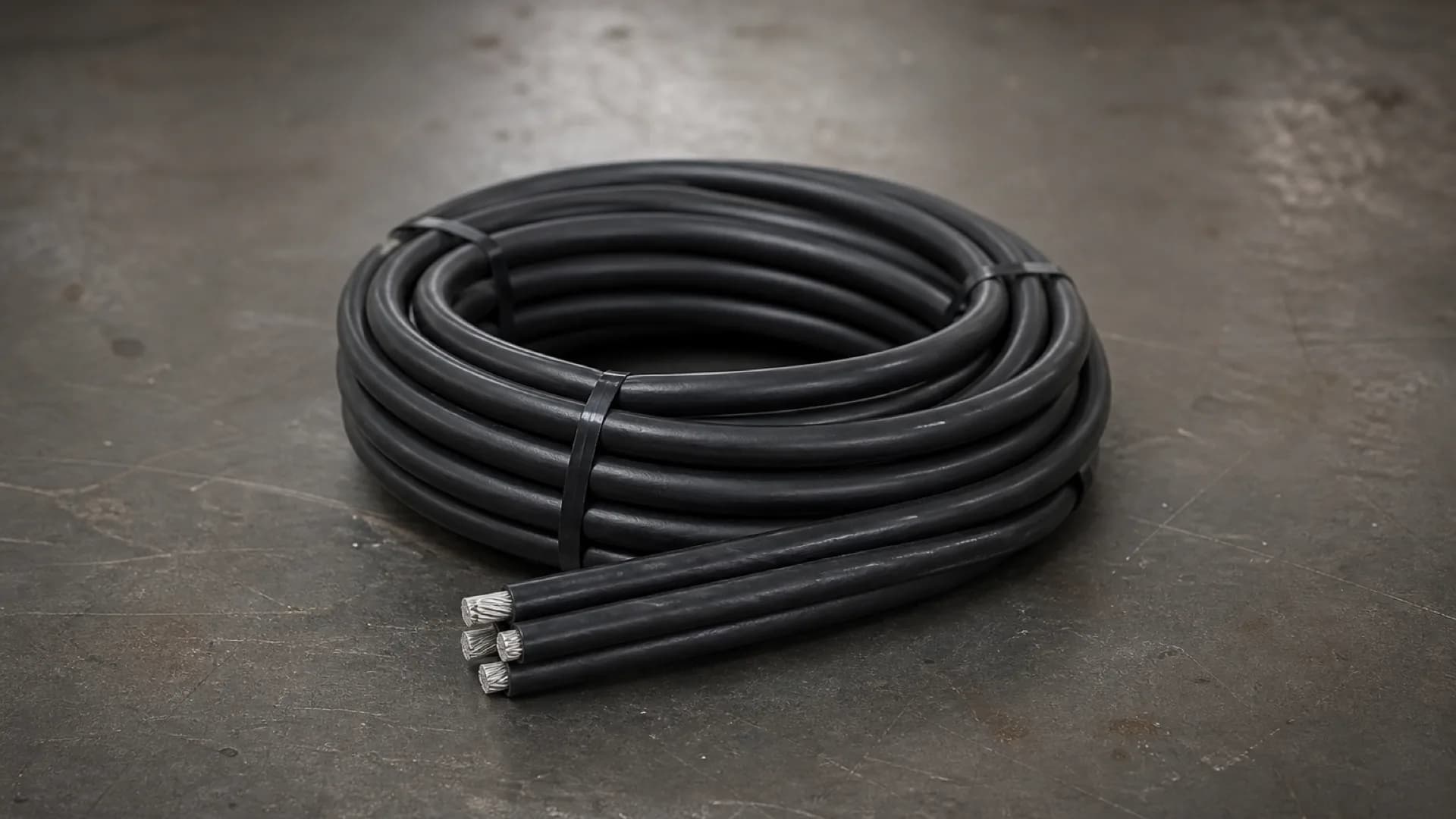
Specialty Product Line
Aerial Cable & Overhead Conductor Manufacturer
Four flagship aerial product families, all manufactured in-house at our factory in Henan, China. Compliant with IEC, ASTM, BS, CB etc.
Overhead conductor manufacturer — how the four families differ
Overhead lines are still the cheapest way to move bulk power, and the conductor is the part of the line that decides span length, sag, loss and how often crews go out to fix faults. Getting the family right matters more than shaving a few percent off the per-km price: a bare conductor chosen for its low cost will cost far more over twenty years if it forces shorter spans, more poles, or repeated tree-contact outages.
We manufacture four aerial families in-house: ACSR and AAC and AAAC as bare stranded conductors, and ABC as insulated bundled cable for distribution. The split is mostly mechanical. Steel-cored ACSR takes the long river and valley crossings, all-aluminium AAC suits short urban spans and coastal air, alloy AAAC sits between the two and avoids the steel core entirely, and ABC trades a little conductivity for insulation that stops phase-to-phase faults and illegal tapping.
Buyers reaching this page are usually comparing against an EPC specification or a tender bill of quantities. The ACSR page carries our full factory catalogue table — 51 metric AL/ST sizes with stranding, DC resistance at 20°C, breaking load, weight and continuous ampacity — and the AAC page carries two tables taken from our published factory product data, each with its source printed under it. The AAAC and ABC pages list indicative sizing for orientation; ask us for the stamped data sheet on those. Where a source figure is internally inconsistent we say so on the page instead of silently correcting it. Send us the standard your project cites and we will return a stamped data sheet against it.
Aerial Cable Products — Choose Your Type
From bare conductors for long-span HV transmission to bundled cables for urban distribution. Compliant with IEC, ASTM, BS, CB etc.
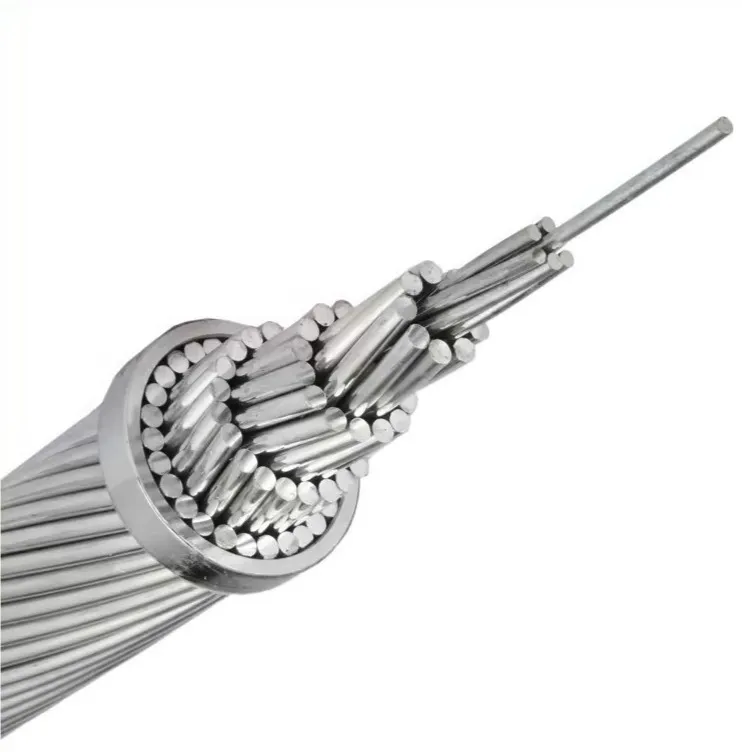
ACSR
Aluminum Conductor Steel ReinforcedHigh tensile strength overhead conductor for long-span transmission
AAC
All Aluminum ConductorLightweight bare conductor for urban distribution networks
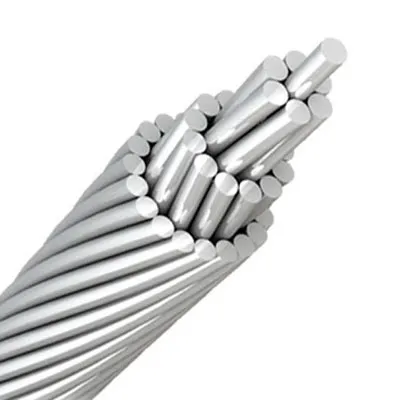
AAAC
All Aluminum Alloy ConductorHigh strength alloy conductor combining AAC's conductivity with ACSR's strength
ABC
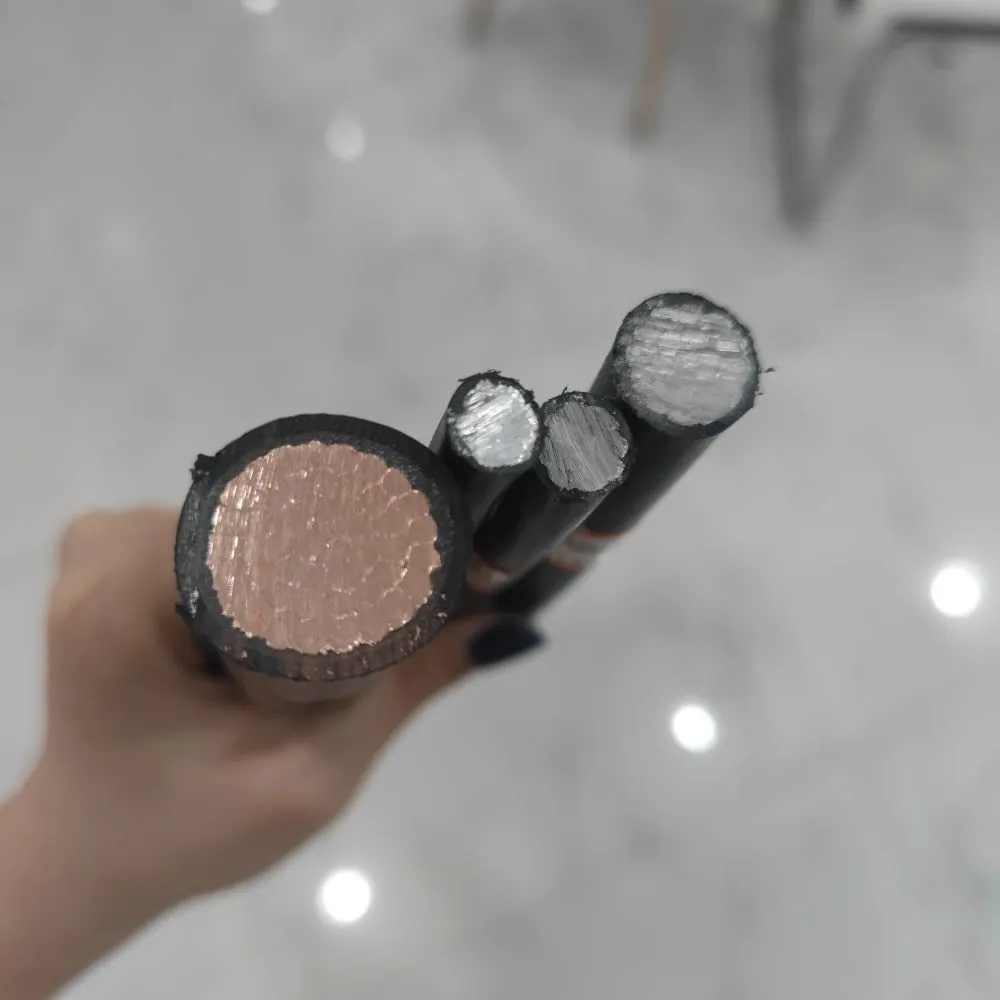
Aerial Bundled CableInsulated overhead cable — safer, lower line losses, EPC standard for urban distribution
Which aerial family fits your line
| Family | Construction | Insulated | Typical use | Published range on site | Standards |
|---|---|---|---|---|---|
| ACSR | Hard-drawn aluminium over galvanized steel core | No — bare | Long-span HV transmission, river and valley crossings | 51 metric AL/ST sizes, 10/2 to 800/100 mm² | IEC 61089, ASTM B232, BS 215 Part 2 |
| AAC | All hard-drawn aluminium strands | No — bare | Short urban distribution spans, coastal and corrosive air | Metric sizes plus ASTM codeword range | IEC 61089, ASTM B231, BS 215 Part 1 |
| AAAC | 6201 aluminium-magnesium-silicon alloy strands | No — bare | Distribution and transmission where the steel core is unwanted | On request | IEC 61089, ASTM B399, BS 3242 |
| ABC | XLPE-insulated cores bundled on a messenger | Yes | Urban and rural LV distribution, house connections | On request | IEC 60502-1, NF C 33-209, BS 7870-5 |
Range and construction columns follow each product page's tables; the ACSR range (10/2 to 800/100 mm² AL/ST) is from our factory catalogue and the AAC range from our published factory product data. AAAC and ABC are listed by construction and standard only — ask us for the stamped data sheet with figures for those two rather than sizing from this table.
Why source aerial cable from us
Real factory, not a trader
Backed by a 45-year-old cable factory in Henan with 60 production lines. Factory inspections, video walkthroughs, and on-site visits welcome.
EPC-ready compliance
IEC, ASTM, BS, DIN, GB standards under one roof. Full type test reports, mill test certificates, CB Scheme test data on request.
Belt-and-Road experience
Active projects in the Philippines, Mongolia, Kazakhstan, Oman, South Africa etc.
Frequently asked questions about aerial cable
- What is the difference between ACSR, AAC, and ABC cable?
- ACSR (Aluminum Conductor Steel Reinforced) uses a galvanized steel core for high tensile strength in long-span transmission. AAC (All Aluminum Conductor) is pure aluminium for shorter spans and coastal environments. ABC (Aerial Bundled Cable) is insulated and bundled on a messenger for urban distribution, reducing phase-to-phase faults and illegal tapping.
- Which family should I specify for a long river crossing?
- ACSR. The steel core carries the mechanical tension, so it sags less than an all-aluminium conductor of the same cross-section and holds longer spans. AAAC is the alternative when the span is long but a steel core is unwanted for corrosion reasons.
- What standards do your aerial cables comply with?
- Bare conductors are built to IEC 61089 and GB/T 1179, with ASTM B232 (ACSR), ASTM B231 (AAC) and ASTM B399 (AAAC) plus the matching BS 215 parts available on request. ABC follows IEC 60502-1 and NF C 33-209. Specify the standard your tender cites and we produce and certify against it.
- Are the specification tables on your product pages your own factory data?
- Where a table carries a source line, yes. The ACSR table is the 51-size metric AL/ST range from our factory ACSR catalogue, and two of the three AAC tables are reproduced from our published factory product data — each of those prints its source directly under the table. The remaining summary tables on the AAC, AAAC and ABC pages are indicative sizing for orientation, not certified factory figures, so ask us for the stamped data sheet before you quote. Where a source figure is internally inconsistent we leave it as printed and flag it on the page instead of quietly correcting it, so what you see matches what our mill certificate will say.
- Can you quote against ASTM codewords instead of metric sizes?
- Yes. ASTM B232 uses bird names (Drake, Linnet, Partridge, Grosbeak) and the IS 398 / BS series uses animal names (Weasel, Dog, Wolf, Panther, Zebra, Moose) widely cited in India, Africa and the Middle East. Send either the codeword or the cross-section and we will confirm the equivalent before quoting.
- What is the minimum order quantity for aerial cable?
- MOQ depends on the family and size, because setup time on the stranding line drives the floor rather than the tonnage. Send the size, drum length and destination port and we will confirm MOQ and lead time with the quote.
- Can you supply aerial cable for projects in Africa and the Middle East?
- Yes. We have active export projects across 60+ countries including Nigeria, South Africa, Saudi Arabia, UAE, Oman, the Philippines and Kazakhstan, and we provide the type test reports, mill test certificates and customs documentation those projects require.
Related Cable Guides
- ABC Cable Price Per Meter 2026 | Cost Breakdown & Factory QuoteABC cable price per meter by size and configuration (2×16 to 3×150+1×95). Full cost breakdown, pricing factors explained. Get factory-direct quote within 24h.
- XLPE Insulated Overhead Cable | Covered Conductor Specifications & PriceXLPE insulated overhead cable (covered conductor): reduces outages by 60–80%, prevents tree contact faults. 35–400mm², IEC 60502 rated. China factory price and sourcing guide.
- Medium Voltage ABC Cable: 11kV & 33kV Specs & SelectionMedium voltage ABC cable guide: 11kV and 33kV aerial bundled cable specs, insulation, messenger selection and standards for MV distribution.
- ACSR Conductor: Complete Specifications, Size Chart & Factory Price [2026]ACSR conductor specifications: full size chart (Rabbit to Moose), weight table, breaking strength, current capacity. 60-line China factory with IEC 61089 certification. Competitive bulk pricing — request FOB quote.