Key Takeaway
XLPE insulated overhead cable (covered conductor): reduces outages by 60–80%, prevents tree contact faults. 35–400mm², IEC 60502 rated. China factory price and sourcing guide.
XLPE Insulated Overhead Cable Guide: Covered Conductors for Aerial Power Lines
The shift from bare conductors to XLPE insulated overhead cables is one of the most significant trends in power distribution infrastructure. Driven by safety requirements, reduced right-of-way needs, and lower maintenance costs, utilities worldwide are specifying covered conductors for new installations and replacing aging bare wire systems with XLPE aerial cable.
This guide covers everything you need to know about XLPE overhead cable — from material science and construction to specification, installation, and comparative economics. Whether you are a utility engineer writing specifications, a contractor pricing a job, or a project developer evaluating options, this resource will help you make informed decisions about XLPE insulated conductors.
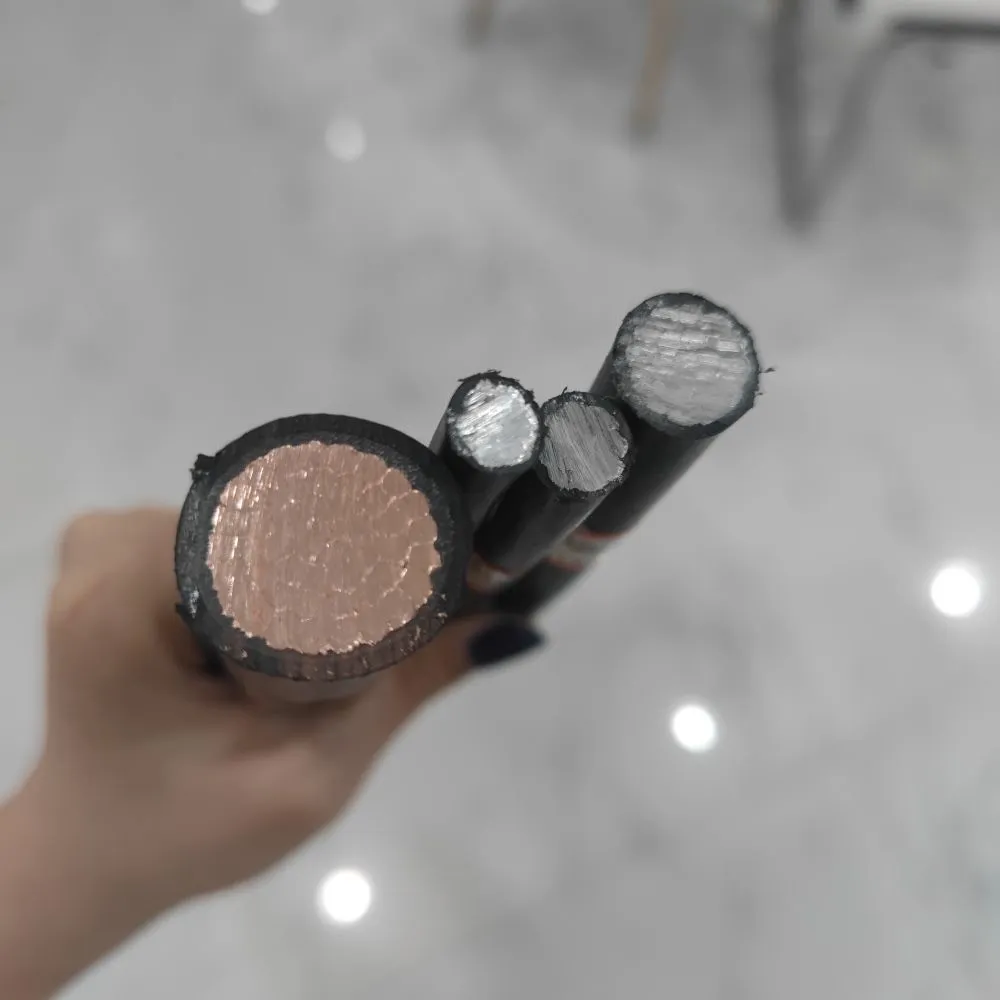
What Is XLPE Insulated Overhead Cable?
XLPE overhead cable — also called a covered conductor or insulated aerial cable — is an overhead power line conductor with a layer of cross-linked polyethylene (XLPE) insulation applied over the metallic conductor. Unlike bare conductors (AAC, AAAC, ACSR) that are fully exposed to the environment, XLPE aerial cables have a protective insulation sheath that provides:
- Partial insulation against phase-to-phase and phase-to-ground contact
- Protection against tree contact, animal-caused faults, and wind-blown debris
- Corrosion barrier that extends conductor service life
- Reduced clearance requirements compared to bare conductors
It is critical to understand that XLPE overhead cables are not fully insulated in the same sense as underground power cables. They are rated for "covered conductor" service — the insulation withstands incidental contact and reduces fault frequency, but the cable is not designed for continuous contact with grounded surfaces. This distinction affects installation practices and protective relay settings.
XLPE Material: Why Cross-Linked Polyethylene?
Cross-linked polyethylene has become the dominant insulation material for overhead covered conductors because of its unique combination of properties:
Cross-Linking Process
Standard polyethylene (PE) is a thermoplastic — it softens and deforms at elevated temperatures. Cross-linking creates chemical bonds between polymer chains, converting PE into a thermoset material that:
- Maintains mechanical integrity at temperatures up to 90°C continuously (250°C short-circuit)
- Resists deformation under sustained mechanical stress (creep resistance)
- Will not melt or drip during short-circuit heating
- Provides excellent electrical insulation properties
Why XLPE Outperforms PVC and PE for Overhead Use
XLPE's combination of thermal endurance, low weight, UV stability, and electrical performance makes it the clear choice for overhead applications where the cable faces simultaneous thermal, mechanical, UV, and weather stresses for 30–40 years.
Types of XLPE Insulated Overhead Cable
XLPE overhead cables come in several configurations depending on the application voltage, installation method, and local standards.
Single-Core Covered Conductor
A single aluminium or aluminium-alloy conductor with XLPE insulation applied directly over the conductor (with or without a semiconducting screen). Used in:
- Medium voltage (6.6–33 kV) spacer cable systems
- Single-phase rural distribution
- Replacement of bare conductors on existing pole infrastructure
Construction (inside to outside):
- Aluminium or AAAC conductor (stranded)
- Inner semiconducting layer (for MV types)
- XLPE insulation (1.5–5.5 mm depending on voltage)
- Outer semiconducting layer (for MV types)
- Weatherproof outer sheath (HDPE or modified PE)
Aerial Bundled Cable (ABC)
ABC bundles multiple insulated phase conductors together — typically twisted around a bare or insulated neutral/messenger wire. This is the most common form of XLPE overhead cable for low voltage (0.6/1 kV) and medium voltage (up to 33 kV) distribution.
LV ABC (0.6/1 kV) — Typical configuration:
- 2, 3, or 4 insulated phase conductors (XLPE insulated)
- 1 bare or insulated neutral/messenger (provides mechanical support)
- Phase sizes: 16–240 mm²
- Neutral may be larger (supports the bundle weight)
MV ABC (up to 33 kV) — Typical configuration:
- 3 insulated phase conductors (XLPE with semiconducting screens)
- Supported by a bare AAAC messenger wire via insulating spacers
- Phase sizes: 35–185 mm²
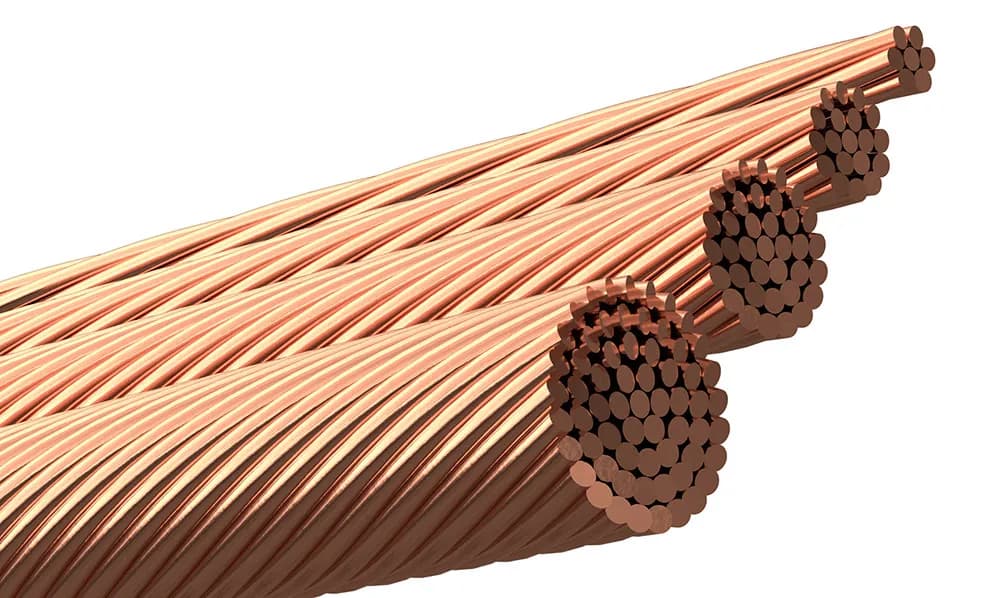
Spacer Cable System
A hybrid approach primarily used at medium voltage (15–35 kV) in North America. XLPE-covered phase conductors are supported by a high-strength messenger cable through diamond-shaped polymer spacers at regular intervals. This system:
- Allows compact phase spacing (reduces right-of-way)
- Provides tree-contact resistance
- Maintains some visual similarity to bare wire systems
- Uses standard ACSR or AAAC messenger for strength
Specifications and Standards
International Standards for XLPE Overhead Cable
Key Technical Specifications
When specifying XLPE overhead cable, the following parameters must be defined:
Electrical:
- Rated voltage (U₀/U): e.g., 0.6/1 kV, 8.7/15 kV, 12/20 kV, 18/30 kV
- Conductor cross-sectional area (mm²)
- Maximum conductor temperature (continuous / emergency / short-circuit)
- Current rating (ampacity) at specified ambient conditions
Mechanical:
- Minimum breaking load of conductor
- Maximum span length
- Minimum bending radius
- Permitted installation temperature range
- Weight per unit length (kg/km)
Insulation:
- XLPE thickness (minimum average and minimum at any point)
- Outer sheath thickness
- Voltage withstand test values (AC and impulse)
- Tracking and erosion resistance
Advantages of XLPE Overhead Cable Over Bare Conductors
1. Dramatically Reduced Outage Rates
Bare conductor distribution lines experience outages from tree contact, animal bridging (birds, snakes, possums), wind-blown debris, and conductor clashing. XLPE insulation eliminates or reduces these fault causes:
Utilities in forested areas report 60–80% reduction in sustained outages after converting from bare to covered conductors.
2. Improved Safety
XLPE covered conductors significantly reduce the risk of:
- Electrocution from contact with fallen lines (insulation provides a time buffer for protection to operate)
- Bushfire ignition from conductor clashing or tree contact
- Public safety incidents in areas where lines run close to buildings
In fire-prone regions (Australia, California, Mediterranean), utilities are mandating covered conductors or underground cables to reduce wildfire ignition risk.
3. Reduced Right-of-Way and Clearance Requirements
Because covered conductors tolerate incidental contact, many jurisdictions allow:
- Reduced phase-to-phase spacing (compact construction)
- Reduced clearance to buildings and structures
- Narrower vegetation management corridors
- Installation in areas where bare lines would not be permitted
This translates to lower easement costs, reduced tree trimming expenses, and the ability to serve areas with constrained corridors.
4. Lower Maintenance Costs
With fewer outages and reduced vegetation management requirements, XLPE overhead cables lower operational expenditure:
5. Extended Conductor Life
The XLPE insulation acts as a barrier against:
- Atmospheric corrosion (SO₂, salt spray, acid rain)
- UV degradation of the aluminium surface
- Mechanical abrasion from wind-induced vibration at support points
This can extend effective conductor life from 40 years (bare) to 50+ years (covered) in aggressive environments.
Interested in this product?
Looking for XLPE insulated overhead cable for your distribution project? We manufacture covered conductors to IEC, NFC, and GB standards in sizes from 25 to 400 mm² for voltages up to 35 kV.Applications of XLPE Aerial Cable
Urban and Suburban Distribution
The most common application. XLPE ABC replaces bare overhead lines in residential areas where:
- Trees overhang the line corridor
- Buildings are close to the line
- Public safety is a primary concern
- Aesthetic impact must be minimized (bundled cable is less visually intrusive than bare wire on cross-arms)
Rural Electrification
In developing regions, XLPE ABC offers rapid, cost-effective electrification:
- Simple pole-top attachment (no cross-arms or insulators for LV)
- Reduced theft (difficult to make illegal connections to insulated cable)
- Lower fault rates in tropical vegetation
- Single-pole construction reduces material costs
Forested and Fire-Prone Areas
Where vegetation contact risk is high and bushfire consequences are severe, XLPE covered conductors provide a critical safety layer. Many Australian utilities now mandate covered conductor for all overhead distribution in "Bushfire Prone Areas."
Coastal and Industrial Environments
The insulation barrier protects the conductor from salt spray and industrial pollutants, eliminating the corrosion failures that plague bare ACSR in these environments. XLPE covered AAAC provides both corrosion resistance and contact protection.
Temporary and Construction Supply
XLPE ABC can be rapidly deployed for temporary power supply to construction sites, events, and emergency restoration. The insulation allows installation at reduced clearances and in confined spaces where bare conductors would be prohibited.
XLPE Overhead Cable vs Underground Cable: When to Choose Each
The general rule: Use XLPE overhead cable when the area has adequate overhead corridor space and the visual impact is acceptable. Use underground cable in dense urban centers, high-value property areas, extreme weather zones (hurricanes), and where regulations require it.
For most of the world's distribution networks, aerial cable (including XLPE covered conductors) remains the most practical and economic solution.
Conductor Material Options for XLPE Overhead Cable
The metallic conductor inside XLPE overhead cable is typically one of:
For most medium-voltage XLPE overhead cable applications, AAAC conductor is preferred because:
- No steel core means no risk of internal corrosion beneath the insulation
- Good strength-to-weight ratio for 200–400 m spans
- The insulation eliminates the main advantage of ACSR (if you can reduce clearances, you don't need as much sag margin)
Installation Considerations
Stringing and Tensioning
XLPE covered conductors require modified installation procedures compared to bare wire:
- Stringing blocks must have larger radius and smooth surfaces (no sharp edges that could damage insulation)
- Pulling tension limits are lower to avoid insulation compression damage
- Minimum bending radius is typically 15× the overall cable diameter (vs bare conductor which can be wound tighter)
- Temperature limits — do not install below -10°C (XLPE becomes brittle) unless the cable is specifically formulated for cold installation
- Dead-end and suspension hardware must use compression fittings designed for insulated conductors (insulation must be stripped at termination points)
Support Hardware
Standard bare-wire hardware (suspension clamps, dead-end clamps) is not suitable for XLPE overhead cable. Dedicated hardware includes:
- Insulation-piercing connectors — make electrical connections without stripping insulation
- Suspension clamps with elastomer cradles — distribute load without crushing insulation
- Dead-end wedge clamps — grip the conductor through the insulation
- Covered conductor ties — UV-resistant polymer ties for pin-top support
Jointing and Termination
Mid-span joints on XLPE overhead cable must maintain both mechanical strength and insulation integrity:
- Compression joints with heat-shrink or cold-shrink insulation restoration
- Pre-insulated branch connectors for tap-offs
- Transition assemblies where covered conductor meets bare conductor sections
Fault Location
One challenge with covered conductors is that faults are harder to locate visually (no visible burn marks on the conductor). Utilities should plan for:
- Fault passage indicators along the feeder
- Portable fault location equipment
- More frequent patrol and inspection schedules for damage assessment after storms
Performance Data and Ampacity
Current Ratings for Common XLPE Overhead Cable Sizes
Ampacity depends on ambient temperature, wind speed, solar radiation, and maximum conductor temperature. The following table assumes:
- 40°C ambient temperature
- 0.6 m/s crosswind
- Full solar radiation (1000 W/m²)
- 90°C maximum conductor temperature (XLPE rated)
Note: XLPE insulation allows 90°C continuous operation, giving 10–15% higher ampacity compared to PVC-insulated equivalents (rated 70°C).
Thermal Derating Factors
Economic Analysis: XLPE Overhead Cable vs Bare Conductor
Capital Cost Comparison
XLPE covered conductor systems typically have 10–20% higher upfront capital cost compared to equivalent bare ACSR systems. The main cost differences:
- Conductor/cable cost: XLPE covered conductor costs 60–80% more per km than bare ACSR due to insulation material and processing
- Pole savings: Shorter poles and reduced hardware partially offset cable cost (−10–15%)
- Cross-arms and insulators: Dramatically reduced with covered conductors (−60–75%)
- Specialized fittings: Slightly higher cost for XLPE-specific hardware (+30%)
- Installation labour: Marginally higher due to heavier cable and specialized techniques (+15–20%)
Contact us for project-specific cost analysis based on your voltage level and route parameters.
Lifecycle Cost Comparison (20-Year NPV, per km)
Over a 20-year period, XLPE covered conductors typically deliver approximately 30–40% lower total lifecycle cost compared to bare ACSR, despite higher upfront investment. Key savings come from:
- Vegetation management: Reduced by 60–70% (insulation tolerates brief contact)
- Fault repair: Reduced by 70–80% (fewer weather and vegetation-related faults)
- Customer interruption penalties: Dramatically lower due to improved reliability
- Extended replacement cycle: XLPE systems last 10+ years longer before needing replacement
In most distribution environments with moderate vegetation, XLPE covered conductors deliver a lower total lifecycle cost despite higher upfront investment. The payback period is typically 3–7 years.
Interested in this product?
Get a competitive quotation for XLPE insulated overhead cable. We supply LV ABC (0.6/1 kV) and MV covered conductors (up to 35 kV) manufactured to international standards with full type test reports.Design Considerations and Selection Guide
Selecting the Right XLPE Overhead Cable
Use this decision framework to specify the correct cable:
Step 1: Determine voltage class
- LV (0.6/1 kV) → ABC configuration
- MV (6.6–33 kV) → Single-core covered conductor or MV ABC
Step 2: Calculate required current capacity
- Determine maximum load including growth projections
- Apply derating for ambient temperature
- Select conductor size from ampacity tables
Step 3: Check mechanical requirements
- Maximum span length → determines minimum conductor strength
- Wind and ice loading → determines required breaking load
- If spans exceed 200 m for LV or 300 m for MV, consider AAAC conductor for added strength
Step 4: Specify insulation level
- Standard voltage rating for the system voltage
- Consider one step higher if lightning is frequent or surge protection is limited
- Specify tracking-resistant outer sheath for polluted environments
Step 5: Choose configuration
- ABC (bundled) for LV and light-load MV
- Spacer cable for MV with long spans
- Single-core on existing pole infrastructure for MV upgrades
Common Specification Mistakes
Mistake 1: Specifying underground cable for overhead use. Underground XLPE cables have different jacket materials (not UV-rated) and are heavier (armored). Always use cables specifically designed for overhead/aerial installation.
Mistake 2: Ignoring UV resistance. Generic XLPE without UV stabilizers (carbon black or UV absorbers) will degrade within 5–10 years of sun exposure. Ensure the outer sheath is specifically rated for outdoor UV exposure.
Mistake 3: Undersizing for short-circuit. XLPE can withstand 250°C for up to 5 seconds during a short circuit. Verify that the conductor cross-section can handle the prospective short-circuit current for the protection clearing time.
Mistake 4: Using bare-wire hardware. Standard metallic suspension clamps will crush and damage XLPE insulation. Always use hardware specifically designed for covered conductors.
Mistake 5: Neglecting insulation integrity testing. Unlike bare conductors where damage is visible, insulation damage on covered conductors may be hidden. Specify factory high-voltage testing (routine test on every drum) and post-installation withstand testing.
Climate and Environmental Performance
UV Resistance
XLPE insulation for overhead use must contain UV stabilizers. The two main approaches:
- Carbon black loading (2.5%+) — provides excellent UV protection but limits the cable to black color only
- UV absorber additives — allow colored insulation (for phase identification) but may have shorter UV life
For maximum durability, specify a black HDPE outer sheath over the XLPE insulation. The HDPE layer takes the UV exposure while the XLPE beneath remains protected.
Performance in Extreme Cold
Standard XLPE remains flexible to approximately -40°C. For Arctic or high-altitude installations:
- Specify cold-flex grade XLPE
- Do not install standard grades below -10°C
- Allow cable to warm (in shelter or sunshine) before stringing in cold weather
- Minimum bending radius increases by 50% below 0°C
Performance in Extreme Heat
In desert and tropical environments (ambient 50°C+):
- Derate ampacity per the derating table above
- Dark-colored cables absorb more solar radiation (higher surface temperature)
- Consider thicker insulation for additional thermal margin
- XLPE's 90°C rating provides comfortable margin over ambient in most cases
Pollution and Chemical Resistance
XLPE resists:
- Salt spray (coastal environments)
- Acid rain and industrial fallout
- Agricultural chemicals
- Ozone (present in UV-rich environments)
For heavily polluted industrial environments, specify cables with enhanced tracking resistance (measured per IEC 60587, Class 2 or higher).
XLPE vs Other Overhead Insulation Materials
Summary: XLPE offers the best overall balance for overhead cable insulation. EPR is superior for flexibility (useful in congested installations) but costs more. HDPE is adequate for outer sheaths but lacks the thermal rating for primary insulation at MV. PVC is obsolete for overhead applications due to weight, cold brittleness, and environmental concerns.
Testing and Quality Assurance
Factory Tests (Routine — Every Drum)
- Conductor resistance measurement
- High-voltage withstand test (AC, per applicable standard)
- Insulation thickness measurement
- Visual inspection
Factory Tests (Type — Once Per Design)
- Impulse voltage withstand (BIL)
- Partial discharge measurement
- Hot set test (verifies cross-linking degree)
- Tensile and elongation of insulation
- Thermal ageing (7 days at elevated temperature)
- Cold bend test
- UV exposure test (accelerated weathering)
Site Tests (Post-Installation)
- Phase identification and continuity
- Insulation resistance (megger test)
- High-voltage withstand (typically at 80% of factory test voltage)
- Visual inspection for installation damage
Specify that the manufacturer provides full type test reports and routine test certificates with each delivery. This ensures traceability and confirms the cable meets the specified standard.
Frequently Asked Questions
Q: Is XLPE overhead cable the same as underground cable installed overhead?
No. XLPE overhead cable is specifically designed for aerial installation — it has UV-resistant outer sheath, lighter weight construction, and appropriate mechanical properties for spanning between poles. Underground cable is heavier (often armored), may lack UV protection, and is not rated for the mechanical stresses of overhead suspension.
Q: Can XLPE covered conductors prevent all electrocution risk?
No. Covered conductors are not fully insulated for continuous contact. They reduce the risk by preventing flashover during brief contacts (tree branches, birds) and may provide a time buffer during a down-conductor event. But sustained contact with a grounded surface will eventually lead to insulation breakdown. Protection systems must still operate to clear faults.
Q: What is the typical lifespan of XLPE overhead cable?
With proper installation and UV-resistant outer sheath, XLPE overhead cables typically last 30–40 years. The insulation degrades gradually through UV exposure, thermal cycling, and oxidation. Regular inspection and insulation testing can identify cables approaching end-of-life.
Q: How much more does XLPE overhead cable cost compared to bare conductors?
The cable itself costs 60–80% more than equivalent bare conductor. However, total installed system cost is only 10–20% higher because covered conductors eliminate cross-arms, reduce pole height requirements, and simplify hardware. Lifecycle cost is typically 30–40% lower due to reduced maintenance and outages.
Q: Can I use XLPE overhead cable with existing bare-wire poles and hardware?
Partially. Existing poles can often be reused, but hardware (clamps, ties, dead-ends) must be replaced with covered-conductor-rated equivalents. Consult with your cable supplier about compatible hardware systems.
Q: What happens when XLPE insulation is damaged?
Damaged insulation must be repaired or the section replaced. Small punctures can be sealed with heat-shrink repair sleeves. Larger damage requires cutting out the damaged section and installing a mid-span joint. Unlike bare conductors where a nick in a strand is the main concern, covered conductor damage compromises the insulation system that the line's reduced clearances depend on.
Q: Is XLPE covered conductor suitable for areas with frequent lightning?
XLPE insulation provides limited lightning protection. The insulation level (BIL) is designed for switching surges and induced overvoltages, not direct lightning strikes. In high-lightning areas, surge arresters should be installed at regular intervals along the line, just as with bare conductor systems. Some utilities install arresters every 200–300 m in severe lightning zones.
Conclusion
XLPE insulated overhead cable represents the modern standard for distribution power lines where safety, reliability, and reduced maintenance are priorities. The technology is mature, standards are well-established, and decades of field experience confirm the economic and performance advantages over bare conductors.
When to specify XLPE overhead cable:
- Any new distribution line in vegetated areas
- Urban/suburban areas with public safety concerns
- Coastal and polluted environments
- Fire-prone regions
- Areas with high outage costs or strict reliability regulations
- Replacement of aging bare conductor systems
When bare conductors may still be appropriate:
- Long-span transmission (220 kV+) where insulation weight is impractical
- Remote areas with no vegetation and minimal safety concern
- Very short-life temporary installations
- Budget-constrained projects in benign environments with no reliability requirements
For most distribution applications worldwide, XLPE covered conductors and aerial bundled cable deliver the best combination of safety, reliability, and lifecycle economics. The higher upfront cost pays for itself within a few years through reduced outages and maintenance.
Interested in this product?
Ready to specify XLPE insulated overhead cable for your project? Contact our technical team for product recommendations, specifications, and factory-direct pricing on covered conductors from 1 kV to 35 kV.Related Products & Resources
Product Categories
- Aerial Cable Products — Complete range of LV ABC, MV covered conductors, and bare overhead conductors
- Power Cable Products — Underground XLPE cable for applications where overhead is not feasible
- Solar Cable Products — PV1-F and H1Z2Z2-K solar cables with XLPE insulation
Related Articles
- XLPE Power Cable Manufacturer Guide — Underground XLPE cable specifications and sourcing
- Cable Insulation Types Comparison — PVC vs XLPE vs EPR — when to use each
- Overhead Transmission Line Cable Types — All conductor types including bare and covered
- Conductor Selection Guide for Power Lines — How to choose the right conductor
- ACSR Conductor: Complete Specifications & Factory Price Guide — The bare conductor alternative
- ABC Cable: Aerial Bundled Conductor Guide — LV insulated overhead distribution cable
- How to Import Cable from China — Complete sourcing and logistics guide