Key Takeaway
Complete XLPE cable specifications: voltage classes 0.6/1kV to 35kV, insulation thickness by IEC 60502, conductor sizing, XLPE vs PVC comparison. Technical reference for engineers and buyers.
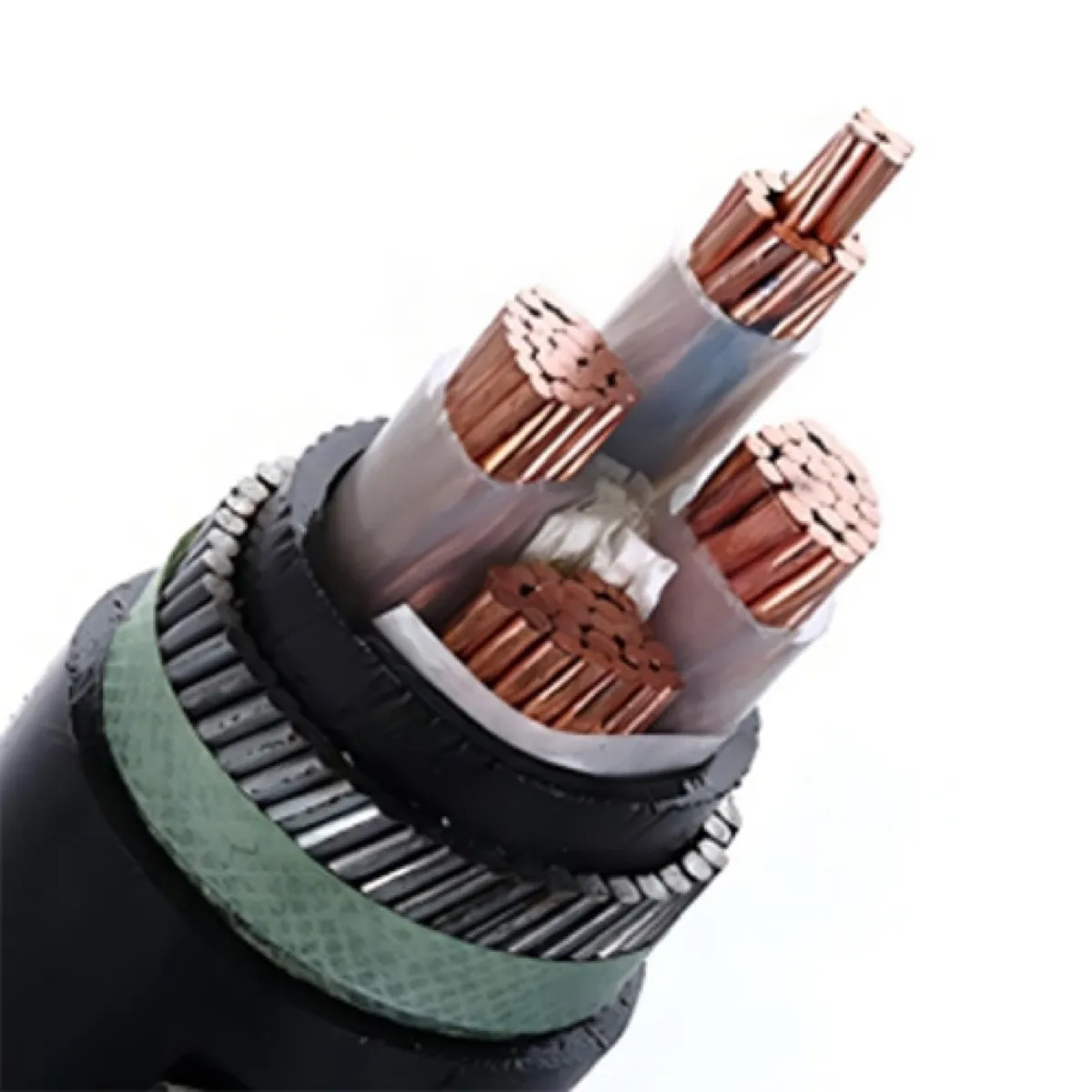
XLPE (Cross-Linked Polyethylene) insulated power cable is the dominant choice for underground power distribution and transmission worldwide. From 0.6/1kV low-voltage feeders serving residential developments to 35kV medium-voltage circuits powering industrial plants, XLPE cables have largely replaced traditional PVC and paper-insulated types due to superior thermal performance, higher current capacity, and longer operational life.
This guide covers everything a procurement engineer, EPC contractor, or utility buyer needs to know: cable construction, full specification tables per IEC 60502, type designations, armour options, installation considerations, and what to look for when sourcing from a Chinese manufacturer.
We produce XLPE power cables at our factory in Henan, China - certified to IEC 60502-1, IEC 60502-2, GB/T 12706, and BS 7870. Need to understand what these certifications mean and how to verify them? Read our complete cable certification guide.
What Is XLPE Cable?
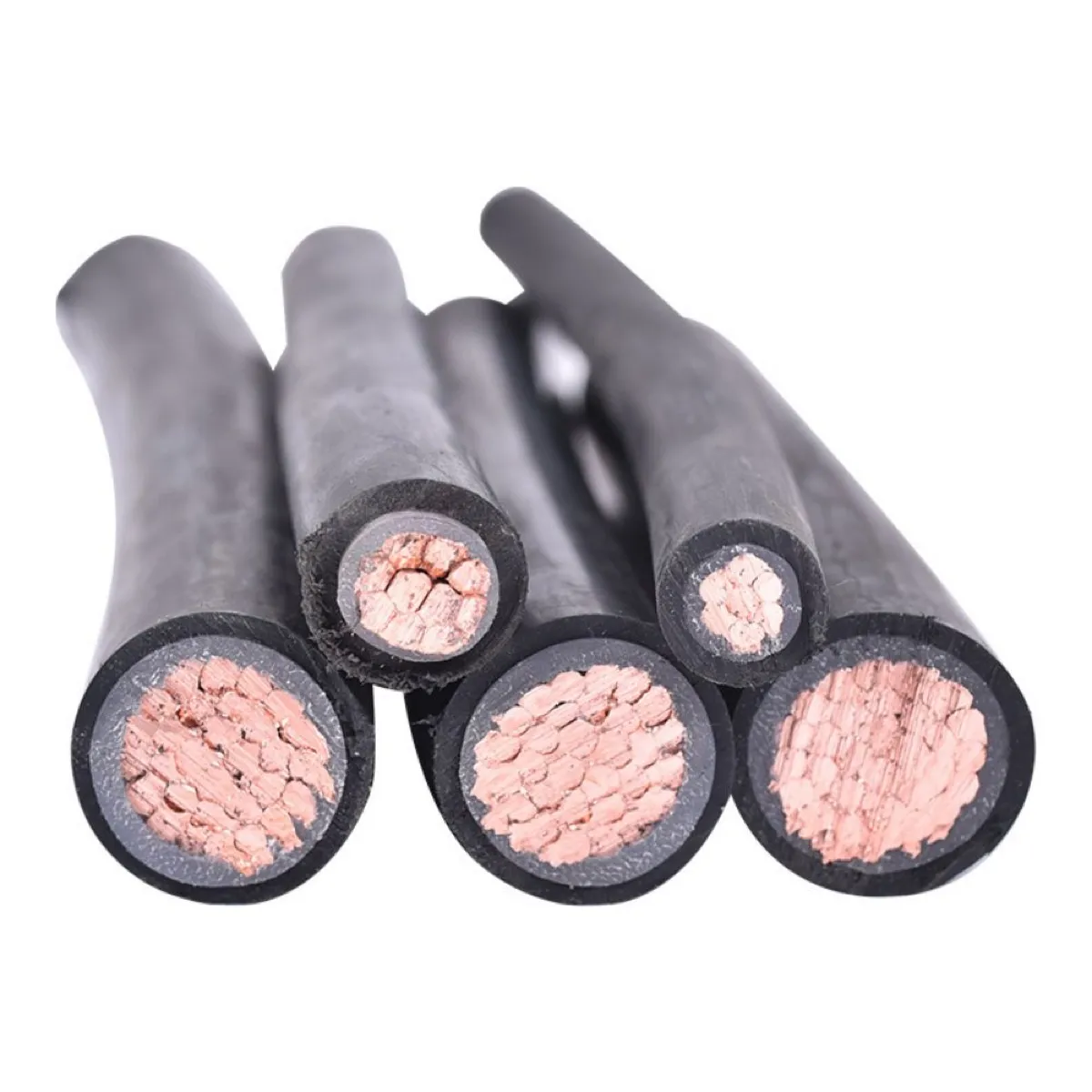
XLPE stands for Cross-Linked Polyethylene - a thermoset material created by chemically cross-linking standard polyethylene under heat and pressure. This cross-linking process transforms the molecular structure from linear chains into a three-dimensional network, fundamentally changing the material's properties.
Why cross-linking matters for cable insulation:
- Higher operating temperature: XLPE operates continuously at 90°C conductor temperature, compared to 70°C for PVC. This means more current through the same conductor size.
- Emergency overload capacity: XLPE can withstand 250°C during short-circuit conditions (5 seconds maximum), versus 160°C for PVC.
- No melting point: Unlike thermoplastic PVC, cross-linked XLPE does not melt - it chars. This prevents insulation flow under thermal stress.
- Lower dielectric loss: XLPE has a dielectric constant of approximately 2.3 (vs 3.5-8.0 for PVC), resulting in lower capacitive losses, especially important in medium and high voltage applications.
- Moisture resistance: XLPE absorbs significantly less water than PVC, improving long-term insulation reliability in direct-burial applications.
The result: XLPE cables carry 15-30% more current than equivalent PVC cables of the same conductor size, or alternatively, you can use a smaller conductor cross-section to achieve the same rating - reducing material cost and weight.
XLPE Power Cable Construction
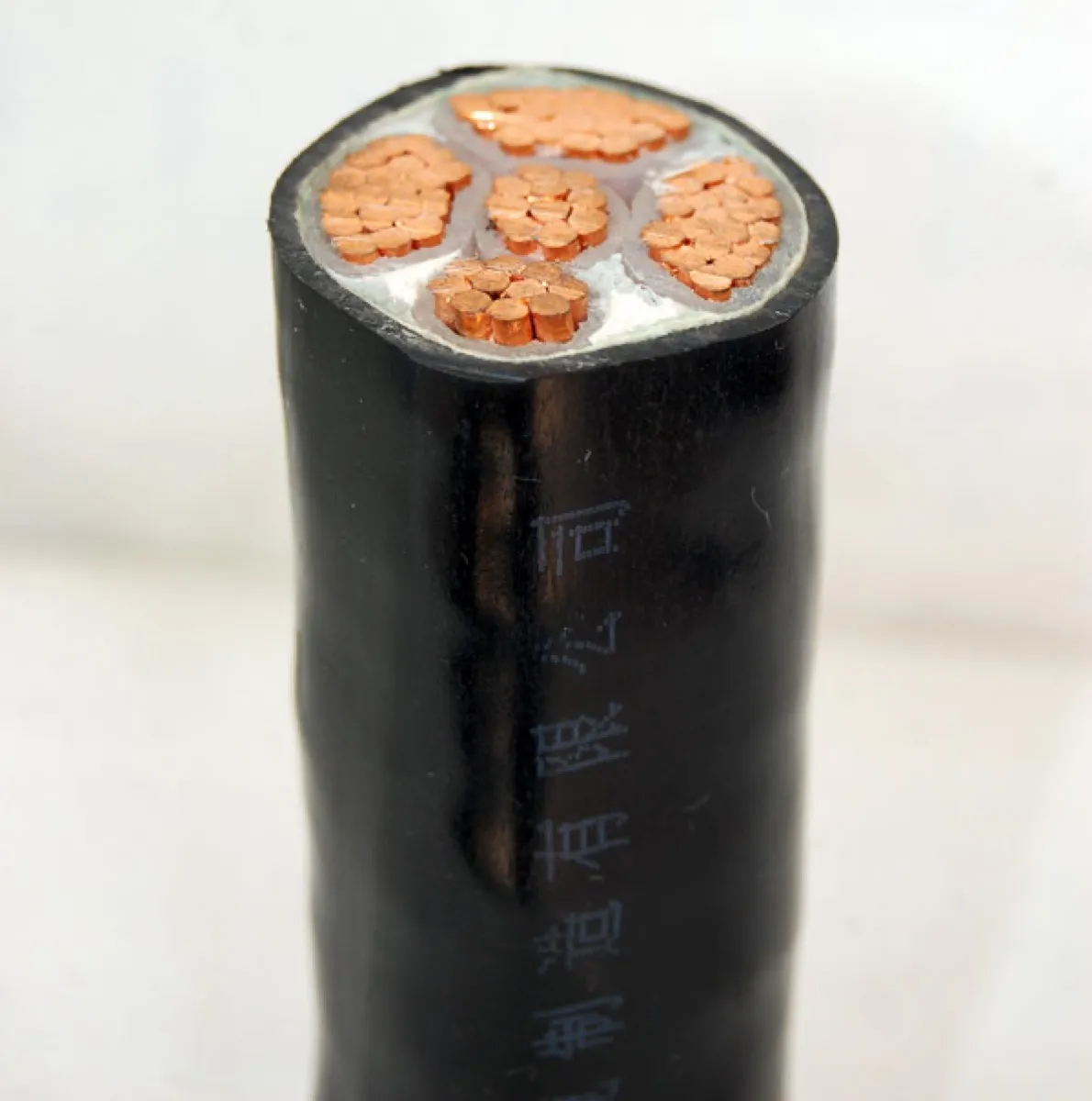
A typical XLPE power cable consists of multiple concentric layers, each serving a specific function:
1. Conductor
The current-carrying core. Available in:
- Copper (Cu): Higher conductivity (lower resistance per km), stronger, preferred where space is limited
- Aluminium (Al): Lighter weight (approximately 1/3 of copper), lower cost per ampere-metre, preferred for long runs and cost-sensitive projects
Conductor construction types per IEC 60228:
- Class 1: Solid, circular - for sizes up to 16mm2
- Class 2: Stranded, circular or shaped - standard for most power cables
- Class 5/6: Flexible stranded - for cables requiring repeated bending
For multi-core cables above 25mm2, sector-shaped (compacted) conductors are standard. This reduces the overall cable diameter by approximately 20% compared to circular conductors, saving material on insulation, armouring, and sheathing.
2. Conductor Screen (Medium Voltage Only)
For cables rated 3.6/6kV and above, a semi-conducting layer is extruded directly over the conductor. This smooths the electric field at the conductor surface, eliminating air gaps that would cause partial discharge.
3. XLPE Insulation
The primary insulation layer. Nominal thickness is specified by IEC 60502-1 (for cables up to 1kV) and IEC 60502-2 (for cables from 1kV to 36kV):
Insulation thickness for 0.6/1kV cables (IEC 60502-1):
| Conductor Size (mm2) | Nominal Insulation Thickness (mm) |
|---|---|
| 1.5 - 16 | 0.7 |
| 25 - 35 | 0.9 |
| 50 - 95 | 1.0 |
| 120 - 150 | 1.1 |
| 185 - 240 | 1.2 |
| 300 - 400 | 1.4 |
| 500 - 630 | 1.6 |
Insulation thickness for medium voltage cables (IEC 60502-2):
| Rated Voltage (U0/U) | Nominal Insulation Thickness (mm) |
|---|---|
| 3.6/6 kV | 3.4 |
| 6/10 kV | 3.4 |
| 8.7/15 kV | 4.5 |
| 12/20 kV | 5.5 |
| 18/30 kV | 8.0 |
| 21/35 kV | 9.0 |
4. Insulation Screen (Medium Voltage Only)
A semi-conducting layer over the insulation, providing a smooth equipotential surface for controlled electric field termination.
5. Inner Sheath (Bedding)
PVC or LSZH (Low Smoke Zero Halogen) extruded layer that:
- Provides a bedding surface for armouring
- Protects insulated cores from mechanical damage during armouring
- Binds multi-core cables into a circular assembly
6. Armour
Mechanical protection for cables installed in environments with external force risks. Two main types:
Steel Tape Armour (STA):
- Two overlapping galvanized steel tapes wound helically
- Provides crush and impact resistance
- Used for multi-core cables laid in trenches or ducts
- Chinese designation: YJV22 (double steel tape)
Steel Wire Armour (SWA):
- Galvanized steel wires laid helically around the cable
- Provides both crush resistance AND longitudinal tensile strength
- Required for direct burial, vertical risers, or cables crossing unstable ground
- Chinese designation: YJV32 (steel wire armour)
Aluminium Wire Armour (AWA):
- Used where weight reduction matters or in single-core AC cables (to avoid eddy current heating in ferrous armour)
- Non-magnetic - eliminates armour losses in single-core applications
7. Outer Sheath
The final extruded layer - typically PVC (black, for UV resistance) or PE (for enhanced moisture resistance in direct burial). LSZH sheaths are specified for tunnels, metros, and enclosed spaces where fire safety is critical.
Cable Type Designations
Different standards use different naming systems. Here's how they map:
| Cable Construction | Chinese (GB/T 12706) | IEC/VDE | BS |
|---|---|---|---|
| Cu/XLPE/PVC (unarmoured) | YJV | N2XY | 6641Y |
| Cu/XLPE/STA/PVC | YJV22 | N2XBY | - |
| Cu/XLPE/SWA/PVC | YJV32 | N2XRY | 6946X |
| Cu/XLPE/STA/PE | YJV23 | N2XB2Y | - |
| Cu/XLPE/SWA/PE | YJV33 | N2XR2Y | - |
| Al/XLPE/PVC (unarmoured) | YJLV | NA2XY | - |
| Al/XLPE/STA/PVC | YJLV22 | NA2XBY | - |
| Al/XLPE/SWA/PVC | YJLV32 | NA2XRY | - |
Decoding Chinese cable designations:
- Y = Polyethylene (or cross-linked polyethylene when followed by J)
- J = Cross-linked
- V = PVC
- L = Aluminium conductor
- 22 = Double steel tape armour + PVC outer sheath
- 32 = Steel wire armour + PVC outer sheath
- 23 = Steel tape armour + PE outer sheath
- 33 = Steel wire armour + PE outer sheath
XLPE Cable Size Chart: Complete Conductor Range by Voltage Class
Selecting the right XLPE cable size requires matching conductor cross-section to your circuit's current demand, voltage drop limits, and short-circuit withstand requirements. The table below provides the complete conductor size range available for XLPE insulated power cables across all voltage classes we manufacture.
Low Voltage (0.6/1kV) — Full Size Range
| Conductor Size (mm²) | Cores Available | Conductor Material | Typical Application |
|---|---|---|---|
| 1.5 | 2C, 3C, 4C, 5C | Cu | Lighting circuits, control wiring |
| 2.5 | 2C, 3C, 4C, 5C | Cu | Socket outlets, small motors |
| 4 | 2C, 3C, 4C | Cu | Submersible pumps, HVAC |
| 6 | 2C, 3C, 4C | Cu | Water heaters, small 3-phase loads |
| 10 | 1C, 3C, 4C, 3+1, 3+2 | Cu / Al | Distribution sub-mains |
| 16 | 1C, 3C, 4C, 3+1, 3+2 | Cu / Al | Motor feeders, panel boards |
| 25 | 1C, 3C, 4C, 3+1, 3+2 | Cu / Al | Industrial sub-distribution |
| 35 | 1C, 3C, 4C, 3+1, 3+2 | Cu / Al | Workshop main supply |
| 50 | 1C, 3C, 4C, 3+1, 3+2 | Cu / Al | Medium motor loads, building risers |
| 70 | 1C, 3C, 4C, 3+1, 3+2 | Cu / Al | Large motor feeders |
| 95 | 1C, 3C, 4C, 3+1, 3+2 | Cu / Al | Main LV distribution |
| 120 | 1C, 3C, 4C, 3+1, 3+2 | Cu / Al | Transformer LV tails |
| 150 | 1C, 3C, 4C, 3+1, 3+2 | Cu / Al | Transformer LV tails |
| 185 | 1C, 3C, 4C, 3+1, 3+2 | Cu / Al | Main switchboard feeders |
| 240 | 1C, 3C, 4C, 3+1, 3+2 | Cu / Al | High-capacity distribution |
| 300 | 1C, 3C, 4C, 3+1, 3+2 | Cu / Al | Substation feeders |
| 400 | 1C, 3C | Cu / Al | Power plant internal distribution |
| 500 | 1C | Cu / Al | Generator output cables |
| 630 | 1C | Cu / Al | Generator output, bus-tie cables |
Medium Voltage (3.6/6kV to 21/35kV) — Size Range
| Conductor Size (mm²) | Available Voltages | Cores | Notes |
|---|---|---|---|
| 25 | 3.6/6kV, 6/10kV | 3C | Minimum for MV distribution |
| 35 | 3.6/6kV – 12/20kV | 1C, 3C | Light industrial feeders |
| 50 | 3.6/6kV – 18/30kV | 1C, 3C | Standard distribution |
| 70 | 3.6/6kV – 18/30kV | 1C, 3C | Urban underground networks |
| 95 | 3.6/6kV – 21/35kV | 1C, 3C | Primary distribution |
| 120 | 3.6/6kV – 21/35kV | 1C, 3C | Substation interconnection |
| 150 | 3.6/6kV – 21/35kV | 1C, 3C | Wind farm collector cables |
| 185 | 3.6/6kV – 21/35kV | 1C, 3C | High-load distribution |
| 240 | 6/10kV – 21/35kV | 1C, 3C | Transmission class |
| 300 | 6/10kV – 21/35kV | 1C, 3C | Transmission class |
| 400 | 8.7/15kV – 21/35kV | 1C | High-capacity links |
| 500 | 8.7/15kV – 21/35kV | 1C | Power station output |
| 630 | 12/20kV – 21/35kV | 1C | Maximum standard production |
| 800 | 18/30kV – 21/35kV | 1C | Special order, sub-transmission |
All sizes comply with IEC 60228 conductor dimensions and IEC 60502-1/IEC 60502-2 insulation requirements. Aluminium conductors are available from 10mm² upward for LV and 25mm² upward for MV.
How to use this chart: Identify your voltage class, determine the required current rating from the current carrying capacity tables below, then select the smallest conductor size that satisfies current rating, voltage drop (typically ≤ 3-5%), and short-circuit withstand requirements for your circuit protection coordination.
0.6/1kV XLPE Cable Specifications
Below are complete specifications for our standard production range. All values conform to IEC 60502-1 and GB/T 12706.1.
Single Core (1C) - Cu/XLPE/PVC Unarmoured
| Size (mm2) | Conductor OD (mm) | Sheath Thickness (mm) | Overall OD (mm) | Weight Cu (kg/km) | Weight Al (kg/km) |
|---|---|---|---|---|---|
| 1×10 | 3.8 | 1.4 | 8.0 | 140 | 78 |
| 1×16 | 4.8 | 1.4 | 9.0 | 202 | 103 |
| 1×25 | 6.0 | 1.4 | 10.6 | 299 | 144 |
| 1×35 | 7.0 | 1.4 | 11.6 | 397 | 180 |
| 1×50 | 8.4 | 1.4 | 13.1 | 544 | 235 |
| 1×70 | 10.0 | 1.4 | 15.0 | 745 | 312 |
| 1×95 | 11.5 | 1.5 | 16.6 | 986 | 398 |
| 1×120 | 13.0 | 1.5 | 18.4 | 1233 | 491 |
| 1×150 | 14.5 | 1.6 | 20.5 | 1534 | 606 |
| 1×185 | 16.2 | 1.6 | 22.7 | 1885 | 740 |
| 1×240 | 18.4 | 1.7 | 25.3 | 2418 | 933 |
| 1×300 | 20.5 | 1.8 | 27.7 | 2997 | 1140 |
| 1×400 | 23.5 | 1.9 | 31.4 | 3962 | 1488 |
| 1×500 | 26.5 | 2.0 | 35.0 | 4933 | 1840 |
| 1×630 | 30.0 | 2.2 | 39.1 | 6189 | 2291 |
Values are typical for IEC 60502-1 compliant cables. Contact us for confirmed product datasheets.
Four Core (4C) - Cu/XLPE/PVC Unarmoured
| Size (mm2) | Conductor OD (mm) | Sheath Thickness (mm) | Overall OD (mm) | Weight Cu (kg/km) | Weight Al (kg/km) |
|---|---|---|---|---|---|
| 4×10 | 3.8 | 1.8 | 16.8 | 544 | 295 |
| 4×16 | 4.8 | 1.8 | 19.2 | 787 | 389 |
| 4×25 | 6.0 | 1.8 | 23.0 | 1189 | 567 |
| 4×35 | 7.0 | 1.8 | 25.4 | 1577 | 707 |
| 4×50 | 8.0 | 1.9 | 26.1 | 2135 | 891 |
| 4×70 | 9.5 | 2.0 | 30.1 | 2932 | 1191 |
| 4×95 | 11.0 | 2.1 | 33.5 | 3895 | 1532 |
| 4×120 | 12.4 | 2.3 | 36.6 | 4875 | 1890 |
| 4×150 | 13.8 | 2.4 | 40.9 | 6079 | 2348 |
| 4×185 | 15.4 | 2.6 | 46.5 | 7492 | 2891 |
| 4×240 | 17.5 | 2.8 | 51.1 | 9620 | 3651 |
| 4×300 | 19.6 | 3.0 | 56.3 | 11943 | 4482 |
Values are typical for IEC 60502-1 compliant cables. Contact us for confirmed product datasheets.
Note: Sizes 50mm2 and above use sector-shaped conductors for 4-core configuration.
Three Core + Neutral (3+1) - Cu/XLPE/PVC Unarmoured
| Size (mm2) | Overall OD (mm) | Weight Cu (kg/km) | Weight Al (kg/km) |
|---|---|---|---|
| 3×10+1×6 | 16.1 | 505 | 281 |
| 3×16+1×10 | 18.6 | 731 | 370 |
| 3×25+1×16 | 22.1 | 1093 | 528 |
| 3×35+1×16 | 23.9 | 1385 | 632 |
| 3×50+1×25 | 24.9 | 1901 | 813 |
| 3×70+1×35 | 28.7 | 2599 | 1076 |
| 3×95+1×50 | 31.9 | 3471 | 1388 |
| 3×120+1×70 | 34.9 | 4401 | 1728 |
| 3×150+1×70 | 38.9 | 5309 | 2076 |
| 3×185+1×95 | 44.2 | 6615 | 2573 |
| 3×240+1×120 | 48.5 | 8456 | 3233 |
| 3×300+1×150 | 53.4 | 10499 | 3970 |
Values are typical for IEC 60502-1 compliant cables. Contact us for confirmed product datasheets.
Current Carrying Capacity
Current ratings depend on installation method, ambient temperature, soil thermal resistivity, and cable grouping. The following values are based on IEC 60287 calculation methods under reference conditions:
Reference conditions:
- Ground temperature: 20°C
- Ambient air temperature: 30°C
- Soil thermal resistivity: 1.0 K·m/W
- Burial depth: 0.8m
- Single circuit, no grouping
Current Rating - XLPE Insulated, Copper Conductor, 0.6/1kV
3-core or 4-core cables, direct buried in ground (see underground cable installation methods for burial depth and duct requirements):
| Size (mm2) | Current Rating (A) |
|---|---|
| 10 | 75 |
| 16 | 100 |
| 25 | 130 |
| 35 | 160 |
| 50 | 190 |
| 70 | 240 |
| 95 | 290 |
| 120 | 335 |
| 150 | 380 |
| 185 | 435 |
| 240 | 510 |
| 300 | 580 |
Single-core cables in trefoil, direct buried in ground:
| Size (mm2) | Current Rating (A) |
|---|---|
| 50 | 215 |
| 70 | 270 |
| 95 | 330 |
| 120 | 380 |
| 150 | 430 |
| 185 | 490 |
| 240 | 575 |
| 300 | 660 |
| 400 | 770 |
| 500 | 870 |
| 630 | 990 |
Derating factors to apply:
| Condition | Factor |
|---|---|
| Ground temp 25°C (instead of 20°C) | 0.94 |
| Ground temp 30°C | 0.87 |
| Ground temp 35°C | 0.81 |
| Soil resistivity 1.5 K·m/W | 0.87 |
| Soil resistivity 2.0 K·m/W | 0.78 |
| Soil resistivity 2.5 K·m/W | 0.71 |
| Two circuits touching | 0.80 |
| Three circuits touching | 0.70 |
| Buried depth 1.0m (instead of 0.8m) | 0.97 |
| Buried depth 1.5m | 0.91 |
Note: Current ratings above are standard IEC 60287 reference values for general guidance. Actual ratings for specific cable constructions may differ. Request a project-specific datasheet from our engineering team for confirmed values.
Aluminium Conductor XLPE Cable — Current Rating Comparison
For aluminium conductor (YJLV series), current ratings are approximately 78% of copper values for the same cross-section:
| Conductor (mm²) | Copper 3-Core (A) | Aluminium 3-Core (A) | Weight Saving |
|---|---|---|---|
| 25 | 108 | 84 | 52% |
| 50 | 159 | 124 | 53% |
| 95 | 241 | 188 | 54% |
| 150 | 317 | 247 | 55% |
| 240 | 415 | 323 | 56% |
| 300 | 475 | 370 | 56% |
| 400 | 555 | 433 | 57% |
When to choose aluminium: Long trunk cables (>200m) where weight and cost matter more than space. Common in Africa and Middle East utility distribution where aluminium prices make projects viable within budget.
XLPE vs PVC: Technical Comparison
For buyers evaluating whether to specify XLPE or PVC insulated cables:
| Parameter | XLPE | PVC |
|---|---|---|
| Max continuous conductor temp | 90°C | 70°C |
| Short-circuit temp (5s) | 250°C | 160°C |
| Current rating (same size) | Higher (15-30% more) | Lower |
| Dielectric constant | ~2.3 | 3.5-8.0 |
| Moisture absorption | Very low | Low |
| Flexibility | Stiffer | More flexible |
| Temperature range | -40°C to +90°C | -15°C to +70°C |
| Expected service life | 30-40 years | 20-25 years |
| Halogen content | Zero (PE based) | Contains chlorine |
| Recyclability | Difficult (thermoset) | Easier (thermoplastic) |
| Cost | Higher | Lower |
When to choose XLPE:
- Underground distribution (standard globally)
- High-load circuits where current capacity matters
- Hot environments (tropical, desert, industrial)
- Long cable runs where voltage drop matters (lower capacitance)
- Medium and high voltage applications (3.6kV and above - PVC is rarely used)
When PVC may be acceptable:
- Low-voltage internal wiring in buildings
- Short runs with low load
- Budget-constrained projects with mild ambient conditions
- Applications requiring frequent re-termination (PVC is easier to strip)
Armoured Cable: SWA vs STA — Which to Specify
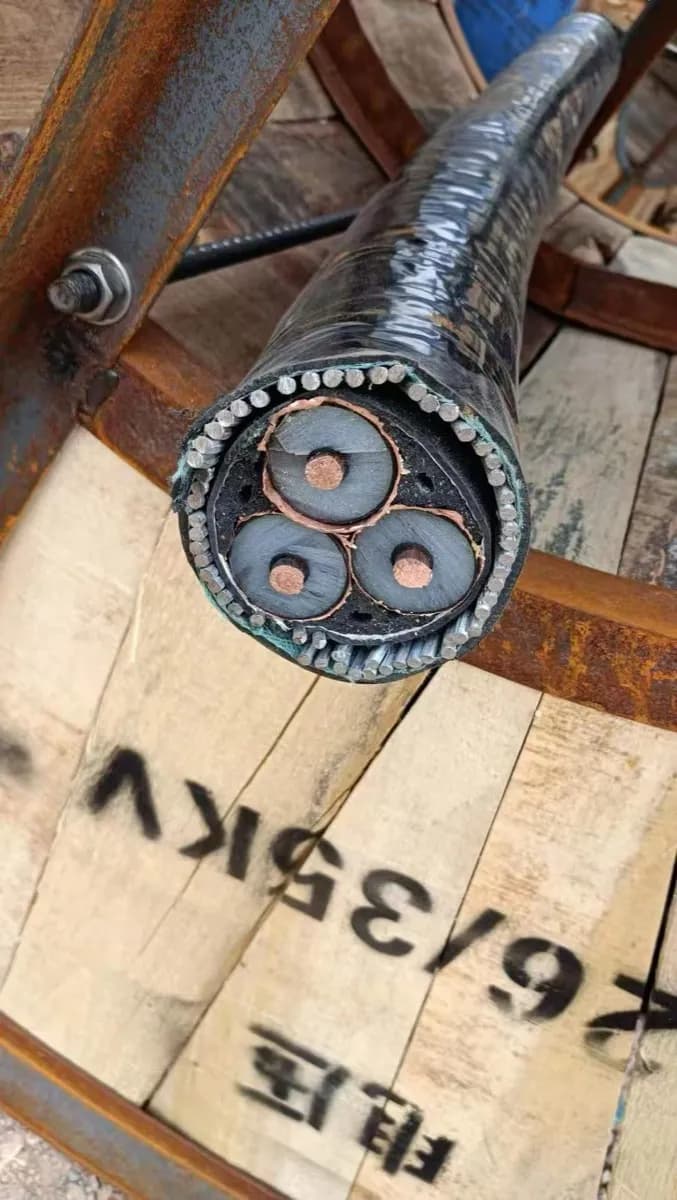
Armour selection is one of the most common specification decisions. For a detailed comparison of all armoured cable types with full size charts, see our 4 Core Armoured Cable: SWA vs STA specifications guide. Here’s the engineering logic:
Steel Tape Armour (STA / YJV22)
Construction: Two galvanized steel tapes, each 0.2-0.5mm thick, wound with overlap in opposite directions.
Provides:
- Radial crush protection
- Rodent resistance
- Some impact protection
Does NOT provide:
- Significant tensile (pulling) strength
- Protection against longitudinal forces
Use when:
- Cable is laid flat in a trench or duct
- No vertical sections
- No significant pulling force during installation
- Multi-core cables (most common application)
Steel Wire Armour (SWA / YJV32)
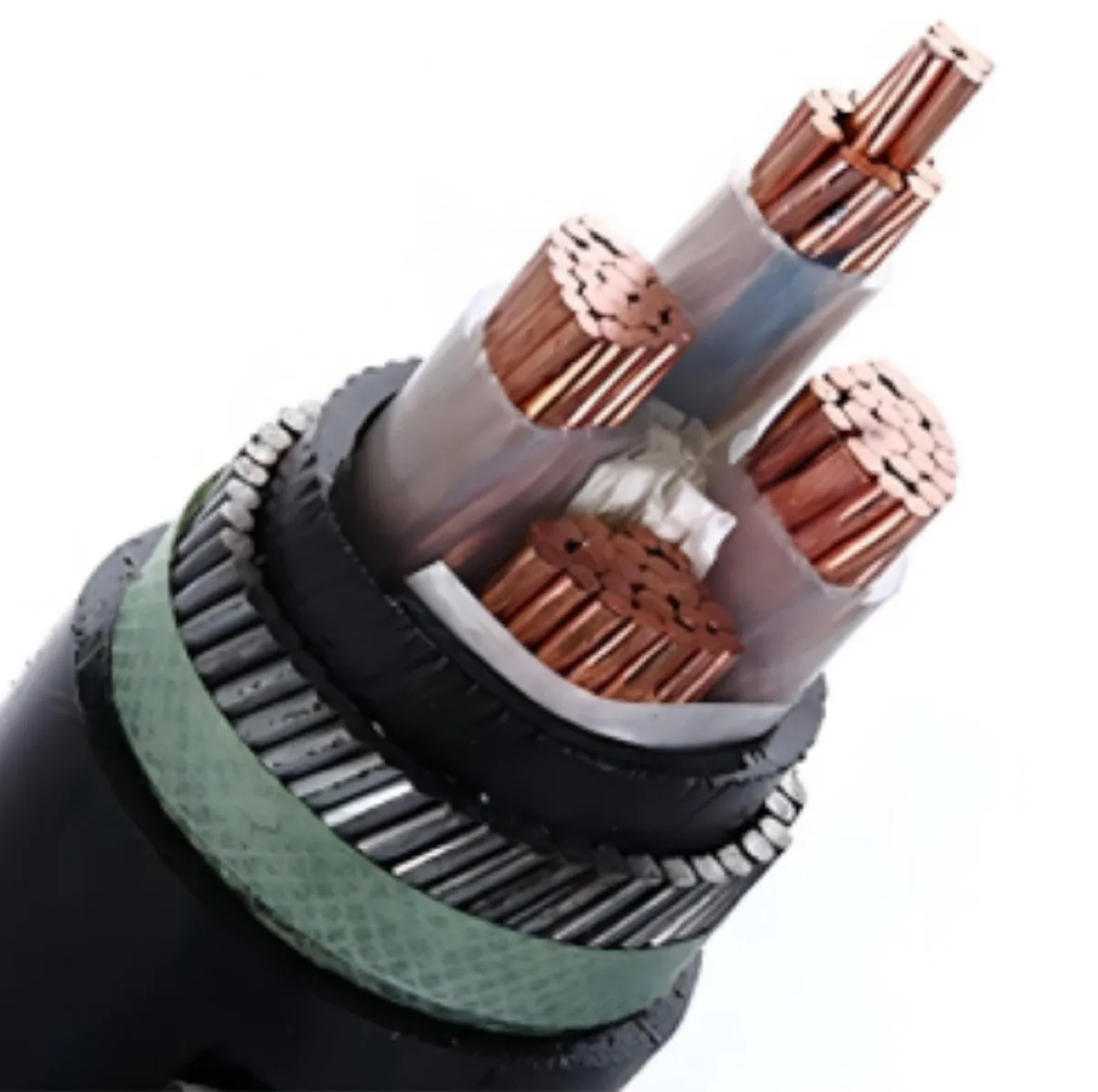
Construction: Galvanized steel round wires (typically 1.25-3.15mm diameter depending on cable size), laid helically in a single layer.
Provides:
- Radial crush protection
- Impact protection
- Longitudinal tensile strength - critical difference from STA
- Better rodent resistance (thicker steel)
Use when:
- Direct burial without duct
- Vertical risers or shafts
- Submarine or river crossings (short span)
- Installation requires pulling through difficult terrain
- Single-core cables (use non-magnetic AWA to avoid eddy current losses)
Weight Comparison - Armoured vs Unarmoured (4×95mm2 Cu example)
| Type | Approx. Weight (kg/km) | Approx. OD (mm) |
|---|---|---|
| YJV (unarmoured) | 3,895 | 33.5 |
| YJV22 (STA) | ~4,500 | ~37 |
| YJV32 (SWA) | ~5,000 | ~43 |
Armoured cables are heavier and have larger OD. Factor this into conduit sizing and support spacing.
Medium Voltage XLPE Cable (3.6/6kV to 21/35kV)
For a dedicated guide on MV cable specifications, standards, and sourcing, see our 11kV 33kV Medium Voltage Cable manufacturer guide.
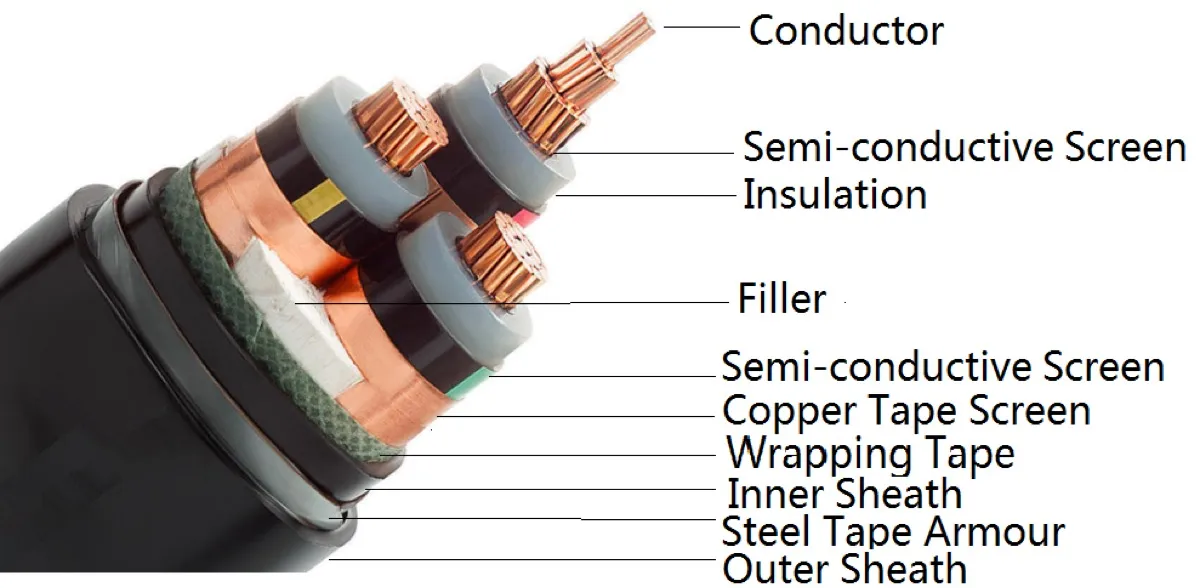
For medium voltage applications, cable construction adds critical stress-control layers:
Typical construction (single core, 8.7/15kV):
- Stranded copper or aluminium conductor (Class 2)
- Semi-conducting conductor screen
- XLPE insulation (4.5mm for 8.7/15kV)
- Semi-conducting insulation screen
- Copper wire screen or copper tape screen (for fault current return)
- Separation tape
- Armour (if specified)
- PVC or PE outer sheath
Key differences from low-voltage cables:
- Mandatory semi-conducting screens (conductor and insulation)
- Thicker insulation (3.4mm to 9.0mm depending on voltage)
- Metallic screen required for fault current capacity and earthing
- More stringent testing requirements (partial discharge test, tan δ)
- Typically single-core for voltages above 18/30kV
Standard voltage ratings we produce:
| Rated Voltage U0/U (kV) | Max System Voltage Um (kV) | Application |
|---|---|---|
| 3.6/6 | 7.2 | Industrial plant distribution |
| 6/10 | 12 | Urban underground networks |
| 8.7/15 | 17.5 | Suburban distribution |
| 12/20 | 24 | Primary distribution |
| 18/30 | 36 | Sub-transmission |
| 21/35 | 36 | Sub-transmission (China standard) |
Quality Standards and Testing
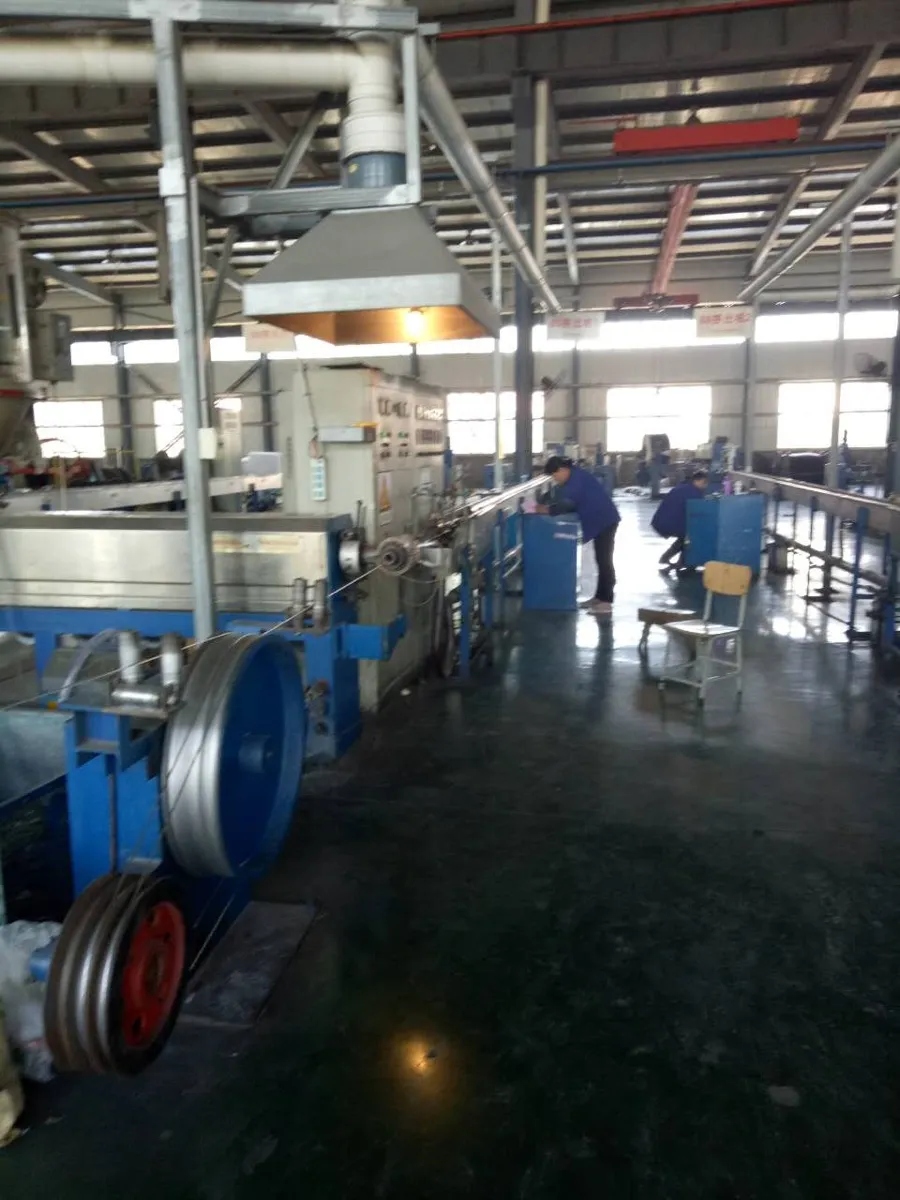
Every XLPE power cable we manufacture undergoes routine testing per the applicable standard. Here's what's tested:
Routine Tests (100% of production)
- Conductor resistance: Measured at 20°C, must comply with IEC 60228 maximum values
- High voltage test: AC voltage applied for 5 minutes (3.5kV for 0.6/1kV cables; scaled for MV)
- Insulation resistance: Minimum 100 MΩ·km at 20°C (LV), higher for MV
- Partial discharge test (MV only): ≤ 5pC at 1.73 × U0
Type Tests (design validation)
- Bending test followed by PD measurement
- Tan δ measurement
- 4-hour high voltage test
- Impulse voltage withstand (BIL)
- Hot set test (verifies cross-linking degree)
- Mechanical tests on sheath and armour
- Ageing tests (thermal + electrical)
Applicable Standards
| Standard | Scope |
|---|---|
| IEC 60502-1 | Power cables 0.6/1kV |
| IEC 60502-2 | Power cables 1kV to 36kV |
| GB/T 12706.1 | Chinese national standard, LV (technically equivalent to IEC 60502-1) |
| GB/T 12706.2 | Chinese national standard, MV |
| BS 7870 | UK standard for distribution cables |
| BS 5467 | Armoured cables for voltages up to 3.3kV |
| NFC 33-226 | French standard (common in West Africa) |
| SANS 1507 | South African standard |
| ASTM / UL (for NA markets) | Various UL listings |
How to Select the Right XLPE Cable for Your Project
Cable selection is a 5-step process. Get any step wrong and you either overspend (oversized cable) or risk failure (undersized cable). Our complete cable size chart with current rating tables provides the ampacity data for every installation method.
Step 1: Determine Voltage Class
| System Voltage | Cable Voltage Rating | Designation |
|---|---|---|
| 380/400V (LV distribution) | 0.6/1kV | Standard LV |
| 3.3kV (industrial) | 3.6/6kV | MV Class 1 |
| 6.6kV (industrial/mining) | 6/10kV | MV Class 2 |
| 11kV (primary distribution) | 8.7/15kV or 12/20kV | MV Class 3 |
| 22kV | 12/20kV or 18/30kV | MV Class 4 |
| 33kV (sub-transmission) | 21/35kV | MV Class 5 |
Rule: Cable rated voltage must be ≥ system highest voltage (Um). For solidly earthed systems, cable U₀ ≥ system phase-to-ground voltage.
Step 2: Calculate Required Current & Choose Conductor Size
- Calculate full-load current: I = P / (√3 × V × cosφ) for 3-phase
- Apply diversity factor if multiple loads
- Select conductor size from current rating table where I_rated > I_load × 1.0 (minimum)
- Apply derating factors for:
- Ambient temperature above 30°C (air) or 20°C (ground)
- Grouped cables (multiple circuits touching)
- Thermal resistivity of soil > 2.5 K·m/W
- Enclosed installation (trunking, conduit)
Step 3: Verify Voltage Drop
Maximum voltage drop limits (typical):
- IEC: 4% for distribution, 6% for motor starting
- BS 7671: 3% for lighting, 5% for other circuits
- NEC: 3% branch, 5% total
Voltage drop formula (3-phase): ΔV = √3 × I × L × (R×cosφ + X×sinφ) / 1000
If voltage drop exceeds limit → increase conductor size one step.
Step 4: Check Short-Circuit Rating
The conductor must withstand prospective fault current for the protection clearing time:
Adiabatic equation: I²t = k² × S²
Where:
- I = short-circuit current (A)
- t = fault clearing time (s)
- S = conductor cross-section (mm²)
- k = 143 for copper/XLPE, 94 for aluminium/XLPE
If calculated minimum S > your selected size → increase conductor size.
Step 5: Select Armour & Outer Sheath
| Installation Method | Armour Required | Recommended Type |
|---|---|---|
| Cable tray / ladder | None | YJV (unarmoured) |
| Cable duct / conduit | None | YJV (unarmoured) |
| Direct burial | Steel tape (Type 22) | YJV22 |
| Direct burial, corrosive soil | Steel tape + PE sheath (Type 23) | YJV23 |
| Vertical shaft / riser | Steel wire (Type 32) | YJV32 |
| Underwater / river crossing | Steel wire + PE sheath (Type 33) | YJV33 |
| Submarine / deep water | Thick steel wire (Type 42) | YJV42 |
| Single-core MV (>35mm²) | Non-magnetic wire (Type 72) | YJV72 |
Installation Guidelines
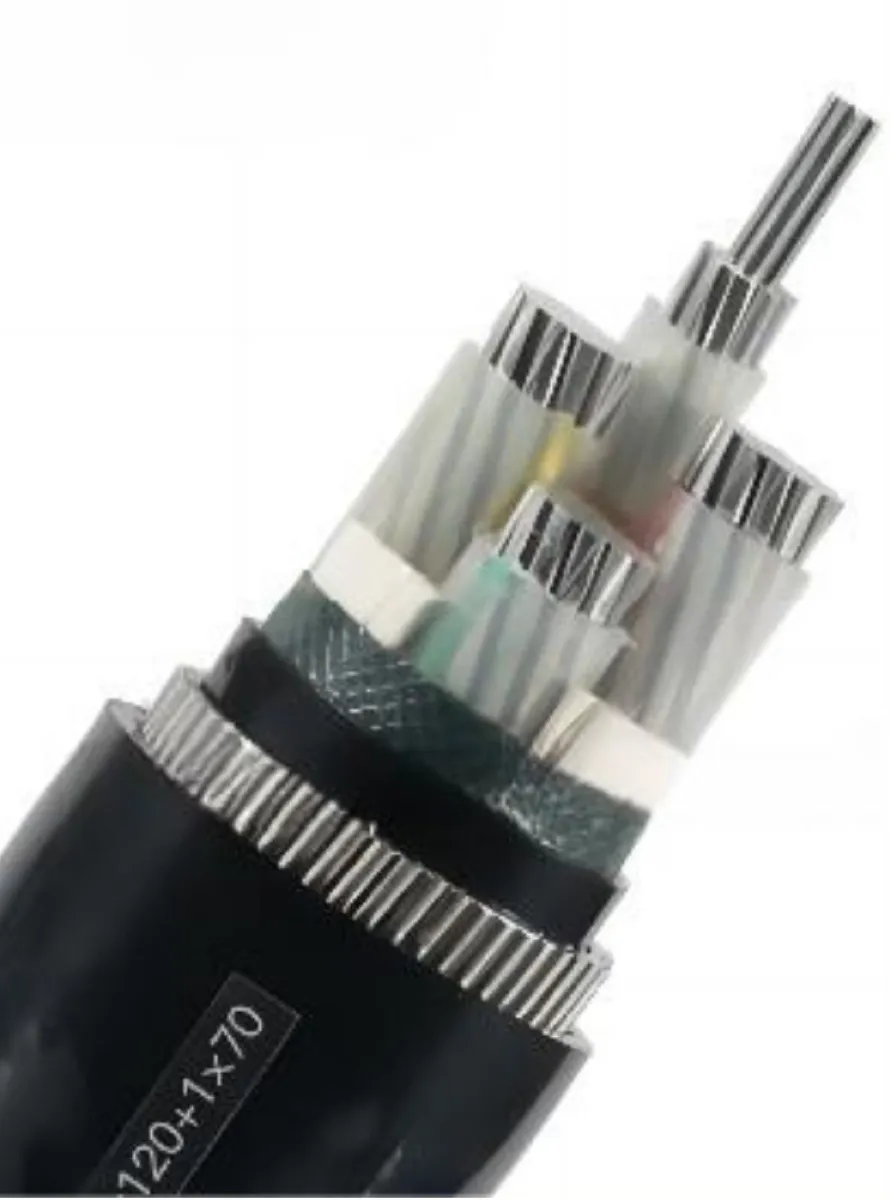
Proper installation directly impacts cable life and performance. Key considerations:
Direct Burial
- Minimum burial depth: 0.7m (LV) / 0.9m (MV) - local codes may require more
- Cable bed: 75mm fine sand or sifted soil below and above cable
- Protective covers: Concrete slabs or warning tape at 300mm above cable
- Minimum bending radius: 15× cable OD (armoured) / 12× OD (unarmoured)
- Separation from other services: minimum 0.3m from telecom, 0.5m from gas
In Ducts / Conduit
- Maximum pulling tension: 50 N/mm2 (copper) or 30 N/mm2 (aluminium) based on conductor cross-section
- Conduit fill ratio: cable OD should not exceed 45% of duct ID (single cable) or 40% (multiple)
- Use cable lubricant for pulls exceeding 30m
- Install pulling eyes on armour wires (SWA), never pull by conductor
Jointing and Termination
- Low voltage: heat-shrink or cold-shrink kits
- Medium voltage: pre-moulded or heat-shrink stress control joints
- Critical: maintain clean, dry conditions during MV jointing - contamination causes partial discharge failures
Why Buy XLPE Cable from China? Factory Advantages
China produces over 40% of the world's wire and cable by volume, making it the largest cable manufacturing base globally. For international buyers sourcing XLPE power cables, Chinese factories offer several structural advantages that are difficult to match elsewhere.
Price Advantage: LME + Processing Fee Model
Chinese cable pricing follows a transparent LME + processing fee structure:
- Conductor cost: Based on London Metal Exchange (LME) copper or aluminium settlement price on the date of order confirmation
- Processing fee: Covers insulation materials, manufacturing, testing, packaging, and margin
This model gives buyers full visibility into cost composition. Because China's cable industry has intense domestic competition (thousands of manufacturers), processing fees are driven down to efficient levels. The result: XLPE cable from China typically costs 20-40% less than equivalent product from European or North American manufacturers, with the same IEC-compliant specifications.
Production Capacity and Lead Times
Major Chinese XLPE cable factories operate at scale that enables competitive lead times:
- Annual production capacity: 15,000-25,000 km of finished cable per factory (our facility produces approximately 20,000 km/year)
- Multiple CCV/VCV lines: Allows simultaneous production of different specifications without queue delays
- Raw material access: China is the world's largest copper importer and processor — supply chain is mature and responsive
- Typical lead times: 2-4 weeks for standard specifications, 4-6 weeks for special orders
This means large project orders (100+ km) that might take 8-12 weeks from a European factory can often ship in 4-6 weeks from China.
Multi-Standard Certification: IEC, BS, NFC, GB — All from One Factory
One of the strongest advantages of established Chinese manufacturers is the ability to produce to multiple international standards from a single factory:
| Standard | Region | Coverage |
|---|---|---|
| IEC 60502-1/2 | International | Full range, all voltages |
| GB/T 12706 | China (technically equivalent to IEC 60502) | Full range |
| BS 7870 / BS 5467 | UK, Commonwealth, East Africa | Certified |
| NFC 33-226 | France, West Africa, North Africa | Certified |
| SANS 1507 | South Africa | Certified |
| ASTM / UL | North America | Select products |
This means a buyer managing projects across Nigeria (BS standard), Senegal (NFC standard), and Kazakhstan (IEC/GOST) can source all cables from one manufacturer — simplifying procurement, quality control, and logistics.
Quality Control Infrastructure
Top-tier Chinese cable factories have invested heavily in testing and QC:
- CNAS-accredited laboratories (equivalent to ISO/IEC 17025)
- Full partial discharge testing capability for medium voltage cables
- Water treeing and ageing test facilities
- 100% routine high-voltage testing on production output
- Third-party inspection acceptance (SGS, Bureau Veritas, TÜV) as standard practice
The key is selecting the right manufacturer. See the verification checklist below for how to separate quality factories from unreliable ones.
Export Logistics Maturity
China's cable export infrastructure is highly developed:
- Packaging: Wooden drums (ISPM-15 compliant for international shipping) or steel drums for sea freight
- Documentation: Commercial invoice, packing list, test reports, certificates of conformity, and certificates of origin — all in English as standard
- Shipping: Direct container loading from factory, FCL or LCL options, FOB/CIF/CFR terms
- Major ports: Shanghai, Ningbo, Qingdao, Tianjin — all within trucking distance of cable manufacturing clusters
For a step-by-step guide on importing cable from China, including payment terms, inspection processes, and shipping logistics, read our How to Buy Cable from China guide.
Choosing an XLPE Cable Manufacturer: What to Verify
When sourcing XLPE power cables — especially from the leading China XLPE cable manufacturers for international projects — here’s what separates a reliable manufacturer from a risk:
Factory Verification Checklist
1. Production capability:
- CCV (Catenary Continuous Vulcanization) line for MV/HV cables - this is the modern standard
- VCV (Vertical Continuous Vulcanization) for HV cables above 35kV
- Minimum 10 extrusion lines for LV cable volume production
- In-house conductor drawing and stranding
2. Testing laboratory:
- Partial discharge testing capability (for MV cables)
- High voltage test set rated to at least 2× the cable's rated voltage
- IEC 17025 accredited lab (or equivalent CNAS accreditation in China)
- Conductor resistance bridge with temperature correction
3. Certifications:
- CB scheme (international mutual recognition)
- CCC mark (mandatory for Chinese domestic market)
4. Material traceability:
- XLPE compound from qualified suppliers (Borealis, Dow, Hanwha, or equivalent)
- Copper cathode grade A (LME registered brands)
- Material test certificates available per batch
5. Track record:
- Export experience to your target market
- Reference projects with similar cable specifications
- Familiarity with your required standard (don't assume a GB factory automatically knows BS or NFC requirements - verify)
Red Flags
- Factory cannot show CCV/VCV line (means they may be using outdated steam curing)
- No partial discharge testing for MV cables
- Reluctance to provide factory audit access
- Pricing significantly below market (usually means thinner insulation, undersized conductors, or recycled material)
- No material traceability system
Our Manufacturing Capability
Our factory (Huanghe Cable, Henan, China) produces the full range of XLPE power cables. Visit our factory page for production line details and certifications.
Voltage range: 0.6/1kV to 35kV Conductor material: Copper or aluminium Conductor range: 1.5mm2 to 630mm2 (LV) / 25mm2 to 800mm2 (MV) Core count: 1, 2, 3, 4, 5 core; 3+1, 3+2, 4+1 configurations Armour options: Unarmoured, STA (YJV22), SWA (YJV32), AWA — see our full power cable product range for all configurations Sheath: PVC, PE, LSZH Production lines: Multiple dedicated LV and MV cable production lines Standards: IEC 60502, GB/T 12706, BS 7870, BS 5467, NFC 33-226, SANS 1507 Annual capacity: Contact us for current capacity availability
Export markets: We supply cables for projects across Africa (Nigeria, Kenya, South Africa, Ghana, Tanzania), the Middle East (Oman, Saudi Arabia, UAE, Iraq), Southeast Asia (Philippines, Vietnam, Cambodia), and Central Asia (Kazakhstan, Mongolia).
How to Request a Quote
To get an accurate quotation, provide the following information:
- Cable type and voltage: e.g., 0.6/1kV, Cu/XLPE/SWA/PVC
- Conductor material: Copper or Aluminium
- Size and configuration: e.g., 4×95mm2, or 3×185+1×95mm2
- Armour requirement: Unarmoured / STA / SWA
- Standard: IEC 60502-1, BS 5467, NFC 33-226, or other
- Quantity: Total length in km or metres
- Destination port: For FOB/CIF calculation
- Special requirements: LSZH sheath, fire rating, specific colour coding, print marking
Our engineering team will provide:
- Detailed technical datasheet for your specific cable
- Full test schedule per your referenced standard
- FOB or CIF pricing
- Production timeline
- Shipping and documentation requirements
Interested in this product?
Request a Free XLPE Cable QuoteFrequently Asked Questions
What is the maximum operating temperature of XLPE cable?
XLPE insulated cables are rated for continuous operation at 90°C conductor temperature. During emergency overload, they can operate at 130°C for limited duration. Short-circuit rating is 250°C for a maximum of 5 seconds.
Can XLPE cable be used outdoors above ground?
Yes, provided the outer sheath is UV-stabilised (black PVC or black PE). For exposed installations, use cables with SWA armour for mechanical protection. The cable should be supported at intervals per manufacturer recommendations to avoid sagging.
What is the minimum bending radius for XLPE armoured cable?
For armoured XLPE cables: minimum 15 times the overall cable diameter. For unarmoured: 12 times. For example, a 4×95mm2 SWA cable with ~43mm OD has a minimum bend radius of 645mm.
How do I determine the right cable size for my project?
Cable sizing depends on load current, installation method, ambient conditions, voltage drop limits, and short-circuit rating. Start with the current rating tables above, apply relevant derating factors, then verify voltage drop and short-circuit withstand. Our engineering team can perform full cable sizing calculations for your project - contact us with your load schedule and installation details.
What's the difference between YJV and YJV22 and YJV32?
- YJV: XLPE insulated, PVC sheathed, no armour - for indoor installation or in ducts
- YJV22: Same plus double steel tape armour - for direct burial where no pulling force is needed
- YJV32: Same plus steel wire armour - for direct burial, vertical installations, or where tensile strength is required during installation
Is your factory auditable?
Yes. We welcome factory visits and third-party inspections. We regularly host buyers, EPC engineers, and inspection agencies (SGS, BV, TUV). Contact us to arrange a factory tour.
What sizes does XLPE cable come in?
XLPE insulated power cables are manufactured in conductor sizes from 1.5mm² to 630mm² for low voltage (0.6/1kV) applications, and from 25mm² to 800mm² for medium voltage (3.6/6kV to 21/35kV). Low voltage cables are available in 1-core through 5-core configurations, plus combined formats like 3+1 and 3+2. Medium voltage cables above 18/30kV are typically single-core only. Both copper and aluminium conductors are available, with aluminium offered from 10mm² upward. See our complete size chart above for the full range by voltage class.
Where can I find a complete XLPE cable specification chart?
This guide includes full specification charts covering insulation thickness (per IEC 60502-1 and IEC 60502-2), conductor dimensions, cable weight, overall diameter, and current carrying capacity for all standard XLPE cable sizes. For low voltage 0.6/1kV cables, see the single-core, four-core, and 3+1 core specification tables. For medium voltage insulation thickness by rated voltage, see the XLPE insulation section. If you need a project-specific datasheet with exact dimensions for your cable configuration, contact our engineering team with your requirements.
Interested in this product?
Contact Us for XLPE Cable SpecificationsRelated Products & Resources
- XLPE Insulated Power Cable - Full Product Page
- SWA Armoured Cable
- PVC Insulated Power Cable (VV)
- Control Cable for Industrial Automation - multi-core PVC/XLPE insulated cables often installed alongside power cables
- 4 Core Armoured Cable: SWA/STA Sizes & Specifications - full size chart 1.5-800mm2 with current ratings and SWA vs STA comparison
- Cable Insulation Types: PVC vs XLPE vs EPR - Complete Comparison
- How to Buy Cable from China: Procurement Guide
- Fire Resistant Cable - for critical circuits requiring circuit integrity during fire
- 3 Phase Power Cable: Sizes & Specifications - complete sizing guide for 3-core, 3+1, and 3+2 configurations
- XLPE Cable Price Per Meter — Cost Factors & Budgeting - understand what drives cable pricing
- 11kV Cable Specifications & Size Chart - current ratings and dimensions for medium voltage applications
- Top 10 XLPE Cable Manufacturers in China - ranked list of leading Chinese XLPE cable factories