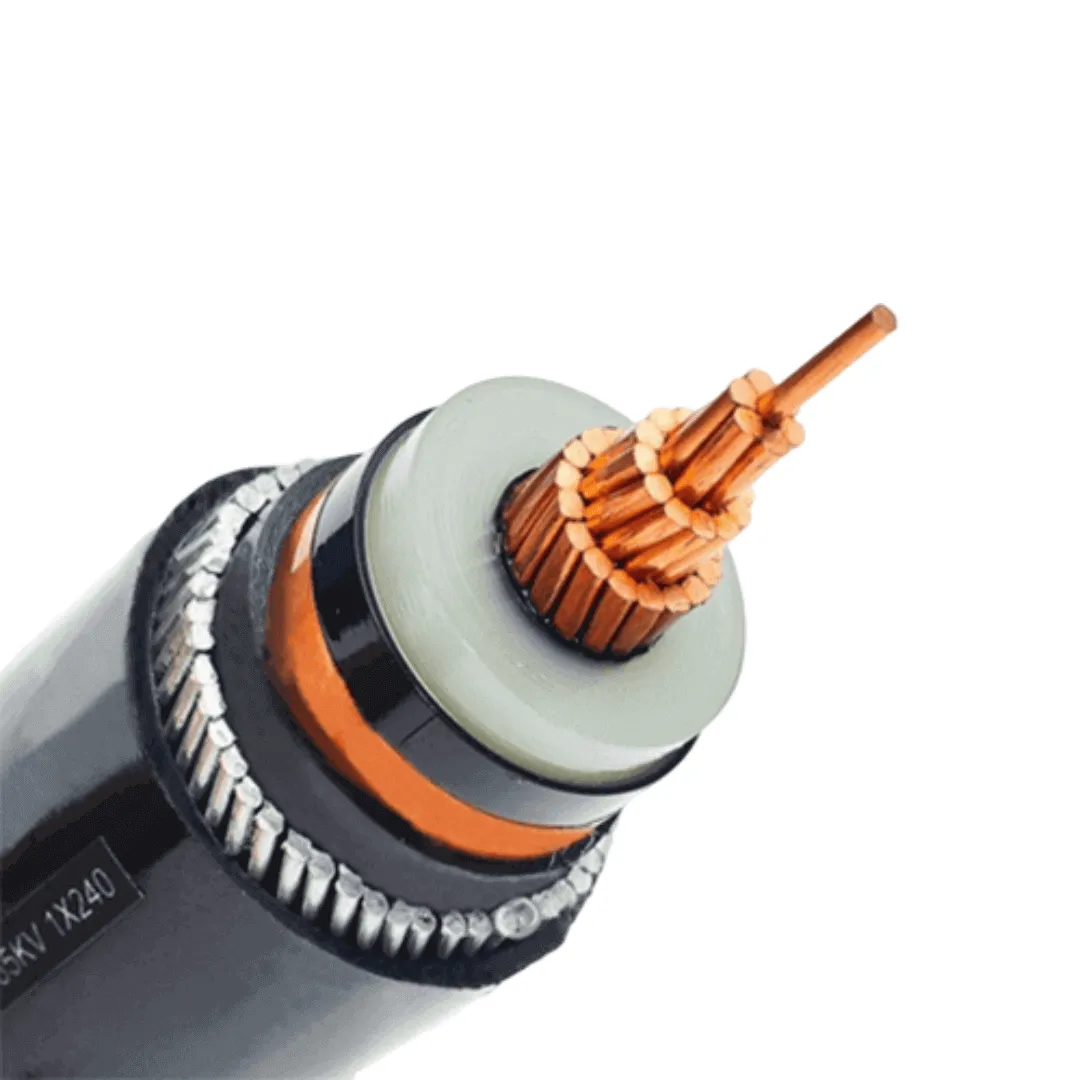
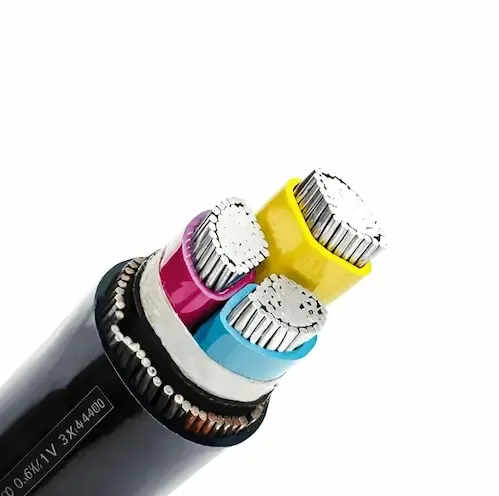
Key Takeaway
Complete 11kV cable size chart with current ratings, dimensions, and weight tables. Single-core and 3-core XLPE 6.35/11kV cable specifications per IEC 60502-2. Copper and aluminium conductor options for underground and aerial installation.
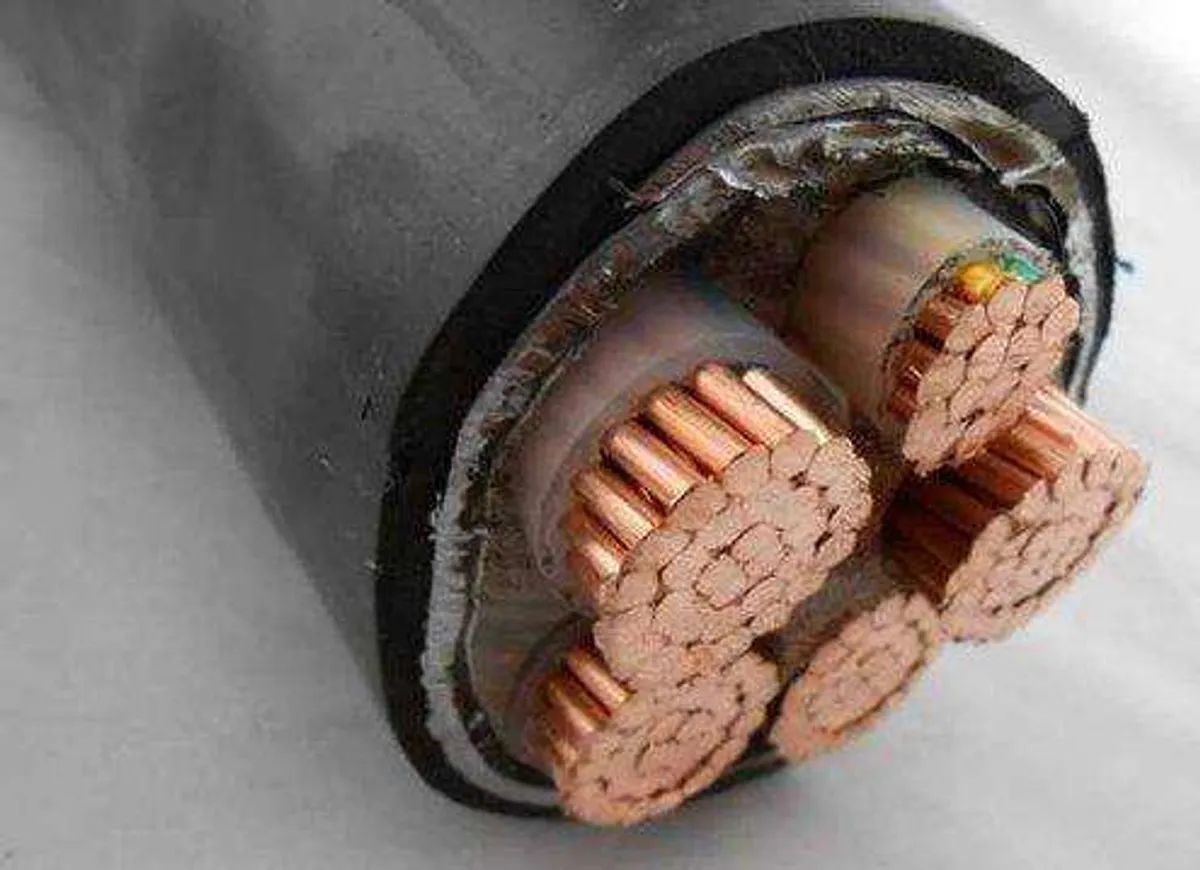
Selecting the correct 11kV cable size is one of the most critical decisions in medium voltage network design. Undersized cable causes overheating, accelerated insulation ageing, and premature failure. Oversized cable wastes capital on unnecessary copper or aluminium while increasing installation difficulty due to weight and bend radius.
This reference guide provides complete specification tables for 6.35/11kV XLPE insulated cables — covering single-core and three-core configurations, copper and aluminium conductors, current ratings for all standard installation methods, physical dimensions, and weight data. All values conform to IEC 60502-2, with cross-references to BS 6622, AS/NZS 1429.1, and GB/T 12706.2 where applicable.
Whether you are sizing cable for a utility distribution feeder, an industrial incoming supply, a solar farm collection circuit, or a mining site ring main, these tables provide the engineering data needed to make correct sizing decisions without flipping through multiple manufacturer datasheets.
11kV Cable Voltage Rating Explained
The standard voltage designation for 11kV system cables is 6.35/11(12)kV or 8.7/15(17.5)kV, depending on the earthing arrangement of the network:
- 6.35/11kV (U₀/U) — for solidly earthed or resistance-earthed systems where earth faults are cleared within 1 hour
- 8.7/15kV (U₀/U) — for impedance-earthed or isolated neutral systems where earth faults may persist, requiring thicker insulation
Where:
- U₀ = rated power-frequency voltage between conductor and metallic screen (earth)
- U = rated power-frequency voltage between any two phase conductors
- Um = maximum system voltage (12kV or 17.5kV respectively)
Most utility distribution networks worldwide (UK, Australia, Middle East, Africa, India, Southeast Asia) operating at a nominal 11kV use cables rated 6.35/11kV because their systems are solidly earthed with fast fault clearance. Networks with resonant earthing (Petersen coil) or isolated neutral require 8.7/15kV rated cable for the same 11kV system voltage.
The insulation thickness difference is significant: 3.4mm for 6.35/11kV versus 4.5mm for 8.7/15kV (IEC 60502-2, Table 1). This directly affects overall cable diameter, weight, and bend radius — all factors that matter during procurement and installation planning.
11kV Cable Construction Standards
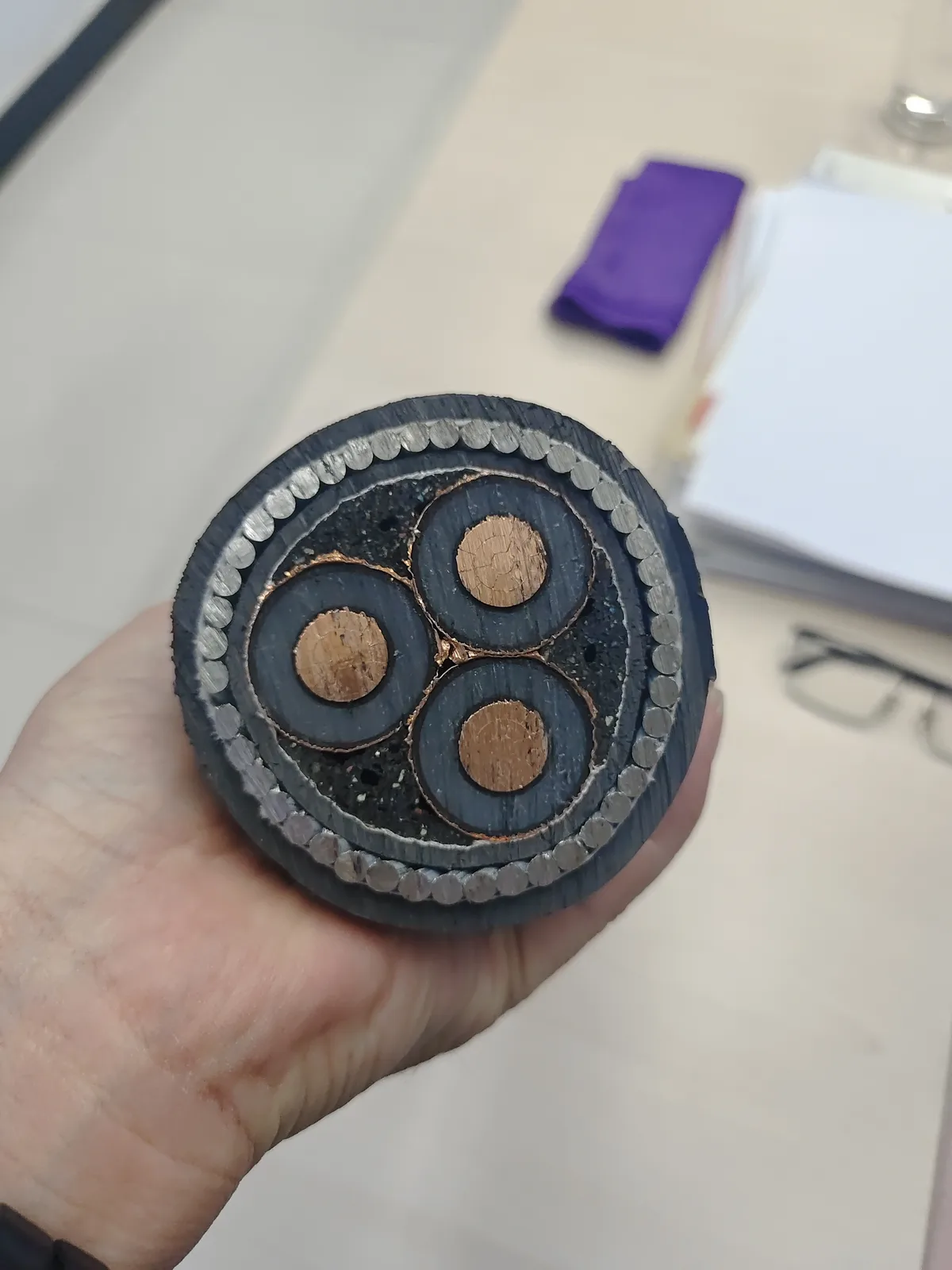
All 11kV XLPE cables share a common construction principle defined by IEC 60502-2. Understanding each layer is essential for correct specification.
Layer-by-Layer Construction
| Layer | Material | Function |
|---|---|---|
| Conductor | Stranded copper (Class 2) or aluminium (Class 2) | Carries load current |
| Conductor screen | Semi-conductive XLPE compound | Smooths electric field at conductor surface |
| Insulation | Cross-linked polyethylene (XLPE) | Primary dielectric barrier, rated for 90°C continuous |
| Insulation screen | Semi-conductive XLPE compound | Smooths electric field at insulation surface |
| Metallic screen | Copper tape (0.1mm) or copper wires (16–70mm²) | Carries fault current, provides earthing path |
| Water barrier | Swellable tape or powder (optional) | Prevents longitudinal water penetration |
| Bedding | PVC or PE compound | Mechanical protection layer under armour |
| Armour | Galvanised steel wire (SWA) or steel tape (STA) | Mechanical protection for direct burial |
| Outer sheath | PVC (black or red) or PE/MDPE | Environmental protection |
Key Design Parameters per IEC 60502-2
| Parameter | 6.35/11kV | 8.7/15kV |
|---|---|---|
| Insulation thickness | 3.4 mm | 4.5 mm |
| Conductor screen thickness | ≥0.5 mm | ≥0.5 mm |
| Insulation screen thickness | ≥0.5 mm | ≥0.5 mm |
| Max conductor temperature (continuous) | 90°C | 90°C |
| Max conductor temperature (short-circuit) | 250°C | 250°C |
| Max conductor temperature (emergency) | 130°C | 130°C |
| Partial discharge (max at 1.73×U₀) | ≤10 pC | ≤10 pC |
| Routine test voltage (5 min) | 21 kV | 26 kV |
11kV Single-Core Cable Size Chart
Single-core 11kV cables are used for high-current circuits where heat dissipation requirements favour individual phase separation, for large conductor sizes above 300mm² where three-core cable becomes impractically heavy, and where single-point or cross-bonded sheath earthing can be implemented to eliminate circulating sheath currents.
Single-Core 6.35/11kV — Copper Conductor, XLPE, Copper Wire Screen, PE Sheath (Unarmoured)
Standard construction: Cu conductor (Class 2) / semi-conductive screen / XLPE insulation (3.4mm) / semi-conductive screen / copper wire screen / PE outer sheath.
| Conductor Size (mm²) | Conductor Diameter (mm) | Insulation Thickness (mm) | Screen Area (mm²) | Overall Diameter (mm) | Weight (kg/km) |
|---|---|---|---|---|---|
| 35 | 7.2 | 3.4 | 16 | 24.5 | 750 |
| 50 | 8.3 | 3.4 | 16 | 26.0 | 920 |
| 70 | 9.9 | 3.4 | 16 | 28.0 | 1150 |
| 95 | 11.5 | 3.4 | 16 | 30.0 | 1400 |
| 120 | 12.9 | 3.4 | 16 | 31.5 | 1650 |
| 150 | 14.4 | 3.4 | 16 | 33.5 | 1950 |
| 185 | 16.0 | 3.4 | 16 | 35.5 | 2300 |
| 240 | 18.2 | 3.4 | 25 | 38.5 | 2900 |
| 300 | 20.4 | 3.4 | 25 | 41.0 | 3400 |
| 400 | 23.2 | 3.4 | 35 | 44.5 | 4200 |
| 500 | 26.0 | 3.4 | 35 | 48.0 | 5200 |
| 630 | 29.3 | 3.4 | 50 | 52.5 | 6600 |
| 800 | 33.1 | 3.4 | 50 | 57.0 | 8300 |
Note: Dimensions are nominal and may vary ±5% between manufacturers. Screen area selected per IEC 60502-2 Table 7 for 1-second fault duration.
Single-Core 6.35/11kV Current Ratings — Copper Conductor (Amperes)
Current ratings below are for single-core XLPE cables with copper conductors, based on IEC 60287 calculation methods. Reference conditions: ambient air temperature 40°C, ground temperature 25°C, soil thermal resistivity 1.0 K·m/W, burial depth 0.8m.
In Air Installation (Solid Bonded Sheath)
| Conductor Size (mm²) | Flat Touching (A) | Flat Spaced (A) | Trefoil Touching (A) | Trefoil Spaced (A) | Enclosed (A) |
|---|---|---|---|---|---|
| 35 | 182 | 211 | 168 | 178 | 125 |
| 50 | 216 | 251 | 201 | 213 | 150 |
| 70 | 269 | 308 | 251 | 266 | 184 |
| 95 | 323 | 368 | 302 | 321 | 219 |
| 120 | 370 | 420 | 348 | 370 | 257 |
| 150 | 413 | 468 | 393 | 419 | 288 |
| 185 | 471 | 525 | 448 | 478 | 325 |
| 240 | 548 | 602 | 525 | 561 | 376 |
| 300 | 617 | 670 | 598 | 639 | 438 |
| 400 | 701 | 750 | 687 | 735 | 497 |
| 500 | 787 | 831 | 782 | 837 | 558 |
| 630 | 877 | 911 | 886 | 948 | 624 |
| 800 | 986 | 1014 | 1008 | 1082 | 727 |
Underground Installation (Solid Bonded Sheath)
| Conductor Size (mm²) | Direct Buried Flat Touching (A) | Direct Buried Flat Spaced (A) | Direct Buried Trefoil (A) | Duct Flat Touching (A) | Duct Flat Spaced (A) | Duct Trefoil (A) | Single Duct (A) |
|---|---|---|---|---|---|---|---|
| 35 | 177 | 179 | 174 | 156 | 156 | 154 | 140 |
| 50 | 208 | 208 | 204 | 181 | 180 | 180 | 167 |
| 70 | 251 | 248 | 249 | 216 | 212 | 217 | 204 |
| 95 | 297 | 291 | 296 | 253 | 246 | 256 | 242 |
| 120 | 334 | 325 | 336 | 284 | 274 | 289 | 279 |
| 150 | 370 | 356 | 374 | 314 | 300 | 322 | 311 |
| 185 | 412 | 392 | 420 | 347 | 328 | 359 | 350 |
| 240 | 467 | 439 | 482 | 391 | 365 | 410 | 402 |
| 300 | 516 | 478 | 538 | 431 | 397 | 457 | 462 |
| 400 | 571 | 522 | 605 | 474 | 431 | 510 | 519 |
| 500 | 627 | 565 | 674 | 520 | 466 | 568 | 580 |
| 630 | 683 | 607 | 746 | 560 | 496 | 520 | 642 |
| 800 | 740 | 651 | 822 | 616 | 537 | 693 | 734 |
Reference conditions per IEC 60287: ground temp 25°C, soil resistivity 1.0 K·m/W, burial depth 0.8m, single circuit.
Single-Point Bonded Sheath (Higher Ratings)
When single-point bonding eliminates circulating sheath currents, current ratings increase by 10–15% for smaller sizes and up to 35% for larger sizes. Key values for copper conductor, trefoil direct buried:
| Conductor Size (mm²) | Solid Bond Trefoil (A) | Single-Point Bond Trefoil (A) | Increase (%) |
|---|---|---|---|
| 95 | 296 | 339 | +15% |
| 150 | 374 | 430 | +15% |
| 240 | 482 | 559 | +16% |
| 300 | 538 | 626 | +16% |
| 400 | 605 | 705 | +17% |
| 500 | 674 | 788 | +17% |
| 630 | 746 | 875 | +17% |
| 800 | 822 | 961 | +17% |
Single-Core 6.35/11kV Current Ratings — Aluminium Conductor (Amperes)
Aluminium conductors carry approximately 78% of the current of an equivalent copper conductor (based on conductivity ratio). For the same ampacity, aluminium requires roughly 1.6× the cross-sectional area of copper.
Underground Direct Buried — Trefoil Formation (Solid Bonded)
| Conductor Size (mm²) | Copper (A) | Aluminium (A) | Al/Cu Ratio |
|---|---|---|---|
| 35 | 174 | 134 | 77% |
| 50 | 204 | 159 | 78% |
| 70 | 249 | 194 | 78% |
| 95 | 296 | 231 | 78% |
| 120 | 336 | 262 | 78% |
| 150 | 374 | 292 | 78% |
| 185 | 420 | 329 | 78% |
| 240 | 482 | 380 | 79% |
| 300 | 538 | 427 | 79% |
| 400 | 605 | 485 | 80% |
| 500 | 674 | 550 | 82% |
| 630 | 746 | 619 | 83% |
| 800 | 822 | 691 | 84% |
11kV Three-Core Cable Size Chart
Three-core 11kV cables are the standard choice for distribution feeders up to approximately 300mm² conductor size. They offer simpler installation (one cable pull instead of three), no sheath bonding requirements, and natural electromagnetic balance between phases.
Three-Core 6.35/11kV — Copper Conductor, XLPE, Copper Tape Screen, SWA, PVC Sheath
Standard construction: 3× [Cu conductor (Class 2) / semi-conductive screen / XLPE insulation (3.4mm) / semi-conductive screen / copper tape screen] / PVC bedding / galvanised steel wire armour / PVC outer sheath.
| Conductor Size (mm²) | Insulation Thickness (mm) | Approx. Overall Diameter (mm) | Approx. Weight (kg/km) | Current Rating — Direct Buried (A) | Current Rating — In Air (A) |
|---|---|---|---|---|---|
| 35 | 3.4 | 48 | 3200 | 171 | 164 |
| 50 | 3.4 | 52 | 3800 | 201 | 195 |
| 70 | 3.4 | 57 | 4600 | 245 | 241 |
| 95 | 3.4 | 62 | 5600 | 292 | 291 |
| 120 | 3.4 | 67 | 6600 | 330 | 334 |
| 150 | 3.4 | 72 | 7800 | 367 | 375 |
| 185 | 3.4 | 77 | 9200 | 412 | 426 |
| 240 | 3.4 | 84 | 11500 | 469 | 495 |
| 300 | 3.4 | 90 | 13800 | 521 | 556 |
| 400 | 3.4 | 98 | 17000 | 579 | 629 |
Current ratings: direct buried in trefoil at 0.8m depth, 25°C ground temp, 1.0 K·m/W; in air = trefoil touching, 40°C ambient.
Three-Core 6.35/11kV — Aluminium Conductor, XLPE, Copper Tape Screen, SWA, PVC Sheath
| Conductor Size (mm²) | Approx. Overall Diameter (mm) | Approx. Weight (kg/km) | Current Rating — Direct Buried (A) | Current Rating — In Air (A) |
|---|---|---|---|---|
| 35 | 48 | 2500 | 133 | 127 |
| 50 | 52 | 2900 | 157 | 152 |
| 70 | 57 | 3500 | 191 | 188 |
| 95 | 62 | 4200 | 227 | 227 |
| 120 | 67 | 4900 | 257 | 260 |
| 150 | 72 | 5700 | 287 | 293 |
| 185 | 77 | 6700 | 323 | 334 |
| 240 | 84 | 8400 | 372 | 391 |
| 300 | 90 | 10000 | 416 | 443 |
| 400 | 98 | 12500 | 469 | 508 |
Weight reduction vs copper: approximately 30–40% depending on size. Same overall diameter because armour and sheathing dimensions remain unchanged.
11kV Cable Size Selection Guide
Selecting the correct 11kV cable size requires matching the cable's de-rated current capacity to the circuit's maximum demand current, while accounting for installation conditions that differ from the reference conditions used in standard rating tables.
Step-by-Step Selection Process
- Determine maximum demand current (I_B) — from transformer rating, motor starting current, or load study
- Select installation method — direct buried, in ducts, in air (determines base current rating table)
- Apply derating factors for actual conditions (see table below)
- Calculate required cable rating: I_Z ≥ I_B / (k₁ × k₂ × k₃ × k₄)
- Check voltage drop — typically ≤5% at full load for distribution circuits
- Verify short-circuit withstand — conductor must survive maximum fault current × clearance time
Derating Factors (Correction Factors per IEC 60287)
Ground Temperature Correction (Reference: 25°C)
| Actual Ground Temp (°C) | Correction Factor |
|---|---|
| 15 | 1.07 |
| 20 | 1.04 |
| 25 | 1.00 |
| 30 | 0.96 |
| 35 | 0.92 |
| 40 | 0.88 |
| 45 | 0.83 |
| 50 | 0.78 |
Soil Thermal Resistivity Correction (Reference: 1.0 K·m/W)
| Soil Resistivity (K·m/W) | Correction Factor |
|---|---|
| 0.5 | 1.17 |
| 0.7 | 1.10 |
| 1.0 | 1.00 |
| 1.5 | 0.89 |
| 2.0 | 0.81 |
| 2.5 | 0.75 |
| 3.0 | 0.70 |
Burial Depth Correction (Reference: 0.8m)
| Actual Depth (m) | Correction Factor |
|---|---|
| 0.5 | 1.04 |
| 0.8 | 1.00 |
| 1.0 | 0.98 |
| 1.25 | 0.96 |
| 1.5 | 0.93 |
| 2.0 | 0.90 |
Grouping (Multiple Circuits) Correction — Direct Buried Trefoil
| Number of Circuits | Spacing = 0 (touching) | Spacing = 0.25m | Spacing = 0.5m | Spacing = 1.0m |
|---|---|---|---|---|
| 2 | 0.80 | 0.85 | 0.90 | 0.95 |
| 3 | 0.70 | 0.76 | 0.82 | 0.88 |
| 4 | 0.64 | 0.70 | 0.77 | 0.84 |
| 6 | 0.56 | 0.63 | 0.70 | 0.78 |
Worked Example: 11kV Cable Size Selection
Project: 2 MVA transformer incoming cable, 200m route length, direct buried in tropical climate.
Step 1 — Maximum demand current: I_B = S / (√3 × U) = 2,000,000 / (1.732 × 11,000) = 105 A
Step 2 — Installation conditions:
- Direct buried in trefoil, depth 1.0m
- Ground temperature: 35°C (tropical)
- Soil resistivity: 1.5 K·m/W (dry sandy soil)
- Single circuit
Step 3 — Combined derating factor: k = 0.92 × 0.89 × 0.98 = 0.802
Step 4 — Required cable rating: I_Z ≥ 105 / 0.802 = 131 A
Step 5 — Select from 3-core table (copper, direct buried):
- 50mm² = 201A ✓ (adequate)
- 35mm² = 171A ✓ (adequate but check voltage drop)
Step 6 — Voltage drop check at 105A over 200m: For 3×50mm² Cu: ΔV ≈ (√3 × 105 × 0.2 × 0.495) = 18V = 0.16% of 11kV ✓
Result: 3×50mm² copper XLPE/SWA cable is suitable. The 95mm² size would be needed only if future load growth to 5 MVA is anticipated.
Short-Circuit Withstand Capacity
The conductor must survive the maximum prospective fault current for the protection clearance time without exceeding 250°C (XLPE insulation limit). The adiabatic equation per IEC 60949:
I²t = k² × S²
Where:
- I = short-circuit current (A)
- t = fault clearance time (s)
- k = material constant (copper = 143, aluminium = 94 for XLPE insulation at 90°C initial temp)
- S = conductor cross-section (mm²)
Maximum 1-Second Short-Circuit Current by Conductor Size
| Conductor Size (mm²) | Copper — 1s (kA) | Copper — 3s (kA) | Aluminium — 1s (kA) | Aluminium — 3s (kA) |
|---|---|---|---|---|
| 35 | 5.0 | 2.9 | 3.3 | 1.9 |
| 50 | 7.2 | 4.1 | 4.7 | 2.7 |
| 70 | 10.0 | 5.8 | 6.6 | 3.8 |
| 95 | 13.6 | 7.8 | 8.9 | 5.2 |
| 120 | 17.2 | 9.9 | 11.3 | 6.5 |
| 150 | 21.5 | 12.4 | 14.1 | 8.1 |
| 185 | 26.5 | 15.3 | 17.4 | 10.0 |
| 240 | 34.3 | 19.8 | 22.6 | 13.0 |
| 300 | 42.9 | 24.8 | 28.2 | 16.3 |
| 400 | 57.2 | 33.0 | 37.6 | 21.7 |
| 500 | 71.5 | 41.3 | 47.0 | 27.1 |
| 630 | 90.1 | 52.0 | 59.2 | 34.2 |
| 800 | 114.4 | 66.1 | 75.2 | 43.4 |
Note: The metallic screen must also withstand fault current. Screen cross-section is selected based on the maximum earth fault current and protection clearance time at the installation location.
Screen Fault Rating
For copper wire screens, the 1-second fault withstand capacity:
| Screen Cross-Section (mm²) | 1-Second Rating (kA) |
|---|---|
| 16 | 2.3 |
| 25 | 3.6 |
| 35 | 5.0 |
| 50 | 7.2 |
| 70 | 10.0 |
| 95 | 13.6 |
Select screen size so that: Screen fault rating ≥ maximum earth fault current at that point in the network.
Installation Requirements
Minimum Bending Radius
The minimum bending radius prevents mechanical damage to insulation and screens during installation.
| Cable Type | Minimum Bend Radius |
|---|---|
| Single-core, unarmoured | 15× overall diameter |
| Single-core, armoured (SWA) | 15× overall diameter |
| Three-core, armoured (SWA) | 12× overall diameter |
| Three-core, unarmoured | 12× overall diameter |
Practical examples:
- 3×240mm² SWA (OD ≈ 84mm): minimum bend radius = 84 × 12 = 1008mm ≈ 1.0m
- 1×400mm² unarmoured (OD ≈ 44.5mm): minimum bend radius = 44.5 × 15 = 668mm ≈ 0.67m
Maximum Pulling Tension
| Conductor Material | Maximum Tension |
|---|---|
| Copper | 50 N/mm² × conductor area |
| Aluminium | 30 N/mm² × conductor area |
Example: 3×300mm² Cu cable maximum pulling tension = 50 × 300 = 15,000 N = 15 kN (per core, applied via pulling eye on all three conductors simultaneously = 45 kN total).
Underground Installation Depth
| Installation Scenario | Minimum Cover (typical) |
|---|---|
| Footpath | 0.45m |
| Road crossing | 0.60m |
| Agricultural land | 0.90m |
| Under building | 0.60m |
| With protective tiles | Depth may be reduced by 0.1m |
Note: Actual minimum cover varies by country and utility specification. Always check local regulations.
6.35/11kV vs 8.7/15kV — Which Rating for Your 11kV Network?
Both voltage ratings serve 11kV systems, but they are not interchangeable without understanding the earthing system:
| Parameter | 6.35/11kV | 8.7/15kV |
|---|---|---|
| System earthing | Solidly earthed or low-impedance earthed | Impedance earthed, isolated neutral, or resonant earthed |
| Earth fault clearance | Within 1 hour (typically less than 1s) | May persist for hours |
| Insulation thickness (IEC 60502-2) | 3.4 mm | 4.5 mm |
| Overall diameter (3×240mm² SWA, approx.) | 84 mm | 92 mm |
| Weight (3×240mm² SWA, approx.) | 11,500 kg/km | 13,200 kg/km |
| Cost premium (8.7/15kV over 6.35/11kV) | — | +12–18% |
| Typical markets | UK, Australia, Middle East, Africa, India | Continental Europe (some networks), industrial isolated systems |
| Standard references | BS 6622, AS/NZS 1429.1 | BS 6622 Category B, NF C 33-226 |
Recommendation: If you are unsure which rating to specify, check the Distribution Network Operator (DNO) approved cable schedule for your region. Most 11kV distribution networks globally are solidly earthed, making 6.35/11kV the correct choice. Specifying 8.7/15kV "to be safe" adds unnecessary cost and installation difficulty without improving reliability on a solidly-earthed network.
Copper vs Aluminium — Size Equivalence Table
When converting between copper and aluminium for the same circuit rating:
| Required Current (A) | Copper Size (mm²) | Aluminium Size (mm²) | Weight Saving (Al vs Cu) | Cost Saving (typical) |
|---|---|---|---|---|
| ~170 | 35 | 50 | 25% | 30–40% |
| ~200 | 50 | 70 | 28% | 32–42% |
| ~250 | 70 | 95 | 28% | 33–43% |
| ~295 | 95 | 120 | 30% | 35–45% |
| ~335 | 120 | 150 | 30% | 35–45% |
| ~375 | 150 | 185 | 32% | 38–48% |
| ~420 | 185 | 240 | 33% | 38–48% |
| ~480 | 240 | 300 | 35% | 40–50% |
| ~540 | 300 | 400 | 35% | 40–50% |
| ~605 | 400 | 500 | 38% | 42–52% |
When to choose aluminium:
- Long route lengths where weight reduction eases installation
- Cost-sensitive projects where lifetime performance is acceptable
- Utility distribution feeders (most DNOs accept aluminium for 11kV)
- Non-corrosive environments
When to choose copper:
- Limited duct or trench space (copper is smaller for same rating)
- High fault-level locations (copper withstands more fault current per mm²)
- Corrosive or subsea environments
- Short cable routes where material cost difference is minimal
- Industrial sites with high ambient temperatures (copper's higher melting point provides margin)
Common 11kV Cable Applications
| Application | Typical Cable Configuration | Common Sizes |
|---|---|---|
| Utility primary distribution feeder | 3-core Al, XLPE/SWA | 185–300mm² |
| Ring main unit (RMU) interconnection | 3-core Al or Cu, XLPE/SWA | 95–185mm² |
| Transformer incoming supply (1–5 MVA) | 3-core Cu, XLPE/SWA | 50–150mm² |
| Transformer incoming supply (5–20 MVA) | Single-core Cu, XLPE/Cu screen | 240–500mm² |
| Solar farm collection circuit | Single-core Al, XLPE | 185–400mm² |
| Wind farm inter-array | 3-core Cu/Al, XLPE/SWA | 95–240mm² |
| Mining site reticulation | 3-core Cu, XLPE/SWA (EPR for flexibility) | 70–185mm² |
| Industrial plant internal MV distribution | 3-core Cu, XLPE/SWA or unarmoured | 95–300mm² |
| DNO last-mile connection | 3-core Al, XLPE/SWA | 185–300mm² (standard) |
Frequently Asked Questions
What is the maximum current for 240mm² 11kV cable?
For a 3-core 240mm² copper XLPE/SWA cable at 6.35/11kV, rated per IEC 60502-2 reference conditions:
- Direct buried (trefoil): 469 A
- In air (trefoil touching): 495 A
For single-core 240mm² copper, direct buried trefoil (solid bonded): 482 A
These are base ratings. Apply derating factors for actual ground temperature, soil resistivity, burial depth, and circuit grouping.
What is the outer diameter of 11kV 3-core 185mm² cable?
Approximately 77mm for copper conductor XLPE/SWA construction at 6.35/11kV. This gives a minimum bending radius of approximately 924mm (12× OD). Allow sufficient space in cable trays, ducts, and joint bays.
What size 11kV cable do I need for a 5 MVA transformer?
Full load current: I = 5,000,000 / (1.732 × 11,000) = 262 A
For a single circuit, direct buried in temperate climate (25°C ground, 1.0 K·m/W soil):
- 3-core 95mm² copper (292A rated) — adequate with minimal margin
- 3-core 120mm² copper (330A rated) — recommended for load growth allowance
- 3-core 150mm² aluminium (287A rated) — adequate if using aluminium
For tropical or harsh conditions, add derating: 120mm² Cu or 185mm² Al is the typical choice.
Can I use 11kV cable for a 10kV system?
Yes. Cable rated 6.35/11kV has a maximum system voltage (Um) of 12kV, which covers 10kV systems. The Chinese standard GB/T 12706.2 rates these cables as 6/10kV or 8.7/10kV depending on the earthing arrangement. Electrically identical to IEC 60502-2 6.35/11kV cable — different labelling convention.
What is the insulation resistance of 11kV XLPE cable?
XLPE insulation resistance is typically >5000 MΩ·km at 20°C for new cable. IEC 60502-2 does not specify a minimum insulation resistance value for XLPE cables (it's inherently high). Instead, the standard requires:
- Routine voltage test: 21kV AC for 5 minutes (6.35/11kV rated cable)
- Partial discharge: ≤10 pC at 1.73 × U₀ = 11kV
- Type test: 42kV AC for 4 hours with heating cycles
How many years does 11kV XLPE cable last?
Design life per IEC 60502-2 is 30 years minimum under rated conditions. In practice, properly installed and operated XLPE 11kV cables routinely achieve 40+ years of service. Key factors affecting actual life:
- Operating temperature (continuous operation near 90°C limit accelerates ageing)
- Water ingress to insulation (water treeing)
- Partial discharge activity
- Mechanical damage during installation
- Soil thermal conditions causing chronic overheating
Testing Requirements for 11kV Cable
Routine Tests (Every Drum)
Per IEC 60502-2 Clause 14:
| Test | Requirement |
|---|---|
| Conductor resistance | Per IEC 60228 class tolerance |
| Voltage test | 21 kV AC for 5 minutes (6.35/11kV) |
| Partial discharge | ≤10 pC at 1.73 × U₀ |
| Insulation thickness measurement | Per Table 1 minimum at any point |
| Dimensional check | Conductor diameter, overall diameter |
Type Tests (Design Qualification)
| Test | Requirement |
|---|---|
| Bending test + partial discharge | After bending at minimum radius |
| Heating cycle voltage test | 42 kV for 4 hours, 20 cycles at conductor temp cycling 5–90°C |
| Impulse voltage test | 75 kV (BIL) for 6.35/11kV |
| Hot set test | XLPE elongation/set at 200°C |
| Shrinkage test | Insulation and sheath materials |
| Water penetration | Longitudinal and radial (if claimed) |
Sample Tests
| Test | Requirement |
|---|---|
| Conductor tensile/elongation | Per IEC 60228 |
| Insulation tensile/elongation | Before and after ageing at 135°C |
| Sheath tensile/elongation | Before and after ageing |
| Hot pressure test | 80°C for PVC, specific deformation limits |
| Carbon black content (PE sheath) | 2.5 ± 0.5% |
| Ozone resistance (EPR only) | No cracking |
Applicable International Standards
| Standard | Scope |
|---|---|
| IEC 60502-2 | Power cables 6kV to 30kV — construction, testing, dimensions |
| IEC 60228 | Conductor requirements (Class 1, 2, 5, 6) |
| IEC 60287 | Current rating calculations (steady-state) |
| IEC 60949 | Short-circuit temperature rise calculations |
| IEC 60840 | Power cables above 30kV (for 33kV and above) |
| BS 6622 | UK standard for MV XLPE cables 6.35/11kV and 19/33kV |
| BS 7870-4 | UK distribution cables with integrated services |
| AS/NZS 1429.1 | Australian/NZ standard for MV polymeric cables |
| GB/T 12706.2 | Chinese standard for MV power cables (equivalent to IEC 60502-2) |
| NF C 33-226 | French standard for MV cables |
11kV Cable from China: Factory-Direct Supply
We manufacture the complete range of 6.35/11kV and 8.7/15kV XLPE cables at our ISO 9001 certified factory in Henan, China. Our 11kV cable production capabilities include:
Product range:
- Single-core: 35mm² to 800mm², copper or aluminium
- Three-core: 35mm² to 400mm², copper or aluminium
- Armour options: steel wire armour (SWA), steel tape armour (STA), or unarmoured
- Screen types: copper tape, copper wire, or combined copper wire/tape
- Sheath: PVC, PE, MDPE, or LSZH (low smoke zero halogen)
Standards compliance:
- IEC 60502-2 (international)
- GB/T 12706.2 (China national standard)
- BS 6622 (UK market)
- AS/NZS 1429.1 (Australia/NZ market)
- NF C 33-226 (French market)
Testing capability:
- Full routine testing per IEC 60502-2 on every production drum
- Type testing at accredited third-party laboratories (KEMA, CNAS-accredited labs)
- Partial discharge measurement system (sensitivity better than 5 pC)
- VLF and AC withstand testing for commissioning support
Quality certifications:
- ISO 9001:2015 quality management
- ISO 14001:2015 environmental management
- CCC (China Compulsory Certification)
- PCCC (China Power Cable Product Certification)
- KEMA type-tested designs
Whether you need 500 meters for a single transformer connection or 50 km for a distribution network expansion, we supply 11kV cable with full test reports, material certificates, and export documentation from our power cable range. Contact us for specifications and pricing.
Summary: Quick-Reference 11kV Cable Sizing Table
For rapid cable selection on standard projects (single circuit, direct buried trefoil, 25°C ground, 1.0 K·m/W soil):
| Load (MVA at 11kV) | Full Load Current (A) | Minimum Cu Size (3-core) | Minimum Al Size (3-core) | Recommended Size (with margin) |
|---|---|---|---|---|
| 1 | 52 | 35mm² | 35mm² | 50mm² Cu / 70mm² Al |
| 2 | 105 | 35mm² | 50mm² | 70mm² Cu / 95mm² Al |
| 3 | 157 | 50mm² | 70mm² | 95mm² Cu / 120mm² Al |
| 5 | 262 | 95mm² | 150mm² | 120mm² Cu / 185mm² Al |
| 7.5 | 394 | 185mm² | 240mm² | 240mm² Cu / 300mm² Al |
| 10 | 525 | 300mm² | 400mm² | 400mm² Cu / single-core |
| 15 | 787 | Single-core req'd | Single-core req'd | 1×400mm² Cu or 1×500mm² Al |
| 20 | 1050 | Single-core req'd | Single-core req'd | 1×630mm² Cu or 1×800mm² Al |
This quick-reference assumes standard conditions and no derating. For actual projects, always apply correction factors for ground temperature, soil resistivity, depth, and grouping as shown in the selection guide above.
Related 11kV & MV Cable Resources
Sizing and specifying an 11kV network involves more than the current-rating tables above. Use these guides to compare constructions, cross-check standards, and move from specification to procurement:
Compare & select the right construction:
- Medium Voltage Cable 11kV & 33kV Manufacturer Guide — full MV range, DNO supply and 33kV step-up
- ACSR vs AAC vs AAAC: Which Conductor for Your Power Line? — when overhead beats underground MV
- Cable Insulation Types: PVC vs XLPE vs LSZH — why XLPE is the MV standard
- Underground Power Cable Types & Installation — burial, ducting and soil-condition selection
Get pricing & source your 11kV cable:
- XLPE Cable Price Per Meter: Cost Factors & Factory Quote — what drives MV cable cost
- XLPE Power Cable Manufacturer Guide — how to choose a factory
- Top 10 XLPE Cable Manufacturers in China — ranked supplier shortlist
- How to Import Cable from China: 7-Step Buyer's Guide — from RFQ to delivery
Interested in this product?
Get an 11kV Cable Quote — Full Test Reports & Export Docs