Key Takeaway
XLPE cable price breakdown: what drives cost per meter by conductor size, voltage class & armour type. Copper vs aluminium comparison table. Get factory-direct quote — no trading company markup, reply within 24h.
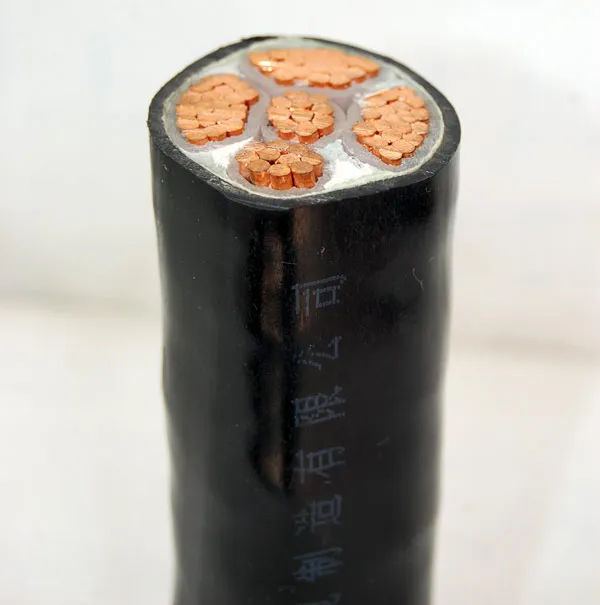
If you are pricing out an infrastructure project — whether it is a housing development, industrial plant, solar farm, or utility distribution network — XLPE cable price is one of the largest line items on your bill of materials. The challenge is that XLPE power cable pricing varies significantly depending on conductor size, voltage class, armour type, and where you source it.
This guide breaks down exactly what determines XLPE cable cost per meter, compares pricing across voltage classes and conductor materials, and shows you how to get the best factory-direct price from China without compromising on quality or certification.
We manufacture the full range of XLPE insulated power cables — from 0.6/1 kV low-voltage distribution cables up to 35 kV medium-voltage feeders — at our factory in Henan, China. Our production lines cover single-core and multi-core configurations, copper and aluminium conductors, and all standard armour types (SWA, STA, AWA).
What Determines XLPE Cable Price?
XLPE cable is not a commodity with a fixed price tag. Every quote depends on a combination of material, engineering, and commercial factors. Understanding these drivers helps you compare quotes intelligently and avoid overpaying.
1. Conductor Material: Copper vs Aluminium
The conductor accounts for 60–75% of total cable cost for low-voltage XLPE cables. This single factor creates the biggest price swing:
- Copper conductor: Higher conductivity (smaller cross-section needed for same current), but copper trades at roughly 4–5× the price of aluminium by weight
- Aluminium conductor: Requires a larger cross-section for equivalent current capacity, but the raw material cost per kilometre is dramatically lower
For a typical 4-core 95mm² XLPE cable, switching from copper to aluminium conductor reduces the cable price by approximately 40–50%. For long distribution runs where weight and termination complexity are acceptable, aluminium delivers significant project savings.
2. Conductor Cross-Section
Larger cross-sections mean more metal per metre. The relationship is roughly linear — double the cross-section, nearly double the conductor material cost. Common sizes range from 1.5mm² for control applications up to 630mm² for heavy industrial feeders.
The practical impact: a 4×240mm² cable costs roughly 6–8× more per metre than a 4×25mm² cable of the same voltage class and construction.
3. Voltage Class
Higher voltage ratings require thicker insulation, semiconducting screens, and metallic shielding — all of which add material and manufacturing cost:
| Voltage Class | Insulation Thickness (typical, 95mm²) | Additional Layers | Relative Cost Index |
|---|---|---|---|
| 0.6/1 kV | 1.0 mm | None | 1.0× (baseline) |
| 3.8/6.6 kV | 3.4 mm | Conductor screen + insulation screen + copper tape | ~1.4–1.6× |
| 6.35/11 kV | 3.4 mm | Same as above | ~1.5–1.7× |
| 8.7/15 kV | 4.5 mm | Same + thicker screens | ~1.7–2.0× |
| 12.7/22 kV | 5.5 mm | Same | ~2.0–2.3× |
| 19/33 kV | 8.0 mm | Same + larger screen area | ~2.5–3.0× |
Note: These are relative indices for the same conductor size. Actual multipliers depend on conductor cross-section and armour type.
The takeaway: moving from low-voltage to medium-voltage roughly doubles or triples your cable cost per metre for the same conductor size, due to insulation engineering requirements per IEC 60502-2.
4. Armour Type
Armoured XLPE cable costs more than unarmoured, but the premium varies by armour construction:
- Unarmoured: Baseline price — suitable for cable tray, indoor, or ducted installations
- STA (Steel Tape Armour): Adds ~8–12% to cable cost — two layers of steel tape, used for single-core cables and static installations
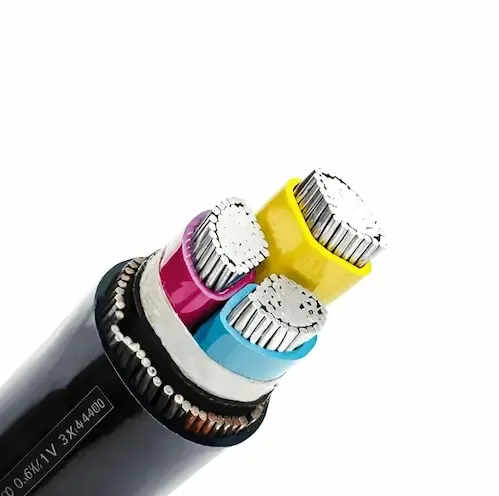
- SWA (Steel Wire Armour): Adds ~10–15% to cable cost — helical steel wires, the standard for direct burial multi-core cables
- AWA (Aluminium Wire Armour): Similar premium to SWA but lighter — required for single-core cables to avoid magnetic heating
For a detailed comparison of armoured cable specifications, see our 4-core armoured cable guide.
5. Number of Cores
More cores means more conductor material, more insulation, and a larger overall cable diameter requiring more armour and sheathing material:
- Single-core: Baseline
- 3-core: ~2.7–2.9× single-core price (not exactly 3× due to shared armour/sheath)
- 4-core: ~3.5–3.8× single-core price
- 3+1 core (reduced neutral): ~3.2–3.4× single-core price
6. Sheath Material
- PVC outer sheath: Standard, lowest cost
- LSZH (Low Smoke Zero Halogen): Adds 5–10% premium — required for buildings, tunnels, metro systems
- PE (Polyethylene): Sometimes used for direct burial, similar cost to PVC
7. Certifications and Testing
If your project requires specific national certifications (SABS, KEBS, SON, KEMA, etc.), the manufacturer may need to conduct additional type testing or maintain specific production approvals. This can affect pricing, especially for smaller orders where certification overhead is spread across fewer metres.
8. Commodity Market Prices
Copper and aluminium are traded on the London Metal Exchange (LME). Cable prices fluctuate daily with metal markets. A 10% rise in LME copper price translates to roughly a 6–8% increase in finished copper XLPE cable price. Most manufacturers quote with a validity period of 7–15 days due to metal volatility.
XLPE Cable Price Trends 2025–2026: How Market Forces Shape Your Cost
XLPE cable pricing does not exist in a vacuum — it tracks global commodity markets, energy costs, and supply-demand dynamics. Understanding price trends helps you time your procurement for maximum value.
Copper Price Movement and Its Impact on XLPE Cable Cost
LME copper has been volatile through 2025 and into 2026, driven by strong global electrification demand — EV charging infrastructure, national grid upgrades, and data centre construction are all pulling copper demand higher. When copper moves 10% on the LME, a copper-conductor XLPE cable moves approximately 6–8% in finished price — the relationship is not 1:1 because insulation, armour, sheathing, and manufacturing overhead are fixed-cost components.
The practical implication: on a large project with, say, 50 km of 4×95mm² copper XLPE cable, a 10% swing in copper price can shift your cable budget by 6–8%. That is a significant number on infrastructure contracts.
Aluminium Price Trends
Aluminium has been relatively more stable than copper in the same period, trading within a narrower band. For buyers on tight budgets or long distribution projects, aluminium XLPE cable offers both a lower absolute price and less exposure to commodity volatility.
What This Means for Procurement Timing
- Watch LME copper daily: If copper drops 5%+ from recent peaks, that is a buying window for copper XLPE cable
- Lock price early: Once you have a quote within validity (7–15 days), confirm with deposit promptly if the price is acceptable — waiting costs money if copper is trending up
- Consider aluminium for new projects: In the current pricing environment, the 40–50% cost saving on aluminium conductor cables is even more compelling for long underground runs
- Bulk contracts with price-adjustment clauses: For phased projects spanning 6+ months, negotiate a pricing formula tied to LME, so both buyer and seller share commodity risk fairly
XLPE Cable Price Outlook
The medium-term outlook suggests continued upward pressure on copper-intensive cables due to global electrification momentum. Infrastructure spending in Africa, the Middle East, and Southeast Asia continues to grow, supporting strong demand for XLPE power cables. Buyers who plan ahead, optimise conductor material choice, and buy factory-direct (eliminating middleman markup) will maintain the best cost position.
XLPE Cable Price by Voltage Class: What to Expect
Low Voltage XLPE Cable (0.6/1 kV)
This is the highest-volume segment. Used for power distribution in buildings, industrial plants, solar farms, and underground networks. Available as:
- Single-core (for switchboard wiring and parallel runs)
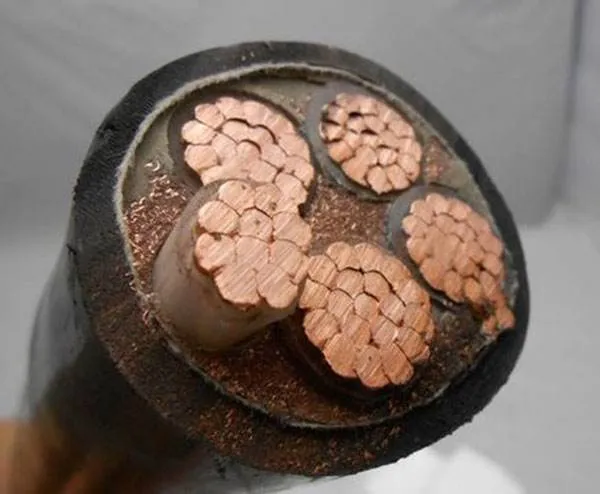
- Multi-core (2, 3, 3+1, 4, 5 core) for general distribution
- Armoured (SWA/STA) for direct burial and outdoor use
- Unarmoured for cable tray and indoor installation
Price drivers at this voltage level are dominated by conductor material and cross-section. Insulation cost is relatively minor since XLPE thickness at 0.6/1 kV is only 0.7–1.0mm.
For specifications and sizing data on low-voltage XLPE cables, see our XLPE power cable manufacturer guide.
Medium Voltage XLPE Cable (6.6 kV – 33 kV)
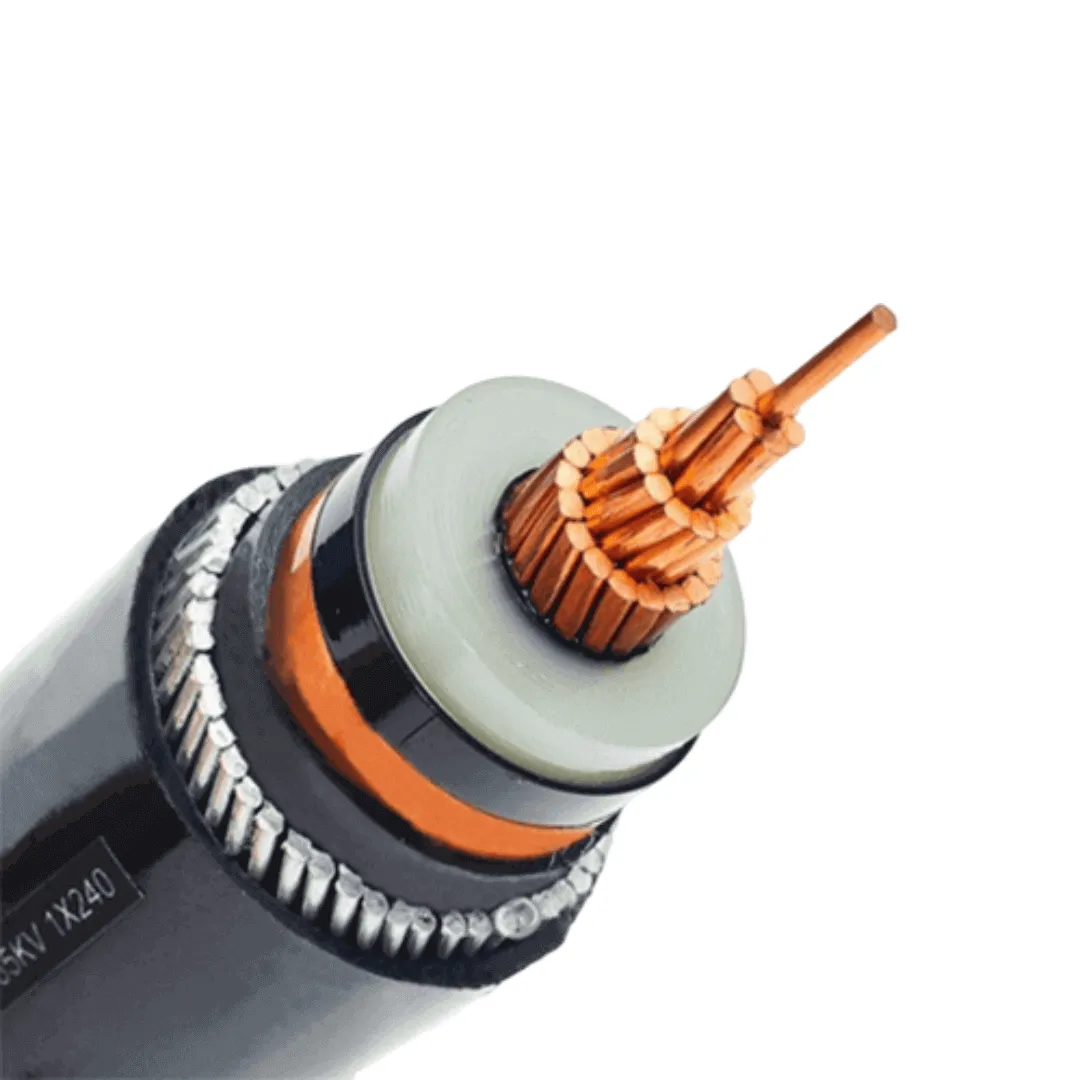
Medium-voltage XLPE cables are engineering-intensive products. Each cable includes:
- Semiconducting conductor screen
- XLPE insulation (3.4mm to 8.0mm depending on voltage)
- Semiconducting insulation screen
- Metallic screen (copper tape or copper wire)
- Bedding, armour, and outer sheath
The additional layers, tighter manufacturing tolerances, and mandatory partial discharge testing (≤5 pC) make MV cables significantly more expensive per metre than equivalent LV cables.
Typical applications:
- Primary distribution feeders (11 kV, 33 kV)
- Industrial plant HV supply
- Wind and solar farm collection cables
- Underground utility networks
- Mining reticulation
For detailed MV cable specifications per IEC 60502-2, read our medium voltage cable guide.
Copper vs Aluminium XLPE Cable: Price Comparison
This is the biggest cost decision most buyers face. Here is how the economics work:
| Factor | Copper XLPE Cable | Aluminium XLPE Cable |
|---|---|---|
| Conductor cost share | 65–75% of cable price | 35–45% of cable price |
| Price difference | Baseline | 40–50% cheaper |
| Size for same current | Baseline (e.g., 95mm²) | ~1.5× larger (e.g., 150mm²) |
| Weight | Heavier | ~50% lighter |
| Termination | Standard copper lugs | Aluminium-rated lugs, anti-oxidant compound |
| Theft risk | Higher (scrap value) | Lower |
| Best application | Short runs, confined space, harsh termination environments | Long distribution runs, cost-sensitive bulk projects |
When Aluminium Makes Economic Sense
- Cable runs exceeding 100 metres
- Projects where installed cost dominates (not maintenance cost)
- Underground distribution where cable is protected from theft
- Large cross-sections (150mm² and above) where the aluminium size penalty is manageable
When Copper Is Worth the Premium
- Space-constrained installations (smaller diameter for same capacity)
- Environments requiring frequent disconnection/reconnection
- Corrosive environments where aluminium oxide buildup at joints is problematic
- Projects where client specification mandates copper
XLPE Cable Specification & Cost Factor Table
The table below shows common XLPE cable configurations with the factors that drive relative pricing. Rather than publishing prices that become outdated with the next LME shift, we show the cost-relevant parameters:
Low Voltage (0.6/1 kV) — 4-Core SWA, Copper
| Size (mm²) | Copper Weight (kg/km) | Overall Diameter (mm) | Cable Weight (kg/km) | Cost Driver Rank |
|---|---|---|---|---|
| 4×16 | 538 | 23.0 | 1,300 | Low |
| 4×25 | 840 | 26.5 | 1,810 | Low-Mid |
| 4×35 | 1,176 | 29.0 | 2,240 | Mid |
| 4×50 | 1,680 | 32.5 | 2,910 | Mid |
| 4×70 | 2,352 | 37.0 | 3,880 | Mid-High |
| 4×95 | 3,192 | 41.0 | 5,030 | High |
| 4×120 | 4,032 | 45.0 | 6,150 | High |
| 4×150 | 5,040 | 48.5 | 7,320 | Very High |
| 4×185 | 6,216 | 53.0 | 8,850 | Very High |
| 4×240 | 8,064 | 59.0 | 11,150 | Premium |
| 4×300 | 10,080 | 64.0 | 13,340 | Premium |
The copper weight column is your primary cost indicator. At current LME copper prices, multiply copper weight by the daily rate to estimate the conductor material component, which represents 65–75% of the finished cable price.
Low Voltage (0.6/1 kV) — 4-Core SWA, Aluminium
| Size (mm²) | Aluminium Weight (kg/km) | Overall Diameter (mm) | Cable Weight (kg/km) | Cost Driver Rank |
|---|---|---|---|---|
| 4×25 | 252 | 27.0 | 1,420 | Low |
| 4×35 | 353 | 29.5 | 1,680 | Low |
| 4×50 | 504 | 33.0 | 2,150 | Low-Mid |
| 4×70 | 706 | 37.5 | 2,850 | Mid |
| 4×95 | 958 | 41.5 | 3,680 | Mid |
| 4×120 | 1,210 | 45.5 | 4,480 | Mid-High |
| 4×150 | 1,512 | 49.5 | 5,380 | High |
| 4×185 | 1,865 | 54.0 | 6,500 | High |
| 4×240 | 2,419 | 60.0 | 8,200 | Very High |
| 4×300 | 3,024 | 65.0 | 9,900 | Very High |
Notice the aluminium weight is roughly 30% of the copper equivalent — this is why aluminium cable price is so much lower, despite requiring a larger cross-section for the same current rating.
Armoured vs Unarmoured XLPE Cable: Price Difference
The armour adds material cost and manufacturing complexity. Here is what to expect:
Cost Premium for Armour
| Armour Type | Typical Price Premium Over Unarmoured | Best For |
|---|---|---|
| SWA (Steel Wire) | +10–15% | Multi-core, direct burial, high impact risk |
| STA (Steel Tape) | +8–12% | Single-core, static installations |
| AWA (Aluminium Wire) | +10–14% | Single-core, avoids eddy current heating |
| None (Unarmoured) | Baseline | Cable tray, duct, indoor |
When Unarmoured Is Acceptable
- Indoor installations on cable tray or ladder
- Inside conduit or duct systems
- Inside cable trenches with concrete covers
- Switchboard and panel wiring
When You Need Armoured
- Direct burial (always SWA for multi-core)
- Outdoor exposed runs
- Industrial environments with mechanical risk
- Areas with rodent activity
The 10–15% armour premium is almost always justified for underground and outdoor installations — the alternative (unarmoured cable in protective conduit) typically costs more in total when you add conduit material and installation labour.
XLPE Cable Price by Destination: What Affects Your Landed Cost
Factory-gate price is only part of the equation. Your actual cost per metre at site depends heavily on logistics and market factors:
Freight Cost
Cable is heavy. A 20ft container holds approximately 18–22 tonnes of cable depending on drum dimensions. Freight cost per kg varies significantly by route:
- China to West Africa (Lagos): Higher freight rates, longer transit (25–35 days)
- China to East Africa (Mombasa): Moderate freight, 18–25 days
- China to Middle East (Jebel Ali): Lower freight, 12–18 days
- China to Southeast Asia (Manila): Lowest freight among export destinations, 7–12 days
For large cable orders (full containers), freight cost adds roughly 3–8% to cable FOB price depending on destination.
Import Duties and Taxes
| Destination | Typical Cable Import Duty | VAT/GST | Notes |
|---|---|---|---|
| Nigeria | 10–20% CIF | 7.5% | Additional levies may apply |
| Kenya | 25% CIF | 16% | EAC Common External Tariff |
| South Africa | 0–15% | 15% | Depends on HS code, SADC preferences |
| UAE | 5% CIF | 5% | Low barrier market |
| Saudi Arabia | 5–12% | 15% | GCC common tariff |
| Philippines | 3–10% | 12% | Depends on trade agreements |
| Pakistan | 11–20% + regulatory duty | 18% | Complex duty structure |
Certification Costs
Some markets require specific product certification before import or installation:
- SABS (South Africa): Type testing and factory audit — cost amortised across production volume
- KEBS (Kenya): Product mark required
- SON (Nigeria): SONCAP certification mandatory
- GSO (Gulf States): Regional conformity mark
We hold active certifications for all major export markets. This means no additional certification cost or delay for standard cable specifications. For non-standard configurations, allow 4–8 weeks for type testing if required.
XLPE Cable Price Calculator: Estimate Your Project Cost
Most buyers wait for a quote without knowing whether the number they receive is reasonable. Here is a simple formula to estimate XLPE cable price per metre yourself, based on publicly available data. This gives you a sanity-check tool before you even contact a supplier.
The Basic Cost Formula
For copper-conductor XLPE cable, the price per metre can be approximated as:
Estimated price/m = (Conductor weight per km × LME copper price per kg ÷ 1000) × Manufacturing factor
Where:
- Conductor weight per km = Cross-section (mm²) × Number of cores × 8.89 kg/km per mm² (copper density factor)
- LME copper price = Check lme.com for current cash settlement price (USD/tonne, divide by 1000 for per-kg)
- Manufacturing factor = Multiplier that covers insulation, armour, sheath, manufacturing overhead, and profit margin
Manufacturing Factor by Cable Type
| Cable Configuration | Manufacturing Factor | Notes |
|---|---|---|
| LV unarmoured, PVC sheath | 1.35–1.45 | Simplest construction |
| LV SWA armoured, PVC sheath | 1.45–1.60 | Standard distribution cable |
| LV LSZH sheath | 1.50–1.65 | Fire-rated sheath premium |
| MV 11kV, copper screen, SWA | 1.70–1.90 | Screens and MV insulation add cost |
| MV 33kV, copper screen, SWA | 1.90–2.20 | Thick insulation, larger screens |
These factors represent typical factory-direct pricing. Trading companies add 10–25% on top.
Worked Example
Estimate the price for 4×95mm² 0.6/1kV Cu/XLPE/SWA/PVC cable:
- Conductor weight = 95 × 4 × 8.89 = 3,378 kg/km
- Assume LME copper = USD 9,500/tonne = USD 9.50/kg
- Conductor cost per metre = 3,378 × 9.50 ÷ 1000 = USD 32.09/m
- Apply manufacturing factor 1.50 = USD 48.14/m estimated
This gives you a ballpark. If a supplier quotes USD 45–55/m for this cable, it is in the normal range. If someone quotes USD 30/m, either they are using a lighter conductor (fraud) or the LME has dropped significantly. If someone quotes USD 75/m, they are likely a trading company with heavy markup.
For Aluminium Conductor
Use the same formula with:
- Aluminium density factor: 2.70 kg/km per mm² (instead of 8.89 for copper)
- LME aluminium price: Typically USD 2,200–2,600/tonne
- Manufacturing factor: Same ranges as above
Aluminium example: 4×150mm² Al/XLPE/SWA:
- Conductor weight = 150 × 4 × 2.70 = 1,620 kg/km
- LME aluminium = USD 2,400/tonne = USD 2.40/kg
- Conductor cost per metre = 1,620 × 2.40 ÷ 1000 = USD 3.89/m
- Apply factor 1.55 = USD 6.03/m estimated
This illustrates exactly why aluminium cables are dramatically cheaper — the raw material cost is roughly one-eighth of copper.
Limitations of This Calculator
- Does not account for certifications, special testing, or minimum order quantity effects
- Manufacturing factors vary by country of origin (China factories typically at the lower end, European factories at the higher end)
- Freight, duty, and insurance are separate (add 5–15% for CIF landed cost)
- Small cross-sections (below 25mm²) have proportionally higher manufacturing factors because conductor cost is a smaller share
Use this as a negotiation tool and quote validation method — not as a substitute for a proper quotation. For an accurate price based on your exact specification and quantity, request a factory-direct quote.
How to Get the Best XLPE Cable Price from China
Here are the strategies that actually move the needle on price:
1. Buy Factory Direct
Trading companies and distributors add 10–25% markup. When you buy directly from the manufacturer, you eliminate this layer entirely. We are a factory — not a trading company — with our own production lines, testing laboratory, and export documentation team.
For our factory capabilities and product range, visit our XLPE cable supplier guide.
2. Order in Volume
Cable production has significant setup costs — die changes, colour changes, and testing setup. Larger orders spread these fixed costs across more metres:
- Small orders: Higher per-metre cost due to setup amortisation
- Standard project orders: Competitive pricing
- Large project or annual contract: Best pricing tier, possible dedicated production scheduling
3. Consider Aluminium Where Appropriate
As shown above, aluminium conductor cables cost 40–50% less. For underground distribution runs, aluminium is standard practice in most markets. The engineering trade-off (slightly larger cable, aluminium-rated terminations) is well worth the cost saving on large projects.
4. Optimise Voltage Class
Don't over-specify. If your system voltage is 11 kV, you need 6.35/11 kV cable — not 12.7/22 kV cable. The higher insulation class costs significantly more per metre with no benefit to your installation.
5. Consolidate Cable Types
If your project needs multiple cable sizes (e.g., 4×95, 4×50, and 4×25 for different feeders), ordering everything from one factory on one purchase order gives better pricing than splitting across suppliers.
6. Plan Ahead on Delivery
Rush orders cost more — overtime, priority scheduling, and express freight all add up. Standard production lead time is 2–4 weeks depending on quantity and specification. Planning allows sea freight (cheapest) rather than air freight.
7. Choose FOB Terms for Large Orders
FOB (Free on Board) pricing gives you control over freight and insurance — you can often get better shipping rates through your own forwarder than the factory's CIF quote, especially for full container loads.
Total Cost of Ownership: XLPE vs PVC Insulated Cable
XLPE cable costs more per metre than PVC cable of the same conductor size. But the total installed cost often favours XLPE. Here is why:
Higher Current Rating = Smaller Cable
XLPE operates at 90°C continuous (vs 70°C for PVC). This means higher current-carrying capacity for the same conductor cross-section:
| Cable Size | PVC Current Rating (buried) | XLPE Current Rating (buried) | Difference |
|---|---|---|---|
| 4×25 mm² | 77 A | 96 A | +25% |
| 4×50 mm² | 110 A | 136 A | +24% |
| 4×95 mm² | 158 A | 197 A | +25% |
| 4×150 mm² | 204 A | 253 A | +24% |
| 4×240 mm² | 268 A | 332 A | +24% |
Ratings per BS 7671 / IEC 60502, 4-core SWA, direct burial, 20°C ground, 1.2 K·m/W soil thermal resistivity.
This means: if your load requires 200A, you need 4×120mm² in XLPE but 4×150mm² in PVC. The smaller XLPE cable costs less in conductor material, is lighter to transport, and easier to handle during installation.
Longer Service Life
XLPE-insulated cables have a design life of 30–40 years vs 20–25 years for PVC. Over a project lifecycle, XLPE offers lower cost per year of service.
Better Short-Circuit Performance
XLPE withstands 250°C short-circuit temperature (5 seconds) vs 160°C for PVC. This means XLPE cables can handle higher fault currents without damage — potentially eliminating the need to oversize cables for short-circuit rating alone.
When PVC Still Makes Sense
- Very short runs where material cost difference is negligible
- Temporary installations (construction site power)
- Low-current control circuits where thermal performance is irrelevant
- Budget-constrained projects with short design life requirements
For a detailed comparison of insulation materials, read our cable insulation types guide.
XLPE Cable Price in Key Export Markets
XLPE Cable Price in Nigeria
Nigeria is Africa's largest cable market by import volume. Key factors affecting landed price:
- Import duty: 10–20% CIF value
- SONCAP certification: Mandatory pre-shipment inspection
- Preferred sizes: 4×16 to 4×300mm² (LV), 1×95 to 1×240mm² (11kV single-core for urban distribution)
- Port: Lagos (Apapa/Tin Can Island) — congestion can add demurrage costs
- Payment: L/C most common for first orders, T/T for established relationships
XLPE Cable Price in Pakistan
Pakistan imports significant volumes of XLPE cable for its growing energy infrastructure:
- Complex duty structure: Base duty + regulatory duty + additional customs duty
- Common specifications: 11kV and 33kV single-core for distribution, LV multi-core for commercial/industrial
- Standards: IEC 60502, KESC/LESCO specifications
- Port: Karachi
- Key projects: Distribution network expansion, industrial zones, housing schemes
XLPE Cable Price in Philippines
The Philippines is a growing market with strong demand from:
- Solar farm development (DC and AC collection cables)
- Industrial park construction
- Utility network modernisation
- Key standard: PEC (Philippine Electrical Code) references IEC
- Low import duty (3–10%) makes China-sourced cable highly competitive
- Port: Manila, Cebu
- Transit: 7–12 days from Chinese ports — lowest freight cost among our export markets
Middle East (UAE, Saudi Arabia, Iraq)
- Low import duties (5% GCC tariff)
- High demand for XLPE cable in oil/gas, construction, and infrastructure
- Preference for XLPE over PVC due to ambient temperatures exceeding 40°C
- Fire safety regulations driving LSZH sheath requirements in buildings
- Standards: IEC 60502, BS 6622 (UK influence), and GSO certification
Frequently Asked Questions About XLPE Cable Pricing
Why is XLPE cable more expensive than PVC cable?
XLPE (Cross-Linked Polyethylene) insulation requires a chemical cross-linking process during manufacture — either peroxide curing in a CCV (Catenary Continuous Vulcanisation) line or silane grafting. This adds manufacturing complexity and cost compared to simple PVC extrusion. However, the higher current rating of XLPE often allows a smaller conductor size, which can make the total cable cost comparable or even lower.
How much does XLPE cable cost per meter?
XLPE cable price per metre varies enormously depending on voltage, conductor size, conductor material, number of cores, and armour type. A 4×25mm² LV copper SWA cable costs a fraction of what a single-core 240mm² 33kV cable costs. Contact us with your specific requirements for an accurate quote.
Is aluminium XLPE cable good quality?
Yes. Aluminium XLPE cable manufactured to IEC 60502 is a standard, proven product used worldwide in utility distribution networks. The key is proper termination — use aluminium-rated lugs and anti-oxidant compound at every joint and termination point.
How long is the quote valid?
Due to LME metal price fluctuations, our quotes are typically valid for 7–15 days. For orders confirmed with deposit within the validity period, the quoted price is locked regardless of subsequent metal price movements.
What is the lead time for XLPE cable production?
Standard lead time is 2–4 weeks from deposit receipt for common specifications and typical project quantities. Large orders or non-standard specifications may require 4–6 weeks. We provide a production schedule at order confirmation.
Can you supply XLPE cable with custom specifications?
Yes. We manufacture to customer specifications including non-standard conductor sizes, special sheath colours, additional fire performance requirements, and project-specific testing protocols. Contact us with your specification document for a quotation.
What payment terms do you offer?
We accept:
- T/T (Telegraphic Transfer): 30% deposit, 70% before shipment
- L/C (Letter of Credit): Irrevocable L/C at sight
- D/P (Documents Against Payment): For established customers
Where can I find an XLPE cable price list?
Unlike standardised commodities, XLPE cable does not have a fixed price list because pricing changes daily with LME copper and aluminium markets. Any "price list" you find online is either outdated or from a trading company using inflated figures. The most accurate approach is to request a fresh quotation based on your specific cable size, voltage class, and quantity. We provide itemised quotations within 24 hours that reflect real-time material costs.
What is the typical XLPE cable cost per meter for common sizes?
XLPE cable cost per metre spans a wide range depending on configuration. As a rough guide: a low-voltage 4×25mm² copper SWA cable costs roughly 3–4× less than a 4×150mm² cable of the same type, because conductor material dominates the cost. Use the price calculator formula in this article (conductor weight × LME price × manufacturing factor) to estimate any size. A binding price requires a quotation against your bill of materials.
Why is XLPE cable more expensive than PVC cable but still more economical overall?
XLPE insulation requires a cross-linking process (CCV or silane curing) that PVC does not need, making manufacturing more complex. However, XLPE’s 90°C continuous operating temperature (vs 70°C for PVC) means you can use a smaller conductor cross-section for the same current — often one size smaller. The smaller conductor saves 15–25% on material cost, which frequently offsets the XLPE insulation premium. Over the cable’s 30–40 year design life (vs 20–25 years for PVC), XLPE delivers significantly lower cost per year of service.
Request a Quote for XLPE Cable
Getting an accurate XLPE cable price requires a specific enquiry. Provide us with:
- Voltage class (0.6/1kV, 6.35/11kV, 8.7/15kV, 12.7/22kV, or 19/33kV)
- Number of cores and size (e.g., 4×95mm², 1×240mm²)
- Conductor material (copper or aluminium)
- Armour type (SWA, STA, AWA, or unarmoured)
- Sheath type (PVC or LSZH)
- Standard (IEC 60502, BS 5467, NFC 33-226, or other)
- Quantity (total metres or kilometres)
- Delivery terms (FOB, CIF, or CFR) and destination port
- Required certifications (SABS, KEBS, SON, KEMA, etc.)
We respond to enquiries within 24 hours with a detailed quotation including unit price, packaging specification, production timeline, and shipping options.
For technical specifications and construction details on our XLPE cable range, visit our power cable product page.
Related reading:
- 3 Phase Power Cable Sizes & Specifications — Three-phase XLPE cable sizing from 1.5 to 800mm²
- XLPE Cable Specifications: Voltage, Insulation & Construction — Full specifications, construction, and standards
- Medium Voltage Cable (11kV–33kV) Guide — MV-specific engineering details
- Cable Insulation Types: PVC vs XLPE vs EPR — Complete insulation comparison
- 4-Core Armoured Cable Specifications — SWA/STA sizing tables
- Underground Power Cable Types — Installation guide for buried XLPE cables