Key Takeaway
Objective comparison of CADIVI versus Chinese cable suppliers for XLPE, armoured, control, and fire-resistant cable in Vietnam. Same IEC/TCVN standards, factory-direct cost, lead time and the China-Vietnam land-border logistics advantage explained.
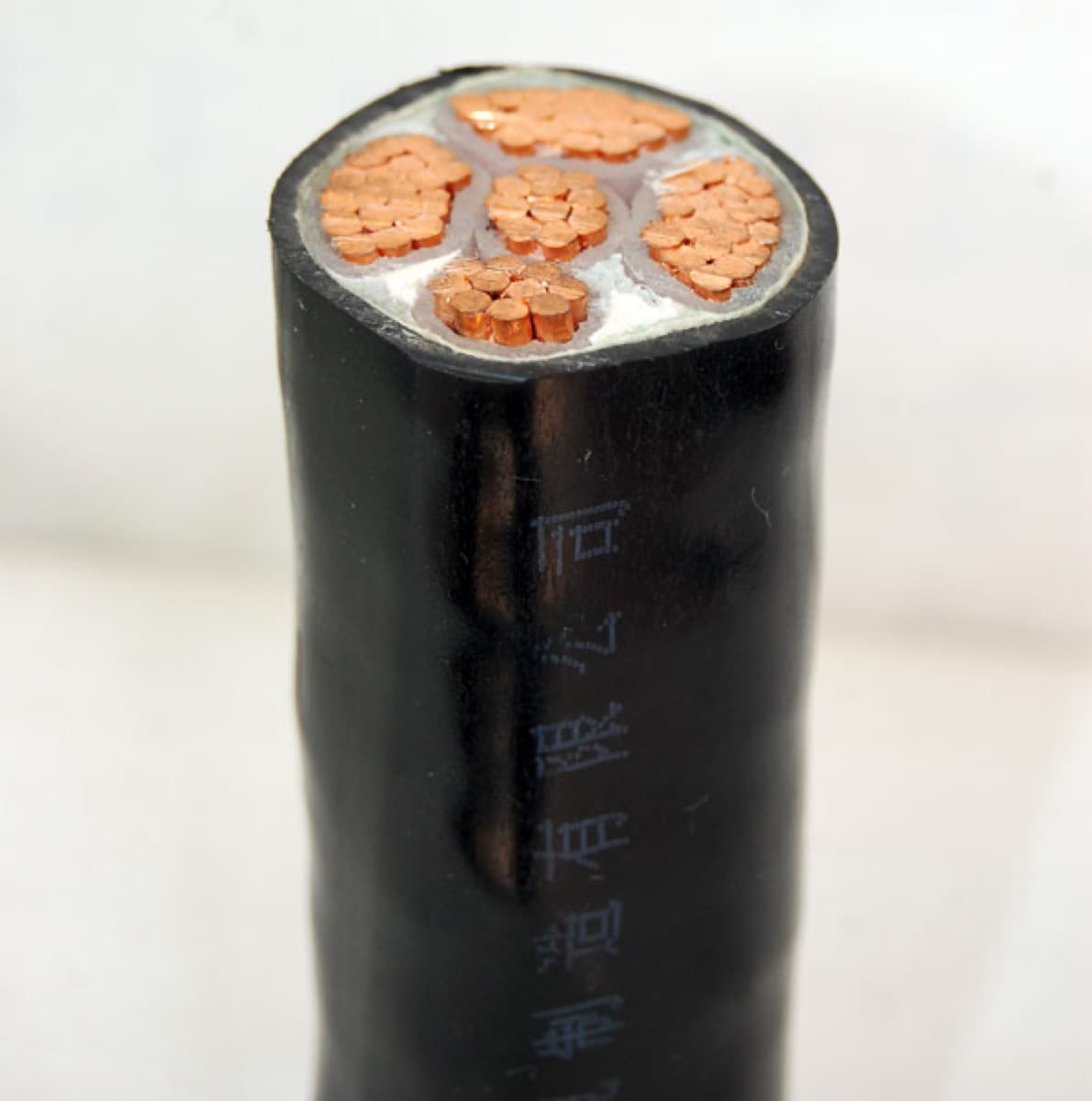
If you procure power cable for construction, industrial, infrastructure, or renewable projects in Vietnam, CADIVI is the name you compare everything against. Founded in 1975, CADIVI (Vietnam Electric Cable Corporation) is the largest and most established cable manufacturer in Vietnam, with a broad domestic distribution network and a portfolio covering building wire, LV and MV power cable, and control cable. It is the default specification on a large share of Vietnamese building, factory, and utility projects.
But procurement teams building factories, high-rises, metro lines, and solar farms across Vietnam already know the trade-off: for standard XLPE and armoured cable produced to IEC 60502 and the TCVN standards that mirror it, Chinese suppliers deliver equivalent technical performance at a meaningfully lower landed cost — with the shortest logistics path of any import option. The copper is the same electrolytic grade, the XLPE compound comes from the same global suppliers, and the type tests reference the same IEC/TCVN clauses your consultant already specifies.
This guide is a deliberately objective, data-driven comparison for Vietnamese buyers — whether you are evaluating a Chinese alternative to CADIVI for the first time or building the technical case for your project committee. CADIVI is a genuinely strong manufacturer with real local advantages, and there are situations where staying domestic is the right call. We cover those honestly.
Company Overview: CADIVI vs Chinese Suppliers
| Factor | CADIVI | Chinese Suppliers (Tier 1-2) |
|---|---|---|
| Headquarters | Ho Chi Minh City, Vietnam | Various (Henan, Jiangsu, Zhejiang) |
| Founded | 1975 | 1967–1990s (most established factories) |
| Regional position | Largest cable manufacturer in Vietnam | Export-focused, strong ASEAN trade lanes |
| Product range | Building wire, LV/MV power cable, control cable | LV/MV power cable, armoured, control, fire-resistant, ABC, ACSR, solar — full range |
| Primary standards | TCVN, IEC | IEC, GB/T, BS, TCVN-adaptable (export) |
| Footprint | Dominant domestic distribution across Vietnam | Export from China, established Vietnam trade lanes |
| Positioning | Established domestic incumbent | Cost-competitive factory-direct |
CADIVI's strength is real: decades of domestic track record, ubiquitous local distribution and stock, and strong brand recognition with Vietnamese contractors and inspectors. The point of this comparison is not that CADIVI is weak — it is that for the commodity majority of most cable packages (standard LV and MV XLPE, armoured, and control cable to IEC/TCVN), a qualified Chinese factory builds the same product to the same standard at a lower landed cost, delivered across a short border.
Price: Where the Cost Gap Comes From
Cable pricing is not a fixed list — it moves with the LME copper price at the moment of order, the exact specification, order volume, and your Incoterms. Any supplier quoting a firm per-metre number without your specification and a live copper reference is guessing. For that reason we do not publish price tables; we quote against your actual cable schedule. Request a quote for your specification → and you will get FOB and CIF-Hai Phong / Ho Chi Minh (or DAP overland via the Guangxi border) pricing benchmarked to that day's copper.
What the comparison reliably shows in the Vietnamese market is a consistent structural cost gap between a domestic incumbent and Chinese factory-direct supply on the same IEC/TCVN specification. Buyers who run a like-for-like comparison typically find the gap is widest on made-to-order MV cable and large-volume LV runs, and narrowest on small top-up quantities where local stock wins on speed. The takeaway is not a headline percentage — it is that the gap is structural, driven by the cost factors below, not by any difference in the cable itself.
Why the price gap exists:
- China's scale and mature supply chain for copper, XLPE compound, and machinery
- Domestic Vietnamese manufacturing and distribution overhead built into incumbent pricing
- Brand and incumbency premium with local contractors and inspectors
- The very short logistics leg from China means freight adds little to the landed cost
What you are NOT sacrificing on a qualified Chinese alternative:
- Copper conductor purity (99.97%+ electrolytic copper, IEC 60228 Class 1/2)
- XLPE compound from the same global suppliers (Borealis, Dow, Hanwha)
- Cross-linking on the same generation of CCV lines (Maillefer, Rosendahl, or equivalent)
- Type testing referencing the same IEC 60502 / IEC 60811 clauses TCVN mirrors
The Vietnam-specific factor that tilts the comparison is logistics. China and Vietnam share a land border, so cable can move overland via the Guangxi crossings (Pingxiang / Youyi Guan into Lang Son, or Hekou into Lao Cai) as well as by a very short sea leg to Hai Phong or Ho Chi Minh. Freight cost per drum is low relative to cable value, so the factory-direct saving survives into the landed price rather than being eaten by shipping.
Standards: IEC, TCVN, and What Actually Has to Match
Vietnam runs on TCVN standards, which for power cable are harmonised with IEC. This makes equivalence straightforward to demonstrate:
- TCVN 5935 (= IEC 60502) governs XLPE-insulated power cable for rated voltages up to 30kV — the direct Vietnamese adoption of the IEC standard.
- TCVN 6612 (= IEC 60228) governs conductors of insulated cable.
- IEC 60332 / TCVN governs flame propagation; IEC 60331 governs circuit integrity under fire; IEC 60811 governs mechanical and ageing tests.
- Fire-performance cable for metro, tunnel, and high-rise work carries additional fire-integrity and low-smoke requirements — a specialist area discussed below.
For a Chinese supplier, the key is producing to the TCVN-referenced specification and providing type-test reports against the matching IEC clauses. A factory that already exports to Vietnam will understand the TCVN overlay and can mark and document cable accordingly. When you evaluate a Chinese alternative to CADIVI, ask:
- Can you build and mark to the TCVN-referenced specification, not just generic IEC?
- Can you provide type-test reports (CNAS/ILAC accredited) against the IEC clauses TCVN mirrors?
- Have you shipped this cable type into Vietnam before, and do you know the customs and marking requirements?
Technical Quality: Is Chinese Cable Really Equivalent to CADIVI?
For standard LV and MV cable to IEC/TCVN, a qualified Tier 1-2 Chinese factory is technically equivalent. Break it down by component:
Conductor (Copper or Aluminium)
Both CADIVI and Chinese suppliers use electrolytic copper meeting IEC 60228 / TCVN 6612 Class 1/2. Copper cathode comes from the same global market — Chinese factories source from LME-registered producers such as Jiangxi Copper and Tongling Nonferrous. Conductor DC resistance must meet the standard regardless of origin, verified by routine test on every length. There is no physical difference in how the conductor carries current.
XLPE Insulation
Cross-linked polyethylene is the heart of the cable and where quality genuinely varies between good and budget factories:
- Compound quality — Premium Chinese exporters use imported XLPE compound from Borealis, Dow, or Hanwha. Budget factories may use lower-grade domestic compound. This is the single most important thing to verify.
- Cross-linking — Top factories run Maillefer, Rosendahl, or equivalent CCV lines; cross-linking must meet the hot-set elongation limit of IEC 60811.
- Cleanliness — extrusion must be clean enough to avoid contaminants that seed partial-discharge failures in MV cable.
Key verification: Request the partial discharge (PD) report. IEC 60502-2 requires PD ≤ 10pC at 2U₀ for MV cable; better Chinese factories achieve ≤ 5pC. No PD report, no deal.
Armour and Sheath
SWA/STA use galvanised mild steel per IEC 60502. PVC and LSZH sheathing compounds are mature in China. Vietnam's hot, humid, monsoon climate makes two checks worthwhile: UV-resistant sheathing for outdoor runs and confirmed performance for damp and direct-buried installation. These are the least differentiated parts of the cable.
Testing and Quality Control
| Test | Standard | CADIVI | Qualified Chinese Factory |
|---|---|---|---|
| Conductor resistance | IEC 60228 / TCVN 6612 | Routine | Routine |
| Voltage withstand | IEC 60502 | Routine | Routine |
| Insulation resistance | IEC 60502 | Routine | Routine |
| Partial discharge (MV) | IEC 60502-2 | Routine | Routine |
| Hot set (cross-link) | IEC 60811 | Type test | Type test |
| Flame propagation | IEC 60332 | Type test | Type test |
| Circuit integrity (fire) | IEC 60331 | Type test | Type test |
The real difference is accreditation lineage and local track record, not physics. CADIVI has decades of TCVN-tested Vietnamese production; qualified Chinese factories hold CNAS/ILAC-accredited reports, and the top tier hold KEMA type tests. Both are internationally recognised. Ask directly which your supplier holds against the clauses your spec demands.
Fire-Resistant & Specialist Cable: Verify Hard
Vietnam's metro build-out (Hanoi and Ho Chi Minh City lines), high-rise construction, and industrial fit-outs have made fire-performance cable a large and growing requirement. Fire cable is not commodity XLPE — it demands verified circuit integrity (IEC 60331), flame propagation (IEC 60332), and low-smoke/halogen-free performance (IEC 61034 / IEC 60754) to the exact class the project specifies.
Honest guidance: qualified Chinese factories produce fire-resistant and LSZH cable to these standards and compete directly — but this is where documentation discipline matters most. Demand the specific type-test reports for the exact fire class and construction offered, not a generic certificate. If a supplier cannot produce the matching IEC 60331/60332/61034 reports for that product, walk away. Fire cable is life-safety product; verify, do not assume.
Lead Time & Logistics: Vietnam's Unique Advantage
| Factor | CADIVI (domestic) | Chinese Factory Direct |
|---|---|---|
| Quotation response | Local, direct | Fast, direct from factory sales |
| Production (standard) | Quick if in stock; longer if made to order | Scheduled directly on the line |
| Production (custom / MV) | Subject to domestic production queue | Flexible line scheduling |
| Shipping | Domestic distribution (fast) | Very short — sea to Hai Phong/HCMC, or overland via Lang Son / Lao Cai |
| Overall | Fastest for stocked domestic items | Highly competitive — shortest import path of any source |
Key insight: Vietnam is the single best-positioned import market for Chinese cable anywhere. The shared land border means overland delivery via the Guangxi crossings is measured in days, and the sea leg to Hai Phong or Ho Chi Minh City is one of the shortest China export routes. For cable CADIVI holds in local stock, domestic delivery is still fastest for urgent small orders — but for made-to-order MV cable and large-volume LV, the Chinese factory-direct option lands quickly and competitively, without the long ocean transit that erodes the advantage in more distant markets.
When to Stay with CADIVI (Legitimate Reasons)
- Urgent, small, or top-up orders. When you need cable this week and it is on the shelf with a local distributor, domestic stock beats any import cycle.
- Projects requiring named local brand. Some Vietnamese public and developer specifications name CADIVI or require a domestic brand. Where that is a hard rule, it decides the matter.
- Small building-wire quantities. For low-volume building wire on a single site, the logistics of importing rarely pay off against buying locally off the shelf.
- Hands-on local after-sales. For projects needing immediate local technical support and warranty response, a domestic manufacturer has an edge.
- Unverified fire-cable substitution. Never swap life-safety fire cable to an unverified source to save money — if you cannot fully qualify the fire-performance reports in time, stay with the proven product.
When a Chinese Supplier Is the Better Choice
✅ Standard LV/MV XLPE and armoured cable (0.6/1kV to 35kV)
Commodity product to IEC 60502/TCVN 5935. Built to the same standard, the cable is physically equivalent regardless of the badge. The cost saving is pure value.
✅ Large-volume factory, infrastructure, and grid projects
Industrial parks, FDI factory build-outs, and grid work consume enormous cable volumes. Chinese factories are built for scale, and the per-metre saving becomes a very large absolute number across a big package.
✅ Control cable in volume
Factory automation and process plants need multi-core control cable in bulk — a Chinese strength. See our control cable range.
✅ Solar and renewable projects
Vietnam's large solar and wind build-out needs DC solar cable and AC collection cable in volume. Chinese factories supply both to IEC 62930 / IEC 60502.
✅ IEC/TCVN-specified tenders without a named brand
If the spec says "IEC 60502 / TCVN 5935 compliant" without naming a manufacturer, qualified Chinese cable qualifies directly.
✅ Mixed-product orders for a full project package
XLPE + armoured + control + fire-resistant + solar cable in one shipment, delivered to Vietnam or across Southeast Asia from one production base.
How to Qualify a Chinese Alternative to CADIVI
Switching supplier on a project package is a qualification exercise, not a leap of faith. A disciplined process removes the risk:
- Pull the exact specification from your current CADIVI order or tender — voltage class, conductor material and size, cores, armour, sheath, fire class if applicable, and the TCVN/IEC clauses cited.
- Request matching quotes from two or three Chinese factories, each with: type-test reports against the specified IEC/TCVN clauses, the XLPE compound brand, and a written production commitment.
- Verify the technical documentation:
- Type-test lab is CNAS/ILAC accredited (or KEMA for the top tier)
- Conductor DC resistance per IEC 60228 / TCVN 6612
- Insulation thickness and PD result per IEC 60502-2 for MV
- Fire reports (IEC 60331 / 60332 / 61034) where fire cable is specified
- Order a sample drum or run a factory audit. Because the border is close, an in-person factory visit is genuinely practical for Vietnamese buyers — you can inspect the CCV line and confirm branded compound stock in a short trip.
- Use third-party inspection on the first production run. SGS, Bureau Veritas, or Intertek can witness routine tests and marking before shipment. It is a small cost against a large order and the fastest way to convert committee skepticism into a signed approval.
What Vietnamese Buyers Report
Feedback from buyers who have qualified a Chinese alternative to a domestic incumbent is consistent:
- Cost saving realised: consistent double-digit savings on standard LV/MV cable, net of freight and duties — the exact figure depends on specification, volume, and the copper price at order time.
- Quality: with reputable Tier 1-2 factories, issues are rare and cosmetic rather than electrical, provided the compound and PD result were verified up front.
- The proximity dividend: short transit, same time zone, and easy factory visits make Vietnam-China sourcing simpler to manage than almost any other export relationship — communication and problem-solving happen fast.
- Common friction points: initial resistance from teams used to specifying CADIVI, and customs/marking documentation on the very first shipment. Both are one-time hurdles that disappear on reorder.
Why Huanghe Cable as Your CADIVI Alternative
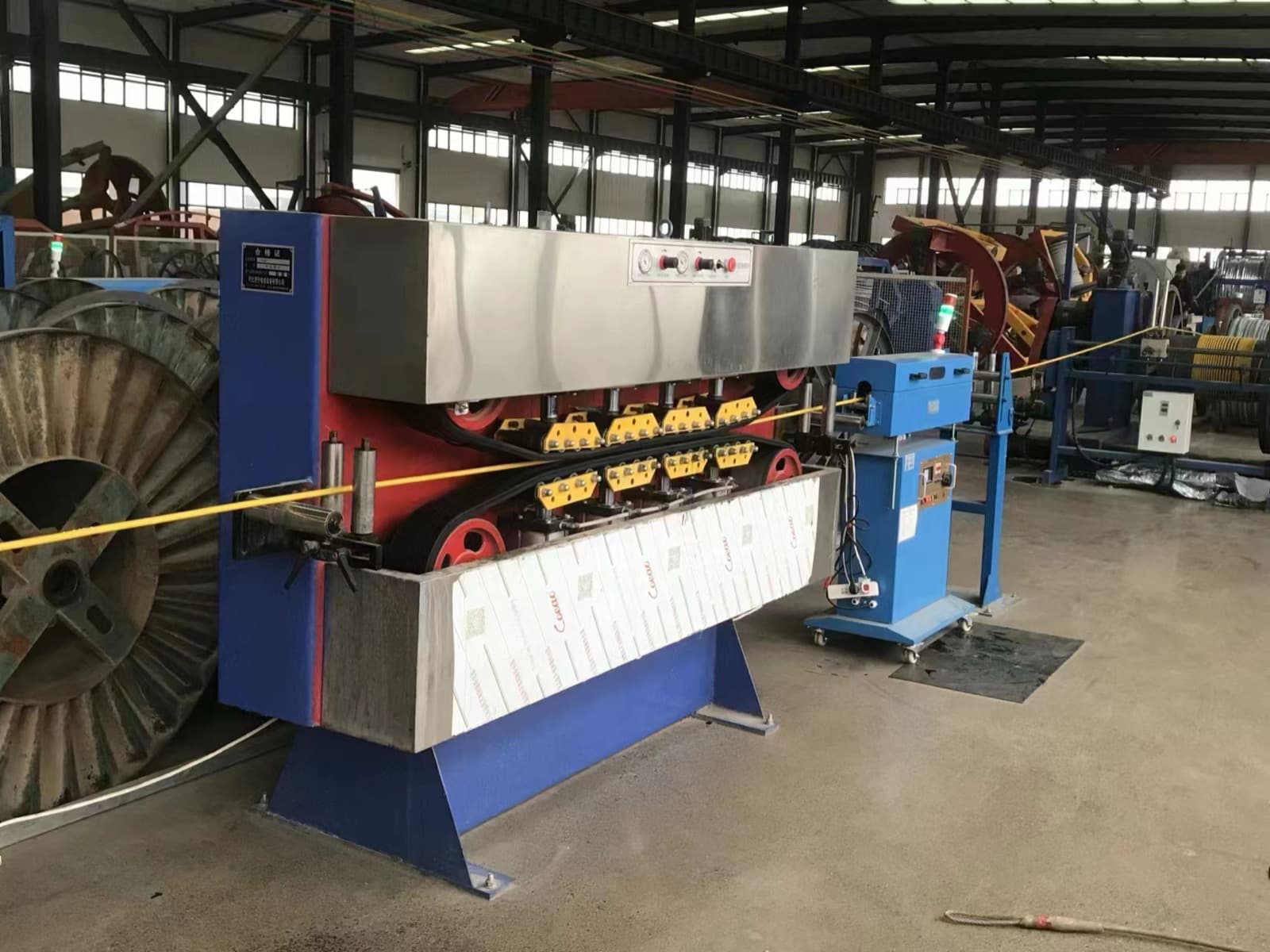
Huanghe Cable manufactures the full range Vietnamese projects need, built to IEC 60502 and marked to the TCVN-referenced specification:
- Power cable: LV and MV XLPE, 0.6/1kV up to 26/35kV, copper or aluminium
- Armoured cable: SWA/STA to IEC 60502 / BS 5467, for direct burial and industrial use
- Control cable: multi-core, shielded and unshielded, for factory automation
- Fire-resistant & LSZH cable: to IEC 60331 / 60332 / 61034 for metro, tunnel, and high-rise
- Solar DC cable to IEC 62930 for renewable projects
What we bring to a like-for-like comparison with CADIVI:
- Factory-direct FOB pricing quoted against your schedule and live copper — no distributor layer
- Type-test reports (CNAS/ILAC accredited) against the IEC clauses TCVN mirrors
- Flexible order quantities, including mixed-product containers for a full project package
- The shortest logistics path of any cable import source — sea to Hai Phong/HCMC or overland via Lang Son / Lao Cai
- Same time zone and easy factory access for Vietnamese buyers
We are candid about the boundary: for urgent small quantities and life-safety fire cable you cannot fully qualify in time, stay with the proven local product. For the standard LV/MV/control/solar cable that makes up the bulk of Vietnamese project spend, we compete directly on the same standard at a lower landed cost.
Ready to compare? Send us your CADIVI specification → and we will provide a like-for-like quotation, including the type-test report and FOB/CIF pricing benchmarked to current copper.
Frequently Asked Questions
Is Chinese cable accepted on Vietnamese projects?
Where a specification says "IEC 60502 / TCVN 5935 compliant" without naming a manufacturer, qualified Chinese cable with matching type-test reports qualifies directly. The exception is public or developer specifications that explicitly name CADIVI or require a domestic brand — read the specification's brand clause first.
Does Chinese cable meet TCVN standards, not just IEC?
TCVN power-cable standards (TCVN 5935, TCVN 6612) are direct adoptions of the matching IEC standards. A factory that already exports to Vietnam produces to the TCVN-referenced specification and marks cable accordingly, with type-test reports against the matching IEC clauses. Confirm your supplier can mark and document to TCVN, not just generic IEC.
What makes Vietnam different from other cable import markets?
Proximity. China and Vietnam share a land border, so cable can move overland via the Guangxi crossings in days, and the sea leg to Hai Phong or Ho Chi Minh City is one of the shortest China export routes. Short transit, the same time zone, and easy factory visits make the sourcing relationship simpler to manage than almost any other export market.
Can a Chinese factory supply fire-resistant cable for metro and high-rise projects?
Yes, qualified factories produce fire-resistant and LSZH cable to IEC 60331 / 60332 / 61034. But this is life-safety product — demand the specific type-test reports for the exact fire class and construction offered, not a generic certificate. If the matching reports are not available, do not substitute.
What is the single most important thing to verify?
The XLPE compound brand and, for MV cable, the partial-discharge (PD) result. Premium factories use Borealis/Dow/Hanwha compound and achieve low PD (≤ 5pC). For fire cable, add the specific fire-integrity reports. These checks separate a genuine Tier 1-2 factory from a budget supplier more than anything else.
Related Guides
- How to Import Cable from China
- Power Cable Certification Guide: IEC, KEMA, CB, ISO
- How to Avoid Cable Scams from China
- Fire-Resistant Cable for High-Rise & Tunnel Projects
- KVV / KVVP / KVVR Control Cable Compared
- Solar Cable Manufacturer China Buyer's Guide
- XLPE Power Cable Manufacturer Guide
Market Context: Why Vietnamese Buyers Compare
Vietnam's cable demand is driven by sustained FDI-led industrialisation (factories and industrial parks), rapid urban construction and high-rise development, metro and infrastructure build-out in Hanoi and Ho Chi Minh City, grid expansion, and one of Southeast Asia's largest renewable programs. Every one of these consumes commodity XLPE, armoured, control, fire-resistant, and solar cable in volume — exactly the categories where a qualified Chinese factory competes hardest.
At the same time, contractors and developers work on tight margins and tight schedules, which pushes procurement to look hard at where structural savings exist on commodity spend. Cable is one of the largest single line items on any electrical package, and the China border sits right next door.
CADIVI remains a strong, credible incumbent with genuine advantages in local stock, distribution reach, and brand acceptance. The realistic 2026 picture is not "replace CADIVI with China" but "match the source to the scope": domestic for urgent stock, small building wire, and brand-named specifications; China factory-direct for the large-volume standard XLPE/MV/control/solar cable that dominates the spend — helped by the shortest import logistics of any market.
The Bottom Line
| Scenario | Best Choice |
|---|---|
| Standard LV/MV XLPE & armoured (IEC/TCVN) | Chinese factory — equivalent standard, lower cost |
| Large-volume factory / infrastructure | Chinese factory — scale economics |
| Control cable in volume | Chinese factory — category strength |
| Solar & renewable cable | Chinese factory — volume to IEC 62930 |
| Urgent / small top-up order | CADIVI — local stock wins on speed |
| Small building-wire quantity | CADIVI — local off-the-shelf |
| Brand-named specification | CADIVI — compliance decides |
| Fire cable you cannot fully qualify in time | Proven product — life-safety first |
For standard XLPE, armoured, and control cable to IEC 60502 and TCVN 5935 in voltage classes up to 35kV, a qualified Chinese factory delivers genuine technical equivalence to CADIVI at a meaningfully lower landed cost — and, thanks to the shared border, the shortest logistics path of any import source. The smart approach is qualification-based procurement, not brand-based procurement — verify the factory, verify the conformity route, then let the standard and the price decide.
Disclaimer: This article is an independent, objective comparison for procurement research. CADIVI is a respected manufacturer and all references to it are factual and neutral. Standard specifications reference published IEC and TCVN values. Pricing is not quoted — request a quotation for your exact specification.