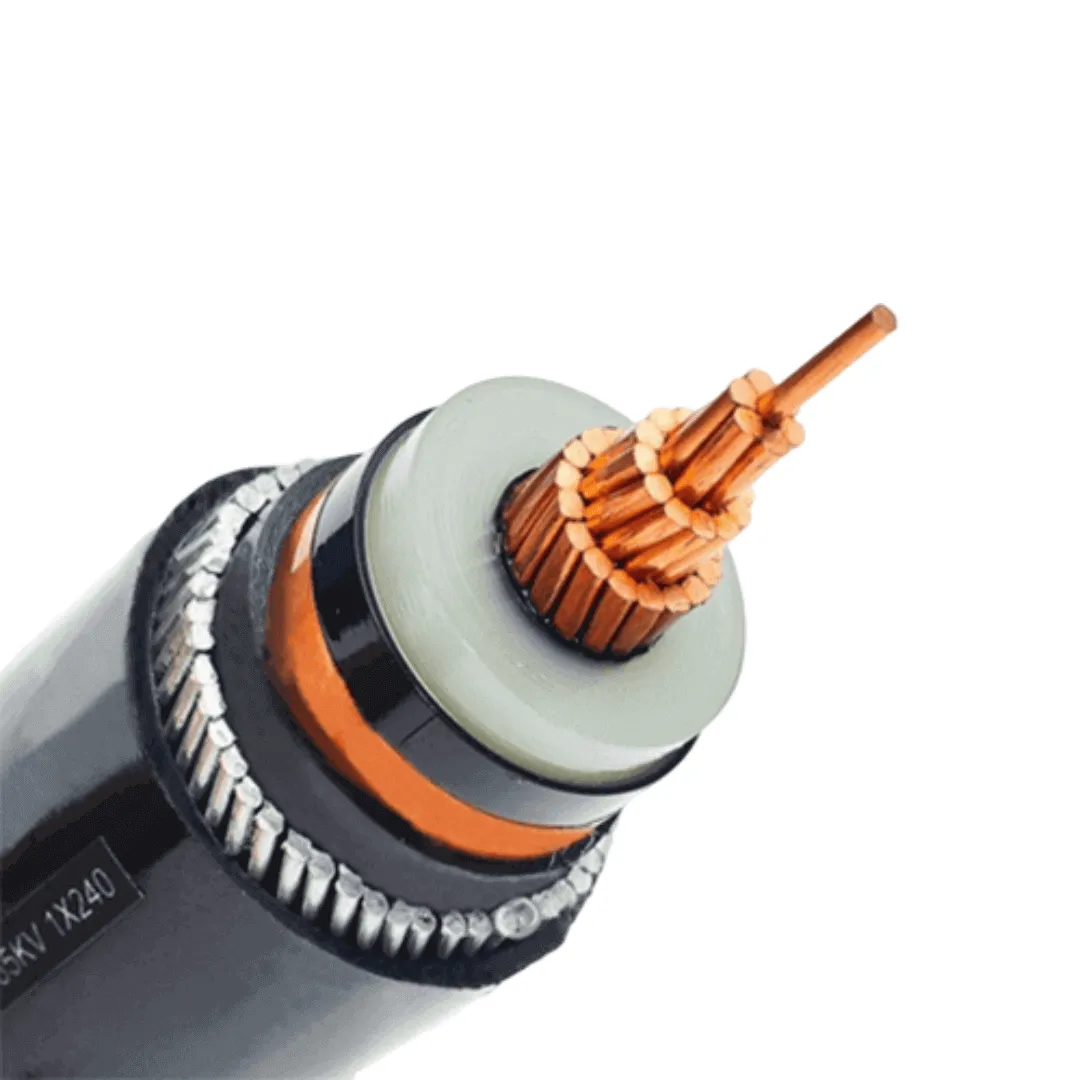
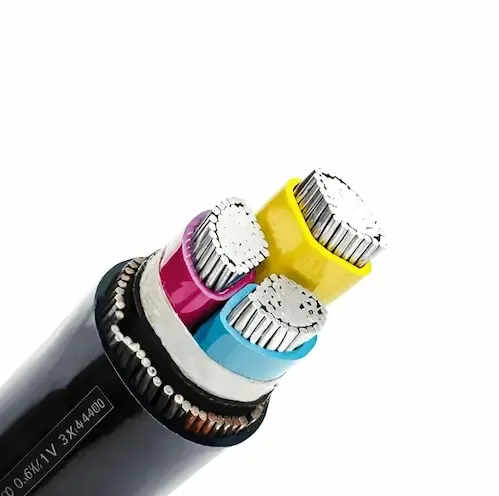
Key Takeaway
Real cable procurement scams exposed: copper-clad aluminum fraud, undersized conductors, fake certifications, bait-and-switch factories, and payment traps. Learn exactly how to detect and prevent each one with actionable verification methods.
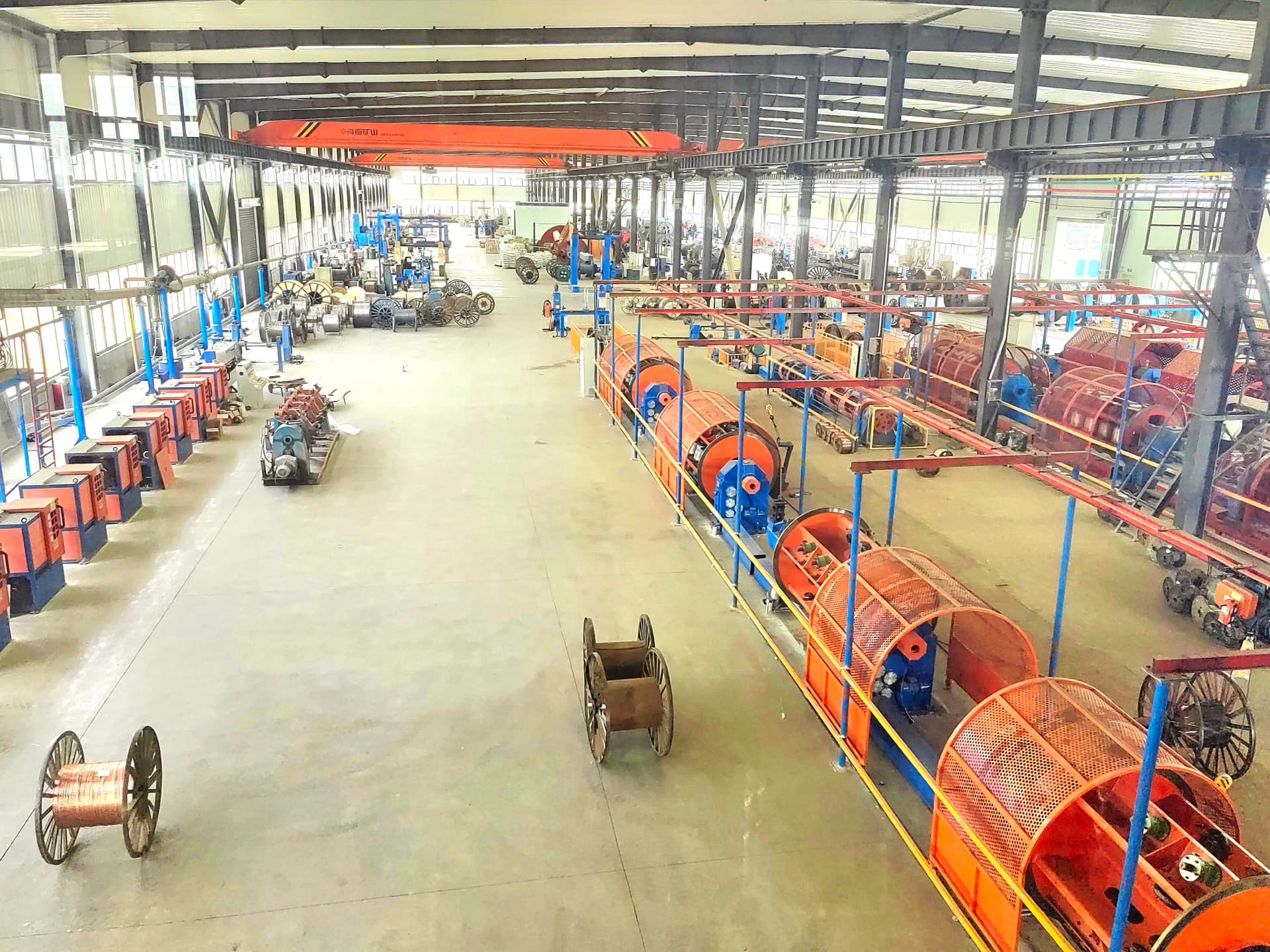
Let's be direct: cable fraud exists in the Chinese export market. We write this as a manufacturer who competes against fraudulent suppliers every day — factories that win orders by cheating on materials, then disappear when the cable fails in the field.
This is not an abstract risk. In 2023, a construction project in East Africa discovered that 12 km of "95mm² copper XLPE cable" contained copper-clad aluminum conductors. The cable passed initial visual inspection. It even passed a basic continuity test. But when the utility attempted to energize the 11kV feeder at full load, the cable overheated within 40 minutes. The entire installation had to be ripped out and replaced — a loss exceeding $380,000 in cable, labour, and project delays.
We have seen this story repeated across Africa, the Middle East, and Southeast Asia. The patterns are predictable, and — critically — every single scam in this guide is preventable if you know what to check before, during, and after production.
Why Cable Fraud Exists (and Why China Specifically)
Before diving into the scams, understand why this problem concentrates in Chinese cable exports:
Scale creates anonymity. China has over 7,000 registered cable manufacturers. Among them are world-class factories producing to IEC/BS/ASTM standards with full third-party certification. But the sheer number means that fraudulent operators can set up, take orders, deliver substandard product, and dissolve before consequences catch up.
Price pressure enables cheating. When international buyers demand the lowest possible price and select suppliers purely on quotation value, they create economic incentive for fraud. A legitimate 3×95mm² Cu/XLPE/SWA cable costs approximately $8.50–$9.50/meter to manufacture (July 2026 copper prices). If someone quotes $5.80/meter, the math does not work — they are cutting something. The question is where.
Distance delays detection. A buyer in Nigeria or Pakistan cannot easily inspect production in Henan or Hebei province. By the time cable arrives, clears customs, and gets installed, 4–6 months have passed. The fraudulent supplier has already been paid.
None of this means Chinese cable is inherently risky. It means that buying ANY industrial product across international borders requires verification. The same scams exist when buying cable from India, Turkey, or Egypt — China simply has the largest export volume, so it has the most visible fraud cases.
Scam #1: Copper-Clad Aluminum (CCA) Sold as Pure Copper
How It Works
The supplier quotes pure copper conductor cable. They may even show you a "copper" sample piece. But the actual production uses copper-clad aluminum (CCA) — an aluminum core with a thin copper coating.
CCA looks like copper on the outside. It even conducts electricity. But:
- Conductivity is 61% of pure copper (aluminum's conductivity is 61% IACS vs copper's 100%)
- Current-carrying capacity drops proportionally — a "95mm² CCA" cable carries the same current as approximately 58mm² pure copper
- Connections corrode — aluminum oxidizes, creating high-resistance joints that overheat
- Weight difference is dramatic — CCA is 40% lighter than copper for the same cross-section
Why It's Profitable
Copper costs approximately $9,200/tonne (July 2026 LME). Aluminum costs approximately $2,500/tonne. For a 95mm² conductor, replacing copper with CCA saves roughly $4.50/meter — which is almost 50% of the total cable cost. This is the single most profitable cable fraud.
How to Detect It
Before ordering:
- Weight calculation. Request the cable's weight per meter and compare against IEC 60228 standards. A 3×95mm² Cu/XLPE/SWA/PVC cable should weigh approximately 3.85–4.10 kg/m. If the quoted weight is significantly below this (e.g., 2.8 kg/m), the conductors are not pure copper. We publish weight per meter with every quotation — ask for the figures before you compare prices.
- Price sanity check. Calculate raw copper cost: 95mm² × 3 cores × 8.89 g/cm³ (copper density) × LME copper price = minimum conductor material cost per meter. If the total cable price is BELOW the raw copper cost, it is physically impossible for the cable to contain pure copper.
During production (if you arrange inspection):
- Cut a cross-section. Slice through the conductor and examine the cut face. CCA shows a silvery aluminum core surrounded by a thin copper ring. Pure copper is uniform reddish-gold throughout.
- File test. Use a metal file on the conductor surface. Pure copper files uniformly gold/red. CCA reveals silver aluminum within 0.1mm of filing.
- Weigh a measured length. Weigh exactly 1 meter of stripped conductor. 95mm² pure copper conductor weighs 845 g/m (per IEC 60228). If it weighs ~510 g/m, it's aluminum or CCA.
After delivery:
- Conductor resistance test. Measure DC resistance per IEC 60228. For 95mm² Class 2 copper at 20°C, maximum resistance is 0.193 Ω/km. CCA will measure approximately 0.316 Ω/km — 64% higher. This is the definitive test.
- Specific gravity test. Copper density is 8.89 g/cm³. Aluminum is 2.70 g/cm³. CCA falls between, typically 3.3–3.8 g/cm³. Weigh a known-length stripped conductor and calculate.
Prevention
- Specify in your contract: "Pure electrolytic copper conductor per IEC 60228 Class 2. Copper-clad aluminum (CCA) is explicitly rejected. Factory must provide copper rod mill certificate for each production batch."
- Require third-party inspection with conductor resistance measurement on the first 3–5 drums produced
- Include penalty clause: "If CCA is detected at any point including after installation, supplier bears full replacement cost including labour and consequential damages"
Scam #2: Undersized Conductors (Nominal vs Actual)
How It Works
The cable is labelled "95mm²" but the actual conductor cross-sectional area is 85mm², 80mm², or even 70mm². The factory uses fewer or thinner individual wires in the stranded conductor.
This is more subtle than CCA fraud because:
- The cable still contains real copper
- It still conducts electricity
- Visual inspection cannot easily detect the difference (you cannot count individual wires by eye in a 19-wire or 37-wire stranded conductor)
- Even conductor resistance may pass a quick check if the buyer does not know the exact IEC 60228 limits
Why It's Profitable
Reducing conductor from 95mm² to 80mm² saves approximately $1.30/meter on a 3-core cable. On a 20 km order, that's $26,000 in stolen copper.
The IEC 60228 Trap
IEC 60228 specifies maximum DC resistance for each conductor size — NOT minimum cross-sectional area. A "95mm²" conductor is defined as having maximum resistance of 0.193 Ω/km at 20°C for Class 2 stranded copper. The actual cross-section can be slightly less than 95mm² if the copper quality is high (low impurity = lower resistance per unit area).
Fraudulent factories exploit this margin. They know most buyers check resistance (if anything) and might accept 0.195 or even 0.200 Ω/km without flagging it. But cable at 0.200 Ω/km when the limit is 0.193 is non-compliant — period.
How to Detect It
Before ordering:
- Request the factory's conductor wire arrangement: how many individual wires, what diameter each. For 95mm² Class 2 per IEC 60228: typically 19 wires × 2.52mm diameter, or 37 wires × 1.81mm diameter. If they quote a different configuration, calculate actual area (n × π × d²/4) and verify it meets ≥95mm².
During production:
- Micrometer measurement. Measure individual wire diameters with a calibrated micrometer (not a ruler). Each wire should match the declared diameter ±0.02mm.
- Wire count. Cut a cross-section and count individual wires. Must match the declared construction.
- Conductor resistance measurement. This is mandatory per IEC 60228. Measure at a known temperature, correct to 20°C, and compare against the standard's maximum value. For verification details, see our complete testing guide.
After delivery:
- Same resistance test as above — but now you're checking after the fact, which means remediation is expensive if non-compliant
Prevention
- Specify in purchase order: "Conductor construction: [number] wires × [diameter]mm. Conductor resistance shall not exceed [value per IEC 60228 Table 2] at 20°C."
- Require conductor resistance test certificate for every drum (this should be standard — any factory refusing this is a red flag)
- Third-party dimensional inspection on first production batch: strip 1 meter, count wires, measure wire diameters, calculate actual cross-sectional area
Scam #3: Thin Insulation and Sheath (Reduced Material Thickness)
How It Works
The factory reduces XLPE insulation thickness and PVC sheath thickness below the minimum values specified in IEC 60502-1. Instead of the required 1.0mm insulation for a 0.6/1kV cable at 95mm², they apply 0.7mm or 0.8mm.
This saves material (XLPE compound costs $2,800–$3,200/tonne) and increases extrusion line speed (thinner layers = faster production = more output per shift). Double profit incentive.
Why It's Dangerous
Insulation thickness directly determines:
- Voltage withstand capability — thinner insulation fails at lower voltages, especially under surge conditions
- Long-term aging performance — thinner insulation has less material to lose during 30-year thermal aging
- Mechanical damage resistance — thinner sheath offers less protection during installation pulling and backfilling
- Fire performance — less insulation material = faster burn-through during fire conditions
IEC 60502-1 Table 3 specifies minimum insulation thickness for good reason. These are not safety margins to be "optimized."
IEC 60502-1 Minimum Insulation Requirements
| Conductor size (mm²) | Rated voltage | Nominal insulation (mm) | Min. at any point (mm) | Nominal sheath (mm) | Min. sheath at any point (mm) |
|---|---|---|---|---|---|
| 25–50 | 0.6/1 kV | 1.0 | 0.7 | 1.8 | 1.5 |
| 70–95 | 0.6/1 kV | 1.0 | 0.7 | 1.8 | 1.5 |
| 120–150 | 0.6/1 kV | 1.0 | 0.7 | 1.9 | 1.6 |
| 185–240 | 0.6/1 kV | 1.0 | 0.7 | 2.0 | 1.7 |
| 300–400 | 0.6/1 kV | 1.0 | 0.7 | 2.1 | 1.8 |
| 500–630 | 0.6/1 kV | 1.0 | 0.7 | 2.2 | 1.9 |
Note: Nominal values are per IEC 60502-1 Table 3 (insulation) and Table A.4 (sheath). Minimum at any point = nominal minus 15% tolerance (IEC 60502-1 Clause 8.1). Fraudulent factories often meet the "minimum" value while targeting far below nominal — always compare against nominal thickness.
How to Detect It
Before ordering:
- Request the factory's declared nominal insulation and sheath thickness for your specific cable construction. Compare against IEC 60502-1 Table 3 (insulation) and Table A.4 (sheath).
During production:
- Caliper measurement. Cut a cross-section sample and measure insulation thickness at 4 points around the conductor (thinnest point matters, not average). Measure sheath thickness at thinnest point.
- "At any point" rule. IEC 60502-1 Clause 8 states minimum thickness must be met "at any point of measurement." Factories sometimes quote the average thickness (which passes) while having thin spots (which fail). Measure at the thinnest visible point.
After delivery:
- Same dimensional check. Requires cutting a sample length (typically 1m from the end of each drum — most specifications allow this)
Prevention
- Contractual clause: "Insulation and sheath thickness shall comply with IEC 60502-1 Table 3 and Table A.4 respectively. Minimum thickness at any point of measurement shall not be less than 90% of specified nominal value per Clause 8.1."
- Third-party dimensional inspection — this is cheap (SGS/BV charge ~$300–$500 per inspection visit) and catches thickness fraud immediately. We coordinate inspection dates on request — send us the scope
- Request factory to provide cross-section photos of first production batch with caliper readings visible
Scam #4: Fake or Misrepresented Certifications
How It Works
The supplier provides "test reports" or "certificates" that are:
- Completely fabricated — created in Photoshop/Word with fake lab logos
- Copied from another factory — real certificate, wrong company name (digitally altered)
- Real but inapplicable — genuine certificate for a different cable construction than what you're buying
- Expired or superseded — valid certificate from 2018 but materials have been changed since then
Real Example
A buyer receives a "KEMA type test report" for 3×240mm² XLPE cable. The report looks legitimate — proper formatting, DNV logo, test data. But:
- The report is actually for Factory A (a legitimate manufacturer)
- The buyer is purchasing from Factory B (which has no KEMA reports)
- Factory B digitally replaced the factory name on page 1 but forgot to change it on page 47 of the report where it appears in the specimen identification section
This happens regularly. Certificate fraud is the easiest form of cable fraud because it requires no physical material substitution — just a PDF editor.
How to Detect It
Verification checklist:
-
Contact the issuing laboratory directly. Email KEMA/DNV (energy.certification@dnv.com), CESI, or the relevant lab with the report number. Ask: "Is report number [X] genuine, and was it issued to [factory name]?"
-
Check internal consistency. A genuine 40-80 page type test report mentions the manufacturer name in multiple locations: cover page, specimen description, test witness section, factory address for sample collection. Scan ALL pages, not just page 1.
-
Verify lab accreditation. The testing laboratory must hold ISO/IEC 17025 accreditation for cable testing. Check the ILAC database or the lab's national accreditation body website.
-
Match cable specifications exactly. A type test report for "3×95mm² Cu/XLPE/SWA/PVC 0.6/1kV" does NOT cover your order of "3×120mm² Cu/XLPE/STA/PVC 0.6/1kV." Different conductor size, different armour type — it's a different cable.
-
Check online databases. For CB certificates: verify at iecee.org. For ISO certificates: check the certification body's public directory.
For a complete guide to understanding what each certification type proves and how to verify authenticity, see our certification guide.
Common Red Flags
| Red Flag | What It Suggests |
|---|---|
| Only cover page provided (1-2 pages), not full report | Possibly fabricated — real type tests are 20-80 pages |
| Report number format doesn't match lab's known numbering system | Possibly fabricated |
| No laboratory address, phone, or contact info on report | Not from a legitimate lab |
| Factory reluctant to have you contact the lab directly | They know verification will fail |
| Certificate date > 7 years old with no evidence of surveillance | May no longer reflect current production |
| Same report attached by multiple different "factories" online | Report stolen from the original holder |
Prevention
- Make verification mandatory before payment. Include in PO: "Supplier shall provide type test reports. Buyer reserves the right to verify authenticity with the issuing laboratory. If any certificate is found to be fraudulent, misrepresented, or inapplicable to the ordered cable specification, the contract is void and all payments shall be refunded."
- Do the verification yourself. It takes one email and costs nothing. Don't assume the paperwork is real just because it looks professional.
- Request routine test reports for YOUR production — these are generated fresh for each order and much harder to fake (they reference specific drum numbers, dates, and measured values unique to your order)
Scam #5: Bait-and-Switch (Trading Company Pretending to Be a Factory)
How It Works
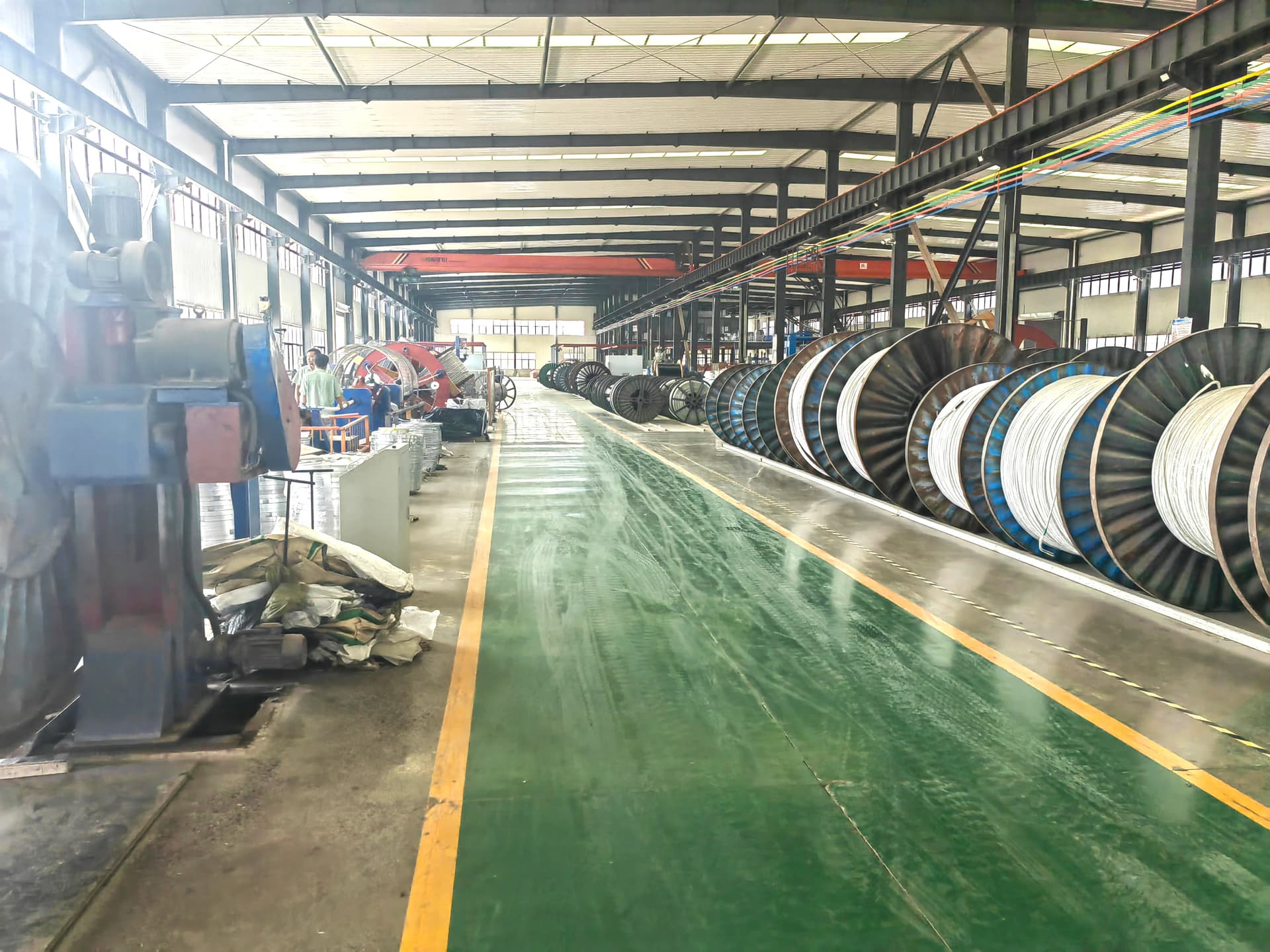
You believe you are buying from "Henan Excellent Cable Co., Ltd" — a factory with its own production line, quality control, and testing laboratory. They showed you factory photos. They sent you a business license. The Alibaba page says "Manufacturer."
In reality, "Henan Excellent Cable" is a trading company — 3 people in a rented office who subcontract your order to the cheapest available factory. They have:
- No production equipment
- No quality control laboratory
- No engineering staff who understand cable standards
- No accountability if the subcontracted factory delivers garbage
The subcontracted factory may change from order to order. Your first (small) order came from a decent factory. Your second (large) order goes to whoever quoted the trading company the lowest price that week.
Why It's Risky
Trading companies are not inherently evil. Some add real value — consolidation, logistics, payment facilitation. The problem is when they:
- Claim to be manufacturers (fraud)
- Cannot verify or control production quality (no expertise)
- Prioritize their margin over your cable quality (selecting cheapest subcontractor)
- Disappear when problems arise (no fixed assets to lose)
How to Detect It
Due diligence before ordering:
-
Business license verification. Request their Chinese business license (营业执照). Check the "Business Scope" (经营范围) section. A real manufacturer will list "生产" (production/manufacturing) of cables. A trading company will list "销售" (sales) or "贸易" (trade) only.
-
Factory video call. Request a LIVE video call from the factory floor. Not a pre-recorded video. Not photos that could be from any factory. A live call where they walk you through:
- Raw material warehouse (copper rod storage)
- Conductor drawing/stranding machines
- Extrusion lines (with YOUR cable type being produced if possible)
- Testing laboratory
- Finished goods warehouse with cable drums
-
Google Maps / Baidu Maps check. Ask for the exact factory address. Check satellite imagery — is there actually an industrial facility at that location? Is it large enough for cable manufacturing (cable factories need significant space for extrusion lines and drum storage)?
-
Equipment specifics. Ask: "What brand/model are your extrusion lines? What is your maximum continuous extrusion length? What voltage can your test set apply?" A real factory answers these instantly. A trading company fumbles or delays.
-
Third-party factory audit. Companies like SGS, TÜV, and Bureau Veritas offer factory assessment services. They physically visit the address, verify production equipment exists, check capacity claims, and confirm the business entity matches.
The "Alibaba Manufacturer" Problem
Alibaba's "Manufacturer" badge is self-declared by default. Alibaba does verify some suppliers, but their verification confirms the business entity exists — not that it actually manufactures anything. A trading company with a registered business license can obtain a "Manufacturer" badge.
How to read Alibaba signals:
- "Trade Assurance" = they accept Alibaba's payment protection (not a quality indicator)
- "Verified Supplier" = business entity confirmed (not manufacturing confirmed)
- "Gold Supplier 10 years" = they've paid for Alibaba membership for 10 years (not a quality indicator)
- Factory photos with blurred logos or clearly stock images = likely not their own factory
Prevention
- Mandate factory visit (in person or via third-party audit) before any order exceeding $50,000
- Contract directly with the manufacturing entity — the business license on your contract should show "production" in scope
- Include "right to inspect during production" in your contract — this forces them to reveal the actual production location
- Start with a small trial order and arrange third-party inspection specifically for that order. If they resist inspection, walk away.
The 6th "Scam" That's Actually Buyer Error: Unrealistic Price Expectations
This one is uncomfortable but necessary.
Many buyers who get scammed share one common factor: they chose the cheapest quotation without questioning why it was cheapest.
Here is the math for a genuine 3×95mm² Cu/XLPE/SWA/PVC 0.6/1kV cable at July 2026 copper prices (~$9,200/tonne LME):
| Component | Calculation | Cost per meter |
|---|---|---|
| Copper conductor (3×95mm²) | 3 cores × 95mm² × 8.89 g/cm³ × $9.20/kg ÷ 1000 | ~$7.37 |
| XLPE insulation | Material + extrusion cost | ~$0.45 |
| Steel wire armour | Material + armouring cost | ~$0.55 |
| PVC bedding + sheath | Material + extrusion cost | ~$0.40 |
| Filler, tape, printing | Minor materials | ~$0.15 |
| Production overhead | Labor, equipment, QC, testing | ~$0.50 |
| Minimum legitimate cost | ~$9.42/m | |
| Factory margin (5-8%) | ~$0.50–$0.75 | |
| Minimum viable selling price | ~$9.92–$10.17/m |
If someone offers you this cable at $7.50/meter, the arithmetic is clear: they cannot deliver genuine product at that price. Something will be substituted — CCA conductors, thinner insulation, recycled copper with higher resistance, or simply a smaller conductor size labelled as 95mm².
The "3 Quote" Rule
When soliciting quotations:
- Get at least 5–7 quotes for the same specification
- Discard the lowest 1-2 (likely fraudulent or unsustainable)
- Discard the highest 1-2 (likely inflated or unnecessary premium)
- The middle range represents legitimate market pricing
- Any quote significantly below this range demands explanation — not celebration
Your Complete Anti-Fraud Checklist
Use this before, during, and after every cable order from a new supplier:
Before Placing Order
- Price sanity check — calculate minimum copper cost and compare against quoted price
- Business license verification — confirm "production" in business scope
- Factory verification — live video call or third-party audit
- Certificate verification — contact issuing laboratory directly
- Reference check — ask for 3 recent export customers in your region (and actually contact them)
- Weight verification — request declared weight per meter, compare against IEC 60228 calculated weight
- Contract includes: CCA rejection clause, inspection rights, penalty for non-compliance, conductor resistance specification
During Production
- Third-party inspection arranged — SGS/BV/TÜV visit during production
- Conductor resistance measured — on minimum 10% of drums
- Cross-section cut and inspected — conductor area, wire count, insulation thickness, sheath thickness
- Weight check — weigh 3 random drums, calculate weight/meter, compare against declared
- Visual inspection — printing legibility, drum condition, cable appearance
Before Payment (Final Installment)
- All routine test reports received — one per drum, showing voltage withstand + conductor resistance
- Inspection report cleared — third-party inspection report with no non-conformities
- Shipping marks match — drum labels match your PO specification exactly
- Photos of loaded container — cable drums properly secured for ocean transport
After Delivery
- Random sample testing — strip 1m from at least 2 drums, measure conductor resistance, insulation thickness
- Weight verification — weigh drums and compare against declared net weight
- Compare against trial order — if this is a repeat order, does the cable look/feel/weigh the same as last time?
What Legitimate Factories Do Differently
Here is what distinguishes a genuine cable manufacturer from a fraudulent operation:
Transparency over secrecy:
- We invite factory visits and video calls — no appointment needed for existing customers
- We provide full type test reports (all 40+ pages, not just cover pages) and welcome you to verify with the testing lab
- We declare conductor construction (wire count × diameter) and provide IEC 60228 compliance data for every drum
Testing is standard, not optional:
- Every drum receives routine voltage withstand test and conductor resistance measurement before it leaves our warehouse
- Routine test reports reference specific drum serial numbers — they are not generic templates
- We maintain calibrated testing equipment with annual verification certificates
Traceability is built in:
- Each cable drum traces back to: copper rod supplier + batch, XLPE compound supplier + batch, production date + shift, operator ID, test date + results
- If a problem appears after installation, we can trace exactly which raw materials and processes produced that specific cable length
Pricing reflects real costs:
- We publish copper-weight-based pricing that moves with LME copper rates
- We explain our price structure when asked — copper cost + material cost + production cost + margin
- We do not compete on price alone — we compete on reliability, certification, and after-sales support
Frequently Asked Questions
Is all Chinese cable low quality?
No. China produces approximately 35% of the world's total cable output, ranging from the cheapest possible product to cables meeting the strictest international standards (KEMA-tested, BASEC-certified). The quality depends entirely on which factory you source from and what quality controls you apply. The problem is not "Chinese cable" — it's unverified procurement from unvetted suppliers.
How common is copper-clad aluminum fraud?
It's the most financially significant cable fraud and occurs primarily in price-driven export markets (Africa, South Asia, parts of the Middle East) where buyers select purely on lowest price and do not conduct pre-shipment inspection. In markets where third-party inspection is standard (European utility projects, World Bank-funded infrastructure), CCA fraud is rare because it's immediately detected.
Can I trust Alibaba suppliers?
Alibaba is a marketplace, not a quality guarantor. Trustworthy factories exist on Alibaba, but so do trading companies and fraudulent operations. Alibaba's verification confirms business registration — not manufacturing capability or product quality. Apply the same due diligence (factory audit, certificate verification, trial order with inspection) regardless of the platform.
What does third-party inspection cost?
A pre-shipment inspection by SGS, Bureau Veritas, or TÜV typically costs $300–$800 per visit for cable orders. This covers physical inspection, dimensional measurement, and basic testing. More comprehensive inspections (including conductor resistance testing on multiple drums) may cost $800–$1,500. Compare this against the cost of receiving 20 km of non-compliant cable — the inspection is always cheaper.
Should I require a factory visit before ordering?
For orders above $50,000: strongly recommended (in person or via third-party audit). For smaller trial orders: a detailed live video call showing the factory floor, testing lab, and your cable type in production is a reasonable alternative. Any supplier who refuses to allow factory verification — in any form — should be eliminated from consideration immediately.
What recourse do I have if I receive fraudulent cable?
Legal recourse against a Chinese company from overseas is expensive and slow. Prevention is dramatically cheaper than remediation. However, if fraud is discovered:
- Document everything — photos, test results, weight measurements
- File a dispute through the payment platform (if Trade Assurance/LC)
- Report to your country's trade complaint mechanism (if applicable)
- Consider pre-shipment inspection as mandatory for all future orders (lesson learned)
The most effective recourse is contractual: include specific penalty clauses, retain 20-30% final payment until inspection passes, and use letter of credit (LC) payment terms that release funds only upon satisfactory inspection certificate.
Source Safely — Next Steps
- How to Import Cable from China: 7-Step Buyer's Guide
- Cable Standards by Country: IEC, BS & NEC Guide
- XLPE Power Cable Manufacturer Guide
Key Takeaways
-
Price that seems too good to be true IS too good to be true. Calculate minimum copper cost for your cable specification — anything significantly below that is mathematically fraudulent.
-
Verification is cheap; replacement is catastrophic. A $500 inspection visit prevents a $100,000+ disaster.
-
Certificates are only valuable if verified. One email to the issuing lab costs nothing and prevents fake certification fraud entirely.
-
Buy from manufacturers, not mystery middlemen. Verify the entity you're contracting with actually produces cable — business license, factory visit, live video.
-
Every scam in this guide is preventable. The common thread: buyers who got scammed skipped verification steps that would have revealed the fraud before money changed hands.
Sourcing power cable and want to work with a factory that welcomes verification? Contact our team — we provide full type test reports, arrange factory visits or live video tours, and support third-party inspection on every order. Ask us anything about our production capability, certifications, or pricing structure.