Key Takeaway
Armoured vs non-armoured cable comparison for procurement engineers. SWA/STA cost difference, installation scenarios, IEC/BS/NEC requirements, and how to avoid over-specifying or under-protecting your cables.
Every cable specification decision comes down to one question: does this cable need armour, or am I paying for protection it will never use?
Get it wrong in either direction and you have a problem. Over-specify armoured cable where it is not needed, and you waste 25–40% on material cost plus extra labour for heavier drums and cable glands. Under-specify non-armoured cable in a harsh environment, and you risk mechanical damage, ground faults, and project shutdowns that cost far more than the cable itself.
This guide gives you the technical basis to make that decision correctly — covering construction differences, performance data, installation scenarios, cost analysis, and what international standards actually require. Whether you are writing a specification, reviewing a bill of quantities, or sourcing cable for a specific project, this is the reference you need.
What Makes a Cable "Armoured"? Construction Breakdown
The difference between armoured and non-armoured cable is one additional layer — but that layer changes everything about the cable's mechanical properties, weight, flexibility, termination method, and cost.
Non-Armoured Cable Construction (e.g., YJV, N2XY, NYY)
From centre outward:
- Conductor — stranded copper or aluminium (Class 1 or Class 2 per IEC 60228)
- Insulation — XLPE (90°C rated) or PVC (70°C rated), applied by extrusion
- Filler — non-hygroscopic material filling interstices between cores
- Inner sheath (bedding) — PVC or LSZH compound, extruded over laid-up cores
- Outer sheath — PVC or PE, the final protective layer
Total layers: 4–5. The cable relies entirely on its installation environment for mechanical protection.
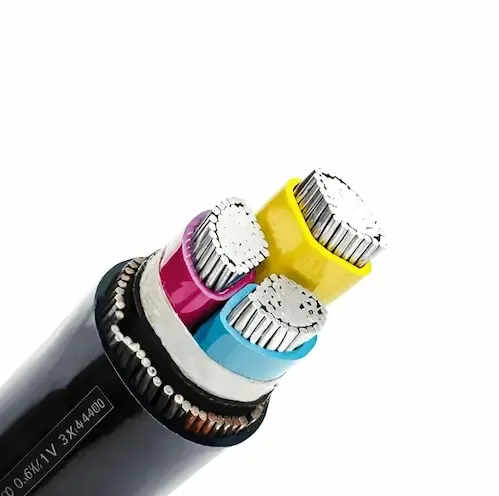
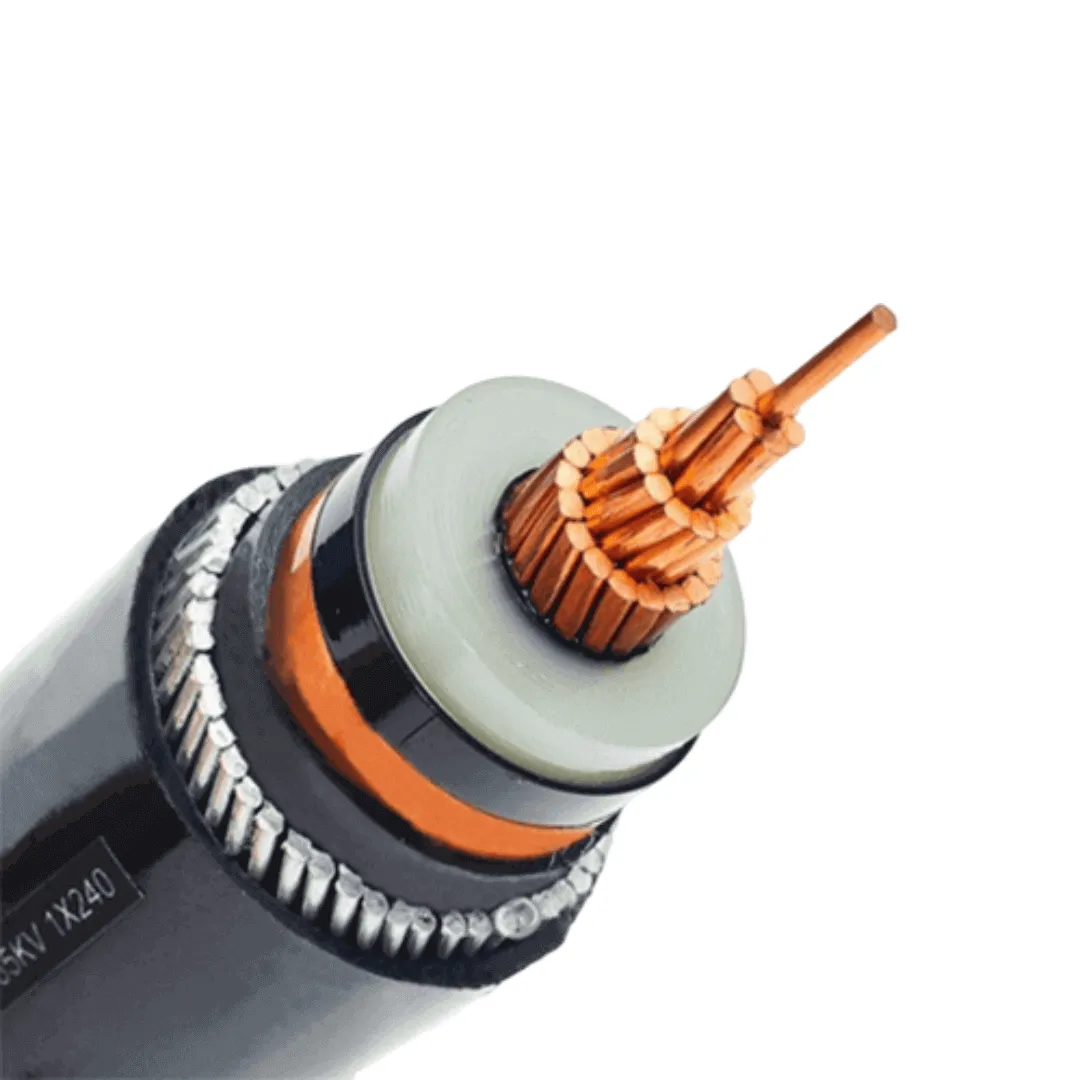
Armoured Cable Construction (e.g., YJV22, N2XRY, BS 5467)
Same as above, plus:
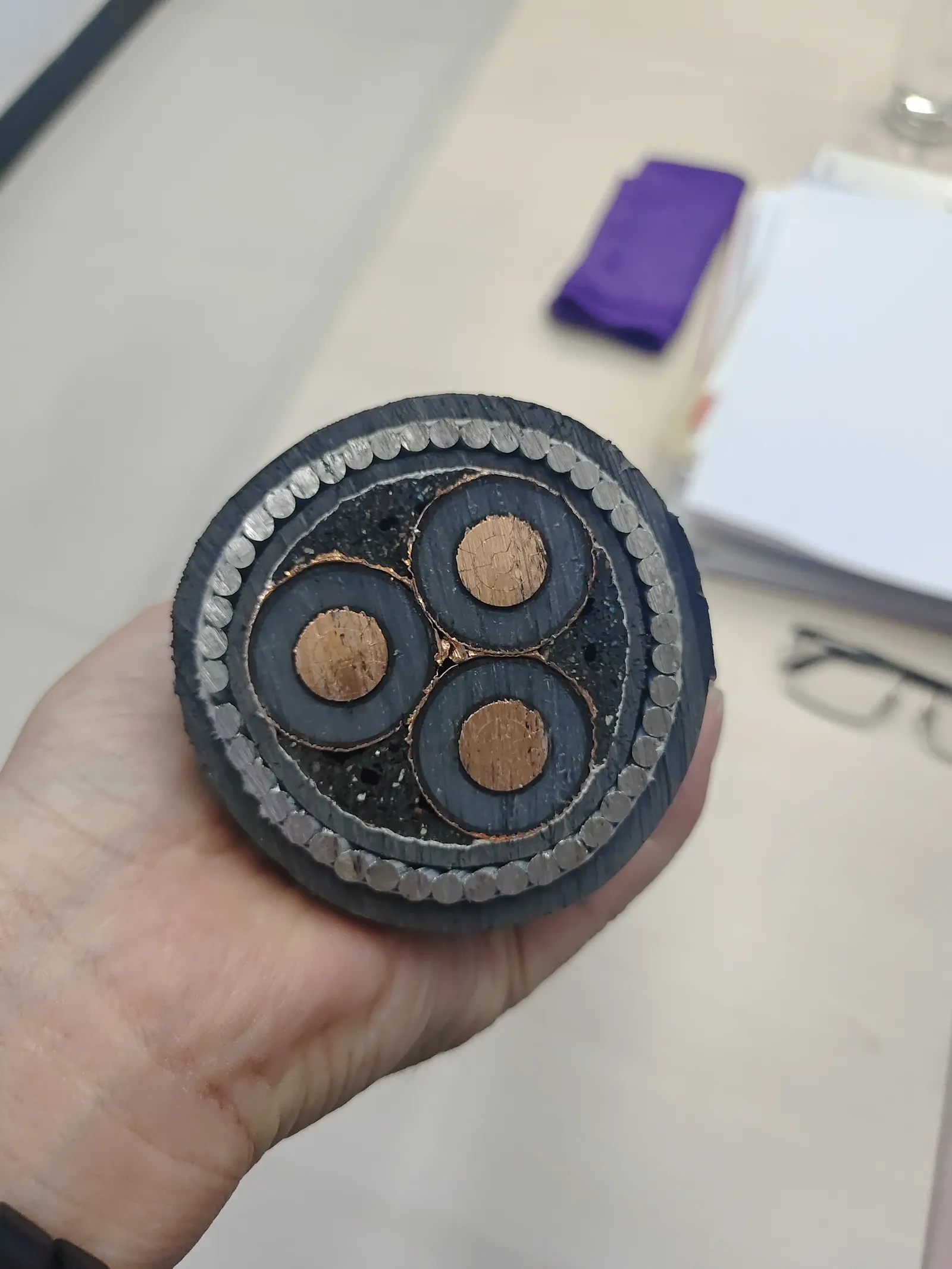
- Armour layer — applied between the inner and outer sheaths. Either:
- SWA (Steel Wire Armour) — round galvanised steel wires applied helically. Used on multi-core cables (typically round profile).
- STA (Steel Tape Armour) — two overlapping galvanised steel tapes wound in opposite directions. Used on single-core cables (to avoid eddy current heating) and some multi-core designs.
- AWA (Aluminium Wire Armour) — aluminium wires for single-core cables where steel would cause magnetic losses.
- Outer sheath — extruded over the armour for corrosion protection
Total layers: 6–7. The armour provides mechanical protection intrinsic to the cable — it does not depend on the installation method.
Key Structural Differences at a Glance
| Property | Non-Armoured | Armoured (SWA) |
|---|---|---|
| Number of layers | 4–5 | 6–7 |
| Mechanical protection | None (relies on environment) | Built-in impact/crush resistance |
| Earth fault path | Requires separate CPC | Armour serves as CPC (if sized correctly) |
| Termination | Standard cable gland or lug | Indoor gland or armoured cable gland (CW type) |
| Typical designation | YJV / N2XY / NYY | YJV22 / N2XRY / BS 5467 |
Performance Comparison: Armoured vs Non-Armoured
Beyond the obvious mechanical protection, armouring changes several cable properties that affect installation planning, electrical performance, and lifetime cost.
Mechanical Strength
The primary reason armour exists. Per IEC 60502-1 Annex B, armoured cables must withstand:
- Impact resistance: 20 J for cables ≤25mm OD, 30 J for larger cables
- Crush resistance: 4 kN on a 50mm length
- Tensile strength: Armour contributes significant longitudinal strength (relevant for vertical runs and pulling)
Non-armoured cables have no specified impact or crush rating — their survival depends entirely on the conduit, tray, or duct protecting them.
Real-world implication: A 4×95mm² SWA cable can survive a dropped shovel blade. The same cable without armour cannot.
Weight and Diameter
Armour adds significant mass:
| Cable Size | Non-Armoured OD (mm) | Armoured OD (mm) | Non-Armoured Weight (kg/km) | Armoured Weight (kg/km) | Weight Increase |
|---|---|---|---|---|---|
| 4×16mm² Cu | 22.8 | 27.4 | 720 | 1,050 | +46% |
| 4×50mm² Cu | 32.5 | 38.2 | 1,780 | 2,450 | +38% |
| 4×95mm² Cu | 41.2 | 47.8 | 3,250 | 4,200 | +29% |
| 4×240mm² Cu | 58.6 | 66.0 | 7,800 | 9,500 | +22% |
| 4×400mm² Cu | 72.0 | 80.5 | 12,500 | 14,800 | +18% |
The weight increase is proportionally larger on smaller cables because the armour wire diameter does not scale linearly with conductor size. A 4×16mm² armoured cable is nearly 50% heavier than its non-armoured equivalent.
Installation impact: Heavier cable means larger drums, higher shipping cost, more pulling force required, and potentially larger cable tray. For a 500m run of 4×95mm² cable, armoured adds approximately 475 kg — the equivalent of another 2 drums of small cable.
Bending Radius
Armour constrains flexibility:
- Non-armoured cable: Minimum bending radius = 6× overall diameter (IEC 60502-1)
- SWA armoured cable: Minimum bending radius = 8× overall diameter (round wire)
- STA armoured cable: Minimum bending radius = 12× overall diameter (tape armour is less flexible)
For a 4×95mm² cable: non-armoured needs 247mm minimum bend radius; SWA armoured needs 382mm. In tight spaces, this difference matters.
Current Carrying Capacity
Armour itself does not significantly affect current rating. Both types use the same conductor and insulation — the thermal resistance of a thin steel layer is negligible. However:
- Armoured cables buried directly in soil use direct burial derating factors (IEC 60287 method)
- Non-armoured cables in duct/conduit use enclosed derating factors
- In practice, direct-buried armoured cable often has a higher effective current rating than the same size cable pulled through a duct (better thermal dissipation in soil vs. trapped air)
Corrosion Resistance
The armour layer is a maintenance consideration:
- Galvanised steel wires resist general atmospheric corrosion but degrade in:
- High-salinity environments (coastal, marine)
- Acidic soils (pH < 5)
- Chemically contaminated ground
- Mitigation: PVC outer sheath protects the armour; ensure sheath integrity during installation
- Aluminium wire armour: Better corrosion resistance than steel, used where corrosion is a specific risk
Non-armoured cable has no metallic layer to corrode — one less failure mode to consider in chemically aggressive environments.
When You Must Use Armoured Cable
These scenarios demand armour — skipping it creates unacceptable risk of mechanical damage, code violation, or both.
1. Direct Burial Without Duct
If the cable goes directly into the ground without a protective conduit or duct, armour is non-negotiable. The steel layer protects against:
- Spade/excavator strikes during future digging
- Soil movement and settlement forces
- Rodent gnawing (rats can and will chew through PVC sheaths)
- Rock impingement during backfilling
IEC 60502-1, BS 7671 (UK Wiring Regulations), and virtually every national code require armoured cable for direct burial. Non-armoured cable buried without duct violates installation standards everywhere.
For complete burial depth requirements and installation methods, see our underground power cable guide.
2. Outdoor Exposed Runs
Cable routed externally on building surfaces, along fences, across open ground, or between structures — anywhere it is exposed to:
- Physical impact from vehicles, equipment, or foot traffic
- UV degradation stress (armour provides a structural backstop if the sheath degrades)
- Wind loading on long spans
- Vandalism or accidental damage
3. Industrial Environments with Mechanical Risk
Factories, warehouses, mining operations, construction sites — anywhere heavy equipment operates near cables:
- Fork-lift traffic areas
- Overhead crane zones
- Areas subject to falling objects
- Machine rooms with vibration
4. Vertical Risers (Tall Buildings/Shafts)
Cable running vertically needs to support its own weight. In runs over 5–10 metres, the armour provides:
- Longitudinal tensile strength (prevents conductor elongation)
- Support at cleating points (cable cleat grips armour, not just sheath)
- Containment if external sheath fails
5. Areas Requiring the Armour as Earth Conductor
In many installations, the SWA layer doubles as the Circuit Protective Conductor (CPC/earth). This is cost-effective because:
- No separate earth conductor needed
- The steel area typically exceeds earth fault capacity requirements for the circuit
- BS 7671 and IEC 60364 permit this, provided the armour cross-section meets fault current requirements
If your design relies on the cable armour for earth continuity, you obviously need armoured cable.
When Non-Armoured Cable Is the Right Choice
Armoured cable is not always better — in these scenarios, it adds cost and complexity without benefit.
1. Cable Tray and Ladder Rack (Indoor)
Cable trays and ladders provide mechanical protection through their own structure. Adding armour to cables on tray:
- Increases weight (tray loading calculation becomes more expensive)
- Adds cost for no mechanical benefit
- Requires cable glands that are unnecessary
Standard practice worldwide: non-armoured cable on indoor tray, with fire barriers at penetrations.
2. Conduit and Trunking Systems
If the cable is inside a metallic or PVC conduit the entire route:
- The conduit provides mechanical protection
- The conduit provides the earth path (metallic systems)
- Armour is redundant
Exception: If there is any part of the route between conduit sections where the cable is exposed, consider armoured for the full route rather than transitioning mid-run.
3. Contained Cable Ducting (Underground)
Cables pulled through pre-installed underground ducts (HDPE pipes, PVC conduit banks) do not need armour:
- The duct provides the mechanical barrier
- Non-armoured cable is easier to pull (lighter, more flexible, lower friction)
- Duct systems are designed for cable replacement — lighter cable is an advantage
Cost benefit: for a 200m underground run, using non-armoured cable in duct vs. armoured direct-buried, material cost is often similar (duct + non-armoured ≈ armoured alone), but the duct gives you replaceability.
4. Switchboard and Panel Internal Wiring
Short cable runs within switchboards, distribution panels, and motor control centres — all fully enclosed in metal housings.
5. Temporary Installations
Event cabling, construction site temporary power, short-term installations — use non-armoured cable with physical protection (mats, ramps, conduit clips) rather than investing in armoured cable that will be discarded.
Cost Analysis: What Does Armour Actually Add?
The price difference is not just the steel wire — it cascades through the entire supply chain.
Material Cost Difference
Based on typical ex-factory pricing for XLPE insulated copper cable (FOB China):
| Cable Size | Non-Armoured (USD/m) | SWA Armoured (USD/m) | STA Armoured (USD/m) | Premium |
|---|---|---|---|---|
| 4×16mm² Cu XLPE | ~4.50 | ~5.80 | ~5.60 | +26–29% |
| 4×50mm² Cu XLPE | ~11.50 | ~14.00 | ~13.50 | +17–22% |
| 4×95mm² Cu XLPE | ~21.00 | ~25.50 | ~24.80 | +18–21% |
| 4×240mm² Cu XLPE | ~52.00 | ~60.00 | ~58.50 | +13–15% |
| 1×400mm² Cu XLPE | ~38.00 | ~42.50 (AWA) | ~41.00 (STA) | +8–12% |
Note: Prices are indicative and fluctuate with copper/aluminium commodity markets. Contact your manufacturer for current pricing.
The percentage premium decreases for larger cables because the armour cost (mainly galvanised steel wire) is relatively fixed, while the conductor cost (copper) dominates on larger sizes.
Total Installed Cost Difference
Material is only part of the picture. Armoured cable adds cost at every stage:
Shipping and handling:
- Heavier drums = higher freight cost (30–45% more weight per reel)
- Larger drum dimensions = fewer drums per container
- Estimate: +15–25% shipping cost per metre
Installation labour:
- Armoured cable requires cable glands at every termination point (CW-type glands: USD 5–50 each depending on size)
- Heavier cable = slower pulling, more labour hours
- Earth bonding of armour at each end (testing, labelling)
- Estimate: +20–30% installation labour
Total installed cost premium for armoured over non-armoured: typically 30–50% for small/medium cables, 20–35% for large cables.
The Hidden Cost of NOT Using Armour
When armour is genuinely needed and you skip it:
- Cable fault repair: USD 5,000–50,000+ depending on voltage, location, and downtime
- Project delay: Days to weeks to source replacement cable, re-excavate, re-install
- Third-party damage claims: If your unprotected cable damages someone else's property
- Insurance implications: Installing non-compliant cable may void coverage
The math is simple: if there is a reasonable probability of mechanical damage, armour pays for itself with the first avoided fault.
International Standards: What Do Codes Require?
Standards do not always mandate armour explicitly — they specify the installation must provide "mechanical protection." How you achieve that is an engineering decision.
IEC 60364 (International)
Section 522.6 — Protection against mechanical stress:
- Cables shall be selected and installed to withstand foreseeable mechanical stresses
- Direct burial: requires armoured cable OR cable in mechanically protective duct
- No prescriptive armour mandate for indoor installations if tray/conduit provides protection
BS 7671 (United Kingdom)
Regulation 522.6:
- Cable must be suitably protected against mechanical damage or be of a type that resists it
- SWA cable is explicitly listed as providing mechanical protection per Table 52.1
- Armour can serve as CPC (protective conductor) per Regulation 543.1
NEC (United States — NFPA 70)
Article 300.5 — Underground Installations:
- Direct buried cable requires armour OR concrete encasement OR 24-inch burial depth (for most circuits)
- Type MC cable (metal-clad) or Type AC used where mechanical protection is required
- NEC approach differs: many US installations use conduit + THWN-2 wire rather than armoured cable
AS/NZS 3008 (Australia/New Zealand)
- Armoured cable required for direct burial unless in heavy-duty conduit
- Cable tray installations: non-armoured permitted for most indoor applications
- Armour used as earth conductor only if it meets AS/NZS 3008 earth fault calculation
SANS 10142 (South Africa)
- SWA armoured cable is the dominant installation method for distribution networks
- Required for most outdoor and underground installations
- South African market heavily favours armoured cable due to theft/vandalism concerns
For a detailed comparison of how different cable standards (IEC, BS, GB) apply to armoured cable specifications, see our 4 core armoured cable SWA/STA specifications guide.
SWA vs STA vs Non-Armoured: Quick Decision Matrix
| Scenario | Recommendation | Reason |
|---|---|---|
| Direct burial, multi-core | SWA | Round wire gives best impact protection + serves as earth |
| Direct burial, single-core | STA or AWA | Avoids eddy current losses that SWA would create on single-core |
| Indoor cable tray | Non-armoured | Tray provides protection; armour adds unnecessary weight/cost |
| Outdoor on wall/structure | SWA | Exposed to impact, weather, potential vandalism |
| Underground in duct | Non-armoured | Duct provides protection; lighter cable easier to pull |
| Vertical riser > 10m | SWA | Armour provides longitudinal support at cleat points |
| Chemical plant / refinery | SWA + LSZH | Mechanical protection + low-smoke materials for fire safety |
| Mining / tunnelling | SWA (often double armoured) | Maximum impact protection for harsh underground environment |
| Temporary construction power | Non-armoured + mats | Short-term use does not justify armour investment |
| Generator to distribution board (outdoor) | SWA | Short run but outdoor exposure; gland provides weatherproof entry |
Common Specification Mistakes
Mistake 1: Over-Specifying Armour on Indoor Tray
The scenario: A consulting engineer specifies SWA armoured cable for all cables in an indoor commercial building, including those on covered cable tray in ceiling voids.
The problem:
- Cable tray already provides protection per IEC 60364-522.6
- Armoured cable is 35–45% heavier — the tray itself needs to be upgraded
- Every termination needs a CW gland — hundreds of extra glands on a building project
- Total project cost increase: potentially 20–30% on cable and accessories
The fix: Specify non-armoured XLPE cable on indoor tray (YJV/N2XY), with armoured cable only for:
- Outdoor portions
- Underground sections
- Exposed/accessible areas where damage is possible
Mistake 2: Using Non-Armoured Cable in "Protected" Outdoor Conduit That Will Deteriorate
The scenario: Non-armoured cable installed in PVC conduit outdoors. "The conduit protects it."
The problem: After 5–10 years, UV exposure degrades PVC conduit. Joints separate, clips break, conduit cracks. Now non-armoured cable is effectively exposed. No one will re-conduit an existing cable run.
The fix: For permanent outdoor installations, use armoured cable even inside conduit — the armour is your backup when the conduit inevitably degrades. Alternatively, use UV-stable HDPE conduit (50+ year life).
Mistake 3: Direct Burial Without Armour Because "We'll Be Careful"
The scenario: A contractor buries non-armoured cable at 600mm depth. "Nobody's going to dig here, it's behind the building."
The problem:
- Utility records get lost. Future excavation will happen.
- 600mm is within spade depth — a single landscaping project hits the cable
- Without armour, there is zero margin for error
- Insurance may not cover damage to non-compliant installations
The fix: Always armour or duct for underground. No exceptions. The cable will be there for 30+ years — you cannot predict what happens above it.
Mistake 4: Specifying SWA on Single-Core Cables
The scenario: Three runs of 1×400mm² with SWA (steel wire armour) for a large three-phase feeder.
The problem: Alternating current flowing through a single conductor creates a magnetic field that induces circulating currents in surrounding ferromagnetic materials — including steel wire armour. This causes:
- Significant heating of the armour layer
- Derating of the cable (reduced current capacity by 10–30%)
- Energy waste (hysteresis and eddy current losses)
The fix: For single-core cables, use:
- STA (Steel Tape Armour) — non-magnetic stainless steel tape avoids losses
- AWA (Aluminium Wire Armour) — non-ferromagnetic, no circulating current issue
- Non-armoured in trefoil formation within a common duct — magnetic fields cancel
This is not optional — it is a fundamental electrical engineering requirement per IEC 60502.
Termination and Gland Differences
The choice between armoured and non-armoured cable affects every point where the cable connects.
Non-Armoured Cable Termination
Simple and fast:
- Indoor: Cable stripped and cores terminated directly into bus bars or terminals. Optional nylon cable gland for strain relief.
- Outdoor/IP-rated: Compression cable gland (stuffing gland type) provides weatherproofing and strain relief.
- No earth bonding requirement at gland (no metallic armour to bond).
- Installation time per termination: 5–15 minutes depending on size.
Armoured Cable Termination
Requires a proper armoured cable gland:
- CW-type gland (indoor) or BW-type gland (for unbraided cables): grips the armour wires, provides mechanical strain relief, and provides the earth bond in one assembly.
- E1W-type gland (weatherproof): adds a seal for outdoor/IP-rated terminations.
- The armour must be fanned out, cut to correct length, and mechanically locked into the gland body.
- Earth tag from gland must be bonded to the equipment earth bar.
- Installation time per termination: 15–40 minutes depending on size and type.
Cost per termination point:
- Non-armoured gland: USD 1–8
- Armoured CW gland (20mm): USD 5–15
- Armoured CW gland (63mm): USD 30–60
- Armoured E1W weatherproof (50mm+): USD 50–120
On a project with 200 cable termination points, gland cost alone can add USD 5,000–15,000 if armoured cable is specified unnecessarily.
Sourcing Considerations: Armoured vs Non-Armoured from China
When buying cable from a top Chinese cable manufacturer, the armour decision also affects lead time, minimum order quantities, and shipping logistics.
Lead Time
- Non-armoured cable: Faster to produce. The armouring process (wire drawing, galvanising, and helical application) adds 2–5 days to production.
- Standard sizes (4×16 to 4×240 SWA): Most established factories keep semi-finished stock and can armour within 7–10 days. Our own production runs 10–15 days on standard armoured constructions.
- Non-standard sizes or AWA: May require longer because aluminium wire has to be sourced for the run.
Shipping Weight Impact
Armoured cable is significantly heavier. This matters for container loading:
- A 20ft container holds approximately 22,000 kg
- For 4×95mm² cable: you fit ~5,200m non-armoured vs. ~4,500m armoured in the same container
- That is 700m less cable per container — roughly 13% less
- On large orders, this means extra containers and higher freight cost
Quality Checkpoints for Armoured Cable
When inspecting armoured cable from any manufacturer, verify:
- Wire diameter: Measure individual armour wires. They must meet the minimum specified in IEC 60502 Table 11 (typically 1.25mm for cables up to 13mm OD under armour, 1.6mm for 13–25mm, 2.0mm for larger).
- Galvanising quality: Wires should be bright zinc-coated, not rusted or dull. Request the zinc coating weight test report (minimum 200 g/m² per IEC 60502).
- Lay direction and pitch: The helical winding should be uniform with consistent spacing. Irregular lay indicates poor armouring machine setup.
- Continuity test: Armour must show electrical continuity end-to-end (this is your earth path).
For a complete guide to evaluating Chinese cable factories, see our how to import cable from China guide.
Making Your Decision: A Practical Flowchart
Ask these questions in order:
Q1: Is any part of the cable route underground (direct burial)?
- Yes → Armoured cable (or non-armoured in duct, but see cost comparison)
- No → Continue to Q2
Q2: Is the cable exposed outdoors or in areas with mechanical risk?
- Yes → Armoured cable
- No → Continue to Q3
Q3: Does the cable route have continuous mechanical protection (tray, conduit, trunking)?
- Yes → Non-armoured cable is sufficient
- No → Continue to Q4
Q4: Is the installation permanent (>5 years) in an area that may change use?
- Yes → Consider armoured for future-proofing
- No → Non-armoured cable is acceptable
Q5: Does your design require the cable armour as earth/CPC?
- Yes → Must use armoured cable
- No → Decision based on Q1–Q4 above
If you answer "armoured" at any step, specify armour for that circuit. If you reach the end without triggering armour, non-armoured cable is the technically correct and cost-effective choice.
Frequently Asked Questions
Is armoured cable always better than non-armoured?
No. Armoured cable is better when mechanical protection is needed. When it is not needed — such as cable on indoor tray or in conduit — armour adds 30–50% cost, 30–45% weight, requires expensive glands, and provides no benefit. The right cable for the installation is always better than the most expensive cable.
Can I use non-armoured cable underground if it is inside a duct?
Yes. If the cable is enclosed in a continuous duct (HDPE pipe, PVC conduit) from pit to pit with no exposed sections, non-armoured cable is acceptable per IEC 60364 and most national codes. The duct provides the mechanical protection. This approach also makes future cable replacement possible.
Does armoured cable last longer than non-armoured?
The conductor and insulation — the parts that carry current — are identical. Armoured cable does not have a longer electrical life. However, in environments where mechanical damage is possible, armoured cable survives incidents that would destroy non-armoured cable. In a protected indoor environment, both types have the same expected life (30–40+ years).
Can I use armoured cable without a cable gland?
Technically you can terminate armoured cable without a proper gland — but you lose the mechanical anchorage, the weatherproof seal, and the earth bond. This creates a non-compliant installation. Always use the correct gland type. The cost of a gland is trivial compared to the cable cost.
Is SWA armour suitable for single-core cables?
No. Steel wire armour on single-core AC cables causes magnetic heating losses (eddy currents and hysteresis in the ferromagnetic steel). Single-core cables should use Steel Tape Armour (STA with non-magnetic stainless steel) or Aluminium Wire Armour (AWA). This is not a preference — it is an electrical requirement.
Summary: Make the Right Call
The armour decision should be driven by one thing: does the installation environment pose a credible mechanical threat to the cable?
If yes — use armoured cable. The 25–40% premium is cheap insurance against faults, downtime, and safety incidents.
If no — use non-armoured cable. You save money, reduce weight, simplify terminations, and speed up installation. There is no engineering benefit to armouring a cable that will never be hit.
Do not default to armoured "just in case." Do not default to non-armoured "to save money." Evaluate each route section individually. A single project may correctly use both types — armoured for the outdoor/underground sections and non-armoured for the indoor/tray sections.
For complete armoured cable specifications, size charts, and current ratings, see our 4 core armoured cable SWA/STA guide. For information on our armoured cable production capabilities and factory-direct pricing, visit our SWA cable product page or request a quotation.
Related articles:
- 4 Core Armoured Cable: SWA vs STA — Complete Size Chart & Specifications — Full current ratings for every armoured cable size
- Underground Power Cable Types & Installation Guide — Burial methods, depth requirements, and cable selection
- SWA Cable: Steel Wire Armoured Cable Supplier Guide — SWA construction, gland sizing, and factory sourcing
- XLPE Power Cable: Complete Specifications Guide — Insulation specifications for both armoured and non-armoured types
- 3 Phase Power Cable Sizes & Specifications — Three-phase cable sizing for all installation methods
- Cable Insulation Types: PVC vs XLPE vs EPR — Material selection guide
- Top 10 XLPE Cable Manufacturers in China — Leading armoured cable factories compared