Key Takeaway
Complete guide to power cable testing methods: routine tests, type tests, sample tests per IEC 60502. Learn how to read a cable test report, what values to check, and when to require third-party testing before shipment.
Your cable supplier sends you a test report. Four pages of numbers, graphs, and standard references. Conductor resistance: 0.125 Ω/km. Insulation resistance: 380 MΩ·km. Voltage withstand: passed at 3.5 kV for 5 minutes.
But what do these numbers actually mean? Are they good? Are they bad? How do you know if this cable will perform in your installation for 30 years?
This guide teaches you how to understand cable testing — not from an engineer's academic perspective, but from a buyer's practical one. We explain what each test does, what "pass" actually means in numbers, how to spot a suspicious report, and when you should demand third-party verification.
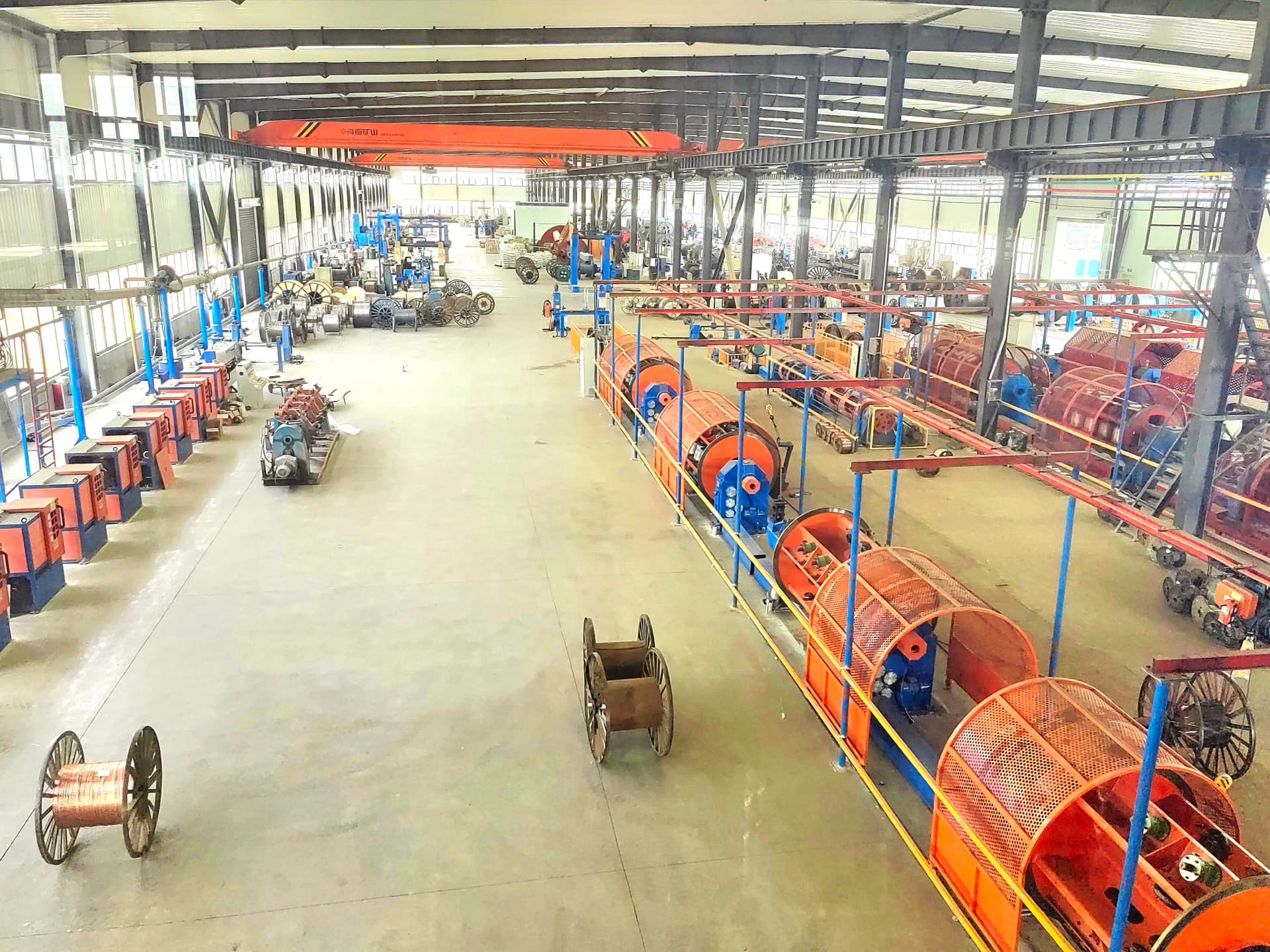
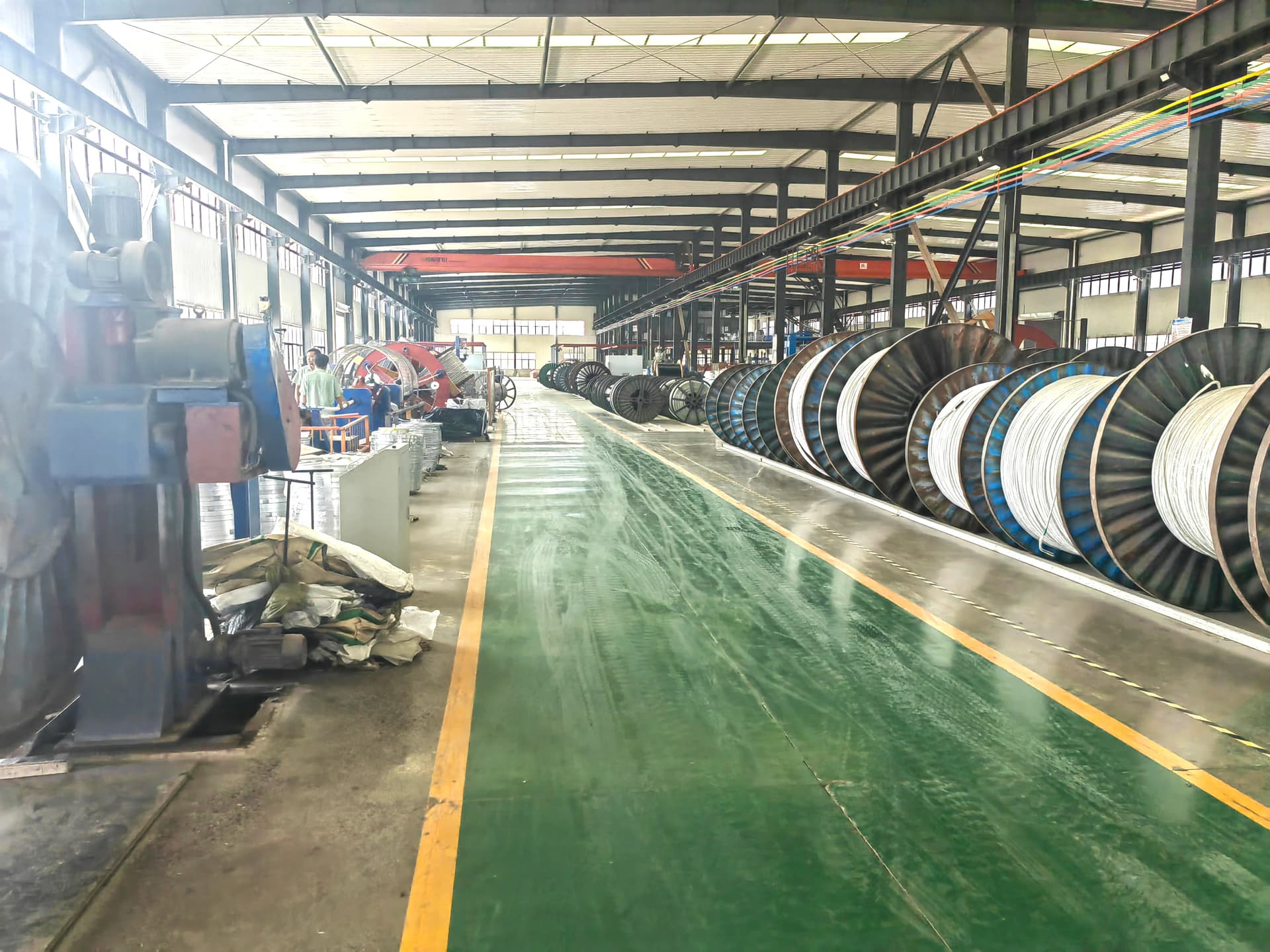
We write this as a manufacturer who tests every single drum of cable before shipment at our factory. We know what the numbers should look like, what makes them drift, and what a buyer should worry about versus what is normal production variation.
Why Cable Testing Matters More Than Certificates
Here is a truth that many buyers miss:
A type test certificate tells you that a sample of this cable design passed comprehensive testing at some point in the past. It says nothing about the 5,000 meters on the drum being loaded onto your container right now.
The only thing that proves YOUR cable is properly manufactured is the routine test report — the electrical tests performed on that specific production length before it ships.
Think of it this way:
- Type test = The car model passed crash testing (the design is safe)
- Routine test = This specific car passed inspection before leaving the factory (this unit was built correctly)
- Third-party inspection = An independent mechanic checked the car before you took delivery (someone verified the factory's own inspection)
You need all three layers for high-value cable orders. But most buyers only ask for the type test certificate, which is the least relevant to what they actually receive.
The Three Categories of Cable Tests (IEC 60502)
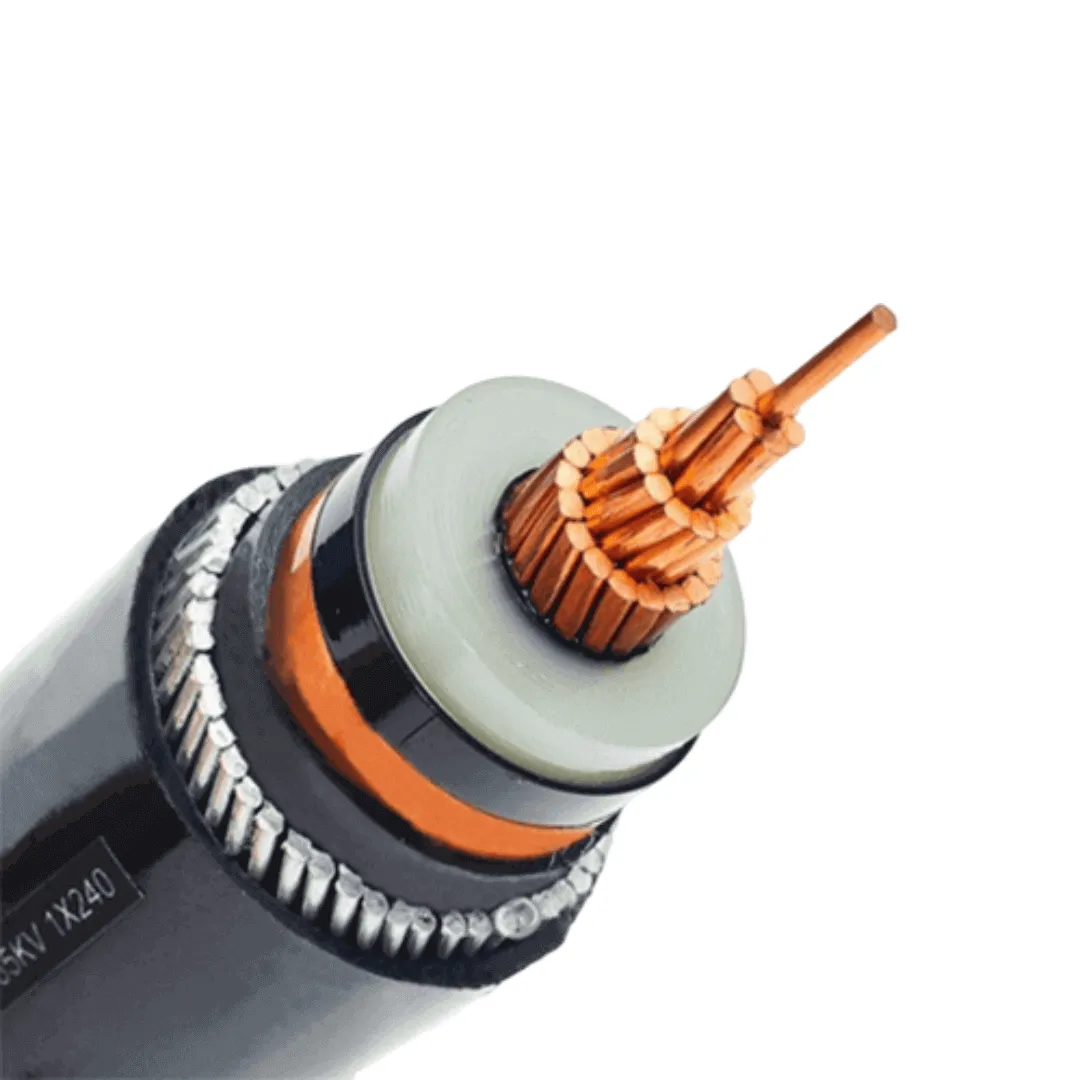
IEC 60502 — the international standard governing power cables from 1 kV to 30 kV — defines three distinct categories of tests. Each serves a different purpose in the quality assurance chain.
1. Routine Tests (Every Manufacturing Length)
When performed: On every cable drum/length before delivery Who performs: The manufacturer's own testing laboratory Purpose: Verify that this specific production length has no manufacturing defects
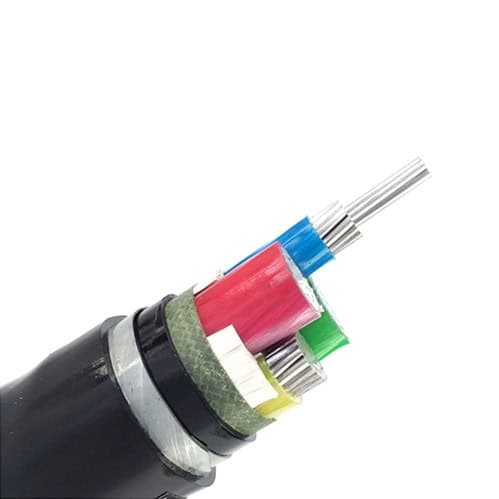
Mandatory routine tests per IEC 60502-1 (0.6/1 kV cables):
| Test | What It Checks | Pass Criteria |
|---|---|---|
| Conductor resistance | Correct conductor cross-section and material purity | Must not exceed IEC 60228 maximum values (e.g., 95mm² Cu Class 2: ≤ 0.193 Ω/km at 20°C) |
| High-voltage withstand (AC) | Insulation integrity — no weak spots or voids | Withstand 3.5 kV AC for 5 minutes (0.6/1 kV rated cable) without breakdown |
| Insulation resistance | Overall insulation quality | ≥ stated minimum per standard (typically calculated from MΩ·km values) |
Mandatory routine tests per IEC 60502-2 (medium voltage 6/10 kV to 18/30 kV):
| Test | What It Checks | Pass Criteria |
|---|---|---|
| Conductor resistance | Same as above | Per IEC 60228 tables |
| High-voltage withstand (AC) | Insulation integrity at higher stress | 2.5 U₀ for 5 minutes (e.g., 21.75 kV for 8.7/15 kV cable) |
| Partial discharge test | Absence of dangerous voids in XLPE insulation | ≤ 10 pC at 1.73 U₀ (e.g., 15.1 kV for 8.7/15 kV cable) |
| Insulation resistance | Overall insulation quality | Per standard requirements |
Why routine tests matter most to buyers:
These are the ONLY tests that prove your specific cable passed. Everything else (type tests, sample tests) was done on different cable at a different time. If a manufacturer cannot provide routine test reports for your order, that is a serious red flag — it means either:
- They did not perform the tests (quality control failure)
- The cable failed and they are hiding it
- The cable was not manufactured by them (trading company reselling)
2. Type Tests (Once Per Cable Design)
When performed: When a new cable construction is introduced, or when design/materials change Who performs: Usually an accredited external laboratory (KEMA, CESI, IPH, ASTA) for credibility — see our certification guide for what each certificate proves Purpose: Prove that the cable DESIGN meets all performance requirements of the standard under extreme conditions
IEC 60502-1 type tests include:
| Test | What It Proves | Conditions |
|---|---|---|
| Bending test + partial discharge (MV) | Cable survives installation bending without insulation damage | Bend around mandrel at (15±2)d diameter, then PD test |
| Tan δ measurement (MV) | Insulation loss factor within limits | Measured at U₀ and 2U₀ |
| Heating cycle voltage test | Insulation survives repeated thermal cycling under voltage stress | 20 heating cycles (8h heat + 16h cool) at conductor temp 90°C (XLPE), with AC voltage applied |
| Impulse voltage test (MV) | Insulation withstands lightning/switching surges | 10 positive + 10 negative impulses at BIL (Basic Impulse Level) |
| Hot set test | XLPE is properly crosslinked | Elongation ≤ 175% and set ≤ 15% after cooling (at 200°C for 15 min under load) |
| Shrinkage test | Insulation dimensionally stable | ≤ 5% shrinkage for XLPE (at 130°C for 1h) |
| Mechanical tests on sheath/insulation | Materials meet tensile strength and elongation requirements | Before and after aging at elevated temperature |
| Fire resistance (IEC 60332-1) | Single cable does not propagate flame | Flame applied for specified duration, burn length measured |
| 4-hour voltage withstand | Long-duration insulation test at elevated voltage | 4U₀ for 4 hours (LV) / per standard (MV) |
Key insight for buyers: A type test report from 2019 is still technically valid in 2026 — IF the factory has not changed:
- XLPE compound supplier/grade
- Conductor material source
- Manufacturing equipment (crosslinking line, extrusion dies)
- Insulation thickness design
In practice, we recommend asking for type test reports less than 5 years old, or requesting a statement confirming no material changes since the test date.
3. Sample Tests (Periodic Verification)
When performed: On agreed frequency — typically every Nth production batch or per contract agreement Who performs: Manufacturer's lab or third-party lab (negotiable) Purpose: Verify that ongoing production maintains the same material properties as the type-tested design
Typical sample tests:
| Test | Frequency | What It Catches |
|---|---|---|
| Hot set test (XLPE crosslinking) | Every 10th batch or weekly | Under-cured XLPE (crosslinking line problems) |
| Tensile strength / elongation of insulation | Every 10th batch | Material degradation or wrong compound grade |
| Tensile strength / elongation of sheath | Every 10th batch | PVC/PE sheath quality issues |
| Conductor wire tensile test | Per copper/aluminium rod batch | Substandard raw material |
| Insulation thickness measurement | Daily (factory QC) | Die wear, extrusion parameter drift |
For buyers: Sample tests are negotiable in your purchase contract. For large orders (>50 km), we recommend specifying:
- Hot set test every 20 drums (verifies XLPE crosslinking consistency)
- Insulation/sheath mechanical properties per 50 drums
- All sample test results provided with shipment documents
How to Read a Cable Test Report: A Buyer's Field Guide
You receive a routine test report from your supplier. Here is exactly what to check, line by line.
Step 1: Verify the Cable Identification
The report header should state:
- Cable type/specification — Must match your purchase order exactly (e.g., "4×95mm² Cu/XLPE/SWA/PVC 0.6/1kV")
- Drum/reel number — Each drum has a unique number; the report should reference it
- Manufacturing date — Should align with your order timeline
- Length — Total meters on this drum (typically 500m–2000m for LV, 200m–1000m for MV)
- Testing standard — Which IEC/BS/GB standard the tests follow
Red flag: A "test report" that does not identify a specific drum number is not a routine test report for your cable. It may be a generic template or a copy of someone else's report.
Step 2: Check Conductor Resistance
What you are looking at: Measured DC resistance of the conductor at 20°C, expressed in Ω/km.
How to verify it is acceptable:
Compare against IEC 60228 maximum values:
| Conductor Size (mm²) | Copper Class 1 (solid) Max Ω/km | Copper Class 2 (stranded) Max Ω/km | Aluminium Class 2 Max Ω/km |
|---|---|---|---|
| 16 | 1.15 | 1.15 | 1.91 |
| 25 | 0.727 | 0.727 | 1.20 |
| 35 | 0.524 | 0.524 | 0.868 |
| 50 | 0.387 | 0.387 | 0.641 |
| 70 | 0.268 | 0.268 | 0.443 |
| 95 | 0.193 | 0.193 | 0.320 |
| 120 | 0.153 | 0.153 | 0.253 |
| 150 | 0.124 | 0.124 | 0.206 |
| 185 | 0.0991 | 0.0991 | 0.164 |
| 240 | 0.0754 | 0.0754 | 0.125 |
| 300 | 0.0601 | 0.0601 | 0.100 |
| 400 | 0.0470 | 0.0470 | 0.0778 |
| 500 | 0.0366 | 0.0366 | 0.0605 |
| 630 | 0.0283 | 0.0283 | 0.0469 |
What the measured value tells you:
- Below maximum by 5–15% → Normal. Good quality copper/aluminium, properly drawn and stranded
- At or very close to maximum → Acceptable but watch closely. May indicate less pure copper or slightly undersized conductor
- Exceeds maximum → FAIL. Cable does not comply with IEC 60228. Do NOT accept this cable
- Suspiciously low (more than 20% below maximum) → Unusual. Could mean the measurement was done at a higher temperature and incorrectly corrected, or conductor is oversized (wastes copper — unlikely unless there is a measurement error)
Temperature correction: Conductor resistance changes with temperature (~0.4% per °C for copper). Reports should state the measurement temperature and show the correction to 20°C. The formula is:
R₂₀ = Rₜ × [1 / (1 + α₂₀(t - 20))]
Where α₂₀ = 0.00393 for copper, 0.00403 for aluminium.
If the report shows a test temperature of 25°C but no temperature correction, the actual 20°C resistance is ~2% lower than the reported figure. This matters when the value is close to the maximum.
Step 3: Check Voltage Withstand Test
What you are looking at: The cable was subjected to elevated AC voltage for a specified duration.
Pass/fail criteria by cable rating:
| Cable Rated Voltage | Routine Test Voltage (AC) | Duration | Pass Criteria |
|---|---|---|---|
| 0.6/1 kV (LV) | 3.5 kV | 5 minutes | No breakdown |
| 1.8/3 kV | 6.5 kV | 5 minutes | No breakdown |
| 3.6/6 kV | 12 kV | 5 minutes | No breakdown |
| 6/10 kV | 15 kV | 5 minutes | No breakdown |
| 8.7/15 kV | 21.75 kV | 5 minutes | No breakdown |
| 12/20 kV | 30 kV | 5 minutes | No breakdown |
| 18/30 kV | 45 kV | 5 minutes | No breakdown |
What "no breakdown" means: During the entire test duration, there was no flashover, puncture, or disruptive discharge in the insulation. The cable held the voltage without any indication of insulation failure.
What the report should state:
- Test voltage applied (kV)
- Duration (must be ≥5 minutes)
- Result: "Passed" or "No breakdown"
- Which cores were tested (all cores must be tested individually, with other cores and armour earthed)
Red flag: If the report says "passed" but does not state the test voltage level, or states a voltage lower than required, the test does not comply with IEC 60502.
Step 4: Check Insulation Resistance (for MV cables: Partial Discharge)
Insulation resistance (all cables):
Measured in MΩ·km at a specified temperature. Higher is better. The minimum requirement depends on the cable construction, but typical values for XLPE insulation at 20°C:
- Expected: 200–2000 MΩ·km (varies widely with cable size and temperature)
- Minimum acceptable: Per standard calculations (generally not a concern for XLPE — failures here indicate severe contamination or moisture ingress)
Partial discharge test (medium voltage cables only):
This is the most critical test for MV cables. Partial discharge (PD) indicates tiny electrical discharges inside voids or contamination within the XLPE insulation. Over time, these discharges erode the insulation and cause eventual failure — sometimes after 5–15 years in service.
Pass criteria per IEC 60502-2:
- Test voltage: 1.73 U₀ (e.g., 15.1 kV for 8.7/15 kV cable)
- Maximum allowable PD: 10 pC (picocoulombs)
- Good result: < 5 pC (often below the detection threshold of the measuring instrument)
- Excellent result: "No measurable discharge" or "< 2 pC"
What PD levels tell you:
| PD Level | What It Means | Action |
|---|---|---|
| < 5 pC | Excellent insulation quality, clean manufacturing | Accept |
| 5–10 pC | Acceptable per standard, but not pristine | Accept, but flag for monitoring if near 10 |
| > 10 pC | FAILS IEC 60502-2 requirements | Reject — insulation has voids or contamination |
| > 20 pC | Serious insulation defect | Reject immediately — premature failure risk |
Why PD matters so much for MV buyers:
A low-voltage cable with a minor insulation void may survive for decades because the electrical stress is low. A medium-voltage cable with the same void will experience partial discharge that progressively destroys the insulation. The cable might pass initial testing but fail after 5–10 years in service. The partial discharge test is your primary tool for detecting this hidden risk before installation.
Step 5: Check the Report Completeness
A legitimate routine test report should include:
| Element | Why It Matters |
|---|---|
| Company letterhead with address | Identifies the testing entity |
| Report number / certificate number | Allows traceability and verification |
| Date of test | Confirms testing was done for your order timeline |
| Cable specification (full description) | Proves the test applies to YOUR cable |
| Drum/reel numbers tested | Links report to physical cable drums |
| Standard referenced | Confirms which criteria were applied |
| Measured values (not just "pass/fail") | Allows you to verify against the standard yourself |
| Technician signature or QC stamp | Assigns accountability |
| Test equipment calibration reference | Proves instruments are accurate (for formal acceptance) |
Red flag checklist:
- ❌ Report shows only "PASS" without numerical values
- ❌ No drum/reel numbers (generic report)
- ❌ Date of test is before your order was placed (recycled old report)
- ❌ Cable specification does not exactly match your PO
- ❌ No company letterhead or identification
- ❌ Test voltages do not match IEC requirements for the cable rating
Critical Tests Explained in Detail
Beyond the routine tests, certain tests deserve deeper explanation because they directly impact whether your cable will last 25–30 years in service.
Partial Discharge Test (Medium Voltage)
The science (simplified):
XLPE insulation is manufactured by extruding molten crosslinked polyethylene around the conductor at high temperature (~250°C) and then crosslinking it in a continuous vulcanization line (CCV). If the manufacturing environment is not perfectly clean, or if the extrusion process has irregularities, tiny voids or contaminants can become trapped inside the insulation.
When high voltage is applied across the insulation (as it will be for 30 years in service), the electric field concentrates at these voids. Air inside the void has much lower dielectric strength than solid XLPE. The air ionizes — creating a tiny lightning bolt inside the insulation. Each discharge erodes a microscopic amount of XLPE. Over millions of cycles, this erosion creates a "tree" pattern (electrical tree) that eventually bridges the full insulation thickness → catastrophic failure.
Manufacturing factors that affect PD:
| Factor | How It Creates PD Risk |
|---|---|
| Unclean extrusion environment | Dust/particles become contamination sites |
| Moisture in XLPE compound pellets | Steam voids form during extrusion |
| Inconsistent extrusion temperature | Incomplete crosslinking leaves soft spots |
| Mechanical damage during handling | Creates micro-cracks that become void sites |
| Semiconductor screen irregularities | Protrusions create field concentrations |
What a good manufacturer does to prevent PD:
- Triple-layer co-extrusion (conductor screen + insulation + insulation screen in one pass)
- Cleanroom environment for XLPE compound handling
- Dry nitrogen atmosphere in the crosslinking tube
- Degassing after production (removes residual crosslinking byproducts)
- 100% PD testing at factory before any MV cable ships
Hot Set Test (XLPE Crosslinking Verification)
What it is: A test that verifies XLPE insulation has been properly crosslinked (cured). Without proper crosslinking, XLPE behaves like ordinary polyethylene — it would melt at elevated operating temperatures and deform under sustained load.
Test method (per IEC 60811-507):
- Cut a specimen of insulation
- Hang a weight from it (20 N/cm² load)
- Place in an oven at 200°C for 15 minutes
- Measure elongation under load: must be ≤ 175%
- Remove weight, cool to room temperature
- Measure permanent set: must be ≤ 15%
What the numbers mean:
IEC 60811-507 pass/fail criteria: Elongation ≤ 175%, permanent set ≤ 15%. The standard defines only the pass/fail boundary. The ranges below reflect typical production experience from our manufacturing data and should be read as practical guidance, not standard-defined thresholds:
| Hot Set Elongation | Interpretation (manufacturing experience) |
|---|---|
| < 80% | Well-cured XLPE — typical for modern CCV lines with optimized parameters |
| 80–130% | Normal production range — most properly manufactured XLPE cable falls here |
| 130–175% | Passes standard but borderline — may indicate line speed too high or temperature too low |
| > 175% | FAIL per IEC 60811-507 — XLPE is not adequately crosslinked |
| Hot Set (Permanent Set) | Interpretation (manufacturing experience) |
|---|---|
| < 5% | Minimal permanent deformation — well-crosslinked |
| 5–10% | Normal production range |
| 10–15% | Passes but borderline — warrants process review |
| > 15% | FAIL per IEC 60811-507 — material retains thermoplastic behavior |
Why buyers should care:
If XLPE is under-crosslinked:
- At operating temperature (90°C continuous), the insulation can creep/deform
- Mechanical damage resistance decreases
- Long-term aging performance deteriorates
- Cable may fail prematurely under sustained load + heat
When to request this test: For any XLPE cable order where you are buying from a new supplier for the first time. Ask for hot set test results from a sample of your production batch. This is the single best indicator of XLPE manufacturing quality.
Heating Cycle Test (Type Test — Long-term Reliability)
What it is: The cable undergoes 20 cycles of heating and cooling while under voltage stress. Each cycle: heat conductor to rated maximum temperature (90°C for XLPE) for 8 hours, then cool for 16 hours. Voltage is applied throughout.
What it proves: The cable survives repeated thermal expansion/contraction cycles without insulation failure. In real life, cables heat up during the day (under load) and cool down at night — thousands of times over their 30-year life. This test compresses years of thermal cycling into weeks.
Why it matters for buyers: This test cannot be performed on your specific cable (it is destructive and takes weeks). It is done as a type test. But it is the best predictor of whether the cable design will survive long-term service. When evaluating a manufacturer's type test report, check whether heating cycle test results are included — if they are not, the type test may be incomplete.
When to Require Third-Party Testing
Not every order needs independent laboratory testing. But certain situations call for it:
Always Require Third-Party Testing When:
-
First order from a new supplier — No track record exists. Third-party verification on the first order validates both the cable and the supplier's quality claims.
-
Medium-voltage cable (≥ 6/10 kV) — The consequences of MV cable failure are severe (expensive repair, long outage, safety risk). The cost of third-party testing (typically $3,000–$8,000 per cable type) is negligible compared to a failure.
-
Critical infrastructure — Hospitals, airports, water treatment plants, mining operations where cable failure threatens human safety or causes unacceptable financial damage.
-
Large orders where testing cost is proportional — As a general guideline, when the cost of independent testing (typically $5,000–$15,000) represents less than 3–5% of your total order value, it is cost-justified. For most cable orders above $100,000–$200,000, this threshold is met.
-
Contract requires it — Many utility companies, EPC contractors, and government projects mandate third-party inspection as a procurement term.
Third-Party Testing Options
| Service Level | What You Get | Typical Cost | When to Use |
|---|---|---|---|
| Factory routine test witness | Inspector watches the factory perform their routine tests | $1,500–$3,000 per visit | Large orders, verify testing is actually done |
| Independent routine testing | Samples sent to external lab for routine test verification | $2,000–$5,000 per cable type | When you question factory test accuracy |
| Dimensional inspection | Third-party measures insulation thickness, conductor size, overall diameter | $1,000–$2,000 per inspection | First orders, when past issues with undersized cable |
| Pre-shipment inspection (PSI) | Full physical inspection: marking, packaging, appearance + test report review | $2,000–$4,000 per container | Standard for any significant import order |
| Full independent type testing | Cable samples sent to accredited lab for complete type test | $15,000–$80,000 per cable type | Only when no valid type test exists |
Note: Cost ranges above are approximate figures based on industry experience and vary by region, cable complexity, and service provider. Request specific quotations from SGS, Bureau Veritas, or TÜV for your project. Pre-shipment inspection costs in China typically start from ~$300/man-day plus travel and reporting fees.
Recommended Third-Party Testing Agencies
For power cable inspection in China:
- SGS — Global leader, multiple labs in China, cable testing capability
- Bureau Veritas (BV) — Strong presence in cable industry, QC inspection services
- TÜV (SÜD/Rheinland) — German certification body with China operations
- CESI — Italian laboratory specializing in electrical equipment testing (used for high-end MV/HV cables)
- CQC inspectors — For Chinese domestic certification verification
Cost perspective: For a $500,000 cable order, spending $10,000 on comprehensive third-party testing (PSI + routine test witness + sample test) represents 2% of order value. Given that cable failure costs easily exceed the full order value (reinstallation, project delays, equipment damage), the ROI on third-party testing is typically 10:1 or better.
Common Quality Issues and How Testing Catches Them
Understanding what problems tests detect helps you decide which tests to prioritize for your order.
Problem 1: Undersized Conductor (Copper/Aluminium Theft)
The scam: Manufacturer labels cable as 95mm² but actually uses 85mm² conductor. Saves 10% copper cost per meter. Impossible to detect visually on insulated cable.
Which test catches it: Conductor resistance measurement
How: A 95mm² copper conductor has a maximum resistance of 0.193 Ω/km (IEC 60228). If the actual cross-section is 85mm², the resistance will be approximately 0.216 Ω/km — clearly exceeding the standard.
Your protection: Check the conductor resistance value on the routine test report against IEC 60228 tables (provided earlier in this article). If it exceeds the maximum, the conductor is undersized, regardless of what the label says.
Problem 2: Thin Insulation (Material Cost Reduction)
The scam: Insulation thickness reduced from nominal 1.0mm to 0.7mm. Saves ~30% on XLPE material. Cable looks the same from outside (sheath covers everything).
Which test catches it:
- Voltage withstand test (partially — thin insulation may still pass short-duration voltage test)
- Physical dimensional inspection (definitively)
- Type test heating cycle (thin insulation fails over time)
Your protection: Request dimensional inspection report showing insulation thickness measurements at multiple points. Per IEC 60502-1, the minimum insulation thickness at any point must be ≥ 90% of nominal value minus 0.1mm.
For example, if nominal insulation thickness is 1.0mm:
- Minimum at any point: 0.9 × 1.0 - 0.1 = 0.8mm
If the report shows values below this minimum, the cable fails.
Problem 3: Under-Crosslinked XLPE
The problem: CCV (Continuous Catenary Vulcanization) line speed too fast, or temperature too low. XLPE is not fully crosslinked. Cable passes all electrical tests at room temperature but will deform under operating temperature.
Which test catches it: Hot set test
How: Under-crosslinked XLPE shows elongation > 175% at 200°C — it behaves like thermoplastic PE rather than thermoset XLPE. Properly crosslinked XLPE shows elongation in the 60–130% range.
Your protection: Request hot set test results for your production batch. This is a sample test (requires cutting a specimen from the cable), so specify it in your purchase contract. Many factories perform this internally on a daily/weekly basis — just ask them to include the results.
Problem 4: Copper-Clad Aluminium (CCA) Sold as Pure Copper
The scam: Conductor is aluminium with a thin copper coating. Looks like copper visually. Weight is lower but buyers rarely weigh cable drums.
Which test catches it: Conductor resistance measurement
How: Aluminium has ~1.67× the resistivity of copper. A 95mm² CCA conductor will show resistance close to aluminium values (0.320 Ω/km) rather than copper values (0.193 Ω/km). The difference is unmistakable.
Your protection: Check conductor resistance against COPPER values in IEC 60228. If the resistance is anywhere near the aluminium column, you have CCA or pure aluminium misrepresented as copper.
Additional check: Weigh the cable drum. A copper cable should weigh significantly more than aluminium. For a 4×95mm² cable, the four copper conductors weigh ~3.4 kg/m combined versus ~1.0 kg/m for aluminium (calculated from IEC 60287-1-1 density values: Cu 8890 kg/m³, Al 2703 kg/m³). The overall cable weight difference is substantial and easily verified with a platform scale.
Problem 5: Recycled/Contaminated XLPE Compound
The problem: Factory uses recycled XLPE scraps or contaminated compound to reduce material cost. Insulation looks normal but contains impurities that will cause partial discharge and eventual failure in MV cables.
Which test catches it: Partial discharge test (for MV cables)
How: Contamination particles become PD initiation sites. Clean XLPE shows PD < 5 pC. Contaminated XLPE typically shows PD > 10 pC (fail) or fluctuating values that indicate multiple discharge sites.
Your protection: For any medium-voltage cable, the PD test is your single most important quality gate. Insist on:
- Factory PD test results for every drum (this should be standard)
- If values are close to 10 pC limit, demand independent PD testing
- For critical applications, specify < 5 pC as your acceptance criteria (stricter than IEC minimum)
Problem 6: Missing or Damaged Semiconductor Screens (MV Cable)
The problem: Extruded semiconductor screen layers (conductor screen and insulation screen) have irregularities — bumps, protrusions, thin spots, or contamination at the interface.
Which test catches it: Partial discharge test + tan δ measurement
How: Screen irregularities create localized electric field stress concentrations, which show up as elevated partial discharge. Tan δ (dielectric loss factor) may also be elevated if the screen/insulation interface is degraded.
Your protection: PD test catches this. Additionally, for critical MV projects, you can specify visual inspection of cable cross-section samples (cut from drum ends) to verify screen layer uniformity.
How Our Factory Testing Works
We test every drum of cable before shipment. Here is our actual testing process:
Low Voltage Cable (0.6/1 kV) — Routine Testing Process
- Conductor resistance — Measured at ambient temperature, corrected to 20°C, compared against IEC 60228. EVERY core of EVERY drum.
- Insulation resistance — Measured with megohmmeter at 500V DC. All cores tested individually.
- High voltage withstand — 3.5 kV AC applied to each core for 5 minutes with other cores + armour earthed. Any breakdown = immediate rejection.
- Visual and marking check — Print legend verified, outer sheath inspected for damage, drum labeling confirmed.
Medium Voltage Cable (6/10 kV to 18/30 kV) — Routine Testing Process
- Conductor resistance — Same as LV process.
- Partial discharge — Voltage raised to 1.73 U₀, PD measured. Must be ≤ 10 pC. We target < 5 pC.
- High voltage withstand — 2.5 U₀ AC for 5 minutes. No breakdown permitted.
- Insulation resistance — Megohmmeter test at 2.5 kV DC.
- Capacitance measurement — Verifies insulation thickness consistency along the length.
- Visual and marking check — Same as LV plus semiconductor screen verification on drum-end samples.
Additional Tests We Perform (Beyond IEC Requirements)
- Spark test during production — Continuous online spark test during extrusion to detect insulation pinholes in real-time (not required by IEC but catches defects before they reach the drum)
- Eccentricity check — X-ray or micrometer measurement to verify conductor is centered within insulation (off-center conductor creates uneven electric field stress)
- Water content measurement — For MV XLPE cable, we verify residual moisture content after degassing (moisture causes PD during service)
What We Provide in Our Test Reports
Every order ships with a test report package that includes:
| Document | Content | Format |
|---|---|---|
| Routine test report (per drum) | Conductor resistance, HV withstand, insulation resistance, PD (MV) | Factory format with measured values |
| Material certificates | Copper rod mill certificate, XLPE compound batch certificate | Copies from material suppliers |
| Dimensional inspection report | Insulation thickness, conductor diameter, overall cable diameter | QC measurements with min/max/average |
| IEC 60228 compliance confirmation | Conductor resistance vs standard maximum | Summary table all drums |
For orders specifying third-party inspection, we coordinate the inspector's access and provide advance notice of production/testing schedules.
Frequently Asked Questions
What is the difference between a routine test and a type test?
A routine test is performed on every manufacturing length (every drum) before delivery — it verifies basic electrical integrity (resistance, voltage withstand, partial discharge). A type test is a comprehensive one-time evaluation of a cable design against all requirements in the standard (electrical, thermal, mechanical, fire). Routine tests confirm YOUR cable is properly made. Type tests confirm the DESIGN is sound.
Can a cable pass routine tests but still fail in service?
Yes, but it is uncommon. Routine tests catch manufacturing defects (contamination, voids, wrong conductor size). What they cannot catch: long-term degradation mechanisms that develop over years (water treeing, thermal aging, mechanical fatigue). This is why type tests (which include accelerated aging and thermal cycling) and proper cable selection (appropriate for the installation environment) are also essential.
How much does third-party cable testing cost?
For a routine test witness (inspector watches factory test your cable): $1,500–$3,000 per visit. For pre-shipment inspection including test report review: $2,000–$4,000 per container. For independent laboratory testing of samples: $3,000–$8,000 per cable type. For complete independent type testing: $15,000–$80,000 depending on voltage class and number of constructions. Most buyers spend $5,000–$15,000 total on third-party verification for orders in the $200,000–$1,000,000 range.
What is partial discharge and why does it matter?
Partial discharge (PD) is a localized electrical breakdown within a small region of insulation (a void or contamination site) that does not bridge the full insulation thickness. Each discharge erodes a tiny amount of insulation material. Over millions of cycles, this erosion propagates as an "electrical tree" that eventually causes complete insulation failure. PD testing at the factory detects these defect sites before the cable is installed — preventing failures that would otherwise occur 5–15 years into service.
Should I require partial discharge testing for low-voltage cable?
Generally no. LV cables (0.6/1 kV) operate at low electric field stress where partial discharges do not initiate or propagate meaningfully. IEC 60502-1 does not require PD testing for LV cables. The voltage withstand test at 3.5 kV for 5 minutes is sufficient to verify LV insulation integrity. However, for LV cables in critical applications (hospitals, data centers), you might specify a higher-than-standard test voltage as additional assurance.
How do I know if the test report is for MY cable and not another customer's?
Check four things: (1) Drum/reel numbers on the report must match the drum numbers on your delivery note and the physical drums received. (2) Manufacturing date should align with your order timeline. (3) Cable specification must exactly match your purchase order. (4) Total length reported should match what you ordered. If any of these do not match, the report may not be for your cable.
What should I do if a test result is borderline (passes but barely)?
For conductor resistance within 5% of the IEC 60228 maximum: the cable technically complies but warrants attention. For PD at 8–10 pC (passes the 10 pC limit but not by much): for non-critical applications, accept it. For critical applications (hospitals, continuous industrial process), consider requesting replacement drums or specifying a tighter acceptance criterion (< 5 pC) in future orders. Always discuss borderline results with the manufacturer — a transparent manufacturer will explain what caused the marginal result and whether it represents a systematic or isolated issue.
Related Guides & Sourcing
Compare & verify:
- Power Cable Certification Explained: IEC, KEMA, CB & ISO
- Prysmian vs Chinese Manufacturers: Same IEC Standard Compared
- 5 Common Scams When Buying Cable from China
Move to sourcing:
- Cable Supplier to Vietnam
- Cable Supplier to Iraq
- XLPE Power Cable Manufacturer Guide
- How to Import Cable from China: 7-Step Buyer's Guide
Key Takeaways for Cable Buyers
- Routine test reports matter most — They prove YOUR specific cable (not a sample from years ago) passed electrical testing before shipment
- Check the numbers yourself — Use the IEC 60228 resistance tables and voltage test requirements in this guide to verify reported values are within limits
- For MV cable, PD is king — The partial discharge test is your single best indicator of medium-voltage cable quality and long-term reliability
- Hot set test verifies XLPE quality — If buying from a new supplier, request hot set test results from your production batch to confirm proper crosslinking
- Legitimate reports have numbers, not just "PASS" — A report that shows only pass/fail without measured values is incomplete and should not be accepted
- Third-party testing is cheap insurance — For orders above $200,000, spending 2–5% on independent verification is proportional risk management
- Match reports to drums — Verify that drum numbers on test reports match your delivery. A report without drum numbers is worthless for traceability
Need cables with comprehensive test documentation? Contact our team with your specifications — we provide complete routine test reports for every drum, material certificates, and coordinate third-party inspection for buyers who require independent verification.