Key Takeaway
Everything buyers need to know about XLPE cable: types (YJV/YJV22/YJV32), size chart 1.5–1000mm², IEC 60502 vs GB/T 12706, voltage classes, and how to get factory-direct pricing from China.
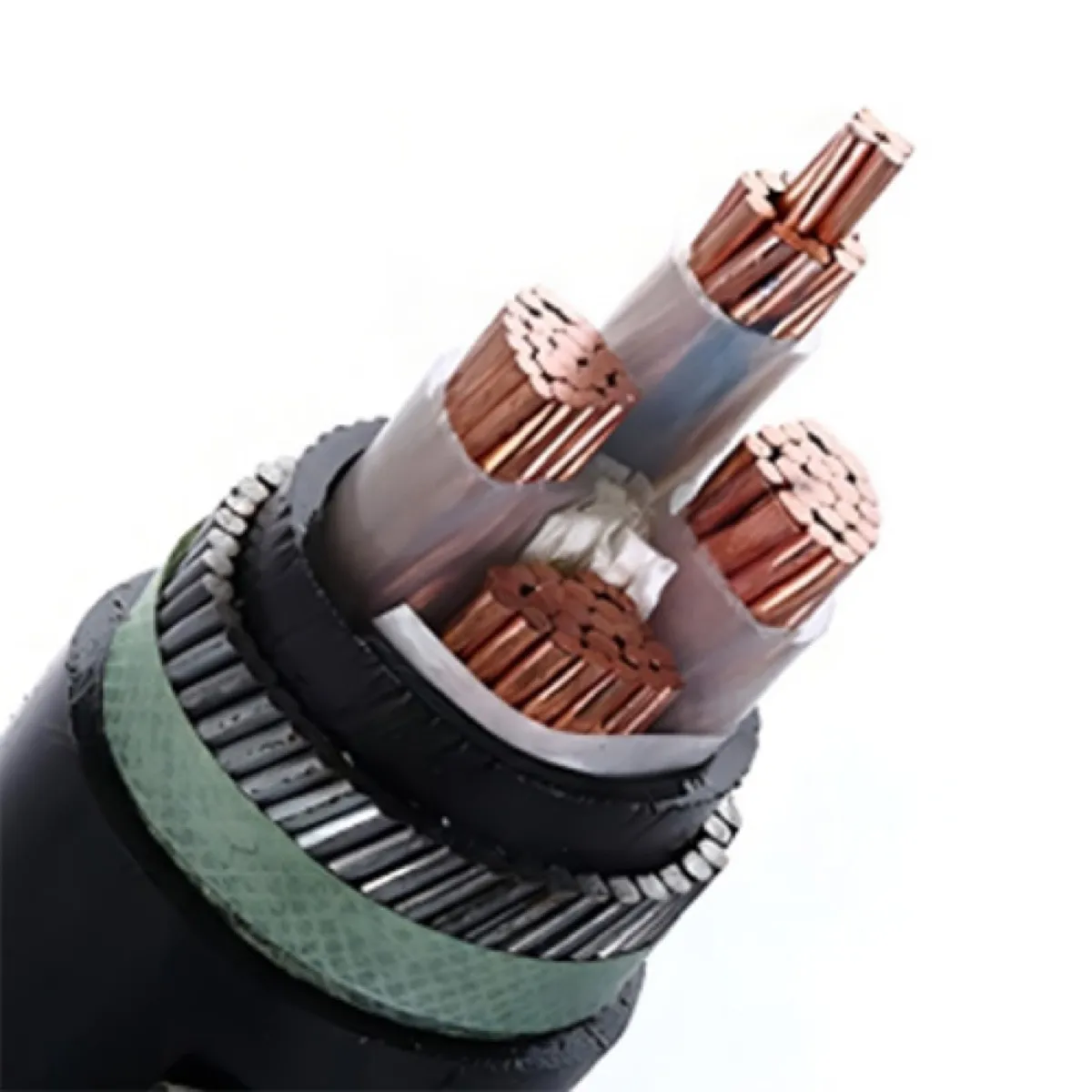
If you are sourcing power cable for any project — underground distribution, industrial plant feeders, building risers, or renewable energy connections — XLPE cable is almost certainly what you need. Cross-linked polyethylene insulation dominates the global power cable market from 0.6/1kV residential feeders up to 35kV utility distribution lines.
This guide covers the complete picture for procurement teams and engineering buyers: what XLPE cable is, every type available, full size charts with current ratings, the standards that govern them, how to match cable to your specific application, and how to source factory-direct from China at 25–40% below European/American brands.
Need a quote now? Send your cable specification → and we will reply with FOB pricing within 24 hours.
What Is XLPE Cable?
XLPE stands for Cross-Linked Polyethylene. It is a thermoset insulation material made by chemically cross-linking standard polyethylene molecules into a three-dimensional network structure. This process permanently changes the material properties:
- 90°C continuous operating temperature (vs 70°C for PVC)
- 250°C short-circuit rating for 5 seconds (vs 160°C for PVC)
- Will not melt — cross-linked structure chars instead of flowing
- Lower dielectric loss — dielectric constant ~2.3 vs 3.5–8.0 for PVC
- Superior moisture resistance — critical for direct burial applications
The practical result: XLPE cables carry 15–30% more current than PVC cables of the same conductor size. Or, equivalently, you can use a smaller (cheaper) conductor to carry the same load.
XLPE insulation is manufactured by two main processes:
- Peroxide cross-linking (chemical) — standard for LV and MV cables, uses dicumyl peroxide (DCP) catalyst in a continuous vulcanisation (CCV) line
- Silane cross-linking (moisture cure) — used for smaller LV cables, lower equipment cost
Our factory uses CCV lines with nitrogen gas curing for all XLPE power cables 0.6/1kV and above, ensuring uniform cross-linking density and consistent electrical properties per IEC 60811 testing.
XLPE Cable Types: Complete Classification
XLPE cables are classified by voltage class, conductor material, armour type, and application. Here is the complete family:
By Voltage Class
| Voltage Class | Designation | Typical Application |
|---|---|---|
| 0.6/1kV | Low voltage (LV) | Building distribution, industrial feeders, underground residential |
| 1.8/3kV | Low-medium voltage | Motor feeders, mining |
| 3.6/6kV | Medium voltage (MV) | Industrial substations, wind farm collectors |
| 6/10kV | Medium voltage | Urban distribution networks |
| 8.7/15kV | Medium voltage | Utility primary distribution |
| 12/20kV | Medium voltage | Rural overhead-to-underground transitions |
| 21/35kV | Medium voltage | Sub-transmission, large industrial supply |
By Type Designation (GB/T 12706 & IEC 60502)
| Type Code | Full Name | Construction |
|---|---|---|
| YJV | Cu/XLPE/PVC | Copper conductor, XLPE insulation, PVC sheath — unarmoured |
| YJLV | Al/XLPE/PVC | Aluminium conductor, XLPE insulation, PVC sheath — unarmoured |
| YJV22 | Cu/XLPE/STA/PVC | Copper, XLPE insulation, steel tape armour, PVC sheath |
| YJLV22 | Al/XLPE/STA/PVC | Aluminium, XLPE insulation, steel tape armour, PVC sheath |
| YJV23 | Cu/XLPE/STA/PE | Copper, XLPE, steel tape armour, PE sheath (corrosive soil) |
| YJV32 | Cu/XLPE/SWA/PVC | Copper, XLPE, steel wire armour, PVC sheath |
| YJV33 | Cu/XLPE/SWA/PE | Copper, XLPE, steel wire armour, PE sheath (underwater) |
| YJV42 | Cu/XLPE/SWA(heavy)/PVC | Copper, XLPE, thick steel wire armour (deep water/high tension) |
| YJV62 | Cu/XLPE/NM-STA/PVC | Non-magnetic steel tape armour (single-core MV) |
| YJV72 | Cu/XLPE/NM-SWA/PVC | Non-magnetic steel wire armour (single-core MV, vertical) |
Naming logic (per GB/T 12706):
- First digit of armour code: 2 = steel tape, 3 = fine steel wire, 4 = thick steel wire, 6 = non-magnetic tape, 7 = non-magnetic wire
- Second digit: 2 = PVC outer sheath, 3 = PE outer sheath
By Application
| Application | Recommended Type | Why |
|---|---|---|
| Indoor cable tray / duct | YJV / YJLV (unarmoured) | No mechanical protection needed; lighter, easier to install |
| Direct burial in soil | YJV22 / YJV23 | Steel tape armour resists compressive force from soil |
| Vertical shaft / bridge | YJV32 / YJV33 | Steel wire armour bears tensile load from cable weight |
| Underwater / river crossing | YJV33 / YJV42 | PE sheath for water resistance + heavy armour for current forces |
| Single-core MV (>35mm²) | YJV62 / YJV72 | Non-magnetic armour avoids eddy current heating |
| Corrosive chemical plant | YJV23 / YJV33 | PE outer sheath resists chemical attack |
XLPE Cable Construction: Layer by Layer
Understanding cable construction helps you specify correctly and verify quality during factory inspection.
Low Voltage XLPE Cable (0.6/1kV)
Single-core (YJV 1×XX):
- Conductor — Circular stranded copper (Class 2 per IEC 60228) or solid (Class 1 for ≤16mm²)
- XLPE Insulation — Cross-linked polyethylene, thickness per IEC 60502-1 Table 2
- Inner sheath/bedding — PVC or PE filler + binder tape (multi-core only)
- Armour (if specified) — Steel tape (Type 22) or steel wire (Type 32)
- Outer sheath — PVC (Type V) or PE (Type 23/33)
Multi-core (YJV 3×XX+1×XX / 4×XX+1×XX):
- 2-core: phase + neutral (lighting circuits)
- 3-core: 3-phase (balanced loads, motors)
- 3+1 core: 3-phase + reduced neutral
- 4+1 core: 3-phase + full neutral + earth (most common for distribution)
- 5-core: 3-phase + neutral + earth (European standard configuration)
Medium Voltage XLPE Cable (3.6/6kV to 21/35kV)
MV cables add critical layers not present in LV cables:
- Conductor — Stranded copper or aluminium, compacted circular or sector-shaped
- Conductor screen — Semi-conductive XLPE compound, extruded, bonded to insulation
- XLPE Insulation — Triple-extruded with screens in single pass (important for quality)
- Insulation screen — Semi-conductive compound, strippable or bonded
- Metallic screen — Copper tape or copper wire screen (fault current return path)
- Water-blocking (optional) — Swellable tape or powder for longitudinal water block
- Armour (if required) — Non-magnetic for single-core to avoid eddy current heating
- Outer sheath — PVC or PE, typically extruded MDPE for direct burial
Why triple extrusion matters: The conductor screen, insulation, and insulation screen are extruded simultaneously in a single pass on CCV line. This eliminates interfaces where partial discharge can initiate. Cheap manufacturers who use separate extrusion passes create weak points that cause premature failure at MV voltages.
XLPE Cable Size Chart: Full Specification Tables
0.6/1kV Copper XLPE Cable — Current Rating (IEC 60502-1)
Installation method: In air, trefoil touching, ambient 30°C, conductor 90°C
| Conductor (mm²) | 1-Core (A) | 2-Core (A) | 3-Core (A) | 4-Core (A) | Resistance at 20°C (Ω/km) |
|---|---|---|---|---|---|
| 1.5 | 26 | 23 | 20 | 18 | 12.1 |
| 2.5 | 35 | 31 | 27 | 25 | 7.41 |
| 4 | 46 | 41 | 36 | 33 | 4.61 |
| 6 | 58 | 53 | 46 | 42 | 3.08 |
| 10 | 80 | 71 | 63 | 57 | 1.83 |
| 16 | 105 | 94 | 83 | 75 | 1.15 |
| 25 | 140 | 121 | 108 | 97 | 0.727 |
| 35 | 170 | 148 | 132 | 119 | 0.524 |
| 50 | 205 | 179 | 159 | 144 | 0.387 |
| 70 | 260 | 224 | 200 | 181 | 0.268 |
| 95 | 315 | 271 | 241 | 219 | 0.193 |
| 120 | 360 | 312 | 278 | 252 | 0.153 |
| 150 | 410 | 356 | 317 | 287 | 0.124 |
| 185 | 465 | 400 | 357 | 324 | 0.0991 |
| 240 | 545 | 468 | 415 | 380 | 0.0754 |
| 300 | 620 | 535 | 475 | 433 | 0.0601 |
| 400 | 730 | 625 | 555 | — | 0.0470 |
| 500 | 840 | 715 | 635 | — | 0.0366 |
| 630 | 970 | 815 | 725 | — | 0.0283 |
| 800 | 1100 | — | — | — | 0.0221 |
| 1000 | 1260 | — | — | — | 0.0176 |
Values per IEC 60502-1, installation method E (free air). Derating factors apply for grouped cables, higher ambient, or enclosed installation.
0.6/1kV Copper XLPE Cable — Direct Burial Current Rating
Installation method: Direct buried, 1.0m depth, soil thermal resistivity 2.5 K·m/W, ambient soil 20°C
| Conductor (mm²) | 2-Core (A) | 3-Core (A) | 3+1 Core (A) | 4+1 Core (A) |
|---|---|---|---|---|
| 1.5 | 25 | 22 | 21 | 19 |
| 2.5 | 33 | 29 | 28 | 25 |
| 4 | 44 | 38 | 36 | 33 |
| 6 | 55 | 48 | 46 | 42 |
| 10 | 74 | 65 | 62 | 57 |
| 16 | 97 | 85 | 81 | 74 |
| 25 | 126 | 110 | 105 | 96 |
| 35 | 152 | 133 | 127 | 116 |
| 50 | 182 | 159 | 152 | 139 |
| 70 | 224 | 197 | 188 | 172 |
| 95 | 270 | 237 | 227 | 207 |
| 120 | 308 | 271 | 259 | 237 |
| 150 | 349 | 307 | 293 | 268 |
| 185 | 394 | 346 | 330 | 303 |
| 240 | 459 | 403 | 384 | 353 |
| 300 | 521 | 457 | 436 | 400 |
| 400 | 600 | 530 | — | — |
Values per IEC 60502-1. For different soil conditions, apply correction factors: 1.0 K·m/W soil → multiply by 1.18; 3.0 K·m/W dry sand → multiply by 0.89.
Aluminium Conductor XLPE Cable — Current Rating Comparison
For aluminium conductor (YJLV series), current ratings are approximately 78% of copper values for the same cross-section:
| Conductor (mm²) | Copper 3-Core (A) | Aluminium 3-Core (A) | Weight Saving |
|---|---|---|---|
| 25 | 108 | 84 | 52% |
| 50 | 159 | 124 | 53% |
| 95 | 241 | 188 | 54% |
| 150 | 317 | 247 | 55% |
| 240 | 415 | 323 | 56% |
| 300 | 475 | 370 | 56% |
| 400 | 555 | 433 | 57% |
When to choose aluminium: Long trunk cables (>200m) where weight and cost matter more than space. Common in Africa and Middle East utility distribution where aluminium prices make projects viable within budget.
XLPE vs PVC Cable: When to Use Each
This is the most common question from buyers. The answer depends on your operating conditions:
| Parameter | XLPE (YJV) | PVC (VV) | Winner |
|---|---|---|---|
| Max operating temp | 90°C | 70°C | XLPE |
| Short-circuit temp (5s) | 250°C | 160°C | XLPE |
| Current capacity (same size) | Base | 15-30% lower | XLPE |
| Dielectric constant | 2.3 | 3.5–8.0 | XLPE |
| Moisture resistance | Excellent | Good | XLPE |
| Flexibility | Stiffer | More flexible | PVC |
| Cold bend temp | -15°C min | -10°C min | XLPE |
| Cost (same size) | Base | 10-15% cheaper | PVC |
| UV resistance | Poor (needs sheath) | Poor (needs sheath) | Tie |
| Chemical resistance | Good | Moderate | XLPE |
| Fire performance | Burns, low smoke | Burns, high HCl gas | XLPE |
| Service life | 30+ years | 20-25 years | XLPE |
Choose XLPE when:
- Operating load is high relative to conductor size (need 90°C rating)
- Cable is direct buried (moisture resistance critical)
- Medium voltage (3.6kV+) — PVC not suitable above 3.3kV
- Hot ambient environment (>40°C) where PVC derating becomes severe
- Long design life required (30+ year infrastructure)
- Underground in wet or corrosive soil
Choose PVC when:
- Short indoor runs on cable tray (cost saving, easier to bend)
- Temporary installations where flexibility matters
- Low utilisation factor (cable never approaches rated capacity)
- Budget-critical small-section wiring (≤16mm²)
For most international projects, XLPE is the default choice. PVC is relegated to secondary circuits and short indoor runs. All major utility specifications (SEC, KPLC, TANESCO, ZESCO, etc.) mandate XLPE for distribution cables.
Standards & Certifications: What Buyers Must Verify
XLPE power cables must comply with specific standards depending on destination market. Here is what applies:
International Standards
| Standard | Scope | Key Requirements |
|---|---|---|
| IEC 60502-1 | LV cables 0.6/1kV to 1.8/3kV | Dimensions, electrical tests, mechanical tests |
| IEC 60502-2 | MV cables 3.6/6kV to 36kV | + Partial discharge test, hot set test |
| IEC 60228 | Conductor classes | Class 1 (solid), 2 (stranded), 5 (flexible) |
| IEC 60287 | Current rating calculation | Thermal resistance, derating factors |
| IEC 60332-1 | Single cable flame test | Self-extinguishing requirement |
| IEC 60332-3 | Bundled cable fire test | Category A/B/C for grouped cables |
| IEC 60811 | Insulation/sheath testing | Tensile, elongation, thermal aging, hot set |
Regional Standards
| Market | Standard | Notes |
|---|---|---|
| China | GB/T 12706-2008 | Based on IEC 60502, additional Chinese tests |
| UK/Africa | BS 7870 / BS 5467 | SWA armoured cable per British standard |
| France/West Africa | NFC 33-220 | MV cable, widely specified in ECOWAS countries |
| Middle East (Saudi) | SASO / SEC specification | IEC 60502 + additional SEC-specific tests |
| Australia | AS/NZS 5000.1 | Based on IEC with Australian amendments |
| North America | UL/CSA | Different system (AWG sizing, UL 1072 for MV) |
| India | IS 7098 | Based on IEC 60502 with BIS certification |
Our Certifications
Our XLPE cables are tested and certified to:
- IEC 60502-1 and IEC 60502-2 (full type test reports available)
- GB/T 12706-2008 (mandatory for China domestic + export)
- ISO 9001:2015 quality management system
- CCC (China Compulsory Certification) for domestic market
- Test reports from CNAS-accredited laboratory
For specific market certifications (SASO, BIS, KEMA), we can arrange third-party testing and certification — typically 4-6 weeks lead time. Contact us with your target market requirements.
How to Select the Right XLPE Cable for Your Project
Cable selection is a 5-step process. Get any step wrong and you either overspend (oversized cable) or risk failure (undersized cable).
Step 1: Determine Voltage Class
| System Voltage | Cable Voltage Rating | Designation |
|---|---|---|
| 380/400V (LV distribution) | 0.6/1kV | Standard LV |
| 3.3kV (industrial) | 3.6/6kV | MV Class 1 |
| 6.6kV (industrial/mining) | 6/10kV | MV Class 2 |
| 11kV (primary distribution) | 8.7/15kV or 12/20kV | MV Class 3 |
| 22kV | 12/20kV or 18/30kV | MV Class 4 |
| 33kV (sub-transmission) | 21/35kV | MV Class 5 |
Rule: Cable rated voltage must be ≥ system highest voltage (Um). For solidly earthed systems, cable U₀ ≥ system phase-to-ground voltage.
Step 2: Calculate Required Current & Choose Conductor Size
- Calculate full-load current: I = P / (√3 × V × cosφ) for 3-phase
- Apply diversity factor if multiple loads
- Select conductor size from current rating table where I_rated > I_load × 1.0 (minimum)
- Apply derating factors for:
- Ambient temperature above 30°C (air) or 20°C (ground)
- Grouped cables (multiple circuits touching)
- Thermal resistivity of soil > 2.5 K·m/W
- Enclosed installation (trunking, conduit)
Step 3: Verify Voltage Drop
Maximum voltage drop limits (typical):
- IEC: 4% for distribution, 6% for motor starting
- BS 7671: 3% for lighting, 5% for other circuits
- NEC: 3% branch, 5% total
Voltage drop formula (3-phase): ΔV = √3 × I × L × (R×cosφ + X×sinφ) / 1000
If voltage drop exceeds limit → increase conductor size one step.
Step 4: Check Short-Circuit Rating
The conductor must withstand prospective fault current for the protection clearing time:
Adiabatic equation: I²t = k² × S²
Where:
- I = short-circuit current (A)
- t = fault clearing time (s)
- S = conductor cross-section (mm²)
- k = 143 for copper/XLPE, 94 for aluminium/XLPE
If calculated minimum S > your selected size → increase conductor size.
Step 5: Select Armour & Outer Sheath
| Installation Method | Armour Required | Recommended Type |
|---|---|---|
| Cable tray / ladder | None | YJV (unarmoured) |
| Cable duct / conduit | None | YJV (unarmoured) |
| Direct burial | Steel tape (Type 22) | YJV22 |
| Direct burial, corrosive soil | Steel tape + PE sheath (Type 23) | YJV23 |
| Vertical shaft / riser | Steel wire (Type 32) | YJV32 |
| Underwater / river crossing | Steel wire + PE sheath (Type 33) | YJV33 |
| Submarine / deep water | Thick steel wire (Type 42) | YJV42 |
| Single-core MV (>35mm²) | Non-magnetic wire (Type 72) | YJV72 |
XLPE Cable Price: What Drives Cost
We do not publish fixed price lists because cable pricing changes daily with raw material markets. However, here are the factors that determine your quote:
Cost Breakdown (typical 0.6/1kV YJV22 4×95mm²)
| Component | % of Total Cost |
|---|---|
| Copper conductor | 60–70% |
| XLPE insulation | 8–12% |
| Steel tape armour | 5–8% |
| PVC sheath + fillers | 4–6% |
| Manufacturing + overhead | 10–15% |
Key cost drivers:
- Conductor material — Copper (LME price) vs aluminium (40-50% cheaper per equivalent capacity)
- Conductor size — Directly proportional to copper/aluminium weight
- Voltage class — Higher voltage = thicker insulation + screens = more material
- Armour type — SWA (Type 32) costs 15-20% more than STA (Type 22)
- Core count — 4+1 core costs ~25% more than 3-core for same conductor size
- Length — Standard drums (500m, 1000m) vs custom cut lengths
- Certification — Third-party KEMA/SASO testing adds to per-order cost
How to get the best price:
- Specify aluminium where acceptable (saves 30-40% on conductor cost)
- Order standard drum lengths (avoid short cuts that waste material)
- Combine multiple sizes in one order (shared shipping/logistics cost)
- Request FOB pricing (we handle export packing and container loading)
Cable prices change with copper/aluminium commodity markets. Share your complete specification for a current quotation based on today's LME rate.
Quality Control: How to Verify XLPE Cable Quality
Not all XLPE cable is equal. Here is what separates quality product from substandard:
Factory Tests (Routine Tests per IEC 60502)
Every drum of cable undergoes:
- Conductor resistance — Must meet IEC 60228 Class 2 maximum values
- High voltage test — 3.5kV for 5 minutes (0.6/1kV cable), no breakdown
- Insulation resistance — >100 MΩ·km at 20°C
- Partial discharge test (MV only) — ≤5 pC at 1.73 × U₀
Type Tests (performed on sample cables)
- Hot set test — Elongation ≤175% at 200°C, permanent set ≤15% (proves cross-linking)
- Tensile strength & elongation — Before and after aging at 135°C for 7 days
- 4-hour voltage test — 4 × U₀ for 4 hours without breakdown
- Bending test — 3 cycles around mandrel without insulation damage
- Impact test — Drop weight impact at -10°C without cracking
Red Flags to Watch For
- Hot set test failure — Cable was not properly cross-linked (production shortcut)
- Conductor resistance above IEC max — Undersized or impure copper (adding recycled scrap)
- Insulation thickness below minimum — Material saving at expense of safety
- No partial discharge test for MV — Critical; PD causes premature insulation failure
What to request from any supplier:
- Routine test report for your specific drums (not generic report)
- Type test report from CNAS/ILAC-accredited lab
- Raw material certificates (copper cathode origin, XLPE compound supplier)
- Cross-linking degree test (gel content >85% per IEC 60811-507)
We provide all test documents with every shipment. Third-party inspection (SGS, BV, TUV) is welcome at our factory — we arrange at buyer's request.
Installation Best Practices
Proper installation protects your cable investment and ensures rated performance:
Minimum Bending Radius
| Cable Type | Minimum Bend Radius |
|---|---|
| Unarmoured, single-core | 15 × cable OD |
| Unarmoured, multi-core | 12 × cable OD |
| Armoured, single-core | 15 × cable OD |
| Armoured, multi-core | 12 × cable OD |
| MV cable (any type) | 20 × cable OD |
Direct Burial Requirements
- Depth: Minimum 700mm cover for LV, 1000mm for MV (per IEC/local codes)
- Bedding: 100mm fine sand or sifted soil below and above cable
- Warning tape: Placed 300mm above cable in trench
- Separation: Minimum 200mm between parallel power cables (derate if closer)
- Crossing services: Cable tiles/covers where crossing water/gas pipes
Cable Pulling
- Maximum pulling tension: 50 N/mm² × conductor area (copper), 30 N/mm² (aluminium)
- Sidewall bearing pressure: ≤3000 N/m for unarmoured, ≤5000 N/m for armoured
- Minimum temperature: Do not install below -10°C without pre-warming
- Lubrication: Use approved cable-pulling compound for duct installations
How to Order XLPE Cable from Our Factory
What We Need from You
To provide an accurate quote within 24 hours:
- Cable type — e.g., YJV22, 4×95+1×50mm²
- Voltage rating — e.g., 0.6/1kV
- Quantity — Total metres or km (specify drum lengths if required)
- Standard — IEC 60502, BS 5467, GB/T 12706, or other
- Conductor material — Copper or aluminium
- Destination country & port — For FOB/CIF quotation
- Certification requirements — KEMA, SASO, BIS, etc. if needed
Our Production Capability
| Capability | Specification |
|---|---|
| Conductor range | 1.5mm² to 1000mm² (copper), 16mm² to 1000mm² (aluminium) |
| Voltage range | 0.6/1kV to 35kV |
| Production lines | 4× CCV lines, 6× cabling lines, 8× extrusion lines |
| Daily output | 50+ km of finished cable |
| Standard drum | 500m or 1000m (custom lengths available) |
| Lead time | 7-15 days for standard sizes, 15-25 days for MV/special |
| MOQ | 1 drum (500m) per size |
| Export packing | Wooden/steel drums, container-fit dimensions |
| Payment | T/T 30% deposit + 70% before shipment, L/C at sight |
Delivery Process
- Inquiry → You send specification
- Quotation → We reply with FOB price + lead time within 24h
- Order confirmation → Deposit payment + production schedule
- Production → Daily progress photos available on request
- Testing → Routine test on every drum, reports sent before shipment
- Inspection → Third-party inspection window (3-5 days)
- Shipping → FCL container loading, BL + documents within 7 days
- After-sales → Technical support for installation questions
Ready to get started? Send your specification and quantity — we will match the right cable to your project.
Frequently Asked Questions
What does XLPE stand for in cable?
XLPE stands for Cross-Linked Polyethylene. It is a thermoset insulation material where polyethylene molecules are chemically bonded into a 3D network structure, giving the insulation a 90°C continuous temperature rating (vs 70°C for standard PVC). This higher rating means more current capacity per conductor size.
What is the maximum voltage for XLPE cable?
XLPE insulation is used from 0.6/1kV low voltage up to 500kV extra-high voltage (EHV) transmission cables. For distribution applications, the standard range is 0.6/1kV to 35kV. Higher voltages (66kV, 110kV, 220kV, 500kV) use XLPE with additional design features like metallic moisture barriers and special semi-conductive compounds.
What is the lifespan of XLPE cable?
Properly manufactured and installed XLPE cable has a design life of 30-40 years minimum. Many XLPE cables installed in the 1980s remain in service today. The key factors affecting life are: installation quality (bending radius respected, no mechanical damage), thermal loading (not exceeding 90°C continuously), and soil conditions for buried cables (moisture, chemical exposure).
Can XLPE cable be used outdoors?
XLPE cable with a standard PVC or PE outer sheath can be installed outdoors on cable tray, but the outer sheath degrades under prolonged UV exposure (typically 5-10 years). For permanent outdoor exposed installation, specify a UV-stabilised PE outer sheath or install in conduit/trunking. For direct burial, no UV concern exists.
What is the difference between YJV and YJV22?
YJV is unarmoured XLPE cable (for cable tray, duct, indoor use). YJV22 adds steel tape armour (Type 22) for mechanical protection when direct-buried in soil. The "22" indicates: first digit "2" = steel tape armour, second digit "2" = PVC outer sheath over the armour. Choose YJV22 whenever the cable is buried directly without duct protection.
Is XLPE cable suitable for direct burial?
Yes, provided you use an armoured type. YJV22 (steel tape armour + PVC sheath) is the standard choice for direct burial in normal soil. For corrosive or wet soil, use YJV23 (steel tape + PE sheath) for better moisture protection. Unarmoured YJV should only be direct-buried inside protective duct.
What is the temperature rating of XLPE cable?
- Continuous operation: 90°C conductor temperature
- Emergency overload (up to 8 hours): 130°C
- Short-circuit (5 seconds maximum): 250°C
These ratings are significantly higher than PVC (70/100/160°C), which is why XLPE carries more current for the same conductor size.
How much current can 4×95mm² XLPE cable carry?
For 4-core 95mm² copper XLPE cable (YJV 4×95):
- In free air (trefoil): 219A
- Direct buried (2.5 K·m/W soil): 207A
- In duct: approximately 175-185A (apply 0.85 derating)
Actual capacity depends on installation method, ambient temperature, grouping, and soil conditions. Always calculate per IEC 60287 for your specific conditions.
What is the difference between XLPE and EPR insulation?
Both are thermoset insulations rated at 90°C. XLPE has lower dielectric loss (better for HV) and is cheaper to manufacture. EPR (Ethylene Propylene Rubber) is more flexible, making it preferred for portable cables, reeling cables, and applications requiring frequent bending. For fixed installation power distribution, XLPE is the standard choice worldwide.
Related Resources
Looking for specific XLPE cable information? These guides cover individual topics in depth:
- XLPE Cable Specifications: Voltage Rating, Insulation Thickness & Construction — Detailed construction and layer-by-layer technical specs
- XLPE Cable Price Per Meter: Cost Factors & Factory Quote — Pricing structure and how to get competitive quotes
- How to Evaluate a Cable Factory in China — Factory audit checklist for Chinese suppliers
- 3 Phase Power Cable Sizes: Full Specification Chart — Size selection for 3-phase XLPE cables specifically
- 4 Core Armoured Cable: SWA & STA Specs — Deep dive into armoured XLPE cable options
- Underground Power Cable Types: Selection Guide — Choosing cables for direct burial applications
- Cable Size Chart & Current Rating Table — Quick-reference sizing tool for all cable types