Key Takeaway
Complete SWA cable size chart (1.5–400mm²) with current ratings for every installation method. Direct burial depth, gland sizes, SWA vs STA compared. Get factory-direct quote from IEC 60502 & BS 5467 certified manufacturer.
SWA Cable: Complete Buying Guide from China's Leading Steel Wire Armoured Cable Manufacturer
If you are sourcing SWA cable for infrastructure projects in Africa, the Middle East, or Southeast Asia, you need a supplier that delivers consistent quality at competitive factory-direct pricing. This guide covers everything a procurement professional needs to know — from SWA cable meaning and construction to specifications, sizing, and how to place your order with a trusted China-based manufacturer.
What Is SWA Cable? (SWA Cable Meaning Explained)
SWA cable stands for Steel Wire Armoured cable. It is a power cable designed with a layer of galvanised steel wire armour that provides mechanical protection against impact, crushing, and rodent damage. This armour layer makes SWA cable the standard choice for direct burial, outdoor installations, and industrial environments where cables face physical stress.
SWA cable is not a single product — it is a category of cables manufactured under international standards including IEC 60502, BS 5467, and BS 6724. These cables are used worldwide for low-voltage and medium-voltage power distribution in commercial, industrial, and utility applications.
Key Characteristics of SWA Cable
- Mechanical protection: Steel wire armour resists compression, impact, and penetration
- Direct burial capability: Suitable for underground installation without additional conduit in many applications
- Weather resistance: Outer sheath provides UV and moisture protection
- Long service life: Designed for 25–30 years in typical installation conditions
- Fire performance options: Available in LSZH (Low Smoke Zero Halogen) variants per BS 6724
SWA Cable Construction: Layer-by-Layer Breakdown
Understanding the construction of SWA cable helps you specify the right product for your project. Each layer serves a specific protective or functional purpose.
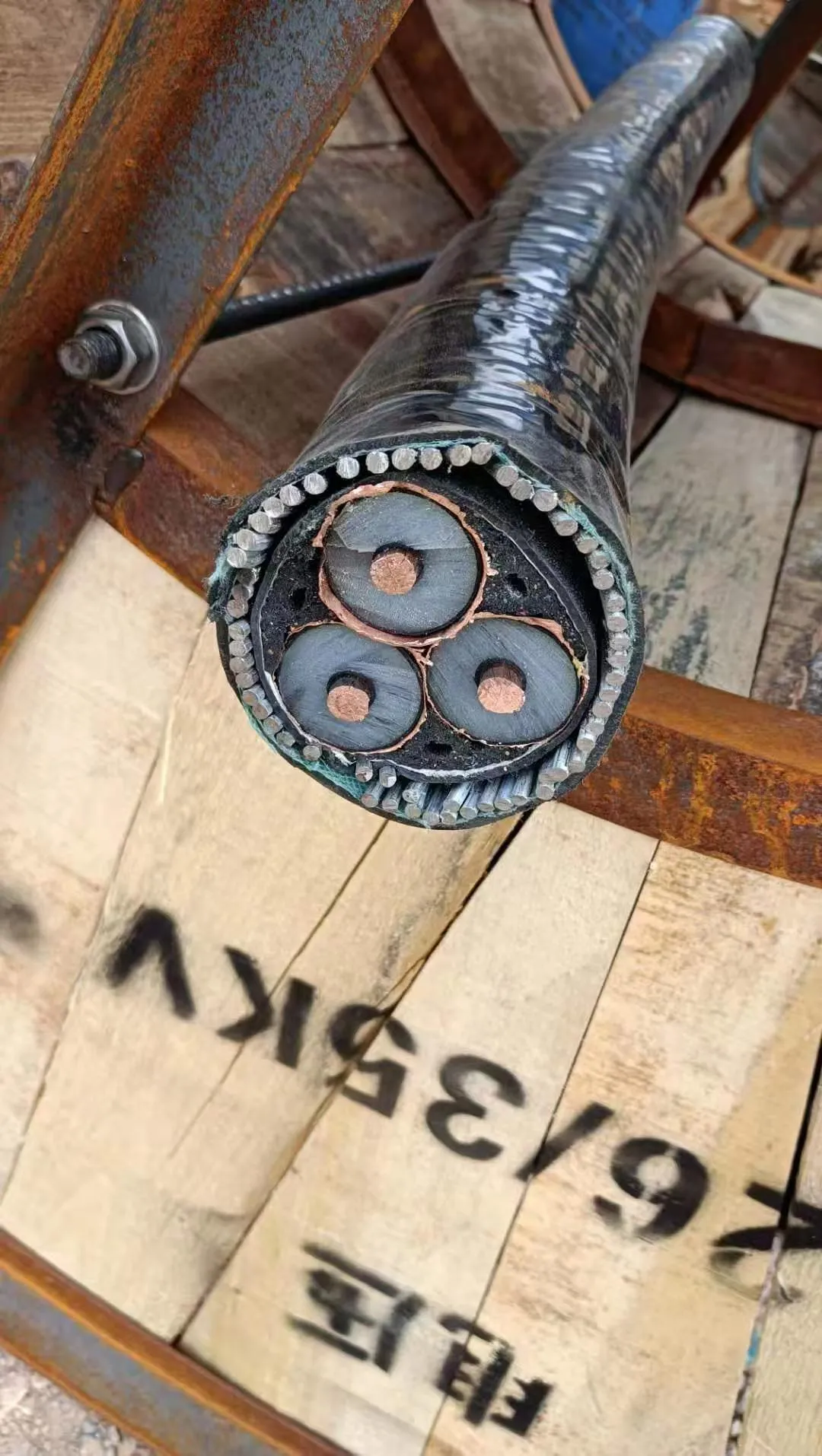
1. Conductor (Core)
The conductor carries the electrical current. SWA cables are manufactured with either:
- Copper conductors — Higher conductivity, preferred for shorter runs and space-constrained installations
- Aluminium conductors — Lighter weight and lower cost per metre, common for larger cross-sections and long distribution runs
Conductors are available in both stranded (Class 2) and solid (Class 1) configurations per IEC 60228. Stranded conductors are standard for cross-sections above 10 mm².
2. Insulation
Each conductor is individually insulated with:
- XLPE (Cross-Linked Polyethylene) — The dominant insulation material for modern SWA cables. Rated for continuous operation at 90°C. Offers superior thermal and electrical properties compared to PVC.
- PVC (Polyvinyl Chloride) — Used in some economy specifications. Rated for 70°C continuous operation.
XLPE insulation allows higher current-carrying capacity for the same conductor size, which means smaller cable diameter and reduced material costs for equivalent performance.
3. Bedding (Inner Sheath)
A layer of PVC or LSZH compound applied over the laid-up insulated cores. This bedding layer:
- Provides a smooth, cylindrical surface for the armour wires to sit on
- Prevents the armour wires from cutting into the insulation
- Contributes to the cable's overall mechanical integrity
4. Steel Wire Armour (SWA)
This is the defining feature. Galvanised steel wires are helically applied around the bedding layer. The armour:
- Provides mechanical protection (impact resistance per IEC 60502-1 Annex E)
- Can serve as a Circuit Protective Conductor (CPC) / earth continuity conductor in single-phase installations (subject to local regulations)
- Resists rodent attack and accidental dig-in damage
Important distinction: SWA (Steel Wire Armour) is used for multi-core cables with circular cross-sections. For single-core cables, STA (Steel Tape Armour) or AWA (Aluminium Wire Armour) is used instead, because steel wire armour on single-core cables would create magnetic heating effects due to induced currents.
5. Outer Sheath (Oversheath)
The outermost layer is typically:
- PVC (standard, per BS 5467) — Black for underground/outdoor use
- LSZH (per BS 6724) — Required for enclosed public spaces, tunnels, and buildings where fire safety is critical
The outer sheath provides protection against moisture ingress, chemical exposure, UV radiation, and mechanical abrasion during installation.
SWA Cable Standards and Certifications
When sourcing SWA cable for international projects, ensure your supplier manufactures to the correct standards. For a detailed comparison of testing requirements, marking differences, and regional applicability, see our complete SWA cable standards guide. Here are the primary standards governing SWA cable production:
IEC 60502-1 (Low Voltage: up to 1 kV)
The international standard for power cables with extruded insulation rated 1 kV to 3 kV. Covers:
- Conductor requirements (per IEC 60228)
- Insulation thickness and material properties
- Armour construction requirements
- Testing protocols (routine, type, and special tests)
- Voltage rating: 600/1000V (Uo/U)
IEC 60502-2 (Medium Voltage: 6 kV to 30 kV)
For medium-voltage SWA cables used in primary distribution networks. Additional requirements include:
- Semiconducting screens over insulation
- Metallic screen (copper tape or wire)
- Higher insulation thickness requirements
BS 5467 (PVC Sheathed SWA Cables)
The British Standard specifically for PVC-insulated and PVC-sheathed armoured cables for voltages up to 1000V. Widely referenced across Commonwealth countries, Africa, and the Middle East. Specifies:
- PVC insulation and sheathing compounds
- Galvanised steel wire armour construction
- Current ratings (in conjunction with BS 7671)
- Colour identification: Brown, Black, Grey (+ Green/Yellow earth for 4-core + earth)
BS 6724 (LSZH Sheathed SWA Cables)
Identical construction to BS 5467 but with Low Smoke Zero Halogen bedding and outer sheath. Required for:
- Public buildings
- Underground rail systems
- Tunnels and enclosed car parks
- Any installation where toxic smoke in a fire is a hazard
Additional Certifications
Our factory produces SWA cables certified to:
- SABS (South Africa)
- KEBS (Kenya)
- SON (Nigeria)
- GSO (Gulf Cooperation Council)
- CE Marking (European conformity)
If your project requires a specific national certification, contact us to confirm availability.
Standards by Region — Quick Reference
| Region | Primary Standard | Notes |
|---|---|---|
| UK & Commonwealth | BS 5467 / BS 6724 | BS 7671 installation rules |
| Africa (SADC) | SANS 10142 / SABS IEC 60502 | SABS mark required for South Africa |
| West Africa (Nigeria, Ghana) | NIS IEC 60502 | SON certification mandatory |
| Middle East & Gulf | GSO IEC 60502 / ESMA | Flame retardant sheath often required |
| South & Southeast Asia | IEC 60502-1 direct | BIS (India), DOSH (Malaysia) |
| Australia & NZ | AS/NZS 5000.1 | Equivalent to IEC with local deviations |
We manufacture SWA cable to all of the above standards from a single production line — specify your target market when requesting a quote and we will confirm the applicable certification.
SWA Cable Sizes: Complete Specification Table
2 Core SWA Cable Sizes
| Cross-Section (mm²) | Overall Diameter (approx.) | Weight (approx. kg/km) | Current Rating in Ground (A) |
|---|---|---|---|
| 2 × 1.5 mm² | 13.5 mm | 340 | 26 |
| 2 × 2.5 mm² | 14.2 mm | 395 | 34 |
| 2 × 4 mm² | 15.2 mm | 460 | 44 |
| 2 × 6 mm² | 16.5 mm | 560 | 56 |
| 2 × 10 mm² | 18.5 mm | 730 | 75 |
| 2 × 16 mm² | 20.5 mm | 935 | 98 |
| 2 × 25 mm² | 23.5 mm | 1,280 | 126 |
| 2 × 35 mm² | 25.5 mm | 1,570 | 152 |
| 2 × 50 mm² | 28.5 mm | 2,010 | 180 |
| 2 × 70 mm² | 31.5 mm | 2,630 | 220 |
| 2 × 95 mm² | 35.0 mm | 3,360 | 260 |
| 2 × 120 mm² | 38.0 mm | 4,050 | 296 |
3 Core SWA Cable Sizes
The 3 core SWA cable is the most common configuration for three-phase power distribution without a separate neutral conductor.
| Cross-Section (mm²) | Overall Diameter (approx.) | Weight (approx. kg/km) | Current Rating in Ground (A) |
|---|---|---|---|
| 3 × 1.5 mm² | 14.0 mm | 385 | 22 |
| 3 × 2.5 mm² | 14.8 mm | 445 | 30 |
| 3 × 4 mm² | 15.8 mm | 530 | 38 |
| 3 × 6 mm² | 17.2 mm | 650 | 48 |
| 3 × 10 mm² | 19.5 mm | 875 | 65 |
| 3 × 16 mm² | 21.5 mm | 1,115 | 84 |
| 3 × 25 mm² | 24.5 mm | 1,530 | 110 |
| 3 × 35 mm² | 27.0 mm | 1,910 | 132 |
| 3 × 50 mm² | 30.0 mm | 2,460 | 158 |
| 3 × 70 mm² | 34.0 mm | 3,270 | 196 |
| 3 × 95 mm² | 38.0 mm | 4,230 | 234 |
| 3 × 120 mm² | 41.5 mm | 5,180 | 268 |
| 3 × 150 mm² | 44.5 mm | 6,130 | 302 |
| 3 × 185 mm² | 48.5 mm | 7,380 | 340 |
| 3 × 240 mm² | 54.0 mm | 9,270 | 392 |
| 3 × 300 mm² | 58.5 mm | 11,100 | 440 |
4 Core SWA Cable Sizes
The 4 core SWA cable is used for three-phase systems requiring a neutral conductor, or for single-phase circuits requiring separate earth and neutral paths.
| Cross-Section (mm²) | Overall Diameter (approx.) | Weight (approx. kg/km) | Current Rating in Ground (A) |
|---|---|---|---|
| 4 × 1.5 mm² | 14.8 mm | 425 | 22 |
| 4 × 2.5 mm² | 15.5 mm | 495 | 30 |
| 4 × 4 mm² | 16.8 mm | 600 | 38 |
| 4 × 6 mm² | 18.2 mm | 740 | 48 |
| 4 × 10 mm² | 20.5 mm | 1,000 | 63 |
| 4 × 16 mm² | 23.0 mm | 1,300 | 81 |
| 4 × 25 mm² | 26.5 mm | 1,810 | 104 |
| 4 × 35 mm² | 29.0 mm | 2,240 | 125 |
| 4 × 50 mm² | 32.5 mm | 2,910 | 150 |
| 4 × 70 mm² | 37.0 mm | 3,880 | 185 |
| 4 × 95 mm² | 41.0 mm | 5,030 | 220 |
| 4 × 120 mm² | 45.0 mm | 6,150 | 252 |
| 4 × 150 mm² | 48.5 mm | 7,320 | 285 |
| 4 × 185 mm² | 53.0 mm | 8,850 | 320 |
| 4 × 240 mm² | 59.0 mm | 11,150 | 370 |
| 4 × 300 mm² | 64.0 mm | 13,340 | 415 |
3+1 Core and 3.5 Core SWA Cable
For three-phase systems with a reduced neutral, 3+1 core configurations are available (e.g., 3 × 70 + 1 × 35 mm²). The reduced neutral is sized at approximately half the phase conductor cross-section, suitable where neutral current is expected to be lower than phase current.
5 Core SWA Cable
Five-core SWA cables (3 phase + neutral + earth) are manufactured for installations requiring all five conductors in a single cable. Available from 1.5 mm² to 50 mm².
Note: Current ratings shown are approximate values for direct burial at 20°C ambient, 1m depth, thermal resistivity 2.5 K·m/W. Actual ratings depend on installation conditions. Refer to IEC 60287 or BS 7671 for derating factors.
SWA Cable Specification: Voltage Ratings and Temperature
Low Voltage SWA Cable (0.6/1 kV)
| Parameter | XLPE Insulated | PVC Insulated |
|---|---|---|
| Voltage Rating (Uo/U) | 600/1000V | 600/1000V |
| Max. Conductor Temperature (continuous) | 90°C | 70°C |
| Max. Conductor Temperature (short circuit) | 250°C (5s) | 160°C (5s) |
| Min. Installation Temperature | 0°C | 0°C |
| Min. Bending Radius | 12 × overall diameter | 12 × overall diameter |
| Insulation Resistance | >100 MΩ·km | >50 MΩ·km |
| Flame Retardant | IEC 60332-1 (single) | IEC 60332-1 (single) |
| Flame Retardant (bundled) | IEC 60332-3 Cat. A (on request) | IEC 60332-3 Cat. A (on request) |
Medium Voltage SWA Cable (3.8/6.6 kV to 19/33 kV)
| Parameter | Specification |
|---|---|
| Voltage Ratings Available | 3.8/6.6 kV, 6.35/11 kV, 8.7/15 kV, 12.7/22 kV, 19/33 kV |
| Insulation | XLPE |
| Conductor Screen | Semiconducting compound |
| Insulation Screen | Semiconducting compound + copper tape |
| Max. Conductor Temperature | 90°C |
| Short Circuit Temperature | 250°C (5s) |
| Standard | IEC 60502-2 |
SWA Cable Applications: Where Is It Used?
Direct Burial / Underground Installation
SWA cable is engineered for direct burial without additional mechanical protection. The steel wire armour provides sufficient protection against normal ground pressure, minor ground movement, and accidental spade strikes. Standard burial depth is 600mm under roads and 450mm under footpaths (per BS 7671 Regulation 522.8.10).
Typical applications:
- Street lighting circuits
- Underground power distribution to buildings
- Industrial site ring mains
- Solar farm DC and AC collection cables
- Agricultural installations
Industrial and Commercial Buildings
Inside industrial facilities, SWA cable is surface-mounted on cable trays, cleated to walls, or run through cable trenches. The armour provides protection in environments with:
- Heavy machinery vibration
- Forklift traffic
- Chemical exposure (with appropriate outer sheath compound)
- Extreme temperature ranges
Typical applications:
- Motor supply circuits
- Distribution board interconnections
- Factory power distribution
- Warehouse and logistics centre wiring
- Data centre power feeds
Outdoor Above-Ground Installations
When cables are exposed to weather, UV, and physical risk, SWA cable is the practical choice. The PVC outer sheath resists UV degradation, and the armour protects against wind-borne debris and animal interference.
Typical applications:
- Outdoor lighting and signage
- Temporary construction power supplies
- Mining surface operations
- Port and harbour installations
- Telecommunications tower power feeds
Hazardous Areas
SWA cable is used in Zone 1 and Zone 2 hazardous areas (per IEC 60079-14) where flammable gases or dusts may be present. The cable's robust construction and ability to maintain circuit integrity under fault conditions make it suitable for these demanding environments.
SWA Cable Installation Methods: Direct Burial vs Cable Trench
Choosing the right installation method impacts project cost, maintenance access, and long-term cable performance. Here is a detailed comparison of the two primary underground installation approaches for SWA cable.
Method 1: Direct Burial (Most Common)
Direct burial means placing the SWA cable directly in a trench dug into the ground, surrounded by fine sand or sifted soil, with protective covers and warning tape above.
Installation procedure (per IEC 60502 and BS 7671):
- Excavate trench to required depth (minimum 600mm under roads, 450mm under footpaths per BS 7671 Regulation 522.8.10)
- Remove sharp stones and debris from trench bottom
- Lay 50mm sand bedding at trench bottom
- Position cable on sand bed — avoid tight bends (minimum 12× cable OD)
- Cover cable with 50mm sand surround
- Place cable protection tiles or covers over the sand
- Backfill with excavated material in 150mm layers, compacting each layer
- Install cable route marker tape 150mm below finished surface level
- Final surface reinstatement
Advantages:
- Lower installation cost (no concrete or precast materials)
- Faster installation — suitable for long rural runs
- Cable armour provides adequate mechanical protection
- Suitable for single circuits or parallel runs with proper spacing
Limitations:
- Future maintenance requires re-excavation
- Adding new cables later means digging a new trench
- Ground conditions (rocky soil, high water table) may require additional protection
- Thermal resistivity of surrounding soil directly affects cable rating
Best for: Street lighting, single building feeds, solar farm collection cables, rural distribution, projects where future cable additions are unlikely.
Method 2: Cable Trench (Concrete Trough)
A cable trench is a pre-formed or cast-in-situ concrete channel with removable covers, allowing cables to be laid and accessed without excavation.
Installation procedure:
- Excavate to formation level (typically 600–1000mm deep)
- Pour concrete base slab (100mm minimum)
- Install precast concrete trench sections or cast walls in-situ (internal width 300–600mm depending on cable count)
- Install cable supports/cleats on trench walls at specified intervals
- Lay SWA cables on supports — maintain 50mm minimum clearance between parallel cables
- Apply fire-stop sealant at building entry points
- Install concrete or steel cover slabs (load-rated for expected traffic)
Advantages:
- Easy future access — lift covers to inspect, repair, or add cables
- Better organisation for multiple parallel circuits
- Protection from third-party damage (concrete structure shields cables)
- Controlled thermal environment (can be ventilated for high-load cables)
- Longer cable life due to reduced mechanical stress
Limitations:
- Higher initial cost (concrete, formwork, covers)
- Slower construction timeline
- Requires drainage provisions (sump pits or slope to drain)
- Cover slabs need to be load-rated for the application (pedestrian, vehicle, forklift)
Best for: Industrial plants, substations, power stations, data centres, any installation where multiple circuits run together and future maintenance/expansion is expected.
Direct Burial vs Cable Trench: Decision Matrix
| Factor | Direct Burial | Cable Trench |
|---|---|---|
| Installation cost | Lower | Higher (2–3×) |
| Speed of installation | Faster | Slower |
| Future maintenance access | Poor (dig up) | Excellent (lift covers) |
| Expandability | Limited | Easy to add cables |
| Mechanical protection | Armour + sand + tiles | Concrete structure |
| Cable current rating | Soil-dependent | Better (ventilation possible) |
| Typical cable count | 1–3 circuits | 3–20+ circuits |
| Lifespan consideration | 25–30 years | 40–50 years (structure) |
| Suitable terrain | Most soil types | Level, developed sites |
| Standards reference | IEC 60502, BS 7671 | IEC 60364-5-52, local building codes |
Burial Depth Requirements by Application
| Location | Minimum Depth (BS 7671) | Minimum Depth (IEC/typical) |
|---|---|---|
| Under roads/highways | 600mm | 800mm |
| Under footpaths | 450mm | 500mm |
| Under private driveways | 500mm | 600mm |
| Agricultural land | 750mm | 900mm (plough depth) |
| Under building foundations | Not permitted | Use duct entry |
| Garden/landscaped areas | 500mm | 500mm |
Note: Always check local regulations — some jurisdictions require greater depths. Medium-voltage cables (>1kV) typically require 200mm additional depth.
SWA Cable Gland Selection for Underground Termination
When SWA cable exits the ground and enters an enclosure, the correct cable gland is essential for maintaining IP rating and earth continuity through the armour.
| Gland Type | Use Case | IP Rating |
|---|---|---|
| CW (indoor) | Indoor terminations, cable tray to enclosure | IP40 |
| BW (outdoor) | Outdoor use, weather-resistant seal | IP66 |
| E1W (industrial) | Industrial, hazardous area entry | IP66 |
| Triton CDS (direct burial) | Underground to enclosure transition | IP68 |
Gland size is determined by the cable's overall diameter — always measure the actual cable, not just the conductor size, as dimensions vary between manufacturers.
SWA Cable vs Armoured Cable: What's the Difference?
Buyers often search for both "SWA cable" and "armoured cable." Here is how these terms relate:
Armoured cable is the broad category — any cable with a metallic armour layer for mechanical protection. SWA cable is a specific type of armoured cable where the armour consists of galvanised steel wires.
Types of Armoured Cable
| Armour Type | Abbreviation | Construction | Typical Use |
|---|---|---|---|
| Steel Wire Armour | SWA | Helical steel wires | Multi-core LV & MV cables |
| Steel Tape Armour | STA | Double steel tape wrap | Single-core cables, static installations |
| Aluminium Wire Armour | AWA | Helical aluminium wires | Single-core cables (avoids magnetic heating) |
| Steel Braid Armour | SBA | Woven steel braid | Flexible armoured cables |
When to Choose SWA Over Other Armour Types
- Multi-core cables: SWA is the default for 2, 3, 4, and 5 core power cables
- Direct burial: SWA provides the best mechanical protection for underground use
- Impact resistance: Steel wire gives superior protection against point loads compared to tape
- Earthing: Steel wires provide a reliable earth path for the circuit
For a comprehensive comparison of all armoured cable types, applications, and sourcing guidance, see our detailed guide: Armoured Cable Manufacturer & Supplier in China.
How to Select the Right SWA Cable: Buyer's Selection Guide
Step 1: Determine Voltage Rating
- 600/1000V for standard low-voltage distribution (most common)
- Higher voltage ratings for medium-voltage primary distribution
Step 2: Choose Conductor Material
| Factor | Copper | Aluminium |
|---|---|---|
| Conductivity | Higher (smaller cable for same current) | Lower (larger cable needed) |
| Weight | Heavier | ~50% lighter |
| Cost | Higher per metre | Lower per metre |
| Termination | Standard lugs | Requires aluminium-rated lugs |
| Corrosion | Resistant | Requires protection at joints |
| Best for | Short runs, confined spaces, harsh environments | Long runs, cost-sensitive projects, overhead |
Step 3: Select Number of Cores
- 2 core: Single-phase circuits (line + neutral, armour as earth)
- 3 core: Three-phase circuits without neutral (L1 + L2 + L3, armour as earth)
- 3+1 core: Three-phase with reduced neutral
- 4 core: Three-phase with full neutral (L1 + L2 + L3 + N, armour as earth)
- 5 core: Three-phase with neutral and earth (L1 + L2 + L3 + N + E)
Step 4: Calculate Conductor Cross-Section
Size the conductor based on:
- Load current — The cable must carry the full-load current without exceeding its continuous rating
- Voltage drop — Ensure voltage drop is within acceptable limits (typically 3–5% max) for the cable run length
- Short-circuit rating — The cable must withstand prospective fault current for the disconnection time
- Derating factors — Apply corrections for ambient temperature, grouping, burial depth, and soil thermal resistivity
Step 5: Specify Sheath Type
- PVC (BS 5467): Standard for outdoor and underground use
- LSZH (BS 6724): Required for indoor public areas, tunnels, metro systems
Step 6: Confirm Standards and Certifications
Ensure the cable is manufactured and tested to the standard required by:
- Your project specification
- The national electrical code of the installation country
- The local authority having jurisdiction (AHJ)
Why Source SWA Cable from China?
Factory-Direct Pricing
China produces over 40% of the world's cable and wire. Sourcing directly from established manufacturers eliminates distributor markups. For projects requiring significant volumes, factory-direct procurement delivers meaningful cost advantages without compromising quality.
Manufacturing Capacity
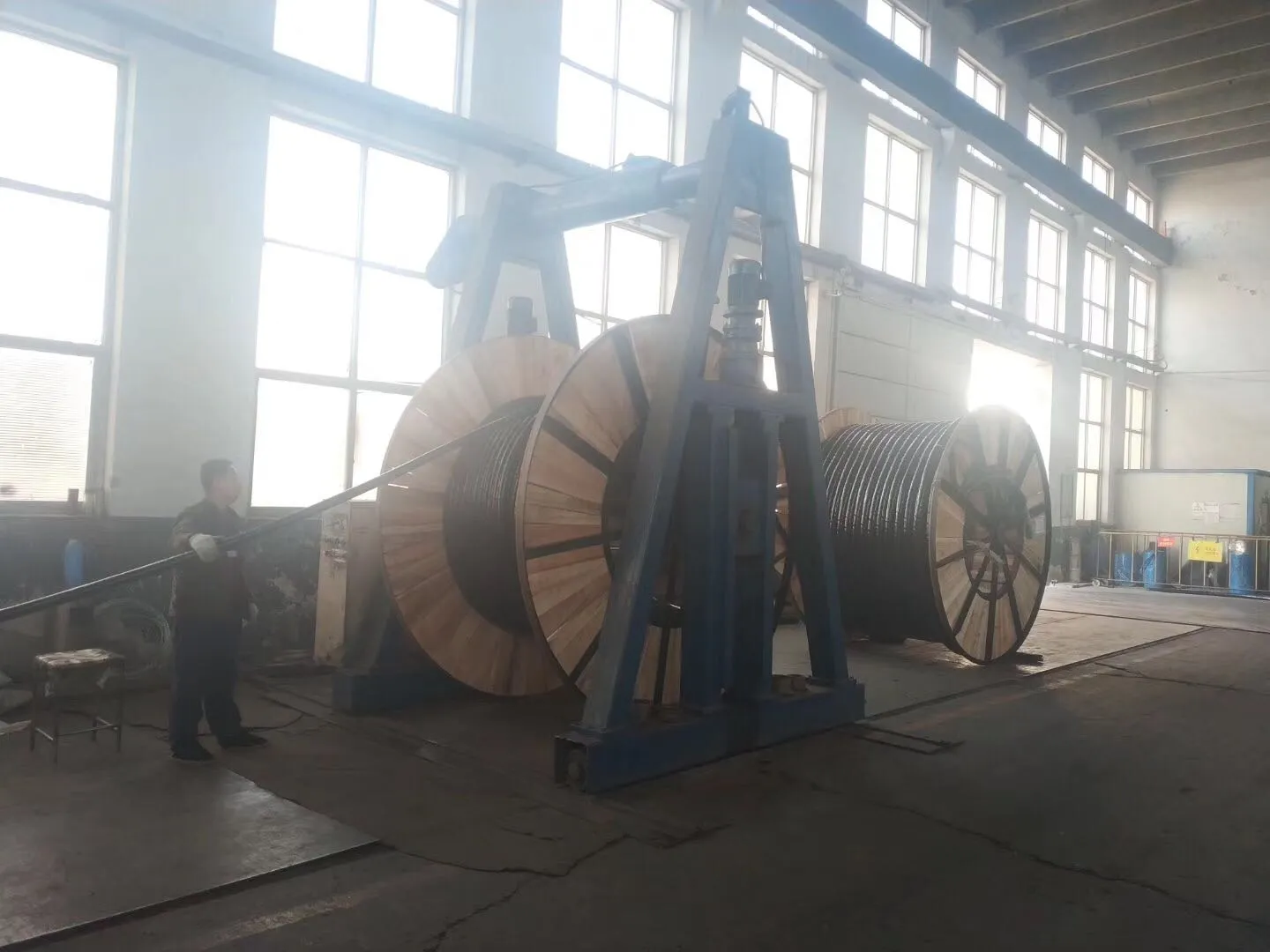
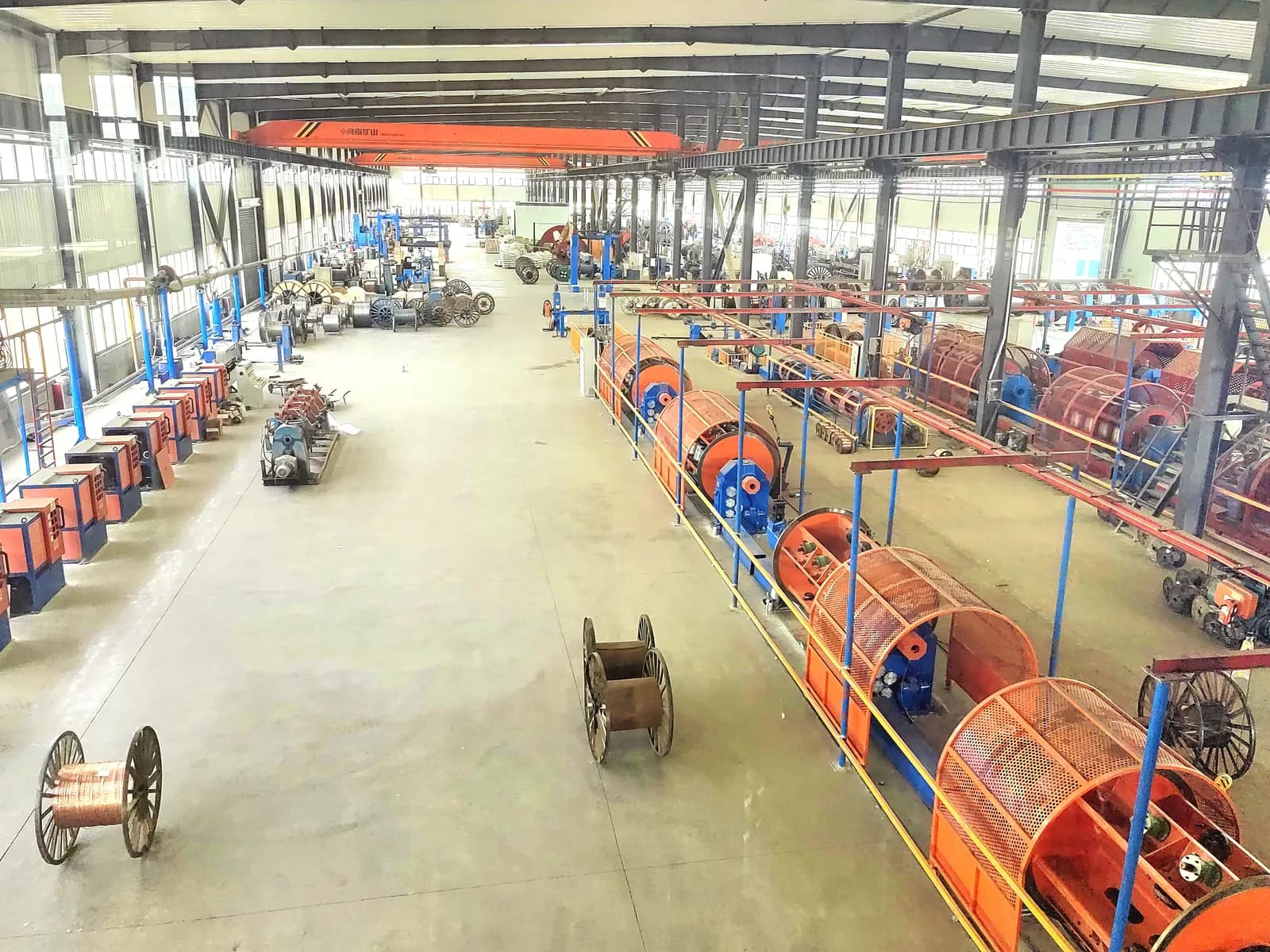
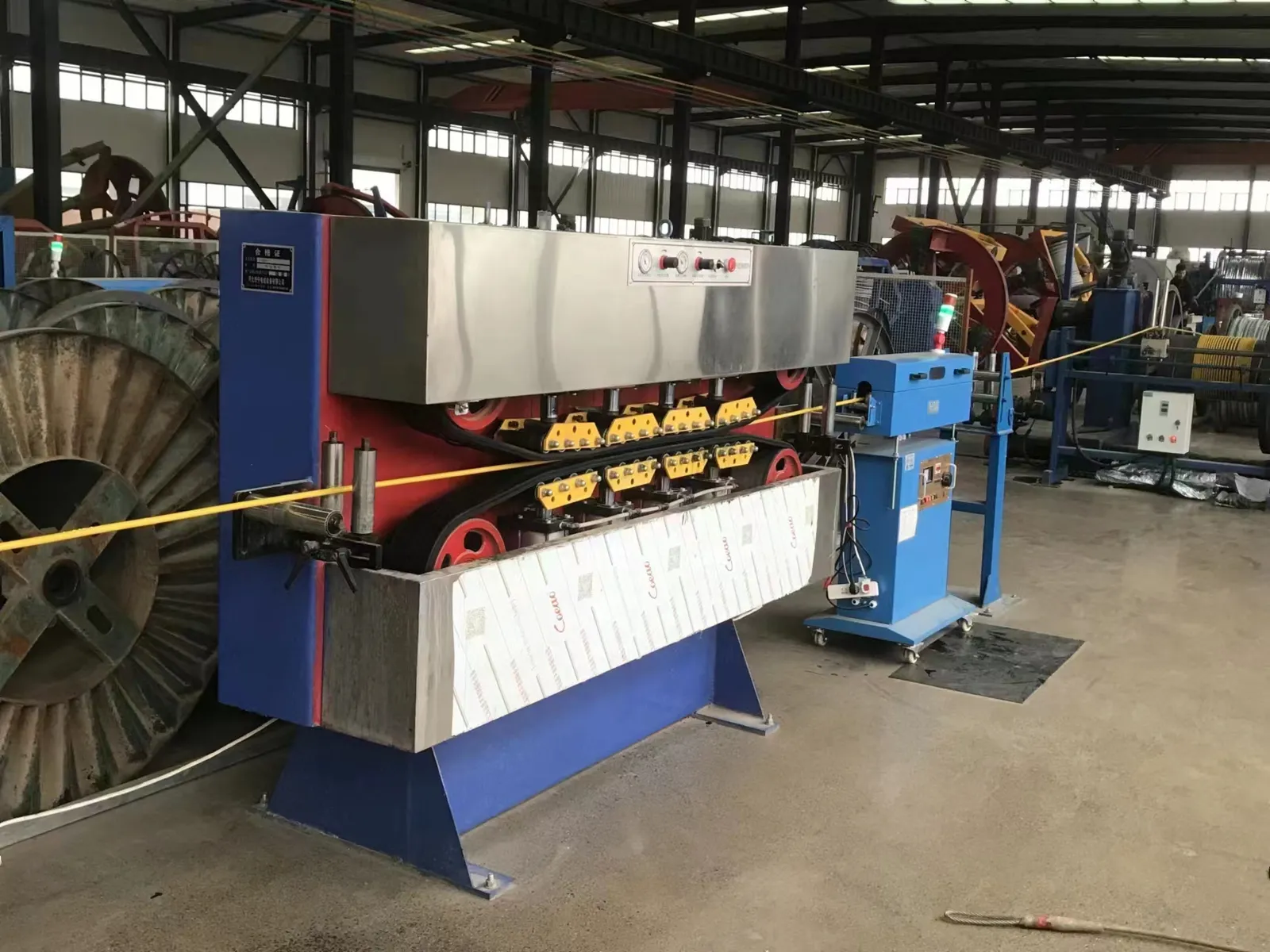
Chinese cable factories operate at scale — advanced extrusion lines, armouring machines, and testing laboratories allow production of the full SWA cable range from 1.5 mm² to 300 mm² in all core configurations. This means:
- Full product range from a single source
- Consistent quality across different cable sizes
- Ability to handle large project orders
Quality Assurance
Reputable Chinese manufacturers maintain:
- ISO 9001 quality management systems
- ISO 14001 environmental management
- In-house testing per IEC 60502 (routine and type tests)
- Third-party witness testing available on request
- Pre-shipment inspection coordination with SGS, BV, or TÜV
International Certifications
Our factory holds certifications for key export markets:
- SABS for South Africa
- KEBS for Kenya
- SON for Nigeria
- KEMA (Netherlands)
- CE (European Union)
- GSO (Gulf States)
Our SWA Cable Manufacturing Capabilities
Product Range
| Category | Range |
|---|---|
| Voltage | 0.6/1 kV to 19/33 kV |
| Conductor | Copper or Aluminium |
| Cross-section | 1.5 mm² to 400 mm² |
| Cores | 1 to 5 cores |
| Insulation | XLPE or PVC |
| Sheath | PVC or LSZH |
| Armour | SWA, STA, AWA |
| Standards | IEC 60502, BS 5467, BS 6724, NFC 33-226, AS/NZS 5000.1 |
Testing and Quality Control
Every drum of SWA cable undergoes:
Routine Tests (100% of production):
- Conductor resistance measurement
- High-voltage test (3.5 kV AC for 5 minutes on 0.6/1 kV cables)
- Insulation resistance measurement (>100 MΩ·km)
- Visual and dimensional inspection
Type Tests (per IEC 60502-1):
- Bending test
- Thermal ageing of insulation and sheath
- Loss of mass test
- Shrinkage test
- Hot pressure test
- Insulation resistance at elevated temperature
- Lightning impulse test (for MV cables)
- Partial discharge test (for MV cables, ≤5 pC)
Packaging and Shipping
- Drums: Heavy-duty wooden or steel drums, drum size matched to cable length and weight
- Marking: Permanent marking every metre showing manufacturer, cable type, voltage, year
- Documentation: Test certificates, material certificates, packing list, commercial invoice
- Shipping: FOB, CIF, or CFR to any port worldwide. Full container loads (FCL) or LCL available.
- Drum lengths: Standard lengths 100m, 500m, or 1000m per drum. Custom lengths available on request.
Frequently Asked Questions About SWA Cable
What does SWA stand for?
SWA stands for Steel Wire Armoured. It describes a cable with helically applied galvanised steel wires providing mechanical protection around the cable cores.
Can SWA cable be buried directly in the ground?
Yes. SWA cable is designed for direct burial without additional conduit or ducting. The steel wire armour provides mechanical protection against normal ground conditions. A cable route marker tape should be buried 150mm above the cable as a warning to future excavators.
What is the difference between 3 core SWA cable and 4 core SWA cable?
A 3 core SWA cable has three insulated conductors (typically for three-phase supply without a neutral — the armour may serve as the earth path). A 4 core SWA cable has four insulated conductors (three phases plus neutral), with the armour again potentially serving as the earth path. The choice depends on whether your circuit requires a separate neutral conductor.
Can the SWA armour be used as an earth conductor?
In many installations, yes — the steel wire armour can serve as the Circuit Protective Conductor (CPC). However, this depends on local regulations and the armour's cross-sectional area relative to the phase conductors. Always verify compliance with the applicable electrical installation standard (e.g., BS 7671, IEC 60364).
What is the minimum bending radius for SWA cable?
The minimum bending radius for SWA cable is typically 12 times the overall cable diameter during installation. For example, a cable with 30mm overall diameter should not be bent tighter than a 360mm radius.
How long does SWA cable last?
SWA cable is designed for a service life of 25 to 30 years under normal operating conditions. Actual lifespan depends on installation quality, operating temperature, environmental conditions, and mechanical stress.
What is the maximum operating temperature?
- XLPE insulated SWA cable: 90°C continuous conductor temperature
- PVC insulated SWA cable: 70°C continuous conductor temperature
Is SWA cable fire resistant?
Standard SWA cable is flame retardant (will not propagate fire per IEC 60332-1) but not fire resistant. For fire survival applications (maintaining circuit integrity during a fire), you need a dedicated fire-resistant cable such as MICC (mineral insulated copper clad) or a cable certified to BS 8519/IEC 60331.
What size SWA cable do I need for 100 amps?
For a 100-amp circuit using 4-core SWA cable buried direct in ground at standard conditions (20°C soil, 1.2 K·m/W thermal resistivity, 0.5m depth per BS 7671), you need a minimum of 35 mm² copper (rated 115A) or 50 mm² aluminium (rated approximately 105A). Apply derating factors for actual installation conditions — grouped cables, higher ambient temperature, or high thermal resistivity soil will require upsizing. Always verify against BS 7671 Appendix 4 or IEC 60287.
How deep should SWA cable be buried?
Minimum burial depths per BS 7671 and common international practice: 450mm under footpaths, 600mm under roads, 500mm under private land. Agricultural land requires 750–900mm to clear plough depth. Medium-voltage cables (≥6.6kV) should be buried 200mm deeper than low-voltage minimums. Always install cable route marker tape 150mm below the finished surface.
Can I run SWA cable on a wall without a cable tray?
Yes. SWA cable can be surface-mounted directly to walls using appropriate cable cleats at intervals not exceeding 350mm for horizontal runs and 450mm for vertical runs. The cleats must grip the outer sheath without damaging it and should be corrosion-resistant (stainless steel or galvanised) for outdoor installations. The cable's armour provides its own mechanical protection, so additional containment is not required for most industrial environments.
What is the voltage drop for SWA cable?
Voltage drop depends on cable size, load current, cable length, and power factor. For example, 4-core 25mm² copper SWA at rated load (96A per BS 7671 Table 4D4A) over 100m three-phase gives approximately 1.65mV/A/m × 96A × 100m = 15.8V, which is 3.96% of 400V. BS 7671 limits total voltage drop to 5% for most installations (3% for lighting circuits). Use manufacturer voltage drop tables or BS 7671 Appendix 4 for precise calculation.
SWA cable vs STA cable — which should I choose?
SWA (Steel Wire Armour) is for multi-core cables. STA (Steel Tape Armour) is for single-core cables. Using SWA on single-core cables creates eddy current heating in the steel wires due to the alternating magnetic field. STA (or AWA — Aluminium Wire Armour) avoids this problem because the tape/aluminium does not form closed magnetic loops. If you need single-core armoured cables (common for MV or large LV installations), specify STA or AWA.
How to Order SWA Cable from Our Factory
Getting a quotation is straightforward:
- Tell us your specification — Voltage, cores, conductor size, material (Cu/Al), insulation type, sheath type, standard, and required length
- We provide a quote — Including unit price, packaging, and shipping options to your port
- Confirm your order — We issue a proforma invoice and begin production upon deposit
- Pre-shipment inspection — We invite third-party inspection or send test certificates
- Ship to your door — FOB, CIF, or door-to-door delivery arranged
Request a Quote
Ready to source SWA cable at factory-direct pricing? Contact us with your project requirements:
- Cable specification (size, cores, material)
- Total quantity required (in metres or kilometres)
- Destination port or delivery address
- Required certifications or standards
- Project timeline
We supply projects across Africa (Nigeria, Kenya, Tanzania, Ghana, South Africa, Ethiopia), the Middle East (UAE, Saudi Arabia, Qatar, Iraq, Oman), and Southeast Asia (Philippines, Vietnam, Indonesia, Myanmar, Cambodia).
Whether you need 3 core SWA cable for a solar farm, 4 core SWA cable for industrial distribution, or a full range of sizes for an infrastructure project — we manufacture it all under one roof with consistent quality and competitive pricing.
Contact us today for SWA cable pricing →
Related Reading
- SWA Cable Applications: Where & Why to Use Steel Wire Armoured Cable — Industry-by-industry application guide covering underground, industrial, mining, solar, and marine
- SWA Cable Installation Guide: Burial Depth, Gland Selection & Step-by-Step Methods — Complete installation procedures per IEC 60502 and BS 7671
- SWA Cable Price Per Meter: 2026 Factory Cost Guide — Pricing breakdown by size, material, and order volume
- SWA Cable Sizing Guide: Current Ratings & Voltage Drop — Full sizing methodology with derating tables
- 3 Phase Power Cable Sizes & Specifications — Complete sizing guide for 3-core, 3+1, and 3+2 SWA configurations
- 4 Core Armoured Cable: SWA & STA Specifications — Full size chart with current ratings 1.5–800mm²
- Underground Power Cable Types & Installation Guide — Direct burial methods, depth requirements, and cable selection
- Armoured Cable Manufacturer & Supplier in China — STA, AWA, and other armoured cable variants