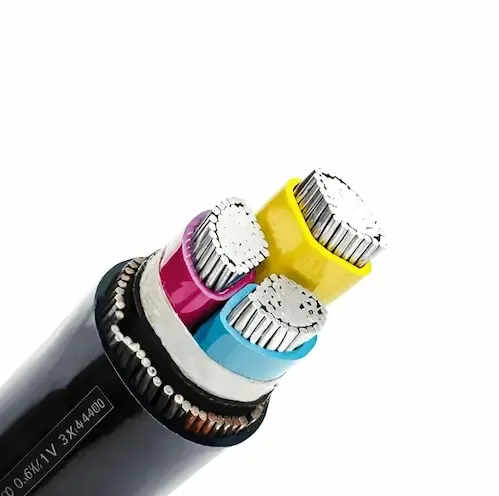
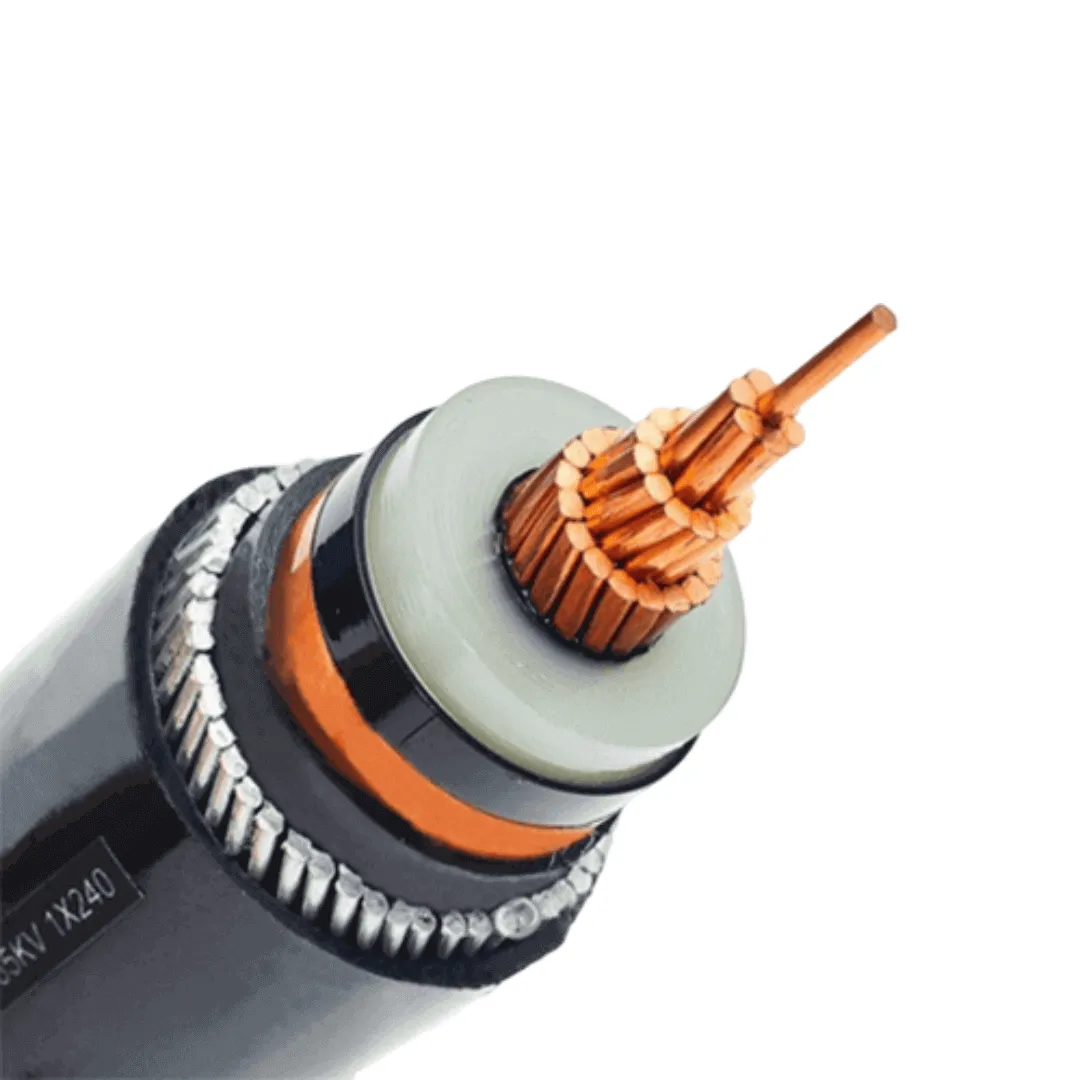
Key Takeaway
Compare SWA cable standards across regions: IEC 60502 (international), BS 5467 (UK/Commonwealth), NFC 33-226 (Francophone Africa). Testing requirements, marking differences, and how to specify correctly for your market.
Ordering SWA cable from a Chinese factory is straightforward — until your shipment gets held at the port because the cable marking does not match the standard required by the local utility. Or your project engineer rejects the delivery because the insulation thickness follows IEC 60502 when the specification calls for BS 5467.
These are not hypothetical scenarios. They happen regularly on cross-border cable procurement projects, and they cost time and money to resolve.
The core problem: steel wire armoured cables are manufactured to different national and international standards depending on the destination country. While these standards share common engineering principles, they differ in specific requirements for insulation thickness, conductor class, armour construction, voltage testing levels, and cable marking. Getting the standard wrong means the cable may be physically identical but contractually non-compliant.
This guide compares the three most commonly specified SWA cable standards in international trade — IEC 60502, BS 5467, and NFC 33-226 — so you can specify correctly, avoid procurement errors, and ensure your cable passes inspection at site.
What Is an SWA Cable Standard?
A cable standard is a published technical document that defines the minimum requirements for cable construction, materials, dimensions, performance, and testing. Standards ensure that cables from different manufacturers are interchangeable, safe, and fit for purpose.
For SWA cables specifically, standards cover:
- Conductor requirements — material (copper or aluminium), class (solid, stranded, flexible), resistance tolerances
- Insulation — material type (XLPE or PVC), minimum thickness by voltage class and conductor size
- Armour — wire diameter, number of wires, material (galvanised steel), lay length
- Sheath — material, minimum thickness, colour
- Electrical testing — voltage withstand, insulation resistance, partial discharge (MV only)
- Marking — what information must be printed on the cable surface, at what intervals
Different countries and regions adopt different standards, often based on their colonial history, trade relationships, or national standardisation bodies. The three dominant standards families for SWA cable in international trade are IEC (international), BS (British), and NFC (French).
For a broader overview of which standard applies in which country, see our cable standards by country guide.
IEC 60502: The International Baseline Standard
IEC 60502 is published by the International Electrotechnical Commission (IEC) and serves as the global reference standard for power cables with extruded insulation. Most national standards are derived from or aligned with IEC 60502.
Structure: Part 1 vs Part 2
| Part | Voltage Range | Scope |
|---|---|---|
| IEC 60502-1 | 0.6/1 kV to 1.8/3 kV | Low voltage power cables |
| IEC 60502-2 | 3.6/6 kV to 18/30 kV | Medium voltage power cables |
Part 1 covers the majority of SWA cables used in building and industrial distribution. Part 2 applies to primary distribution feeders and utility networks.
Key Requirements for SWA Cable Under IEC 60502-1
Conductor: Copper or aluminium, Class 1 (solid) or Class 2 (stranded) per IEC 60228. Class 2 is standard for cross-sections 25mm² and above.
Insulation thickness (XLPE, 0.6/1kV selected sizes):
| Conductor Size (mm²) | Minimum Insulation Thickness (mm) |
|---|---|
| 1.5 – 16 | 0.7 |
| 25 – 35 | 0.9 |
| 50 – 95 | 1.0 |
| 120 – 150 | 1.1 |
| 185 – 240 | 1.2 |
| 300 – 400 | 1.4 |
| 500 – 630 | 1.6 |
Source: IEC 60502-1 Table 2 (XLPE insulation, rated voltage 0.6/1kV)
Armour (steel wire): Galvanised steel wires applied helically over the inner sheath. Wire diameter is specified based on cable outer diameter — typically 1.25mm for cables up to 13mm diameter, 1.6mm for 13–25mm, and 2.0mm for cables exceeding 25mm outer diameter over the armour bedding.
Voltage test (routine): 3.5 kV AC for 5 minutes on each core (for 0.6/1kV rated cables).
Marking: Standard requires manufacturer identification, standard number, voltage rating, conductor size, and year of manufacture. Marking interval is typically every 1 metre or less.
Where IEC 60502 Is Specified
IEC 60502 is accepted in most countries that do not have their own national cable standard. It is the default specification for:
- Middle East (UAE, Saudi Arabia, Qatar, Oman, Iraq, Jordan)
- Central and South America
- Central Asia (Kazakhstan, Uzbekistan)
- Parts of Southeast Asia
- International EPC contracts (where the consultant has not specified a national standard)
BS 5467: The UK and Commonwealth Standard
BS 5467 is published by the British Standards Institution (BSI) and covers power cables with thermosetting insulation (XLPE) and steel wire or steel tape armour, rated at 600/1000V to 1900/3300V. It is one of the most commonly specified standards for SWA cable in international trade.
How BS 5467 Relates to IEC 60502
BS 5467 is not identical to IEC 60502-1. While both standards cover similar cable constructions, BS 5467 includes specific UK requirements that differ from the IEC baseline:
- Conductor class: BS 5467 calls for Class 2 stranded conductors for all sizes 1.5mm² and above (IEC allows Class 1 solid up to 16mm²)
- Insulation thickness: Generally aligned with IEC 60502-1, but some sizes have slightly different values
- Sheath colour: BS 5467 specifies black outer sheath as standard (IEC does not mandate colour)
- Marking requirements: More prescriptive than IEC — must include BS 5467 designation, voltage rating (e.g., 600/1000V), cable type designation, conductor size, manufacturer name, and year
- Core identification: Follows BS 7671 wiring regulations — brown/black/grey for phases, blue for neutral, green-yellow for earth
BS 5467 Insulation Thickness (XLPE, 600/1000V)
| Conductor Size (mm²) | Minimum Insulation Thickness (mm) |
|---|---|
| 1.5 – 16 | 0.7 |
| 25 – 35 | 0.9 |
| 50 – 95 | 1.0 |
| 120 – 150 | 1.1 |
| 185 – 240 | 1.2 |
| 300 – 400 | 1.4 |
These values align with IEC 60502-1 for XLPE insulation at 0.6/1kV. The key differences between BS 5467 and IEC 60502-1 appear in PVC-insulated variants (covered by BS 6346) and in marking/testing details rather than dimensions.
BS 7870-4: The Related Standard
For higher-voltage distribution cables, BS 7870-4 (distribution cables with XLPE insulation for voltages from 3.8/6.6kV to 19/33kV) takes over from BS 5467. This standard is technically aligned with IEC 60502-2 but carries additional British requirements for partial discharge testing and sheath integrity testing.
Where BS 5467 Is Specified
BS 5467 is required or preferred in:
- United Kingdom — mandatory for installations under BS 7671
- Kenya — KS standard references BS 5467 directly
- Nigeria — SON (Standards Organisation of Nigeria) accepts BS 5467
- Tanzania — TBS references BS standards
- Ghana — GSA references BS standards
- Hong Kong — CLP and HK Electric specify BS 5467
- Malaysia — MS references BS standards for LV armoured cables
- Singapore — SS standards aligned with BS
- East African Community — generally BS-standard territory
- Caribbean nations — Jamaica, Trinidad, Barbados
For these markets, your cable must carry the BS 5467 marking and comply with its specific conductor class, colour coding, and test requirements — even if the cable is dimensionally similar to IEC 60502-1.
NFC 33-226: The Francophone Standard
NFC 33-226 is published by AFNOR (Association Française de Normalisation) and covers medium-voltage power cables with extruded insulation for rated voltages from 3.6/6kV to 18/30kV. It is the dominant standard in French-speaking Africa and former French colonies.
Important Scope Distinction
Unlike IEC 60502 and BS 5467 which cover both low and medium voltage, NFC 33-226 specifically covers medium voltage (6kV to 30kV). For low-voltage armoured cables in Francophone markets, NFC 32-321 (cables with PVC insulation) or NFC 32-322 (cables with XLPE insulation) are the applicable standards.
The full Francophone cable standards family:
- NFC 32-321 — LV cables, PVC insulation (0.6/1kV)
- NFC 32-322 — LV cables, XLPE insulation (0.6/1kV)
- NFC 33-220 — MV cables, general requirements
- NFC 33-226 — MV cables, XLPE insulation (3.6/6kV to 18/30kV)
Key Requirements Under NFC 33-226
Conductor: Aluminium is the default conductor material in Francophone African specifications (unlike BS markets where copper predominates). Copper is available but less commonly specified for cost reasons. Conductor class follows IEC 60228 Class 2.
Insulation thickness (XLPE, selected voltages):
| Rated Voltage (U₀/U) | Minimum Insulation Thickness (mm) |
|---|---|
| 3.6/6 kV | 3.4 |
| 6/10 kV | 3.4 |
| 8.7/15 kV | 4.5 |
| 12/20 kV | 5.5 |
| 18/30 kV | 8.0 |
Source: NFC 33-226, aligned with IEC 60502-2 Table 6 values for XLPE insulation
Semiconducting screens: Required on both conductor and insulation for all voltage classes. Conductor screen is extruded semiconducting compound; insulation screen is extruded semiconducting compound with copper tape or copper wire metallic screen over it.
Armour: Steel wire armour for multi-core cables; aluminium wire armour for single-core cables (to prevent eddy current losses). This requirement mirrors IEC 60502-2.
Marking: Must include NFC 33-226 reference, manufacturer name, year, voltage rating, conductor material and size. French-language marking is sometimes required by local utilities.
Where NFC 33-226 Is Specified
NFC standards dominate in:
- France — for utility distribution cables
- Senegal — SENELEC specifications reference NFC
- Côte d'Ivoire — CIE (utility) specifies NFC 33-226
- Cameroon — ENEO references NFC standards
- Morocco — ONEE specifies NFC for MV distribution
- Tunisia — STEG references NFC
- Algeria — Sonelgaz references NFC
- Vietnam — EVN (Electricity of Vietnam) accepts NFC standards due to historical French influence
- Madagascar, Mali, Burkina Faso, Niger, Gabon, Congo — all Francophone utilities specify NFC
For these markets, cable must be manufactured to NFC dimensional requirements and carry NFC marking. A cable manufactured to IEC 60502-2 will often meet the dimensional requirements (since NFC 33-226 is technically aligned with IEC 60502-2), but it must be explicitly marked and certified to NFC to pass local utility acceptance.
Head-to-Head Comparison: IEC 60502 vs BS 5467 vs NFC 33-226
| Parameter | IEC 60502-1 | BS 5467 | NFC 33-226 |
|---|---|---|---|
| Issuing body | IEC (International) | BSI (British) | AFNOR (French) |
| Voltage coverage | 0.6/1kV to 1.8/3kV (Part 1); 3.6/6kV to 18/30kV (Part 2) | 600/1000V to 1900/3300V | 3.6/6kV to 18/30kV |
| Primary insulation | XLPE or PVC | XLPE (BS 5467) or PVC (BS 6346) | XLPE |
| Conductor class | Class 1 (≤16mm²) or Class 2 | Class 2 for all sizes ≥1.5mm² | Class 2 per IEC 60228 |
| Default conductor material | Copper or aluminium | Copper (predominant in spec) | Aluminium (predominant in spec) |
| Armour type (multi-core) | SWA (galvanised steel wire) | SWA (galvanised steel wire) | SWA (galvanised steel wire) |
| Armour type (single-core) | AWA (aluminium wire) | AWA or SWA with note | AWA (aluminium wire) |
| Sheath colour | Not specified (manufacturer choice) | Black (standard) | Black (standard) |
| Routine voltage test (LV) | 3.5 kV AC / 5 min | 3.5 kV AC / 5 min | N/A (MV standard) |
| Routine voltage test (MV, 12/20kV) | 50 kV AC / 5 min | 50 kV AC / 5 min (BS 7870-4) | 50 kV AC / 5 min |
| Partial discharge (MV) | ≤ 10 pC at 1.73 U₀ | ≤ 5 pC at 2 U₀ (BS 7870-4) | ≤ 10 pC at 1.73 U₀ |
| Core colours (LV 3-phase) | Brown/Black/Grey + Blue | Brown/Black/Grey + Blue (BS 7671) | Black numbering or colour |
| Marking interval | ≤ 1m (recommended) | ≤ 1m | ≤ 1m |
| Primary markets | Middle East, LATAM, Central Asia | UK, East Africa, Hong Kong, Caribbean | France, West/North Africa, Vietnam |
Key Takeaways from the Comparison
- BS 5467 is the most prescriptive — it mandates Class 2 conductors for all sizes, specifies sheath colour, and has tighter partial discharge limits at medium voltage (via BS 7870-4)
- NFC 33-226 is MV-only — you need NFC 32-321/322 for low-voltage Francophone projects
- IEC 60502 is the universal fallback — if in doubt or if no national standard is specified, IEC 60502 is accepted almost everywhere
- Dimensional compatibility is high — a cable built to IEC 60502-1 will usually meet BS 5467 dimensional requirements, but marking and conductor class compliance must be verified separately
Other Regional SWA Cable Standards
Beyond the three major standards, several regional standards are relevant for SWA cable specification:
SANS 1507 — South Africa
Published by the South African Bureau of Standards (SABS). SANS 1507 covers PVC-insulated power cables from 0.6/1kV to 1.9/3.3kV. For XLPE-insulated armoured cables, South Africa uses SANS 10198-6 in conjunction with IEC 60502-1. South African projects typically require SABS approval and use of the SABS mark.
AS/NZS 5000.1 — Australia and New Zealand
Covers low-voltage power cables for fixed installations. Australia does not commonly use SWA cable — the preferred method is PVC/XLPE cable in conduit or cable ladder. When armoured cable is used, AS/NZS 5000.1 applies and has specific requirements for flame retardance testing that exceed IEC baseline.
IS 7098 — India
Published by the Bureau of Indian Standards (BIS). IS 7098-1 covers XLPE insulated cables up to 1100V. Indian projects require BIS certification (ISI mark). The standard is technically similar to IEC 60502-1 but has India-specific conductor sizes and testing requirements.
GB/T 12706 — China
The Chinese national standard for XLPE insulated power cables. GB/T 12706 is technically equivalent to IEC 60502 (it is the Chinese adoption of the IEC standard). Part 1 covers 1–3kV, Part 2 covers 6–35kV. All cable manufactured in China for domestic use follows GB/T 12706, but export production is manufactured to whatever standard the buyer specifies.
How to Specify the Right Standard for Your Project
Choosing the correct standard is not a technical decision — it is a regulatory and contractual decision driven by where the cable will be installed and who will inspect it.
Decision Framework
Step 1: Identify the installation country
The destination country determines which standard is accepted by the local utility, building authority, or regulatory body.
Step 2: Check the project specification
The EPC contract, tender document, or consultant's specification will usually name the required standard explicitly. Follow what is written.
Step 3: If no standard is named, follow regional default:
| Region | Default Standard |
|---|---|
| UK, East Africa, Nigeria, Hong Kong | BS 5467 (LV) / BS 7870-4 (MV) |
| France, West Africa, North Africa, Vietnam | NFC 32-321/322 (LV) / NFC 33-226 (MV) |
| Middle East, Latin America, Central Asia | IEC 60502-1 (LV) / IEC 60502-2 (MV) |
| South Africa | SANS 1507 / SANS 10198-6 |
| India | IS 7098 |
| Australia/NZ | AS/NZS 5000.1 |
| China (domestic) | GB/T 12706 |
Step 4: Confirm with the end client or utility
Even within a country, different utilities may have different preferences. SENELEC in Senegal may insist on NFC while a World Bank-funded project in the same country may accept IEC. Always confirm with the party who will inspect and accept the cable.
Step 5: Specify clearly in your purchase order
Your PO to the cable manufacturer must state:
- Standard (e.g., "BS 5467")
- Voltage rating (e.g., "600/1000V")
- Cable construction (e.g., "4C × 95mm² Cu/XLPE/SWA/PVC")
- Any additional requirements (e.g., "BASEC certified" or "KEMA tested")
For help selecting the right SWA cable size for your circuit, see our sizing guide with current rating tables.
Testing and Certification Requirements by Standard
All SWA cable standards require two categories of testing: routine tests (performed on every manufactured length) and type tests (performed once on a representative sample to validate the cable design).
Routine Tests (100% of Production)
| Test | IEC 60502-1 | BS 5467 | NFC 33-226 |
|---|---|---|---|
| Conductor resistance | ✓ | ✓ | ✓ |
| High-voltage test (AC) | 3.5 kV / 5 min (LV) | 3.5 kV / 5 min | 2.5 U₀ / 5 min |
| Insulation resistance | ✓ (≥ values per table) | ✓ | ✓ |
| Partial discharge (MV only) | ≤ 10 pC at 1.73 U₀ | ≤ 5 pC at 2 U₀ | ≤ 10 pC at 1.73 U₀ |
Type Tests (Design Validation)
| Test | IEC 60502-1 | BS 5467 | NFC 33-226 |
|---|---|---|---|
| Bending test | ✓ | ✓ | ✓ |
| Tensile strength & elongation (insulation/sheath) | ✓ | ✓ | ✓ |
| Hot set test (XLPE) | ✓ | ✓ | ✓ |
| Ageing tests (thermal) | ✓ | ✓ | ✓ |
| Loss of mass test (PVC) | ✓ | ✓ (if PVC variant) | N/A (XLPE only) |
| Impulse voltage test (MV) | ✓ | ✓ | ✓ |
| Water penetration test | ✓ (longitudinal) | ✓ | ✓ |
Third-Party Certification
For many markets, manufacturing to a standard is not sufficient — you also need third-party certification:
- BASEC (British Approvals Service for Cables) — Required or strongly preferred for BS 5467 cables in the UK market. BASEC conducts factory audits and product testing.
- KEMA/DNV — Widely accepted for IEC 60502 compliance in the Middle East and international projects. Provides independent type test reports.
- LCIE (Laboratoire Central des Industries Electriques) — French certification body for NFC standard compliance.
- BIS — Mandatory ISI marking for cables sold in India.
- SABS — Required for South African market entry.
We hold KEMA type test reports for our IEC 60502 range and supply BS 5467 cables with BASEC certification for UK and East African markets. For complete details on certification pathways, read our power cable certification guide.
How We Manufacture to Multiple Standards from One Factory
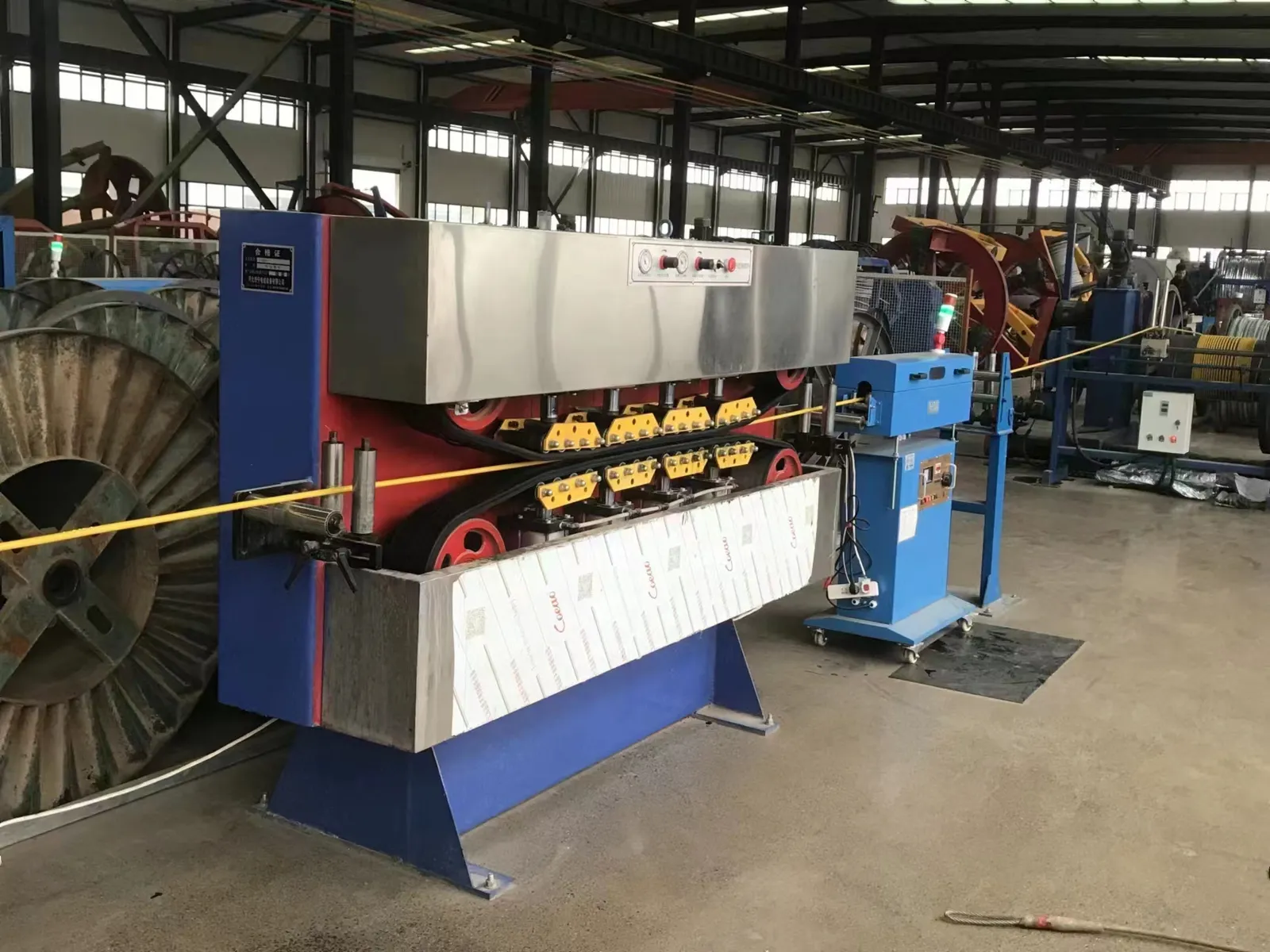
Our factory in Henan, China produces SWA cables to IEC 60502, BS 5467, NFC 33-226, and GB/T 12706 from the same production lines. This is possible because:
Same Core Engineering, Different Compliance Layers
The physical cable construction — conductor, insulation, armour, sheath — uses the same materials and manufacturing processes regardless of the target standard. What changes between standards is:
- Conductor class selection — Class 2 stranded for BS 5467 (all sizes); Class 1 solid available for IEC 60502 (≤16mm²)
- Colour coding — Brown/Black/Grey/Blue for BS 7671 markets; numbered cores for some NFC markets
- Marking — Different text printed on the outer sheath (standard reference, manufacturer code)
- Test protocols — Some standards require additional or stricter tests
- Certification documentation — Different test report formats and certificates
Production Capability
| Standard | Voltage Range | Certification | Lead Time |
|---|---|---|---|
| IEC 60502-1/2 | 0.6/1kV – 18/30kV | KEMA type test report | 2–4 weeks |
| BS 5467 / BS 7870-4 | 600/1000V – 19/33kV | BASEC approved | 3–4 weeks |
| NFC 33-226 | 3.6/6kV – 18/30kV | LCIE test reports | 3–5 weeks |
| GB/T 12706 | 0.6/1kV – 26/35kV | CCC certified | 2–3 weeks |
Why This Matters for Buyers
If you manage projects across multiple countries — say a solar farm in Kenya (BS 5467), a utility distribution project in Senegal (NFC 33-226), and an industrial plant in Saudi Arabia (IEC 60502) — you can source all three cable specifications from one manufacturer. This simplifies:
- Quality control — one factory audit covers all your supply
- Logistics — consolidate shipments from one origin
- Commercial terms — single supply agreement, consistent pricing model
- Technical support — one engineering team understands all your specifications
For pricing information on SWA cable across different standards and specifications, see our SWA cable price guide.
Frequently Asked Questions
Can I use IEC 60502 cable in a country that requires BS 5467?
In most cases, no — even though the physical cable may be dimensionally identical. The marking on the cable must reference BS 5467, and the conductor class must be Class 2 for all sizes. If you supply IEC-marked cable to a BS 5467 project, the inspector or consulting engineer is likely to reject it. Some projects accept "dual-marked" cables (marked to both IEC 60502 and BS 5467), which we can produce on request.
What is the difference between BS 5467 and BS 6346?
BS 5467 covers cables with thermosetting insulation (XLPE), while BS 6346 covers cables with thermoplastic insulation (PVC). Both can have SWA armour. For new installations, BS 5467 (XLPE) is almost always preferred due to higher current ratings, better short-circuit performance, and longer service life. BS 6346 is still used for some legacy specifications and cost-sensitive projects.
Is NFC 33-226 the same as IEC 60502-2?
Not exactly. NFC 33-226 is technically aligned with IEC 60502-2 in terms of insulation thickness and construction requirements, but it carries additional French-specific requirements for marking, documentation, and in some cases conductor material preferences. A cable manufactured to IEC 60502-2 dimensions can often be certified to NFC 33-226 with appropriate marking and documentation changes, but it requires explicit verification.
Do I need BASEC certification to sell SWA cable in the UK?
BASEC certification is not a legal requirement in the UK, but it is very strongly preferred by distributors, contractors, and specifiers. Most UK wholesalers will not stock non-BASEC cables. For export to the UK market, BASEC approval is effectively a market access requirement.
Can one cable be certified to multiple standards simultaneously?
Yes. We routinely produce cables that carry dual or triple certification — for example, a cable marked "IEC 60502-1 / BS 5467 / 600/1000V" that meets the requirements of both standards. This is commercially useful for distributors who serve multiple markets from a single stock holding.
How do I verify that a Chinese manufacturer can actually produce to BS 5467 or NFC 33-226?
Ask for: (1) third-party type test reports from a recognised lab (BASEC, KEMA, LCIE); (2) evidence of previous shipments to the target market; (3) factory audit reports from buyers in that market. Any established manufacturer claiming multi-standard capability should have these documents readily available. See our SWA cable installation guide for what to check on cable arriving at site.
Compare & Select
Request a Quote for Standard-Compliant SWA Cable
Whether your project calls for BS 5467, IEC 60502, NFC 33-226, or another regional standard, we manufacture to specification from our Henan factory with a 40+ year production track record.
What to include in your inquiry:
- Required standard (e.g., BS 5467)
- Voltage rating
- Cable construction (cores × size, conductor material)
- Quantity (metres or kilometres)
- Destination country and port
- Any third-party certification requirements (BASEC, KEMA, etc.)
We typically respond within 24 hours with a detailed quotation including applicable test certificates. For an overview of SWA cable applications across industries, see our applications guide.
Related SWA Cable Resources:
- SWA Cable: Complete Buyer's Guide — overview of SWA cable types, construction, and sourcing
- SWA Cable Price Per Metre — what drives pricing and how to optimise cost
- SWA Cable Sizing Guide — current ratings and voltage drop calculations
- 4-Core Armoured Cable Specifications — detailed spec tables for the most common SWA configuration
- Ten Chinese SWA Plants Ranked on Standards Scope — which hold third-party BS 5467 evidence and which only declare conformity