Key Takeaway
Why physically perfect power cables get rejected at destination — wrong standard on paperwork, missing certification marks, colour code errors. A practical prevention system based on 45 years of multi-standard cable export experience.
We receive inquiries every month from buyers who are switching suppliers. The pattern is remarkably consistent: they ordered cable from a factory that said "yes" to everything, the cable arrived at destination, and something in the documentation or marking did not match what the project required.
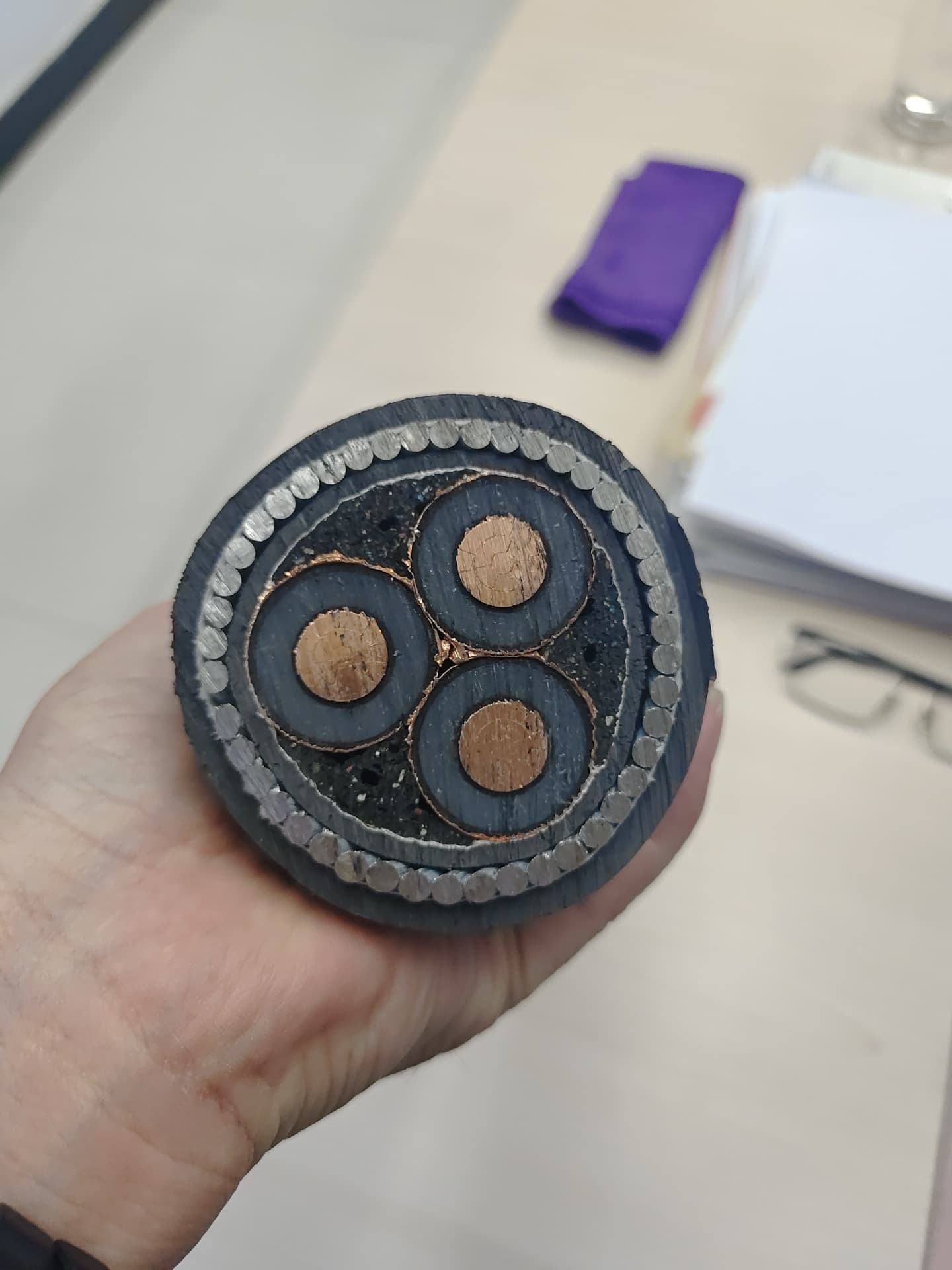
The cable itself was usually fine. Good copper. Proper insulation thickness. Clean extrusion. The problem was never the product — it was the compliance system around it.
After 45 years of manufacturing and exporting power cables to 60+ countries, we have seen every variation of this failure. Here is what actually goes wrong, why it happens, and exactly how to prevent it — whether you buy from us or anyone else.
Why Cable Shipments Get Rejected: The Three Failure Modes
Every compliance rejection we have encountered — from buyers who came to us after bad experiences — falls into one of three categories. Understanding these patterns is how you avoid repeating them.
Failure Mode 1: Wrong Standard Referenced on Documentation
The pattern: A buyer in the Middle East or Africa orders cable for an IEC-specified project. The factory produces a cable that physically meets IEC 60502-1 requirements — because China's national standard GB/T 12706 is the identical adoption of IEC 60502. Same dimensions, same test methods, same pass criteria.
But the test report header says "GB/T 12706-2020." The cable print marking says "GB/T 12706." The consulting engineer on site opens the documentation, checks it against the tender specification that reads "IEC 60502-1:2021," and rejects the delivery.
Why this is not pedantry — it is contract law. When a tender document specifies IEC 60502-1, that is a contractual requirement. A test report referencing a different standard number — even a technically identical one — is a non-conformance. The engineer has no authority to accept it, even if they personally know the standards are equivalent.
How it happens at the factory level:
- The factory's test laboratory system defaults to GB/T references because that is what CCC (China Compulsory Certification) requires for domestic sales
- The sales team confirms "yes, we produce to IEC standard" — which is technically true — but does not flag the documentation formatting to production
- Cable print marking is programmed once and nobody checks whether it says GB/T or IEC for export orders
- Test report templates pull the standard reference automatically from the lab system
What the buyer experiences: Cable sitting at a job site or port while the factory scrambles to reissue test certificates. If the project has a strict timeline, this delay cascades into liquidated damages, contractor penalties, or the buyer sourcing emergency replacement from a local distributor at premium prices.
Failure Mode 2: Missing Mandatory Certification Mark
The pattern: A buyer needs cable for South Africa, India, the US, or Australia. They find a Chinese manufacturer with good prices and "IEC certification." They order. The cable arrives at customs — and gets stopped.
This is the most expensive failure mode because it often cannot be fixed after the fact.
According to South Africa's NRCS (National Regulator for Compulsory Specifications), there is a formal memorandum of agreement between SARS Customs & Excise and NRCS that ensures "no importer will be granted market entry into South Africa for commodities that fall under the scope of the relevant compulsory specifications unless they are in possession of an original valid LOA" (Letter of Authority). This is not a guideline — it is a legal gate. Without the LoA document, cables physically cannot clear South African customs.
The same principle applies in India (BIS ISI mark mandatory under BIS Act 2016), the United States (UL/NRTL listing required by NEC), and Australia (RCM mark + JAS-ANZ certification).
Why buyers fall into this trap:
- The factory says "we can supply to SANS standard" or "we export to South Africa" — but holding a manufacturing capability is not the same as holding the legal registration
- IEC certification (even KEMA type test) does NOT automatically grant access to markets with compulsory national certification
- Buyers assume that if a factory exports to 60 countries, they must have all certifications — they do not. No single factory holds every national certification.
- Time pressure. The buyer needs cable in 12 weeks. Getting an NRCS LoA takes 6–12 months. Getting BIS registration takes 8–14 months. There is no shortcut.
What the buyer experiences: Cable detained at port with accumulating storage charges, or — worse — cable delivered to site and then rejected during commissioning inspection. At that point, the only options are to return the cable to origin, redirect it to a different market, or scrap it. We have had buyers come to us after losing entire project allocations this way.
Failure Mode 3: Colour Code Mismatch
The pattern: The standard is correct on paperwork. The certification exists. Everything looks good on paper. Then the cable drums are opened at site, and the insulation colours are wrong for the destination country.
This happens because IEC 60502 does not mandate a single colour code. It references IEC 60446 (now IEC 60445) for "preferred" identification, but actual wiring colours are governed by national installation regulations — which vary significantly:
| Market | Phase Colours | Neutral | Earth |
|---|---|---|---|
| UK/EU (BS 7671) | Brown / Black / Grey | Blue | Green-Yellow |
| Australia (AS/NZS 3000) | Red / White / Blue | Black | Green-Yellow |
| South Africa (SANS 10142) | Red / Yellow / Blue | Black | Green-Yellow |
| United States (NEC) | Black / Red / Blue | White | Green |
| Middle East (common) | Brown / Black / Grey | Blue | Green-Yellow |
| China (GB/T default) | Yellow / Green / Red | Blue | Green-Yellow |
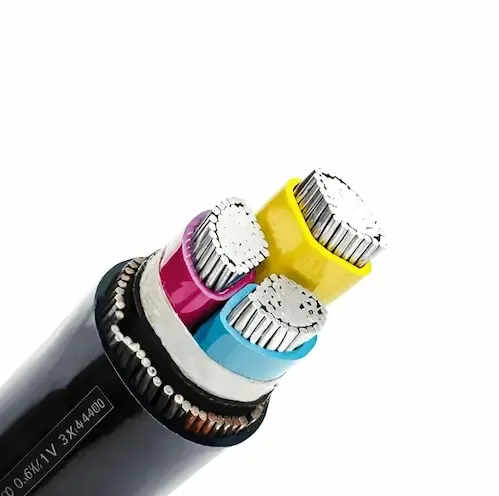
A factory producing "IEC 60502-1 cable" without explicit colour instructions from the buyer will typically default to Chinese national colours — Yellow/Green/Red phases. If that cable goes to Australia (expecting Red/White/Blue) or the UK (expecting Brown/Black/Grey), the contractor on site cannot use it.
Why there is no field fix: You cannot re-colour insulation after extrusion. On multicore cables, you cannot peel back the outer sheath and re-sleeve individual cores. The only options are:
- Sleeve identification (coloured tape or heat-shrink on each core at every joint and termination point) — sometimes accepted on large single-core cables in industrial plant environments, but never accepted on multicore distribution cables
- Full re-manufacture — which means the buyer waits another 8–12 weeks for new production
What triggers this failure: The purchase order says "3-core 95mm² XLPE/SWA/PVC cable to IEC 60502-1" and nothing else about colours. The factory makes it in Chinese default. Everyone is technically correct, and everyone loses.
The Standards Map: What Each Major Market Actually Requires
Here is what you need to know for each major export market — not a list of standard numbers for reference, but the practical acceptance criteria that determine whether your cable clears customs, passes inspection, and gets installed.
IEC Markets (Middle East, Africa, Southeast Asia, Latin America)
Acceptance criteria:
- Cable manufactured to IEC 60502-1 (LV, 0.6/1kV) or IEC 60502-2 (MV, 6/10kV to 18/30kV) — the XLPE power cable range covers both
- Test reports explicitly referencing IEC standard (not GB/T, not "equivalent to")
- Type test certificate from accredited lab — most Gulf and African utility projects require KEMA (now DEKRA) specifically
- Colour code per client specification (usually BS 7671 colours for Gulf/Africa)
- Cable print marking includes: manufacturer name, IEC standard number, voltage rating, conductor size, year of manufacture
Where buyers get tripped up:
- Gulf projects (UAE, Saudi, Qatar) almost always require KEMA type test reports specifically — a CNAS report may not be accepted even though both labs are ISO 17025 accredited. This catches many first-time Gulf exporters off guard.
- Fire performance requirements vary by application: UAE Civil Defence requires IEC 60332-3 Cat A + Low Smoke Zero Halogen (LSZH) for indoor public building cables. Not stating fire class in your PO means the factory will supply standard PVC sheath — which fails fire inspection.
- Some African utilities (Kenya Power, TANESCO, ZESCO) maintain approved manufacturer lists. Your cable must come from a registered supplier, regardless of what certifications it carries. The same applies to utility tenders in Bangladesh and Pakistan.
What "IEC compliant" actually means from a Chinese factory: GB/T 12706 IS IEC 60502 — same construction, same tests. The cable is physically identical. But to be accepted on an IEC-specified project, you need:
- Test reports issued against IEC 60502 (not GB/T 12706)
- Cable print legend showing "IEC 60502-1" (not "GB/T 12706")
- KEMA or equivalent type test certificate if the project/utility demands it
- Correct colour code for the destination country (NOT Chinese default)
All four must be correct simultaneously. Miss any one and you have a compliance gap.
United Kingdom — BS System
Acceptance criteria:
- Cable to BS 5467 (thermosetting insulated, armoured, 600/1000V) or BS 6724 (LSZH armoured) or BS 7870 (distribution cables) — armoured variants use SWA construction
- BASEC certification strongly preferred — many major contractors will not accept non-BASEC cable on principle
- Colour code per BS 7671 18th Edition: Brown (L1), Black (L2), Grey (L3), Blue (N), Green-Yellow (CPC)
- Cable marking format per BS standard requirements
- ENA Type Approval for cables going into Distribution Network Operator (DNO) networks
The BASEC question: BASEC (British Approvals Service for Cables) is not legally mandatory in the UK. But in practice:
- Most main contractors on infrastructure projects specify BASEC in procurement documents
- Network operators (UKPN, WPD, SSEN, ENW) require ENA approved cables — which typically requires BASEC
- Without BASEC, your market in the UK is limited to smaller private projects and less demanding specifications
Can a Chinese factory supply BASEC-certified cable? Yes — several Chinese manufacturers hold BASEC certification. It requires annual factory audits by BASEC inspectors travelling to China, ongoing surveillance testing, and multi-year investment. The certificate is verifiable on BASEC's public register at basec.org.uk. If a factory claims BASEC but cannot provide a verifiable certificate number, that is a red flag.
United States — Effectively Closed to IEC Cable
Reality check: The US market operates on a fundamentally different system. NEC (National Electrical Code, NFPA 70) requires all electrical products to be "listed" by a Nationally Recognized Testing Laboratory (NRTL) — primarily UL, but also CSA, ETL/Intertek, or FM Global.
What this means practically:
- IEC 60502-1 cable CANNOT be legally installed on any US project governed by NEC
- "Equivalent" is not a concept that exists in the US system — the cable must carry the physical UL listing mark
- UL listing requires: product testing to UL standards (UL 44 for thermoset wire, UL 1072 for MV cable), initial factory audit, ongoing quarterly surveillance visits
- The cable designation system is completely different: XHHW-2, RHW-2, USE-2, MV-90, MV-105 — none of which map directly to IEC designations
- Conductor sizes are AWG/kcmil, NOT mm²
- According to our certification guide, a full KEMA type test alone costs €50,000–€150,000. UL listing involves similar testing investment plus ongoing surveillance fees and US-specific compliance overhead.
Bottom line: If your project is in the United States, source from a factory that already holds UL listing for the specific cable type you need, or source domestically. Do not attempt to import IEC-manufactured cable for a US NEC-governed project. It will be rejected by the AHJ (Authority Having Jurisdiction) with zero appeal pathway.
We are transparent about this: we do not currently hold UL listing. We cannot supply cable for US projects. Any factory that says "we can supply UL cable" must be able to show you a verifiable listing on UL's Product iQ database (iq.ulprospector.com).
South Africa — The LoA Trap
Why South Africa catches people: The NRCS administers compulsory specifications for power cables. The legal framework is unambiguous — the NRCS website states that a memorandum between SARS (Customs & Excise) and NRCS ensures that "no importer will be granted market entry into South Africa for commodities that fall under the scope of the relevant compulsory specifications unless they are in possession of an original valid LOA."
Requirements:
- Cable must comply with SANS 1507 (MV XLPE) or SANS 1418 (LV XLPE) or SANS 1411 (PVC)
- Manufacturer must hold a valid NRCS Letter of Authority for the specific product type
- LoA requires: formal application, product testing at SABS or equivalent approved lab, factory inspection, annual renewal
- Timeline from cold start: 6–12 months (there is no expedited process)
- Cable marking must include SANS standard number
The trap in practice: Many Chinese factories tell buyers "we supply to SANS standard" or "we export to South Africa regularly." This may mean they have manufactured cable that meets SANS requirements physically. It does NOT necessarily mean they hold the LoA. Without the LoA, the cable cannot legally enter South Africa — customs will not release it.
How to verify: Ask for the LoA number. Check it against the NRCS register. If the factory hesitates, deflects, or says "we'll get it" — they do not have it, and you do not have 6–12 months to wait.
India — BIS Compulsory Registration
Why India is a separate challenge: The Bureau of Indian Standards requires compulsory certification (ISI mark) for all power cable products under the BIS Act 2016 and relevant quality control orders.
Requirements:
- Cable must comply with IS 7098 (XLPE insulated cables) or IS 1554 (PVC insulated cables)
- Foreign manufacturer must hold BIS registration for the specific product category
- Registration process: application, product testing at BIS-recognized lab, factory audit by BIS inspectors (they travel to China), mark placement approval, annual surveillance
- Timeline from application to certificate: 8–14 months
- Every cable drum must carry the ISI mark with the manufacturer's unique registration number
Impact on procurement decisions:
- Private industrial projects in India require BIS-marked cable — not just government projects
- EPC contractors with Indian project commitments cannot accept non-BIS cable regardless of other international certifications
- A factory with KEMA + BASEC + NRCS but no BIS registration simply cannot supply the Indian market
We are transparent: as of 2026, our BIS registration is in process but not yet approved. We cannot supply ISI-marked cable for India today. If a factory claims BIS registration, verify the registration number on the BIS portal before ordering.
Australia & New Zealand — AS/NZS + Unique Colour Code
Requirements:
- Cable to AS/NZS 5000.1 (LV power cables) or AS/NZS 1429.1 (polymeric insulated cables)
- JAS-ANZ accredited certification body mark required (SAI Global, BSI, SGS, or equivalent)
- RCM (Regulatory Compliance Mark) applicable to electrical equipment
- Colour code per AS/NZS 3000 Wiring Rules: Red/White/Blue phases, Black neutral, Green-Yellow earth
- Cable marking per AS/NZS requirements
The colour code difference that catches everyone: While AS/NZS 5000 is based on IEC 60502, Australia uses its own national colour code. The neutral is Black (not Blue as in IEC/BS systems). If you order "IEC cable" without specifying Australian colours, you will receive Blue neutral — which is non-compliant in Australia.
The Pre-Shipment Compliance Checklist
Every cable export shipment should pass this checklist before the container is loaded. This is not theory — this is what our export documentation team runs through on every order. Print it. Use it. Adapt it to your specific project requirements.
Documentation Checkpoint
- Test reports reference the CORRECT destination standard (IEC/BS/SANS/AS-NZS — not GB/T)
- Test report edition/year matches the edition specified in the contract
- Type test certificate exists, is valid (not expired), and covers the exact cable construction being shipped
- Type test is from a lab acceptable to the destination market (KEMA for Gulf? ASTA? CNAS?)
- Certificate of Conformity (CoC) issued against correct standard
- Material certificates available (copper rod, XLPE compound, armour wire, sheath compound)
- Packing list matches contract specification exactly (cable description, length per drum, number of drums)
Physical Cable Checkpoint
- Cable print legend shows correct standard number (not GB/T)
- Cable print legend includes: manufacturer name, voltage rating, conductor size, year of manufacture
- Core insulation colour code matches destination country wiring regulations
- Neutral core colour is correct for destination (Blue? Black? White? — this varies by country)
- Earth conductor is Green-Yellow where required
- Overall sheath colour matches specification (typically Black for buried, sometimes Grey for indoor)
- Drum labeling matches shipping documentation and cable print marking
Certification Checkpoint
- Factory holds valid certification for destination market (BASEC / NRCS LoA / BIS ISI / UL / JAS-ANZ)
- Certificate number verified on certification body's public database — not just a PDF from the factory
- Certificate scope covers the specific cable type AND size range being shipped
- Certification is current (check expiry date — certifications lapse if annual audits are missed)
- If KEMA type test required: certificate number verified on DEKRA/KIWA database
Contract Checkpoint
- Purchase order explicitly states: standard number + edition year + colour code requirement
- Fire performance requirements explicitly stated (IEC 60332-1 single cable? 60332-3 bunched? Cat A/B/C? LSZH?)
- Packing and labeling requirements stated (language for labels, drum marking format, weather protection)
- Pre-shipment inspection clause defined (third-party inspector, scope of inspection, accept/reject criteria)
- Non-conformance and rejection clause defined (who pays for return freight, re-manufacturing, demurrage)
If any item is unchecked: stop. Resolve it before loading the container. A phone call or email exchange today costs nothing. Sorting out a compliance failure after shipment costs weeks of delay and potentially the entire order value.
What to Put in Your Purchase Order
Most compliance failures we see originate in vague purchase orders. The buyer says "cable to IEC standard" and expects the factory to fill in every detail correctly. The factory interprets ambiguity in whatever way is fastest or cheapest for them.
Your PO is your contractual protection. Here is what it must state explicitly:
Minimum specification clause (adapt to your project):
Cables shall be manufactured, tested, and certified in full compliance with [STANDARD NUMBER + EDITION YEAR]. All test reports shall reference this standard explicitly; reports referencing equivalent national adoptions (e.g., GB/T 12706) will not be accepted. Cable print marking shall include [STANDARD NUMBER], manufacturer name, voltage rating [Uo/U kV], conductor cross-section [mm²], and year of manufacture. Insulation colour code shall comply with [WIRING REGULATION REFERENCE] as follows: [LIST SPECIFIC COLOURS PER CORE]. Manufacturer shall provide valid [CERTIFICATION TYPE] certificate covering the cable types in this order, verifiable on [SPECIFIC DATABASE/WEBSITE]. Non-compliant cable will be rejected at manufacturer's cost, including return freight, demurrage, and re-testing fees.
Worked example for a UAE project:
Cables shall be manufactured, tested, and certified in full compliance with IEC 60502-1:2021. All test reports shall reference IEC 60502-1:2021 explicitly; reports referencing GB/T 12706 or other national adoptions will not be accepted. Cable print marking shall include IEC 60502-1, manufacturer name, voltage rating 0.6/1kV, conductor size in mm², and year of manufacture. Insulation colour code shall comply with BS 7671:2018+A2:2022 as follows: Brown (L1), Black (L2), Grey (L3), Blue (N), Green-Yellow (CPC). Manufacturer shall provide valid KEMA type test certificate covering the cable types in this order, verifiable on DEKRA product certification database. Fire performance: IEC 60332-3 Category A, IEC 60754-1 (halogen free), IEC 61034-2 (minimum 60% light transmittance). Non-compliant cable will be rejected at manufacturer's cost including return freight and demurrage.
This single paragraph in your PO eliminates the majority of compliance failures described in this article. It removes ambiguity. It gives the factory a clear target. And it gives you contractual recourse if they miss it.
Why most buyers do not write POs this way: Because it requires knowing the answers before ordering. What colour code? What fire class? What type test lab? If you do not know these answers, ask your consulting engineer or the end client's technical team BEFORE issuing the PO. Figuring it out after production starts is how failures happen. If you would rather have us check the specification against your destination market first, send us the tender documents.
How We Handle Multi-Standard Export
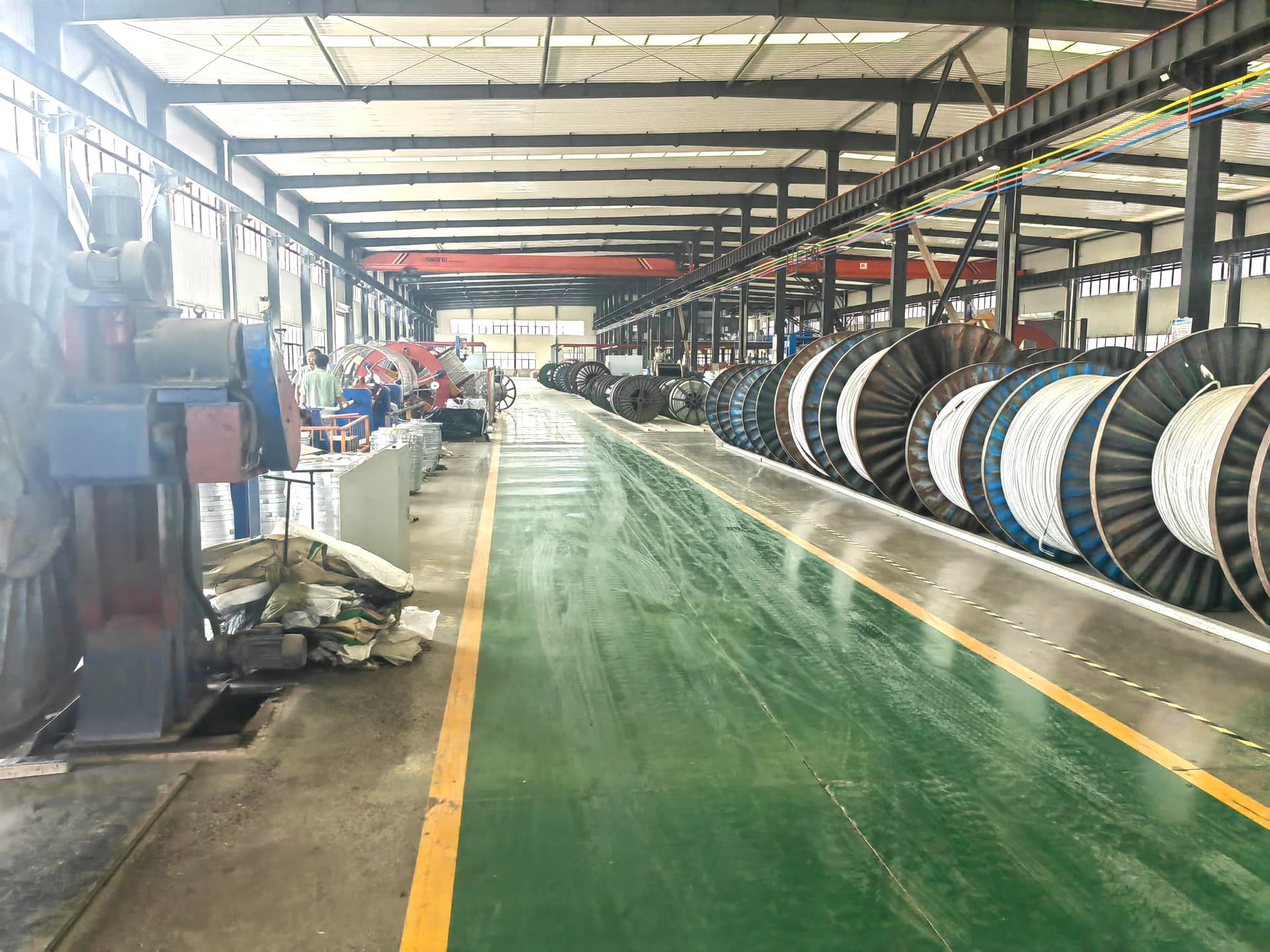
We are writing this from direct experience. Our factory has been manufacturing cables since the 1980s — over 45 years of production history. We operate 60 production lines and maintain 45 testing instruments in our accredited laboratory. We export to 60+ countries across IEC, BS, SANS, and AS/NZS standard systems.
Here is how multi-standard compliance actually works at the factory level:
What we hold: (all certificates available for download)
- IEC 60502-1/2 type test certificates (KEMA/DEKRA verified)
- GB/T 12706 CCC certification (mandatory for Chinese domestic market)
- BASEC certification for UK market supply
- NRCS Letter of Authority for South Africa
- SASO registration for Saudi Arabia
- Pre-qualification with multiple utilities: DEWA (Dubai), ADDC (Abu Dhabi), SEC (Saudi), Kenya Power, and others
What this means for your order: When you specify IEC 60502-1 with KEMA type test, we issue all documentation against IEC 60502-1, programme the cable marking to print "IEC 60502-1," and provide the KEMA certificate. Not GB/T 12706 with a cover letter explaining they are equivalent.
When you specify BS 5467 with BASEC, you receive BASEC-certified cable with BS marking and BS 7671 colour code. Your contractor can verify the certificate on BASEC's public register before the cable arrives on site.
When you specify SANS 1507 for South Africa, we ship with documentation that satisfies the NRCS LoA requirement. The cable clears customs because the legal registration exists.
What we cannot do — and will tell you upfront:
- We do not hold UL listing. We cannot supply cable for US NEC-governed projects. If you need US-listed cable, we will say so immediately rather than shipping and creating a problem.
- Our BIS ISI registration for India is in process as of 2026. We cannot supply ISI-marked cable for the Indian market today. Rather than promising "it will be ready soon," we will tell you the realistic timeline.
- If your project requires a certification we do not hold, we will tell you before you order — not after you have paid and waited 10 weeks for production.
This is not altruism. It is practical: a rejected shipment costs us money too (return freight, reputation damage, wasted production capacity). It is cheaper for everyone to get it right the first time.
For detailed information on what each certification means and how to verify them independently, see our what KEMA and CB certificates prove. For understanding how cables are tested before shipment, see our Quality Testing Methods Guide. If you want to understand how substandard suppliers operate and how to spot them, see How to Avoid Cable Procurement Scams from China.
How to Verify ANY Factory Before You Order
This applies whether you are buying from us or from any other manufacturer. Trust should be verified, not assumed.
1. Ask for the Certification Number — Then Check It Yourself
Every legitimate certification has a public verification method:
- KEMA/DEKRA: DEKRA product certification database (publicly searchable)
- BASEC: basec.org.uk/approved-products (searchable by manufacturer)
- NRCS LoA: NRCS online verification portal
- UL: UL Product iQ at iq.ulprospector.com (searchable by company and product)
- BIS ISI: BIS registration portal (searchable by manufacturer and standard)
- JAS-ANZ: JAS-ANZ register of accredited bodies and certified products
The test: Ask the factory for their certificate number. Then go to the relevant public database and verify it exists, is current, and covers the specific cable type you are ordering. If the factory cannot provide a number, or the number does not appear in the database, or the scope does not cover your cable type — that is your answer. Move on.
2. Request a Documentation Sample Before Production
Before placing your full order, ask the factory for a sample documentation package from a recent shipment to your specific destination market. You want to see:
- A test report — does it reference your required standard? Is the format professional? Are the test parameters correct?
- A Certificate of Conformity — does it name the correct standard?
- A cable drum photo — does the marking show the correct standard and information?
- A packing list — does it match the technical description?
This exercise tells you whether the factory has genuine export experience to your market, or whether they are figuring it out for the first time on your order.
3. Define Colour Code in Writing with an Unambiguous Reference
Do not rely on a verbal description or a single line in the PO. Provide or reference:
- The specific wiring regulation clause (e.g., "BS 7671:2018 Table 51, Identification of conductors")
- A colour chart or Pantone/RAL reference for sheath colour if non-standard
- Explicit statement of each core colour: "L1 = Brown, L2 = Black, L3 = Grey, N = Blue, E = Green-Yellow"
State it clearly. Get written confirmation from the factory that they have received and understood the colour requirement. If possible, request a short sample length before full production begins.
Colour disputes after production are unrecoverable on multicore cables. Get it right on paper before the extruder runs.
FAQ
My factory says GB/T 12706 is the same as IEC 60502. Can I accept this?
They are technically correct — GB/T 12706 is China's identical adoption of IEC 60502. The construction, dimensions, and test methods are the same. But if your contract specifies "IEC 60502-1," the documentation must reference IEC 60502-1. Test reports must say IEC. Cable marking must say IEC. A technically equivalent standard with the wrong reference number is a contractual non-conformance. Any competent inspection engineer will reject it. Insist that all documentation explicitly references the standard stated in your contract.
How long does it take to get KEMA type test certification?
For a factory with an existing KEMA/DEKRA relationship: 3–6 months for a new cable design type test. Starting from scratch with no prior relationship: 6–12 months including audit scheduling, testing, and report issuance. According to our certification guide, a full KEMA type test for a medium-voltage cable range costs €50,000–€150,000 depending on the number of cable designs tested. This is not something a factory obtains overnight — plan your project timeline accordingly.
Can I import cable into South Africa without an LoA?
No. The NRCS compulsory specification framework creates a legal requirement enforced at the border. NRCS has a formal agreement with SARS Customs & Excise to prevent non-compliant products from entering the market. Without a valid LoA, your cable will be detained at customs. There is no temporary exemption, no bond-and-release process, and no "we'll sort it out after arrival." Verify the LoA exists before ordering — not after shipping.
What happens if the colour code is wrong but everything else is correct?
The cable is rejected for installation. There is no practical field fix for wrong insulation colours on multicore cables. Options are:
- Sleeve identification (coloured tape or heat-shrink at every joint and termination) — sometimes accepted on large single-core cables in industrial plant environments, but essentially never accepted on multicore distribution cables by inspection engineers
- Full re-manufacture — new production run with correct colours, 8–12 weeks additional lead time
This is why colour code must be explicitly stated in the purchase order AND verified during a pre-shipment inspection before the container is loaded.
Is a factory test report sufficient, or do I need third-party certification?
It depends on your project context:
- Private industrial projects in IEC markets: Factory test reports from a CNAS-accredited lab are often sufficient for routine tests. Type test certificates may still be required.
- Utility and infrastructure projects: Almost always require independent type test certificates (KEMA, ASTA, DEKRA) — factory self-certification is not accepted.
- Government-funded projects: Typically specify third-party certification as a tender requirement.
- Markets with compulsory certification (India, South Africa, US, Australia): Third-party mark is legally mandatory regardless of project type or funding source.
When in doubt, get the third-party certificate. The upfront cost is known and manageable. The cost of a compliance failure after shipment is not.
My project spans multiple countries. How do I handle cable specification?
Order in separate lots per destination country. Each lot gets:
- Documentation referencing that specific country's required standard
- Colour code matching that country's wiring regulations
- Certification appropriate for that market
- Cable marking formatted for that market
Do not try to find a "universal" specification. A cable marked "IEC 60502-1" with BS 7671 colours works for the Gulf and UK — but fails in Australia (wrong colours), fails in South Africa (needs SANS reference + LoA), and is illegal in the US (no UL listing). If your project serves multiple markets, split the purchase order by destination.
How do I know if a factory genuinely exports to my market vs just claiming they can?
Three verification steps:
- Ask for the specific certification/registration number for your market and verify it on the public database
- Ask for a sample documentation package from a previous shipment to your market (test report, CoC, packing list)
- Ask for a reference client in your market (a serious factory will provide at least a country reference, even if not a named client)
A factory that has genuinely exported to a market can produce these items in minutes. A factory that is "figuring it out" will deflect, delay, or provide vague assurances. The distinction is usually obvious.
Compare Suppliers on the Same Standard
- Prysmian vs Chinese Manufacturers: Same IEC Standard, 30%+ Cheaper
- Nexans and Chinese factories on the same IEC standard
Key Takeaways
Standard compliance is not about the copper and plastic — it is about documentation, marking, and certification. Most rejected cables are physically sound products. The paperwork and details around them failed.
Three things cause rejection: Wrong standard referenced on documentation, missing mandatory certification mark, wrong colour code. Verify all three before shipping.
Your purchase order is your primary protection. Specify: standard number + edition year + colour code + certification requirement + rejection clause. A vague PO produces unpredictable results.
Verify certifications independently. Every legitimate certification has a public database. If you cannot find a factory's certificate online, it likely does not exist. Do not rely on PDF copies alone.
The US market requires UL listing — no exceptions. Do not attempt to import IEC cable for an NEC-governed project.
South Africa and India require pre-registration that takes 6–14 months. This cannot be resolved after the cable is manufactured. Confirm the factory holds the registration before ordering.
Colour code has no field fix. Wrong colours on multicore cable means re-manufacture. Define colours explicitly in writing and verify during production, not at destination.
Choose a factory that tells you what they cannot do. Any manufacturer can say "yes." The ones worth working with are the ones that say "no, we don't hold that certification — here is what we can supply, and here is what you need from someone else." That honesty prevents expensive failures.
Need to verify whether we hold the right certification for your specific project and destination? Contact our export team with your project location, required standard, and cable specification. We will confirm what we can supply — and be upfront about what we cannot.