Key Takeaway
Objective comparison of Aberdare Cables versus Chinese cable manufacturers for XLPE, armoured, and MV cable in South Africa and the SADC region. Same IEC/SANS standards, factory-direct cost, lead time and quality compared for utility and mining buyers.
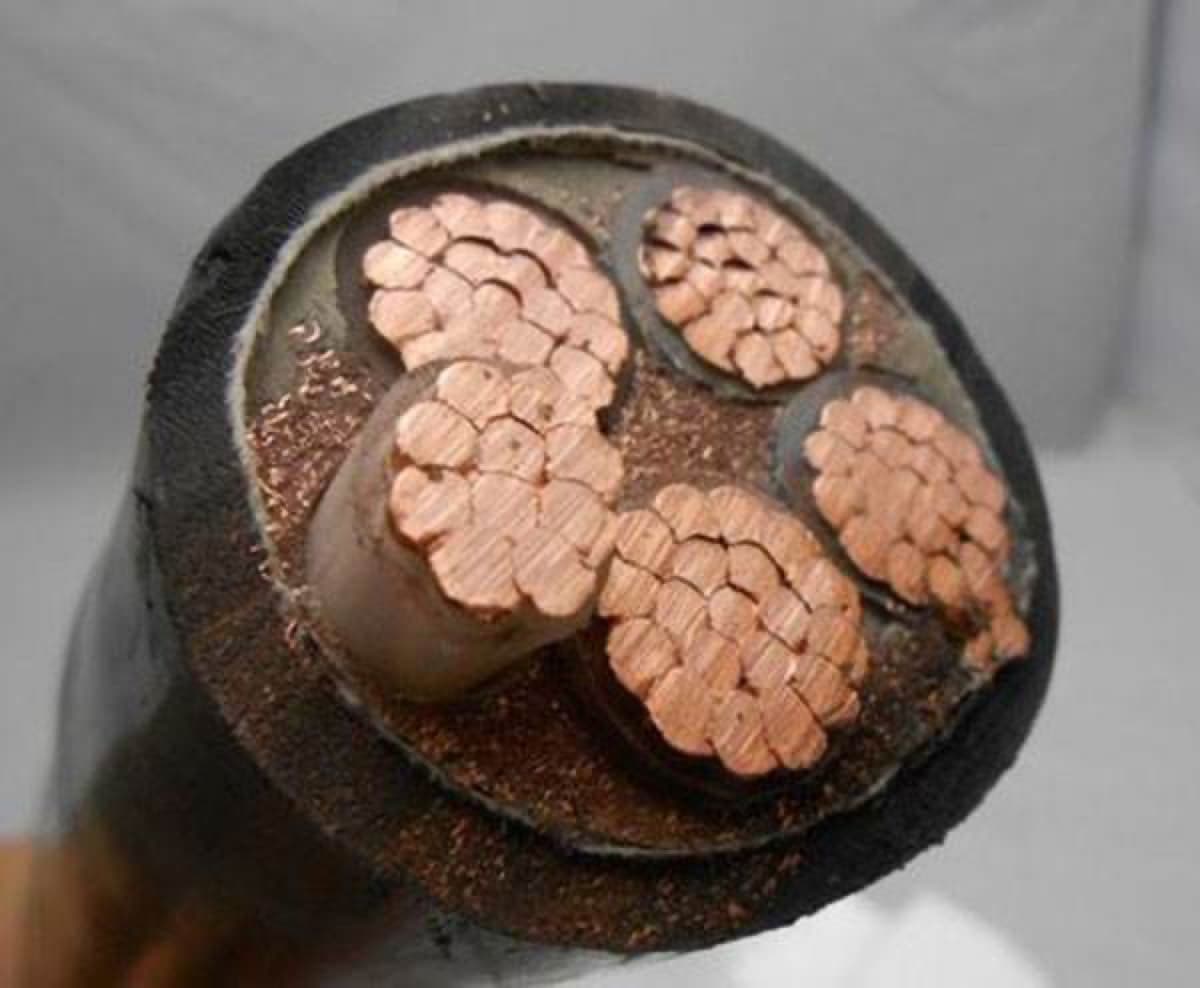
If you procure power cable for utility, mining, construction, or renewable projects in South Africa and the wider SADC region, Aberdare Cables needs no introduction. Founded in 1946, Aberdare is the largest and most established cable manufacturer in Southern Africa, with multiple production sites and a portfolio spanning power cable, flexible trailing and elastomer cable for mining, and energy-storage solutions. For decades it has been a default name on the approved vendor lists of Eskom, the municipalities, and the mining houses.
But procurement teams across South Africa, Zambia, Botswana, Namibia, and Mozambique already know the trade-off: for standard XLPE and armoured cable produced to IEC 60502 and the SANS standards that mirror it, Chinese manufacturers deliver equivalent technical performance at a meaningfully lower landed cost. The copper is the same electrolytic grade, the XLPE compound comes from the same global suppliers, the cross-linking follows the same physics, and the type tests reference the same IEC/SANS clauses your consultant already specifies.
This guide is a deliberately objective, data-driven comparison for Southern African buyers — whether you are evaluating a Chinese alternative to Aberdare for the first time or building the technical case for your engineering committee. Aberdare is a genuinely strong manufacturer, and there are situations where staying local is the right call. We cover those too.
Company Overview: Aberdare Cables vs Chinese Manufacturers
| Factor | Aberdare Cables | Chinese Manufacturers (Tier 1-2) |
|---|---|---|
| Headquarters | South Africa | Various (Henan, Jiangsu, Zhejiang) |
| Founded | 1946 | 1967–1990s (most established factories) |
| Regional position | Largest cable manufacturer in Southern Africa | Export-focused, growing African distribution |
| Product range | Power cable, mining trailing/elastomer cable, energy-storage solutions | LV/MV power cable, armoured, ABC, control, ACSR — full commodity range |
| Primary standards | SANS, IEC | IEC, GB/T, BS, SANS-adaptable (export) |
| Footprint | Multiple SA production sites, ~1,700 staff (per company reporting) | Export from China, established Africa trade lanes |
| Positioning | Established regional incumbent | Cost-competitive factory-direct |
Aberdare's strength is real: nearly eight decades of local track record, a mining-cable portfolio built for African conditions, and in-country manufacturing that carries genuine local-content and lead-time advantages. The point of this comparison is not that Aberdare is weak — it is that for the commodity majority of most cable tenders (standard LV and MV XLPE and armoured cable to IEC/SANS), a qualified Chinese factory builds the same product to the same standard at a lower landed cost.
Price: Where the Cost Gap Comes From
Cable pricing is not a fixed list — it moves with the LME copper price at the moment of order, the exact specification, order volume, and your Incoterms. Any supplier quoting a firm per-metre number without your specification and a live copper reference is guessing. For that reason we do not publish price tables; we quote against your actual cable schedule. Request a quote for your specification → and you will get FOB and CIF-Durban (or Walvis Bay / Dar es Salaam / Beira) pricing benchmarked to that day's copper.
What the comparison reliably shows in the South African market is a consistent structural cost gap between a locally manufactured incumbent and Chinese factory-direct supply on the same IEC/SANS specification. Buyers who run a like-for-like comparison typically find the gap is widest on made-to-order MV cable and large-volume LV and ACSR runs, and narrowest on small top-up quantities where local stock wins on speed. The takeaway is not a headline percentage — it is that the gap is structural, driven by the cost factors below, not by any difference in the cable itself.
Why the price gap exists:
- South African input costs — electricity (a real factor given local grid constraints), labour, and imported raw material landed into SA first
- Local manufacturing and distribution overhead built into incumbent pricing
- Exchange-rate exposure on the rand for imported compound and machinery
- Brand and incumbency premium on established vendor lists
What you are NOT sacrificing on a qualified Chinese alternative:
- Copper conductor purity (99.97%+ electrolytic copper, IEC 60228 Class 1/2)
- XLPE compound from the same global suppliers (Borealis, Dow, Hanwha)
- Cross-linking on the same generation of CCV lines (Maillefer, Rosendahl, or equivalent)
- Type testing referencing the same IEC 60502 / IEC 60811 / SANS clauses
One South-Africa-specific factor cuts in China's favour: because so much raw material and machinery is imported into SA anyway, a large part of the "local" cable's cost base is itself imported. Buying finished cable factory-direct from China simply removes the local conversion and distribution margin from the equation.
Standards: IEC, SANS, and What Actually Has to Match
South Africa runs on the SANS standards, which for power cable are closely harmonised with IEC. This matters because it makes equivalence straightforward to demonstrate:
- SANS 1507 / SANS 97 and related standards govern PVC and XLPE-insulated cable — built on the same technical base as IEC 60502.
- IEC 60502-1/-2 is the international reference for LV and MV XLPE cable and is directly recognised.
- IEC 60228 governs conductors; IEC 60332 governs flame propagation; IEC 60811 governs mechanical and ageing tests.
- Mining cable carries additional requirements (flexibility, mechanical robustness, flame performance) — this is a specialist area, discussed below.
For a Chinese manufacturer, the key is producing to the SANS-referenced specification and providing type-test reports against the matching IEC clauses. A factory that already exports to Southern Africa will understand the SANS overlay and can mark and document cable accordingly. When you evaluate a Chinese alternative to Aberdare, ask:
- Can you build and mark to the SANS-referenced specification, not just generic IEC?
- Can you provide type-test reports (CNAS/ILAC accredited) against the IEC clauses SANS mirrors?
- Have you shipped this cable type into South Africa (or Zambia / Botswana / Namibia) before?
Technical Quality: Is Chinese Cable Really Equivalent to Aberdare?
For standard LV and MV cable to IEC/SANS, a qualified Tier 1-2 Chinese factory is technically equivalent. Break it down by component:
Conductor (Copper or Aluminium)
Both Aberdare and Chinese manufacturers use electrolytic copper meeting IEC 60228 Class 1/2, and aluminium/ACSR conductors per the same standard families. Copper cathode comes from the same global market — Chinese factories source from Jiangxi Copper, Tongling Nonferrous (both LME-registered), or imported cathode from Chile, Zambia, or DR Congo. Notably, some of that African copper is mined a short distance from where the finished cable is later installed. Conductor DC resistance must meet IEC 60228 regardless of origin, verified by routine test on every length.
XLPE Insulation
Cross-linked polyethylene is the heart of the cable and where quality genuinely varies between good and budget factories:
- Compound quality — Premium Chinese exporters use imported XLPE compound from Borealis, Dow, or Hanwha. Budget factories may use lower-grade domestic compound. This is the single most important thing to verify.
- Cross-linking — Top factories run Maillefer, Rosendahl, or equivalent CCV lines; cross-linking must meet the hot-set elongation limit of IEC 60811.
- Cleanliness — extrusion must be clean enough to avoid contaminants that seed partial-discharge failures in MV cable.
Key verification: Request the partial discharge (PD) report. IEC 60502-2 requires PD ≤ 10pC at 2U₀ for MV cable; better Chinese factories achieve ≤ 5pC. No PD report, no deal.
Armour and Sheath
SWA/STA use galvanised mild steel per IEC 60502. PVC and LSZH sheathing compounds are mature in China. For African outdoor and direct-buried installations, confirm UV-resistant sheathing and, for high-ambient regions, the correct temperature rating. These are the least differentiated parts of the cable.
Testing and Quality Control
| Test | Standard | Aberdare | Qualified Chinese Factory |
|---|---|---|---|
| Conductor resistance | IEC 60228 | Routine | Routine |
| Voltage withstand | IEC 60502 | Routine | Routine |
| Insulation resistance | IEC 60502 | Routine | Routine |
| Partial discharge (MV) | IEC 60502-2 | Routine | Routine |
| Hot set (cross-link) | IEC 60811 | Type test | Type test |
| Flame propagation | IEC 60332 | Type test | Type test |
| Mechanical / ageing | IEC 60811 | Type test | Type test |
The real difference is accreditation lineage and local track record, not physics. Aberdare has decades of SANS-tested SA production; qualified Chinese factories hold CNAS/ILAC-accredited reports, and the top tier hold KEMA type tests. Both CNAS and KEMA are internationally recognised. Ask directly which your supplier holds against the clauses your spec demands.
Mining Cable: A Legitimate Caveat
Aberdare's flexible trailing, reeling, and elastomer cable for mining is a genuine specialist strength, built for South African deep-level and opencast conditions. Mining cable is not commodity XLPE — it demands specific rubber compounds, mechanical endurance, and flame/toxicity performance, often to SANS mining-specific requirements and mine-house standards.
Honest guidance: for standard mine reticulation and surface power (fixed XLPE/armoured cable), a qualified Chinese factory competes directly. For flexible trailing and reeling cable in demanding underground duty, treat it as a specialist purchase: verify the exact rubber compound, the relevant mining approval, and a real track record in comparable conditions before switching. Do not swap safety-critical trailing cable to an unproven source to save money.
Lead Time & Logistics
| Factor | Aberdare (local) | Chinese Factory Direct |
|---|---|---|
| Quotation response | Local, direct | Fast, direct from factory sales |
| Production (standard) | Quick if in stock; longer if made to order | Scheduled directly on the line |
| Production (custom / MV) | Subject to local production queue | Flexible line scheduling |
| Shipping | In-country road freight (fast) | Sea to Durban / Cape Town, then inland; or Walvis Bay / Beira / Dar es Salaam for landlocked SADC |
| Overall | Fastest for stocked SA items | Competitive on made-to-order and volume, planned ahead |
Key insight: For cable Aberdare holds in stock in South Africa, local delivery is genuinely faster — that is a real advantage for urgent or small orders. But for made-to-order MV cable and large-volume LV/ACSR, the picture is different: Chinese lines have flexible scheduling and, planned into the project timeline, land the full quantity competitively. For landlocked markets (Zambia, Botswana, Zimbabwe), routing via Walvis Bay, Beira, or Dar es Salaam is well established — factor the inland leg into planning.
When to Stay with Aberdare (Legitimate Reasons)
- Mining flexible/trailing cable. Safety-critical elastomer cable for underground and heavy opencast duty — use a proven manufacturer with the right approvals and track record.
- Urgent, small, or top-up orders. When you need cable this week and it is on the shelf in Johannesburg or Cape Town, local stock beats an import cycle.
- Local-content requirements. Some Eskom, municipal, and BEE-linked procurement carries local-content conditions that favour SA manufacture. Where that is a hard rule, it decides the matter.
- HV/EHV cable. Transmission-class cable and its jointing expertise belong with a demonstrated HV manufacturer.
- After-sales proximity. For projects needing hands-on local technical support and fast warranty response, an in-country manufacturer has an edge.
When a Chinese Manufacturer Is the Better Choice
✅ Standard LV/MV XLPE and armoured cable (0.6/1kV to 33kV)
Commodity product to IEC 60502/SANS. Built to the same standard, the cable is physically equivalent regardless of the badge. The cost saving is pure value.
✅ Large-volume utility and grid projects
Grid extension, electrification, and rural reticulation consume enormous cable volumes. Chinese factories are built for scale, and the per-metre saving becomes a very large absolute number across a big tender.
✅ ACSR and bare overhead conductor
Overhead line conductor (ACSR/AAC/AAAC) is a Chinese strength and a high-volume African need for transmission and distribution line building. See our ACSR conductor range.
✅ Solar and renewable projects
South Africa's REIPPPP and the wider African solar build-out need DC solar cable and AC collection cable in volume. Chinese factories supply both to IEC 62930 / IEC 60502.
✅ IEC/SANS-specified tenders without a named brand
If the spec says "IEC 60502 / SANS compliant" without naming a manufacturer, qualified Chinese cable qualifies directly.
✅ Mixed-product orders across the SADC region
XLPE + armoured + ABC + control + ACSR in one shipment, delivered to South Africa, Botswana, or neighbouring SADC markets (Zambia, Namibia, Mozambique) from one production base.
How to Qualify a Chinese Alternative to Aberdare
Switching supplier on a utility or mining tender is a qualification exercise, not a leap of faith. A disciplined process removes the risk:
- Pull the exact specification from your current Aberdare order or tender — voltage class, conductor material and size, cores, armour, sheath, and the SANS/IEC clauses cited.
- Request matching quotes from two or three Chinese factories, each with: type-test reports against the specified IEC/SANS clauses, the XLPE compound brand, and a written production commitment.
- Verify the technical documentation:
- Type-test lab is CNAS/ILAC accredited (or KEMA for the top tier)
- Conductor DC resistance per IEC 60228
- Insulation thickness and PD result per IEC 60502-2 for MV
- Flame/fire reports (IEC 60332, and IEC 60331 where circuit integrity is required)
- Order a sample drum or run a factory audit. For a first switch on a large tender, a third-party audit (or a video factory tour) confirms the CCV line, testing lab, and branded compound stock are real.
- Use third-party inspection on the first production run. SGS, Bureau Veritas, or Intertek can witness routine tests and marking before shipment. It is a small cost against a large order and the fastest way to convert committee skepticism into a signed approval — ask the inspection company for a day-rate quote for your factory location.
What Southern African Buyers Report
Feedback from buyers who have qualified a Chinese alternative to a local incumbent is consistent:
- Cost saving realised: consistent double-digit savings on standard LV/MV cable and ACSR, net of freight and duties — the exact figure depends on specification, volume, and the copper price at order time.
- Quality: with reputable Tier 1-2 factories, issues are rare and cosmetic (drum marking, packaging) rather than electrical, provided the compound and PD result were verified up front.
- Common friction points: initial resistance from committees used to specifying Aberdare; longer lead time on the very first order during qualification; and inland logistics coordination for landlocked SADC destinations.
The buyers who succeed treat it as qualification-based procurement: verify the factory and the conformity route once, then reorder with confidence.
Why Huanghe Cable as Your Aberdare Alternative
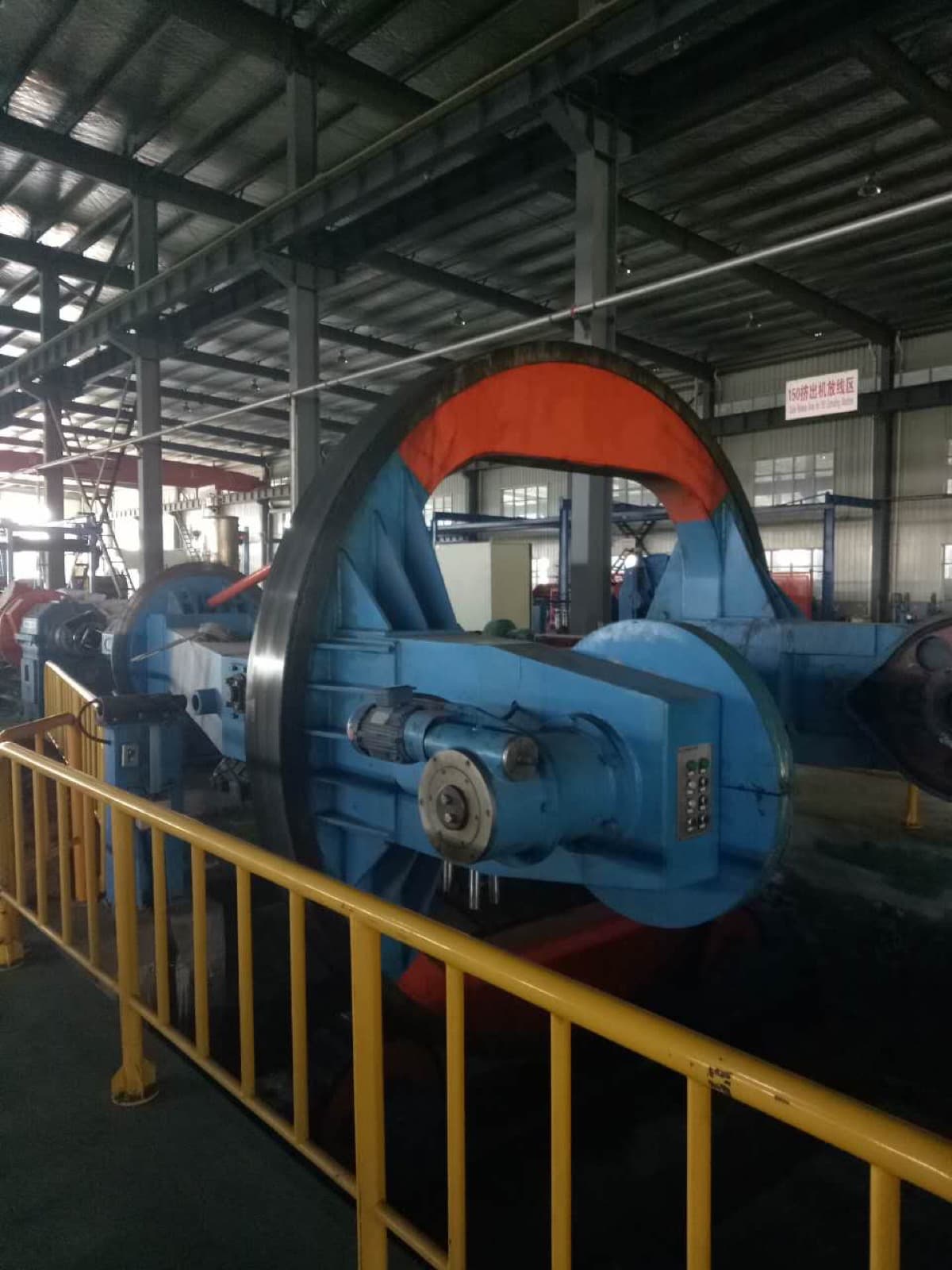
Huanghe Cable manufactures the full commodity range Southern African projects need, built to IEC 60502 and marked to the SANS-referenced specification:
- Power cable: LV and MV XLPE, 0.6/1kV up to 26/35kV, copper or aluminium
- Armoured cable: SWA/STA to IEC 60502 / BS 5467, for direct burial and industrial use
- ACSR / bare overhead conductor: for transmission and distribution line building
- ABC (aerial bundled conductor): LV and MV, for reticulation and electrification
- Control cable and solar DC cable to IEC 62930
What we bring to a like-for-like comparison with Aberdare:
- Factory-direct FOB pricing quoted against your schedule and live copper — no distributor layer
- Type-test reports (CNAS/ILAC accredited) against the IEC clauses SANS mirrors
- Flexible order quantities, including mixed-product containers for the SADC region
- Established sea and inland trade lanes into Durban, Cape Town, Walvis Bay, Beira, and Dar es Salaam
- Direct factory communication, in English, throughout the order
We are candid about the boundary: for safety-critical mining trailing cable and HV/EHV transmission cable, use a proven specialist. For the standard LV/MV/ACSR/solar cable that makes up the bulk of Southern African spend, we compete directly on the same standard at a lower landed cost.
Ready to compare? Send us your Aberdare specification → and we will provide a like-for-like quotation, including the type-test report and FOB/CIF pricing benchmarked to current copper.
Frequently Asked Questions
Is Chinese cable accepted on South African utility and municipal tenders?
Where a tender specifies "IEC 60502 / SANS compliant" without naming a manufacturer, qualified Chinese cable with matching type-test reports qualifies directly. The exception is procurement carrying explicit local-content or preferential-procurement conditions — there, in-country manufacture may be a hard requirement that decides the matter. Always read the local-content clause first.
Does Chinese cable meet SANS standards, not just IEC?
The SANS power-cable standards are closely harmonised with IEC 60502. A factory that already exports to Southern Africa produces to the SANS-referenced specification and marks cable accordingly, with type-test reports against the matching IEC clauses. Confirm your supplier can mark and document to SANS, not just generic IEC.
How does the rand exchange rate affect the comparison?
Both options carry currency exposure — Aberdare imports raw material and machinery priced in hard currency, and a China purchase is typically USD-denominated. Because a large share of the local cable's cost base is itself imported, the structural cost gap tends to persist across the exchange-rate cycle rather than disappear when the rand moves.
Can a Chinese factory supply mining cable for South African mines?
For fixed mine reticulation and surface power (XLPE/armoured), yes. For flexible trailing and reeling cable in demanding underground duty, treat it as a specialist purchase — verify the exact rubber compound, the relevant mining approval, and a real track record before switching. Do not swap safety-critical trailing cable purely to save money.
How do we handle logistics to landlocked SADC countries?
Cable ships to a coastal port (Durban, Cape Town, Walvis Bay, Beira, or Dar es Salaam) then moves inland by road or rail to Zambia, Botswana, Zimbabwe, or Malawi. This routing is well established; the key is to build the inland leg into your project timeline. We quote landed pricing to the delivery point you specify.
What is the single most important thing to verify?
The XLPE compound brand and, for MV cable, the partial-discharge (PD) result. Premium factories use Borealis/Dow/Hanwha compound and achieve low PD (≤ 5pC). This one check separates a genuine Tier 1-2 factory from a budget supplier more than any other.
Related Guides
- How to Import Cable from China
- Power Cable Certification Guide: IEC, KEMA, CB, ISO
- How to Avoid Cable Scams from China
- ACSR Conductor Complete Guide
- Solar Cable Manufacturer China Buyer's Guide
- XLPE Power Cable Manufacturer Guide
- Nexans vs Chinese Cable Manufacturers
Market Context: Why Southern African Buyers Compare
Southern Africa's cable demand is driven by grid expansion and maintenance under constrained utility budgets, an accelerating renewable build-out (REIPPPP and private solar/wind), continued mining investment, and construction. Every one of these consumes commodity XLPE, armoured, ACSR, and solar cable in volume — exactly the categories where a qualified Chinese factory competes hardest.
At the same time, procurement teams operate under real cost pressure: constrained utility capex, currency volatility, and pressure to stretch every rand. That combination pushes buyers to look hard at where structural savings exist on commodity spend — and cable is one of the largest single line items on any electrical package.
Aberdare remains a strong, credible incumbent with genuine advantages in local stock, mining cable, and local-content compliance. The realistic 2026 picture is not "replace Aberdare with China" but "match the source to the scope": local for urgent stock, mining trailing cable, and local-content-bound tenders; China factory-direct for the large-volume standard XLPE/MV/ACSR/solar cable that dominates the spend.
The Bottom Line
| Scenario | Best Choice |
|---|---|
| Standard LV/MV XLPE & armoured (IEC/SANS) | Chinese factory — equivalent standard, lower cost |
| Large-volume grid / electrification | Chinese factory — scale economics |
| ACSR / overhead conductor | Chinese factory — category strength |
| Solar & renewable cable | Chinese factory — volume to IEC 62930 |
| Urgent / small top-up order | Aberdare — local stock wins on speed |
| Mining flexible / trailing cable | Aberdare or proven specialist — safety-critical |
| Local-content-bound tender | Aberdare — compliance decides |
| HV / EHV transmission cable | Proven HV specialist |
For standard XLPE, armoured, ACSR, and solar cable to IEC 60502 and SANS in voltage classes up to 35kV, a qualified Chinese factory delivers genuine technical equivalence to Aberdare at a meaningfully lower landed cost across Southern Africa. The smart approach is qualification-based procurement, not brand-based procurement — verify the factory, verify the conformity route, then let the standard and the price decide.
Disclaimer: This article is an independent, objective comparison for procurement research. Aberdare Cables is a respected manufacturer and all references to it are factual and neutral. Standard specifications reference published IEC and SANS values. Pricing is not quoted — request a quotation for your exact specification.