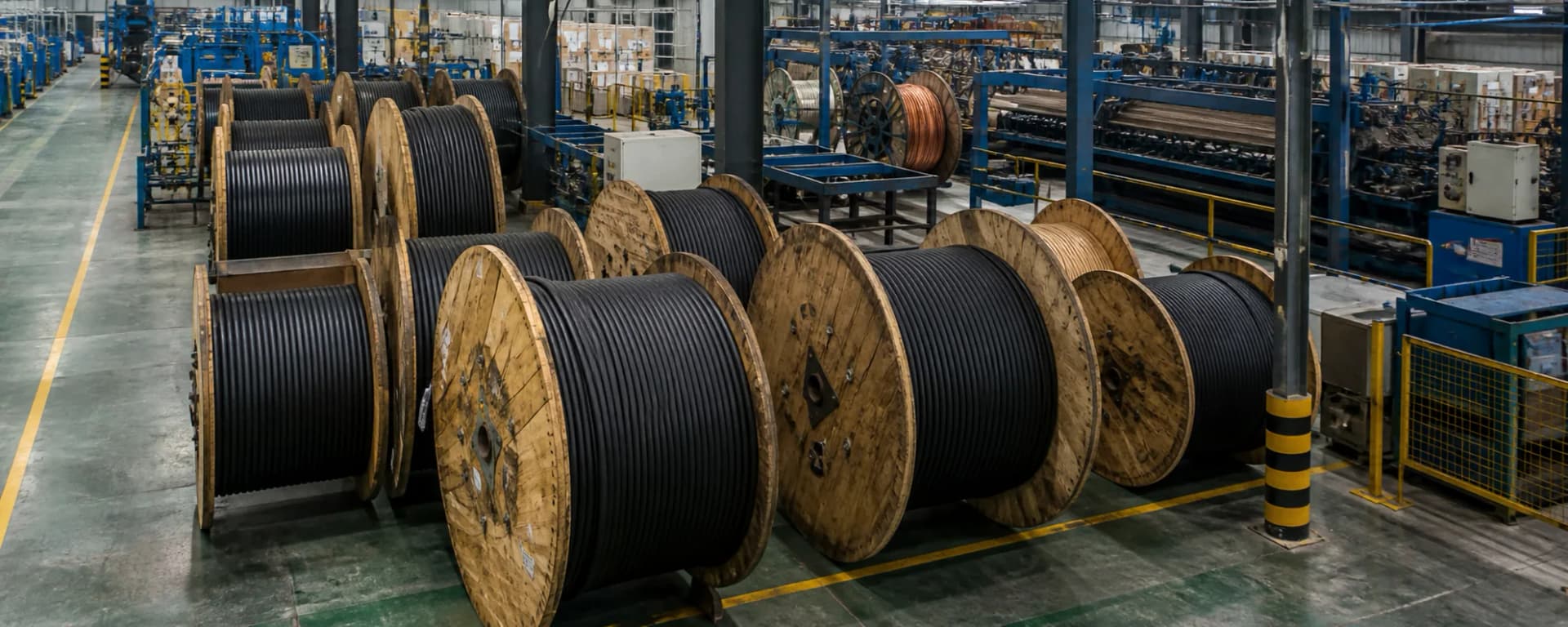
Electrical Cable Supply to Botswana
Market Overview
Botswana represents a growing market for electrical cables driven by mining sector expansion, grid modernization, and renewable energy development. The country's installed generation capacity stands at approximately 900 MW, dominated by the Morupule A (132 MW) and Morupule B (600 MW) coal-fired power plants operated by Botswana Power Corporation (BPC Energy Annual Report, 2023).
National electrification stands at approximately 80% (World Bank, 2023), with significant gaps in rural and remote areas where grid extension programs continue to drive demand for distribution cables and overhead conductors. BPC serves as the sole vertically integrated utility responsible for generation, transmission, and distribution across the country.
China is one of Botswana's major trading partners for manufactured goods, with electrical equipment imports growing steadily as the country pursues infrastructure modernization under its National Development Plan 12 (NDP 12, 2024-2030).
Key Infrastructure Projects Driving Cable Demand
Diamond Mining Electrification
Diamond mining remains Botswana's primary industry, contributing approximately 20% of GDP and 70-80% of export earnings (Bank of Botswana Annual Report, 2023). Major mining operations require extensive cable infrastructure:
- Debswana Diamond Company (50/50 joint venture between Government of Botswana and De Beers): Operates Jwaneng (world's richest diamond mine by value) and Orapa mines, both requiring continuous underground and surface cable supply
- Khoemacau Copper Mine: US$850 million development in the Kalahari Copper Belt, operational since 2022, requiring medium-voltage XLPE power cables and mining-grade flexible cables
- Motheo Copper-Silver Mine (Sandfire Resources): Underground operation demanding armoured cables rated for harsh underground conditions
Mining operations typically require:
- Medium-voltage XLPE cables (6/10 kV to 20/35 kV) for primary distribution
- Steel wire armoured (SWA) cables for underground installations
- Trailing cables and flexible rubber-sheathed cables for mobile equipment
- Overhead ACSR conductors for mine-to-grid connections
BPC Grid Expansion Program
Botswana Power Corporation is implementing a multi-billion Pula grid expansion program to achieve universal electrification by 2030:
- 132 kV and 66 kV transmission line extensions connecting rural load centers
- Morupule B Unit 5 & 6: Additional 300 MW coal generation requiring new transmission infrastructure
- North-West Transmission Grid: Extending high-voltage lines to the tourism-rich Maun/Okavango region
- Cross-border interconnections: Upgrades to import corridors from South Africa (Eskom), Mozambique (EDM), and Zambia (ZESCO)
Solar Energy Development
Botswana has exceptional solar irradiance averaging 6.1 kWh/m²/day, among the highest globally. The Botswana Integrated Resource Plan (IRP, 2020) targets significant solar generation capacity:
- 100 MW Solar PV projects: Multiple utility-scale plants under development through competitive bidding
- Distributed generation: Growing rooftop solar installations at commercial and mining facilities
- Battery Energy Storage Systems (BESS): Planned deployments to support grid stability
Solar projects drive demand for:
- DC solar cables (PV1-F / H1Z2Z2-K rated)
- Medium-voltage collector cables
- XLPE underground cables for grid connection
- Overhead lines for evacuation corridors
Technical Standards & Certifications
BOBS Standards Framework
The Botswana Bureau of Standards (BOBS) is the national standards body responsible for developing and adopting standards for electrical products. Botswana's standards framework draws heavily from South African (SANS) and international (IEC) standards:
| Application | Standard | Equivalent |
|---|---|---|
| PVC insulated cables | BOS 164 | SANS 1507 / IEC 60502 |
| XLPE power cables | SANS 97 (adopted) | IEC 60502-2 |
| Flexible cables | SANS 1339 (adopted) | IEC 60245 |
| Overhead conductors | SANS 182 (adopted) | IEC 61089 |
| Cable installation | SANS 10142 (adopted) | - |
Certification Requirements
- BOBS Mark: Voluntary quality mark; increasingly requested by government tenders
- Product testing: Third-party test reports from accredited laboratories (SABS, KEMA, or equivalent) widely accepted
- IEC compliance: Products meeting IEC standards are generally accepted for importation
- Mining specifications: Mining companies often specify to SANS standards directly or require ISO 9001 manufacturer certification
Voltage System
- Distribution: 400/230V, 50 Hz (three-phase four-wire)
- Medium voltage: 11 kV, 22 kV, 33 kV
- Transmission: 66 kV, 132 kV, 220 kV (planned 400 kV)
Import Regulations & Duties
SACU Common External Tariff
Botswana is a member of the Southern African Customs Union (SACU), which applies a Common External Tariff (CET) to imports from non-SACU countries:
| HS Code | Description | Duty Rate |
|---|---|---|
| 8544.11 | Copper winding wire | 0% |
| 8544.19 | Other winding wire | 0% |
| 8544.20 | Coaxial cable | 0% |
| 8544.42 | Cables fitted with connectors (under 1000V) | 10% |
| 8544.49 | Other electric conductors (under 1000V) | 10% |
| 8544.60 | Other electric conductors (>1000V) | 0-10% |
Additional charges:
- VAT: 14% on CIF + duty value
- Environmental levy: Minimal on industrial goods
Trade Preferences
- SADC Trade Protocol: Reduced or zero duties on qualifying goods from SADC member states
- AGOA: Botswana qualifies for African Growth and Opportunity Act benefits with the US
- No anti-dumping duties currently in force on Chinese cable imports to Botswana
Documentation Requirements
- Commercial invoice with detailed product description
- Packing list
- Bill of lading / airway bill
- Certificate of origin (Form A for MFN, or SADC certificate for preferential rates)
- Test certificates / conformity reports
- Import permit (for specific controlled goods; standard cables generally exempt)
Logistics & Shipping
Primary Route: Via Durban, South Africa
As a landlocked country, Botswana's primary import corridor runs through South Africa:
Sea leg: China ports → Durban, South Africa
- Transit time: 25-30 days from major Chinese ports (Shanghai, Ningbo, Guangzhou)
- Durban is Africa's busiest container port and handles the majority of Botswana-bound cargo
Overland leg: Durban → Gaborone/destination
- Distance: approximately 1,000 km to Gaborone (southern Botswana)
- Transit: 3-5 days by road transport
- Border crossing: Tlokweng/Kopfontein (busiest) or Pioneer Gate
- Total door-to-door: approximately 30-38 days
Alternative Route: Via Walvis Bay, Namibia
- Sea leg: China → Walvis Bay: 22-28 days
- Overland: Walvis Bay → Gaborone: approximately 1,600 km, 4-6 days
- Advantageous for destinations in northern/western Botswana (Maun, Francistown via Namibia)
- Trans-Kalahari Highway provides direct corridor
Logistics Considerations
- Cable drum transport: Heavy drums (1-5 tons) typically shipped in 20ft or 40ft flat-rack containers
- Inland container depot: Gaborone has facilities for container handling and temporary storage
- Customs clearance: BURS (Botswana Unified Revenue Service) processes at border posts; typical clearance 1-3 days
- Transport infrastructure: Well-maintained tar roads on major corridors; railway (Botswana Railways) connects Gaborone-Francistown-Plumtree
Packaging Requirements
- Wooden cable drums must be ISPM-15 heat-treated (HT stamped) for international shipping
- Steel drums preferred for heavy-gauge power cables
- Container loading must account for weight distribution on unpaved last-mile roads
Why Choose China Cable Factory for Your Botswana Projects?
As an established Chinese cable manufacturer supplying to the Southern African market, we offer:
Standards Compliance: Our cables are manufactured to IEC and SANS standards, meeting BOBS requirements for the Botswana market. Full test reports and certificates provided with every shipment.
Mining Cable Expertise: With extensive experience supplying to African mining operations, we provide armoured cables, flexible trailing cables, and medium-voltage XLPE cables designed for demanding underground and surface mining environments.
Competitive Pricing: Direct factory supply eliminates intermediaries, providing significant cost advantages over South African cable manufacturers while maintaining equivalent quality standards.
Complete Product Range: From LV PVC cables to 33 kV XLPE power cables, overhead ACSR/AAC conductors, and solar PV cables — single-source procurement for your entire project.
Export Documentation: Experienced export team handles all documentation requirements including certificates of origin, test reports, and ISPM-15 compliant packaging.
Ready to source cables for your Botswana project?
Contact our export team for product specifications, pricing, and lead times tailored to Botswana delivery.
📱 WhatsApp: +86 134 6102 4180
We respond within 2 hours during business hours (UTC+8).