Key Takeaway
Objective comparison of Nexans cables versus Chinese manufacturers for XLPE, armoured, and MV cable. Price difference 25-40%, same IEC standards. Guide for procurement teams switching suppliers.
If you're sourcing power cable for infrastructure projects in the Middle East, Africa, or Southeast Asia, you've likely encountered Nexans on the approved vendor list. As the world's second-largest cable manufacturer (headquartered in Paris, France), Nexans is a trusted brand with operations spanning 40+ countries.
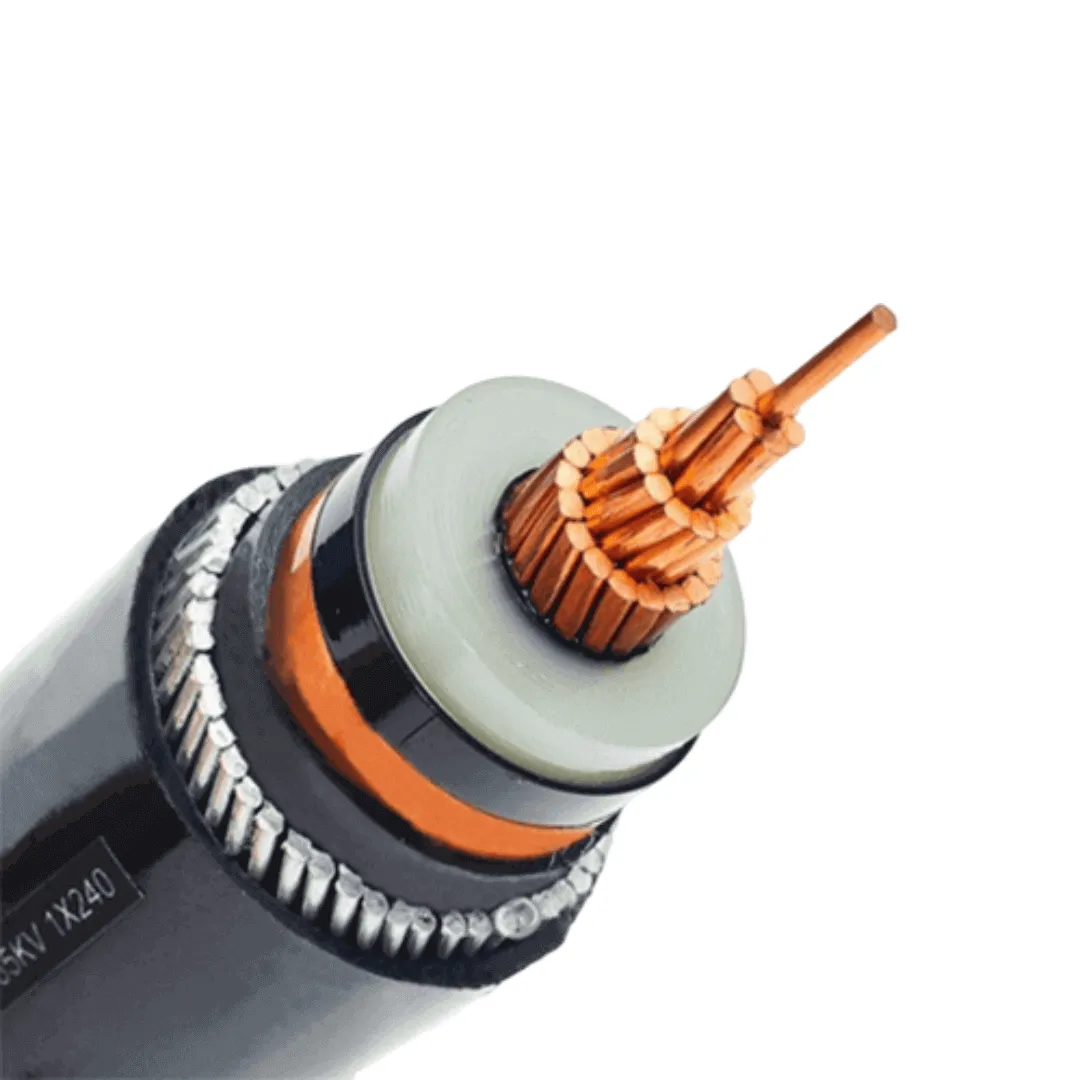
But here's what experienced procurement teams already know: for standard XLPE and armoured cable produced to IEC 60502, Chinese manufacturers deliver equivalent technical performance at 25-40% lower cost. The raw materials are identical (Borealis XLPE compound, Jiangxi/Aurubis copper), the production process follows the same physics, and the testing standards are the same.
This guide provides a data-driven comparison to help you make an informed sourcing decision — whether you're evaluating Chinese suppliers for the first time or building a case for your technical committee.
Company Overview: Nexans vs Chinese Cable Manufacturers
| Factor | Nexans | Chinese Manufacturers (Tier 1-2) |
|---|---|---|
| Headquarters | Paris, France | Various (Jiangsu, Henan, Zhejiang) |
| Founded | 2000 (spun off from Alcatel) | 1967–1990s (most established factories) |
| Annual Revenue | €8.54 billion (2024) | ¥1B–60B depending on scale |
| Employees | 28,500 globally | 500–20,000 per manufacturer |
| XLPE Voltage Range | Up to 525kV | Up to 220kV (top tier) / 35kV (mid tier) |
| Global Presence | 40+ countries, local sales offices | Export from China, limited local presence |
| Primary Standards | IEC, NFC, BS, ASTM | IEC, GB/T, BS, NFC (export-adapted) |
Price Comparison: How Much Can You Actually Save?
Pricing varies by cable type, specification, copper price at time of order, and Incoterms. Based on typical FOB China vs. DDP/CIF pricing from Nexans regional distributors (Middle East and Africa), here are realistic ranges:
Low Voltage XLPE Cable (0.6/1kV)
| Specification | Nexans (CIF Middle East) | Chinese Factory (FOB China) | Savings |
|---|---|---|---|
| 4×95mm² Cu XLPE/SWA/PVC | ~$18-22/m | ~$12-15/m | 25-35% |
| 4×240mm² Cu XLPE/SWA/PVC | ~$42-50/m | ~$28-34/m | 28-35% |
| 1×300mm² Cu XLPE/PVC | ~$22-26/m | ~$14-18/m | 30-38% |
Medium Voltage Cable (6/10kV – 18/30kV)
| Specification | Nexans (CIF Middle East) | Chinese Factory (FOB China) | Savings |
|---|---|---|---|
| 3×95mm² 8.7/15kV Cu XLPE/SWA | ~$38-45/m | ~$24-30/m | 30-38% |
| 3×240mm² 12/20kV Cu XLPE/SWA | ~$72-85/m | ~$48-58/m | 28-35% |
| 1×400mm² 18/30kV Cu XLPE | ~$55-65/m | ~$35-42/m | 32-40% |
Note: Prices are indicative ranges based on 2025-2026 market conditions at LME copper ~$9,000-9,500/t. Actual pricing fluctuates with copper spot price, order volume, and delivery terms. Contact us for current pricing on specific specifications.
Why the price gap exists:
- European labor costs (€35-50/hour vs ¥30-60/hour in China)
- European energy costs (electricity in France: €0.15-0.20/kWh vs China: ¥0.5-0.7/kWh)
- Nexans' publicly-traded company overhead (marketing, shareholder returns, executive compensation)
- Local sales office and after-sales infrastructure costs
- Brand premium — you're paying for the name
What you're NOT sacrificing:
- The copper conductor is the same purity (99.97%+ electrolytic copper)
- XLPE compound comes from the same global suppliers (Borealis, Dow, Hanwha)
- Cross-linking process (CCV line) follows identical physics
- Testing per IEC 60502 is the same — partial discharge, voltage withstand, insulation resistance
Technical Quality: Is Chinese Cable Really Equivalent?
This is the critical question. Let's break it down by component:
Conductor (Copper or Aluminum)
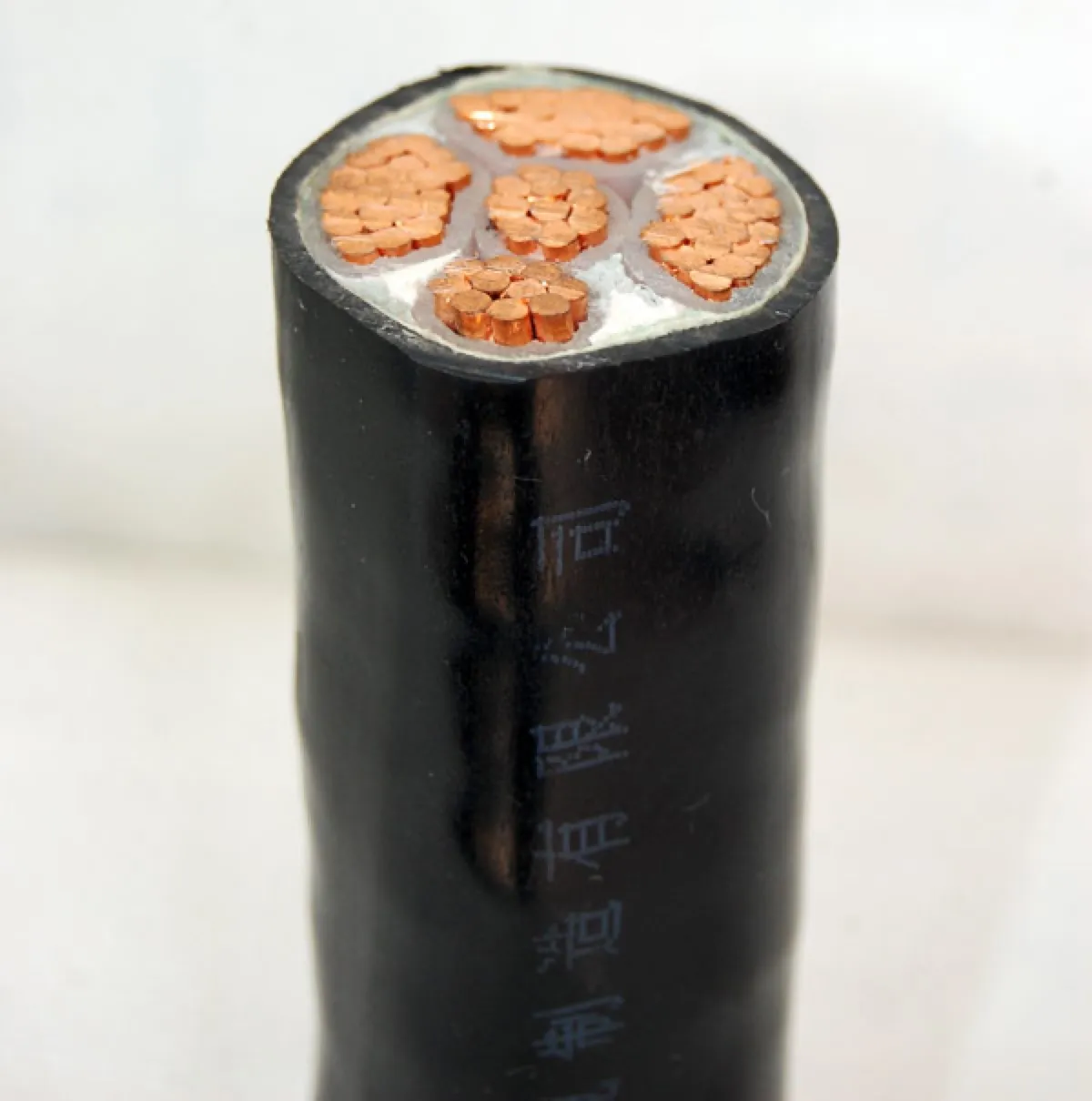
Both Nexans and Chinese manufacturers use electrolytic copper meeting IEC 60228 Class 1 (solid) or Class 2 (stranded) requirements. The copper cathode comes from the same global supply chain — Chinese manufacturers typically source from:
- Jiangxi Copper (China's largest, London Metal Exchange registered brand)
- Tongling Nonferrous (LME registered)
- Imported cathode from Chile (Codelco), Zambia, or Congo
Conductor resistance must meet IEC 60228 tables regardless of where it's manufactured. This is verified by routine testing on every production batch.
XLPE Insulation
Cross-linked polyethylene insulation is the heart of the cable. Quality depends on:
-
Compound quality — Premium Chinese manufacturers use imported XLPE compound from Borealis (Austria), Dow (USA), or Hanwha (Korea). Budget manufacturers may use domestic Chinese compound, which can have higher impurity levels.
-
Cross-linking process — CCV (Catenary Continuous Vulcanization) lines from Maillefer (Switzerland), Rosendahl (Austria), or Chinese equivalents. The cross-linking degree must achieve minimum hot-set elongation per IEC 60811.
-
Cleanliness — The extrusion environment must be clean-room grade to prevent contamination that causes partial discharge failures.
Key verification: Request the partial discharge test report. IEC 60502-2 requires PD ≤ 10pC at 2U₀ for MV cable. If a Chinese manufacturer can demonstrate PD ≤ 5pC (which the better factories achieve), the insulation quality matches or exceeds Nexans' standard production.
Armour and Sheath
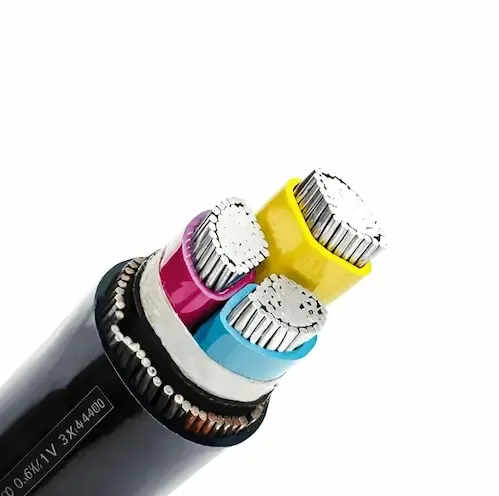
Steel wire armour (SWA) or steel tape armour (STA) uses galvanized mild steel wire/tape per IEC 60502. PVC or LSZH sheathing compounds are well-established in China. These components are straightforward — quality variation between manufacturers is minimal.
Testing and Quality Control
| Test | IEC Standard | Nexans | Good Chinese Manufacturer |
|---|---|---|---|
| Conductor resistance | IEC 60228 | ✓ Routine | ✓ Routine |
| Voltage withstand | IEC 60502 | ✓ Routine | ✓ Routine |
| Insulation resistance | IEC 60502 | ✓ Routine | ✓ Routine |
| Partial discharge (MV) | IEC 60502-2 | ✓ Routine | ✓ Routine |
| Hot set test | IEC 60811 | ✓ Type test | ✓ Type test |
| Mechanical tests | IEC 60811 | ✓ Type test | ✓ Type test |
| Ageing tests | IEC 60811 | ✓ Type test | ✓ Type test |
The difference: Nexans has KEMA/ASTA/CESI accreditation for their type test reports. Chinese manufacturers typically have CNAS-accredited lab reports. Both are internationally recognized, but some project specifications specifically require KEMA — in which case, ask your Chinese supplier if they hold KEMA type tests (several top-tier Chinese factories do: ZTT, Hengtong, Huanghe Cable's partner labs).
Lead Time Comparison
| Factor | Nexans (via regional distributor) | Chinese Factory Direct (industry range) |
|---|---|---|
| Quotation response | 3-7 business days | 24-48 hours |
| Production (standard specs) | 2-4 weeks (if in stock) / 6-10 weeks (made to order) | 15-25 days industry range; 10-15 days at our own plant |
| Production (custom/MV) | 8-14 weeks | 25-45 days |
| Shipping to Middle East | Already in-region (if stocked) | 18-25 days sea freight |
| Shipping to East Africa | 1-2 weeks from EU warehouse | 20-30 days sea freight |
| Shipping to Southeast Asia | 2-4 weeks from EU | 7-15 days sea freight |
| Total lead time (typical) | 3-6 weeks (stock) / 10-16 weeks (MTO) | 5-8 weeks total |
Key insight: For standard specifications that Nexans stocks in regional warehouses (Dubai, Johannesburg, Singapore), they can deliver faster. But for made-to-order cable — which is most MV cable and any non-standard LV specification — Chinese manufacturers often deliver faster because their production lines have shorter backlogs and more flexible scheduling.
The right-hand column is the range across Chinese exporters, not a single factory's quote. For reference, our own production runs 10–15 days on standard specifications, which is at the fast end of that range — ask any supplier for their own figure in writing rather than accepting a country-level average.
When to Choose Nexans (Legitimate Advantages)
Be objective — Nexans isn't just a brand name. They offer real advantages in specific situations:
-
HV/EHV cable (110kV+): Nexans' high-voltage technology and installation expertise for 110kV, 220kV, and submarine cable is genuinely world-class. Few Chinese manufacturers (only ZTT, Hengtong) can match this.
-
Consultant/client specification lock-in: Some projects specify "Nexans or approved equivalent" where the approval process is deliberately difficult. Fighting this specification wastes time and money.
-
Turnkey cable systems: Nexans offers design + supply + installation + commissioning for complex cable routes. If you need the full service, their integrated offering has value.
-
Local after-sales in your country: If Nexans has an office in your market, warranty claims and technical support are straightforward.
-
Political/financing requirements: Some European-financed development projects require European-origin equipment.
When Chinese Manufacturers Are the Better Choice
For the majority of standard power cable procurement in the Middle East, Africa, and Asia:
✅ Standard LV/MV XLPE cable (0.6/1kV to 35kV)
This is commodity product manufactured to IEC 60502. The cable is physically identical regardless of manufacturer when produced to the same standard. The 25-40% cost saving from China is pure value — you're not sacrificing anything technical.
✅ Large-volume orders (5+ containers)
Chinese factories are built for scale. Their production economics improve significantly on larger orders, and they can dedicate lines to your specification.
✅ Projects with standard IEC specifications
If your project spec says "IEC 60502-1 compliant" without naming specific manufacturers, Chinese cable qualifies directly. No approval headaches.
✅ Cost-sensitive markets
For power distribution projects in Nigeria, Kenya, Bangladesh, Pakistan, Philippines, and similar markets where budget drives decisions, Chinese manufacturers dominate for good reason.
✅ Mixed-product orders
Need XLPE power cable + armoured cable + control cable + ABC cable in one shipment? Chinese manufacturers handle this routinely. Nexans regional distributors typically stock limited SKUs.
How to Qualify a Chinese Manufacturer as "Nexans Equivalent"
If your organization currently buys from Nexans and you're evaluating Chinese alternatives, here's a practical qualification process:
Step 1: Document Your Current Specification
Pull the exact cable specification from your last Nexans purchase order:
- Standard (IEC 60502-1? BS 7870? NFC 33-226?)
- Voltage designation
- Conductor material, size, class
- Insulation material and thickness
- Armour type
- Sheath material
- Any special requirements (fire performance, UV resistance, termite resistance)
Step 2: Request Like-for-Like Quotation
Send the specification to 2-3 Chinese manufacturers. Request:
- Unit price per meter (FOB and CIF your port)
- IEC 60502 type test report for the offered cable
- Routine test commitment (what tests on every drum)
- Production lead time
- Minimum order quantity
Step 3: Technical Verification
Review the type test report. Key checks:
- Testing lab is CNAS or ILAC accredited
- Conductor resistance meets IEC 60228
- Insulation thickness meets IEC 60502 minimum
- Partial discharge (MV cable) ≤ 10pC at 2U₀
- Hot-set elongation confirms proper cross-linking
Step 4: Sample Order or Factory Audit
For first-time qualification:
- Order one drum as a sample (pay for it — serious manufacturers don't give free cable)
- Or arrange a factory audit (in person or via video call with live production observation)
- Verify the factory uses CCV line (not just PVC extrusion equipment)
- Check raw material inventory (branded XLPE compound bags from Borealis/Dow)
Step 5: Third-Party Inspection
For your first full order, engage a third-party inspection company (SGS, Bureau Veritas, Intertek, or TÜV) to:
- Witness production
- Verify routine test results
- Check packaging and marking
- Inspect loading
Cost: typically $300-500 per inspection day. A small price for qualification confidence on an order worth $50K-500K.
Real-World Switching: What Buyers Report
Based on market feedback from buyers in Saudi Arabia, UAE, Iraq, and Vietnam who have switched from Nexans to Chinese suppliers:
Cost savings realized: 22-38% on LV cable, 28-42% on MV cable (after freight and duties)
Quality issues encountered: Minimal for Tier 1-2 manufacturers. Most common issue is cosmetic (printing quality, drum appearance) rather than electrical performance.
Challenges:
- Initial technical committee resistance ("we've always used Nexans")
- Longer initial lead time due to qualification process
- Need for third-party inspection adds cost and time on first orders
- Communication timezone difference (China is UTC+8)
After qualification:
- Repeat orders are straightforward — no re-qualification needed
- Pricing remains stable (copper-indexed) without the European inflation creep
- Production flexibility is higher — non-standard configurations available without premium
- Direct factory relationship means fewer intermediary markups
Why Huanghe Cable for Nexans-Equivalent XLPE Cable
If you're evaluating Chinese alternatives to Nexans for standard LV/MV XLPE cable procurement, Huanghe Cable (China Cable Factory) offers:
Technical equivalence:
- Full IEC 60502-1 and IEC 60502-2 compliance
- XLPE insulation using Borealis compound, CCV cross-linked
- 0.6/1kV to 35kV voltage range — covers 90%+ of Nexans' volume products
- In-house testing laboratory with full IEC 60811 capability
- Type test reports available for immediate download — see our certificates
Commercial advantages over Nexans:
- 25-35% lower FOB pricing on equivalent specifications
- 24-hour quotation response (vs. days/weeks from Nexans distributors)
- Workable MOQ — 500–1,000 m per size on standard constructions, 2,000–5,000 m on custom specifications; mixed sizes can be combined into one container
- 10-15 day production for standard specifications
- Direct factory communication — no distributor layers
Export track record:
- 60+ countries served since 2016
- Regular shipments to Middle East, Africa, Southeast Asia
- Experience with destination-specific testing requirements (SASO, ESMA, KEBS, SON)
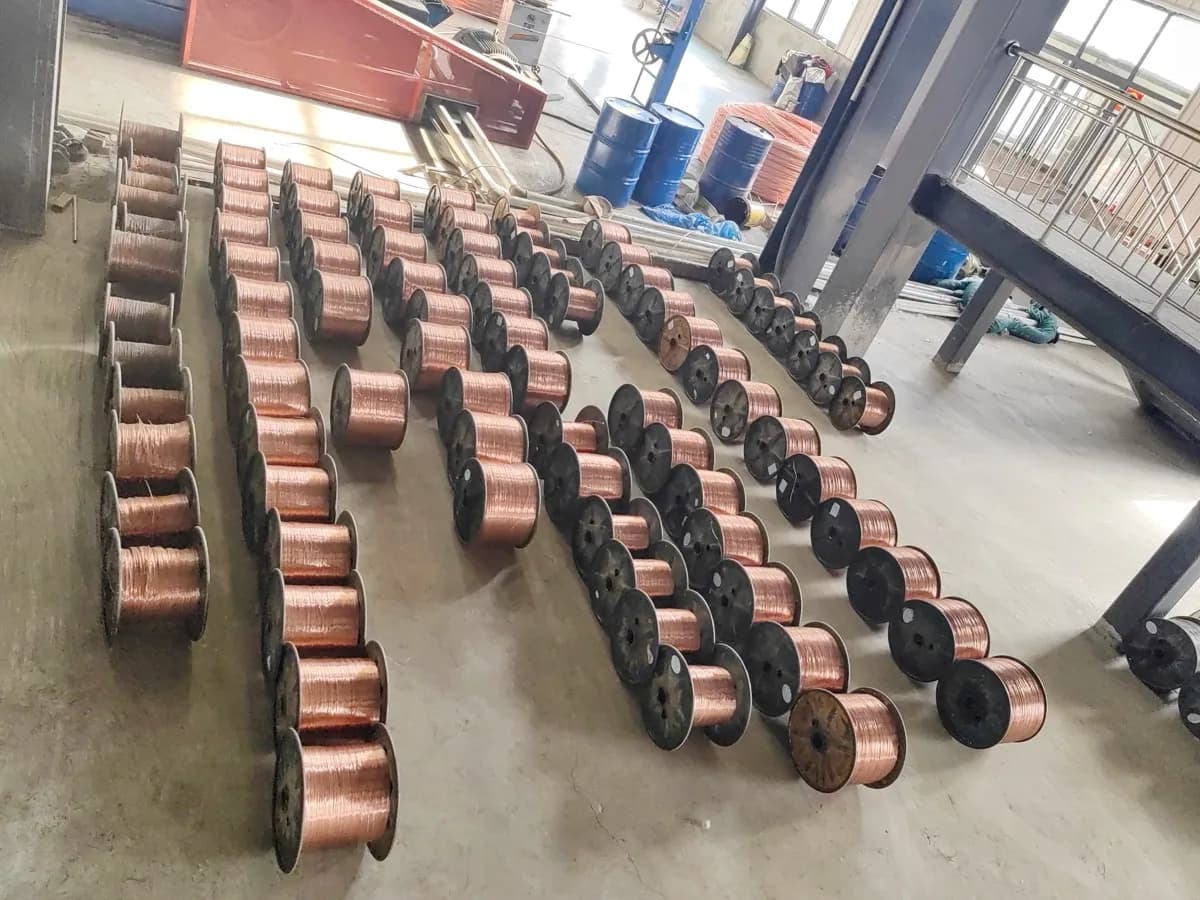
Like-for-like comparison: Against a Nexans specification, our factory returns a matched quotation within 24 hours, including type test report and FOB/CIF pricing.
Frequently Asked Questions
Can I use Chinese cable where the spec says "Nexans or equivalent"?
Yes, if the specification says "or equivalent" — you need to demonstrate equivalence through type test reports showing compliance with the same IEC standard. Most Chinese manufacturers can provide this. The approval process depends on the consultant/engineer: some accept CNAS-accredited test reports directly, others require KEMA/ASTA.
Is Chinese XLPE cable approved for use in GCC countries?
Yes, with proper certification. Saudi Arabia requires SASO conformity; UAE requires ESMA/ECAS; Qatar requires KAHRAMAA approval. Established Chinese exporters (including Huanghe Cable) have experience with these approval processes and can supply compliant cable.
What if the cable fails after installation?
Legitimate Chinese manufacturers provide the same warranty terms as European brands (typically 5-year material warranty for LV cable, 10-year for MV). The key is buying from a manufacturer with an established export history and verified factory — not a trading company that may disappear.
How do I handle the "Chinese cable is low quality" perception with my client?
Present the data:
- Show the IEC type test report (same standard as Nexans)
- Reference major infrastructure projects using Chinese cable (40%+ of global cable is made in China)
- Offer third-party inspection as quality assurance
- Propose a sample order for testing before committing to full volume
- Remind them that Nexans operates manufacturing facilities in China under their own brand
Does Nexans manufacture in China too?
Yes. Nexans opened a new cable manufacturing facility in China in 2021 and has maintained operations in the Chinese market. Cable produced in their Chinese plants is sold under the Nexans brand. This undermines the "Chinese manufacturing = inferior" argument — if Nexans trusts Chinese production for their own brand, the manufacturing capability is proven.
Related Articles
- Top 10 XLPE Cable Manufacturers in China [2026 Ranked]
- How to Import Cable from China: Step-by-Step Guide
- XLPE Power Cable Specifications: Complete Technical Guide
- Medium Voltage Cable 11kV & 33kV Manufacturer Guide
- Prysmian vs Chinese Cable Manufacturers — another major Western brand comparison
- XLPE Cable Price Per Meter — understand pricing from Chinese factories
- 4 Core Armoured Cable SWA/STA Specifications — detailed product specs for LV armoured cable
- Cable Supplier to Saudi Arabia
- Cable Supplier to Vietnam
- Cable Supplier to Nigeria
Market Context: Why More Buyers Are Switching
The shift from European cable brands to Chinese manufacturers isn't new — it's been accelerating since 2015. Here's what's driving it:
Infrastructure Boom in Developing Markets
Africa, the Middle East, and Southeast Asia are experiencing massive power grid expansion. The World Bank estimates $40+ billion annually in power infrastructure investment across Sub-Saharan Africa alone. At these scales, the 25-40% saving from Chinese cable translates to millions of dollars per project — enough to fund additional grid kilometres or substation equipment.
Chinese Manufacturing Quality Has Caught Up
In the early 2000s, quality concerns about Chinese cable were often legitimate. Poor XLPE compound, inadequate cross-linking, and weak quality control produced failures. By 2026, the picture is fundamentally different:
- Chinese manufacturers now operate the same Maillefer and Rosendahl CCV lines as European factories
- Raw materials are globally sourced (European XLPE compound is the norm for export-grade cable)
- IEC certification and third-party testing are standard practice — learn what each certification proves
- Major Chinese cable (from ZTT, Hengtong, etc.) is installed in European infrastructure projects
Belt and Road Influence
China's Belt and Road Initiative has created established supply chains, logistics routes, and trade relationships between Chinese manufacturers and buyers across 140+ countries. Cable procurement follows these established trade corridors.
Currency and Cost Structure Advantages
China's manufacturing cost advantage isn't just labor. It includes:
- Lower energy costs (critical for cable production — extrusion is energy-intensive)
- Integrated copper supply chain (domestic smelting from imported cathode)
- Established logistics infrastructure (containerization, port efficiency)
- Government export incentives (VAT rebate on cable exports)
These structural advantages mean Chinese cable pricing will remain competitive for the foreseeable future — this isn't a temporary discount.
Summary: Making the Decision
| If your situation is... | Recommended approach |
|---|---|
| Standard LV/MV cable, IEC spec, cost matters | Switch to qualified Chinese manufacturer |
| HV cable (110kV+), turnkey installation needed | Stay with Nexans or consider ZTT/Hengtong |
| Client/consultant insists on "Nexans only" | Negotiate "or equivalent" language, then qualify Chinese option |
| First time buying from China | Start with a trial order (1-2 drums), inspect, then scale |
| Large tender (1000km+ cable) | Dual-source: Nexans for critical MV, Chinese for volume LV |
The bottom line: for standard XLPE power cable to IEC 60502 in voltage classes up to 35kV, Chinese manufacturers offer genuine technical equivalence at significantly lower cost. The smart approach is qualification-based rather than brand-based procurement.
Request a Nexans-equivalent quotation from China Cable Factory →