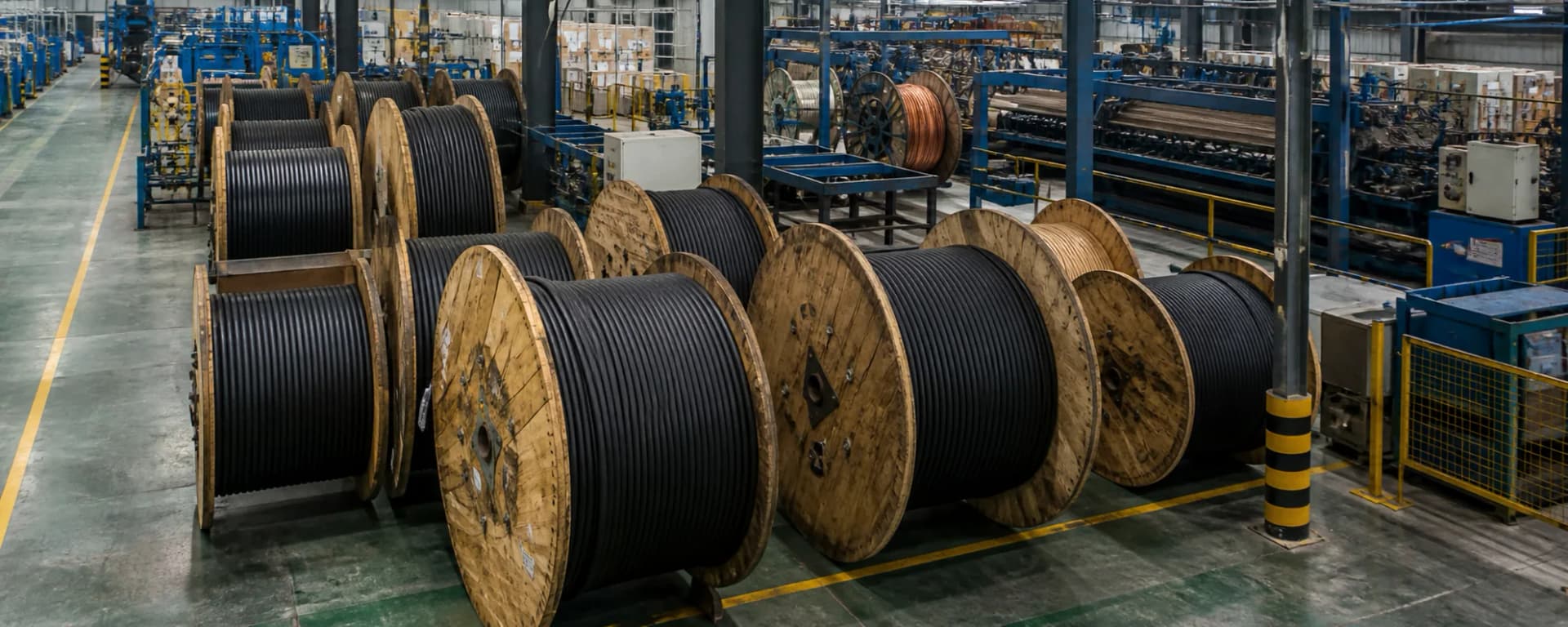
Bangladesh Electricity Market Overview
Bangladesh achieved a remarkable milestone in 2022: 100% of its population gained access to electricity, up from just 47% in 2009. This is one of the fastest electrification drives in modern history, connecting over 90 million additional people to the grid in just over a decade. However, access does not equal reliability. The grid infrastructure that was built rapidly to reach universal access now faces severe quality and capacity challenges.
The country's peak demand exceeds 16,000 MW during summer months, while generation capacity stands above 25,000 MW. Yet load shedding persists because the transmission and distribution systems cannot handle the flows. The Power Grid Company of Bangladesh (PGCB) operates a transmission network originally designed for far lower throughput, and distribution utilities — particularly the Bangladesh Power Development Board (BPDB) and Dhaka Electric Supply Company (DESCO) — manage ageing networks with high technical losses.
This creates sustained demand for cable products across all voltage levels: high-voltage conductors for transmission, medium-voltage XLPE for distribution backbone, and low-voltage cables for the last-mile connections that serve the country's booming garment industry and growing urban population.
Key Drivers of Cable Demand
Grid Quality Improvement Programme: Having achieved access, the government's focus has shifted to reliability. The Power Division's target of reducing system losses below 10% requires wholesale replacement of bare overhead LV lines with ABC cable and upgrading distribution feeders from aluminium to copper XLPE in high-load areas.
PGCB Transmission Expansion: PGCB is executing its grid expansion master plan, adding 400 kV transmission capability (stepping up from the 230 kV backbone) and building new substations and interconnectors. Each transmission line project requires ACSR or AAAC conductors in quantities measured in thousands of tonnes.
Rooppur Nuclear Power Plant: Bangladesh's first nuclear power plant (2,400 MW) in Ishwardi requires high-capacity transmission lines to evacuate power to the national grid. The associated transmission infrastructure project is one of the largest single cable procurement exercises in the country's history.
Industrial Zone Electrification: Bangladesh has over 100 Export Processing Zones (EPZs) and Special Economic Zones (SEZs), many under development or expansion. The garment sector alone — which employs over 4 million workers and generates $45 billion in exports — requires reliable power supply with quality cable infrastructure for factories operating 24/7.
Dhaka Densification: Greater Dhaka, home to over 22 million people, is converting overhead distribution to underground cable in commercial areas and along major corridors. The Dhaka Power Distribution Company (DPDC) and DESCO have ongoing underground cable programmes requiring XLPE medium-voltage cables and armoured LV cables.
Payra and Matarbari Power Hubs: The large thermal power plants at Payra (Southern Bangladesh) and Matarbari (Cox's Bazar) need dedicated transmission corridors with high-capacity conductors to connect to the grid.
Import Profile
Bangladesh relies heavily on imported cables for transmission and medium-voltage distribution projects. While a domestic cable manufacturing industry exists (primarily serving the building wire and LV market), higher-voltage cables and overhead conductors for utility projects are predominantly imported. China is the leading source of cable imports, with competitive pricing and short shipping distances via Chittagong port making Chinese manufacturers the natural partners for Bangladesh's grid expansion.
Bangladesh Standards and Certification Requirements
Bangladesh's standards framework for electrical cables is centered on BSTI (Bangladesh Standards and Testing Institution) and direct IEC standard adoption for utility procurement.
BSTI Standards
BSTI maintains Bangladesh Standards (BDS) for electrical products, with cable-related standards largely adopting IEC:
- BDS IEC 60502-1 — Power cables with extruded insulation, rated voltages 1 kV to 3 kV
- BDS IEC 60502-2 — Power cables for rated voltages from 6 kV to 30 kV
- BDS IEC 61089 — Round wire concentric lay overhead electrical stranded conductors
- BDS IEC 60228 — Conductors of insulated cables
- BDS 1262 — PVC insulated cables for electricity supply
BSTI certification (BDS Mark) is primarily enforced for products sold in the consumer market. For utility and project imports, compliance with IEC standards demonstrated through accredited laboratory test reports is the accepted path.
BPDB and PGCB Procurement Specifications
The Bangladesh Power Development Board (BPDB) and Power Grid Company of Bangladesh (PGCB) issue detailed technical specifications for their procurement tenders:
- PGCB transmission conductor specifications follow IEC 61089 with additional requirements for conductor grease, galvanizing class, and marking
- BPDB distribution cable specifications reference IEC 60502 with project-specific amendments for screening method, armour type, and sheath material
- Type test reports from ILAC-accredited laboratories are mandatory for bid qualification
- Factory audit clearance is typically required for first-time suppliers to PGCB
Our type test reports from CNAS-accredited laboratories satisfy PGCB and BPDB documentation requirements, as CNAS is an ILAC MRA signatory recognized by Bangladesh procurement authorities.
Import Licensing
Cable imports into Bangladesh require:
- Import Registration Certificate (IRC) from the Office of the Chief Controller of Imports and Exports
- Letter of Credit (LC) opened through a scheduled bank in Bangladesh (mandatory for all commercial imports)
- Pre-Shipment Inspection (PSI) certificate for shipments above specified value thresholds
- BSTI clearance for standard compliance (typically verified through test certificates rather than physical testing)
We provide complete documentation packages formatted for Bangladesh LC opening requirements, including pro-forma invoices, technical specifications, and test certificate summaries as required by opening banks.
Shipping Logistics: China to Bangladesh
Bangladesh's proximity to China via the Indian Ocean maritime route provides efficient logistics with competitive freight rates and short transit times.
Departure Ports
We ship to Bangladesh from the following Chinese ports:
- Shanghai Port — Primary departure port with frequent direct services to Chittagong.
- Ningbo Port — Alternative with good vessel frequency and competitive rates.
- Qingdao Port — Used for combined shipments or when schedules align.
Arrival Port: Chittagong
Chittagong Port is Bangladesh's primary international trade gateway, handling over 90% of the country's imports:
- Chittagong Port — Main container terminal, well-equipped for cable drum handling.
- Mongla Port — Secondary port in southwestern Bangladesh, used for project cargo destined for western regions.
- Payra Port — Newly operational deep-water port, increasingly used for power project imports in southern Bangladesh.
Transit Time
Ocean transit from China to Chittagong is short and predictable:
| Route | Transit Time |
|---|---|
| Shanghai → Chittagong | 12–15 days |
| Ningbo → Chittagong | 12–15 days |
| Qingdao → Chittagong | 14–17 days |
Combined with 15–25 days production time, total lead time from order to port is typically 30–40 days — significantly faster than European or Middle Eastern cable suppliers.
Container Loading
Standard container configurations for Bangladesh-bound cable shipments:
- ACSR/AAC conductors: 18–22 tonnes per 20GP container
- XLPE power cable: 15–20 tonnes per 20GP depending on voltage and cross-section
- ABC cable: 16–20 tonnes per 20GP
- Armoured cable: 16–20 tonnes per 20GP
Import Duties and Taxes
Cable imports into Bangladesh are subject to:
- Customs Duty (CD): 10–15% depending on HS code classification (bare conductors typically 10%, insulated cables 15%)
- Supplementary Duty (SD): Nil for most cable categories
- VAT: 15% (standard rate)
- Advance Tax (AT): 5%
- Advance Income Tax (AIT): 5%
- Regulatory Duty (RD): Variable, assessed case-by-case
Total landed cost calculations should factor approximately 35–40% above CIF value for all duties and taxes combined. We provide detailed landed cost estimates for budget planning upon request.
Most Demanded Cable Products in Bangladesh
Based on our shipping history and the procurement patterns of Bangladesh's power sector, the following products represent the highest-demand categories:
1. XLPE Insulated Power Cable for Industrial Zones
Application: EPZ/SEZ internal distribution, garment factory power supply, urban underground networks, substation interconnection.
Bangladesh's industrial zones operate on demanding duty cycles — garment factories run production lines around the clock, and even brief power interruptions mean missed export deadlines. XLPE cable's superior thermal performance (90°C continuous, 250°C short-circuit) makes it the standard choice for industrial power distribution. Key specifications demanded:
- 11 kV single-core 95 mm² to 400 mm² Cu/XLPE/PVC (screened, for EPZ distribution)
- 11 kV 3-core 70 mm² to 240 mm² Cu/XLPE/SWA/PVC (armoured, for direct burial)
- 33 kV single-core 150 mm² to 500 mm² Cu/XLPE/PVC (metallic screened, for PGCB substations)
- 0.6/1 kV 4-core 50 mm² to 400 mm² Cu/XLPE/SWA/PVC (for factory incoming supply)
All medium-voltage cables are triple-extruded with semiconductive screens and undergo partial discharge testing at 1.5 Uo as standard. Type test reports per IEC 60502-2 are available for all voltage classes.
2. ACSR Conductors for Transmission and Rural Grid
Application: PGCB 230 kV and 132 kV transmission, BPDB 33 kV sub-transmission, rural electrification feeders.
Despite achieving 100% electrification, Bangladesh continues building transmission and distribution lines to reinforce grid capacity and accommodate demand growth. PGCB's transmission expansion and BPDB's feeder rehabilitation programmes sustain large-volume ACSR demand. Standard sizes for Bangladesh:
- ACSR Zebra (400 mm²) — 230 kV transmission (twin bundle)
- ACSR Panther (200 mm²) — 132 kV transmission
- ACSR Dog (100 mm²) — 33 kV distribution feeders
- ACSR Rabbit (50 mm²) — 11 kV distribution
- ACSR Weasel (30 mm²) — Rural LV overhead lines
Manufactured to IEC 61089 with Class A or Class B galvanizing per IEC 60888, depending on the environmental corrosion exposure specified in PGCB tender documents. Complete with rated breaking strength certificates, DC resistance verification, and dimensional inspection reports.
3. ABC (Aerial Bundled Cable) for Dhaka Densification
Application: LV distribution in dense urban areas, loss reduction in high-theft zones, replacement of bare overhead in Dhaka, Chittagong, and Sylhet.
Greater Dhaka's explosive growth creates extraordinary challenges for distribution utilities. Narrow streets, dense construction, and high population density make overhead bare conductors both unsafe and impractical. ABC cable addresses multiple problems simultaneously: it eliminates accidental contact hazards, prevents illegal tapping, reduces technical losses, and allows closer conductor spacing in constrained rights-of-way. Specifications for Bangladesh:
- 3×95+70 mm² XLPE/AAAC — Main LV feeders in Dhaka commercial areas
- 3×70+50 mm² XLPE/AAAC — Residential distribution
- 3×50+35 mm² XLPE/AAAC — Branch circuits
- 2×16 mm² + 1×25 mm² — Service connections
DPDC and DESCO have both adopted ABC as their standard for new LV construction and for replacement of damaged bare overhead lines. The neutral messenger is AAAC per IEC 61089, providing corrosion resistance important in Bangladesh's high-humidity climate.
4. Underground Armoured Cable for Urban Networks
Application: Commercial district underground distribution, factory floor wiring, direct burial along road corridors.
As Dhaka, Chittagong, and Sylhet modernize their infrastructure, underground cable installation becomes mandatory in new commercial developments and road improvement projects. Steel wire armoured cables rated 0.6/1 kV serve the low-voltage underground network:
- 4-core 70 mm² to 300 mm² Cu/XLPE/SWA/PVC — Underground LV feeders
- 4-core 95 mm² to 500 mm² Al/XLPE/SWA/PVC — Cost-effective alternatives for longer runs
- 3-core + reduced neutral configurations per specific project requirements
- Single-core 300 mm² to 1000 mm² for substation LV bus connections
Manufactured to IEC 60502-1 with galvanized steel wire armour providing mechanical protection for direct burial without additional conduit.
5. Control and Instrumentation Cable
Application: Power plant control systems, substation SCADA, industrial process control in EPZs.
Bangladesh's new power plants (Rooppur Nuclear, Payra, Matarbari) and industrial facilities require substantial quantities of control and instrumentation cable:
- Multi-pair 1.5 mm² Cu/PVC/PVC control cables (5-pair to 37-pair)
- Screened instrumentation cables for analogue signal transmission
- Fire-resistant cables (IEC 60331) for power plant safety systems
- Armoured control cables for outdoor and buried installations
Key Infrastructure Projects Driving Demand
Rooppur Nuclear Power Plant
Bangladesh's first nuclear facility, built with Russian technical cooperation in Ishwardi (Pabna District), represents a 2,400 MW addition to the grid. Beyond the plant itself, the transmission infrastructure to evacuate this power requires:
- High-capacity ACSR or AAAC conductors for dedicated 400 kV transmission lines to Dhaka
- XLPE cables for substation interconnection
- Specialized nuclear-grade cables within the plant (to separate procurement specifications)
Payra Thermal Power Hub
The Payra power hub in Patuakhali district, with multiple thermal units planned, requires dedicated transmission corridors to deliver power northward to demand centres. This creates sustained conductor procurement across multiple project phases.
100 Special Economic Zones Programme
The Bangladesh Economic Zones Authority (BEZA) is developing 100 SEZs across the country. Each zone requires complete electrical infrastructure from 33 kV incoming supply through to factory-level distribution. This represents a long-term, recurring demand for medium-voltage and low-voltage cable products.
Rural Grid Reinforcement
While 100% access has been achieved, the rural grid was built rapidly with minimum specifications. Reinforcement — upgrading conductor sizes, adding new feeders, and replacing deteriorated lines — creates ongoing demand for ACSR and ABC products through the Palli Bidyut Samities (Rural Electric Cooperatives).
Quality Assurance and Testing
Our quality system meets the documentation standards required by Bangladesh's major power sector procuring entities:
- ISO 9001:2015 certified quality management system
- IEC CB Scheme certificates for power cable product lines
- CNAS-accredited laboratory testing (ILAC MRA recognized)
- Full routine testing per applicable IEC standard on every production drum
- Type testing maintained current for all standard voltage classes
Testing for Bangladesh Utility Requirements
For PGCB and BPDB tender compliance, we provide:
- Complete type test reports per IEC 60502-2 including partial discharge, impulse, and long-term stability tests
- ACSR conductor type test reports per IEC 61089 including rated breaking strength and stress-strain data
- Environmental testing data (heat ageing, humidity resistance) relevant to Bangladesh's tropical climate
- Material certificates with full chemical analysis for conductor aluminium and copper
Climate Considerations
Bangladesh's tropical climate — with temperatures exceeding 40°C in summer, humidity routinely above 80%, and monsoon flooding — places specific demands on cable products:
- XLPE insulation maintains its properties at elevated ambient temperatures (unlike PVC which derates significantly)
- Galvanizing quality for ACSR steel cores is specified to resist corrosion in high-humidity environments
- Cable sheath materials are UV-stabilized for exposed installations
- Armour galvanizing meets Class B or higher for buried cables in flood-prone areas
We select materials and manufacturing parameters appropriate for tropical deployment, not temperate European conditions.
Third-Party Inspection
We accommodate inspection by agencies commonly nominated in Bangladesh procurement:
- SGS Bangladesh
- Bureau Veritas Bangladesh
- Intertek Dhaka
- Bangladesh-based inspection firms nominated by PGCB or BPDB
Pre-shipment inspection coordination is handled by our dedicated quality team, with witness testing scheduled to align with inspector availability.
Why Choose China Cable Factory for Bangladesh Projects
Short supply line: Chittagong port is 12–15 days from Shanghai. Combined with production, total lead time is 30–40 days — essential for project timelines in a market where procurement delays can cascade into contractual penalties.
IEC standards match: Bangladesh adopts IEC directly through BDS standards. Our products are manufactured to IEC from specification through testing — no adaptation layer required.
Industrial zone expertise: We understand the power quality and reliability demands of garment factories and EPZ operations. Our cable specifications account for the high-duty-cycle, high-ambient-temperature conditions typical of Bangladesh's industrial sector.
Proven PGCB compliance: Our type test reports and quality documentation meet PGCB and BPDB tender requirements. We have experience with Bangladesh's LC-based procurement system and provide documentation formatted for opening banks.
Tropical climate engineering: Cable specifications are selected for tropical conditions — appropriate insulation ratings, enhanced corrosion protection, and UV-resistant materials for Bangladesh's demanding environment.
Volume flexibility: From a single container of ABC cable for a Palli Bidyut cooperative to bulk ACSR for PGCB transmission — our capacity matches your scale.
Get a Quote for Your Bangladesh Project
Whether you are a PGCB contractor building transmission lines, a BPDB-registered supplier sourcing distribution cable, an EPZ developer electrifying a new industrial zone, or an importer supplying the construction sector — we are ready to support your requirements.
Request a quote today:
- WhatsApp: +86-134-6102-4180 — Fast response, send your specifications directly
- Email: sales@chinacablefactory.com — For formal RFQ documents and tender support
- Contact Form: Submit your requirements — We reply within 24 hours
What to include in your inquiry:
- Cable type and specification (standard, voltage rating, conductor size, construction details)
- Quantity required (metres or tonnes)
- Delivery terms (FOB Shanghai, CIF Chittagong, or CIF Mongla)
- Project timeline and LC opening schedule
- Any specific testing, inspection, or documentation requirements
- Tender reference number (if applicable)
We provide detailed quotations including technical datasheets, production schedules, and shipping plans. Our export documentation team ensures all paperwork is formatted for smooth LC negotiation and Bangladesh customs clearance.
Interested in this product?
Request a Free Quote for Bangladesh