Key Takeaway
Objective comparison of Ducab cables versus China factory-direct equivalents for XLPE, armoured, and MV cable in the GCC. Same IEC/BS standards, SASO/ESMA/KAHRAMAA-ready, factory-direct pricing. Guide for Middle East procurement teams.
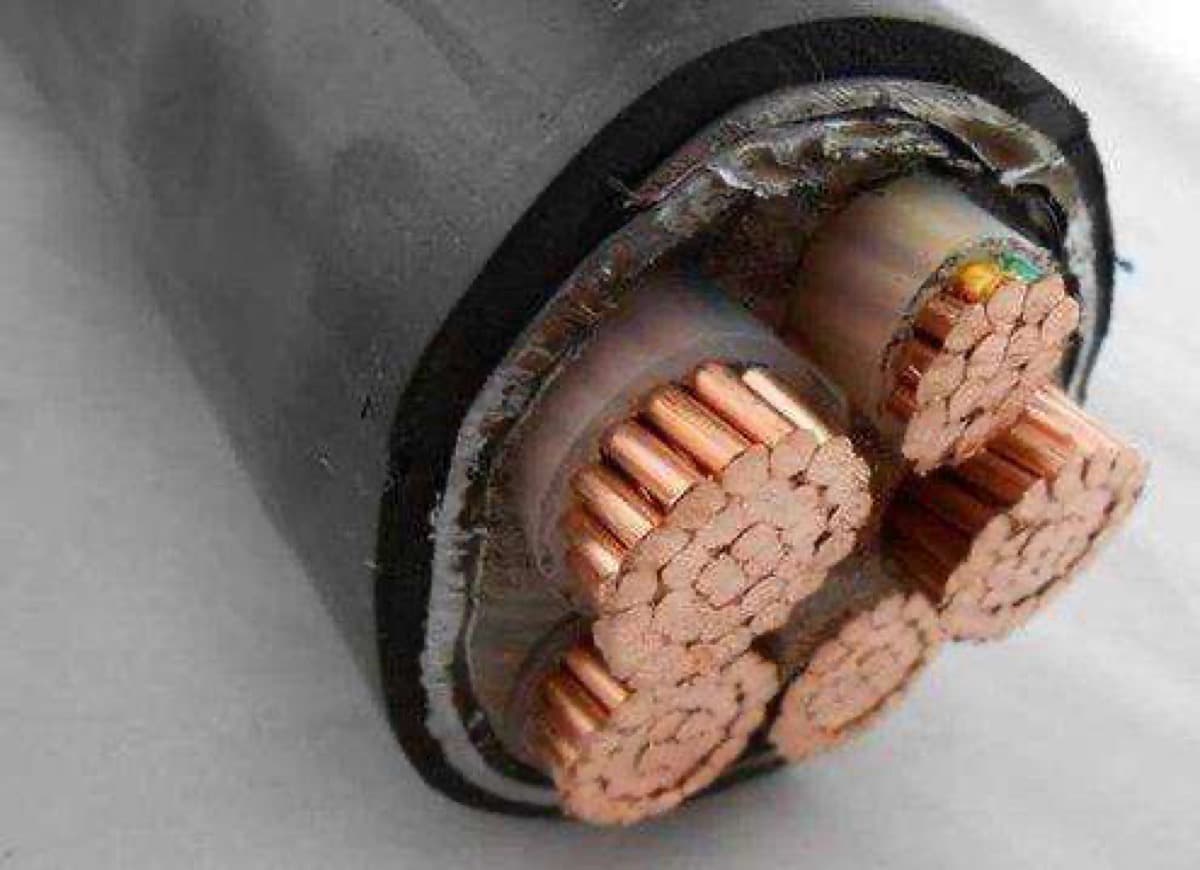
If you procure power cable for infrastructure, utility, or construction projects anywhere in the GCC, Ducab is almost certainly on your approved vendor list. Founded in 1979 as a joint venture backed by the Dubai and Abu Dhabi governments, Ducab has become the benchmark cable brand across the United Arab Emirates and the wider Gulf — supplying everything from low-voltage building wire to fire-resistant, nuclear, and renewable-energy cable.
But experienced procurement teams across Saudi Arabia, the UAE, Oman, Qatar, and Iraq already know the trade-off: for standard XLPE and armoured cable produced to IEC 60502 and BS standards, China factory-direct suppliers deliver equivalent technical performance at a meaningfully lower landed cost. The copper is the same electrolytic grade, the XLPE compound comes from the same global suppliers, the cross-linking process follows the same physics, and the type tests reference the same IEC and BS clauses your consultant already specifies.
This guide is a data-driven comparison to help GCC buyers make an informed sourcing decision — whether you are evaluating a China factory-direct alternative to Ducab for the first time, or building the technical case for your engineering committee. It is deliberately objective: Ducab is a genuinely strong manufacturer, and there are situations where staying with Ducab is the right call. We will cover those too.
Company Overview: Ducab vs China Factory-Direct
| Factor | Ducab | China Factory-Direct (Tier 1-2) |
|---|---|---|
| Headquarters | Dubai & Abu Dhabi, UAE | Various (Henan, Jiangsu, Zhejiang) |
| Founded | 1979 (Dubai/Abu Dhabi government JV) | 1967–1990s (most established factories) |
| Ownership | UAE government-backed | Private / mixed-ownership manufacturers |
| Product range | LV/MV/HV power cable, fire-resistant, nuclear, renewable-energy cable, copper & aluminium conductors | LV/MV power cable, armoured, ABC, control, ACSR — full commodity range |
| Primary standards | BS, IEC, and GCC-specific approvals | IEC, GB/T, BS, NFC (export-adapted) |
| Regional footprint | Dominant in UAE + strong across GCC | Export from China, growing GCC distribution |
| Positioning | Premium / benchmark brand | Cost-competitive factory-direct |
Ducab's strength is real: decades of Gulf track record, government backing, and a product portfolio that reaches into specialist categories (fire survival, nuclear, subsea) where few suppliers compete. The point of this comparison is not that Ducab is weak — it is that for the commodity majority of most cable tenders (standard LV and MV XLPE and armoured cable), you are paying a brand and locality premium for a product that a qualified China factory builds to the identical standard.
Price Comparison: Where the Cost Gap Comes From
Cable pricing is not a fixed list — it moves with the LME copper price at the moment of order, the exact specification, order volume, and your Incoterms. Any supplier quoting a firm per-metre number without your specification and a live copper reference is guessing. For that reason we do not publish price tables; we quote against your actual cable schedule. Request a quote for your specification → and you will get FOB and CIF-Gulf pricing benchmarked to that day's copper.
What the comparison reliably shows across the Gulf is a consistent structural cost gap between benchmark-brand cable landed via distributor and China factory-direct supply on the same IEC/BS specification. Buyers who run a like-for-like comparison typically find the gap is widest on made-to-order MV cable and large-volume LV runs, and narrowest on small top-up quantities where in-region stock wins. To see the cost factors in detail, see our XLPE cable price per metre guide and SWA armoured cable price guide. The takeaway is not a headline percentage — it is that the gap is structural, driven by the cost factors below rather than by any difference in the cable itself.
Why the price gap exists:
- UAE manufacturing and compliance overhead built into brand pricing
- Government-backed corporate structure, marketing, and premium positioning
- Distributor and regional stock-holding margins layered on top of ex-works cost
- Brand premium — on a benchmark vendor list, you pay partly for the name and the "nobody gets fired for specifying Ducab" comfort factor
What you are NOT sacrificing on a qualified China alternative:
- Copper conductor purity (99.97%+ electrolytic copper, IEC 60228 Class 1/2)
- XLPE compound from the same global suppliers (Borealis, Dow, Hanwha)
- Cross-linking on the same generation of CCV lines (Maillefer, Rosendahl, or equivalent)
- Type testing referencing the same IEC 60502 / IEC 60811 / BS clauses
The structural cost gap is not a temporary discount that disappears next quarter. It reflects labour, energy, and supply-chain economics that favour Chinese production for commodity cable — the same reason a large share of the world's cable is already made in China, including cable sold under Western brand names.
Technical Quality: Is a China Alternative Really Equivalent to Ducab?
This is the question your technical committee will ask. The honest answer: for standard LV and MV cable to IEC/BS, a qualified Tier 1-2 Chinese factory is technically equivalent. Let us break it down by component.
Conductor (Copper or Aluminium)
Both Ducab and Chinese manufacturers use electrolytic copper meeting IEC 60228 Class 1 (solid) or Class 2 (stranded), and aluminium/aluminium-alloy conductors per the same standard. The copper cathode comes from the same global market — Chinese factories typically source from:
- Jiangxi Copper (China's largest, LME-registered brand)
- Tongling Nonferrous (LME-registered)
- Imported cathode from Chile (Codelco), Zambia, or DR Congo
Conductor DC resistance must meet the IEC 60228 tables no matter where the cable is drawn and stranded. It is verified by routine test on every production length. There is no physical mechanism by which a compliant conductor from one country carries current differently from a compliant conductor from another.
XLPE Insulation
Cross-linked polyethylene insulation is the heart of the cable, and it is where quality genuinely varies between good and budget factories. It depends on three things:
-
Compound quality — Premium Chinese exporters use imported XLPE compound from Borealis (Austria), Dow (USA), or Hanwha (Korea) — the same compound families Ducab uses. Budget factories may use lower-grade domestic compound with higher impurity levels. This is the single most important thing to verify.
-
Cross-linking process — CCV (Catenary Continuous Vulcanization) lines cross-link the insulation. Top Chinese factories run Maillefer (Switzerland), Rosendahl (Austria), or equivalent lines. Cross-linking degree must achieve the minimum hot-set elongation of IEC 60811.
-
Cleanliness — Extrusion must be clean enough to avoid contaminants that seed partial-discharge failures in MV cable.
Key verification: Request the partial discharge (PD) test report. IEC 60502-2 requires PD ≤ 10pC at 2U₀ for MV cable. Better Chinese factories achieve PD ≤ 5pC, which meets or beats benchmark production. If a supplier cannot show you a PD report, that tells you what you need to know.
Armour and Sheath
Steel wire armour (SWA) and steel tape armour (STA) use galvanised mild steel per IEC 60502. PVC and LSZH sheathing compounds are mature and widely produced in China — LSZH matters in the Gulf for tunnels, metro, airports, and enclosed public buildings, and qualified factories supply it routinely. These are the least differentiated parts of the cable; variation between competent manufacturers is minimal.
Testing and Quality Control
| Test | Standard | Ducab | Qualified China Factory |
|---|---|---|---|
| Conductor resistance | IEC 60228 | Routine | Routine |
| Voltage withstand | IEC 60502 | Routine | Routine |
| Insulation resistance | IEC 60502 | Routine | Routine |
| Partial discharge (MV) | IEC 60502-2 | Routine | Routine |
| Hot set (cross-link degree) | IEC 60811 | Type test | Type test |
| Mechanical / ageing | IEC 60811 | Type test | Type test |
| Fire performance (where required) | IEC 60332 / BS 6387 | Type test | Type test (verify per factory) |
The real difference is accreditation lineage, not physics. Ducab holds long-standing type-test accreditation and a Gulf track record. Qualified Chinese factories hold CNAS/ILAC-accredited lab reports, and several also hold KEMA type tests. Both CNAS and KEMA are internationally recognised. Where a project specification specifically demands KEMA-witnessed type tests, ask your Chinese supplier directly — the top tier can provide them; not every factory can. That single question separates a genuine equivalent from a pretender.
GCC Certification & Compliance: The Real Gatekeeper
In the Gulf, the deciding factor is rarely the cable itself — it is whether the cable clears the destination country's conformity regime. This is where buyers worry a China alternative will get stuck. It does not have to, if the supplier has done it before.
Each GCC market has its own approval framework:
- Saudi Arabia — SASO / SABER: Cable must be registered in the SABER platform with a Product Certificate of Conformity (PCoC) and a Shipment Certificate of Conformity (SCoC). Saudi projects also reference Saudi Standards (SASO/IEC-adopted).
- UAE — ESMA / ECAS / EQM: Emirates Conformity Assessment Scheme registration; some utilities (DEWA, ADDC/AADC) maintain their own approved-vendor and testing requirements.
- Qatar — KAHRAMAA: The utility maintains a rigorous approved-manufacturer list and material submission process; KAHRAMAA approval is often the true gate on utility work.
- Oman — DCRP / utility approval: Distribution companies specify IEC-based requirements and material submissions.
- Kuwait / Bahrain: Ministry of Electricity & Water and standards-body requirements, largely IEC-referenced.
What this means for sourcing: A qualified China factory that already exports into the GCC will have compliant SASO/SABER registration experience, ESMA-ready documentation, and — critically — a track record of getting cable through the specific utility's inspection. That experience is worth more than any brochure claim. When you evaluate a China alternative to Ducab, the questions that matter are:
- Have you shipped this exact cable type into my country before?
- Can you provide the SASO/SABER (or ESMA / KAHRAMAA) registration and conformity documents?
- Will you accept a third-party inspection (SGS / Bureau Veritas / Intertek / TÜV) at your factory before shipment?
A supplier that answers yes to all three has effectively de-risked the compliance gate that makes buyers default to Ducab in the first place.
Lead Time Comparison
| Factor | Ducab (via distributor / stock) | China Factory Direct |
|---|---|---|
| Quotation response | Slower (distributor relay) | Fast, direct from factory sales |
| Production (standard specs) | Quick if stocked; longer if made to order | Scheduled directly on the production line |
| Production (custom / MV) | Longer, subject to production-slot queue | Flexible line scheduling |
| Shipping within GCC | In-region if the exact spec is stocked | Short sea leg to Jebel Ali / Dammam / Sohar / Hamad |
| Overall | Fastest for stocked standard items | Often faster for made-to-order and MV cable |
Key insight: For standard specifications Ducab holds in stock, in-region delivery is fast — that is a genuine advantage. But most MV cable and any non-standard LV configuration is made to order, and there the picture flips: China factory lines often have shorter backlogs and more scheduling flexibility, and the sea leg to the Gulf is short. For made-to-order cable, a China factory frequently delivers the full quantity faster than a distributor waiting on a European or regional production slot.
When to Stay with Ducab (Legitimate Reasons)
Be objective — Ducab is not just a name on a vendor list. There are real situations where staying with Ducab is the correct decision:
-
Specialist categories. Fire-survival cable to BS 6387 / BS 8491, nuclear-qualified cable, and other high-assurance products are areas where a proven, long-track-record manufacturer earns its premium. Do not switch these to an unproven supplier to save money.
-
HV / EHV cable. For transmission-class cable and the associated jointing and installation expertise, use a manufacturer with a demonstrated HV record — whether Ducab or a top-tier Chinese HV specialist (ZTT, Hengtong). This is not commodity territory.
-
Utility approved-vendor lock-in. If DEWA, KAHRAMAA, or a similar utility lists Ducab as an approved manufacturer and the approval path for alternatives is deliberately slow, the cost of fighting the specification can exceed the cable saving on a single project.
-
Local after-sales and stock. For urgent, small, top-up orders where you need cable this week and Ducab holds it in a Gulf warehouse, in-region stock beats any import cycle. This is a genuine advantage for emergency and small quantities.
-
National-content / financing requirements. Some projects carry local-content or financing conditions that favour UAE-origin material. Where that is a hard rule, it decides the matter.
When a China Factory-Direct Alternative Is the Better Choice
For the majority of standard power-cable procurement across the Gulf:
✅ Standard LV/MV XLPE and armoured cable (0.6/1kV to 35kV)
This is commodity product built to IEC 60502. Produced to the same standard, the cable is physically equivalent regardless of the badge on the drum. The cost saving is pure value here — you are not giving up anything technical. See our XLPE power cable factory-direct sourcing guide and armoured cable supplier guide for specifications and how to buy.
✅ Large-volume orders
Chinese factories are built for scale. Production economics improve on larger orders and a line can be dedicated to your specification. On a grid-expansion or large construction package, even a modest per-metre saving becomes a very large absolute number.
✅ Projects specified to IEC/BS without a named brand
If your specification says "IEC 60502-1 compliant" or "BS 5467" without naming a manufacturer, a qualified China cable qualifies directly. No approval fight.
✅ Cost-sensitive projects across the wider region
For distribution and construction work in Saudi Arabia, UAE, Iraq, Oman, and neighbouring markets where budget drives award, China factory-direct supply is the default for good reason.
✅ Mixed-product orders
Need XLPE power cable + armoured cable + control cable + ABC in one shipment? A Chinese factory handles that routinely from one production base. Regional distributors typically stock a narrower range of SKUs.
How to Qualify a China Factory as "Ducab Equivalent"
If your organisation currently buys Ducab and you want to evaluate a China alternative without exposing the project to risk, use a structured qualification process rather than a leap of faith.
Step 1: Document your current Ducab specification
Pull the exact spec from your last Ducab purchase order:
- Standard (IEC 60502-1? BS 5467? BS 6724 for LSZH? BS 6387 for fire?)
- Voltage designation (0.6/1kV, 8.7/15kV, 12/20kV, 18/30kV)
- Conductor material, size, class (IEC 60228)
- Insulation material and nominal thickness
- Armour type (SWA / STA / none)
- Sheath material (PVC / LSZH)
- Special requirements (fire performance, UV, sunlight resistance for Gulf conditions, high ambient temperature rating)
Step 2: Request a like-for-like quotation
Send the specification to 2-3 China factories. Ask each for:
- Unit price per metre (FOB and CIF your Gulf port)
- IEC 60502 (and BS, where relevant) type-test report for the offered cable
- Routine-test commitment (what is tested on every drum)
- Production lead time and MOQ
- SASO/SABER, ESMA, or KAHRAMAA registration status for your market
Step 3: Technical verification
Review the type-test report against the spec:
- Testing lab is CNAS or ILAC accredited (or KEMA, if the spec demands it)
- Conductor resistance meets IEC 60228
- Insulation thickness meets IEC 60502 minimum
- Partial discharge (MV) ≤ 10pC at 2U₀
- Hot-set elongation confirms proper cross-linking
- Fire-performance report present where required
Step 4: Sample order or factory audit
For first-time qualification:
- Order one drum as a paid sample (serious factories do not give free cable)
- Or run a factory audit — in person or by video call with live production observation (our China cable factory audit checklist covers exactly what to look for)
- Confirm a real CCV line exists (not just PVC extrusion equipment)
- Check raw-material inventory (branded XLPE compound bags from Borealis / Dow / Hanwha)
Step 5: Third-party inspection on the first order
For your first full order, engage SGS, Bureau Veritas, Intertek, or TÜV to:
- Witness production and routine testing
- Verify results, packaging, and drum marking
- Inspect container loading
The cost of a third-party inspection is small relative to the order value, and it is the single most effective way to convert committee skepticism into a signed approval. Ask the inspection company for a day-rate quote for your port and factory location.
Real-World Switching: What Gulf Buyers Report
Based on market feedback from buyers in Saudi Arabia, the UAE, Oman, and Iraq who have added or switched to China factory-direct supply alongside Ducab:
Cost savings realised: consistent double-digit savings on both LV and MV cable, net of freight and duties — the exact figure depends on specification, volume, and the copper price at order time.
Quality issues encountered: Minimal for Tier 1-2 factories. The most common complaints are cosmetic (print quality, drum finish) rather than electrical performance.
Challenges reported:
- Initial committee resistance ("we have always specified Ducab")
- Longer lead time on the first order because of the qualification and registration step
- Third-party inspection adds cost and time on the first shipment
- Timezone gap (China is UTC+8; the Gulf is UTC+3/+4 — a manageable 3-4 hour difference, actually easier than dealing with European suppliers)
After qualification:
- Repeat orders are straightforward — no re-qualification needed
- Copper-indexed pricing stays stable without brand-driven inflation creep
- Higher production flexibility — non-standard configurations without a heavy premium
- Direct factory relationship removes intermediary markups
Why Huanghe Cable for a Ducab-Equivalent Supply
If you are evaluating a China factory-direct alternative to Ducab for standard LV/MV XLPE and armoured cable, Huanghe Cable (China Cable Factory) offers a like-for-like path:
Technical equivalence:
- Full IEC 60502-1 and IEC 60502-2 compliance, with BS-referenced construction on request
- XLPE insulation using imported compound, CCV cross-linked
- 0.6/1kV to 35kV voltage range — covers the great majority of Ducab's commodity volume
- In-house testing to IEC 60811, with type-test reports available for review
- LSZH sheathing available for Gulf tunnels, metro, airports, and enclosed buildings
Commercial advantages:
- Factory-direct FOB pricing on equivalent specifications, quoted against your schedule and live copper
- Fast quotation response, direct from the factory sales desk
- Flexible order quantities, including mixed-product containers
- Production scheduled directly on our lines for standard specifications
- Direct factory communication — no distributor layers
Gulf export readiness:
- Experience with destination conformity: SASO/SABER (Saudi), ESMA/ECAS (UAE), and utility submissions
- Regular shipments across the Middle East, Africa, and Southeast Asia
- Short sea lead time to Jebel Ali, Dammam, Sohar, and Hamad
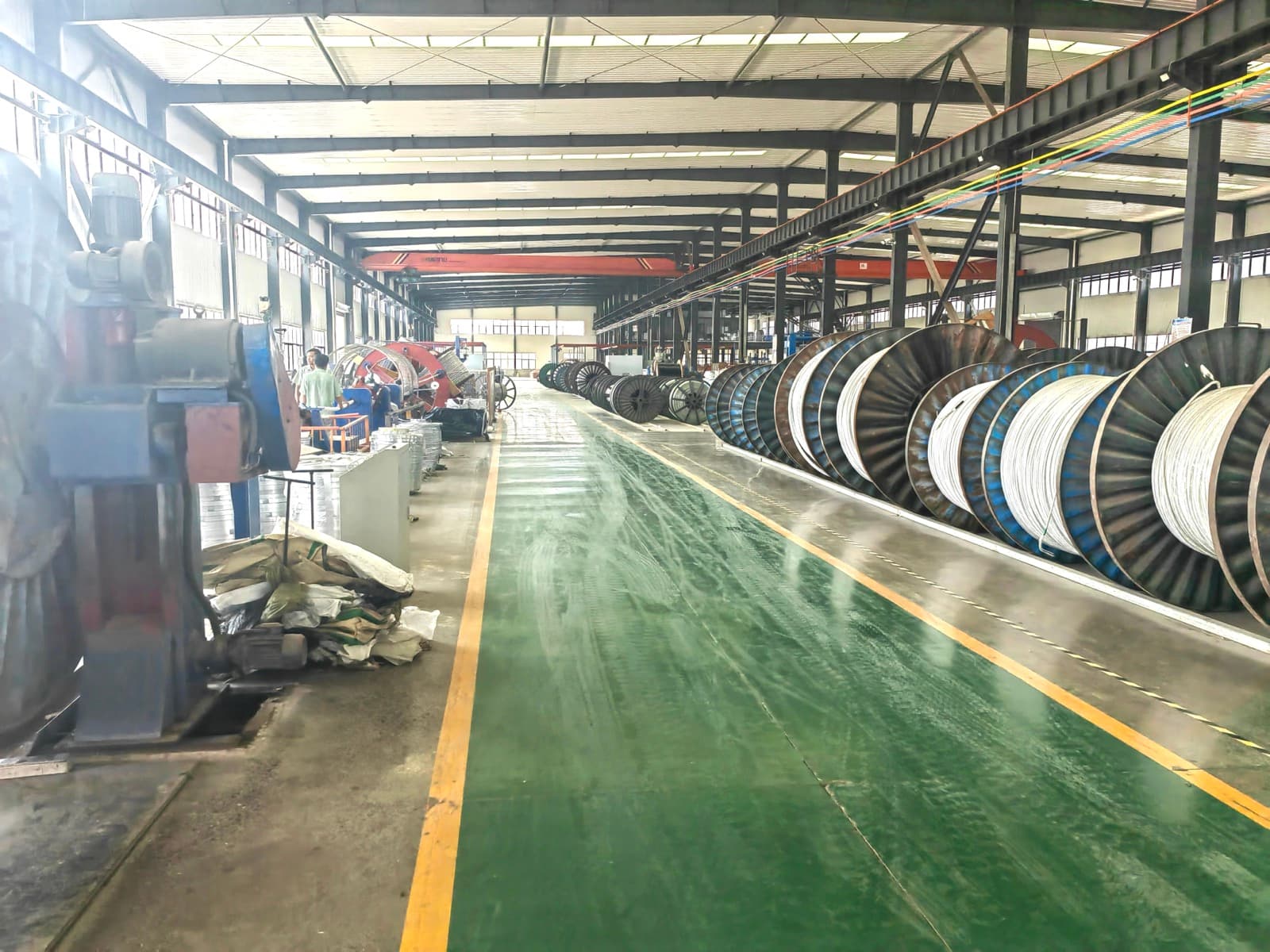
Ready to compare? Send us your Ducab specification → and we will provide a like-for-like quotation, including the type-test report and FOB/CIF Gulf pricing benchmarked to current copper.
Frequently Asked Questions
Can I use a China cable where the spec says "Ducab or equivalent"?
Yes. Where a specification says "or equivalent," you demonstrate equivalence with a type-test report showing compliance to the same IEC/BS standard. Most qualified Chinese factories provide this. Acceptance depends on the consultant: some accept CNAS/ILAC-accredited reports directly, others require KEMA — in which case confirm your supplier holds KEMA type tests before you commit.
Is Chinese cable accepted in Saudi Arabia, the UAE, and Qatar?
Yes, with the correct conformity route. Saudi Arabia requires SASO/SABER registration (PCoC + SCoC); the UAE requires ESMA/ECAS; Qatar utility work requires KAHRAMAA approval. Established Chinese exporters handle these processes routinely. The key is choosing a factory that has already shipped your cable type into your specific country.
What if the cable fails after installation?
A legitimate factory provides written warranty terms on materials and workmanship, and will state the exact period in the supply contract. The real protection is buying from a manufacturer with a verifiable export history and an audited factory — not a trading company that can vanish. Get the warranty in writing and verify the factory before you rely on it.
How do I handle the "Chinese cable is lower quality" objection with my client?
Present the data:
- Show the IEC/BS type-test report (same standard as Ducab)
- Note that a large share of the world's cable — including cable sold under Western brands — is made in China
- Offer third-party inspection (SGS/BV/Intertek) as the quality gate
- Propose a paid sample order for independent testing before full volume
- Frame it as qualification-based procurement, not brand-based
Does buying a Ducab alternative mean lower quality for fire or LSZH cable?
Not necessarily — but fire-survival and LSZH cable are exactly where you should verify hardest. Ask for the BS 6387 / BS 8491 (fire) or IEC 60332-1 / IEC 61034 (flame and smoke) type-test reports specific to the offered product. A qualified factory supplies these; treat their absence as a red flag.
Related Articles
- XLPE Cable Price Per Meter: Cost Factors & Factory-Direct Quote — what actually drives the price
- Buy XLPE Power Cable from China: Sourcing, FOB Pricing & Shipping
- Top 10 XLPE Cable Manufacturers in China [2026 Ranked]
- Nexans vs Chinese Cable Manufacturers — another benchmark-brand comparison
- Prysmian vs Chinese Cable Manufacturers
- Power Cable Certification Guide: IEC, KEMA, CB, ISO — what each certification actually proves
- How to Import Cable from China: Step-by-Step Guide
- Medium Voltage Cable 11kV & 33kV Manufacturer Guide
- 4 Core Armoured Cable SWA/STA Specifications
- Cable Supplier to Saudi Arabia
- Cable Supplier to UAE
- Cable Supplier to Oman
Market Context: Why Gulf Buyers Are Diversifying Suppliers
The move to qualify China factory-direct supply alongside benchmark brands like Ducab is not new — it has accelerated across the GCC since the mid-2010s. A few forces drive it.
Gulf infrastructure spend at scale
Saudi Arabia's Vision 2030 giga-projects, UAE grid reinforcement, Oman and Qatar utility expansion, and the region-wide push into solar and renewable generation all consume enormous quantities of cable. At that scale, even a modest per-metre saving on the commodity portion of cable spend compounds into a very large absolute number across a project — enough to fund additional grid kilometres or substation equipment. Procurement teams cannot ignore a number that large.
Chinese manufacturing quality has caught up
In the early 2000s, quality concerns about Chinese cable were often justified. By 2026 the picture is fundamentally different:
- Top Chinese factories run the same Maillefer and Rosendahl CCV lines as European plants
- Export-grade cable uses globally sourced compound (imported XLPE is the norm)
- IEC/BS certification and third-party testing are standard practice — learn what each certification proves
- Chinese cable is installed in major infrastructure worldwide, including projects in Europe and the Gulf
Localisation cuts both ways
The Gulf's own localisation drive has expanded regional manufacturing — but it has also made buyers more sophisticated about total landed cost, conformity documentation, and dual-sourcing. A buyer who can qualify a second, lower-cost source strengthens their negotiating position with every incumbent supplier, Ducab included.
Short, established trade lanes
Sea freight from China to the main Gulf ports (Jebel Ali, Dammam, Sohar, Hamad) is short and high-frequency, and Belt-and-Road-era trade relationships have made cable procurement from China a well-trodden path. Logistics is no longer the obstacle it once was.
Summary: Making the Decision
| If your situation is... | Recommended approach |
|---|---|
| Standard LV/MV cable, IEC/BS spec, cost matters | Qualify a China factory-direct alternative |
| Fire-survival, nuclear, or HV/EHV cable | Stay with a proven specialist (Ducab or a top-tier HV Chinese maker) |
| Utility insists on "Ducab only" | Negotiate "or equivalent," then qualify the China option with type tests |
| First time sourcing from China | Start with a paid sample order, inspect, then scale |
| Large-volume tender | Dual-source: benchmark brand for critical items, China for volume LV/MV |
The bottom line: for standard XLPE and armoured power cable to IEC 60502 and BS in voltage classes up to 35kV, a qualified China factory delivers genuine technical equivalence to Ducab at a meaningfully lower landed cost across the GCC. The smart approach is qualification-based procurement, not brand-based procurement — verify the factory, verify the conformity route, then let the standard and the price decide.
Request a Ducab-equivalent quotation from China Cable Factory →