Key Takeaway
Step-by-step guide to buying XLPE power cable from China factories. FOB pricing, shipping options, MOQ, lead time, payment terms, and quality inspection checklist.
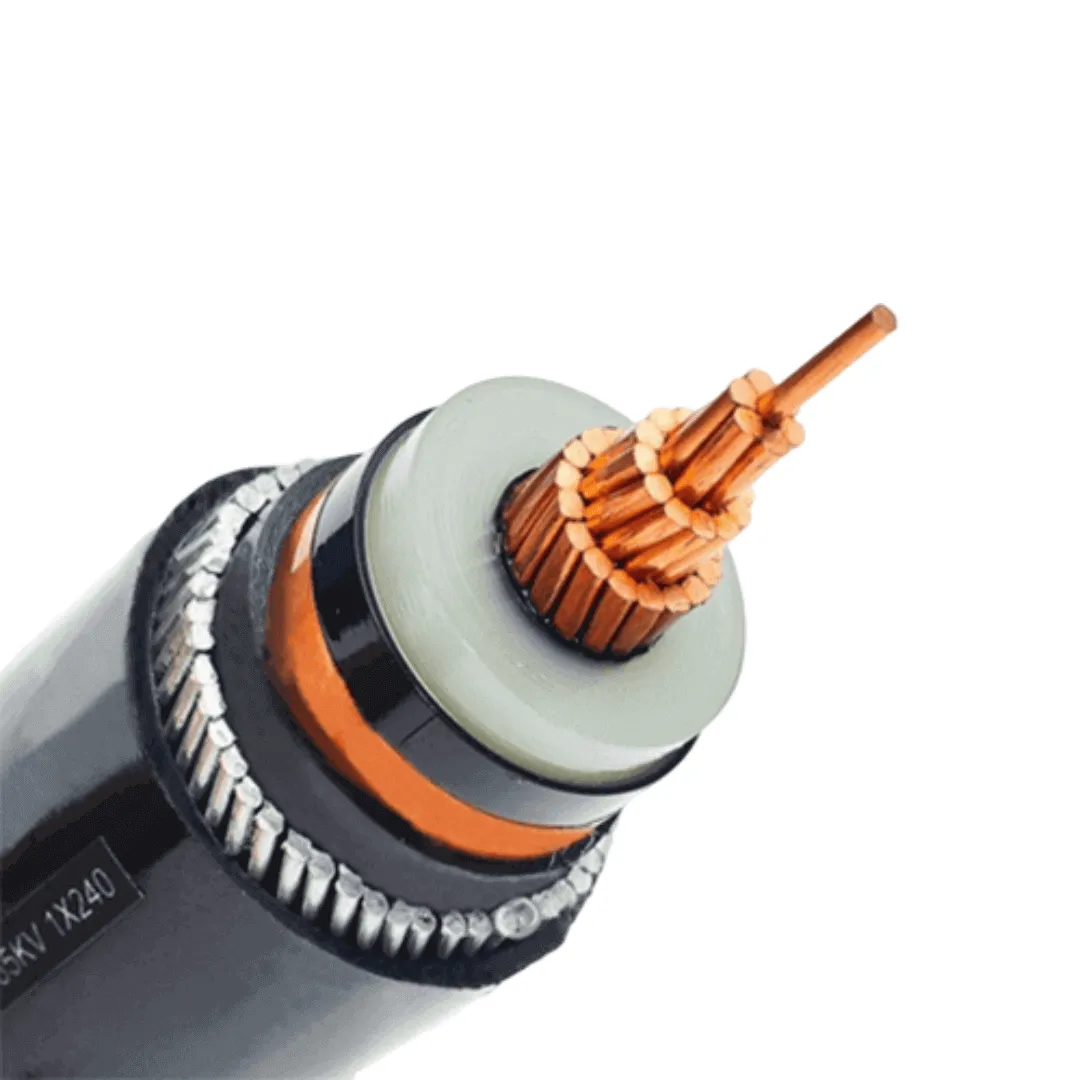
Sourcing XLPE power cables from China gives you direct access to one of the world's largest cable manufacturing bases — where production capacity, raw material supply chains, and international certification infrastructure have matured over decades of serving global utility and industrial projects.
Whether you need 0.6/1kV low-voltage distribution cables for a residential development, 8.7/15kV feeders for an industrial park, or 26/35kV transmission cables for a utility grid expansion, buying factory direct from a Chinese XLPE cable supplier — particularly from the top-ranked China XLPE cable manufacturers — means lower unit costs, flexible order quantities, and faster production scheduling than sourcing through trading companies or regional distributors.
This page explains our XLPE cable product range, manufacturing standards, quality control process, and how to place an order — everything you need to make a confident purchasing decision.
Why Buyers Choose Chinese XLPE Cable Manufacturers
China produces over 30% of the world's electrical cable output. For international buyers, this translates into practical advantages that directly affect project budgets and timelines.
Lower Production Costs Without Compromising Quality
Chinese cable factories benefit from integrated supply chains. Copper rod, aluminum ingot, XLPE compound, and steel tape are all sourced domestically at scale — eliminating import markups that manufacturers in other regions face. The savings pass through to your quoted price.
This is not about cutting corners. The same IEC 60502 testing protocols, the same conductor purity requirements, the same insulation thickness standards apply. The cost advantage comes from supply chain efficiency and manufacturing scale, not material substitution.
Manufacturing Capacity for Large Orders
A single Chinese cable factory can run dozens of extrusion lines simultaneously. This means your 500 km underground cable order does not queue behind months of backlog. Production scheduling is flexible — urgent orders can often be accommodated by allocating additional shifts.
Full International Certification
Established Chinese XLPE cable manufacturers hold:
- IEC 60502-1 (low voltage power cables)
- IEC 60502-2 (medium voltage power cables)
- GB/T 12706 (Chinese national standard, technically equivalent to IEC 60502)
- BS 7870 (British standard for distribution cables)
- ASTM standards for North American projects
- ISO 9001 quality management systems
- ISO 14001 environmental management
Certificates are issued by accredited third-party labs and available for inspection before you place an order.
Export Experience
We have shipped XLPE cables to over 50 countries across Southeast Asia, the Middle East, Africa, South America, and Oceania. Our export team handles documentation (commercial invoice, packing list, certificate of origin, test reports), container loading optimization, and coordination with freight forwarders.
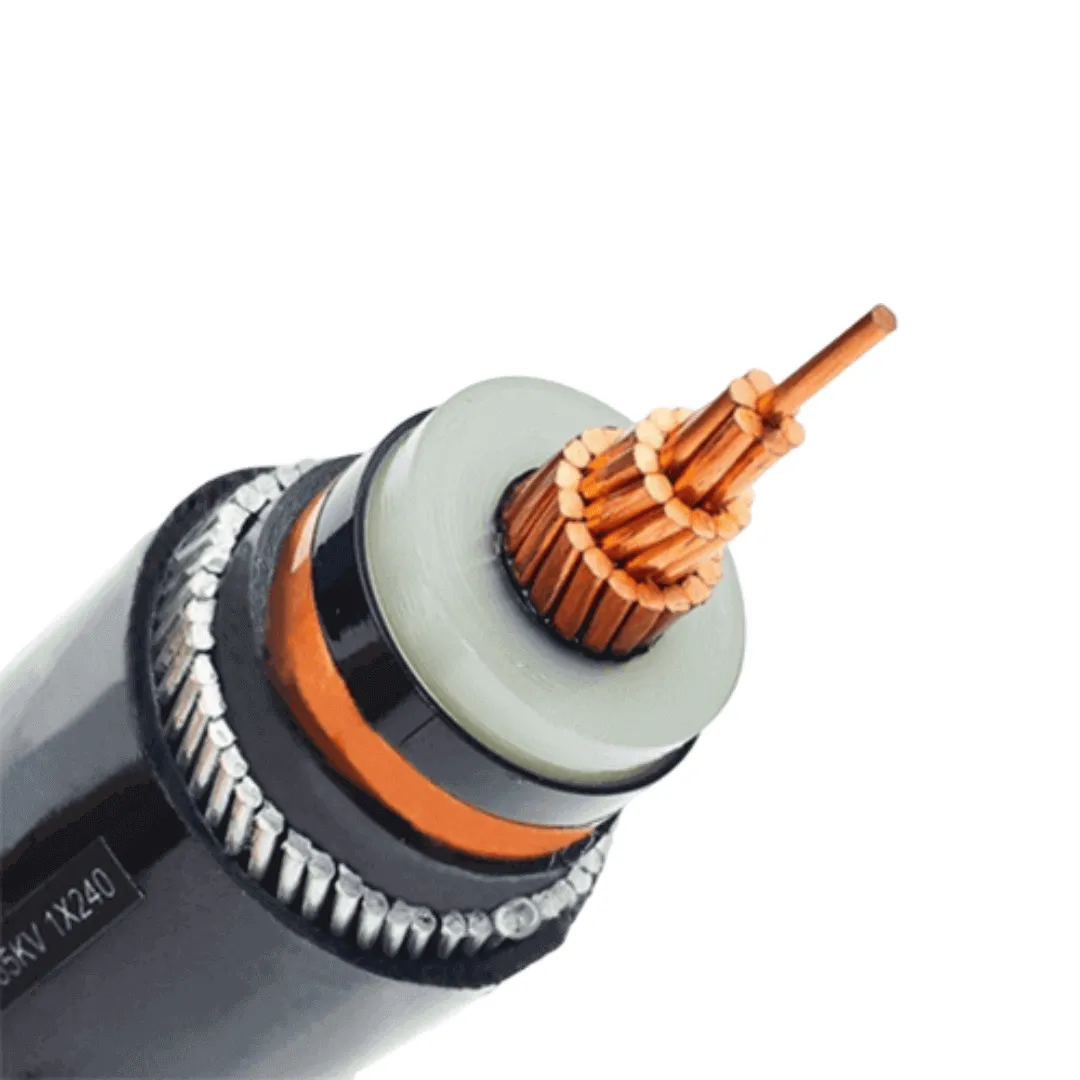
Our XLPE Power Cable Product Range
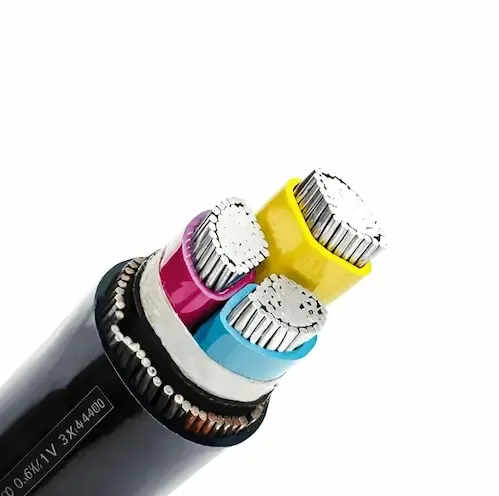
We manufacture the full spectrum of XLPE insulated power cables, organized by voltage class. Every cable in our range is available with copper or aluminum conductors, various armour types, and single-core or multi-core configurations.
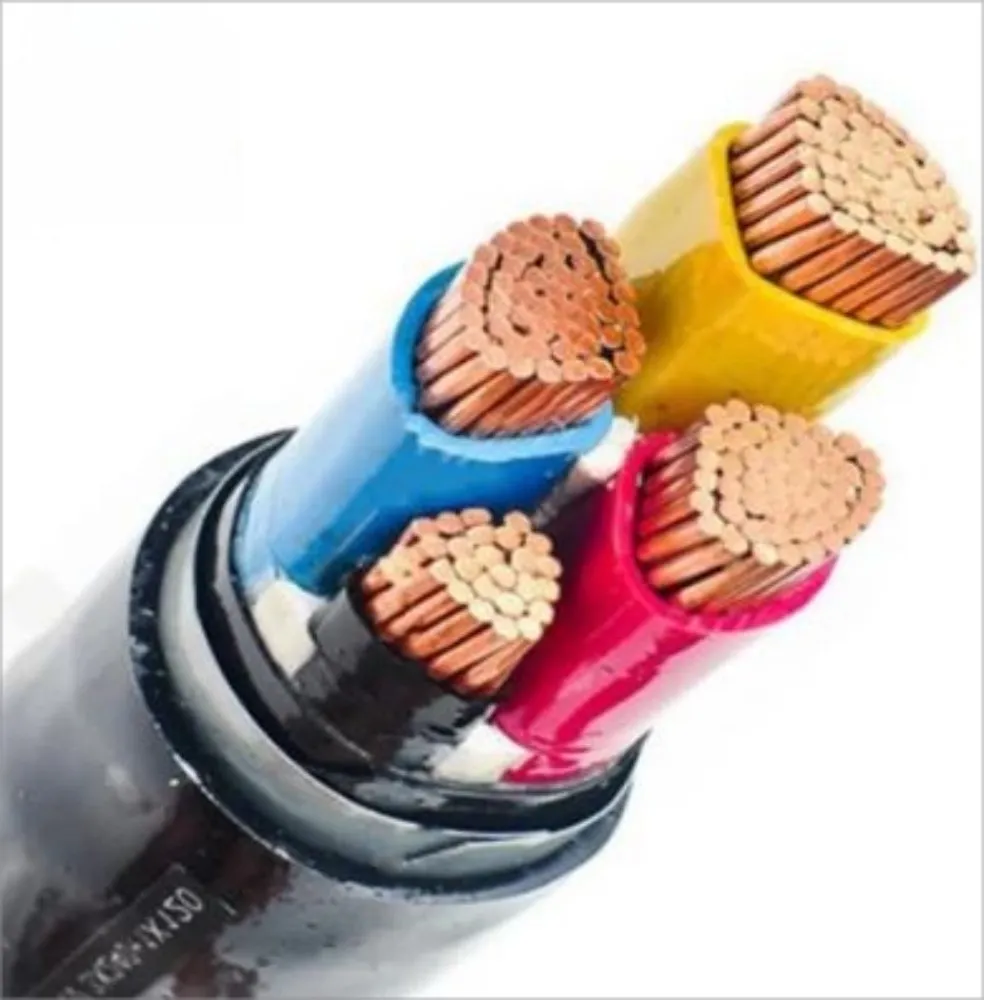
Low Voltage XLPE Cable (0.6/1kV)
Our most popular product line for building services, industrial plants, and underground distribution networks.
Type designations:
- YJV — XLPE insulated, PVC sheathed, unarmoured
- YJV22 — XLPE insulated, PVC sheathed, steel tape armoured
- YJV32 — XLPE insulated, PVC sheathed, steel wire armoured (SWA)
- YJLV — Aluminum conductor versions of the above
- YJV23 — Steel tape armoured, PE outer sheath (direct burial)
Specifications available:
| Cores | Cross-section (mm²) | Conductor | Voltage Rating |
|---|---|---|---|
| 1 | 1.5 – 1000 | Cu or Al | 0.6/1kV |
| 2 | 1.5 – 300 | Cu or Al | 0.6/1kV |
| 3 | 1.5 – 400 | Cu or Al | 0.6/1kV |
| 4 | 1.5 – 400 | Cu or Al | 0.6/1kV |
| 3+1 | 1.5 – 400 | Cu or Al | 0.6/1kV |
| 3+2 | 1.5 – 400 | Cu or Al | 0.6/1kV |
| 4+1 | 1.5 – 400 | Cu or Al | 0.6/1kV |
| 5 | 1.5 – 400 | Cu or Al | 0.6/1kV |
Current ratings (copper conductor in air at 30°C ambient, 90°C conductor temperature):
| Cross-section | 1-core | 3-core |
|---|---|---|
| 25 mm² | 140 A | 114 A |
| 50 mm² | 205 A | 167 A |
| 95 mm² | 310 A | 254 A |
| 150 mm² | 405 A | 330 A |
| 240 mm² | 540 A | 441 A |
| 400 mm² | 720 A | 588 A |
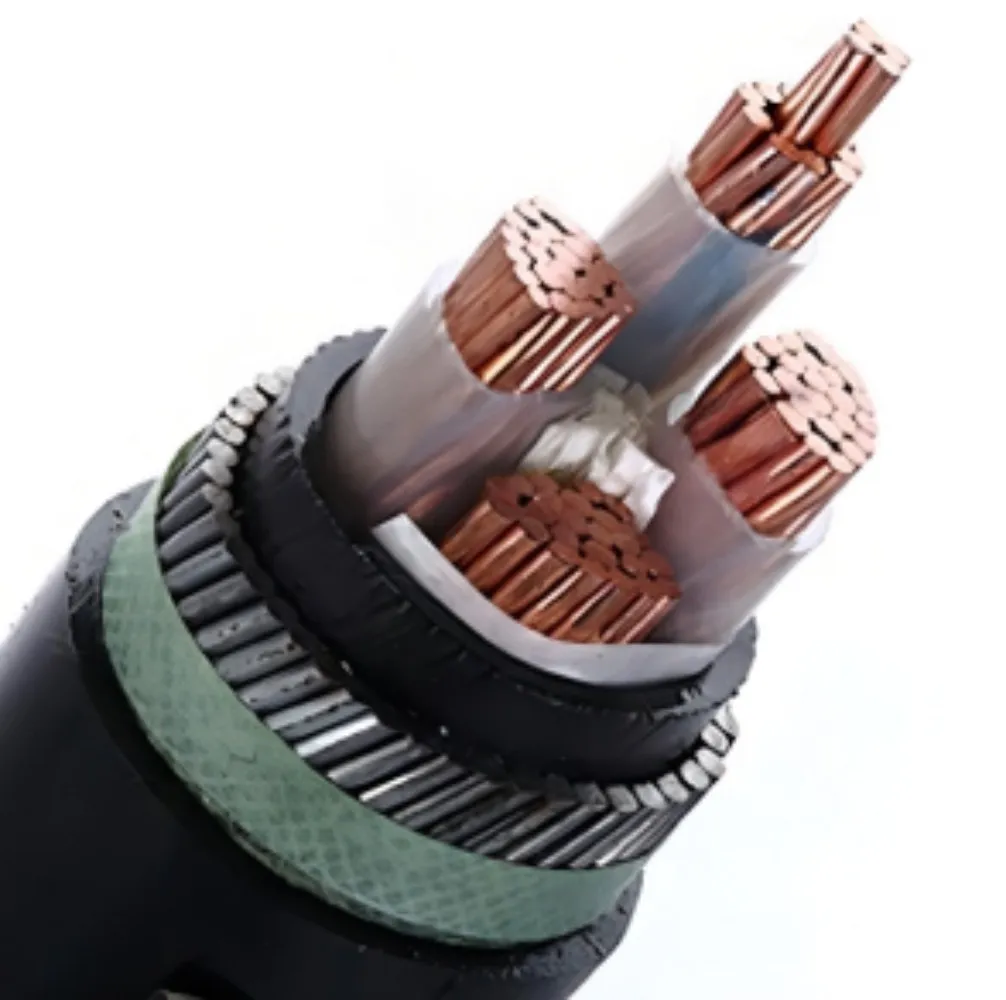
Medium Voltage XLPE Cable (3.6/6kV to 26/35kV)
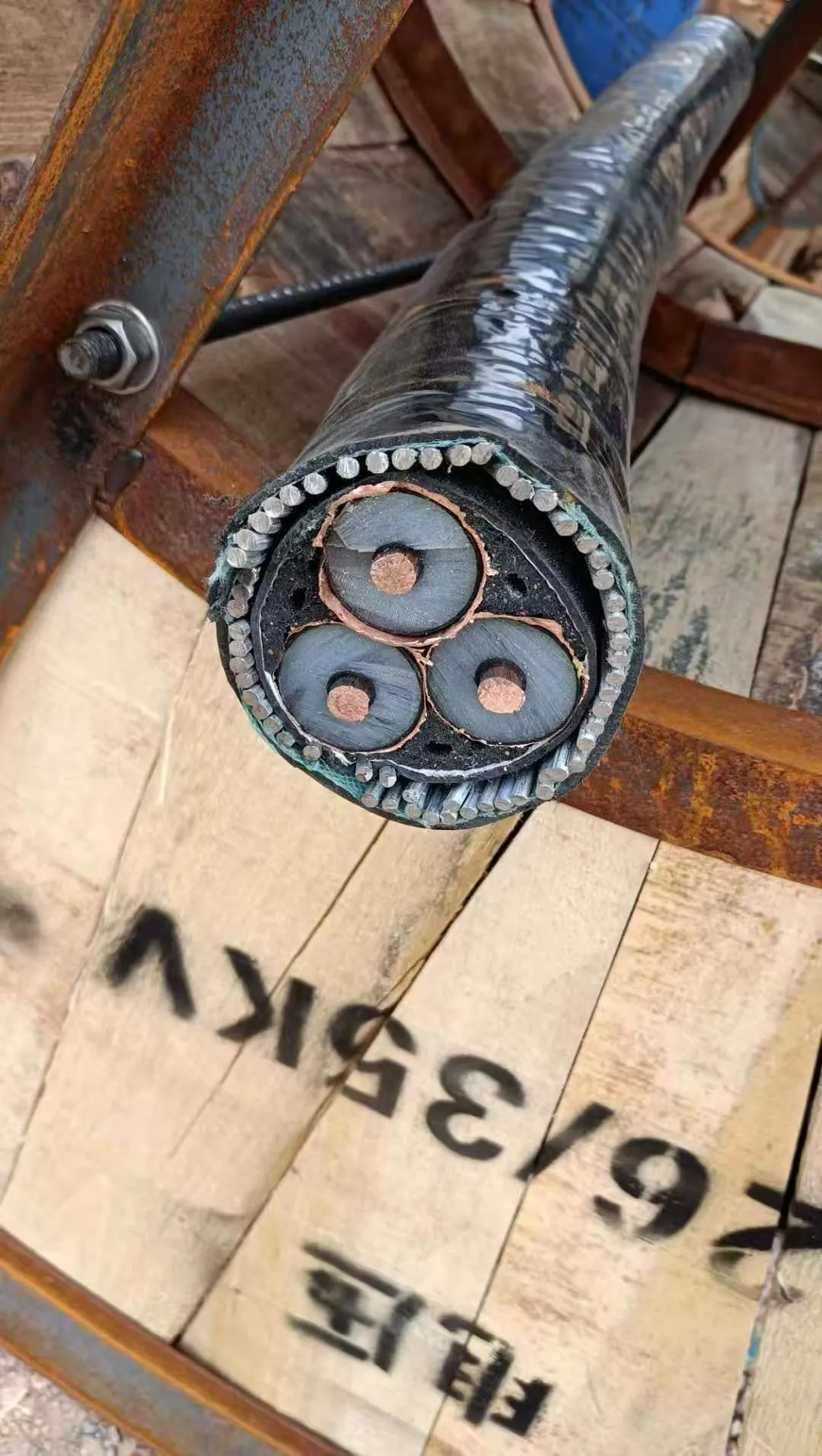
For primary distribution, substation feeders, and utility grid connections. Available with copper wire screen, metallic sheath, and various armour options.
Type designations:
- YJV — Unarmoured, for cable tray or duct installation
- YJV22 — Steel tape armoured
- YJV32 — Steel wire armoured (SWA)
- YJV62 — Corrugated aluminum sheath
- All types available with copper or aluminum conductors
Voltage classes:
| Voltage Rating (U₀/U) | Max System Voltage (Um) | Application |
|---|---|---|
| 3.6/6kV | 7.2kV | Industrial distribution |
| 6/10kV | 12kV | Urban distribution |
| 8.7/15kV | 17.5kV | Utility feeders |
| 12/20kV | 24kV | Primary distribution |
| 18/30kV | 36kV | Sub-transmission |
| 26/35kV | 40.5kV | Grid connection |
Available cross-sections: 25 mm² to 1000 mm² (single-core), 25 mm² to 400 mm² (three-core)
Insulation thickness per IEC 60502-2:
| Voltage | Insulation Thickness |
|---|---|
| 3.6/6kV | 3.4 mm |
| 6/10kV | 3.4 mm |
| 8.7/15kV | 4.5 mm |
| 12/20kV | 5.5 mm |
| 18/30kV | 8.0 mm |
| 26/35kV | 9.0 mm |
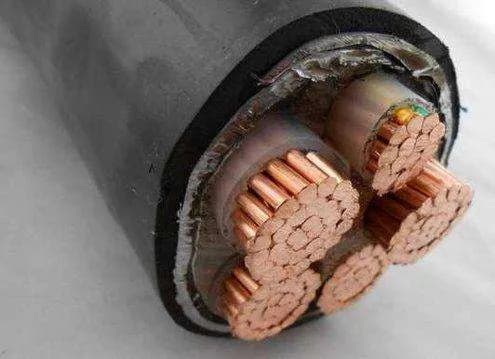
Cable Construction and Materials
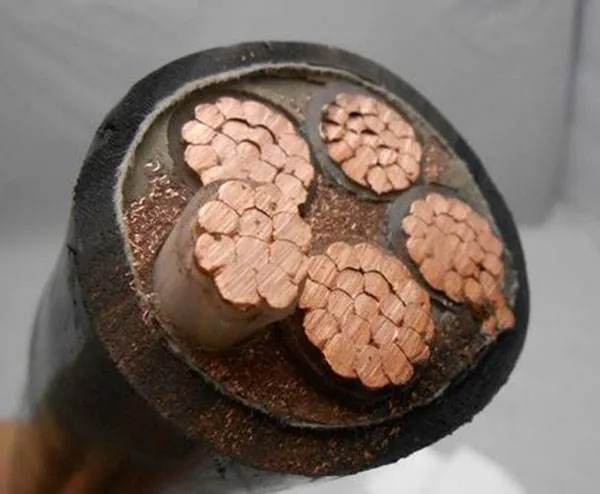
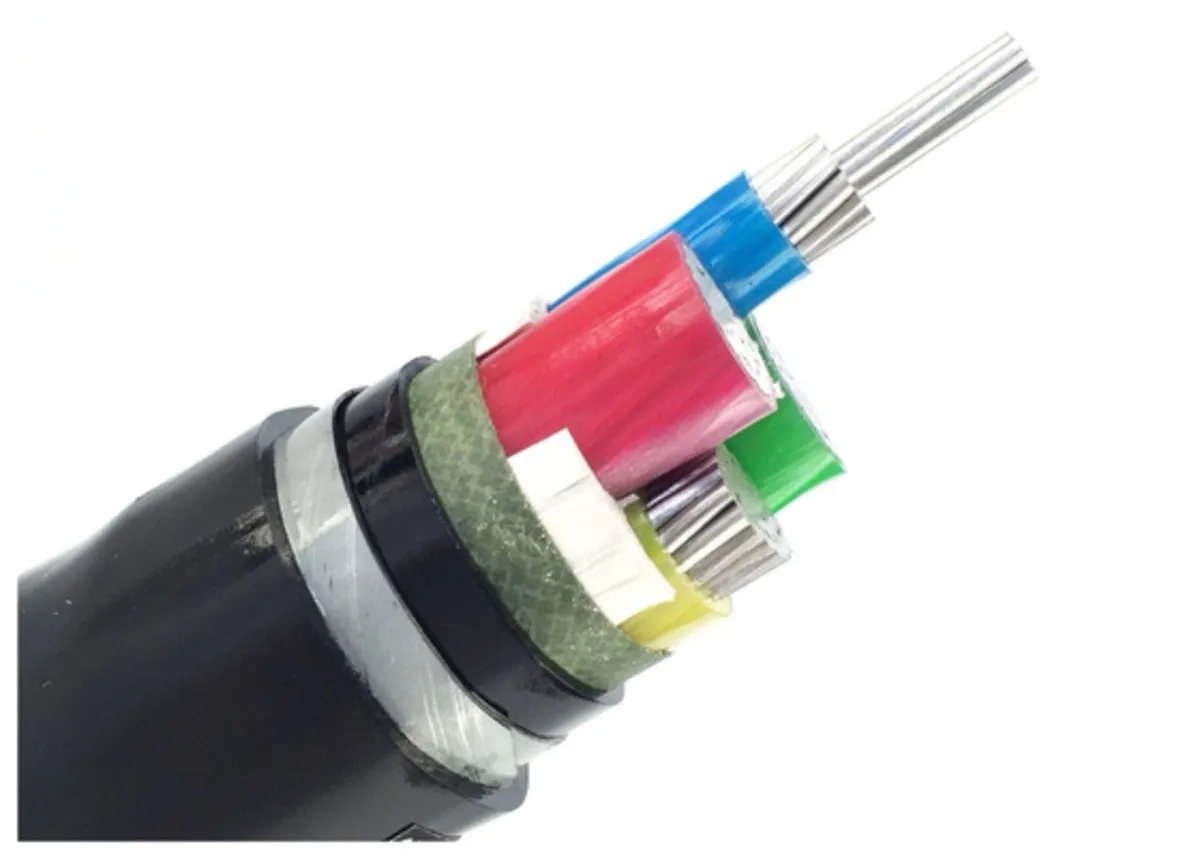
Understanding what goes into an XLPE cable helps you evaluate supplier quality. Here is the layer-by-layer construction from inside out:
Conductor
- Material: Electrolytic copper (purity ≥99.97%) or electrical grade aluminum (purity ≥99.7%)
- Class 1: Stranded round conductor (for smaller cross-sections)
- Class 2: Stranded, compacted circular or sector-shaped conductor (standard for most applications)
- Class 5: Flexible stranded conductor (for cables requiring frequent bending)
Sector-shaped conductors reduce overall cable diameter and material usage for multi-core cables — this is standard practice for 3-core and 4-core designs.
XLPE Insulation
Cross-linked polyethylene insulation is produced through a continuous vulcanization (CV) process. The cross-linking creates a thermosetting structure that does not melt or deform at operating temperature — a critical advantage over thermoplastic PVC.
Key properties:
- Rated conductor temperature: 90°C (continuous)
- Emergency overload temperature: 130°C
- Short-circuit temperature: 250°C (5 seconds)
- Excellent moisture resistance
- Low dielectric loss (tan δ)
- Volume resistivity: ≥1.0 × 10¹² Ω·m
Screening (Medium Voltage Only)
MV cables include:
- Conductor screen: Semi-conductive XLPE layer bonded to insulation, eliminates air gaps
- Insulation screen: Semi-conductive layer over insulation
- Metallic screen: Copper wire or copper tape screen for fault current return path
Inner Sheath / Bedding
PVC or PE bedding layer between cable cores and armour. Provides mechanical cushioning and prevents armour from damaging insulation during bending.
Armour
- Non-magnetic steel tape armour (STA): Two layers of non-magnetic steel tape, helically wound. Suitable for direct burial without heavy mechanical stress.
- Steel wire armour (SWA): Galvanized steel wires laid helically. Superior tensile strength for installations with pulling forces or vertical runs.
- Aluminum wire armour (AWA): Non-magnetic option for single-core cables to avoid eddy current heating.
Outer Sheath
- PVC: Standard option, flame retardant
- PE (Polyethylene): Better moisture resistance for wet environments
- LSZH (Low Smoke Zero Halogen): For enclosed spaces, tunnels, and buildings requiring fire safety
Standards and Certifications
Every cable we produce is manufactured and tested to recognized international standards. Here is what each standard covers and why it matters for your project:
IEC 60502-1 — Low Voltage Power Cables (0.6/1kV)
The international baseline for LV power cables with extruded insulation. Covers conductor requirements, insulation and sheath thickness, electrical tests (voltage withstand, insulation resistance), and mechanical tests. Accepted in most countries worldwide.
IEC 60502-2 — Medium Voltage Power Cables (1kV to 35kV)
Extends IEC 60502-1 for cables rated 1kV to 35kV. Adds requirements for semi-conductive screens, partial discharge testing (≤10 pC at 1.73 U₀), and tan δ measurement. Critical for utility-grade cables.
GB/T 12706 — Chinese National Standard
China's national standard for XLPE power cables, technically equivalent to IEC 60502 with identical test methods and performance requirements. If your project specification calls for IEC 60502, GB/T 12706 certified cable meets the same criteria.
BS 7870 — British Standard
Covers distribution cables for public electricity supply in the UK. Relevant for projects in the UK, former Commonwealth countries, and markets that reference British standards.
ASTM Standards
For projects in North America, we can manufacture to ASTM standards including conductor specifications per ASTM B3 (copper) and B231 (aluminum).
Factory Testing (Routine Tests)
Every production drum of cable undergoes:
- Conductor resistance measurement — verifies conductor cross-section and purity
- High voltage test — AC voltage withstand per IEC 60502 Table 18
- Insulation resistance — measured at rated voltage
- Partial discharge test (MV cables) — must be ≤10 pC at 1.73 U₀
- Dimensional checks — insulation thickness, sheath thickness, outer diameter
Test reports are provided with every shipment.
XLPE vs PVC Cable — Why XLPE Wins for Underground and Industrial Use
If you are choosing between XLPE and PVC insulated cables for your project, here is the direct comparison:
| Property | XLPE Cable | PVC Cable |
|---|---|---|
| Max conductor temperature | 90°C | 70°C |
| Emergency overload | 130°C | — |
| Short-circuit temperature | 250°C | 160°C |
| Current carrying capacity | Higher (20-30% more than PVC at same size) | Lower |
| Moisture resistance | Excellent | Good |
| Dielectric loss | Low | Higher |
| Voltage range | Up to 500kV | Up to 6kV practical |
| Service life | 30-40 years | 20-25 years |
| Weight | Lighter at equivalent rating | Heavier |
| Cost | Slightly higher material cost | Lower material cost |
| Best for | Underground, industrial, high-load, MV/HV | Light-duty LV, indoor wiring |
The verdict: For any underground installation, industrial feeder, or application above 1kV, XLPE is the standard choice. The higher current rating means you can often use a smaller conductor size — which offsets the slightly higher insulation cost and actually saves money on copper.
PVC cables still make sense for indoor LV wiring, lighting circuits, and applications under 4kV where conductor temperatures stay well below 70°C. For everything else, XLPE is the engineering and economic choice.
Application Scenarios
Our XLPE cables serve projects across every sector that requires reliable power distribution:
Utility Power Grids
Primary and secondary distribution networks, substation interconnections, underground urban feeders replacing overhead lines. Voltage classes from 6/10kV to 26/35kV. Single-core cables for high-capacity trunk lines, three-core cables for distribution branches.
Industrial Parks and Manufacturing Plants
Main power supply from substation to factory buildings. 0.6/1kV for internal distribution, 10kV or 35kV for incoming supply. Steel wire armoured types for cable trenches and outdoor buried routes.
Real Estate and Commercial Buildings
Underground distribution from transformer stations to residential towers. Multi-core 0.6/1kV cables (3+1, 3+2, 4+1 configurations) for building risers and basement distribution.
Solar and Renewable Energy Projects
Collector cables connecting inverter stations to grid tie-in points. Medium voltage XLPE cables (typically 33kV or 35kV) for solar farm internal networks. Aluminum conductor versions preferred for long horizontal runs where weight savings reduce installation cost.
Mining Operations
Armoured XLPE cables for pit power distribution. Steel wire armour (SWA) provides mechanical protection in harsh underground environments. Fire-retardant outer sheath options available for compliance with mining safety regulations.
Infrastructure Projects
Tunnel power supply, airport runway lighting feeders, port and dock installations, railway traction power distribution. LSZH sheath options for tunnels and enclosed spaces.
Quality Assurance — Testing and QC Process
Buying factory direct means you need confidence in quality control. Here is our complete QC process from raw material to container loading:
Incoming Material Inspection
- Copper rod: Conductivity test (≥100% IACS), visual inspection, diameter measurement
- XLPE compound: Melt flow index, cross-linking degree verification, moisture content
- Steel tape/wire: Zinc coating thickness, tensile strength, dimensions
In-Process Quality Control
- Conductor stranding: Lay length measurement, wire count verification, resistance check per unit length
- Insulation extrusion: Continuous eccentricity monitoring, thickness measurement at intervals, surface quality inspection
- Cross-linking: CV line temperature profile monitoring, hot-set test on samples (elongation ≤175%, set ≤15% per IEC 60811)
- Armouring: Tape/wire overlap measurement, uniformity check
Finished Cable Testing (100% Routine Tests)
Every drum undergoes the full routine test sequence per IEC 60502:
- Conductor resistance at 20°C — must meet IEC 60228 values
- AC voltage withstand — 3.5 kV for 5 minutes (0.6/1kV cables)
- Insulation resistance — ≥100 MΩ·km at rated voltage
- Partial discharge (MV) — ≤10 pC at 1.73 U₀
- Sheath integrity test — 10 kV DC for 1 minute (armoured cables)
Type Testing and Sample Testing
For new designs or customer requirements, we perform type tests including:
- Bending test (per IEC 60502)
- Tan δ measurement
- Lightning impulse test (MV cables)
- Long-term aging test
- Fire performance test (for flame-retardant grades)
Third-Party Inspection
We welcome pre-shipment inspection by your appointed third-party agency (SGS, BV, Intertek, TUV, or your own representative). Factory access is open for inspection visits.
Packaging, Shipping, and Export
Cable Drums
- Standard wooden drums (reusable) sized to cable diameter and ordered length
- Steel drums available for heavy cables or sea freight requiring extra protection
- Maximum drum width fits standard 20ft and 40ft container doors
Container Loading
- 20ft container: Typically 18-22 tonnes net cable weight depending on drum sizes
- 40ft container: Up to 26 tonnes
- Drums secured with steel strapping and wooden chocks to prevent movement during transit
Shipping Terms
We offer flexible shipping arrangements:
- FOB (Chinese port): You arrange ocean freight. Most common for buyers with established freight partners.
- CIF (destination port): We handle freight and insurance to your port. Simpler for first-time buyers.
- CFR, DAP, DDP: Available on request for specific trade requirements.
Documentation Provided
Every shipment includes:
- Commercial invoice and packing list
- Certificate of origin
- Full routine test report (per drum)
- Material certificates
- Certificate of conformity to specified standards
- Bill of lading
- Insurance certificate (CIF terms)
How to Order — Step by Step
Buying XLPE cables from us is straightforward. Here is the typical process from first inquiry to delivery:
Step 1: Send Your Cable Specification
Tell us what you need:
- Voltage rating
- Conductor material (copper or aluminum)
- Number of cores and cross-section size
- Armour type (if required)
- Total quantity (meters or km)
- Applicable standard (IEC, BS, GB, ASTM)
- Destination port or delivery address
Email us or use the contact form on this website.
Step 2: Receive Your Quotation
We respond within 24 hours with:
- Unit price per meter (based on current copper/aluminum market price)
- Production lead time
- Recommended packaging
- Shipping cost estimate (if CIF requested)
Prices are typically valid for 7 days due to raw material market fluctuations.
Step 3: Confirm Order and Payment
After you confirm the quotation:
- We issue a proforma invoice
- Payment terms: typically 30% deposit, 70% before shipment (negotiable for repeat customers)
- Production begins after deposit receipt
Step 4: Production and QC
- Production timeline depends on order volume and cable type
- You receive progress updates
- Routine test reports generated for each drum
- Pre-shipment inspection arranged if requested
Step 5: Shipping and Delivery
- Container loading photos provided
- Shipping documents sent within 48 hours of vessel departure
- Cargo tracking information shared
- Any post-delivery support needed — we are available
Frequently Asked Questions
What is the minimum order quantity for XLPE cables?
We accommodate orders from a single drum (typically 100-500 meters depending on cable size) up to multi-container project orders. Contact us with your specific quantity for confirmation and best pricing.
Can you produce cables to my custom specification?
Yes. If your project requires non-standard configurations (specific colour coding, custom markings, particular sheath materials, or modified dimensions), we can produce to your specification. Provide your technical drawing or specification sheet for a quote.
How do XLPE cables perform in high temperature environments?
XLPE insulation is rated for continuous conductor temperature of 90°C, emergency overload at 130°C, and short-circuit at 250°C for 5 seconds. The ambient temperature where the cable is installed determines derating factors — we can provide derating tables for your specific installation conditions.
Do you supply single-core or three-core MV cables?
Both. Single-core cables are preferred for large cross-sections (above 300 mm²) where three-core designs become impractically heavy. Three-core cables are more economical for cross-sections up to 300 mm² and simplify installation with fewer cable runs.
What armour type should I choose?
- Non-magnetic steel tape armour (STA / Type 22): Standard for direct burial without significant tensile stress. Lower cost.
- Steel wire armour (SWA / Type 32): When cables are pulled through ducts, installed vertically, or face mechanical impact risk. Higher tensile strength.
- Unarmoured: For cable tray, duct, or indoor installations where external mechanical protection is provided.
Can you provide cables with LSZH (Low Smoke Zero Halogen) sheath?
Yes. LSZH outer sheath is available for all our XLPE cable types. This is commonly required for tunnels, metro systems, airports, commercial buildings, and any enclosed space where smoke density and toxic gas emission must be minimized in a fire event.
How are your cables marked?
Cables are permanently printed with: manufacturer name, cable type designation, voltage rating, conductor size, core count, applicable standard, year of manufacture, and sequential meter marking. Custom print text can be arranged.
What quality certifications do you hold?
Our factory holds ISO 9001:2015, ISO 14001:2015, and CCC (China Compulsory Certification). Our cables are tested and certified to IEC 60502-1, IEC 60502-2, GB/T 12706, and can be manufactured to BS 7870 or ASTM standards on request.
How long does production take?
Production timelines vary by order size, cable type, and current factory schedule. Standard LV cables in common sizes typically have shorter lead times than large-cross-section MV cables that require specialized tooling. Contact us for a timeline specific to your order.
Do you offer technical support after purchase?
Yes. Our engineering team can assist with cable selection, installation recommendations, derating calculations, and any technical questions that arise during your project. This support is included with your purchase.
Get a Quote for Your XLPE Cable Project
Ready to source XLPE power cables factory direct from China? Send us your cable specification and quantity, and we will respond within 24 hours with competitive pricing and production timeline.
What to include in your inquiry:
- Voltage rating and standard (IEC/BS/GB)
- Conductor material and cross-section
- Number of cores
- Armour type
- Total length required
- Destination country/port
Contact us for a free quotation — our export team is ready to support your project from specification to delivery.
Related articles you may find useful:
- XLPE Power Cable Complete Specifications Guide — Detailed specification tables and technical deep-dive
- Nexans vs Chinese Manufacturers: Price & Quality Compared — Side-by-side cost analysis
- SWA Armoured Cable: Supplier & Specifications Guide — Steel wire armoured cable sizing and selection
- 3-Phase Power Cable Sizes & Specifications — Three-phase cable selection for industrial applications
- How to Import Cable from China: Step-by-Step Guide — Complete importing guide with trade terms and logistics
- Top 10 XLPE Cable Manufacturers in China — Compare China’s leading XLPE cable factories