Key Takeaway
ACSR conductor specifications: full size chart (Rabbit to Moose), weight table, breaking strength, current capacity. 60-line China factory with IEC 61089 certification. Competitive bulk pricing — request FOB quote.
ACSR (Aluminium Conductor Steel Reinforced) is the most widely installed overhead conductor in the world — powering transmission and distribution networks from 11kV rural lines to 500kV bulk power corridors. If you're sourcing ACSR for a utility project, EPC contract, or rural electrification programme, this guide covers everything you need: construction, full specification tables, pricing logic, and what to look for in a factory.
We manufacture ACSR across 60 production lines at our facility in Henan, China — certified to IEC 61089, ASTM B232, BS 215, and GB/T 1179. Below is what we know from producing thousands of tonnes annually for projects in Africa, the Middle East, and Southeast Asia.
What Is ACSR Conductor?
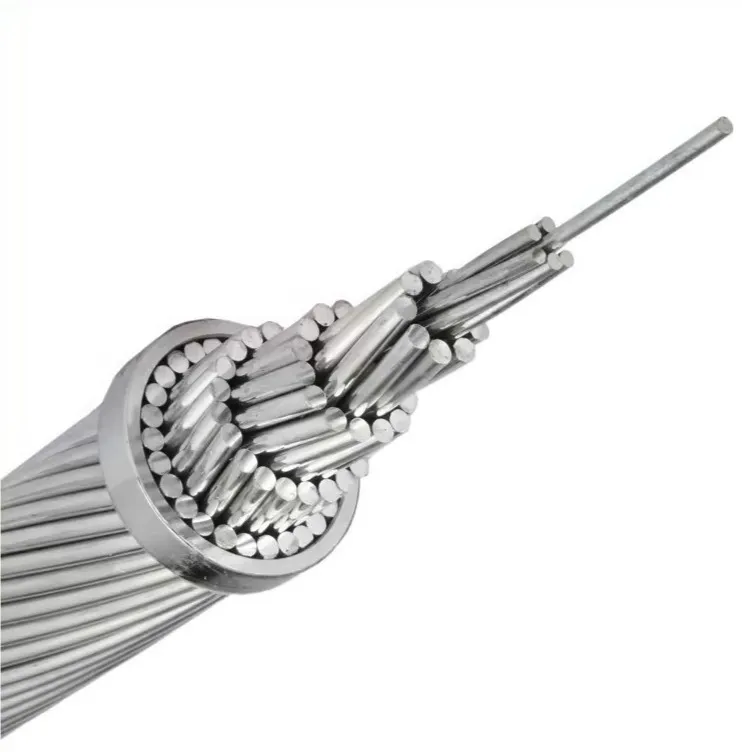
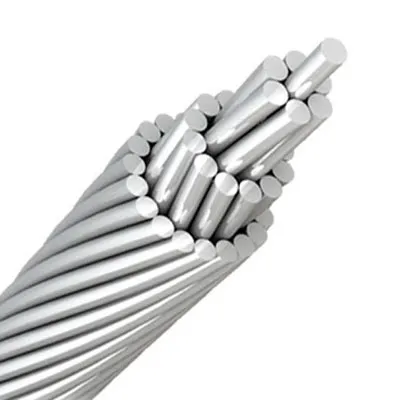
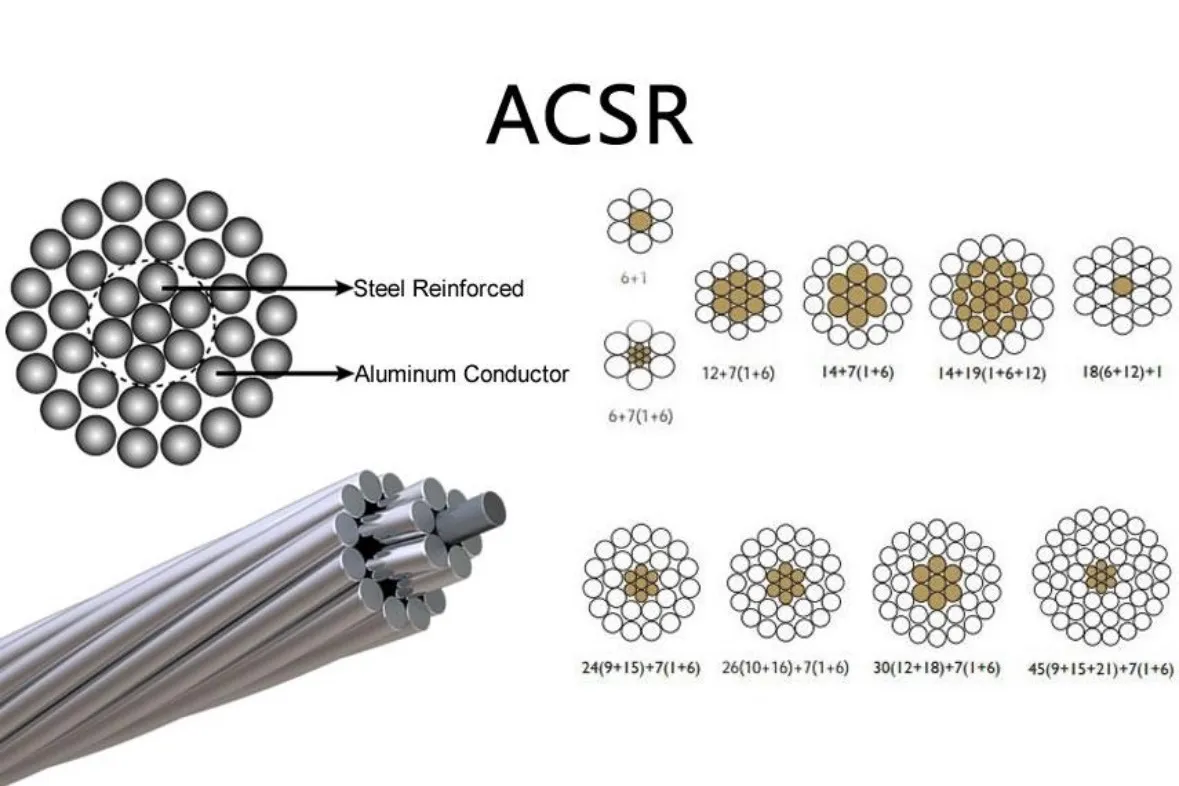
ACSR stands for Aluminium Conductor Steel Reinforced. The conductor consists of a central core of galvanized steel wires surrounded by one or more layers of hard-drawn 1350-H19 aluminium wires, stranded concentrically.
How it works:
- The steel core carries mechanical tension — it holds the conductor's own weight plus wind/ice loads across spans
- The aluminium layers carry electrical current — aluminium is lightweight and has excellent conductivity
- Together they deliver the optimal strength-to-weight ratio at the lowest cost per ampere-kilometre
This dual-material design is why ACSR remains the default choice for overhead lines even after 100+ years — no single material beats it on the cost/performance tradeoff for long spans.
ACSR Conductor Construction & Stranding
The stranding configuration defines an ACSR conductor's mechanical and electrical behaviour. It is expressed as aluminium wires / steel wires — for example, 26/7 means 26 aluminium wires over 7 steel wires.
Common Stranding Configurations
| Stranding | Al/St Ratio | Strength Class | Typical Application |
|---|---|---|---|
| 6/1 | High aluminium | Standard | Distribution lines, short spans ≤200m |
| 7/1 | High aluminium | Standard | Light-duty distribution |
| 26/7 | Balanced | Medium | General transmission 66kV–132kV |
| 30/7 | Balanced | Medium | Sub-transmission, medium spans |
| 54/7 | High aluminium | Standard | Long-span transmission 220kV+ |
| 54/19 | High steel | Extra-high | River crossings, mountain spans 500m+ |
Rule of thumb: More steel wires = higher breaking strength but slightly lower conductivity. Choose 54/19 for extreme spans (river crossings, valley crossings); use 54/7 or 26/7 for standard transmission.
Material Grades
| Component | Standard Grade | Notes |
|---|---|---|
| Aluminium wire | 1350-H19 | Min. 61% IACS conductivity |
| Steel core (standard) | Galvanized Class A/B | Zinc coating ≥260 g/m² (Class B) |
| Steel core (corrosion) | Aluminium-clad (AW) | For coastal/high-humidity environments |
| Grease (optional) | Petroleum-based compound | Applied between layers for marine use |
Complete ACSR Specifications & Size Chart
Below is our full production range based on IEC 61089. These are the sizes most frequently ordered by our export clients:
Small & Medium Sizes (Distribution)
| Code Name | Al Area (mm²) | St Area (mm²) | Stranding (Al/St) | Overall Ø (mm) | Weight (kg/km) | Breaking Load (kN) | Current Rating* (A) |
|---|---|---|---|---|---|---|---|
| Gopher | 25 | 4.17 | 6/1 | 6.35 | 103 | 8.0 | 130 |
| Weasel | 30 | 5.0 | 6/1 | 6.93 | 120 | 9.6 | 145 |
| Rabbit | 50 | 8.33 | 6/1 | 9.45 | 215 | 16.3 | 210 |
| Raccoon | 75 | 12.5 | 6/1 | 11.4 | 299 | 23.1 | 275 |
| Dog | 100 | 16.7 | 6/7 | 14.15 | 394 | 32.7 | 340 |
| Jaguar | 125 | 20.8 | 6/7 | 15.6 | 488 | 40.6 | 390 |
Medium & Large Sizes (Transmission)
| Code Name | Al Area (mm²) | St Area (mm²) | Stranding (Al/St) | Overall Ø (mm) | Weight (kg/km) | Breaking Load (kN) | Current Rating* (A) |
|---|---|---|---|---|---|---|---|
| Wolf | 150 | 25.0 | 30/7 | 17.28 | 576 | 52.1 | 450 |
| Lynx | 175 | 29.2 | 30/7 | 18.13 | 674 | 60.7 | 495 |
| Panther | 200 | 33.3 | 30/7 | 20.04 | 767 | 68.9 | 540 |
| Bear | 250 | 41.7 | 30/7 | 22.26 | 958 | 86.1 | 630 |
| Zebra | 400 | 50.0 | 54/7 | 28.62 | 1621 | 131.9 | 830 |
| Moose | 500 | 64.5 | 54/7 | 31.77 | 2004 | 159.2 | 955 |
| Bison | 550 | 70.8 | 54/19 | 33.35 | 2210 | 183.4 | 1020 |
*Current ratings at 75°C conductor temperature, 35°C ambient, 0.6 m/s wind speed.
Don't see your required size? We produce ACSR to custom specifications — just tell us the aluminium cross-section, steel ratio, and applicable standard.
Interested in this product?
Get ACSR Price for Your Size — Send InquiryACSR Conductor Standards & Certifications
Different regions and clients require compliance with specific standards. We manufacture to all of the following:
| Standard | Region | Full Name |
|---|---|---|
| IEC 61089 | International | Round wire concentric lay overhead electrical stranded conductors |
| ASTM B232 | North America | Standard Specification for Concentric-Lay-Stranded ACSR |
| BS 215 Part 2 | UK/Commonwealth | Aluminium Conductors, Steel Reinforced |
| NFC 34-125 | France/Francophone Africa | Conducteurs câblés en aluminium-acier |
| GB/T 1179 | China | Round wire concentric lay overhead conductors |
| IS 398 | India | Aluminium Conductors for Overhead Transmission |
Our Certifications
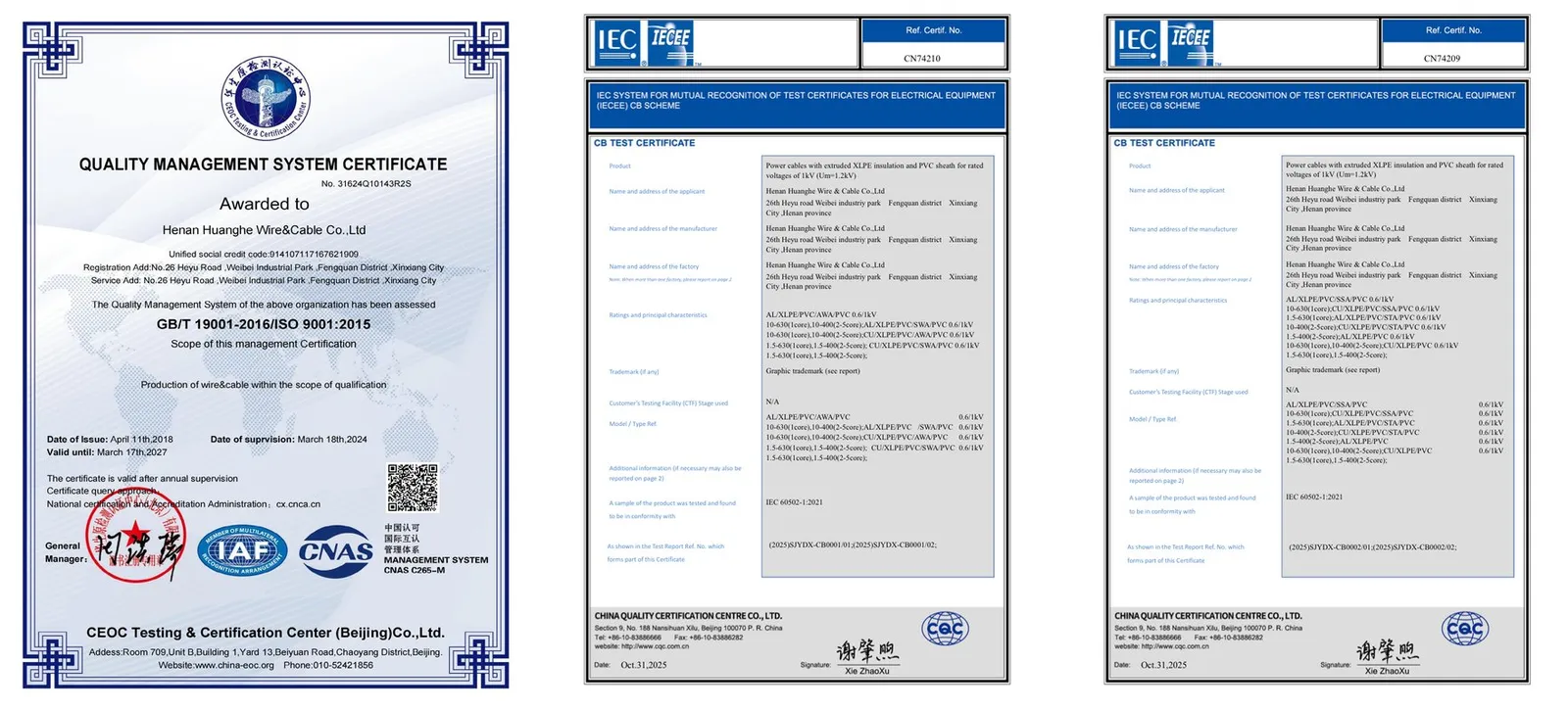
We hold ISO 9001:2015 quality management, ISO 14001 environmental management, IECEE CB Certificate, and KEMA type test reports. All certificates are available for download upon request, and we welcome factory audits from any third-party inspection company (SGS, BV, TUV).
How We Manufacture ACSR — Factory Process
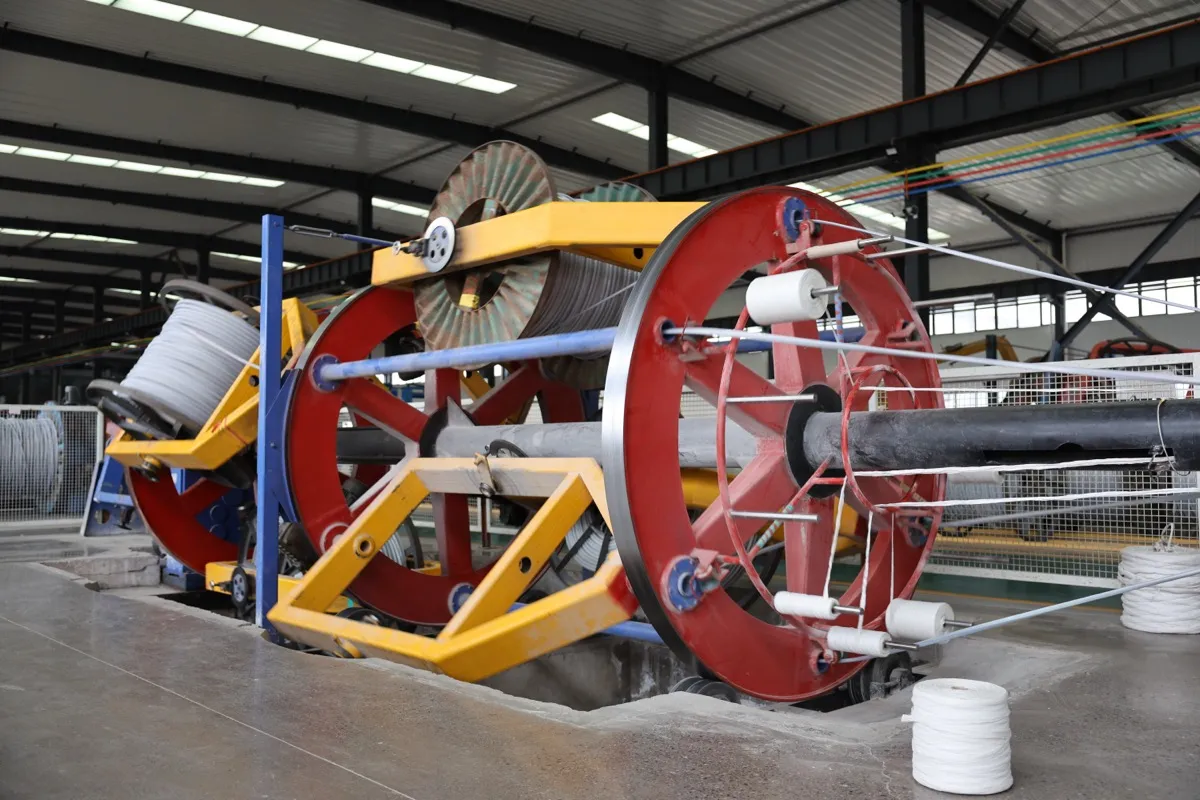
Understanding the manufacturing process helps you evaluate supplier quality. Here's what happens at our facility:
Step 1: Aluminium Rod Drawing
Continuous-cast 9.5mm aluminium rod (99.7% purity, EC grade) is drawn through a series of dies to reach the target wire diameter (1.5mm–4.5mm depending on conductor size). Each wire is tested for tensile strength and electrical resistance.
Step 2: Steel Wire Galvanizing & Drawing
High-carbon steel wire rod is drawn to size, then hot-dip galvanized (zinc coating Class A or B per IEC 60888). For corrosive environments, we apply aluminium cladding (ACSR/AW). Zinc coating weight is tested per batch.
Step 3: Stranding
Steel core wires are stranded first on a rigid-frame strander. Then aluminium layers are applied concentrically on a tubular strander — each layer in opposite direction (right-hand, left-hand alternating) to prevent unwinding.
Critical quality point: Lay ratio (pitch/diameter) must stay within 10–16× per IEC 61089. We monitor this with laser measurement in real-time.
Step 4: Quality Testing
Every production drum undergoes:
- Breaking load test — must exceed rated strength
- DC resistance measurement — must be ≤ standard max (20°C reference)
- Dimensional check — wire diameter tolerance ±1%, overall diameter ±2%
- Zinc coating test — Preece test (number of dips without copper deposition)
- Wrapping test — no cracks on individual wires after wrapping around mandrel
Step 4a: In-Process Quality Gates
Beyond final testing, quality is built into each production stage through real-time monitoring:
Wire drawing stage:
- Laser micrometer checks wire diameter continuously (tolerance ±0.02mm)
- Tensile strength sampled every 5 km of drawn wire per IEC 61089 requirements
- Surface inspection for die marks, scratches, or inclusions that weaken the wire
- Electrical resistance measured inline to confirm conductivity meets 61.2% IACS minimum
Galvanizing stage (steel core):
- Zinc bath temperature monitored at 450±10°C for consistent coating weight
- Preece test performed on samples from each galvanizing run (minimum 4 one-minute immersions in copper sulphate without copper deposition for Class B per IEC 60888)
- Coating weight verified by gravimetric method: minimum 260 g/m² for Class B, 390 g/m² for Class A
- For aluminium-clad steel (ACS/AW), cladding thickness verified by micrograph cross-section
Stranding stage:
- Lay ratio monitored by laser measurement in real-time (must remain 10–16× per layer)
- Back-tension on each wire controlled to prevent birdcaging (loose wires popping out of lay)
- Direction of lay alternates between layers — verified visually and by rotation test
- Strand count verified against specification at start of each drum
Final conductor testing (per drum):
- Full breaking load test on representative samples (destructive test, one sample per production lot or per 10 drums, whichever is more frequent)
- 100% DC resistance measurement on every drum at 20°C reference (temperature-corrected)
- Overall diameter measured at three points along the drum length
- Length verified by mechanical counter against drum marking
Step 4b: Documentation & Traceability
Each drum receives a unique production ID linking:
- Aluminium rod batch number (traceable to smelter)
- Steel wire batch and galvanizing run number
- Stranding machine ID and operator
- All test results (resistance, dimensions, zinc coating)
- Final inspection sign-off
This traceability chain is critical for projects requiring full Mill Test Certificates (MTCs). Our MTCs include all raw material certificates, process records, and test results — compliant with IEC 61089 Annex A documentation requirements.
Step 5: Packaging & Drum Loading
Finished conductor is wound onto steel or wooden drums with proper tension. Drum flanges are reinforced for ocean transport. We apply weatherproof wrap and metal battens for container loading.
ACSR Price: What Determines the Cost?
ACSR pricing is driven by raw materials (75–80% of total cost). Here's what affects your quote:
1. LME Aluminium Price
Aluminium accounts for the majority of ACSR weight. The London Metal Exchange (LME) aluminium cash price directly sets the baseline. We quote based on LME + processing fee.
2. Steel Core Cost
Galvanized steel wire adds a significant premium on top of the aluminium component. Higher steel ratios (54/19 configuration) cost more per km than standard 54/7.
3. Cross-Section Size
Larger conductors (Zebra, Moose) use more material per km but have lower processing cost per tonne — economy of scale. Smaller sizes (Rabbit, Dog) have higher per-km processing overhead.
4. Quantity & Payment Terms
| Order Volume | Typical Discount |
|---|---|
| 1 drum (trial) | List price |
| 50–200 tonnes | 2–3% off |
| 500+ tonnes (project lot) | Negotiable, best price |
5. Packaging & Delivery Terms
- FOB China port — Most competitive. We load containers at Qingdao/Shanghai/Tianjin.
- CIF destination — We arrange shipping. Freight cost varies depending on destination.
- Wooden drums vs. steel drums — Steel drums cost more but are reusable; wooden drums are lighter and cheaper for one-way shipment.
Price Indication (Reference Only)
We don't publish fixed prices because aluminium fluctuates daily. But as a rough reference:
| Size | Approximate FOB Range (USD/km) |
|---|---|
| Rabbit 50/8 | $350–450 |
| Dog 100/17 | $650–800 |
| Wolf 150/25 | $950–1,150 |
| Panther 200/33 | $1,250–1,500 |
| Zebra 400/50 | $2,600–3,100 |
Prices vary with LME, order quantity, and payment terms. Valid as reference only — request a formal quotation for exact pricing.
Interested in this product?
Get Today's ACSR Factory Price — Free QuoteACSR vs AAC vs AAAC: Which Conductor to Choose?
This is the most common question we get from project engineers. Here's a direct comparison:
| Feature | ACSR | AAC | AAAC |
|---|---|---|---|
| Core material | Galvanized steel | None (all aluminium) | None (all aluminium alloy) |
| Tensile strength | ★★★★★ Highest | ★★☆ Low | ★★★☆ Medium |
| Current capacity (same OD) | ★★★☆ | ★★★★ Best | ★★★★ |
| Corrosion resistance | ★★★☆ (needs greasing in coastal) | ★★★★★ | ★★★★★ |
| Weight | ★★★☆ Medium-heavy | ★★★★ Lightest | ★★★★ Light |
| Sag at long spans | ★★★★★ Least sag | ★★☆ Most sag | ★★★☆ |
| Cost per km | ★★★★ Economical | ★★★★★ Cheapest | ★★★☆ |
When to Choose Each
- ACSR → Long spans (300m+), high-voltage transmission, heavy ice/wind loading, cost-sensitive bulk projects
- AAC → Short spans in distribution, coastal environments, urban areas where corrosion is the concern
- AAAC → Medium spans where you need better corrosion resistance than ACSR but more strength than AAC — common in Middle East and Africa
Our recommendation for most export projects: Start with ACSR for transmission and trunk distribution lines. Use AAAC for coastal distribution. Use ABC (Aerial Bundled Cable) for last-mile urban distribution where insulation is required — check our ABC cable pricing guide for current factory rates.
ACSR Applications & Project Cases
Voltage Level Applications
| Voltage | Typical ACSR Size | Span Length |
|---|---|---|
| 11kV–33kV distribution | Rabbit, Dog | 80–150m |
| 66kV sub-transmission | Wolf, Lynx | 150–250m |
| 132kV transmission | Panther, Bear | 250–400m |
| 220kV–330kV transmission | Zebra, Moose | 300–500m |
| 500kV EHV transmission | Moose (bundled 2× or 4×) | 400–600m |
Our Export Project Experience
We have supplied ACSR conductors to utility and EPC projects across multiple continents:
- Philippines — 69kV overhead line rehabilitation project, supplied ACSR Dog and Wolf
- Kenya — Power system interconnection project, ACSR Panther and Zebra
- Bangladesh — Rural electrification programme, ACSR Rabbit and Weasel
- Mongolia — Mining infrastructure power supply, ACSR Bear and Zebra
- Botswana — Utility power station connection, ACSR Wolf
We provide full documentation: mill test certificates, packing lists, shipping marks per client specs, and third-party inspection coordination.
How to Choose the Right ACSR Supplier
Not all ACSR manufacturers are equal. Here's what experienced procurement teams look for:
1. Production Capacity & Lead Time
A factory with multiple stranding lines can run your order in parallel — reducing lead time. Our 60 production lines and large annual capacity allow us to handle projects of all sizes efficiently. Contact us for lead time estimates based on your order.
2. Standards Compliance & Type Test
Ask for type test reports (not just routine test). A KEMA or an accredited lab report for breaking load, resistance, and dimensions proves the factory can actually produce to spec — not just claim it.
3. Export Experience
Factories that only serve domestic China market may not understand international packing requirements, documentation (Mill Test Certificate format, shipping marks, LC documentation), or third-party inspection coordination. We've served 50+ countries and handle SGS/BV/TUV inspections routinely.
4. Raw Material Traceability
A reliable factory buys aluminium rod from certified smelters (Chalco, Nanshan, etc.) and can provide material certificates tracing back to the billet. This matters for projects with strict QA requirements.
5. Sample & Trial Order Willingness
Good suppliers will send a 1-metre sample for inspection before you commit to a project lot. We provide free samples for all ACSR sizes in our range.
Packaging & Shipping
Drum Options
| Drum Type | Best For | Weight (empty) |
|---|---|---|
| Wooden drum | One-way shipment, cost-sensitive | Light (50–150 kg) |
| Steel drum | Reusable, heavy conductor | Heavy (200–500 kg) |
| Plywood drum | Balance of cost and strength | Medium |
Standard drum lengths: 2,000m–5,000m depending on conductor size and drum diameter.
Container Loading
- 20GP container: 20–22 tonnes net
- 40HQ container: 24–26 tonnes net
- We calculate optimal drum sizes to maximize container utilization
All drums are wrapped with hessian cloth or stretch film, with steel battens and chocks securing them inside the container.
Frequently Asked Questions
What is the maximum span for ACSR conductor?
Depends on the size and configuration. Standard ACSR 54/7 (like Zebra 400/50) can handle spans up to 500m in flat terrain. For river crossings or mountain spans exceeding 800m, use ACSR 54/19 or specialized high-strength grades.
What is the lifespan of ACSR?
Properly installed ACSR lasts 30–50 years in normal environments. Coastal or industrial-pollution environments reduce life to 20–30 years unless greased or aluminium-clad steel core (ACSR/AW) is specified.
How do I calculate ACSR conductor weight per metre?
Use the formula: Weight (kg/m) = Weight (kg/km) ÷ 1000. For example, Zebra 400/50 weighs 1,621 kg/km = 1.621 kg per metre. For sag-tension calculations, add the ice loading per your local standard.
What is the difference between ACSR and AACSR?
AACSR (Aluminium Alloy Conductor Steel Reinforced) uses 6201 aluminium alloy wires instead of standard EC-grade 1350 aluminium. The alloy gives 10–15% higher strength but slightly lower conductivity. It's used when you need ACSR-like performance in shorter spans without increasing conductor size.
Can you produce ACSR to my custom specification?
Yes. Send us your required aluminium area, steel area, stranding, and applicable standard. We can also produce to utility-specific specs (e.g., specific code names used by national power companies).
What is your minimum order quantity (MOQ)?
MOQ depends on conductor size and order configuration — contact us for specifics. For common sizes (Rabbit, Dog, Wolf, Panther, Zebra), we maintain buffer stock for faster delivery.
Get Your ACSR Quote Today
Tell us your project requirements and we'll provide a detailed quotation within 24 hours:
- Required sizes (code name or Al/St cross-section)
- Quantity (km or tonnes)
- Applicable standard (IEC / ASTM / BS / other)
- Destination port (for CIF pricing)
- Delivery timeline
Email: sales@chinacablefactory.com | WhatsApp: +86 134-6102-4180
Interested in this product?
Send Inquiry — Get Factory Price in 24hRelated Products & Resources
- ACSR Conductor — Product Page
- XLPE Power Cable — for underground sections of the same transmission projects
- AAC & AAAC Conductor Guide — when to choose all-aluminium conductors
- ABC Cable Buying Guide — insulated overhead distribution cable
- Shipping cable drums and customs clearance — 7-step import process for project buyers
- Cable Conductor Selection Guide — aluminium vs copper decision framework
- ACSR Conductor Sizes & Pricing — full size table with cost factors
- Conductor choices for HV and MV overhead lines — ACSR, AAC, AAAC and ABC side by side
- XLPE Insulated Overhead Cable — insulated alternative for overhead distribution