Key Takeaway
Complete ACSR conductor size chart: 16–800mm², weight per km, breaking load, ampacity. Factory price per km from China manufacturer (IEC 61089, ASTM B232). Get FOB quote for your overhead line project.
Choosing the right ACSR conductor size is the first engineering decision on any overhead line project — and the price per kilometre often determines whether your project budget works. This guide puts both pieces together: complete ACSR conductor size tables with all the specifications you need for line design, plus transparent pricing logic so you can estimate costs before requesting a formal quote.
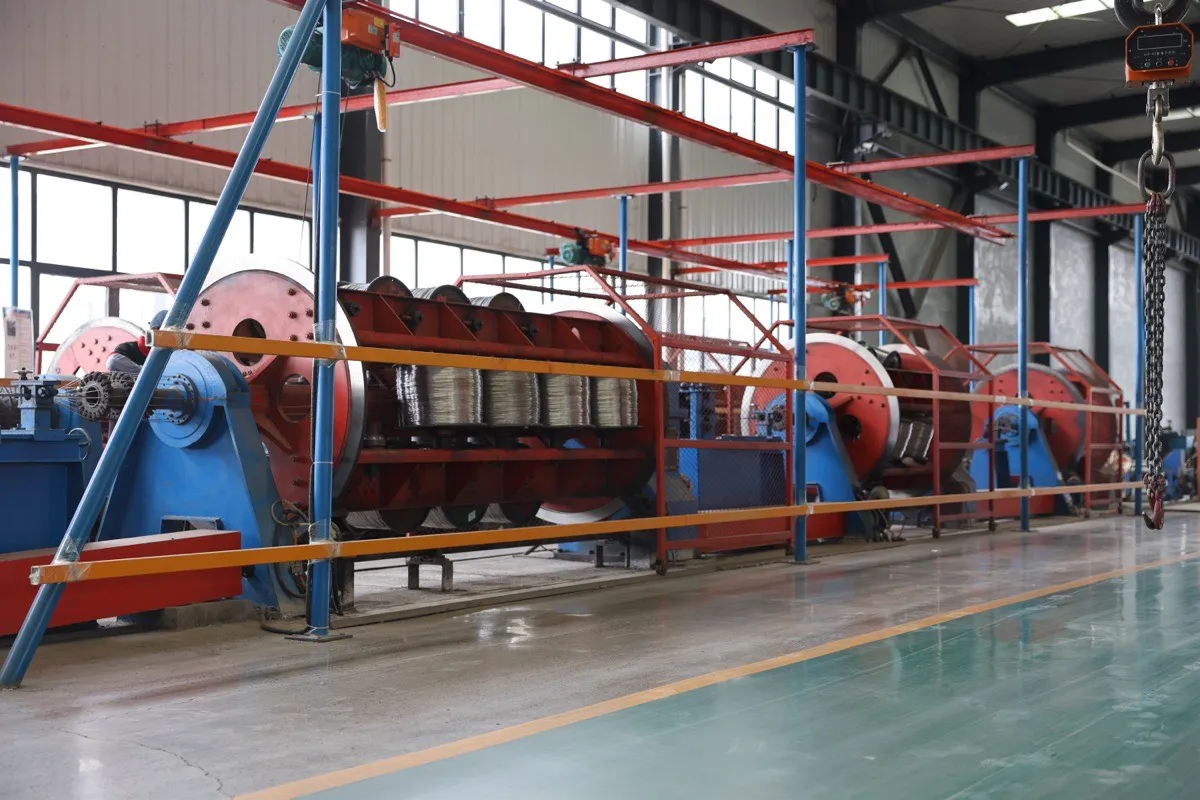
We manufacture ACSR in every standard size from Gopher (16mm²) to Moose (500mm²) and beyond, across 60 production lines at our factory in Henan, China. Below you'll find the full specification tables we use for quoting, the factors that drive ACSR cable price, and a reference price list to help you budget your project.
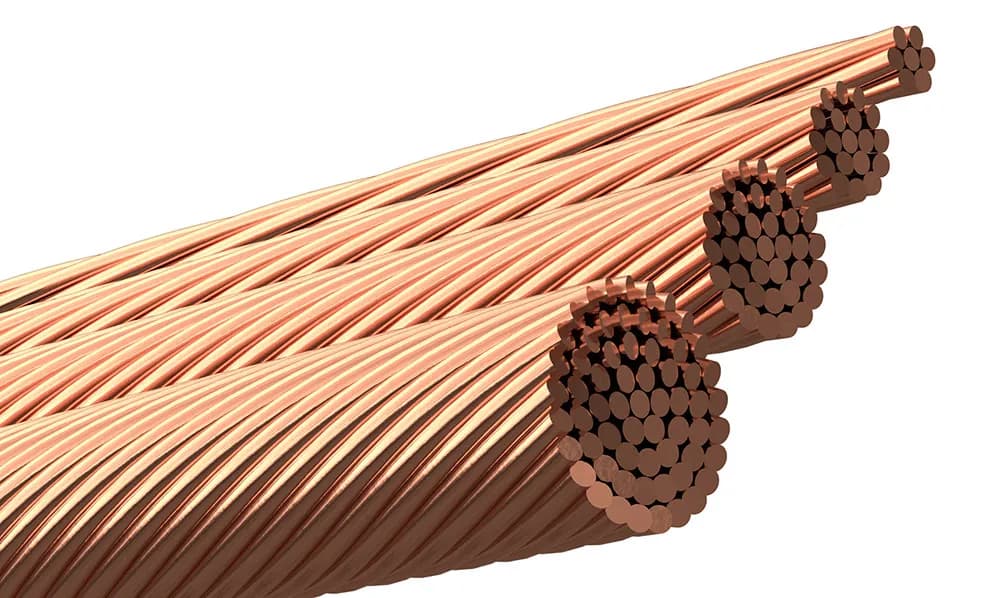
Understanding ACSR Conductor Size Designations
ACSR sizes are specified in multiple ways depending on the region and standard. Understanding the naming convention helps you match your project specification to the correct product:
Size Designation Methods
| Method | Example | Used In |
|---|---|---|
| Code name (animal) | Zebra | IEC/BS markets — UK, Africa, Asia, Middle East |
| Al/St area (mm²) | 400/50 | International engineering drawings |
| AWG/kcmil | 795 kcmil (Drake) | North America (ASTM B232) |
| Total area (mm²) | 450mm² | Some national standards |
The code name system uses animal names in ascending size order — smaller animals for smaller conductors. This convention comes from BS 215 and is now used globally in IEC-standard markets. Each code name corresponds to a fixed aluminium area and steel area combination.
Key relationships:
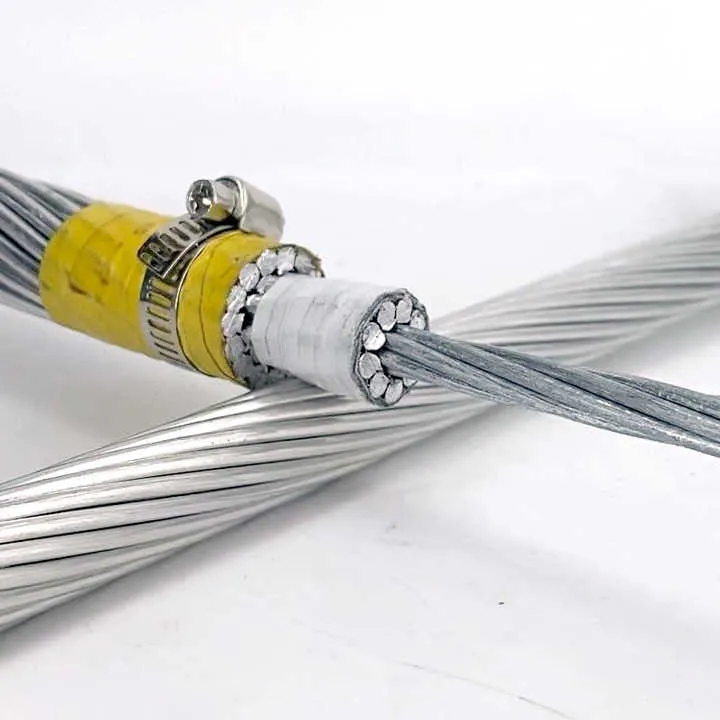
- The aluminium area determines current-carrying capacity
- The steel area determines mechanical strength (breaking load and sag)
- The Al/St ratio defines the conductor's balance between electrical performance and mechanical strength
Standard Al/St Ratios
| Ratio (Al:St) | Stranding | Character | Best For |
|---|---|---|---|
| 6:1 | 6/1 or 26/7 | High conductivity, standard strength | Normal spans, flat terrain |
| 4.5:1 | 30/7 | Balanced | Medium spans, moderate wind/ice |
| 4:1 | 54/7 | Good balance for large conductors | Transmission lines, long spans |
| 2.6:1 | 54/19 | Extra-high strength | River crossings, extreme spans |
| 8:1 | 30/7 (lightweight) | Maximum current, minimum weight | Upgrades, re-conductoring |
Complete ACSR Conductor Specifications Table
These tables cover the full range of ACSR sizes manufactured at our facility, compliant with IEC 61089, BS 215 Part 2, and GB/T 1179.
Small Sizes — Distribution Lines (11kV–33kV)
| Code Name | Al Area (mm²) | St Area (mm²) | Stranding (Al/St) | Wire Ø Al (mm) | Wire Ø St (mm) | Overall Ø (mm) | Weight (kg/km) | UTS (kN) | DC Resistance at 20°C (Ω/km) |
|---|---|---|---|---|---|---|---|---|---|
| Gopher | 16 | 2.67 | 6/1 | 1.85 | 1.85 | 5.55 | 67 | 5.3 | 1.809 |
| Squirrel | 20 | 3.33 | 6/1 | 2.06 | 2.06 | 6.18 | 82 | 6.6 | 1.447 |
| Weasel | 30 | 5.0 | 6/1 | 2.52 | 2.52 | 7.56 | 120 | 9.6 | 0.966 |
| Rabbit | 50 | 8.33 | 6/1 | 3.25 | 3.25 | 9.75 | 195 | 16.3 | 0.579 |
| Raccoon | 75 | 12.5 | 6/1 | 3.99 | 3.99 | 11.97 | 299 | 23.1 | 0.386 |
| Dog | 100 | 16.7 | 6/7 | 3.0 | 1.74 | 14.15 | 394 | 32.7 | 0.289 |
| Jaguar | 125 | 20.8 | 6/7 | 3.35 | 1.94 | 15.6 | 488 | 40.6 | 0.231 |
Medium Sizes — Sub-Transmission & Transmission (33kV–132kV)
| Code Name | Al Area (mm²) | St Area (mm²) | Stranding (Al/St) | Wire Ø Al (mm) | Wire Ø St (mm) | Overall Ø (mm) | Weight (kg/km) | UTS (kN) | DC Resistance at 20°C (Ω/km) |
|---|---|---|---|---|---|---|---|---|---|
| Wolf | 150 | 25.0 | 30/7 | 2.52 | 2.13 | 17.28 | 576 | 52.1 | 0.193 |
| Lynx | 175 | 29.2 | 30/7 | 2.73 | 2.31 | 18.13 | 674 | 60.7 | 0.165 |
| Panther | 200 | 33.3 | 30/7 | 2.91 | 2.46 | 20.04 | 767 | 68.9 | 0.145 |
| Jaguar | 210 | 35.0 | 30/7 | 2.99 | 2.52 | 20.52 | 805 | 72.1 | 0.138 |
| Coyote | 230 | 38.3 | 30/7 | 3.13 | 2.64 | 21.49 | 882 | 78.9 | 0.126 |
| Bear | 250 | 41.7 | 30/7 | 3.26 | 2.76 | 22.26 | 958 | 86.1 | 0.116 |
Large Sizes — High-Voltage Transmission (132kV–500kV)
| Code Name | Al Area (mm²) | St Area (mm²) | Stranding (Al/St) | Wire Ø Al (mm) | Wire Ø St (mm) | Overall Ø (mm) | Weight (kg/km) | UTS (kN) | DC Resistance at 20°C (Ω/km) |
|---|---|---|---|---|---|---|---|---|---|
| Zebra | 400 | 50.0 | 54/7 | 3.07 | 3.02 | 28.62 | 1,621 | 131.9 | 0.0723 |
| Duck | 420 | 52.5 | 54/7 | 3.15 | 3.09 | 29.35 | 1,700 | 138.4 | 0.0689 |
| Dove | 450 | 56.3 | 54/7 | 3.26 | 3.20 | 30.38 | 1,822 | 148.3 | 0.0643 |
| Moose | 500 | 64.5 | 54/7 | 3.43 | 3.43 | 31.77 | 2,004 | 159.2 | 0.0579 |
| Bison | 550 | 70.8 | 54/19 | 3.60 | 2.18 | 33.35 | 2,210 | 183.4 | 0.0527 |
| Elk | 600 | 77.3 | 54/19 | 3.76 | 2.28 | 34.88 | 2,412 | 199.8 | 0.0483 |
Extra-High Strength Sizes — River Crossings & Special Spans
| Code Name | Al Area (mm²) | St Area (mm²) | Stranding (Al/St) | Overall Ø (mm) | Weight (kg/km) | UTS (kN) | Application |
|---|---|---|---|---|---|---|---|
| Zebra 54/19 | 400 | 95.0 | 54/19 | 29.85 | 1,812 | 195.3 | River/valley crossings |
| Moose 54/19 | 500 | 120.0 | 54/19 | 33.50 | 2,280 | 237.6 | EHV long spans |
| Custom 84/19 | 600 | 145.0 | 84/19 | 37.20 | 2,730 | 278.4 | Extreme mountain spans |
Notes on the tables above:
- UTS = Ultimate Tensile Strength (minimum breaking load)
- DC resistance values are at 20°C — convert to operating temperature using the temperature coefficient of aluminium (0.00403/°C)
- Current ratings depend on ambient conditions — see the ampacity section below
- All specifications per IEC 61089 unless otherwise noted
Interested in this product?
Need a Specific Size Not Listed? Send Your RequirementsACSR Conductor Ampacity (Current Ratings)
Current-carrying capacity depends on conductor temperature, ambient conditions, and wind. Here are standard ratings for common ACSR sizes:
| Code Name | Al Area (mm²) | Current at 75°C (A) | Current at 80°C (A) | Current at 90°C (A) |
|---|---|---|---|---|
| Weasel | 30 | 145 | 155 | 175 |
| Rabbit | 50 | 210 | 225 | 255 |
| Dog | 100 | 340 | 365 | 410 |
| Wolf | 150 | 450 | 480 | 540 |
| Panther | 200 | 540 | 575 | 650 |
| Bear | 250 | 630 | 670 | 755 |
| Zebra | 400 | 830 | 885 | 995 |
| Moose | 500 | 955 | 1,020 | 1,145 |
Rating conditions: 35°C ambient temperature, 0.6 m/s crosswind, full sun (1,000 W/m² solar radiation), emissivity 0.5, absorptivity 0.5.
Adjust for your conditions:
- Hotter ambient (45°C): reduce rating by ~10%
- Higher wind speed (1.0 m/s): increase rating by ~8%
- Bundled conductors (twin/quad): each sub-conductor carries less due to mutual heating
ACSR Cable Price: What Determines Your Cost
ACSR conductor pricing is fundamentally a materials-cost problem. Here's the breakdown:
Cost Structure of ACSR Cable
| Cost Component | Share of Total | Key Driver |
|---|---|---|
| Aluminium wire | 55–65% | LME aluminium price |
| Galvanized steel wire | 12–18% | Steel market + zinc price |
| Processing (stranding, testing) | 10–15% | Factory efficiency, automation |
| Packaging & drums | 3–5% | Drum type, export packaging |
| Overhead & margin | 5–8% | Factory scale, competition |
LME Aluminium: The Biggest Variable
The London Metal Exchange (LME) aluminium price moves daily and directly impacts every ACSR quote. A $100/tonne move in LME translates to roughly:
- $50–70/km price change for Zebra 400/50
- $15–25/km price change for Dog 100/17
- $80–100/km price change for Moose 500/65
This is why ACSR quotes are typically valid for 7–14 days — after that, the LME may have shifted enough to require re-pricing.
Steel Core: The Second Variable
Galvanized steel wire pricing depends on:
- Base steel rod price (follows global steel indices)
- Zinc price (for galvanizing — Class A vs Class B coating weight)
- Wire diameter (finer wires cost more to draw)
Higher-strength configurations (54/19) use more steel and cost more per km than standard-strength equivalents (54/7) at the same aluminium area.
ACSR Conductor Price List (Reference)
The following price ranges reflect typical FOB China port pricing at current aluminium levels. These are budgetary references — your actual quote depends on LME price on order date, quantity, and payment terms.
Distribution Sizes
| Code Name | Size (Al/St mm²) | Approx. Price FOB (USD/km) | Approx. Price FOB (USD/tonne) |
|---|---|---|---|
| Gopher | 16/2.67 | $120–160 | $1,800–2,200 |
| Squirrel | 20/3.33 | $150–195 | $1,800–2,200 |
| Weasel | 30/5.0 | $220–280 | $1,850–2,250 |
| Rabbit | 50/8.33 | $350–440 | $1,850–2,250 |
| Raccoon | 75/12.5 | $530–650 | $1,800–2,200 |
| Dog | 100/16.7 | $680–830 | $1,750–2,100 |
| Jaguar | 125/20.8 | $830–1,020 | $1,750–2,100 |
Transmission Sizes
| Code Name | Size (Al/St mm²) | Approx. Price FOB (USD/km) | Approx. Price FOB (USD/tonne) |
|---|---|---|---|
| Wolf | 150/25 | $970–1,180 | $1,700–2,050 |
| Lynx | 175/29.2 | $1,130–1,370 | $1,700–2,050 |
| Panther | 200/33.3 | $1,280–1,550 | $1,680–2,020 |
| Bear | 250/41.7 | $1,580–1,920 | $1,680–2,000 |
| Zebra | 400/50 | $2,650–3,200 | $1,650–1,980 |
| Moose | 500/64.5 | $3,250–3,950 | $1,650–1,970 |
| Bison | 550/70.8 | $3,550–4,300 | $1,630–1,950 |
Important notes on pricing:
- Prices based on LME aluminium at $2,400–2,600/tonne range
- Volume discounts: 2–3% for 50–200 tonnes, negotiable for 500+ tonnes
- Payment terms affect price: T/T in advance = best price; L/C at sight = standard price; deferred L/C = premium
- Steel drum packaging adds $30–50/km vs. wooden drums
- CIF pricing adds $40–80/tonne depending on destination port
Price Comparison by Region (CIF)
| Destination | Additional Freight (USD/tonne) | Transit Time | Common Sizes Ordered |
|---|---|---|---|
| West Africa (Lagos, Tema) | $60–80 | 35–45 days | Dog, Wolf, Panther |
| East Africa (Mombasa, Dar) | $50–70 | 25–35 days | Rabbit, Dog, Wolf |
| Southeast Asia (Manila, Jakarta) | $30–45 | 12–18 days | Dog, Wolf, Zebra |
| Middle East (Jeddah, Dubai) | $40–55 | 18–25 days | Wolf, Panther, Zebra |
| South America (Santos, Callao) | $70–90 | 35–50 days | Panther, Zebra, Moose |
Interested in this product?
Get Your Project-Specific ACSR Price — Free Quote in 24hHow to Calculate ACSR Cost for Your Project
Here's a practical method to estimate your total ACSR conductor cost:
Step 1: Determine Total Length
Calculate the total route length, then add:
- 3–5% for sag (conductor length exceeds span length)
- 2–3% for wastage, joints, and dead-ends
- 5–10% contingency for route changes
Example: A 100km 132kV single-circuit line with twin conductor:
- Route length: 100 km × 3 phases × 2 bundled = 600 km of conductor
- Sag allowance (4%): 600 × 1.04 = 624 km
- Contingency (5%): 624 × 1.05 = 655 km total
Step 2: Select Size and Get Unit Price
For 132kV with twin bundled, Panther 200/33 is a common choice. At current prices: ~$1,400/km (mid-range)
Step 3: Calculate Total Conductor Cost
655 km × $1,400/km = $917,000 FOB
Step 4: Add Accessories & Freight
- Hardware fittings (suspension/tension clamps, spacers): add 5–8% of conductor cost
- Freight to site: add $50–70/tonne × total weight
- Insurance: 0.3–0.5% of CIF value
This gives you a working budget figure for procurement planning.
ACSR Size Selection Guide: Matching Size to Application
Choosing the wrong size means either overspending on conductor material or under-designing for electrical/mechanical requirements. Here's how to match size to application:
By Voltage Level
| Voltage Level | Recommended Sizes | Reason |
|---|---|---|
| 11kV distribution | Rabbit (50), Dog (100) — or AAC in coastal areas | Low current, short spans — minimise cost |
| 33kV distribution | Dog (100), Wolf (150) | Moderate current, medium spans |
| 66kV sub-transmission | Wolf (150), Lynx (175), Panther (200) | Higher current, longer spans |
| 132kV transmission | Panther (200), Bear (250) | High current, long spans, ice loading |
| 220kV transmission | Zebra (400) single or twin | Very high current, bundled for corona control |
| 330kV–500kV EHV | Moose (500) twin or quad bundled | Maximum current, corona and radio noise limits |
By Span Length & Terrain
| Span Length | Terrain | Recommended Configuration | Why |
|---|---|---|---|
| 80–150m | Urban/suburban | 6/1 or 26/7 stranding | Short spans need less strength |
| 150–300m | Rural flat | 30/7 stranding | Standard transmission design |
| 300–500m | Moderate terrain | 54/7 stranding | Good strength for longer spans |
| 500–800m | River/valley crossing | 54/19 stranding | Extra steel for extreme tension |
| 800m+ | Mountain crossing | 54/19 or custom | Maximum strength, possibly larger steel area |
By Climate & Environment
| Condition | Modification | Size Impact |
|---|---|---|
| Heavy ice zone (>20mm radial) | Increase one size up, higher steel ratio | More costly but prevents failure |
| High wind zone (>150 km/h) | Higher steel ratio (54/19 vs 54/7) | Marginal cost increase |
| Coastal/high humidity | Standard size + greased core or ACSR/AW | 10–15% premium for corrosion protection |
| Desert (high ambient temp) | Larger size for de-rating, or TACSR | Higher aluminium area for thermal margin |
| Altitude >2000m | Standard size (lower air density = less cooling) | Consider de-rating current |
ACSR Specifications by International Standards
Different projects require different standards. Here's how specifications vary:
IEC 61089 vs ASTM B232 vs BS 215
| Parameter | IEC 61089 | ASTM B232 | BS 215 Part 2 |
|---|---|---|---|
| Aluminium grade | 1350-H19 (AL1) | 1350-H19 | 1350-H19 |
| Min. conductivity | 61.0% IACS | 61.0% IACS | 61.0% IACS |
| Steel grade | Galvanized Class A/B/C | Galvanized Class A/B/C | Galvanized Class 1/2/3 |
| Lay ratio range | 10–16 × diameter | 10–14 × diameter | 10–16 × diameter |
| Wire diameter tolerance | ±1% | ±1% | ±1% |
| Resistance tolerance | +2% max | +2% max | +2% max |
| Zinc coating test | Preece test (IEC 60888) | ASTM A90/B750 | BS EN 10244-2 |
| Size naming | Code names (Zebra, etc.) | kcmil (Drake, Cardinal) | Code names (same as IEC) |
ASTM B232 Equivalent Sizes (For North American Specs)
| ASTM Name | Size (kcmil) | Al Area (mm²) | Equivalent IEC Name | Stranding |
|---|---|---|---|---|
| Penguin | 266.8 | 135 | Close to Lynx | 6/1 |
| Dove | 556.5 | 282 | Between Bear and Zebra | 26/7 |
| Drake | 795 | 403 | Close to Zebra | 26/7 |
| Cardinal | 954 | 483 | Close to Moose | 54/7 |
| Bluebird | 2156 | 1,092 | — (very large) | 84/19 |
Volume Discounts & Order Economics
Understanding the economics of ordering helps you get the best ACSR cable price:
How Order Size Affects Price
| Order Volume | Price Level | Lead Time | Notes |
|---|---|---|---|
| Sample (100m) | Premium (+15–20%) | 3–5 days | For testing/approval only |
| 1–5 drums | List price | 10–15 days | Trial or small project |
| 10–50 tonnes | Standard price | 15–20 days | Small project lot |
| 50–200 tonnes | 2–3% discount | 20–30 days | Medium project |
| 200–500 tonnes | 3–5% discount | 30–45 days | Large project lot |
| 500+ tonnes | Best negotiated price | 45–60 days | Major project, phased delivery possible |
Smart Ordering Strategies
1. Consolidate sizes: If your project uses Dog, Wolf, and Panther, order all three from one factory in one contract. The combined tonnage gets better pricing than three separate orders.
2. Phase your deliveries: For large projects (1000+ tonnes), negotiate phased delivery over 3–6 months. This lets the factory plan production efficiently and may get you an additional 1–2% discount.
3. Lock aluminium price early: For large contracts, you can negotiate LME price-fixing. The factory buys aluminium forward at today's price for your order. This protects both parties from volatility.
4. Standard drums save money: Wooden drums (non-returnable) are $30–50/drum cheaper than steel drums. For export orders shipping by container, wooden drums are standard and most cost-effective.
5. Consider FOB vs CIF: FOB pricing is always more transparent — you control the freight. But CIF from us can be cheaper if we're shipping to a destination where we have volume freight contracts (West Africa, Southeast Asia).
Quality Verification: What to Check Before Paying
When comparing ACSR cable prices from different suppliers, make sure you're comparing equivalent quality:
Critical Parameters to Verify
| Parameter | What to Check | Red Flag |
|---|---|---|
| Aluminium purity | ≥99.7% EC grade, 61% IACS min | "Commercial grade" without conductivity guarantee |
| Steel zinc coating | Class B minimum (≥260 g/m²) | Class A only (lower life in humid environments) |
| Breaking load | Must meet or exceed rated UTS | "Approximate" strength without test certificate |
| DC resistance | Must be ≤ standard maximum | No resistance test data provided |
| Wire diameter | ±1% tolerance | Undersized wires (reduces cross-section) |
| Drum length | Continuous, no joints | Multiple joints per drum (increases installation cost) |
| Lay direction | Alternating (R-L-R) per standard | Same direction in adjacent layers (prone to birdcaging) |
Documents to Request from Any Supplier
- Type test report — from accredited lab (KEMA, CNAS, etc.), not just factory test
- Routine test certificate — for your specific production lot
- Material certificates — aluminium rod source, steel wire source
- ISO 9001 certificate — current, from accredited registrar
- Factory audit report — if available from previous clients or inspection companies
Our guarantee: Every drum ships with a routine test certificate showing actual breaking load, DC resistance, dimensional measurements, and zinc coating test results.
Interested in this product?
Request Sample + Test Certificate for Your EvaluationComparing ACSR Prices: China Factory vs Other Sources
Buyers often compare Chinese ACSR against local manufacturers or other exporting countries. Here's how the pricing typically stacks up:
| Source | Price Level vs China FOB | Lead Time | When to Choose |
|---|---|---|---|
| China factory (our pricing) | Baseline | 15–45 days + shipping | Cost-sensitive projects, large volumes |
| India factory | +5–15% | Similar | When import duty favours India |
| Turkey factory | +10–20% | Shorter to Middle East/Africa | Urgency, proximity, EU-friendly |
| Local manufacturer (Africa) | +20–40% | Shorter | Small volumes, no import duty, urgency |
| Trading company (China) | +8–15% vs factory | Same | When you can't deal with factory directly |
Why Chinese ACSR is typically cheapest:
- Integrated aluminium supply chain (China produces 60%+ of world's aluminium)
- Factory scale — our 60 lines run 3 shifts, spreading fixed costs
- Lower energy and labour costs in Henan province
- Fierce domestic competition drives efficiency
When Chinese ACSR isn't the best choice:
- Small orders under 5 tonnes (shipping cost dominates)
- Extreme urgency (local stock is faster)
- Specific national standards requiring local certification that Chinese factory doesn't hold
ACSR Conductor Sag & Tension Data
For line design, you need sag-tension values. Here are typical sag values for common ACSR sizes at standard conditions:
| Conductor | Span (m) | Sag at 15°C No Wind (m) | Sag at Max Temp 75°C (m) | Sag at Ice Loading (m) | Tension at 15°C (% UTS) |
|---|---|---|---|---|---|
| Dog 100/17 | 150 | 2.1 | 3.4 | 2.8 | 18% |
| Dog 100/17 | 200 | 3.8 | 5.9 | 5.0 | 18% |
| Wolf 150/25 | 200 | 3.5 | 5.4 | 4.6 | 20% |
| Wolf 150/25 | 300 | 7.6 | 11.8 | 10.1 | 20% |
| Panther 200/33 | 250 | 4.8 | 7.4 | 6.3 | 20% |
| Panther 200/33 | 350 | 9.2 | 14.2 | 12.1 | 20% |
| Zebra 400/50 | 350 | 8.3 | 12.8 | 10.9 | 22% |
| Zebra 400/50 | 450 | 13.5 | 20.9 | 17.8 | 22% |
| Moose 500/65 | 400 | 10.8 | 16.7 | 14.2 | 22% |
Conditions: 15°C still air for everyday tension, max operating temperature 75°C, ice loading per IEC 60826 Light (5mm radial ice). Every-day tension limited to 20–22% UTS as standard design practice.
Why this matters for pricing: Higher sag means you need taller towers or shorter spans — both increase project cost. Choosing a higher-strength configuration (54/19) reduces sag and may allow longer spans, reducing tower count. The conductor costs more per km but total line cost may be lower.
Frequently Asked Questions About ACSR Sizes and Pricing
What is the most commonly used ACSR conductor size?
Globally, Dog (100/17) and Wolf (150/25) are the most commonly ordered sizes for distribution and sub-transmission projects. For high-voltage transmission, Zebra (400/50) dominates. In our factory, these three sizes account for roughly 60% of export orders. For projects where corrosion resistance is the priority over mechanical strength, consider AAC (All Aluminium Conductor) as an alternative — especially for short-to-medium span coastal installations.
How much does ACSR cable cost per metre?
At current market prices, ACSR ranges from approximately $0.12/m (Gopher 16mm²) to $3.95/m (Moose 500mm²) FOB China. The most popular size Dog 100/17 runs about $0.68–0.83/m. These are approximate — request a quotation for your exact quantity and delivery terms.
Why do ACSR prices change frequently?
Because 55–65% of ACSR cost is aluminium, and aluminium is traded on the LME with daily price fluctuations. A typical ACSR quote is valid for 7–14 days. For large projects, you can negotiate price-fixing based on a specific LME date or LME average over a period.
What is the price difference between ACSR 54/7 and ACSR 54/19?
For the same aluminium area (e.g., 400mm²), the 54/19 version costs approximately 8–12% more per km than 54/7 due to the additional steel content. However, the 54/19 version has 40–50% higher breaking strength, which may allow longer spans and fewer towers — potentially reducing total line cost.
How do I compare ACSR prices from different suppliers fairly?
Compare on a USD/tonne basis rather than USD/km to account for different weights. Also verify:
- Same standard (IEC vs ASTM sizes differ slightly)
- Same zinc coating class (Class B costs more than Class A)
- Same drum type and length
- Same delivery terms (FOB vs CIF)
- Same payment terms (T/T vs L/C)
A quote that's 5% cheaper but uses Class A galvanizing and shorter drum lengths may not be a real saving.
What is the minimum order quantity for ACSR conductor?
Our minimum is 1 drum (typically 2,000–5,000m depending on conductor size). For common sizes (Rabbit, Dog, Wolf, Panther, Zebra), we may have buffer stock for faster delivery. For less common sizes, the minimum production run is usually 5–10 tonnes to justify machine setup.
Can I get ACSR conductor with aluminium-clad steel (ACSR/AW)?
Yes. ACSR/AW uses aluminium-clad steel core instead of galvanized steel, providing superior corrosion resistance for coastal and high-humidity environments. It costs approximately 12–18% more than standard galvanized ACSR. Specify this at inquiry stage — it requires different steel wire stock.
How does ACSR conductor weight affect installation cost?
Heavier conductors require:
- Stronger towers and foundations (higher capital cost)
- Heavier stringing equipment (higher installation cost)
- More robust hardware fittings
But heavier conductors also mean larger cross-sections with lower resistance and lower power losses. The economic design balances capital cost against lifetime loss cost.
What is the delivery time for ACSR conductor from China?
- Standard sizes in stock: 5–10 days production + shipping time
- Standard sizes made to order: 15–25 days production + shipping time
- Large project orders (100+ tonnes): 30–45 days production + shipping time
- Shipping time varies: 12–18 days to SE Asia, 25–35 days to East Africa, 35–45 days to West Africa/South America
Do you supply ACSR conductor accessories and hardware?
Yes. We supply complete line hardware including suspension clamps, tension clamps, vibration dampers, armour rods, spacers (for bundled conductors), and mid-span joints. Ordering conductor and hardware together simplifies logistics and may improve pricing.
Related Products & Resources
Product Categories
- Aerial Cable Products — Full range of overhead conductors: AAC, AAAC, ACSR, ACAR, and ABC
- Power Cable Products — Underground XLPE power cables for distribution and transmission
Related Articles
- ACSR Conductor: Complete Specifications & Factory Price Guide — Manufacturing process, standards comparison, and supplier selection
- ACSR Cable Manufacturer China — Factory Price Guide — How to source ACSR direct from Chinese factories
- AAC vs AAAC Conductor Specifications — Compare aluminium conductor alternatives
- ABC Cable: Aerial Bundled Conductor Guide — Insulated overhead distribution cable
- Overhead Transmission Line Cable Types — All conductor types for transmission lines
- Conductor Selection Guide for Power Lines — How to choose the right conductor
- How to Import Cable from China — Complete sourcing and logistics guide
Get Your ACSR Quotation
Full product page: ACSR Conductor — Specifications, Sizes & Factory Price →
Ready to source ACSR conductor for your project? Send us:
- Required sizes — code name or Al/St cross-section
- Total quantity — in km or tonnes
- Applicable standard — IEC 61089, ASTM B232, BS 215, or other
- Destination — for freight calculation
- Timeline — when you need delivery
We'll respond with a detailed quotation within 24 hours, including unit price, total amount, lead time, and available test certificates.
Email: sales@chinacablefactory.com | WhatsApp: +86 134-6102-4180
Interested in this product?
Get ACSR Price List for Your Project — Free Quote in 24h