Key Takeaway
How to buy ACSR conductor from China: factory evaluation checklist, FOB pricing structure, IEC 61089 certification. Get factory direct quote in 24h.
If you're sourcing ACSR conductors for a utility project, electrification programme, or EPC contract, China is where 60–70% of the world's overhead conductor is manufactured. The cost advantage is real — typically 30–50% below comparable Western or Indian manufacturers — but the savings only materialise if you find the right factory. The wrong one costs you far more in delays, failed inspections, and re-orders than you ever saved on unit price.
This guide is written for procurement managers, project engineers, and import buyers who need to place bulk ACSR orders from China. We cover how to identify genuine manufacturers, evaluate their capability, understand pricing mechanics, and manage the order process from first inquiry to delivery at port.
Why Source ACSR From China?
Three factors make China the default sourcing destination for ACSR conductors on international projects:
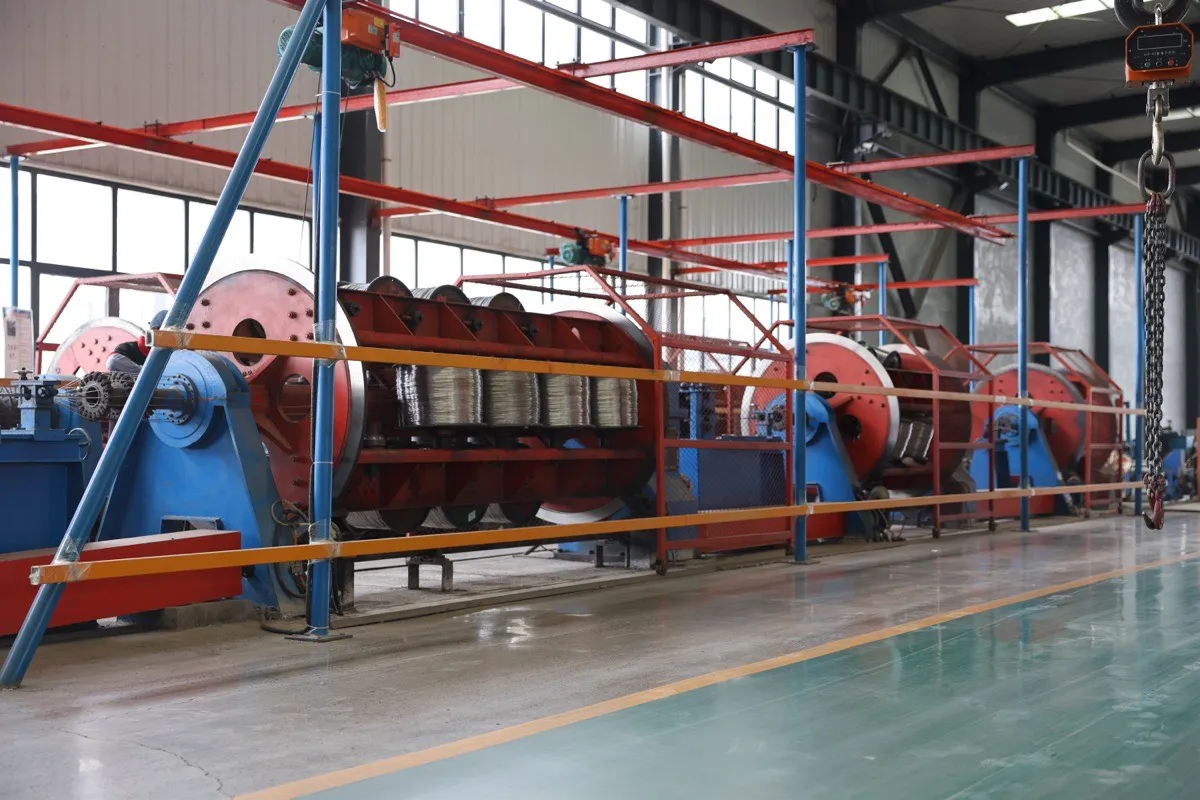
Cost advantage (30–50%). Chinese ACSR factories benefit from proximity to aluminium smelters (China produces 60% of global primary aluminium), lower labour costs, and massive scale. A factory running 40–60 stranding lines has overhead distributed across enormous production volume. The result: FOB prices that undercut domestic manufacturers in Africa, Latin America, and the Middle East by a wide margin.
Production capacity. A single mid-sized Chinese cable factory can produce 3,000–5,000 tonnes of ACSR per month. Large factories exceed 10,000 tonnes. This means your 500km transmission line order (perhaps 1,500–2,000 tonnes) doesn't strain their capacity — they can deliver within 30–45 days rather than 90–120 days from a smaller domestic supplier.
Export experience. Leading Chinese ACSR manufacturers have shipped to 80–120 countries. They understand IEC, BS, ASTM, and NFC standards. They know how to handle LC payment, pre-shipment inspection with SGS or BV, and containerised shipping with proper drum packaging. This isn't their first international order — it's their thousandth.
For a detailed breakdown of ACSR conductor specifications and how to select the right size for your project, see our complete ACSR conductor guide.
Types of ACSR "Manufacturers" — And How to Tell the Difference
Not everyone calling themselves a manufacturer actually makes cable. In China's cable industry, you'll encounter three types of suppliers:
Actual Manufacturers (工厂)
These companies own production equipment — wire drawing machines, stranding lines, armouring machines, and testing laboratories. They have factory premises (typically 20,000–100,000m²), employ production workers, and hold production licences. When you visit, you see raw materials going in one end and finished drums coming out the other.
How to identify:
- Factory address matches business registration (check on Tianyancha or National Enterprise Credit System)
- They have a CCC production licence (mandatory for cable production in China)
- Google Maps or Baidu Maps satellite view shows an industrial facility at their address
- They can provide a factory tour (video or in-person)
- They discuss production scheduling, machine availability, and raw material procurement in detail
Trading Companies Posing as Factories
These entities have a showroom or office, perhaps some stock, but no production lines. They source from actual factories and mark up 5–15%. Some are transparent about this; many are not.
How to identify:
- Registered capital under ¥10 million (actual cable factories need ¥50–500 million)
- Business scope includes "sales of" (销售) rather than "production of" (生产)
- Address is in a commercial building or trading zone, not an industrial park
- They cannot answer specific questions about production capacity, stranding machine types, or wire drawing speeds
- Delivery times are vague ("we'll confirm after checking with our production department")
Export Agents
These are individuals or small firms that connect international buyers with factories for a commission. They can be useful if you lack China sourcing experience, but they add cost and another communication layer.
The bottom line: Working directly with a genuine manufacturer gives you the best price, fastest communication, and most control over quality. A trading company adds 5–15% to your cost with no value unless you specifically need their service (small orders, multi-product consolidation, or local language support).
Interested in this product?
Request factory price list for ACSR conductorsFactory Evaluation Checklist
Before placing a large ACSR order, evaluate the factory against these criteria. You can do this remotely for initial screening, then confirm with a factory audit before your first major order.
Production Capability
| Evaluation Item | What to Look For | Red Flag |
|---|---|---|
| Wire drawing lines | Continuous rod breakdown + multi-wire drawing machines | Manual or semi-automatic only |
| Stranding machines | Tubular or rigid frame stranders, 12–60+ lines | Fewer than 10 lines for bulk orders |
| Monthly capacity | 3,000+ tonnes for reliable bulk delivery | Under 1,000 tonnes (delays likely) |
| Quality lab | Tensile tester, resistivity bridge, dimensional gauges, salt spray chamber | No in-house testing — relies on third party only |
| Raw material sourcing | Direct purchase from smelters (Chalco, Nanshan, Xinfa) | Buys scrap or recycled ingot without declaration |
Certifications That Matter
Different markets require different certifications. Here's what to look for by destination:
| Certification | Standard | Required For |
|---|---|---|
| IEC 61089 | International round wire concentric lay | Most international tenders |
| BS 215 | British Standard ACSR | Commonwealth countries, Africa |
| ASTM B232 | American Standard | Americas, Philippines, some ME |
| NFC 34-125 | French Standard | Francophone Africa |
| IS 398 | Indian Standard | India, Nepal, Bangladesh |
| ISO 9001 | Quality management system | Universal baseline requirement |
| ISO 14001 | Environmental management | EU-funded projects, some African utilities |
| KEMA/ASTA | Type test certification | Premium tenders, some European utilities |
Critical point: Verify certificates are current and issued to the factory (not a parent company or trading partner). Ask for the certificate number and verify it on the issuing body's website.
Export Track Record
Ask for:
- Export country list (or at least top 10 destinations)
- Reference project names (you can often verify these with the end utility)
- Bill of lading copies (factory name should match the shipper)
- Packing photos from previous shipments showing their drums and labelling
A factory that has shipped to your destination country before understands the specific requirements — packaging for container transport, labelling language, documentation format, and any country-specific testing requirements.
ACSR Price Structure: How Factory Pricing Works
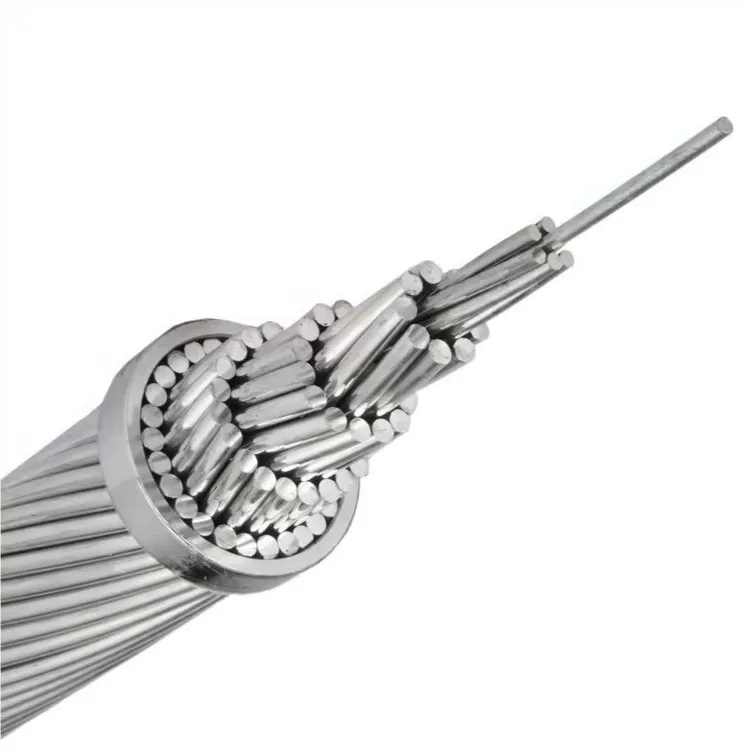
ACSR conductor pricing is not arbitrary — it follows a transparent formula that any factory uses internally. Understanding this structure lets you evaluate quotes intelligently and negotiate from a position of knowledge.
The Pricing Formula
ACSR Price per km = (Aluminium cost + Steel cost + Processing fee + Profit margin)
Broken down:
| Component | How It's Calculated | Typical % of Total Price |
|---|---|---|
| Aluminium | LME price × conductor weight (Al portion) × 1.02–1.05 wastage | 55–70% |
| Steel wire | Steel rod price × core weight × processing factor | 10–18% |
| Processing fee | Covers wire drawing, stranding, QC, packaging, overheads | 10–20% |
| Profit margin | Factory markup | 5–10% |
Why ACSR Prices Fluctuate
The dominant factor is LME aluminium price. Since aluminium accounts for 55–70% of total conductor cost, any significant LME price movement directly impacts your ACSR quote proportionally.
This is why:
- Quotes are typically valid for 3–7 days only
- Long-term contracts often use a "LME + fixed processing fee" structure
- Factories ask when you plan to confirm so they can hedge material purchase
FOB vs CIF Pricing
| Term | What's Included | Best For |
|---|---|---|
| FOB (port) | Factory cost + inland transport + export clearance + loading | Buyers with their own freight forwarder |
| CIF (destination port) | FOB + ocean freight + marine insurance | Buyers who want one delivered price |
| CFR | FOB + ocean freight (no insurance) | Less common but used in some tenders |
Recommendation: Request FOB quotes for comparison, then ask for CIF if you want a landed cost. FOB makes it easier to compare factories on an apples-to-apples basis since freight costs are the same regardless of supplier.
For detailed pricing by conductor size, see our ACSR conductor sizes and price guide.
Interested in this product?
Get a free quote for your ACSR project — specify conductor size and quantityMOQ and Lead Time by Conductor Size
Minimum order quantities and production lead times vary by conductor size. Smaller sizes run faster on machines; larger sizes require more material preparation and slower stranding speeds.
MOQ and lead time depend on conductor size and current production schedule. Smaller conductors (Rabbit, Dog) typically have lower MOQs and faster turnaround, while larger conductors (Zebra, Moose) require larger minimum orders due to machine setup time and material volumes.
Contact us with your required conductor size and quantity for specific MOQ and lead time information.
Notes:
- MOQs are flexible for established customers or when combined with other conductor sizes in the same order
- Lead times assume raw material is in stock — lead time varies by material availability
- Urgent orders (within 15 days) are possible at 5–10% premium if factory has available machine capacity
- Multiple sizes in one order may extend total lead time but reduce per-km cost
Quality Verification: Protecting Your Investment
For significant ACSR orders, quality verification is not optional. Here's the three-layer approach used by experienced international buyers:
Layer 1: Factory Audit (Before First Order)
Conduct a factory audit to verify that the facility matches their claims. Options:
- Self-audit: Visit yourself or send your local representative in China (most thorough)
- Third-party audit: SGS, Bureau Veritas, or TÜV offer factory audit services (contact them for current pricing)
- Video audit: Request a live video factory tour via WeChat video call (free, limited)
Key things to verify during audit:
- Production equipment exists and is operational
- Quality laboratory is equipped and calibrated
- Raw material storage shows adequate stock of aluminium rod and steel wire
- Previous production records and test reports are available
- Worker count matches claimed capacity
Layer 2: Production Monitoring
For orders above 200 tonnes, consider placing an inspector at the factory during production:
- Check raw material test certificates before production starts
- Monitor wire drawing dimensions and tensile strength
- Witness stranding and verify lay length, direction, and conductor diameter
- Review in-process test records daily
Layer 3: Pre-Shipment Inspection (PSI)
This is the minimum quality gate every buyer should implement:
- Who performs it: SGS, Bureau Veritas, TÜV, or CCIC (China Certification & Inspection Group)
- When: After production is complete but before loading containers
- What they check: Dimensional measurements, tensile tests, resistivity, weight per km, visual inspection, packing and labelling
- Cost: Contact your inspection company for current rates (typically 1–3 days depending on order volume)
- Sampling: Per AQL standards (usually Level II, AQL 2.5 for critical defects)
Non-negotiable tests for ACSR:
- Breaking load (must meet minimum per standard)
- DC resistance at 20°C (must be at or below maximum per standard)
- Wire diameter (each aluminium and steel wire)
- Lay ratio and direction
- Galvanisation coating weight (for steel wires) — zinc coating class per specification
- Elongation at break
Order Process: Step by Step
Here's exactly how a typical ACSR order flows from first contact to delivery:
Step 1: Inquiry
Send your requirements to the factory:
- Conductor specification (size, standard, stranding)
- Quantity (in km or tonnes)
- Destination port
- Required certifications or test standards
- Delivery timeline
- Packing requirements (drum size, if specified)
Tip: Be specific. "I need ACSR Dog conductor per BS 215 Part 2, 100km, to Mombasa port, with KEBS mark" gets you a precise quote. "I need some ACSR cable" gets you a generic reply.
Step 2: Quotation (1–2 days)
Factory provides:
- Unit price (per km or per tonne, FOB or CIF)
- Specification confirmation
- Delivery time
- Payment terms
- Validity period (usually 3–7 days due to LME fluctuation)
Step 3: Proforma Invoice (PI)
Once you accept the quote, factory issues a PI — this is the formal commercial offer. It includes all terms: price, quantity, delivery, payment method, packing, and shipping details. Review carefully; this becomes the contract basis.
Step 4: Payment
Standard payment terms for ACSR orders:
| Payment Method | Structure | Risk Level |
|---|---|---|
| T/T (wire transfer) | 30% deposit + 70% before shipment | Standard, balanced risk |
| L/C at sight | 100% irrevocable LC | Safest for buyer, factory prefers established banks |
| L/C 30/60/90 days | Deferred payment LC | Better for buyer's cash flow, factory may add 1–3% |
| D/P (documents against payment) | Pay when docs presented at your bank | Rare for first orders |
First order recommendation: 30% T/T deposit + 70% against copy of B/L (bill of lading) OR letter of credit at sight. This balances risk for both parties.
Step 5: Production (15–50 days)
Factory procures raw materials (if not in stock), schedules your order on production lines, and manufactures. You should receive:
- Production schedule confirmation
- Progress updates (photos/videos) at key milestones
- In-process test reports
Step 6: Inspection
Pre-shipment inspection by your appointed third party. Factory provides access and test samples. If inspection fails, factory corrects issues and re-presents for inspection.
Step 7: Shipping
After inspection passes and final payment is received:
- Factory loads drums into containers
- Provides full documentation set: commercial invoice, packing list, bill of lading, certificate of origin, test reports, certificate of conformity
- Typical ocean freight times: 25–35 days to East Africa, 15–20 days to Southeast Asia, 30–40 days to South America
Interested in this product?
Start your ACSR order — send us your specifications for a factory-direct quoteRed Flags When Dealing with Chinese Cable Suppliers
Years of export experience have taught us what separates reliable factories from problematic ones. Watch for these warning signs:
Price too low to be real. If one quote is 20%+ below all others for the same specification, something is wrong. They may be using substandard aluminium (recycled instead of EC grade), thinner wire diameters, or planning to substitute materials after you pay the deposit.
No factory visit allowed. A legitimate factory is proud of their facility. If they refuse a visit or make excuses repeatedly, they're likely a trading company or their facility doesn't match their claims.
Vague delivery promises. "We can deliver anytime" usually means they haven't checked production scheduling. A real factory tells you their current load and gives you a specific date based on machine availability.
Cannot provide previous test reports. Every factory that has shipped internationally has test reports from third-party inspections. If they can't show you a single previous SGS or BV report, they haven't done proper export business before.
Pressure to skip inspection. Any factory that discourages pre-shipment inspection is telling you they don't trust their own quality. Walk away.
Registered capital doesn't match. If they claim to be a 60-line factory with 5,000 tonne monthly capacity but their registered capital is ¥5 million, the numbers don't add up. Check Tianyancha (天眼查) or Qichacha (企查查) for company registration details.
Communication quality drops after deposit. If the sales team is responsive before payment but goes silent after receiving your deposit, you have a problem. Establish communication expectations in writing before paying.
No clear address or multiple conflicting addresses. Cross-reference their stated address with business registration, website, and Alibaba page. Inconsistencies indicate they're not where they say they are.
Case Examples: What Real Orders Look Like
Case 1: African Utility — 500km ACSR Dog Conductor
Project: Rural electrification programme, East African country Requirement: ACSR Dog (100/16mm²) per BS 215, 500km total, delivered CIF Dar es Salaam Order value: Contact for pricing on similar projects
How it went:
- Buyer shortlisted 4 factories from online research and industry referrals
- Requested quotes from all 4 factories and compared pricing
- Selected factory with mid-range price but strongest export references to Africa
- Factory audit conducted by SGS (confirmed 45 production lines, ISO 9001 current)
- Order placed with 30% T/T deposit, 70% by irrevocable L/C at sight
- Production completed in 35 days (400 tonnes total)
- Pre-shipment inspection by Bureau Veritas — passed first time
- Shipped in 18 × 40ft containers, arrived Dar es Salaam in 28 days
- Total timeline from inquiry to delivery: approximately 2–3 months (typical for large African projects)
Case 2: Southeast Asian Contractor — 200km ACSR Rabbit
Project: Distribution line upgrade, provincial utility contract Requirement: ACSR Rabbit (50/8mm²) per IEC 61089, 200km, FOB Shanghai Order value: Contact for pricing on similar projects
How it went:
- Contractor had previous relationship with a Chinese cable factory (repeat customer)
- Quote received same day — FOB Shanghai price locked for 5 days based on LME
- PI issued and 30% deposit paid within 48 hours to lock the price
- Production completed in 18 days (lightweight conductor, fast stranding)
- Buyer's own QC engineer visited factory for final inspection
- All test results within BS and IEC limits
- 8 × 20ft containers shipped, 12-day sea transit
- Total timeline: 40 days inquiry to delivery
These cases illustrate the range: larger orders to Africa typically run 70–90 days end-to-end, while smaller repeat orders to nearby Asian markets can complete in 35–45 days.
Frequently Asked Questions
What is the minimum order quantity for ACSR conductors? Most factories require a minimum of 5–10 tonnes (roughly 10–50km depending on conductor size). Some will accept smaller trial orders of 1–2 drums at a slightly higher per-km price. For the best pricing, orders above 50 tonnes unlock volume discounts.
What payment terms do Chinese ACSR factories accept? Standard terms are 30% T/T advance + 70% before shipment (against B/L copy). Letter of credit at sight is widely accepted. Some established factories offer 30/60/90 day deferred LC for repeat buyers. Western Union and PayPal are not used for industrial orders.
Can I get samples before placing a bulk order? Yes. Most factories provide 1–2 metre cut samples for free (you pay courier). For full-drum samples (1–2km), expect to pay manufacturing cost plus freight. Samples typically ship within 7–10 days.
How long does production take? 15–50 days depending on conductor size and order volume. Small conductors (Rabbit, Dog) on small orders: 15–20 days. Large conductors (Zebra, Moose) on big orders: 35–50 days. Rush production is possible at premium pricing if machines are available.
What certifications should a Chinese ACSR factory have? At minimum: ISO 9001 + the product standard relevant to your market (IEC 61089, BS 215, ASTM B232, or NFC 34-125). For additional confidence: ISO 14001, KEMA type test reports, and country-specific marks (KEBS, SONCAP, etc.). Always verify certificates are current and issued to the specific factory.
Do you provide warranty on ACSR conductors? Standard factory warranty covers material and manufacturing defects — typically 12–24 months from delivery. ACSR is a passive product with 30–40 year service life; defects manifest during installation or the first year of operation, not later. Warranty claims require evidence that the conductor was installed per manufacturer guidelines.
How is ACSR cable shipped internationally? On wooden or steel drums, loaded into 20ft or 40ft containers. Drum sizes match conductor length requirements (typically 1–5km per drum depending on conductor size). Drums are secured with steel straps and the cable end is sealed. Full container loads (FCL) are standard for bulk orders; LCL is possible for samples or small orders.
Can you manufacture ACSR to custom specifications? Yes. While standard sizes (per IEC, BS, ASTM) cover 90% of orders, factories can produce custom stranding configurations, non-standard cross-sections, or special coatings (e.g., heavy galvanised or aluminium-clad steel core) on request. Custom specs may have higher MOQ (20+ tonnes) and require 5–7 days for technical review.
What other overhead conductors do you manufacture besides ACSR? Our factory produces the full range of overhead conductors including AAC (All Aluminium Conductor), AAAC (All Aluminium Alloy Conductor), and ACAR. We also manufacture ABC (Aerial Bundled Cable) for distribution networks. Ordering multiple conductor types in one purchase often qualifies for consolidated shipping discounts.
How do I verify a factory is legitimate before sending payment? Check company registration on Tianyancha.com, verify registered capital exceeds ¥50 million, confirm factory address via satellite imagery, request a video factory tour, ask for previous shipment references, and conduct a third-party factory audit (SGS, BV, or TÜV) before your first order. Read more on our about page for details on our facility and certifications.
Interested in this product?
Ready to source ACSR from China? Contact us for factory-direct pricing and a virtual factory tourNext Steps
Browse our ACSR product range: ACSR Conductor — All Sizes from Gopher to Moose →
Sourcing ACSR from China is straightforward when you work with the right factory. The keys are: verify the manufacturer is genuine, understand the pricing structure so you can evaluate quotes intelligently, insist on third-party inspection, and use payment terms that protect both parties.
If you're evaluating Chinese ACSR manufacturers for your next project, we invite you to start with a specification inquiry. Send us your conductor size, standard, quantity, and destination — we'll respond with a detailed quotation within 24 hours, including production timeline and available certifications.
For technical specifications and size selection guidance, explore our complete ACSR conductor guide and ACSR sizes and pricing reference.
Related Products & Resources
Product Categories
- Aerial Cable Products — Full range of overhead conductors: AAC, AAAC, ACSR, ACAR, and ABC
- Power Cable Products — Underground XLPE power cables for distribution and transmission
Related Articles
- ACSR Conductor: Complete Specifications & Factory Price Guide — Manufacturing process, quality standards, and technical specs
- ACSR Conductor Sizes and Price Guide — Complete size tables and cost breakdown
- AAC vs AAAC Conductor Specifications — Compare aluminium conductor alternatives
- ABC Cable: Aerial Bundled Conductor Guide — Insulated overhead distribution cable
- Overhead Transmission Line Cable Types — All conductor types for transmission lines
- Conductor Selection Guide for Power Lines — How to choose the right conductor
- How to Import Cable from China — Complete sourcing and logistics guide