Key Takeaway
AAC vs AAAC conductor comparison: tensile strength, conductivity, corrosion resistance, price per km. Full size charts for both. Choose the right conductor for your line project.
AAC and AAAC are the two "all-aluminium" overhead conductor families — no steel core, lighter weight, better corrosion resistance than ACSR. But they serve different roles. If you're specifying conductors for distribution lines, coastal environments, or medium-span transmission, this guide explains exactly when to use each, with full specs and honest pricing.
We produce both AAC and AAAC on our stranding lines in Henan, China — certified to IEC 61089, BS 215, and ASTM B231/B399.
What Is AAC Conductor?
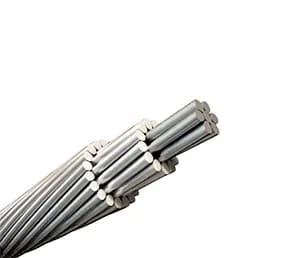
AAC stands for All Aluminium Conductor. It's the simplest overhead conductor: multiple strands of hard-drawn EC-grade (1350-H19) aluminium wire twisted together concentrically. No steel core.
Characteristics:
- Maximum conductivity (61.2% IACS) — the best current-carrying capacity per mm² among overhead conductors
- Lowest tensile strength — relies entirely on aluminium for mechanical support
- Lightest weight — no steel adds mass
- Excellent corrosion resistance — pure aluminium forms a protective oxide layer naturally
Best for: Short-to-medium spans (≤150m) where maximum current capacity matters and mechanical strength requirements are moderate. Coastal environments where ACSR's steel core would corrode.
What Is AAAC Conductor?
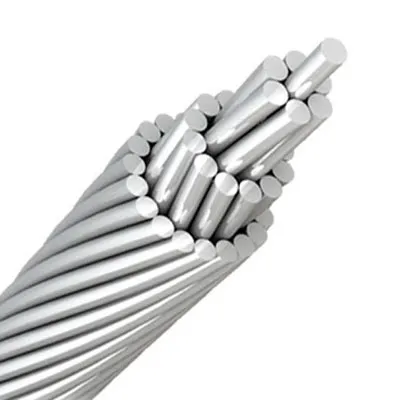
AAAC stands for All Aluminium Alloy Conductor. Instead of pure 1350 aluminium, it uses 6201-T81 aluminium alloy wire — an aluminium-magnesium-silicon alloy that's heat-treated for extra strength.
Characteristics:
- Higher tensile strength than AAC — roughly 50% stronger for the same cross-section
- Slightly lower conductivity (52.5% IACS vs 61.2%) — you sacrifice ~14% current capacity
- Same excellent corrosion resistance as AAC
- Same weight class as AAC (no heavy steel)
- Better sag performance — stronger conductor means less sag at longer spans
Best for: Medium spans (100–350m) where you need more strength than AAC but don't want the corrosion vulnerability and extra weight of ACSR's steel core. The default choice for coastal and humid-climate overhead lines.
Head-to-Head Comparison: AAC vs AAAC
| Property | AAC (1350 Aluminium) | AAAC (6201 Alloy) |
|---|---|---|
| Tensile strength (typical) | 160–180 MPa | 295–330 MPa |
| Conductivity (% IACS) | 61.2% | 52.5% |
| Corrosion resistance | ★★★★★ Excellent | ★★★★★ Excellent |
| Weight (same cross-section) | Baseline | Same (±2%) |
| Maximum span | 100–150m | 200–350m |
| Sag at 100m span | More sag | Less sag |
| Cost per km (same size) | Baseline | 5–10% more |
| Temperature rating | 75–90°C | 75–90°C |
| Standard alloy | EC 1350-H19 | 6201-T81 |
The key tradeoff: AAC gives you maximum amps (best for heavily loaded short urban feeders). AAAC gives you more mechanical strength without adding steel-core corrosion risk (best for longer spans in coastal/tropical environments).
Complete AAC Specifications
AAC Size Chart (IEC 61089 / BS 215 Part 1)
| Code Name | Cross Section (mm²) | Stranding | Wire Ø (mm) | Overall Ø (mm) | Weight (kg/km) | Breaking Load (kN) | DC Resistance (Ω/km @ 20°C) |
|---|---|---|---|---|---|---|---|
| Gopher | 25 | 7/2.13 | 2.13 | 6.4 | 69 | 4.3 | 1.128 |
| Weasel | 30 | 7/2.34 | 2.34 | 7.0 | 83 | 5.2 | 0.934 |
| Rabbit | 50 | 7/3.00 | 3.00 | 9.0 | 137 | 8.5 | 0.569 |
| Dog | 100 | 7/4.27 | 4.27 | 12.8 | 275 | 17.1 | 0.283 |
| Tiger | 150 | 19/3.18 | 3.18 | 15.9 | 412 | 25.5 | 0.190 |
| Wolf | 150 | 19/3.18 | 3.18 | 15.9 | 412 | 25.5 | 0.190 |
| Panther | 200 | 19/3.66 | 3.66 | 18.3 | 549 | 34.1 | 0.142 |
| Zebra | 400 | 37/3.71 | 3.71 | 26.0 | 1,098 | 68.3 | 0.071 |
| Moose | 500 | 37/4.14 | 4.14 | 29.0 | 1,372 | 85.2 | 0.057 |
AAC Current Ratings
| Size (mm²) | Current Rating @ 75°C (A) | Current Rating @ 90°C (A) |
|---|---|---|
| 25 | 130 | 155 |
| 50 | 210 | 250 |
| 100 | 350 | 415 |
| 150 | 460 | 550 |
| 200 | 560 | 665 |
| 400 | 870 | 1,040 |
Ratings: 35°C ambient, 0.6 m/s wind, full sun. AAAC same-size ratings are ~10% lower due to lower conductivity.
Complete AAAC Specifications
AAAC Size Chart (IEC 61089 / BS 3242)
| Code Name | Cross Section (mm²) | Stranding | Wire Ø (mm) | Overall Ø (mm) | Weight (kg/km) | Breaking Load (kN) | DC Resistance (Ω/km @ 20°C) |
|---|---|---|---|---|---|---|---|
| Gopher | 25 | 7/2.13 | 2.13 | 6.4 | 69 | 6.9 | 1.306 |
| Weasel | 30 | 7/2.34 | 2.34 | 7.0 | 83 | 8.3 | 1.081 |
| Rabbit | 50 | 7/3.00 | 3.00 | 9.0 | 137 | 13.7 | 0.659 |
| Dog | 100 | 7/4.27 | 4.27 | 12.8 | 275 | 27.5 | 0.328 |
| Lynx | 175 | 19/3.43 | 3.43 | 17.2 | 481 | 49.8 | 0.186 |
| Panther | 200 | 19/3.66 | 3.66 | 18.3 | 549 | 54.7 | 0.164 |
| Zebra | 400 | 37/3.71 | 3.71 | 26.0 | 1,098 | 109.8 | 0.082 |
| Moose | 500 | 37/4.14 | 4.14 | 29.0 | 1,372 | 137.4 | 0.066 |
Notice: Same physical dimensions as AAC (same wire size, same stranding), but breaking load is ~60% higher and DC resistance is ~16% higher. This is purely the alloy difference.
Interested in this product?
Get AAC / AAAC Price — Tell Us Your SizeWhen to Use AAC — Real-World Applications
1. Urban Distribution Feeders (Short Spans)
City distribution with 40–80m span? AAC gives you the most amperes in the smallest diameter at the lowest cost. No corrosion concern (no salt spray in inland cities), and spans are short enough that AAC's lower tensile strength isn't a problem.
2. Bus Bars & Substation Connections
Substation flexible bus bars use AAC because they need maximum current capacity in a compact space with minimal thermal expansion issues. The spans are extremely short (3–15m), so tensile strength is irrelevant.
3. Coastal Distribution (When Paired with Proper Hardware)
In some coastal utility specifications (Saudi Arabia, UAE coastal), AAC is preferred for its absolute corrosion immunity. Even AAAC's alloy can show minor pitting after 30+ years in aggressive salt environments — pure aluminium doesn't.
When to Use AAAC — Real-World Applications
1. Coastal & Humid Climate Trunk Lines
This is AAAC's strongest use case. Along the coast of West Africa, Southeast Asia, and the Middle East, ACSR's steel core corrodes within 10–15 years — even with Class B galvanizing. AAAC gives you usable mechanical strength (enough for 200–350m spans) without any ferrous corrosion risk.
2. Medium-Voltage Distribution (11–33kV)
Many African and Middle Eastern utilities specify AAAC as the standard conductor for 11kV and 33kV overhead lines. The reasoning: these are permanent infrastructure with 40-year design life; the extra cost over AAC is justified by longer span capability and reduced sag.
3. Replacement for Aged ACSR
When ACSR conductors reach end-of-life (steel core corroded, breaking strands), utilities often re-conductor with AAAC rather than ACSR. Same tower, same span — AAAC's lighter weight (no steel) means existing structures handle it without reinforcement.
4. River Crossings (Secondary)
For river crossings up to 400m, AAAC can handle the span without the expense of ACSR/TW or ACCR special conductors. Beyond 400m, you'll need ACSR with high steel ratio.
ACSR vs AAC vs AAAC: Decision Matrix
| Your Situation | Best Choice | Why |
|---|---|---|
| Long spans (300m+) + inland | ACSR | Highest strength-to-weight, cheapest for long spans |
| Short spans (≤100m) + maximum load | AAC | Best conductivity, lowest cost, strength adequate |
| Medium spans (100–300m) + coastal | AAAC | Corrosion-free, sufficient strength |
| Medium spans + inland + budget | ACSR | Still cheapest per km with adequate corrosion life |
| Cyclone zone + coastal | AAAC | No steel to corrode + good wind-load resistance |
| EHV transmission (220kV+) | ACSR | Bundled ACSR still dominates at transmission level |
| Urban 11kV in salt air | AAAC | Corrosion-free, code compliance, 30+ year life |
Pricing Comparison
Pricing for AAC, AAAC, and ACSR depends primarily on the current LME aluminium price, order volume, and delivery terms. As a general guide:
- AAAC costs 5–10% more than AAC because 6201 alloy rod is more expensive than standard 1350 rod
- ACSR costs slightly more than AAAC due to the galvanized steel wire component
Contact us with your required sizes and quantities for a current quotation.
But total system cost tells a different story: AAAC on the same route as ACSR often means fewer poles (longer spans than AAC but lighter than ACSR = same pole loading). Run a sag-tension calculation for your specific route — the pole savings often offset the per-km conductor premium.
Standards & Certifications
| Standard | Type | Notes |
|---|---|---|
| IEC 61089 | AAC & AAAC | International standard, most commonly referenced |
| BS 215 Part 1 | AAC | British/Commonwealth standard for AAC |
| BS 3242 | AAAC | British standard for aluminium alloy conductor |
| ASTM B231 | AAC | North American AAC standard |
| ASTM B399 | AAAC | North American AAAC standard |
| NFC 34-125 | Both | French standard (Francophone Africa) |
| IS 398 Part 2 & 4 | Both | Indian standard |
We hold IEC CB Certificate, ISO 9001, and KEMA type test reports covering both AAC and AAAC production. All test reports available for buyer review.
Manufacturing Notes
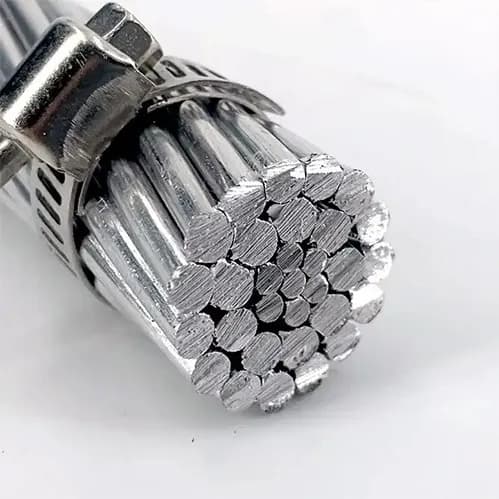
Both AAC and AAAC use the same stranding equipment. The only difference is the input material:
- AAC: Starts from 1350-H19 aluminium rod (99.7% Al, EC grade)
- AAAC: Starts from 6201-T81 alloy rod (Al-Mg-Si alloy, heat-treated)
The alloy rod must be properly solution-treated and aged (T81 temper) before drawing — this is where quality varies between suppliers. Poorly heat-treated 6201 wire won't achieve rated tensile strength, meaning your conductor won't meet spec. We verify every batch of alloy rod with tensile test before it enters production.
AAC vs AAAC in Coastal and Corrosive Environments
Conductor selection in coastal, industrial, and high-humidity environments is one of the most consequential procurement decisions you'll make. The wrong choice can cut asset life in half and trigger unplanned reconductoring within 15 years.
Corrosion Mechanisms in Overhead Conductors
Before comparing AAC and AAAC performance in corrosive zones, it helps to understand the failure modes:
- Galvanic corrosion — occurs in bimetallic conductors (ACSR) where dissimilar metals (aluminium and zinc-coated steel) are in contact with an electrolyte (salt spray, rain, condensation). This is why ACSR fails preferentially in coastal zones.
- Pitting corrosion — localised attack on aluminium, usually initiated by chloride ions from sea salt or industrial pollutants. Pure aluminium (1350) is slightly more resistant than 6201 alloy because it forms a more uniform oxide film.
- Stress corrosion cracking (SCC) — affects high-strength aluminium alloys under tensile stress in corrosive environments. Rare in 6201-T81 AAAC but documented in older 6101 compositions.
How AAC Performs in Corrosive Zones
Pure aluminium's natural oxide layer (Al₂O₃) is one of the most stable passive films of any common engineering metal. In coastal environments:
- The oxide layer self-heals when scratched or damaged
- Pitting, if it occurs, stays shallow (typically less than 0.3mm depth after 20 years in moderate salt spray)
- No galvanic couple exists — all wires are the same alloy
- No grease filling needed for corrosion protection
Expected service life in coastal zones: 35–50 years for AAC, compared to 15–25 years for ungreased ACSR with Class B galvanizing.
How AAAC Performs in Corrosive Zones
The 6201-T81 alloy introduces magnesium and silicon into the aluminium matrix. This changes corrosion behaviour slightly:
- The passive oxide layer is marginally less uniform than pure aluminium
- In aggressive marine environments (within 500m of breaking surf, high chloride concentration), pitting depth can reach 0.5mm after 20 years
- Intergranular corrosion is possible if heat treatment (T81 temper) is improperly controlled — this is a supplier quality issue, not an inherent alloy defect
- Still vastly superior to any conductor with a steel component
Expected service life in coastal zones: 30–45 years for properly manufactured AAAC. The key qualifier is proper T81 temper — inadequate ageing treatment creates susceptible grain boundaries.
Selection Guidance for Corrosive Environments
| Environment Severity | Recommended Conductor | Rationale |
|---|---|---|
| Mild coastal (1–5 km from sea) | AAAC | Strength advantage outweighs marginal corrosion risk |
| Moderate coastal (200m–1km) | AAAC with periodic inspection | Still outperforms ACSR by decades |
| Severe marine (under 200m from surf) | AAC for short spans, AAAC greased for longer spans | Pure aluminium gives maximum corrosion immunity |
| Industrial pollution (SO₂, chemical) | AAAC | Sulphate/nitrate attack is less selective than chloride |
| Desert (dry, UV, sand abrasion) | AAAC | Sand abrasion removes oxide layer; alloy reforms it faster under mechanical wear |
Installation and Stringing Considerations
Procurement doesn't end at the shipping port. How AAC and AAAC are installed affects long-term performance and total project cost. Understanding stringing requirements helps you specify the right accessories and plan installation logistics.
Stringing Tension and Sag
Both AAC and AAAC are strung at a percentage of their rated breaking strength (RBS). Standard practice:
- Initial stringing tension: 18–22% of RBS (under still-air, no-ice conditions)
- Everyday tension (after creep): 15–18% of RBS
- Maximum design tension (with wind/ice): 40–50% of RBS
Because AAAC has ~60% higher breaking strength than AAC at the same cross-section, the same percentage of RBS translates to higher absolute tension — meaning less sag for the same span. This is the primary reason AAAC is preferred for longer spans.
Sag comparison at 150m span, 100mm² conductor, 15°C:
| Conductor | Sag (m) | Minimum Ground Clearance Met? |
|---|---|---|
| AAC 100mm² | 4.8 | Marginal — may need taller poles |
| AAAC 100mm² | 3.2 | Comfortable margin |
| ACSR 100/17 | 2.9 | Best (but corrosion risk) |
Stringing Equipment Requirements
Both AAC and AAAC are relatively easy to string compared to ACSR:
- No birdcaging risk from differential tension (unlike ACSR where aluminium and steel layers have different elasticity)
- Lighter pulling tension required (same size AAC/AAAC weighs less than ACSR)
- Standard aluminium-lined running boards and pulleys — never use steel grooved pulleys on aluminium-based conductors (causes surface damage and initiates corrosion points)
- Pulling speed: 1.5–3 km/hour for typical distribution spans
Jointing and Termination
Both AAC and AAAC use compression-type fittings (sleeves and dead-ends). Key differences in hardware:
| Fitting Type | AAC | AAAC |
|---|---|---|
| Compression sleeve (mid-span joint) | Aluminium tube, standard die set | Aluminium alloy tube, higher compression force required |
| Dead-end clamp | Standard aluminium body | Same body, higher-rated bolt torque |
| Suspension clamp | Armour rod + neoprene-lined cradle | Same — armour rod protects against fretting |
| Repair sleeve | Full-tension type for critical spans | Same specification |
For both conductors, all hardware in contact with the conductor must be aluminium or aluminium-compatible (no bare steel bolts, no copper terminals without bimetal pads).
Creep and Prestressing
Aluminium conductors experience metallurgical creep — permanent elongation under sustained tension over years. This increases sag over time.
- AAC (pure aluminium) creeps more than AAAC (alloy is harder, more creep-resistant)
- Typical 10-year creep: AAC ~0.06%, AAAC ~0.04% (both at 20% RBS, 15°C)
- Some projects specify pre-stressing during installation: conductor is tensioned to 50% RBS for 1 hour, then relaxed to design tension. This accelerates early creep and stabilises sag earlier.
Include creep allowance in sag-tension calculations — under-estimating creep leads to clearance violations years after installation.
Testing and Quality Verification for Buyers
When receiving AAC or AAAC from any supplier — especially for critical utility infrastructure — verification testing protects your investment. Here's what to check and what to demand.
Factory Acceptance Tests (Routine Tests)
These tests are performed on every production drum. Your inspection agency (SGS, Bureau Veritas, TUV, Intertek) should witness them:
| Test | Standard Reference | Pass Criteria |
|---|---|---|
| DC resistance at 20°C | IEC 61089, Clause 5.2 | ≤ tabulated max value for size |
| Conductor diameter | IEC 61089, Clause 5.1 | Within ±1% of nominal |
| Individual wire diameter | IEC 61089, Clause 5.1 | Within ±1% of specified |
| Wire tensile strength | IEC 61089, Table 3/4 | ≥ minimum for alloy grade |
| Wire elongation at break | IEC 61089, Table 3/4 | ≥ 3.0% (AAC) or ≥ 3.0% (AAAC 6201-T81) |
| Wrapping test (ductility) | IEC 61089, Clause 5.4 | No cracks after 8 turns around mandrel |
| Lay ratio measurement | IEC 61089, Clause 5.3 | 10–16× layer diameter |
| Length verification | — | Within +0/–1% of declared |
Type Tests (One-Time Qualification)
Type tests prove the design meets standard. You should verify these reports exist (from an accredited lab) before placing a bulk order:
| Test | Purpose |
|---|---|
| Breaking load (full conductor) | Confirms rated ultimate tensile strength |
| Stress-strain curve | Used for sag-tension calculation input |
| Creep test (1000-hour) | Predicts long-term sag performance |
| Thermal cycling | Verifies conductor integrity under load cycling |
| Corrosion resistance (salt spray, for AAAC) | 1000-hour salt spray per ASTM B117 |
Incoming Inspection at Site
When drums arrive at your project warehouse, conduct these checks before accepting:
- Visual inspection — look for crushed wires, loose strands, shipping damage, moisture ingress
- Resistance spot-check — measure DC resistance on 1 drum per lot (should match MTC value within 2%)
- Dimensional check — calliper on overall diameter and individual wire
- Documentation review — Mill Test Certificate matches drum markings, PO specification, and standard requirements
- Drum condition — no broken flanges, seals intact, metre marking visible and sequential
Red Flags That Indicate Quality Issues
- DC resistance significantly below minimum (suggests undersize wire)
- Wire tensile strength at bare minimum with no margin (suggests inadequate drawing/ageing)
- Inconsistent lay direction within a drum (manufacturing defect)
- Grease or oil on conductor that wasn't specified (may indicate corrosion protection covering up surface defects)
- Missing or incomplete Mill Test Certificates
Demand full traceability: rod supplier certificate → wire drawing records → stranding records → test results. Any factory that cannot produce this chain should be reconsidered.
Frequently Asked Questions
Can I use AAC for 132kV transmission?
Technically yes (by bundling), but practically no. At 132kV and above, spans are typically 250–400m. AAC can't handle those spans without excessive sag and frequent poles. Use ACSR or AAAC.
Does AAAC sag more than ACSR?
Yes, slightly. AAAC has a higher thermal expansion coefficient than ACSR (because ACSR's steel core has low expansion and dominates the composite). At high operating temperatures (80°C+), AAAC sags ~10–15% more than equivalent ACSR. Factor this into sag-tension calculations.
What is the difference between 6201 and 6101 alloy?
6201-T81 is the standard alloy for AAAC conductors — higher magnesium content gives more strength. 6101-T6 is used for bus bar and substation conductor — lower strength but higher conductivity (56% IACS vs 52.5%). Don't confuse them in specs.
How do I convert between AAC code names and mm²?
Code names vary by standard (BS uses animal names, ASTM uses American birds). Always reference the cross-sectional area (mm²) to avoid confusion. When specifying to us, state the mm² and stranding — code names are convenient but ambiguous across standards.
Can you supply AAC with trapezoidal wire (AAC/TW)?
Yes. Trapezoidal (shaped) wire AAC gives ~20% more aluminium area in the same overall diameter — higher current capacity without changing tower hardware. Available for 150mm² and above. Contact us for lead time and availability.
Get Your Quotation
Specify:
- AAC or AAAC (or both for comparison)
- Cross-section (mm²)
- Standard (IEC / BS / ASTM)
- Quantity (km or tonnes)
- Destination port
We'll reply within 24 hours with a technical datasheet and FOB pricing.
Email: sales@chinacablefactory.com | WhatsApp: +86 134-6102-4180
Interested in this product?
Request AAC / AAAC Factory QuoteRelated Products & Resources
- AAC Conductor — Product Page
- ACSR Conductor — steel-reinforced option for longer spans
- ABC Aerial Bundled Cable — insulated overhead distribution
- ACSR Conductor Complete Guide — specifications and sizing
- Overhead Transmission Line Cable Types — all conductor types compared
- Cable Conductor Selection Guide — aluminium vs copper
- How to Import Cable from China — procurement guide