Key Takeaway
Compare overhead conductor types: ACSR, AAC, AAAC, ACAR & OPGW — specs, voltage ratings, pros/cons side by side. Find which conductor fits your project and get pricing.
Every overhead power line starts with a conductor selection decision. The type of cable you choose defines your line's electrical capacity, mechanical behaviour, lifespan, and total cost of ownership. With over a dozen conductor types available — from century-old ACSR to modern high-temperature alloys — making the right choice requires understanding what each type does well and where it falls short.
This guide covers every major overhead transmission line cable type used in modern power systems. Whether you're designing a 33kV distribution line in rural Africa or a 500kV bulk transmission corridor in Southeast Asia, you'll find the technical comparison, application guidance, and cost context to make an informed decision.
We manufacture ACSR, AAC, AAAC, ACAR, and ABC conductors at our factory in Henan, China — serving utility and EPC projects across 50+ countries. The recommendations below come from real project experience, not textbook theory.
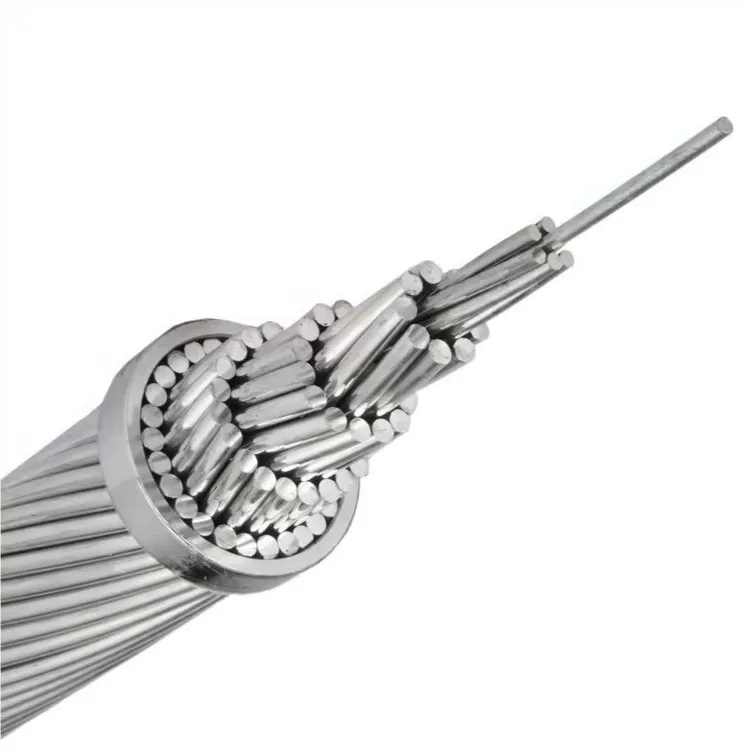
Overview: Types of Overhead Power Line Conductors
Here's the complete family of overhead conductors used in power transmission and distribution:
| Type | Full Name | Core Material | Outer Material | Primary Advantage |
|---|---|---|---|---|
| ACSR | Aluminium Conductor Steel Reinforced | Galvanized steel | EC-grade aluminium (1350) | Best strength-to-cost ratio |
| AAC | All Aluminium Conductor | — | EC-grade aluminium (1350) | Maximum conductivity, lightest |
| AAAC | All Aluminium Alloy Conductor | — | Aluminium alloy (6201/6101) | Corrosion resistance + strength |
| ACAR | Aluminium Conductor Alloy Reinforced | 6201 alloy core | EC-grade aluminium (1350) | High conductivity + good strength |
| ACSR/AW | ACSR Aluminium-Clad Steel | Aluminium-clad steel | EC-grade aluminium (1350) | ACSR strength + corrosion resistance |
| TACSR | Thermal-resistant ACSR | Galvanized steel | Heat-resistant aluminium alloy | High operating temperature (150–210°C) |
| ACCC | Aluminium Conductor Composite Core | Carbon fibre composite | Annealed aluminium (1350-O) | Maximum capacity, low sag |
| OPGW | Optical Ground Wire | Optical fibres in steel tube | Aluminium-clad steel + aluminium | Combined ground wire + telecom |
| ABC | Aerial Bundled Cable | Aluminium alloy messenger | XLPE-insulated aluminium | Safety, theft prevention |
| HTLS | High-Temperature Low-Sag (generic) | Various (Invar, composite) | Various aluminium alloys | Re-conductoring existing lines |
Let's examine each type in detail.
ACSR — Aluminium Conductor Steel Reinforced
ACSR is the world's most widely installed overhead conductor. It has been the standard choice for transmission and distribution lines since the 1900s, and remains dominant today for good reason — no other conductor type matches its cost-effectiveness for long-span overhead lines.
Construction
ACSR consists of a central core of galvanized steel wires surrounded by one or more layers of hard-drawn EC-grade aluminium (1350-H19) wires. The layers are stranded concentrically in alternating directions.
- Steel core: Provides mechanical strength (tensile load, wind/ice resistance)
- Aluminium layers: Carry the electrical current
- Galvanizing: Protects steel from corrosion (zinc coating Class A, B, or C)
Standard Configurations
| Stranding | Al/St Ratio | Strength Level | Typical Application |
|---|---|---|---|
| 6/1 | 6:1 | Standard | Distribution, short spans ≤200m |
| 26/7 | 3.7:1 | High | Sub-transmission, medium spans |
| 30/7 | 4.3:1 | Medium-high | Transmission 66kV–220kV |
| 54/7 | 7.7:1 | Standard (large) | HV/EHV transmission 220kV+ |
| 54/19 | 2.8:1 | Extra-high | River crossings, mountain spans |
Key Specifications
| Size (Code Name) | Al Area (mm²) | Overall Ø (mm) | Weight (kg/km) | UTS (kN) | Resistance (Ω/km) |
|---|---|---|---|---|---|
| Dog | 100 | 14.15 | 394 | 32.7 | 0.289 |
| Wolf | 150 | 17.28 | 576 | 52.1 | 0.193 |
| Panther | 200 | 20.04 | 767 | 68.9 | 0.145 |
| Zebra | 400 | 28.62 | 1,621 | 131.9 | 0.0723 |
| Moose | 500 | 31.77 | 2,004 | 159.2 | 0.0579 |
When to Choose ACSR
- Long-span transmission lines (300m+ spans) where mechanical strength matters
- Projects where cost per ampere-kilometre is the primary criterion
- Areas with heavy wind and ice loading
- Standard utility procurement where ACSR is the default specification
- Budget-constrained projects (ACSR is typically the cheapest per km)
Limitations
- Steel core adds weight and reduces overall conductivity per unit weight
- Susceptible to corrosion in coastal/industrial environments unless greased or ACSR/AW specified
- Maximum operating temperature limited to 75–90°C (higher temperatures accelerate steel core creep)
- Not suitable for re-conductoring where thermal capacity must increase without tower modification
For complete ACSR specifications, sizes, and pricing, see our ACSR Conductor Sizes and Price Guide.
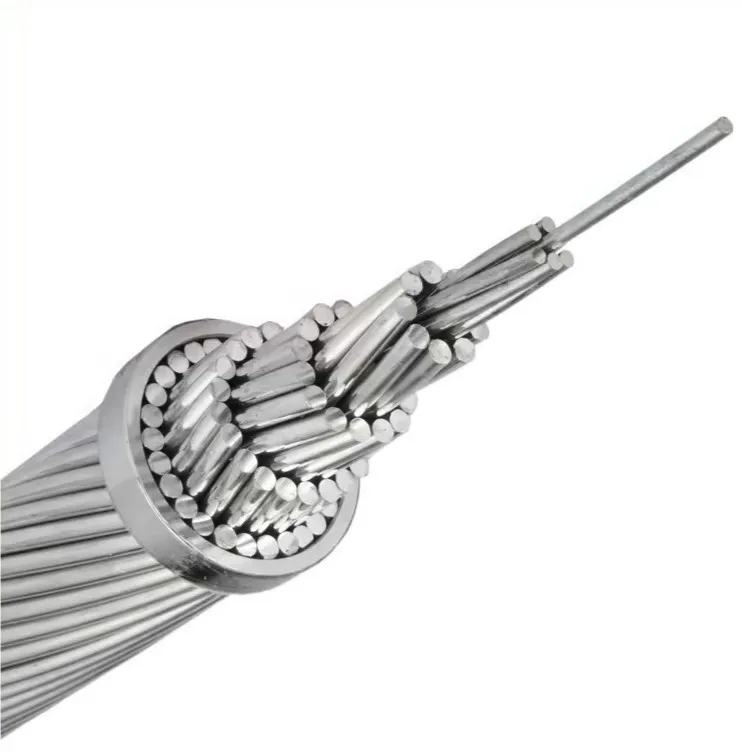
AAC — All Aluminium Conductor
AAC (also called ASC — Aluminium Stranded Conductor) consists entirely of EC-grade 1350-H19 aluminium wires with no steel reinforcement.
Construction
Concentric layers of hard-drawn aluminium wire, all the same material and grade. Available in 7-wire (small), 19-wire, 37-wire, and 61-wire configurations.
Key Specifications
| Size (mm²) | Stranding | Overall Ø (mm) | Weight (kg/km) | UTS (kN) | Resistance (Ω/km) |
|---|---|---|---|---|---|
| 50 | 7 | 9.0 | 137 | 7.4 | 0.579 |
| 100 | 19 | 12.7 | 274 | 14.7 | 0.289 |
| 150 | 19 | 15.5 | 411 | 22.1 | 0.193 |
| 200 | 37 | 18.0 | 548 | 27.8 | 0.145 |
| 300 | 37 | 22.0 | 823 | 41.7 | 0.0966 |
When to Choose AAC
- Short spans (≤150m) where mechanical strength isn't critical
- Coastal environments — no steel means no steel-corrosion risk
- Urban distribution — short spans between poles
- Substations and bus bars — where maximum conductivity per area is needed
- When you need maximum ampacity for a given diameter (no steel eating cross-section area)
Limitations
- Low tensile strength (about 40–50% of ACSR at same aluminium area)
- High sag on long spans — unsuitable for spans above 200m without excessive pole height
- Creep is higher than ACSR (no steel to resist permanent elongation)
- Cannot handle heavy ice loading — likely to fail or sag below clearance
Cost Comparison to ACSR
AAC is typically 5–10% cheaper per km than equivalent ACSR (same aluminium area) because there's no steel component. However, the shorter spans it requires mean more poles/towers — which usually makes the total line cost higher for transmission.
AAAC — All Aluminium Alloy Conductor
AAAC uses aluminium-magnesium-silicon alloy (6201-T81 or 6101-T6) instead of EC-grade aluminium. This gives significantly better strength than AAC while maintaining good corrosion resistance.
Construction
All wires are the same alloy material (homogeneous construction). Stranded concentrically like AAC but with alloy wires that have higher tensile strength.
Key Specifications
| Size (mm²) | Alloy | Stranding | Overall Ø (mm) | Weight (kg/km) | UTS (kN) | Resistance (Ω/km) |
|---|---|---|---|---|---|---|
| 50 | 6201 | 7 | 9.0 | 137 | 12.1 | 0.620 |
| 100 | 6201 | 19 | 12.7 | 274 | 24.3 | 0.310 |
| 150 | 6201 | 19 | 15.5 | 411 | 36.4 | 0.207 |
| 200 | 6201 | 37 | 18.0 | 548 | 48.5 | 0.155 |
| 300 | 6201 | 37 | 22.0 | 823 | 72.8 | 0.103 |
| 400 | 6201 | 61 | 25.4 | 1,097 | 97.0 | 0.0775 |
When to Choose AAAC
- Coastal and corrosive environments — no steel core eliminates galvanic corrosion
- Medium spans (150–350m) where AAC is too weak but ACSR's corrosion risk is unacceptable
- Distribution lines in humid tropical climates (West Africa, SE Asia coastal)
- When replacing ACSR on existing structures — AAAC has similar weight but better corrosion performance
- Middle East and Gulf region — high humidity + salt air makes AAAC the standard choice
Limitations
- 5–7% lower conductivity than EC-grade aluminium (53–55% IACS vs 61% IACS for 1350)
- Costs 8–15% more than ACSR per km (alloy wire is more expensive than plain aluminium + steel)
- Not as strong as ACSR 54/19 — for extreme spans, ACSR still wins
- Creep is slightly higher than ACSR (no steel core to limit long-term elongation)
Standards
- IEC 61089 (AL2 designation for 6201 alloy)
- ASTM B399 (North America)
- BS 3242 / EN 50182
ACAR — Aluminium Conductor Alloy Reinforced
ACAR combines the best electrical properties of EC-grade aluminium with the mechanical strength of aluminium alloy — without using any steel.
Construction
Central core of 6201-T81 aluminium alloy wires (for strength) surrounded by layers of 1350-H19 EC-grade aluminium wires (for conductivity). Think of it as "ACSR without the steel" — using alloy aluminium instead of steel for reinforcement.
Key Specifications
| Total Area (mm²) | Al 1350 Area (mm²) | Alloy 6201 Area (mm²) | Overall Ø (mm) | Weight (kg/km) | UTS (kN) | Resistance (Ω/km) |
|---|---|---|---|---|---|---|
| 100 | 67 | 33 | 12.7 | 274 | 18.2 | 0.322 |
| 200 | 133 | 67 | 18.0 | 548 | 36.4 | 0.161 |
| 300 | 200 | 100 | 22.0 | 823 | 54.6 | 0.107 |
| 400 | 267 | 133 | 25.4 | 1,097 | 72.8 | 0.0805 |
When to Choose ACAR
- When you need better conductivity than AAAC but can't use steel (corrosive environment)
- Coastal transmission lines with medium-long spans
- Upgrading existing lines — lighter weight per strength than ACSR allows longer spans on existing towers
- When project spec calls for "all-aluminium construction" but needs more strength than AAC
Limitations
- Less common in most markets — not all factories produce it
- More expensive than both ACSR and AAAC
- Strength is intermediate (less than ACSR, more than AAC, similar to AAAC)
- Two different wire materials complicate quality control
Cost
ACAR typically costs 15–25% more than ACSR and 5–10% more than AAAC for equivalent sizes.
ACSR/AW — ACSR with Aluminium-Clad Steel
ACSR/AW (also called ACSR/AS) replaces the galvanized steel core with aluminium-clad steel wire. The aluminium cladding (metallurgically bonded, not just coated) provides permanent corrosion protection.
Construction
Same as standard ACSR but the steel core wires have a thick aluminium layer permanently bonded to their surface (typically 10–15% of wire cross-section is aluminium cladding). This eliminates the galvanic corrosion risk between dissimilar metals.
When to Choose ACSR/AW
- Coastal lines within 5km of ocean where salt spray degrades zinc galvanizing
- Industrial environments with acidic or chemical atmospheric pollution
- Project design life >40 years where standard galvanizing might not last
- When you want ACSR's strength but can't accept the corrosion risk
Key Differences vs Standard ACSR
| Parameter | Standard ACSR (Galvanized) | ACSR/AW (Aluminium-Clad) |
|---|---|---|
| Core corrosion protection | Zinc coating (sacrificial) | Aluminium cladding (permanent) |
| Expected life (coastal) | 20–30 years | 40–50+ years |
| Cost premium | Baseline | +12–18% |
| Core conductivity contribution | Zero (steel only) | Slight (aluminium cladding conducts) |
| Weight | Baseline | Slightly less (aluminium lighter than zinc) |
| Standards | IEC 61089 + IEC 60888 | IEC 61232 / ASTM B549 |
Cost Justification
The 12–18% premium for ACSR/AW often pays back through reduced maintenance and longer replacement cycles in corrosive environments. For a 132kV coastal line expected to run 50 years, ACSR/AW eliminates one full re-conductoring cycle that standard ACSR would require.
TACSR & HTLS Conductors — High-Temperature Types
TACSR (Thermal-resistant Aluminium Alloy Conductor Steel Reinforced) and other HTLS (High-Temperature Low-Sag) conductors allow significantly higher operating temperatures — enabling more current through existing tower structures.
TACSR Construction
Same as ACSR but uses thermal-resistant aluminium alloy (TAL or ZTAL) instead of standard 1350 aluminium. This alloy retains its strength at temperatures where standard aluminium would soften and lose tensile properties.
| Conductor Type | Max Operating Temp | Core Type | Al Type | Sag Increase vs ACSR |
|---|---|---|---|---|
| Standard ACSR | 75–90°C | Galvanized steel | 1350-H19 | Baseline |
| TACSR | 150°C | Galvanized steel | TAL alloy | Moderate (+15–20%) |
| ZTACSR | 210°C | Galvanized steel | ZTAL alloy | Moderate (+20–25%) |
| ACCC (Composite) | 180°C | Carbon fibre composite | 1350-O (annealed) | Very low (−5% to +5%) |
| ACCR (3M) | 210°C | Alumina fibre composite | ZTAL alloy | Low (+5–10%) |
| G(Z)TACSR | 150–210°C | Invar/super-invar steel | TAL/ZTAL | Low (+5–10%) |
When to Choose HTLS Conductors
- Re-conductoring existing lines — need 50–100% more capacity without raising towers
- Right-of-way constrained corridors where new lines can't be built
- Urban transmission where land acquisition for new routes is impossible
- Emergency capacity upgrades — install on existing structures, no civil works
ACCC (Aluminium Conductor Composite Core) — Deep Dive
ACCC is the most advanced HTLS conductor commercially available. Its carbon-fibre composite core has near-zero thermal expansion, so the conductor barely sags even at 180°C operating temperature.
Advantages over ACSR:
- 25–30% more aluminium area for same overall diameter (smaller core)
- Uses annealed aluminium (1350-O) which has 63% IACS conductivity vs 61% for H19
- Net result: 1.5–2× the ampacity of same-diameter ACSR
- Sag at maximum temperature similar to ACSR at 75°C
Limitations:
- Very expensive — 3–5× the cost of ACSR per km
- Requires specialized installation equipment (no sheave damage to composite core)
- Limited number of manufacturers (CTC Global holds key patents)
- Not suitable for new lines where ACSR with larger size is cheaper
Cost Comparison — HTLS vs Standard ACSR
| Conductor Type | Relative Cost (per km) | Capacity Gain vs ACSR | When It Makes Economic Sense |
|---|---|---|---|
| ACSR (baseline) | 1.0× | — | New construction, ample ROW |
| TACSR | 1.3–1.5× | +30–40% | Light re-conductoring, moderate upgrade |
| ZTACSR | 1.5–1.8× | +50–70% | Significant upgrade on existing towers |
| ACCC | 3.0–5.0× | +80–100% | Maximum capacity, no tower modifications |
| G(Z)TACSR (Invar) | 2.0–3.0× | +60–80% | Long spans where sag is critical |
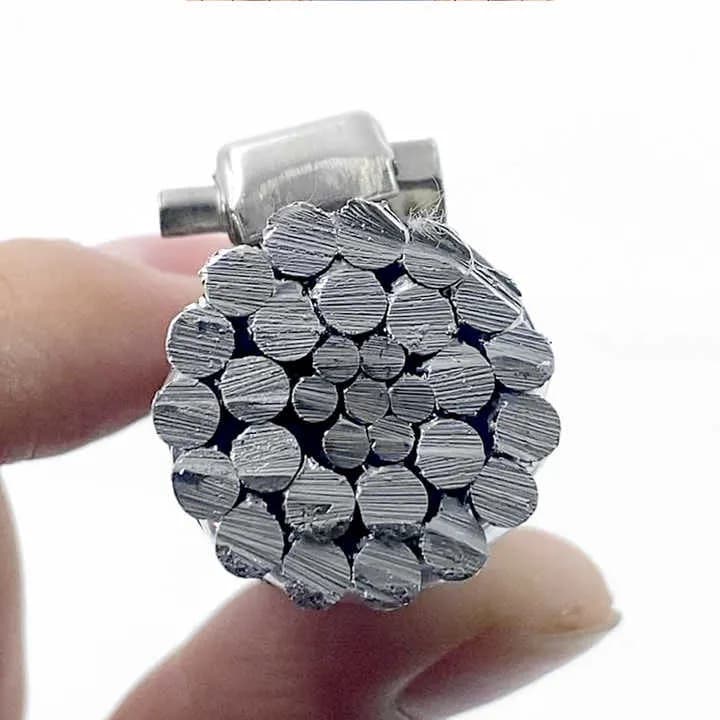
OPGW — Optical Ground Wire
OPGW combines two functions in one cable: it serves as the overhead ground wire (shield wire, earth wire) on transmission lines while simultaneously carrying optical fibres for telecommunications.
Construction
OPGW has a central stainless steel tube containing optical fibres (typically 12, 24, 48, or 96 fibres), surrounded by layers of aluminium-clad steel wires and/or aluminium alloy wires to provide mechanical strength and fault-current capacity.
Key Specifications
| Parameter | Typical Range |
|---|---|
| Optical fibres | 12–144 fibres (single-mode G.652D) |
| Overall diameter | 10–20mm |
| Weight | 350–900 kg/km |
| Rated tensile strength | 60–200 kN |
| Short-circuit capacity | 20–80 kA²s |
| Fibre attenuation | ≤0.22 dB/km at 1550nm |
| Operating temperature | −40°C to +70°C |
When to Choose OPGW
- Any new transmission line where telecommunications will be needed along the route
- Utility communication backbone — connecting substations for SCADA, protection, and telecom
- Replacing existing ground wire — add fibre capacity during routine line maintenance
- Revenue generation — utilities lease dark fibre to telecom operators
Limitations
- More expensive than standard ground wire (steel wire or ACSR ground wire)
- Requires careful handling during installation (fibre is fragile)
- Splice points need specialised equipment
- Not suitable as phase conductor — it's a ground/shield wire only
Cost
OPGW costs significantly more than a plain galvanized steel ground wire, but the premium is justified by the telecommunications value it provides. Pricing depends on fibre count, mechanical specification, and order volume — contact us for a quotation.
ABC — Aerial Bundled Cable
ABC (Aerial Bundled Cable) is fundamentally different from bare overhead conductors — it uses insulated conductors bundled together, carried by a bare or insulated messenger wire.
Construction Types
| Type | Configuration | Application |
|---|---|---|
| Duplex | 1 insulated phase + 1 bare neutral | Single-phase service drops |
| Triplex | 2 insulated phases + 1 bare neutral | Split-phase (North America) |
| Quadruplex | 3 insulated phases + 1 bare neutral | Three-phase distribution |
| LV ABC (4-core) | 3 phases + neutral, all insulated | LV distribution (IEC markets) |
| MV ABC (3-core) | 3 insulated phases + bare messenger | MV distribution up to 33kV |
When to Choose ABC
- Urban distribution — reduced right-of-way, pole attachments, and visual impact
- Anti-theft — insulated conductors can't be tapped with a hook wire (major issue in Africa, South Asia)
- Safety — dramatically reduces electrocution from contact or fallen lines
- Reliability — no conductor clashing in wind, no tree-contact faults
- Rural electrification — World Bank and development banks mandate ABC for funded projects
Limitations
- Limited to distribution voltages (typically ≤33kV)
- Cannot be used for long spans (insulation adds weight, messenger carries all tension)
- More expensive per km than bare conductors (insulation + bundling cost)
- Higher losses for same cross-section (larger outer diameter = less effective cooling)
- Requires different hardware from bare conductors
Cost
ABC cable costs approximately 2–3× more per km than bare ACSR for equivalent current capacity. However, the reduced pole count (no cross-arms), lower maintenance, and elimination of theft losses often make the total ownership cost lower for LV distribution.
For detailed ABC specifications and pricing, see our ABC Cable Guide and ABC Cable Price Per Meter for current factory-direct quotes.
Specialty and Emerging Conductor Types
ACSR/TW — Trapezoidal Wire
ACSR/TW uses trapezoidal-shaped aluminium wires instead of round wires. The trapezoidal cross-section fills gaps between wires, increasing the effective aluminium area by 20–25% for the same overall diameter.
Advantage: Higher current rating without increasing conductor size or tower loads. Limitation: More expensive to manufacture (shaped wire drawing), 10–20% premium. Best for: Uprating existing lines where tower clearances allow the same diameter.
Gap-Type Conductor (GTACSR)
Gap-type conductor has a small gap (filled with grease) between the steel core and aluminium layers. This allows the aluminium to slip relative to the core during high-temperature operation, so thermal expansion doesn't translate to sag.
Advantage: High temperature operation with minimal sag increase. Limitation: Complex installation procedure, very expensive. Best for: Specific spans where sag is critical and tower raising isn't possible.
AACSR — Aluminium Alloy Conductor Steel Reinforced
AACSR uses 6201 aluminium alloy wires (instead of EC-grade 1350) over a steel core. This gives 10–15% higher breaking strength than standard ACSR at the same size but slightly lower conductivity.
Advantage: More strength than ACSR without increasing size. Limitation: Higher resistance (5–7% more losses). Rarely justified vs. going one size up in ACSR. Best for: Niche applications where strength must increase within a fixed diameter constraint.
Head-to-Head Comparison: All Conductor Types
This is the comparison table that helps you narrow down the right conductor type for your project:
Mechanical & Electrical Comparison
| Type | Relative Strength | Relative Weight | Conductivity (% IACS) | Max Temp (°C) | Corrosion Resistance |
|---|---|---|---|---|---|
| ACSR | ★★★★★ | ★★★☆☆ (heavy) | 61% (Al only) | 75–90 | ★★★☆☆ |
| AAC | ★★☆☆☆ | ★★★★★ (lightest) | 61% | 75–90 | ★★★★★ |
| AAAC | ★★★★☆ | ★★★★☆ (light) | 53–55% | 75–90 | ★★★★★ |
| ACAR | ★★★☆☆ | ★★★★☆ (light) | 57–59% | 75–90 | ★★★★★ |
| ACSR/AW | ★★★★★ | ★★★☆☆ (heavy) | 61% (Al only) | 75–90 | ★★★★★ |
| TACSR | ★★★★★ | ★★★☆☆ (heavy) | 60% | 150 | ★★★☆☆ |
| ACCC | ★★★★☆ | ★★★★☆ (light) | 63% | 180 | ★★★★★ |
| OPGW | ★★★★☆ | ★★★☆☆ | N/A (ground wire) | 70 | ★★★★★ |
| ABC | ★★★☆☆ | ★★☆☆☆ (heaviest) | 61% | 70–90 | ★★★★★ |
Cost & Application Comparison
| Type | Relative Cost (per km) | Span Capability | Best Voltage Range | Primary Market |
|---|---|---|---|---|
| ACSR | 1.0× (baseline) | 80–600m | 11kV–500kV | Universal |
| AAC | 0.90–0.95× | 50–150m | 0.4kV–33kV | Distribution, substations |
| AAAC | 1.08–1.15× | 100–350m | 11kV–220kV | Coastal, corrosive areas |
| ACAR | 1.15–1.25× | 100–350m | 11kV–220kV | Niche, coastal transmission |
| ACSR/AW | 1.12–1.18× | 80–600m | 11kV–500kV | Coastal ACSR replacement |
| TACSR | 1.30–1.50× | 80–500m | 66kV–500kV | Re-conductoring, upgrades |
| ACCC | 3.0–5.0× | 200–800m | 132kV–500kV | Maximum capacity upgrades |
| OPGW | Special pricing | 200–600m | N/A (ground wire) | Communication + protection |
| ABC | 2.0–3.0× | 40–100m | 0.4kV–33kV | LV/MV distribution |
Conductor Selection Decision Framework
Use this systematic approach to select the right overhead conductor type for your project:
Step 1: Define Your Voltage and Line Function
| Line Function | Voltage Range | Candidate Conductors |
|---|---|---|
| LV distribution last-mile | 0.4kV | ABC (preferred), AAC |
| MV distribution | 11–33kV | ACSR, AAAC, ABC (urban) |
| Sub-transmission | 33–66kV | ACSR, AAAC |
| Transmission | 66–220kV | ACSR, AAAC, ACSR/AW |
| HV/EHV transmission | 220–500kV | ACSR, TACSR, ACCC |
| Ground/shield wire | — | OPGW, galvanized steel wire |
Step 2: Assess Environmental Conditions
| Environment | Recommended Type | Avoid |
|---|---|---|
| Inland, normal | ACSR | — |
| Coastal (under 5km from sea) | AAAC, ACSR/AW, ACAR | Standard ACSR (without grease) |
| Industrial pollution (acid/chemicals) | AAAC, ACSR/AW | Standard ACSR |
| Desert (high temp, sand) | ACSR, TACSR | AAC (too weak for sand loading) |
| Tropical humid (rainforest) | AAAC | Standard ACSR (accelerated corrosion) |
| Arctic/heavy ice | ACSR 54/19, high-strength | AAC, AAAC (insufficient strength) |
| High altitude (>2000m) | ACSR (standard), size up | — (de-rate for reduced cooling) |
Step 3: Check Mechanical Requirements
| Span Length | Wind/Ice Loading | Recommended Core |
|---|---|---|
| Short (under 150m) | Light | Any type works — choose by cost or environment |
| Medium (150–350m) | Moderate | ACSR 30/7, AAAC, ACAR |
| Long (350–500m) | Heavy | ACSR 54/7 or 54/19 |
| Extra-long (>500m) | Extreme | ACSR 54/19, special high-strength |
| Re-conductoring (existing towers) | Fixed | HTLS (TACSR, ACCC) — match existing sag |
Step 4: Economic Analysis
For most projects, the decision comes down to two or three candidates. Use total life-cycle cost:
Total Cost = Conductor Cost + Tower Cost + Loss Cost + Maintenance Cost
- Conductor cost: Price per km × total length
- Tower cost: Affected by conductor weight (heavier = stronger towers) and sag (more sag = taller towers)
- Loss cost: I²R losses × electricity price × hours/year × design life (20–40 years)
- Maintenance cost: Corrosion inspections, vegetation management, re-conductoring cycle
Key insight: A conductor that's 20% more expensive but lasts 50% longer or allows 30% fewer towers often wins on total cost. Don't choose on conductor price alone.
Interested in this product?
Need Help Selecting the Right Conductor? Send Your Project DetailsConductor Selection by Project Type — Practical Examples
Example 1: 132kV Transmission Line in Coastal Kenya
Requirements: 250km route, coastal environment, 300m average span, 40-year design life
Analysis:
- Standard ACSR would corrode in 20–25 years → need re-conductoring
- AAAC has adequate strength for 300m spans and zero corrosion risk
- ACSR/AW works but costs more than AAAC with no significant advantage
Recommendation: AAAC 300mm² (or ACSR/AW Panther if client spec mandates ACSR)
Cost comparison:
- ACSR Panther: Lower upfront cost per km, but requires re-conductoring around year 25 due to corrosion — significantly increasing lifecycle cost
- AAAC 300: Higher upfront cost per km, but zero corrosion and no replacement needed within 40+ year service life — substantially lower total lifecycle cost
Example 2: 33kV Rural Distribution in Nigeria
Requirements: 500km network, inland savannah, 150m spans, high theft area
Analysis:
- Bare ACSR is cheapest but theft losses are 20–30% of revenue
- ABC eliminates theft but costs 2.5× more per km
- Short spans (150m) mean AAC or AAAC both work mechanically
Recommendation: ABC for LV last-mile (theft prevention), ACSR Dog for 33kV backbone (cost-effective, spans within capability)
Example 3: 220kV Capacity Upgrade in Industrial Corridor
Requirements: Existing 220kV double-circuit line, towers rated for Zebra 400/50, need 60% more capacity
Analysis:
- Can't add new lines (no right-of-way available)
- Can't raise towers (built-up area, excessive cost)
- Must fit within existing tower design (same weight, same sag envelope)
- TACSR gives +40% capacity — not quite enough
- ACCC gives +80-100% — meets the requirement
Recommendation: ACCC conductor matched to existing Zebra diameter and weight. Higher cost per km justified by avoided tower/ROW cost.
Example 4: 500kV Long-Distance Transmission in Desert
Requirements: 800km route, desert terrain, 400–450m spans, sand storms
Analysis:
- ACSR is proven technology for desert transmission (no corrosion concern in dry climate)
- Long spans favour high steel content (ACSR 54/7)
- Hot ambient (45–50°C) requires de-rating — consider larger size
- Sand abrasion on surface wires is minor for large conductors
Recommendation: ACSR Moose 500/65 (54/7), twin-bundled per phase for corona control at 500kV
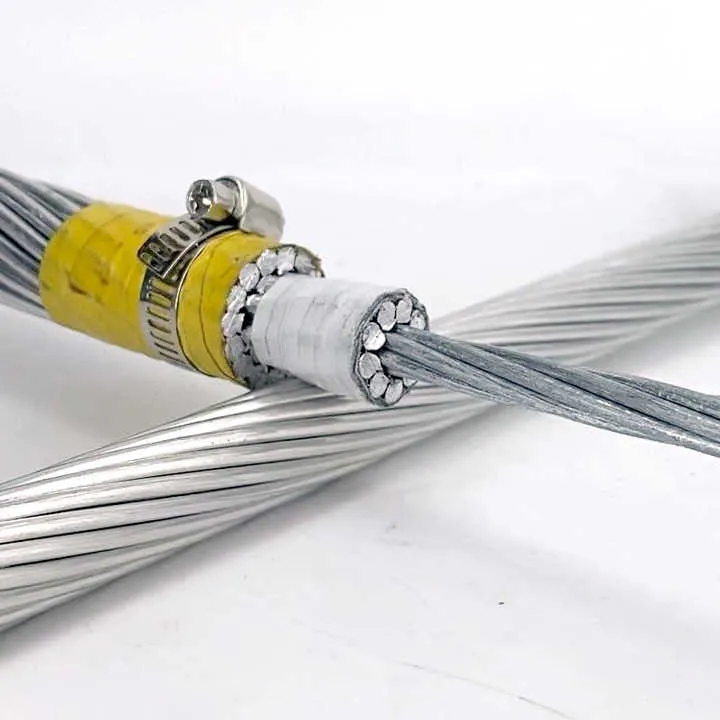
Standards Reference for Overhead Conductors
| Standard | Applies To | Region |
|---|---|---|
| IEC 61089 | ACSR, AAC, AAAC, ACAR | International |
| IEC 62219 | AAAC (specific) | International |
| IEC 61232 | ACSR/AW | International |
| ASTM B232 | ACSR | North America |
| ASTM B231 | AAC | North America |
| ASTM B399 | AAAC | North America |
| ASTM B524 | ACAR | North America |
| BS 215 Part 1 | AAC | UK/Commonwealth |
| BS 215 Part 2 | ACSR | UK/Commonwealth |
| BS 3242 | AAAC | UK/Commonwealth |
| EN 50182 | All bare conductors | Europe |
| GB/T 1179 | All bare conductors | China |
| IS 398 | ACSR | India |
| NFC 34-125 | ACSR | France/Francophone Africa |
Installation Considerations by Conductor Type
Different conductor types have different installation requirements. Factor these into your cost estimate:
| Conductor Type | Special Installation Needs | Equipment | Crew Skill Level |
|---|---|---|---|
| ACSR | Standard stringing | Tensioner, puller, sheaves | Standard |
| AAC | Standard, but watch for kinking | Standard equipment | Standard |
| AAAC | Same as ACSR | Standard equipment | Standard |
| ACAR | Same as ACSR | Standard equipment | Standard |
| ACSR/AW | Same as ACSR | Standard equipment | Standard |
| TACSR | Same as ACSR | Standard equipment | Standard |
| ACCC | Special sheaves (no metal contact with core), lower pulling tension | Composite-rated sheaves, specialized grips | Specialist trained |
| OPGW | Fibre splicing at each dead-end, splice boxes | Fusion splicer, OTDR tester | Specialist (fibre + line) |
| ABC | Bundled cable handling, specific hardware | ABC-specific tools, tensioning | Trained on ABC systems |
Frequently Asked Questions About Overhead Line Cable Types
What is the most common overhead transmission line cable?
ACSR (Aluminium Conductor Steel Reinforced) is the most widely used conductor for overhead transmission lines globally. It accounts for approximately 70% of all installed overhead conductor worldwide. Its combination of adequate strength, good conductivity, and low cost makes it the default choice for most transmission and distribution projects.
What is the difference between ACSR and AAAC for overhead lines?
The main difference is construction: ACSR has a steel core for strength with aluminium wires for conduction, while AAAC is made entirely of aluminium alloy (no steel). ACSR is stronger and cheaper for long spans; AAAC has better corrosion resistance and is preferred for coastal or corrosive environments. AAAC costs 8–15% more per km than ACSR.
Which conductor type is best for coastal power lines?
For coastal environments (within 5km of the sea), choose either AAAC or ACSR/AW (aluminium-clad steel core). Standard galvanized ACSR will corrode prematurely in salt-spray conditions — the zinc coating degrades in 15–20 years, then the steel core rusts. AAAC eliminates the problem entirely; ACSR/AW retains ACSR's strength advantage while adding permanent corrosion protection.
Can you use ACSR cable for 500kV transmission?
Yes, ACSR is the standard conductor for 500kV (and even 765kV/1100kV) transmission lines. At these voltages, conductors are typically bundled (2, 3, or 4 sub-conductors per phase separated by spacers) to control corona discharge and radio interference. Common 500kV configurations use ACSR Moose (500mm²) in quad bundle — four conductors per phase at 450mm spacing.
What is HTLS conductor and when should I use it?
HTLS (High-Temperature Low-Sag) is a family of specialty conductors designed to carry more current than standard ACSR without increasing sag. Types include TACSR, ZTACSR, ACCC, and Gap-type conductors. Use HTLS when you need to increase the power transfer capacity of an existing line without modifying towers — typically for urban corridors or congested transmission routes where building new lines isn't feasible.
What is the cheapest type of overhead conductor?
In terms of cost per km, the ranking from cheapest to most expensive is generally: AAC < ACSR < AAAC < ACAR < ACSR/AW < TACSR < ACCC. However, the cheapest conductor isn't always the cheapest line — AAC requires more towers (closer spacing) which usually makes total line cost higher than ACSR for anything beyond short distribution spans.
How do I choose between overhead bare conductor and ABC cable?
Use bare conductors (ACSR, AAAC) for:
- High voltage (>33kV)
- Long spans
- Lowest cost per km
Use ABC cable for:
- Low/medium voltage distribution (≤33kV)
- Urban areas (safety, reduced right-of-way)
- Areas with power theft problems
- Rural electrification (development bank requirements)
The crossover point is usually at 33kV — above that, bare conductors are the only practical option.
What overhead conductor do you manufacture?
We manufacture ACSR, AAC, AAAC, ACAR, and ABC at our factory in Henan, China. Our production covers sizes from 16mm² to 1000mm² across 60 production lines. We export to 50+ countries and hold certifications to IEC, BS, ASTM, and GB standards. For specialty conductors (ACCC, OPGW), we can source through partner factories and provide complete supply packages.
How long does overhead conductor last?
Design life depends on type and environment:
- ACSR (inland): 40–50 years
- ACSR (coastal): 20–30 years (without protection)
- AAAC: 40–50+ years in any environment
- ACSR/AW: 40–50+ years even coastal
- ABC: 25–35 years (insulation degradation limits life)
- OPGW: 30–40 years (fibre remains good, outer layers may corrode)
Proper maintenance (vibration damper inspection, joint checks) extends conductor life regardless of type.
What determines the maximum span length for overhead conductors?
Maximum span depends on:
- Conductor strength (UTS) — must support its own weight + wind/ice across the span
- Allowable sag — must maintain ground clearance at maximum temperature
- Tower height — taller towers allow more sag, enabling longer spans
- Vibration — very long spans suffer aeolian vibration that fatigues conductor near clamps
Typical practical maximums: AAC 150m, AAAC 350m, ACSR 30/7 400m, ACSR 54/7 500m, ACSR 54/19 800m+.
Our Product Range for Overhead Lines
We supply the following overhead conductor types from our Henan factory:
| Product | Standard Sizes | Standards | Lead Time |
|---|---|---|---|
| ACSR | 16mm²–600mm² | IEC 61089, BS 215, ASTM B232, GB/T 1179 | 15–45 days |
| AAC | 16mm²–500mm² | IEC 61089, BS 215, ASTM B231 | 15–30 days |
| AAAC | 25mm²–500mm² | IEC 61089, IEC 62219, ASTM B399, BS 3242 | 15–35 days |
| ACAR | 50mm²–400mm² | ASTM B524 | 20–40 days |
| ABC (LV) | 16mm²–185mm² | IEC 60502, NFC 33-209 | 15–30 days |
| ABC (MV) | 25mm²–150mm² | IEC 60502, local specs | 20–35 days |
All products ship with:
- Mill test certificates (routine test per drum)
- Material traceability certificates
- ISO 9001 quality management
- Third-party inspection coordination (SGS, BV, TUV available)
Visit our Aerial Cable Products page for detailed product specifications.
Related Products & Resources
Product Categories
- Aerial Cable Products — Full range of overhead conductors: AAC, AAAC, ACSR, ACAR, and ABC
- Power Cable Products — Underground XLPE power cables for when overhead is not feasible
- Solar Cable Products — PV1-F and H1Z2Z2-K solar cables for renewable energy projects
Related Articles
- ACSR Conductor: Complete Specifications & Factory Price Guide — Manufacturing process, quality standards, and supplier selection
- ACSR Conductor Sizes and Price Guide — Complete size tables and pricing for all ACSR variants
- ACSR Cable Manufacturer China — Factory Price Guide — How to source ACSR direct from Chinese factories
- AAC vs AAAC Conductor Specifications — Compare aluminium conductor alternatives
- ABC Cable: Aerial Bundled Conductor Guide — Insulated overhead distribution cable
- Conductor Selection Guide for Power Lines — How to choose the right conductor
- XLPE Insulated Overhead Cable Guide — Covered conductors for MV distribution
- How to Import Cable from China — Complete sourcing and logistics guide
Get a Quotation for Your Project
Tell us what conductor type and size you need, and we'll provide a competitive quotation within 24 hours:
- Conductor type — ACSR, AAC, AAAC, ACAR, or ABC
- Size and quantity — in km or tonnes
- Applicable standard — IEC, ASTM, BS, or local standard
- Environment — inland, coastal, industrial, desert
- Destination port — for CIF pricing
Email: sales@chinacablefactory.com | WhatsApp: +86 134-6102-4180
Interested in this product?
Send Project Requirements — Get Factory Quote in 24h