Key Takeaway
ABC cable price per meter by size and configuration (2×16 to 3×150+1×95). Full cost breakdown, pricing factors explained. Get factory-direct quote within 24h.
If you're sourcing ABC cable for a distribution project, the first question on your mind is simple: what does ABC cable cost per meter?
The honest answer is that there's no single price. ABC cable pricing depends on aluminum market rates, conductor cross-section, number of cores, insulation material, order volume, and delivery terms. A 2×16mm² duplex and a 4×95mm² quadruplex are fundamentally different products at fundamentally different price points.
This guide breaks down everything that affects aerial bundled cable cost so you can budget accurately, compare supplier quotes on equal footing, and negotiate the best possible price for your project. Whether you're procuring for rural electrification in Nigeria, urban network upgrades in South Africa, or distribution projects in Pakistan or Nepal, the pricing logic is the same — only the landed cost variables change.
Our factory quotes FOB and CIF pricing within 24 hours of receiving a specification and quantity.
What Determines ABC Cable Price?
ABC cable price is not arbitrary. It's driven by measurable, trackable cost inputs. Understanding these gives you leverage when evaluating quotes and negotiating with suppliers.
1. Aluminum Price (The Biggest Variable)
Aluminum conductor accounts for 60–75% of finished ABC cable cost, depending on the configuration. This means ABC cable price moves with the London Metal Exchange (LME) aluminum price.
When LME aluminum is at $2,200/ton versus $2,600/ton, that's a meaningful difference on a large order. Most factories — including ours — quote based on the LME rate on the date of order confirmation, plus a fixed processing fee.
Practical implication: If you see aluminum trending upward and your project timeline allows, locking in an order earlier saves real money. Conversely, asking a supplier to hold a quote for 90 days during a volatile market usually means they'll build in a price buffer.
2. Conductor Cross-Section (mm²)
This is straightforward: more aluminum = higher price per meter. A 95mm² conductor uses roughly six times the aluminum of a 16mm² conductor.
Common ABC cable sizes follow IEC and NFC standards:
- Small distribution: 16mm², 25mm², 35mm²
- Medium distribution: 50mm², 70mm²
- Heavy distribution / main feeders: 95mm², 120mm², 150mm²
The relationship between size and price is roughly linear with aluminum content, but processing costs per meter don't scale at the same rate. So a 95mm² cable doesn't cost six times more than 16mm² — it costs perhaps 4–5 times more, because the insulation, stranding, and handling cost per meter is relatively fixed.
3. Number of Cores
ABC cable comes in standard configurations:
- Duplex (1+1): One phase conductor + one neutral/messenger
- Triplex (2+1): Two phase conductors + one neutral/messenger
- Quadruplex (3+1): Three phase conductors + one neutral/messenger
More cores = more material = higher price. A triplex costs roughly 2× a duplex of the same cross-section. A quadruplex costs roughly 3× a duplex. The neutral/messenger wire (often bare AAC or AAAC) adds cost but less than an insulated phase conductor.
For a comprehensive technical overview of these configurations, see our complete guide to ABC aerial bundled conductors.
4. Insulation Material
The two main insulation options for ABC cable are:
- XLPE (Cross-Linked Polyethylene): Higher temperature rating (90°C continuous), better aging resistance, slightly higher cost
- PE (Polyethylene): Standard performance, lower cost, adequate for most LV distribution
XLPE-insulated ABC cable typically costs 5–10% more than PE-insulated cable of the same conductor size. For tropical climates with high ambient temperatures — common across Africa and South Asia — XLPE is the standard specification and worth the premium.
Some projects specify PVC insulation, but this is less common for outdoor aerial applications and generally not recommended for long-term UV exposure.
5. Standards & Certification
The applicable standard affects manufacturing requirements and therefore cost:
- NFC 33-209 (French standard): Most common for African markets, specifies AAAC messenger
- IEC 60502: International standard, widely accepted
- SANS 1418: South African standard, requires SABS certification
- BS 7870: British standard, used in some Commonwealth markets
Cables manufactured to stricter standards or requiring third-party certification (SABS, KEMA, etc.) carry a cost premium of 3–8% due to additional testing, documentation, and process controls.
6. Order Quantity (MOQ & Volume Pricing)
Cable manufacturing involves significant setup costs — loading conductor bobbins, configuring extrusion lines, threading through cabling machines. These setup costs are amortized across the production run.
Larger orders mean lower per-meter cost. The pricing tiers typically break at:
- Standard production runs
- Full container loads (approximately 15–20 tons per 20ft container depending on drum sizes)
- Multi-container orders
- Annual supply agreements
We operate 60 production lines in our Henan facility, which means we can run multiple specifications simultaneously without the scheduling constraints smaller factories face. This flexibility translates to competitive pricing even on mixed-specification orders.
7. Delivery Terms (FOB vs. CIF vs. DDP)
The price you compare should always be on the same Incoterm basis:
- FOB (Free On Board): Factory price + domestic transport to port. You arrange ocean freight.
- CIF (Cost, Insurance, Freight): Factory handles shipping to your destination port. Easier to compare but margins can be hidden in freight markup.
- DDP (Delivered Duty Paid): All-inclusive to your warehouse. Highest quoted price but simplest logistics.
For price comparison purposes, always ask for FOB price as your baseline. Then get separate freight quotes to understand the true landed cost.
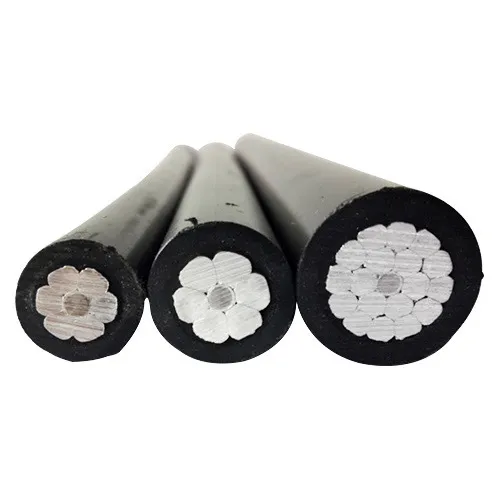
ABC Cable Price by Configuration
Understanding relative cost differences between configurations helps you budget before getting formal quotes. Here's how the main ABC cable types compare in terms of relative cost.
Duplex ABC Cable (1 Phase + 1 Neutral)
Duplex is the most economical configuration per meter. It's used for single-phase service drops and light-load rural distribution. Common sizes are 2×16mm², 2×25mm², and 2×35mm².
Relative cost position: Baseline (lowest cost per meter in the ABC family)
Typical applications:
- Residential service drops
- Rural single-phase distribution
- Street lighting circuits
Triplex ABC Cable (2 Phase + 1 Neutral)
Triplex provides two-phase supply capability. Standard sizes include 3×35mm², 3×50mm², and 3×70mm² (with the neutral often being a different size than the phase conductors, e.g., 2×35+1×54.6mm²).
Relative cost position: Approximately 1.8–2.2× duplex of equivalent phase conductor size
Typical applications:
- Split-phase residential service (common in some markets)
- Medium-load distribution branches
Quadruplex ABC Cable (3 Phase + 1 Neutral)
Quadruplex is the workhorse of three-phase LV distribution. This is what most electrification projects and urban network upgrades specify. Common sizes range from 3×50+1×54.6mm² to 3×150+1×70mm².
Relative cost position: Approximately 2.8–3.3× duplex of equivalent phase conductor size
Typical applications:
- Three-phase main distribution lines
- Industrial area supply
- Urban and peri-urban network backbone
Quadruplex with Street Lighting Conductor (3+1+1)
Some specifications add a fifth conductor for street lighting control. This adds approximately 15–25% to the quadruplex price depending on the lighting conductor size (typically 16mm² or 25mm²).
ABC Cable Size & Price Comparison Table
The table below shows common ABC cable specifications with the key parameters that drive pricing. Actual prices require a quotation based on current aluminum rates and your specific requirements.
| Configuration | Conductor Size | Neutral/Messenger | Standard | Weight (approx. kg/km) | Price Factor |
|---|---|---|---|---|---|
| Duplex | 2×16mm² | Bare AAC 25mm² | NFC 33-209 | ~180 | Request Quote |
| Duplex | 2×25mm² | Bare AAC 25mm² | NFC 33-209 | ~250 | Request Quote |
| Triplex | 2×35+1×54.6mm² | AAAC 54.6mm² | NFC 33-209 | ~450 | Request Quote |
| Triplex | 2×50+1×54.6mm² | AAAC 54.6mm² | NFC 33-209 | ~560 | Request Quote |
| Quadruplex | 3×50+1×54.6mm² | AAAC 54.6mm² | NFC 33-209 | ~680 | Request Quote |
| Quadruplex | 3×70+1×54.6mm² | AAAC 54.6mm² | NFC 33-209 | ~870 | Request Quote |
| Quadruplex | 3×95+1×70mm² | AAAC 70mm² | NFC 33-209 | ~1,150 | Request Quote |
| Quadruplex | 3×120+1×70mm² | AAAC 70mm² | NFC 33-209 | ~1,400 | Request Quote |
| Quadruplex | 3×150+1×70mm² | AAAC 70mm² | NFC 33-209 | ~1,680 | Request Quote |
Key insight: Weight per kilometer is a useful proxy for relative cost because aluminum content is the primary cost driver. A cable weighing 1,400 kg/km costs roughly 7–8× more per meter than one weighing 180 kg/km.
Exact pricing depends on your specification; our factory issues FOB, CIF, or DDP quotations within 24 hours.
ABC Cable Price Differences by Market
If you're searching for "ABC cable price in Nigeria" or "ABC cable price in South Africa," you already know that landed cost varies significantly by destination. Here's why.
Nigeria
Nigeria is one of the largest ABC cable markets in Africa, driven by ongoing rural electrification programs and urban network rehabilitation.
Price factors specific to Nigeria:
- Standard: NFC 33-209 is dominant (French-standard legacy from neighboring francophone countries and project consultant specifications)
- Port: Lagos (Apapa/Tin Can) is the primary entry point. Port congestion can add demurrage costs.
- Import duty: Cables attract import duty + VAT. Check current rates with your clearing agent.
- Currency: Naira volatility means CIF prices in USD may differ significantly from landed cost in local currency
- Certification: SON (Standards Organisation of Nigeria) conformity assessment may be required
Competitive landscape: Both Chinese manufacturers and local cable producers serve this market. Factory-direct imports from China typically offer 20–35% cost savings over local production for standard specifications, even after shipping and duties.
South Africa
South Africa has a well-developed cable industry and strict standards regime.
Price factors specific to South Africa:
- Standard: SANS 1418 is mandatory. Cables must carry SABS certification mark.
- Import duty: South Africa applies anti-dumping duties on some cable imports. Verify current duty rates.
- Local content: Some tenders require minimum local content percentages
- Currency: ZAR/USD exchange rate impacts import competitiveness
- Port: Durban is the primary entry point for cable imports
Practical note: SABS certification adds cost and lead time. If you're importing, ensure your supplier holds current SABS certification for the specific cable types you need. Our factory maintains SABS certification for our ABC cable range — certificate copies are available on request.
Pakistan
Pakistan's distribution network expansion creates consistent demand for ABC cable.
Price factors specific to Pakistan:
- Standard: IEC-based specifications, often with WAPDA (Water and Power Development Authority) specific requirements
- Port: Karachi is the primary entry point
- Import duty: Moderate tariff structure. Verify current SRO notifications.
- Payment: LC-based transactions are standard for cable imports
- Competition: Both Chinese and local manufacturers are active
Nepal
Nepal's geography makes ABC cable particularly valuable — mountainous terrain where underground cable is impractical and bare overhead conductors face reliability issues from vegetation and weather.
Price factors specific to Nepal:
- Logistics: Landlocked country. Goods transit through India (Kolkata port) or China, adding transit costs.
- Standard: NEA (Nepal Electricity Authority) specifications, generally aligned with IEC
- Import duty: Customs duty + local taxes
- Payment: LC through commercial banks is standard
Uganda & East Africa
Uganda, Kenya, and Tanzania have active rural electrification programs driving ABC cable demand.
Price factors specific to East Africa:
- Standard: NFC 33-209 and IEC 60502 are both common
- Port: Mombasa (Kenya) serves as the entry point for landlocked Uganda
- Programs: REA (Rural Electrification Agency) projects often specify ABC cable
- Logistics: Transit from Mombasa to Kampala adds approximately 7–12 days and associated costs
- Payment: LCs and DDP terms are common for government-funded projects
Middle East (UAE, Saudi Arabia)
Price factors:
- Standard: IEC and BS standards
- Port: Jebel Ali (Dubai) is a common regional hub
- Duty: Low or zero import duty on cables in most Gulf states
- Certification: Some utilities require specific type test reports
- Advantage: Short shipping time from China (14–18 days) keeps freight costs lower than African destinations
Southeast Asia (Philippines, Bangladesh)
Price factors:
- Standard: IEC-based with local utility specifications
- Shipping: Shorter transit from China reduces freight cost significantly
- Duty: Varies by country. Philippines has moderate tariffs; Bangladesh offers duty concessions for power sector imports under certain programs.
How to Get the Best ABC Cable Price
Getting the lowest ABC cable price isn't just about finding the cheapest quote — it's about optimizing the total equation of price, quality, reliability, and terms. Here's what experienced procurement professionals do.
1. Buy Factory-Direct, Not Through Traders
The supply chain for ABC cable from China typically has these layers:
- Factory → lowest price, but requires you to manage logistics and quality inspection
- Trading company → adds 8–15% margin, handles logistics, may offer better English communication
- Local distributor → adds another 15–30% margin, provides local stock and credit terms
For orders above one container (15+ tons), buying factory-direct almost always makes economic sense. Our factory in Henan sells directly to project buyers and distributors across Africa, Middle East, and Southeast Asia — no middlemen, no hidden margins.
2. Consolidate Specifications
If your project needs multiple ABC cable sizes, ordering them from one factory as a single purchase order typically yields better pricing than splitting across suppliers. This is because:
- Combined volume pushes you into higher discount tiers
- Single production scheduling reduces factory overhead
- One shipment consolidation reduces freight cost per ton
- Documentation and inspection costs are shared
3. Optimize Drum Lengths
Standard drum lengths (500m, 1,000m, or 2,000m per drum) are more cost-effective than custom lengths. Non-standard lengths create production waste and require additional drum inventory.
If your installation spans allow it, specify standard drum lengths and plan your logistics around them.
4. Time Your Purchase with Aluminum Markets
Since aluminum represents the majority of cable cost, timing matters. Track LME aluminum prices and:
- Place orders during price dips if your project schedule allows
- Consider forward-fixing the aluminum component if your supplier offers this
- Avoid placing orders immediately after sharp aluminum price spikes (they often correct within weeks)
5. Negotiate Payment Terms Strategically
Payment terms directly affect pricing:
- 100% T/T advance: Lowest price (factory has zero financing cost)
- 30% deposit + 70% before shipment: Standard terms, minimal price impact
- LC at sight: Slightly higher than T/T due to bank charges, but provides buyer protection
- LC 60–90 days: Adds 1.5–3% to price (factory's financing cost)
- DA/DP terms: Highest price premium, rare for new relationships
For first orders, 30/70 T/T or LC at sight is the sweet spot between security and price.
6. Request FOB Pricing and Arrange Your Own Freight
Many Chinese cable suppliers quote CIF and embed margin in the freight component. By requesting FOB pricing and using your own freight forwarder:
- You see the true factory price
- You control shipping costs and can shop for competitive rates
- You avoid paying markup on freight that's already a commodity service
This tip alone can save 3–7% on your landed cost compared to accepting a supplier's CIF quote.
7. Conduct Factory Audits (or Use Third-Party Inspection)
Lower prices sometimes reflect lower quality — thinner insulation, undersized conductors, recycled aluminum. Protect yourself by:
- Requesting production samples before ordering
- Hiring third-party inspection (SGS, BV, TUV) for pre-shipment checks
- Verifying conductor resistance measurements against IEC standards
- Checking insulation thickness at multiple points per drum
A reputable factory welcomes inspection. If a supplier resists third-party audits, that's a red flag regardless of how good their price is.
ABC Cable Price vs. Bare Overhead Conductor: Total Cost Comparison
Some procurement decisions come down to choosing between ABC cable and traditional bare overhead conductors (ACSR, AAC, or AAAC) on separate pin insulators. Here's how the economics actually compare.
Unit Price Comparison
On a pure $/meter basis, ABC cable costs more than equivalent bare conductor. This is because ABC includes:
- XLPE or PE insulation material
- Bundling/cabling of multiple conductors
- Higher manufacturing complexity
A quadruplex 3×95+1×70mm² ABC cable costs significantly more per meter than four separate bare AAAC conductors of equivalent sizes. On paper, this looks like bare conductor wins.
But unit price is misleading. Total installed cost tells a different story.
Total Installed Cost: ABC Often Wins
Here's what the full cost comparison includes:
| Cost Component | Bare Overhead | ABC Cable |
|---|---|---|
| Conductor cost | Lower | Higher |
| Poles | Requires wider spacing for clearances OR closer spacing | Standard spacing |
| Cross-arms & hardware | Required (expensive) | Not required |
| Pin/disc insulators | Required per phase per pole | Not required |
| Right-of-way width | Wider (conductor swing clearances) | Narrower |
| Installation labor | Higher (multiple conductors, tensioning each separately) | Lower (single pull) |
| Tree trimming/clearing | Extensive | Minimal (insulated contact OK) |
| Maintenance cost/year | Higher (insulator washing, vegetation, fault finding) | Lower |
| Outage rate | Higher (animal/vegetation/wind contact) | Much lower |
| Theft potential | Higher (visible copper/aluminum) | Lower (less attractive target) |
For a complete comparison of overhead line options, see our guide to overhead transmission line cable types.
When Bare Conductor Is Still Cheaper
Bare overhead conductor remains the economical choice when:
- Voltage is above 33kV (ABC is primarily an LV/MV solution)
- The route is through open terrain with no trees or structures nearby
- Span lengths exceed 80m (ABC sag characteristics become limiting)
- The climate is extremely hot and continuous conductor temperature matters
When ABC Cable Is the Clear Choice
ABC cable provides better total economics when:
- Routes pass through or near vegetation
- Right-of-way width is constrained (urban, peri-urban)
- Reliability targets are high (ABC reduces outages by 50–80% vs. bare conductor)
- Installation speed matters (single-pull installation saves time)
- Theft and illegal connections are concerns
- Safety in populated areas is a priority
For most LV distribution in Africa, South Asia, and Southeast Asia, ABC cable delivers lower total cost of ownership despite higher unit cable cost. This is why utilities and electrification programs worldwide have shifted to ABC as the standard for new LV overhead networks.
Explore our full range of ABC cable to find the right specification for your project.
How to Read an ABC Cable Price List
When you receive a price list from a supplier, here's what to look for and how to compare quotes accurately.
Essential Information in a Valid Quote
A professional ABC cable price list should include:
- Conductor material: Aluminum (AA1350) or aluminum alloy (AA6201)
- Conductor size: Phase conductor and neutral conductor sizes in mm²
- Insulation material: XLPE, PE, or PVC
- Applicable standard: NFC 33-209, IEC 60502, SANS 1418, etc.
- Unit price: Per meter or per kilometer
- Currency and Incoterm: USD FOB Shanghai, EUR CIF Lagos, etc.
- Validity period: How long the price is guaranteed
- MOQ: Minimum quantity per size
- Delivery time: Weeks from order confirmation to shipment
- Drum specifications: Length per drum, drum type (wooden/steel)
Red Flags in Price Lists
Watch out for:
- Prices far below market: If a quote is 25%+ below other suppliers for identical specs, the conductor may be undersized or the insulation thinner than standard.
- No standard specified: "ABC cable 3×70+1" without mentioning NFC/IEC/BS is ambiguous.
- No validity date: Aluminum prices change daily. A quote without a validity date is not a real offer.
- Vague delivery terms: "4–8 weeks" is too wide. Reputable factories can give ±1 week accuracy.
Comparing Quotes Apple-to-Apple
When you have quotes from multiple suppliers, normalize them:
- Convert all prices to the same Incoterm (preferably FOB)
- Verify the same standard is quoted
- Confirm conductor sizes include the neutral/messenger specification
- Check if testing/certification costs are included or extra
- Factor in drum costs (some suppliers charge separately, some include them)
Choosing the Right ABC Cable Supplier
Price matters, but it's not the only factor. Here's what separates a reliable ABC cable supplier from a risky one.
Manufacturing Capacity
A factory with 60 production lines (like ours) can fulfill large orders without scheduling delays. Smaller factories with 5–10 lines may offer similar prices but struggle with delivery timing on multi-size orders or large quantities.
Why this matters: Electrification projects often have strict delivery schedules tied to funding milestones. A delay of 2–3 weeks can cascade into project penalties.
Export Experience
A supplier who regularly exports to your region understands:
- Required documentation (commercial invoice, packing list, CO, test reports)
- Certification requirements (SABS, SON, PVOC for Kenya, etc.)
- Packaging requirements for ocean shipment (moisture barriers, drum protection)
- Loading optimization (maximizing weight per container)
Quality Management
Look for:
- ISO 9001 certification (baseline manufacturing quality system)
- Type test reports from accredited labs (CNAS, KEMA, etc.)
- Routine test capabilities in-house
- Willingness to allow third-party inspection
- Track record with named utility clients
After-Sales Support
Quality issues occasionally occur even with the best manufacturers. What matters is how the supplier responds:
- Do they have a documented claims process?
- Can they provide replacement or credit for defective material?
- Do they maintain technical support staff who speak your language?
Frequently Asked Questions About ABC Cable Price
What is the price of ABC cable per meter?
ABC cable price per meter varies based on conductor size, number of cores, insulation material, aluminum market rate, and order quantity. A small duplex (2×16mm²) costs significantly less per meter than a large quadruplex (3×150+1×70mm²). Accurate current pricing requires a quotation against your specific requirements.
Why do ABC cable prices change frequently?
Aluminum constitutes 60–75% of ABC cable cost. Since aluminum is a commodity traded on the London Metal Exchange, its price fluctuates daily based on supply/demand, energy costs, and global economic conditions. Cable prices follow these fluctuations.
Is Chinese ABC cable cheaper than local production?
In most markets, yes. Chinese cable manufacturers benefit from economies of scale, lower energy costs, integrated aluminum supply chains, and intense domestic competition that keeps margins thin. For standard specifications, Chinese ABC cable is typically 20–40% less expensive than equivalent local production, even after shipping and import duties.
What is the minimum order quantity for ABC cable?
This varies by manufacturer and specification. For our factory, we can accommodate orders from a single production length (typically 1,000–2,000m per drum) for common specifications. However, the best pricing starts at full container loads (approximately 15–20 tons). For non-standard specifications, minimum quantities may be higher due to setup costs.
How long does it take to manufacture and deliver ABC cable?
Standard specifications with materials in stock: 2–3 weeks production + 3–6 weeks shipping depending on destination. Non-standard or large orders may require 4–6 weeks production. East Africa (Mombasa) typically takes 25–30 days sailing from Chinese ports; West Africa (Lagos) takes 35–45 days; South Africa (Durban) takes 20–25 days.
Does ABC cable price include drums?
This depends on the supplier. Some include wooden drums in the cable price; others charge separately. Steel drums (returnable or non-returnable) always cost extra. When comparing quotes, clarify whether drum cost is included or additional.
What's the difference between NFC 33-209 and IEC 60502 ABC cable in terms of price?
The technical requirements are similar, so the price difference is minimal (typically less than 3%). The main difference is in the neutral/messenger specification — NFC 33-209 typically specifies AAAC (Aluminum Alloy), while some IEC-referenced specifications may use AAC. AAAC is slightly more expensive than AAC due to the alloy premium.
Can I mix different ABC cable sizes in one order?
Yes, and we recommend it for better pricing. Combining multiple sizes into a single purchase order increases total volume, which qualifies for better volume discounts. We can produce multiple specifications in parallel across our 60 production lines without scheduling conflicts.
How do I verify that ABC cable meets the quoted specifications?
Request routine test reports for each drum (conductor resistance, insulation thickness, voltage withstand). For added assurance, hire a third-party inspection agency (SGS, Bureau Veritas, TUV) to witness testing and check physical dimensions before shipment. Reputable factories cooperate fully with pre-shipment inspections.
Is XLPE insulation worth the extra cost over PE?
For most tropical and subtropical installations (Africa, South Asia, Middle East), yes. XLPE offers better thermal aging resistance, higher continuous operating temperature (90°C vs. 70°C), and superior performance under short-circuit conditions. The 5–10% premium over PE insulation is easily justified by longer service life and better reliability in high-temperature environments.
Get Your ABC Cable Price Today
Pricing ABC cable accurately requires current aluminum rates, your exact specification, and your delivery requirements. Generic "price lists" found online are almost always outdated or misleading.
Here's what we need to provide an accurate quote:
- Configuration: Duplex, triplex, or quadruplex
- Conductor sizes: Phase and neutral/messenger (in mm²)
- Insulation: XLPE or PE
- Standard: NFC 33-209, IEC 60502, SANS 1418, or other
- Quantity: Total meters or kilometers per size
- Delivery: Preferred Incoterm and destination port
- Timeline: When you need delivery
We're a manufacturer with 60 production lines in Henan, China, exporting ABC cable to over 30 countries across Africa, Middle East, and Asia. No trading company margins. Factory-direct pricing. Full certification for major standards including NFC, IEC, and SABS.
Request your personalized ABC cable price quote →
We respond to all inquiries within 24 hours with detailed pricing, specifications, and delivery schedules.
Looking for more information on overhead conductor options? Read our guides on ACSR conductor sizes and pricing, medium voltage ABC cable for 11kV & 33kV, and overhead transmission line cable types, or explore our complete ABC cable product range.