Key Takeaway
ABC cable (aerial bundled cable) sizes 16–185mm²: duplex, triplex, quadruplex configurations explained. IEC 60502 standards, conductor types, insulation materials. Technical reference.
ABC cable (Aerial Bundled Cable) is replacing bare overhead conductors across Africa, Southeast Asia, and rural electrification projects worldwide. If you're sourcing ABC for a distribution network — whether it's a national utility rollout or an EPC contractor requirement — this guide covers construction, sizes, standards, pricing, and what to ask your supplier.
We produce ABC cable on dedicated extrusion and stranding lines at our factory in Henan, China. Our export clients include utilities and EPC firms in the Philippines, Nigeria, Kenya, Bangladesh, and across the Middle East.
What Is ABC Cable?
ABC stands for Aerial Bundled Cable (also called aerial bundled conductor). It's an overhead power distribution cable where insulated phase conductors are bundled together, sometimes with a bare or insulated neutral messenger wire.
Unlike traditional bare overhead lines (which use separate conductors like ACSR on cross-arms with porcelain insulators), ABC bundles everything into one self-supporting assembly that hangs from a single hook or bracket.
Key advantages over bare overhead lines:
- 70–80% reduction in power theft — insulated conductors can't be tapped with a hook wire
- Dramatically fewer outages — no conductor clashing in wind, no tree-contact faults
- Reduced right-of-way — bundled cable needs 1 pole attachment vs. 3–4 cross-arm positions
- Lower maintenance cost — no insulator washing, no vegetation clearing corridor
- Safer — insulated conductors reduce electrocution risk to the public
This is why the World Bank, African Development Bank, and Asian Development Bank all specify ABC cable in their rural electrification loan conditions.
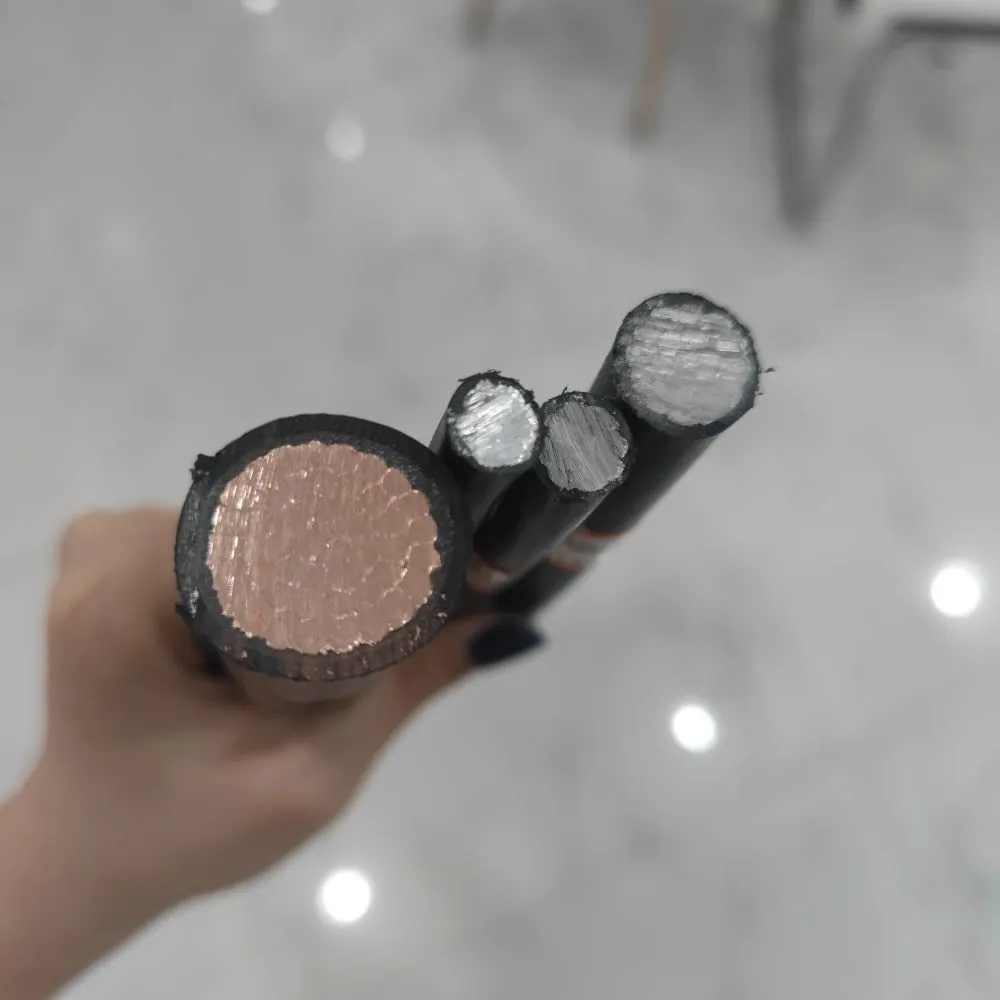
ABC Cable Types & Configurations
ABC cable comes in several configurations depending on how many phases you need and how the neutral/messenger is arranged:
By Number of Conductors
| Type | Configuration | Typical Use |
|---|---|---|
| Duplex (2-core) | 1 phase + 1 neutral | Single-phase service drop, street lighting |
| Triplex (3-core) | 2 phase + 1 neutral OR 3 phase (no neutral) | Single-phase distribution, small loads |
| Quadruplex (4-core) | 3 phase + 1 neutral | Three-phase LV distribution (most common) |
| Quintuplex (5-core) | 3 phase + 1 neutral + 1 street light | Distribution + public lighting on same cable |
By Voltage Rating
| Voltage Class | Typical System | Insulation Thickness | Standard |
|---|---|---|---|
| 0.6/1kV | LV distribution (230/400V) | 1.0–1.4mm XLPE | IEC 60502-1 |
| 3.3/6.6kV | MV distribution | 3.4mm XLPE | IEC 60502-2 |
| 6.35/11kV | MV distribution | 3.4mm XLPE | IEC 60502-2 |
| 12.7/22kV | MV (Thailand, Vietnam) | 5.5mm XLPE | IEC 60502-2 |
| 19/33kV | MV (Middle East, Africa) | 8.0mm XLPE | IEC 60502-2 |
By Neutral/Messenger Type
| Messenger Type | Description | When to Use |
|---|---|---|
| Bare AAAC messenger | Uninsulated alloy conductor carries mechanical load | Standard for most LV ABC (cheapest) |
| Bare ACSR messenger | Steel-reinforced for longer spans | When spans exceed 80m |
| Insulated neutral | All conductors insulated | Where full insulation is required by code |
| Self-supporting (no messenger) | Phase conductors share mechanical load | Short spans, service drops |
ABC Cable Specifications — Full Size Chart
LV ABC Cable (0.6/1kV) — Most Common Export Sizes
Aluminium conductor, XLPE insulated, bundled with bare AAAC messenger:
| Configuration | Phase Size (mm²) | Neutral Size (mm²) | Overall Ø (mm) | Weight (kg/km) | Current Rating (A) |
|---|---|---|---|---|---|
| 1×16+16 (Duplex) | 16 | 16 | 15.2 | 130 | 91 |
| 1×25+25 | 25 | 25 | 17.6 | 190 | 119 |
| 2×16+25 (Triplex) | 16 | 25 | 22.4 | 235 | 91 |
| 2×25+35 | 25 | 35 | 26.0 | 345 | 119 |
| 3×35+50 (Quadruplex) | 35 | 50 | 35.2 | 540 | 144 |
| 3×50+50 | 50 | 50 | 37.6 | 660 | 178 |
| 3×70+50 | 70 | 50 | 41.0 | 830 | 220 |
| 3×95+50 | 95 | 50 | 44.8 | 1,040 | 264 |
| 3×95+70 | 95 | 70 | 46.4 | 1,100 | 264 |
| 3×120+70 | 120 | 70 | 50.2 | 1,300 | 301 |
| 3×150+70 | 150 | 70 | 53.8 | 1,500 | 341 |
| 3×185+95 | 185 | 95 | 59.0 | 1,830 | 384 |
| 3×240+120 | 240 | 120 | 65.4 | 2,340 | 450 |
Current ratings at 40°C ambient, conductor at 90°C (XLPE). Installed in air with 0.6 m/s wind.
MV ABC Cable (up to 33kV)
For MV ABC (also called MV Spacer Cable or Covered Conductor), construction changes:
| Voltage | Phase Size (mm²) | Insulation | Screen | Sheath |
|---|---|---|---|---|
| 11kV | 50–185 | 3.4mm XLPE | Semi-conductive | HDPE |
| 22kV | 70–185 | 5.5mm XLPE | Semi-conductive | HDPE |
| 33kV | 95–240 | 8.0mm XLPE | Semi-conductive | HDPE |
MV ABC eliminates the need for expensive porcelain insulators and reduces pole height requirements. It's gaining rapid adoption in Africa and Southeast Asia for MV distribution.
Interested in this product?
Get ABC Cable Quotation — All Sizes AvailableABC Cable Standards & Test Requirements
Applicable Standards
| Standard | Coverage |
|---|---|
| IEC 60502-1 | LV cables up to 1kV — insulation, construction, testing |
| IEC 60502-2 | MV cables 6kV–30kV |
| NFC 33-209 | French standard for LV ABC (widely used in Francophone Africa) |
| CENELEC HD 626 | European harmonized ABC standard |
| SANS 1418 | South African ABC standard |
| IS 14255 | Indian standard for aerial bunched cable |
| BS 7870 | British standard for LV and MV ABC |
Routine Tests (Every Drum)
| Test | What It Checks |
|---|---|
| Conductor resistance (20°C) | Aluminium conductivity meets standard |
| Insulation resistance | No breakdown in XLPE layer |
| High-voltage withstand (3.5kV for LV) | Insulation integrity under voltage stress |
| Hot-set test | XLPE cross-linking degree (elongation ≤175%, set ≤15%) |
| Dimensional check | Wall thickness, conductor diameter, overall dimensions |
Type Tests (Once Per Design)
| Test | Purpose |
|---|---|
| 4-hour voltage test | Long-term insulation stress survival |
| Impulse voltage test | Lightning and switching surge simulation |
| Bending test | Cable can be installed over pulleys without damage |
| Tensile test on messenger | Breaking load exceeds 95% of rated |
| UV resistance test | Insulation survives outdoor sun exposure |
We maintain full type test reports from accredited labs for all our ABC cable designs. Reports available upon request.
ABC Cable Construction Details
Conductor
- Material: Aluminium 1350-H19 (EC grade, same as AAC conductor) or aluminium alloy 6201 for messenger
- Stranding: Class 2 (7-wire for ≤50mm², 19-wire for 70–185mm²) per IEC 60228
- Shape: Round, compacted round (optional for larger sizes — reduces diameter)
Insulation
- Material: XLPE (cross-linked polyethylene) — standard for modern ABC
- Older designs used PVC (heavier, lower current rating) — we don't recommend PVC for new projects
- Colour coding: Black + colour stripe (red/blue/white/grey) per phase, or solid colours
- UV stabilized with carbon black or colour-stable UV additives
Bundling
Phase conductors and neutral/messenger are laid together with a specific lay length (twist pitch). The messenger wire sits at the centre or periphery of the bundle depending on design:
- Central messenger: Neutral in the middle, phases wrapped around it
- Peripheral messenger: Phases bundled, neutral runs alongside (more common for LV)
Marking
Every 1 metre: manufacturer name, voltage rating, conductor size, year of manufacture, standard compliance, meter marking.
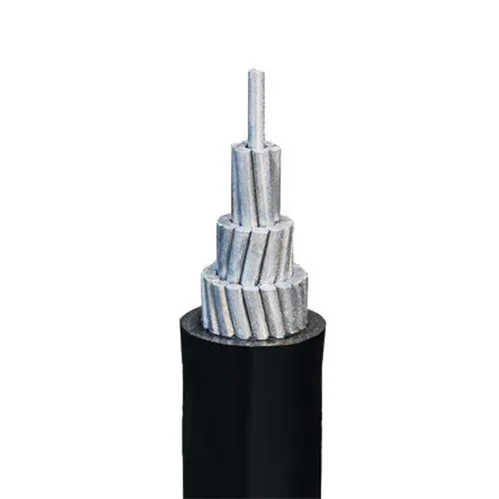
ABC Cable vs Bare Overhead Line: Cost Comparison
Many utility engineers ask: "ABC costs more per km — is it worth it?"
The answer is yes, decisively, when you look at total system cost. ABC cable is typically 20–30% cheaper in total installed cost compared to bare conductor systems. This is because:
- Fewer and shorter poles — ABC uses lighter, shorter poles with wider spacing
- No cross-arms or insulators — just simple hooks, drastically reducing hardware cost
- Lower installation labour — single sling installation vs. multiple attachment points
- Dramatically lower maintenance — insulated conductors resist vegetation contact and corrosion
- Reduced losses — theft and technical losses are significantly lower with insulated bundled cables
- Fewer outages — insulation prevents phase-to-phase faults from wind, branches, and animals
ABC wins on total lifecycle cost in almost every scenario. The only exception: very long rural spans (>150m) where bare ACSR on taller poles is necessary because ABC sags too much.
Contact us for a detailed cost comparison based on your specific project parameters.
Rural Electrification (Africa & South Asia)
The biggest ABC cable market globally. World Bank-funded projects in Nigeria, Kenya, Tanzania, Ethiopia, Bangladesh, and Myanmar all specify LV ABC as the default last-mile distribution technology.
Why: Theft reduction is the #1 driver. In Nigeria alone, power theft accounts for 40% of generated electricity. ABC cuts that to single digits.
Urban Network Rehabilitation (Southeast Asia)
Cities like Manila, Jakarta, and Ho Chi Minh City are replacing old bare overhead networks with ABC to reduce electrocution accidents and improve aesthetics.
Plantation & Mining Sites
Palm oil estates (Malaysia, Indonesia), mining camps (Mongolia, DRC), and industrial zones use ABC for internal LV distribution because it's fast to install and tolerant of vegetation contact.
Cyclone / Typhoon Zones
ABC is more resilient in high winds because bundled conductors don't clash. Philippines and Pacific Island utilities increasingly specify ABC for storm-prone areas.
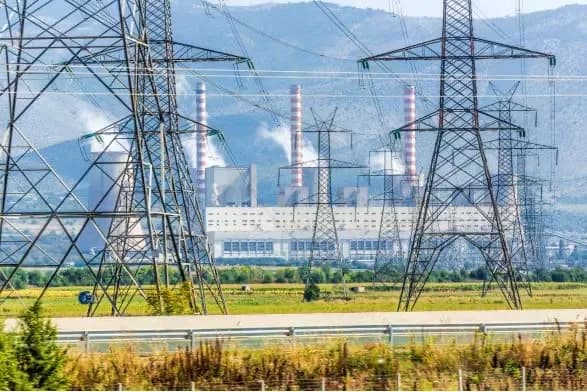
How to Specify ABC Cable for Your Project
When sending us an inquiry, include these details for accurate quotation:
1. System Voltage
LV (0.6/1kV) or MV (11kV, 22kV, 33kV)?
2. Configuration
Duplex, triplex, quadruplex? Phase conductor size and neutral/messenger size?
3. Conductor Material
- Phase: Aluminium (standard) or copper (rare, expensive)?
- Messenger/neutral: AAAC (standard), AAC, or ACSR?
4. Insulation Type
XLPE (recommended) or PVC (older spec, some projects still require it)?
5. Applicable Standard
IEC 60502? NFC 33-209? SANS 1418? Country-specific (some African utilities have their own specs based on IEC)?
6. Drum Length
Standard: 500m or 1,000m per drum for LV ABC. Tell us your preference.
7. Quantity
In km or metres. Project lot (50+ km) gets better pricing.
8. Destination & Delivery Terms
FOB China port or CIF? Which port?
Interested in this product?
Send ABC Cable Specs — Get Factory Quote in 24hABC Cable Price Factors
Like ACSR, ABC cable pricing is primarily driven by aluminium (LME) cost. But insulation adds a layer:
| Factor | Impact on Price |
|---|---|
| LME aluminium price | 60–70% of total cost |
| XLPE compound (imported vs domestic) | 10–15% |
| Conductor cross-section | Larger = more material per km |
| Voltage class | MV requires thicker insulation + screening |
| Quantity ordered | 50+ km gets volume discount |
| Colour coding | Standard black is cheapest; coloured sheath adds 3–5% |
Reference Pricing (FOB, 0.6/1kV LV ABC)
| Size | Approx. FOB Price (USD/km) |
|---|---|
| 2×16+25 Triplex | $450–600 |
| 3×50+50 Quadruplex | $1,100–1,400 |
| 3×70+50 | $1,400–1,750 |
| 3×95+70 | $1,800–2,200 |
| 3×120+70 | $2,100–2,600 |
| 3×185+95 | $3,200–3,800 |
Prices fluctuate with LME aluminium. Contact us for today's price. For a detailed breakdown of ABC cable pricing by configuration, see our ABC Cable Price Per Meter guide.
Manufacturing Process — How We Make ABC Cable
Step 1: Aluminium Wire Drawing
EC-grade aluminium rod (9.5mm) drawn to target wire diameter through multi-die drawing machines. Each wire tested for resistance and tensile.
Step 2: Conductor Stranding
Individual wires stranded per IEC 60228 Class 2 geometry. For compacted conductors, the strand passes through a compacting die to reduce overall diameter by ~10%.
Step 3: XLPE Insulation Extrusion
The critical step. Conductor passes through a triple-head extrusion line:
- Semi-conductive inner screen (for MV)
- XLPE insulation layer
- Semi-conductive outer screen (for MV) or outer jacket
For LV ABC, it's single-layer XLPE extrusion followed by inline cross-linking in a continuous vulcanizing (CV) tube at 250–300°C.
Step 4: Cooling & Testing
After extrusion, cable passes through a cooling trough. Every drum undergoes spark test (inline), high-voltage withstand, conductor resistance, and dimensional measurement.
Step 5: Bundling & Laying Up
Insulated phase conductors are laid together with the messenger wire on a planetary laying-up machine. The lay direction alternates to prevent cable rotation.
Step 6: Drumming & Packaging
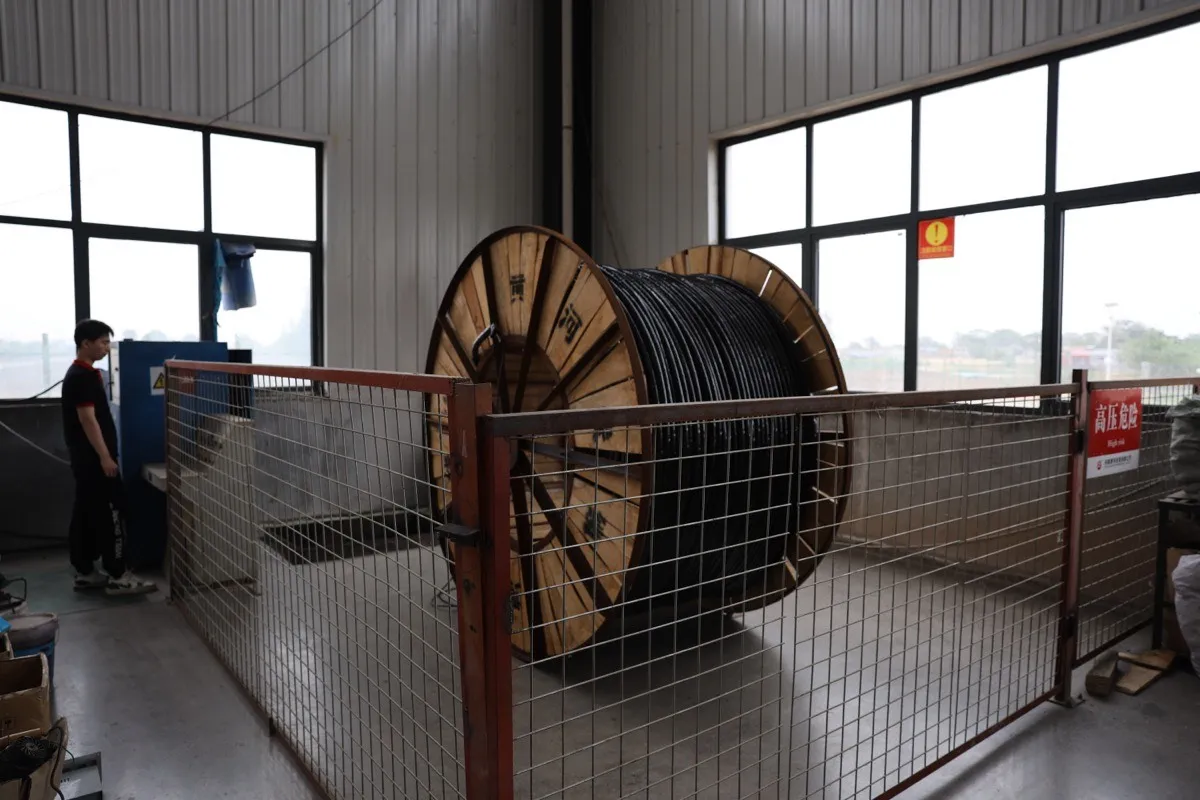
Finished ABC cable wound onto wooden or steel drums, sealed with hessian wrap, stencilled with project markings per client spec.
Installation Tips for ABC Cable
While we're a manufacturer (not installer), our export experience means we get asked these questions constantly. Here are the basics:
Span Lengths
| Cable Size | Maximum Recommended Span |
|---|---|
| 3×50+50 | 60m |
| 3×70+50 | 70m |
| 3×95+70 | 80m |
| 3×120+70 | 80m |
| 3×185+95 | 70m (heavier cable) |
For longer spans, use a stronger messenger (ACSR instead of AAAC) or reduce span.
Hardware (Accessories)
ABC cable needs specific hardware — not regular bare-line fittings:
- Suspension clamp — supports cable at intermediate poles
- Dead-end (anchor) clamp — terminates cable at angle/end poles
- Insulation piercing connector (IPC) — makes branch connections without stripping insulation
- Fuse cut-out bracket — for drop-out fuse mounting on ABC poles
We can supply a complete hardware kit per km if needed — tell us the pole spacing and we'll calculate quantities.
ABC Cable Accessories & Fittings — Complete System Approach
ABC cable is not just conductor — it's a system. The accessories you specify determine installation speed, long-term reliability, and maintenance cost. Many procurement teams order the cable but underestimate the fittings requirement, leading to project delays when hardware arrives late.
Essential ABC Hardware Categories
| Category | Function | Quantity Per km (typical, 80m spans) |
|---|---|---|
| Suspension clamps | Support cable at intermediate (straight-through) poles | 10–12 |
| Dead-end (anchor) clamps | Terminate and tension cable at angle/end poles | 2–4 |
| Insulation piercing connectors (IPC) | Branch connections without stripping insulation | 8–20 (depends on service drops) |
| Suspension hooks/brackets | Attach clamps to pole | 10–12 |
| Cable ties / bundling straps | Secure cable bundle at intervals | 25–30 |
| Fuse cut-out brackets | Mount protection devices | 2–4 |
| Strain relief wedge clamps | Service drop termination at building entry | Per customer connection |
Insulation Piercing Connectors (IPC) — The Critical Accessory
IPCs are what make ABC cable practical for distribution. They allow branch taps and service connections without stripping the insulation — maintaining the cable's integrity and safety.
Key IPC specifications to check:
- Conductor range — must match your main line AND service drop sizes (e.g., main 50–150mm², tap 16–35mm²)
- Insulation piercing capacity — rated for your XLPE thickness
- Shear-head bolt torque — bolt snaps at correct torque, preventing over-tightening (per IEC 61284)
- Housing material — UV-stabilised polycarbonate or glass-reinforced polyamide
- IP rating — minimum IP54 for the completed connection
Do not mix IPC brands on a single project — torque ratings and conductor grip geometry differ between manufacturers, creating inconsistent contact quality.
Hardware Standards
| Standard | Coverage |
|---|---|
| IEC 61284 | Overhead line fittings — requirements and tests |
| IEC 61854 | Overhead lines — requirements and tests for spacers |
| NFC 33-040 | French standard for ABC fittings (common in Africa) |
| EN 50483 | Short-circuit strength of ABC fittings |
Installation Best Practices for ABC Systems
Beyond span length tables, successful ABC installation requires attention to several practical details:
Pole-top configuration:
- At intermediate poles, the suspension clamp cradles the messenger wire — the insulated phase conductors hang freely below
- At angle poles (>5° deviation), use dead-end clamps on both sides with a jumper loop to maintain electrical continuity
- Minimum vertical clearance between ABC cable and pole-top: 300mm for LV, 600mm for MV
Pulling and tensioning:
- Always pull ABC by the messenger wire only — never grip insulated phase conductors (damages XLPE)
- Use a running board (cable roller) at each pole during stringing — roller groove lined with nylon or rubber
- Maximum pulling tension on messenger: 50% of messenger RBS during stringing
- Final installed tension (everyday condition): 10–15% of messenger RBS
Avoid these common installation errors:
- Pulling cable over bare metal edges (cuts insulation, creates future fault point)
- Using ACSR-type bolted dead-ends on ABC messenger (wrong geometry, insufficient grip)
- Forgetting drip loops at service entry points (water tracks along cable into building)
- Installing without armour rods at suspension points (abrasion from wind-induced motion)
Frequently Asked Questions
What is the lifespan of ABC cable?
XLPE-insulated ABC cable lasts 25–35 years when properly installed and not mechanically damaged. UV resistance is critical — ensure the supplier uses UV-stabilized XLPE compound.
Can ABC cable touch tree branches?
Yes — unlike bare conductors, insulated ABC can contact vegetation without causing a fault. This is one of its biggest advantages in tropical environments. However, sustained rubbing against branches can eventually abrade the insulation, so light vegetation management is still recommended.
Is ABC cable waterproof?
The XLPE insulation is water-resistant and can handle rain, humidity, and temporary submersion. However, ABC cable is not designed for permanent burial — use underground armoured cable (NYY or NAYY) for that.
ABC cable vs underground cable — which is cheaper?
ABC is 60–80% cheaper than equivalent underground installation when you factor in trenching, backfill, reinstatement, and conduit. ABC only needs poles and hooks. Underground wins only when aesthetics or regulation demand it.
What is the difference between ABC and BTC cable?
BTC (Bundled Twisted Cable) is the same product — different name used in some markets. ABC, BTC, overhead bundled cable, and aerial bundled conductor all refer to the same technology.
Ready to Source ABC Cable?
Tell us your requirements:
- System voltage (LV or MV)
- Configuration (duplex / triplex / quadruplex)
- Phase and neutral sizes (mm²)
- Standard (IEC / NFC / SANS / other)
- Quantity (km)
- Destination port
We quote within 24 hours with full technical datasheet attached.
Email: sales@chinacablefactory.com | WhatsApp: +86 134-6102-4180
Interested in this product?
Get ABC Cable Factory Price — Send Your SpecsRelated Products & Resources
- ABC Aerial Bundled Cable — Product Page
- AAC Conductor — used as messenger wire in ABC systems
- ACSR Conductor — bare overhead alternative for long spans
- Solar Cable (PV1-F) — for photovoltaic installations connected to ABC networks
- XLPE Insulated Overhead Cable Guide — MV covered conductor alternative
- AAC & AAAC Conductor Specifications — messenger wire options
- Cable Insulation Types: PVC vs XLPE — understanding XLPE insulation
- How to Import Cable from China — shipping and procurement guide
- ACSR Conductor Complete Guide — bare overhead conductor for HV/MV lines
- Overhead Transmission Line Cable Types — all conductor options for overhead networks
- ABC Cable Price Per Meter — pricing and MOQ for bulk orders
- Medium Voltage ABC Cable: 11kV & 33kV — MV distribution specs and selection