Key Takeaway
How to specify and source fire resistant cable for high-rise buildings and tunnels. Circuit integrity standards (IEC 60331, BS 8491), LSZH requirements, cable types for fire pumps, smoke extraction, jet fans and emergency circuits.
High-rise buildings and tunnels share one brutal characteristic: when a fire starts, people cannot get out quickly. Occupants on the 40th floor need working lifts, pressurised stairwells and emergency lighting for the many minutes it takes to descend. Drivers in a tunnel depend on jet fans, lighting and public-address systems to guide them out through smoke. In both environments, the cables feeding those life-safety systems must keep carrying current while surrounded by flame — not for seconds, but for one to three hours.
This is the specification and procurement guide for that cable. It covers the circuit-integrity standards that actually matter, how high-rise and tunnel requirements differ, which cable constructions suit which circuits, and how to write a cable schedule that a manufacturer can quote accurately. If you are sourcing for a project, the goal here is to help you specify correctly the first time — because a fire cable that fails its type test after installation is not a commercial problem, it is a life-safety one.
For the fundamentals of what makes a cable fire resistant and how it differs from flame retardant, see our fire resistant cable manufacturer guide. This article assumes that base knowledge and focuses on the two most demanding application classes.
Why High-Rise and Tunnels Are the Hardest Fire-Cable Environments
Most buildings only need fire cable to survive long enough for a small number of people to leave a limited area. High-rise and tunnel projects break that assumption in three ways.
Evacuation takes far longer. A tall tower cannot be emptied in the few minutes a low-rise building allows. Phased evacuation, firefighting lifts and pressurised stairwells all depend on power and control circuits staying alive for extended periods — often the full duration of a fire brigade intervention. Tunnels are worse still: there is frequently no lateral escape, so ventilation and lighting must run continuously until the last person is clear.
The fire load and temperatures are severe. A vehicle fire in a road tunnel can exceed the standard 830°C test flame and sustain it far longer than a room fire. Rail and metro tunnels add the risk of a fire moving with a train. This is why some tunnel authorities specify 120-minute or 180-minute circuit integrity rather than the baseline 90 minutes.
Smoke and toxicity are lethal in enclosed volumes. In a sealed stairwell or a tunnel bore, the smoke and acid gas released by burning cable insulation has nowhere to disperse. Low-smoke zero-halogen (LSZH) construction is not a nice-to-have here — it is typically mandated by code, because halogen-based insulation produces dense black smoke and corrosive hydrogen chloride that blinds and incapacitates evacuees and damages equipment.
The practical consequence: cable for these projects is almost always specified against a combination of requirements — fire resistance and low smoke and zero halogen and, frequently, extended duration and mechanical robustness. A cable that meets only one of those is the wrong cable.
The Standards That Actually Govern Circuit Integrity
Before you can specify a cable, you need to know which test standards define "it will keep working in a fire." There are three overlapping families, and buyers often confuse them.
Fire resistance — the circuit stays alive (IEC 60331 / BS 8491 / BS 8434)
This is the property that matters most for high-rise and tunnel life-safety circuits. The cable must maintain electrical continuity while directly exposed to flame.
| Standard | What it verifies | Typical duration |
|---|---|---|
| IEC 60331-21 | Circuit integrity of power cables ≤ 0.6/1 kV under 830°C flame | 90 min |
| IEC 60331-23 | Circuit integrity of data/signal cables | 90 min |
| BS 8434-2 | Fire + water spray + mechanical shock (enhanced) | 120 min |
| BS 8491 | Large power/control cables, fire + shock + water | 120 min |
The distinction between the base flame test and the "enhanced" tests (with water spray and mechanical shock) matters enormously for high-rise and tunnel work. A real fire brings falling debris (mechanical shock) and sprinkler or hose water. An enhanced-rated cable is tested against all three insults at once. Many high-rise codes and virtually all serious tunnel specifications call for enhanced fire performance, not the basic flame-only test.
Flame retardancy — the fire does not travel along the cable (IEC 60332)
A separate property. Flame retardant cable resists spreading fire along its own length. It is not the same as fire resistant and does not keep a circuit alive.
- IEC 60332-1: single vertical cable, flame does not propagate
- IEC 60332-3 (categories A/B/C/D): bunched cables in a vertical tray — critical in cable-dense risers and tunnel cable troughs
In a high-rise riser or a tunnel cable trough carrying dozens of cables, IEC 60332-3 Category A performance is what stops one faulty circuit turning the whole riser into a chimney.
Smoke and toxicity — what the cable releases while burning (IEC 60754 / IEC 61034)
- IEC 60754-1/-2: halogen acid gas content and pH/conductivity — zero-halogen verification
- IEC 61034-2: smoke density — light transmittance ≥ 60% in the standard test chamber
For enclosed high-rise spaces and tunnels, these are typically mandatory. The cable designation prefix WDZ (无卤低烟阻燃 / halogen-free, low-smoke, flame-retardant) signals compliance, and WDZN adds fire resistance on top (N = 耐火), giving a cable that is halogen-free, low-smoke, flame-retardant and fire resistant.
The takeaway: a correct high-rise/tunnel fire cable specification names a standard from each relevant family. "Fire resistant cable" alone is not a specification — "WDZN-YJY, IEC 60331-21 (90 min), IEC 60332-3 Cat A, IEC 60754, IEC 61034" is.
Cable Types for High-Rise and Tunnel Life-Safety Circuits
There is no single "fire cable." The right construction depends on the circuit, the environment and the required duration. These are the constructions commonly specified for these projects.
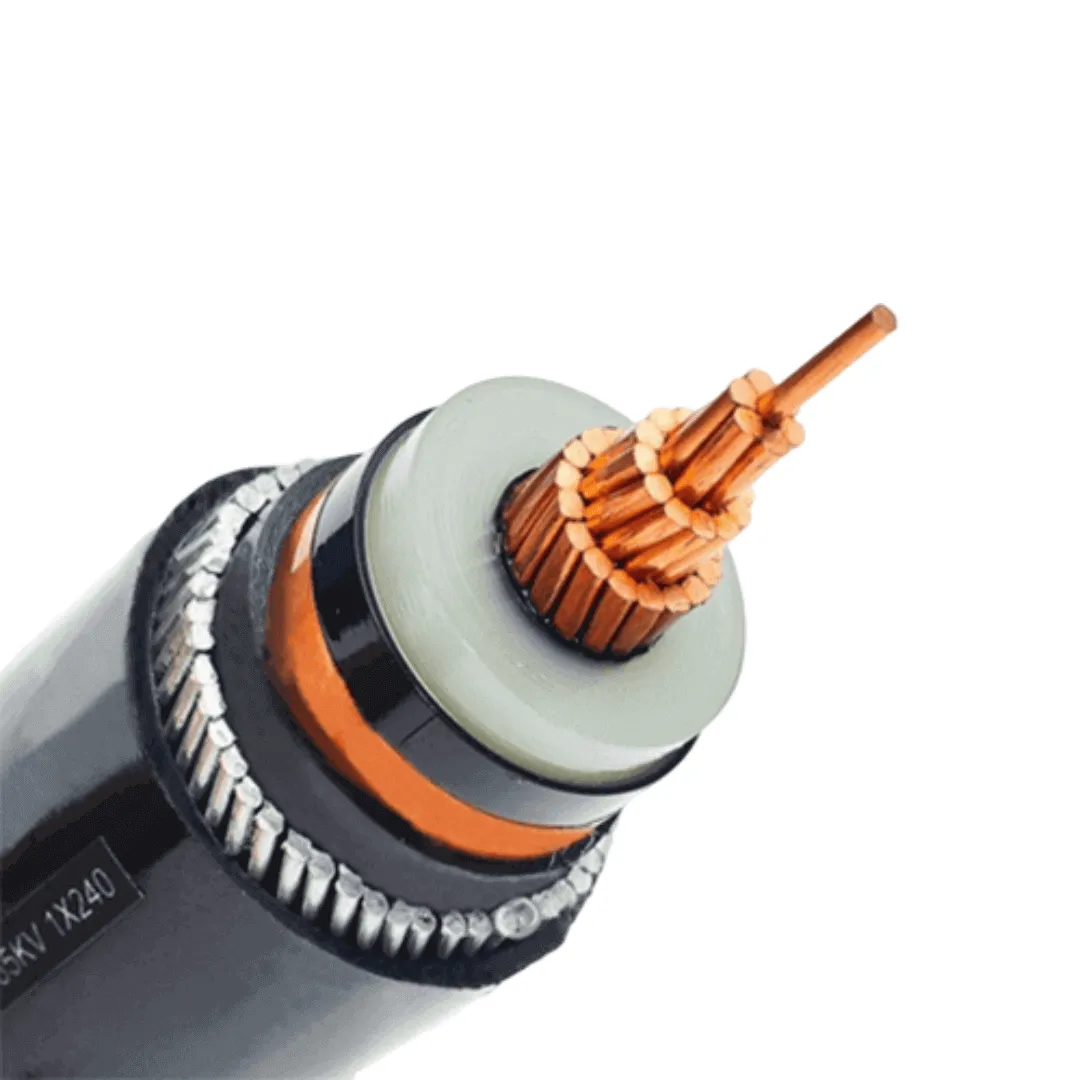
NH-YJV / WDZN-YJY — fire resistant XLPE power cable
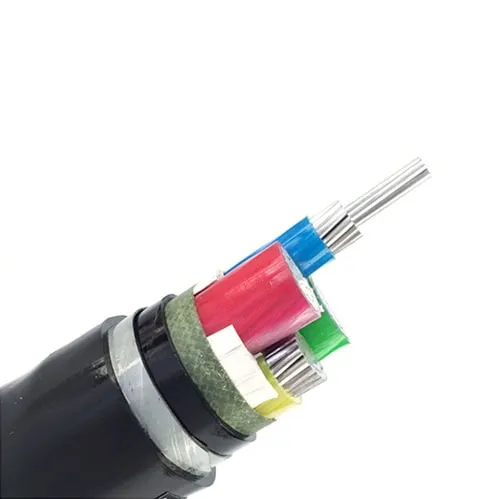
The workhorse for fire pumps, sprinkler pumps, smoke-extraction and pressurisation fan supplies, and firefighting lift feeds. A mica tape barrier is wrapped directly onto each copper conductor beneath the XLPE insulation, so the conductor stays isolated and continuous even after the polymer chars away.
- NH-YJV — PVC sheath, for industrial and non-enclosed locations
- WDZN-YJY — LSZH sheath, required in enclosed public high-rise spaces and tunnels
- Rated 0.6/1 kV, copper conductor, available multicore and single-core
- Circuit integrity to IEC 60331; extendable to 120/180 min with additional mica tape layers
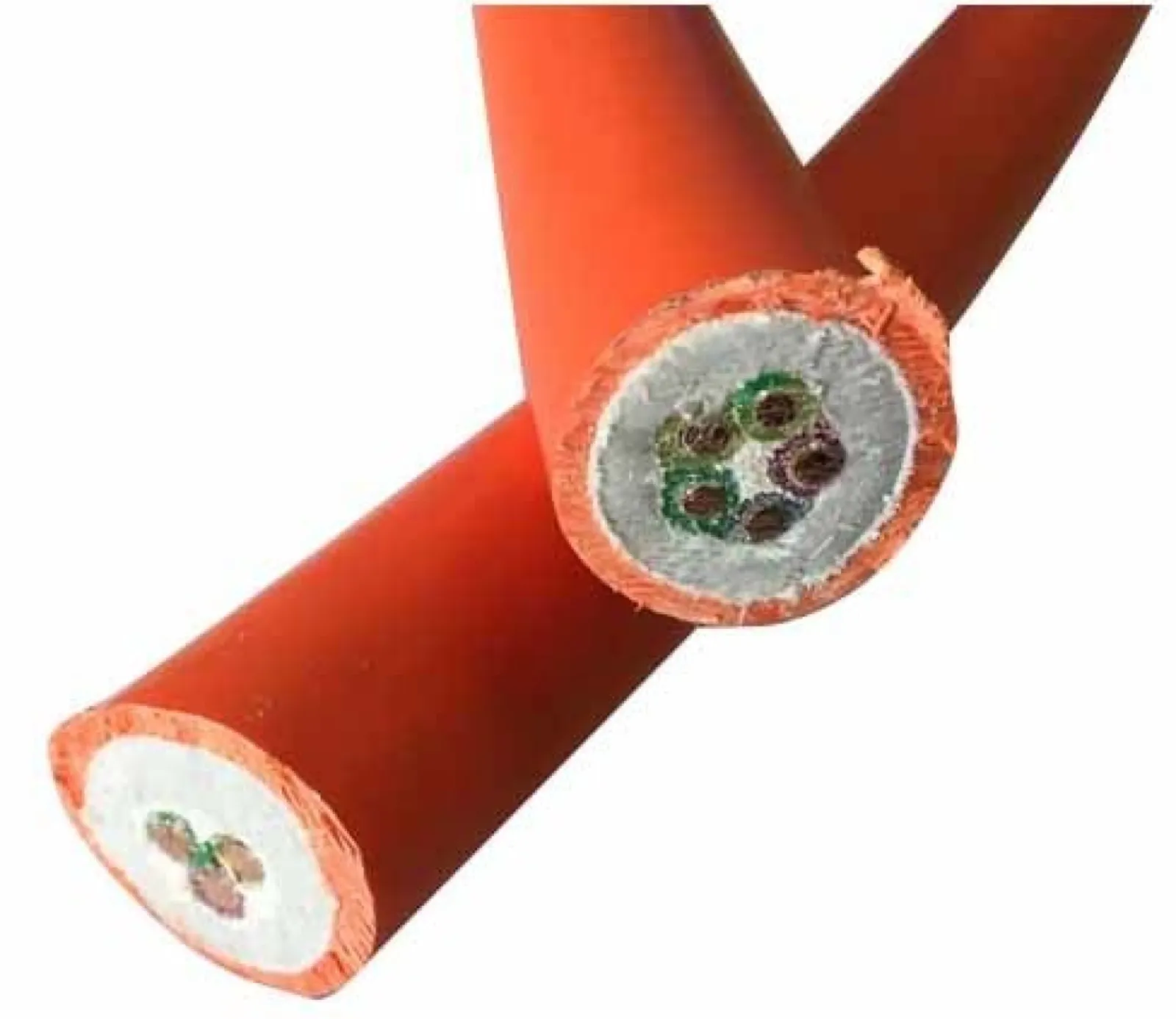
BTTZ mineral insulated cable — the highest-integrity option
Mineral insulated cable uses compacted magnesium oxide as insulation inside a seamless metal sheath. It is inherently fire resistant because its materials are inorganic — there is nothing to burn. For the most critical circuits (firefighting lift final circuits, primary smoke-control feeds, tunnel emergency supplies) where the longest survival time and highest reliability are required, BTTZ is often the specified choice.
- Extremely high temperature tolerance and long fire survival
- Inorganic — zero smoke, zero halogen by nature
- Higher cost and stiffer to install than mica-tape XLPE cable
For full detail on sizes, construction and sourcing, see our BTTZ mineral insulated cable guide.
Fire resistant control and signal cables
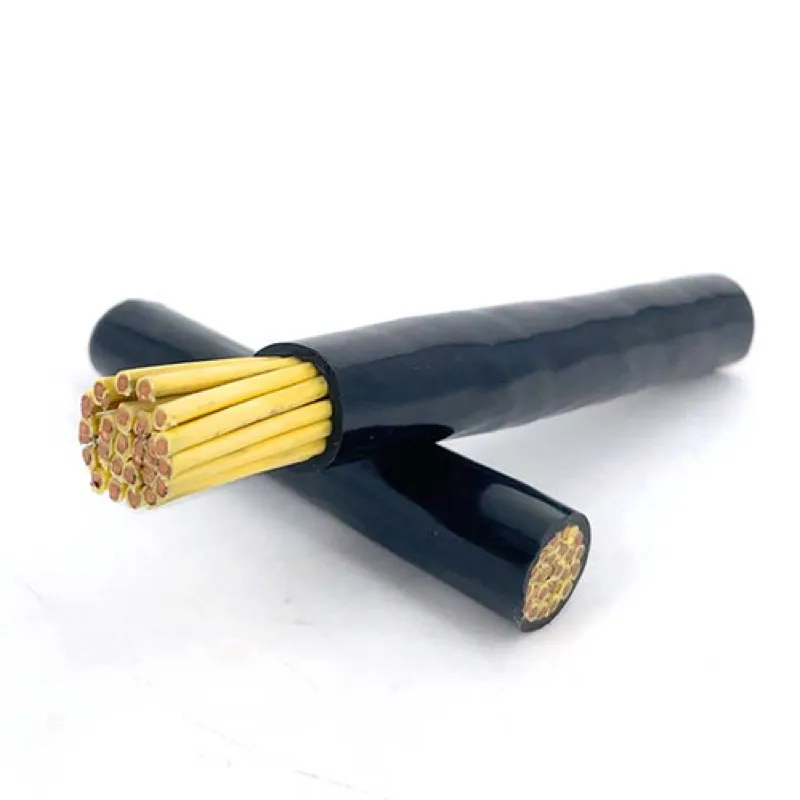
Detection, alarm, PA/VA (public address / voice alarm) and control circuits also need to survive the fire. These are typically fire resistant multicore control cables (for example NH-KVV / WDZN-KVV) tested to IEC 60331-23 for signal integrity. In tunnels, the SCADA, jet-fan control and traffic-signal circuits fall into this category.
LSZH as the baseline for everything else
Even circuits that are not life-safety critical should generally be LSZH in these environments, so that a fire anywhere in the building or bore does not fill escape routes with toxic smoke. See our LSZH cable specification guide for the material detail, and our LSZH vs PVC comparison for when each is appropriate.
High-Rise Buildings: What to Specify Circuit by Circuit
High-rise fire strategy is built around keeping specific systems alive so occupants can evacuate through protected routes while the fire service intervenes. Each of those systems has a cable behind it.
Firefighting and evacuation lifts. The lift the fire brigade uses to reach the fire floor must keep running. Its power and control circuits are among the most critical in the building and are typically specified for enhanced fire performance and extended duration.
Stairwell pressurisation and smoke extraction fans. These keep escape routes clear of smoke. A large motor load on a fire resistant supply — often the largest fire-rated feeders in the building.
Fire pumps and sprinkler pumps. High-flow motor circuits that must energise the moment a fire is detected and stay energised. Voltage drop over the riser height matters here, so conductor sizing is a real engineering calculation, not a default.
Emergency lighting and exit signage. Distributed, lower-current circuits, but numerous, and they must survive to guide evacuation.
Fire alarm, detection and voice-alarm (PA/VA). Signal-integrity circuits on fire resistant control cable to IEC 60331-23.
Two high-rise-specific engineering points that buyers underestimate:
- Voltage drop over vertical distance. A fire pump feeder running up a 150 m riser can lose significant voltage. The cable must be sized for the full run so the motor still develops rated torque at the top of the building. This often pushes conductor size larger than a naive load calculation suggests. Our SWA cable sizing guide covers the voltage-drop method that applies equally to fire-rated feeders.
- Riser fire spread. Dozens of cables share a vertical riser. IEC 60332-3 Category A bunched-cable flame performance is what prevents the riser acting as a flue.
Tunnels: What to Specify Bore by Bore
Tunnels add environmental brutality on top of the fire requirement. The cable specification has to survive not just the fire but years of the tunnel environment before any fire ever happens.
Jet fans and longitudinal ventilation. The primary life-safety system in most road tunnels — they control smoke direction so drivers can escape upstream of the fire. Jet-fan supplies are frequently specified for 120-minute enhanced circuit integrity because the fans must run through a sustained vehicle fire.
Tunnel lighting (normal and emergency). Continuous linear loads along the bore. Emergency and evacuation lighting circuits are fire rated.
Emergency systems — SOS points, PA, CCTV, traffic signals. Control and signal circuits on fire resistant cable, often with additional mechanical protection.
Drainage and firefighting main pumps. Motor circuits that must stay alive during an incident.
Tunnel-specific specification drivers:
- Extended duration. Many tunnel authorities require 120 or 180 minutes rather than 90, reflecting long evacuation and intervention times and severe fire loads. Confirm the required duration before quoting — it changes the mica tape construction.
- Enhanced test regime. Fire + water + mechanical shock (BS 8491 / BS 8434-2 style) is common, because tunnel fires bring deluge water and falling debris.
- Mechanical and environmental robustness. Armour (steel wire or tape) for mechanical protection in cable troughs, and sheaths resistant to moisture, and where relevant hydrocarbons and de-icing salts. See our armoured cable guide for armour construction options.
- Zero halogen is non-negotiable. In a sealed bore, halogen smoke is lethal. WDZN LSZH construction throughout.
How to Specify Fire Cable Correctly — A Checklist
A vague enquiry ("I need fire resistant cable") cannot be quoted accurately and often produces the wrong product. A complete specification names the following for each cable in the schedule:
- Cable type / designation — e.g. NH-YJV, WDZN-YJY, NH-KVV, or BTTZ
- Voltage rating — e.g. 0.6/1 kV
- Cores and cross-section — e.g. 4 × 95 mm² + 1 × 50 mm², sized for actual load and voltage drop
- Circuit integrity standard and duration — e.g. IEC 60331-21, 90 min (or 120/180 min if required)
- Enhanced performance — state if BS 8491 / BS 8434-2 (fire + water + shock) is required
- Flame propagation — IEC 60332-3 Category A for bunched cables in risers/troughs
- Smoke and halogen — IEC 60754 and IEC 61034 for enclosed spaces
- Armour — steel wire (SWA) or steel tape, where mechanical protection is needed
- Sheath — LSZH mandatory for enclosed high-rise/tunnel; state colour if specified
- Quantity per size — drum lengths and total metres per cable
With that information a manufacturer can confirm the construction, produce an accurate datasheet, and issue the relevant type test reports before you commit.
How to Verify a Supplier for Life-Safety Cable
Fire cable is the one product where you cannot treat all suppliers as interchangeable. A cable that quietly fails to meet its claimed circuit integrity will pass a visual inspection on site and only reveal the problem in an actual fire. Verification before ordering is essential.
- Ask for the type test reports up front. Accredited third-party reports (for example to IEC 60331-21) should be available for review at the quotation stage, before you commit — not promised after payment.
- Check the mica tape construction is described. A genuine fire resistant cable has a defined mica tape layer count matched to its rated duration. A supplier who cannot describe the construction is a warning sign.
- Confirm routine (per-drum) testing. Each production drum should have its own routine test certificate — conductor resistance, insulation resistance, voltage withstand.
- Buy from the factory, not a trading intermediary. For life-safety cable, direct manufacturer supply means the test capability and the production are under one roof, and quality accountability is not diluted through a middleman. Our guidance on how to import cable from China and avoiding cable scams covers how to tell a factory from a trading company.
For pricing, we do not publish fixed per-metre prices — fire cable cost is driven by copper content (LME price on the day), mica tape layer count for the required duration, core configuration and quantity. Send your cable schedule for a project-specific quotation.
A note on installation and system certification
One point worth stressing for high-rise and tunnel buyers: circuit integrity is a property of the whole installed system, not the cable alone. The cable type test proves the cable survives fire, but on site the cable relies on its fixings, cleats and containment to stay in place while it burns — a cable that falls off a wall in a fire cannot maintain its circuit even if the conductor is intact. Enhanced fire test standards (BS 8491, BS 8434-2) test the cable with representative fixings for exactly this reason.
When you specify fire cable, coordinate three things so they carry matching ratings: the cable, the fixing/support system, and the required duration. Metal cleats and fire-rated supports at the specified intervals are part of the life-safety system. We supply the cable to the specified circuit-integrity standard and can provide the type test evidence; the fixing and containment specification is set by the project's fire engineer and should be procured to the same duration rating as the cable. Getting these to match avoids the common failure where a correctly specified cable is undermined by combustible or under-rated supports.
Frequently Asked Questions
What is the difference between fire resistant and fire rated cable for tunnels?
They refer to the same property in everyday specification language: a cable that maintains circuit integrity while exposed to fire, tested to IEC 60331 (or the enhanced BS 8491 / BS 8434 regimes). "Fire rated" is common in UK/tunnel terminology, "fire resistant" in IEC terminology. What matters is the specific test standard and duration you name — not the label.
Do tunnel cables need 120 or 180 minute fire resistance?
It depends on the tunnel authority's fire strategy, which reflects evacuation time and fire load. Many road and rail tunnels specify 120 minutes; some critical circuits require 180. The baseline IEC 60331 test is 90 minutes. Confirm the required duration from the project fire engineer before ordering, because it changes the mica tape construction and the price.
Can fire resistant cable also be armoured and LSZH at the same time?
Yes. These are independent construction layers. The mica tape (fire resistance) is wrapped on each conductor, the LSZH compound is the insulation/sheath material, and steel wire or tape armour is applied over the laid-up cores. A WDZN-YJY22 cable is fire resistant, low-smoke halogen-free, and steel-tape armoured simultaneously — common for tunnel cable troughs.
Why is LSZH mandatory in high-rise and tunnel projects?
In enclosed spaces, smoke and acid gas cannot disperse. Halogen-based (PVC) insulation produces dense black smoke and corrosive hydrogen chloride that blinds evacuees, hampers firefighting and destroys electronic equipment. LSZH construction (verified to IEC 60754 and 61034) keeps escape routes visible and non-toxic. For the material comparison, see our LSZH vs PVC guide.
How do I size a fire pump cable for a tall building?
Size for the load current, then check voltage drop over the full vertical run at starting and running conditions. A long riser can drop enough voltage that the motor no longer develops rated torque at the top — so the conductor often needs to be larger than the load current alone suggests. The voltage-drop sizing method applies directly to fire-rated feeders.
Is BTTZ or mica-tape XLPE cable better for critical tunnel circuits?
BTTZ (mineral insulated) offers the highest inherent fire survival because its insulation is inorganic and cannot burn — often chosen for the most critical, longest-duration circuits. Mica-tape XLPE (WDZN-YJY) is more flexible, easier to install and lower cost, and meets 90/120/180 minute ratings with the appropriate construction. The choice is a reliability-versus-installability-and-cost decision per circuit. Our BTTZ guide covers the trade-offs.
Specify With Confidence — Get a Project Quotation
We manufacture fire resistant cable for high-rise and tunnel projects — WDZN-YJY mica-tape XLPE, NH-KVV fire resistant control cable, and BTTZ mineral insulated cable — with in-house mica tape wrapping, XLPE CCV extrusion, and IEC 60331 circuit-integrity testing.
Send your cable schedule (with the specification details from the checklist above) and we will return:
- A technical datasheet with dimensions and current ratings for each cable
- The applicable type test reports (IEC 60331, and enhanced BS 8491 / BS 8434 where required)
- A project-specific quotation based on current copper price and your quantities
- Delivery timeline to your specified port
For high-rise and tunnel life-safety circuits, specifying the right cable the first time is not a cost decision — it is a safety one. Our engineering team can review your project specification and confirm the correct construction, duration and testing for each circuit before you commit to an order.