Key Takeaway
LSZH cable guide: types (WDZN-YJY, WDZ-YJY), sizes 1.5–630mm², current ratings, IEC 60754/61034 standards, and sourcing from China manufacturer with factory pricing.
LSZH (Low Smoke Zero Halogen) cable is the standard specification for buildings, tunnels, metro systems, airports, and any enclosed space where fire safety is critical. When a standard PVC cable burns, it releases dense black smoke and toxic hydrogen chloride gas — both kill faster than the fire itself. LSZH cables eliminate this risk.
This guide covers everything procurement engineers and EPC contractors need: LSZH cable types, complete size tables with current ratings, IEC standard compliance, and practical sourcing guidance from a China manufacturer with 45 years of production history.
What Is LSZH Cable? Definition and Core Properties
LSZH stands for Low Smoke Zero Halogen (also written as LS0H, LSOH, or OHLS depending on the standard). It describes the cable's sheath and insulation material — not the conductor or armour type.
Core properties of LSZH compounds:
- Zero halogen content: No chlorine, fluorine, bromine, or iodine in the polymer. Tested per IEC 60754-1 (halogen acid gas < 0.5% HCl equivalent) and IEC 60754-2 (pH ≥ 4.3, conductivity ≤ 10 µS/mm)
- Low smoke emission: Light transmittance ≥ 60% per IEC 61034 (minimum visibility during fire)
- Flame retardant: Self-extinguishing, does not propagate fire. Tested per IEC 60332-1 (single cable) and IEC 60332-3 (bunched cables)
- No toxic gas release: Eliminates the hydrogen chloride (HCl) gas that causes both lung damage and corrosion of electronic equipment
What LSZH is NOT:
LSZH alone does NOT mean fire resistant. Fire resistance (maintaining circuit integrity during fire per IEC 60331) requires a separate mica tape barrier inside the cable. A cable can be:
- LSZH only (safe smoke properties, but circuit fails during fire)
- Fire resistant only (circuit survives fire, but may produce toxic smoke if using PVC sheath)
- Both LSZH + Fire Resistant (the complete fire safety specification — model designation: WDZN-YJY)
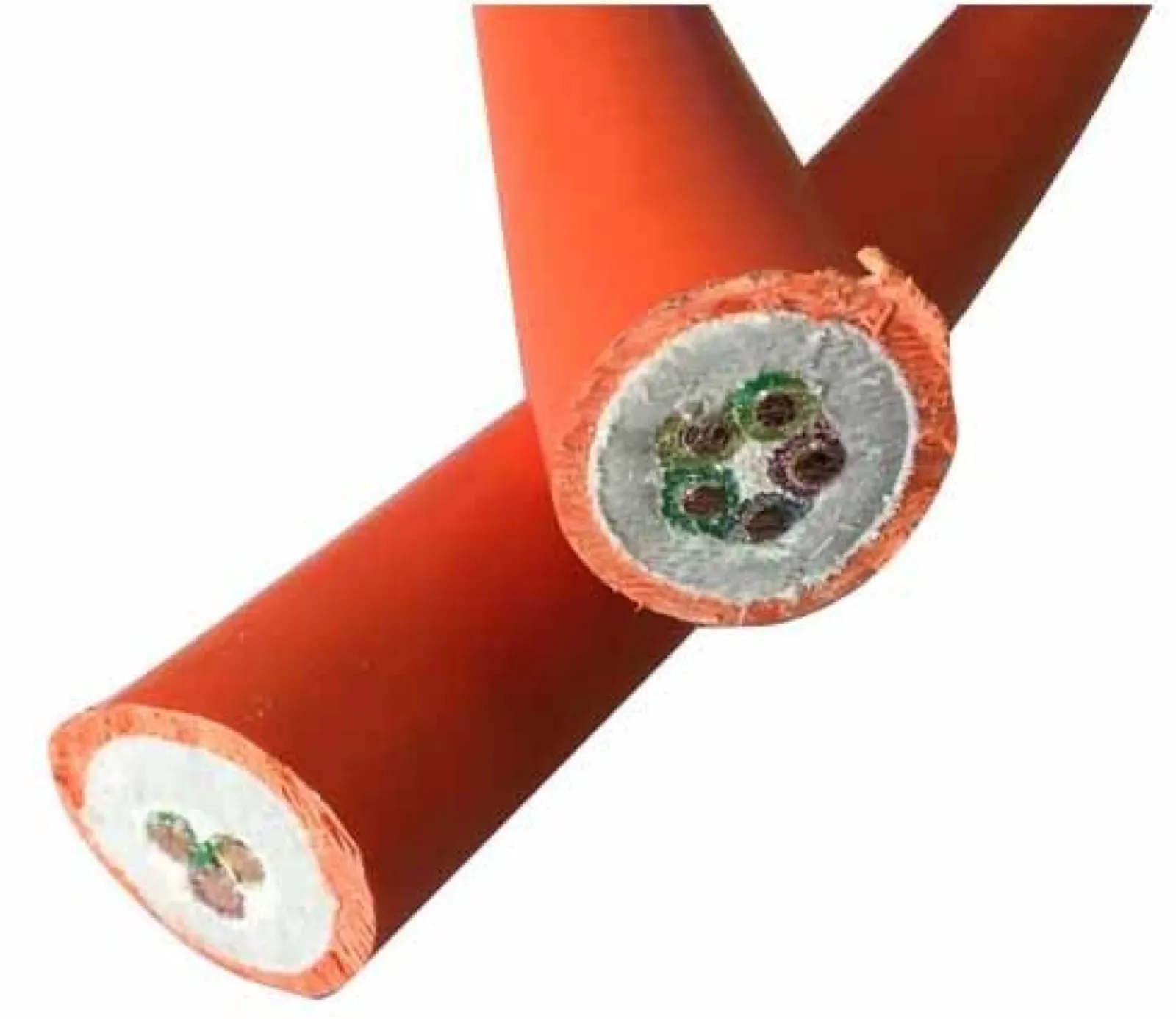
For a complete guide to fire resistant cable types, pricing, and how to source from a China manufacturer, see our mica tape construction and factory pricing.
LSZH Cable Types: Complete Classification
LSZH cables come in multiple configurations depending on voltage, fire rating, and application. Here's the complete classification system used in international trade:
By Voltage Rating
| Voltage Class | Typical Designation | Conductor Range | Applications |
|---|---|---|---|
| 450/750V | WDZN-BYJ | 1.5–10mm² | Building wiring, lighting circuits |
| 0.6/1kV | WDZN-YJY | 1.5–630mm² | Power distribution, feeders |
| 1.8/3kV | WDZN-YJY | 25–300mm² | Motor supply, industrial |
| 3.6/6kV | WDZN-YJY | 25–300mm² | Medium voltage distribution |
| 6/10kV | WDZN-YJY | 25–400mm² | Substation connections |
| 8.7/15kV | WDZN-YJY | 50–630mm² | Primary distribution |
By Fire Performance
Level 1: LSZH Flame Retardant (WDZ- prefix)
- Material: Halogen-free polyolefin insulation + LSZH sheath
- Fire test: IEC 60332-1 (single cable vertical flame), IEC 60332-3 Cat A/B/C (bunched)
- Circuit integrity during fire: NO — cable fails when insulation degrades
- Use for: General building wiring where smoke/toxicity is the concern but circuits can trip
Level 2: LSZH + Fire Resistant (WDZN- prefix)
- Material: Mica tape + XLPE/halogen-free insulation + LSZH sheath
- Fire test: IEC 60331 (circuit integrity at 830°C for 90+ minutes)
- Circuit integrity during fire: YES — 90 minutes minimum
- Use for: Emergency circuits — fire alarms, smoke extraction fans, emergency lighting, fire pumps, elevator recall
Level 3: LSZH + Fire Resistant + Armoured (WDZN-YJY22/23)
- Everything in Level 2 + steel tape or wire armour
- Additional mechanical protection for buried/exposed routes
- Use for: Underground or exposed emergency feeders in industrial plants, tunnels
By Conductor Type
- Single core: 1×1.5mm² to 1×630mm² — for tray/conduit installation
- Multicore: 2-core, 3-core, 4-core, 5-core, 3+1, 3+2, 4+1 configurations
- Flexible: Stranded Class 5 conductor for connection cables and equipment wiring
- Screened: With copper tape or wire braid screen for control/instrumentation LSZH cables
LSZH Cable Sizes and Current Ratings
Low Voltage LSZH Power Cable: WDZN-YJY 0.6/1kV
Single Core — Current Ratings (Amps) at 30°C Ambient, Laid in Air
| Conductor Size (mm²) | 1-Core in Air | 2-Core Flat | 3-Core Trefoil | 4-Core |
|---|---|---|---|---|
| 1.5 | 26 | 22 | 19 | 18 |
| 2.5 | 35 | 29 | 26 | 24 |
| 4 | 46 | 39 | 34 | 31 |
| 6 | 58 | 49 | 43 | 39 |
| 10 | 80 | 67 | 59 | 53 |
| 16 | 105 | 88 | 77 | 70 |
| 25 | 138 | 116 | 101 | 92 |
| 35 | 168 | 141 | 123 | 112 |
| 50 | 200 | 168 | 147 | 133 |
| 70 | 253 | 212 | 185 | 168 |
| 95 | 302 | 254 | 221 | 201 |
| 120 | 347 | 290 | 254 | 230 |
| 150 | 395 | 332 | 289 | 263 |
| 185 | 450 | 378 | 329 | 299 |
| 240 | 528 | 443 | 386 | 351 |
| 300 | 605 | 508 | 442 | 402 |
| 400 | 707 | — | 517 | — |
| 500 | 812 | — | 595 | — |
| 630 | 936 | — | 685 | — |
Values per IEC 60364-5-52 Table B.52-1, Installation Method E (free air). Derate for: higher ambient, grouped cables, enclosed tray, direct burial.
Derating Factors (for 90°C rated XLPE/LSZH cables):
- 35°C ambient: ×0.96
- 40°C ambient: ×0.91
- 45°C ambient: ×0.87
- 50°C ambient: ×0.82
- Grouped in tray (touching, single layer): ×0.85 for 2 cables, ×0.78 for 3, ×0.72 for 4+
- Direct burial at 1m depth: use IEC 60502-1 Table B.52-2 ground values
Building Wire: WDZN-BYJ 450/750V
| Conductor Size (mm²) | Current Rating in Conduit (A) | Current Rating in Free Air (A) |
|---|---|---|
| 1.5 | 14 | 19 |
| 2.5 | 19 | 26 |
| 4 | 25 | 34 |
| 6 | 32 | 43 |
| 10 | 44 | 60 |
| 16 | 57 | 80 |
Ratings for single circuit in conduit, 30°C ambient. Multiple circuits in same conduit require additional derating per IEC 60364-5-52.
LSZH Cable Construction and Materials
Cross-Section Structure (Inside Out)
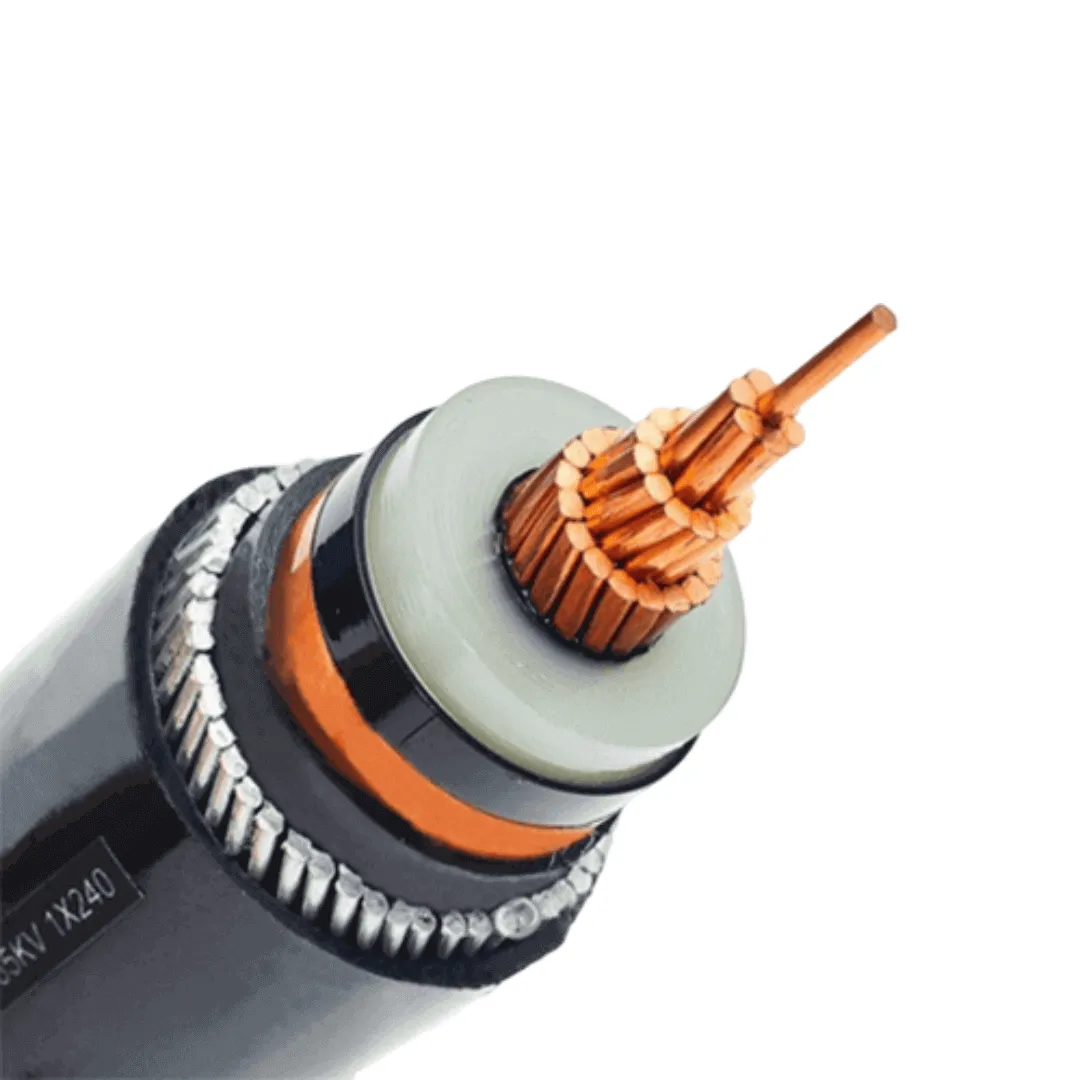
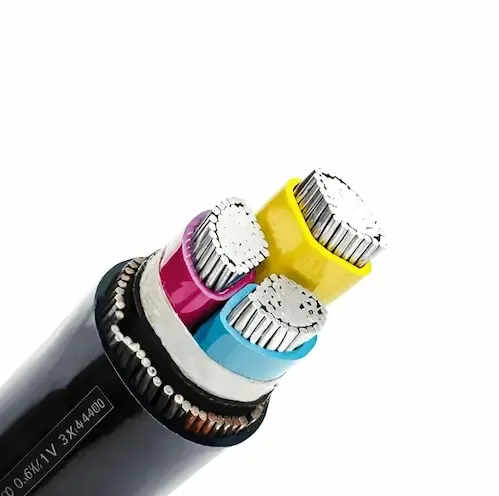
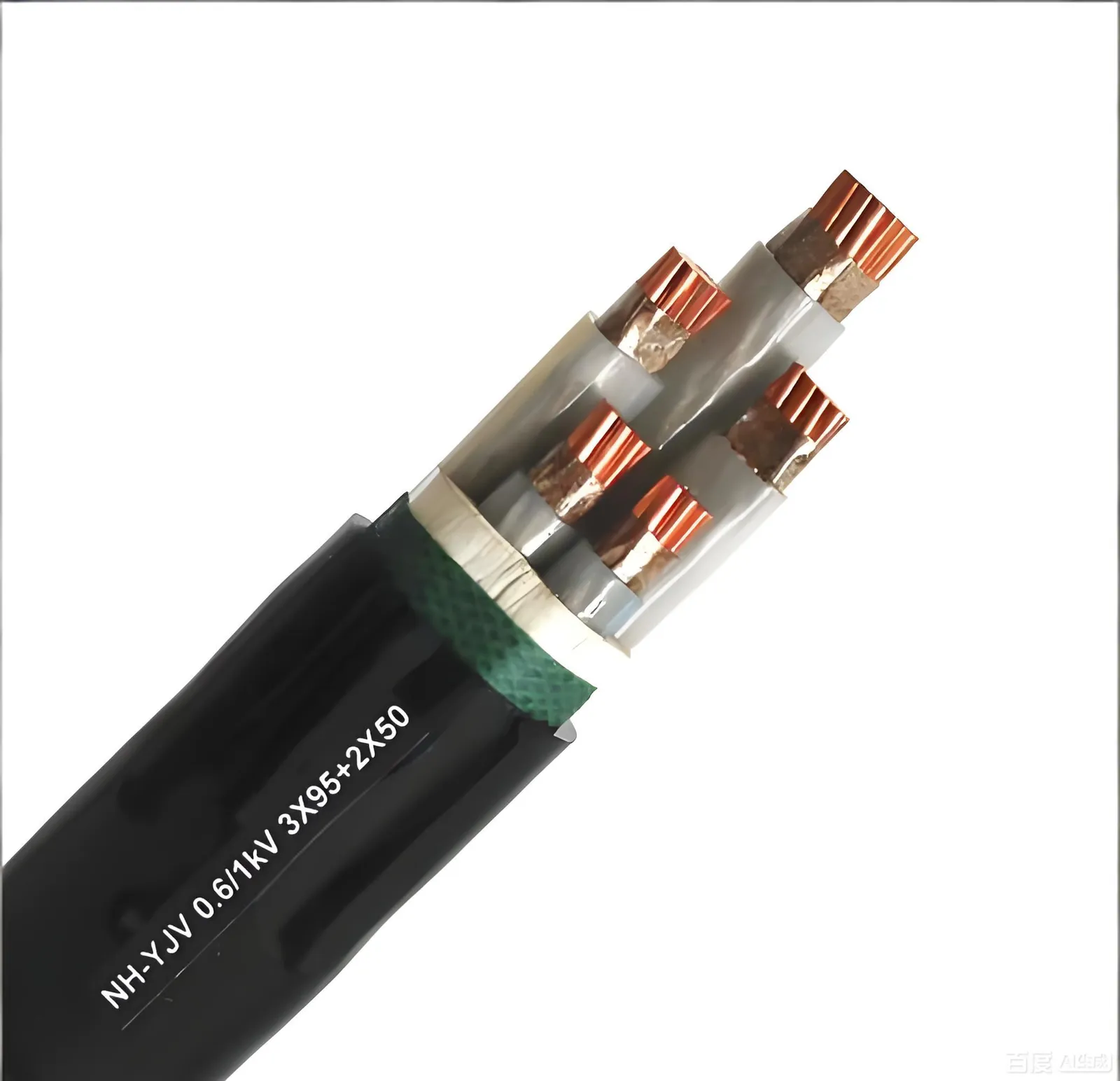
WDZN-YJY 0.6/1kV 3×120mm² (typical fire resistant LSZH power cable):
- Conductor: Stranded annealed copper, Class 2 per IEC 60228, compacted round
- Mica tape barrier: Synthetic mica (phlogopite) tape, 50% overlap wrap — this is what provides fire resistance (IEC 60331 compliance)
- Insulation: XLPE (cross-linked polyethylene) or halogen-free polyolefin, 0.7mm–3.4mm thickness depending on conductor size
- Core identification: Color-coded halogen-free insulation (brown/black/grey/blue/green-yellow per IEC 60446)
- Inner sheath / bedding: Halogen-free polyolefin filler and binder tape
- Armour (if specified): Steel tape (STA) or steel wire (SWA) — adds "-22" or "-23" to model number
- Outer sheath: LSZH compound (halogen-free polyolefin), typically black, 1.8–3.0mm thickness
Material Properties Comparison: LSZH vs PVC vs XLPE
| Property | PVC Sheath | LSZH Sheath | XLPE Insulation |
|---|---|---|---|
| Halogen content | 25–30% chlorine | 0% | 0% |
| Smoke density (IEC 61034) | Fails (< 20% transmittance) | Pass (≥ 60% transmittance) | N/A (insulation layer) |
| HCl emission (IEC 60754-1) | 15–25% | < 0.5% | < 0.5% |
| LOI (Limiting Oxygen Index) | 26–30% | 30–35% | 18–20% (flame retarded: 28%+) |
| Max continuous temp | 70°C | 90°C (some grades 105°C) | 90°C |
| Short circuit temp | 160°C | 150°C | 250°C |
| UV resistance | Good | Poor (needs UV-stabilized grade) | Moderate |
| Cold flexibility | Good to -15°C | Moderate (-20°C for premium grades) | Good to -40°C |
| Water absorption | Low | Higher than PVC (requires drainage design) | Very low |
| Cost index | 1.0× | 1.4–1.8× | 1.1× |
Key takeaway: LSZH sheath material costs more than PVC, but the premium on finished cable (where copper dominates cost) is typically 15–25%. The investment is justified in enclosed spaces where smoke and toxic gas are the primary killers in fire.
IEC Standards for LSZH Cable: What Buyers Must Verify
Mandatory Test Standards
| Standard | What It Tests | Pass Criteria | When Required |
|---|---|---|---|
| IEC 60754-1 | Halogen acid gas amount | < 0.5% HCl equivalent | ALL LSZH cables |
| IEC 60754-2 | Acidity and conductivity of gases | pH ≥ 4.3, conductivity ≤ 10 µS/mm | ALL LSZH cables |
| IEC 61034-1/2 | Smoke density | Light transmittance ≥ 60% | ALL LSZH cables |
| IEC 60332-1 | Single cable vertical flame | Self-extinguishes, char ≤ 425mm | ALL cables |
| IEC 60332-3 Cat A/B/C | Bunched cable flame spread | Char does not reach top marker | Building risers, tunnels, trays |
| IEC 60331-1/2 | Circuit integrity in fire | 90+ min at 830°C (or 950°C for Cat B) | Fire resistant cables only (WDZN-) |
Regional Standard Equivalents
- BS 7211 / BS 7846 — UK standard for LSZH cables. Test methods same as IEC. Look for "LSF" (Low Smoke and Fume) designation in British specs
- EN 50525 / EN 50565 — European harmonized LSZH cables. CPR (Construction Products Regulation) classification: Cca-s1b,d1,a1 or better for building installation
- AS/NZS 5000.1 — Australian LSZH cables. Requires additional "V-90" or "X-90HF" halogen-free marking
- UL 44 / NEC Article 725 — US market uses "Plenum-rated" (CMP/FPL) as functional equivalent for air-handling spaces. True LSZH is less common in US specifications
What to Ask Your Supplier for Verification
- IEC 60754-1 + 60754-2 type test report — Must show actual lab values, not just "pass"
- IEC 61034 smoke density report — From accredited lab (KEMA, SGS, BV, TÜV)
- IEC 60332-3 Category — Cat A is strictest (7L/m fuel load), Cat C is minimum for most building codes
- IEC 60331 report (if fire resistant) — Confirm duration (90 or 120 min) and temperature (830°C standard, 950°C for BS 6387)
- Material test certificate — Oxygen index ≥ 30, confirming compound is genuinely halogen-free (some factories substitute cheaper semi-halogen compounds)
LSZH Cable Applications: Where Specification Is Mandatory
Building Emergency Systems (IEC 60331 + LSZH Required)
Fire-critical circuits that MUST use LSZH + fire resistant cable:
- Fire alarm systems — Detection loops and sounder circuits
- Emergency lighting — Must remain lit for minimum 90 minutes during evacuation
- Fire pump power supply — Motor feeders maintaining water pressure during fire
- Smoke extraction fans — Ventilation circuits that clear escape routes
- Elevator recall circuits — Bring elevators to ground floor for firefighter use
- Public address / voice alarm — Evacuation announcement systems
- Sprinkler system power supply — Pump and valve control circuits
Metro, Rail & Tunnel Systems
All cables inside tunnel envelope must be LSZH regardless of function:
- Traction power feeders
- Signalling and communications
- Platform screen door circuits
- Tunnel ventilation fan supply
- CCTV and passenger information
Why: A single PVC cable fire in a confined tunnel produces enough HCl gas to incapacitate passengers within 2–3 minutes. The 1987 King's Cross Underground fire (31 deaths) led directly to mandatory LSZH specification for all UK metro systems. The same rule now applies to metro and tunnel construction projects across the Gulf and Southeast Asia.
Marine and Offshore (IEC 60092 / DNV / ABS)
Ship and platform classification societies (DNV-GL, Bureau Veritas, Lloyd's, ABS) require halogen-free cables in:
- Accommodation spaces
- Engine rooms (as practical)
- Bridge and control rooms
- Escape routes
Marine LSZH cables additionally need to meet IEC 60092-350 for oil resistance and IEC 60092-353 for shipboard installation.
Airports, Hospitals, Data Centers
Any facility where:
- Large numbers of people occupy enclosed spaces
- Equipment damage from corrosive HCl smoke is unacceptable (data centers, server rooms, telecom exchanges)
- Evacuation times are long (hospitals with immobile patients)
LSZH Cable Model Designation System
Understanding Chinese cable model numbers for international procurement:
W D Z N - Y J Y 2 3
│ │ │ │   │ │ │ │ │
│ │ │ │   │ │ │ │ └── 3: Steel wire armour (SWA)
│ │ │ │   │ │ │ └──── 2: Steel tape armour (STA) + PVC inner sheath
│ │ │ │   │ │ └────── Y: Polyolefin sheath (halogen-free)
│ │ │ │   │ └──────── J: XLPE insulation
│ │ │ │   └────────── Y: Polyethylene-based (copper conductor implied)
│ │ │ └────────────── N: Fire resistant (Nai-huo) = IEC 60331 compliant
│ │ └──────────────── Z: Flame retardant (Zu-ran) = IEC 60332 compliant
│ └────────────────── D: Low smoke (Di-yan) = IEC 61034 compliant
└──────────────────── W: Halogen-free (Wu-lu) = IEC 60754 compliant
Common model numbers for international projects:
| Chinese Designation | IEC Equivalent Description | Use Case |
|---|---|---|
| WDZ-YJY | 0.6/1kV LSZH flame retardant power cable | General building power |
| WDZN-YJY | 0.6/1kV LSZH fire resistant power cable | Emergency circuits |
| WDZN-YJY22 | 0.6/1kV LSZH fire resistant, STA armoured | Underground emergency feeders |
| WDZN-YJY23 | 0.6/1kV LSZH fire resistant, SWA armoured | Direct burial emergency routes |
| WDZ-KYJY | 0.6/1kV LSZH flame retardant control cable | BMS, HVAC control |
| WDZN-KYJY | 0.6/1kV LSZH fire resistant control cable | Fire system control |
| WDZN-BYJ | 450/750V LSZH fire resistant building wire | Internal wiring, conduit |
How to Specify LSZH Cable for Your Tender
Step 1: Determine Fire Performance Level
Question: Do the circuits need to survive during fire, or just not make the fire worse?
- Circuits that can trip during fire → WDZ- (flame retardant LSZH only)
- Circuits that MUST keep working during fire → WDZN- (fire resistant + LSZH)
Step 2: Select Voltage and Conductor Size
Use the current rating tables above. Key inputs:
- Circuit load current (A)
- Voltage drop limit (typically 4% for final circuits, 2.5% for sub-mains per IEC 60364)
- Short-circuit withstand (I²t calculation for protective device coordination)
- Ambient temperature and installation grouping derating
Step 3: Choose Construction
- Unarmoured (YJY): For tray, conduit, or enclosed riser installation
- Steel tape armoured (-22): Moderate mechanical protection, direct burial in stable soil
- Steel wire armoured (-23): Maximum mechanical protection, unstable ground, exposed routes
Step 4: Verify Test Standard Compliance
Specify in your tender documents:
"All cables in fire-rated zones shall comply with:
- IEC 60754-1 and IEC 60754-2 (halogen-free)
- IEC 61034-1 and IEC 61034-2 (low smoke, transmittance ≥ 60%)
- IEC 60332-3 Category [A/B/C] (flame propagation)
- IEC 60331-1 (circuit integrity, 90 minutes minimum at 830°C)
  [Include 60331 only for fire-critical circuits]

Supplier shall provide type test reports from KEMA, SGS, or equivalent
ILAC-accredited laboratory for each cable type offered."
Step 5: Request Factory Verification
Before placing the order, ask for:
- Recent type test reports (< 3 years old) from accredited lab
- Material certificates showing halogen content and oxygen index
- Production sample for independent third-party verification (for orders > 50km or critical projects)
- Factory audit report (ISO 9001 certificate + production line photos/video)
Sourcing LSZH Cable from China: What International Buyers Need to Know
Production Capability
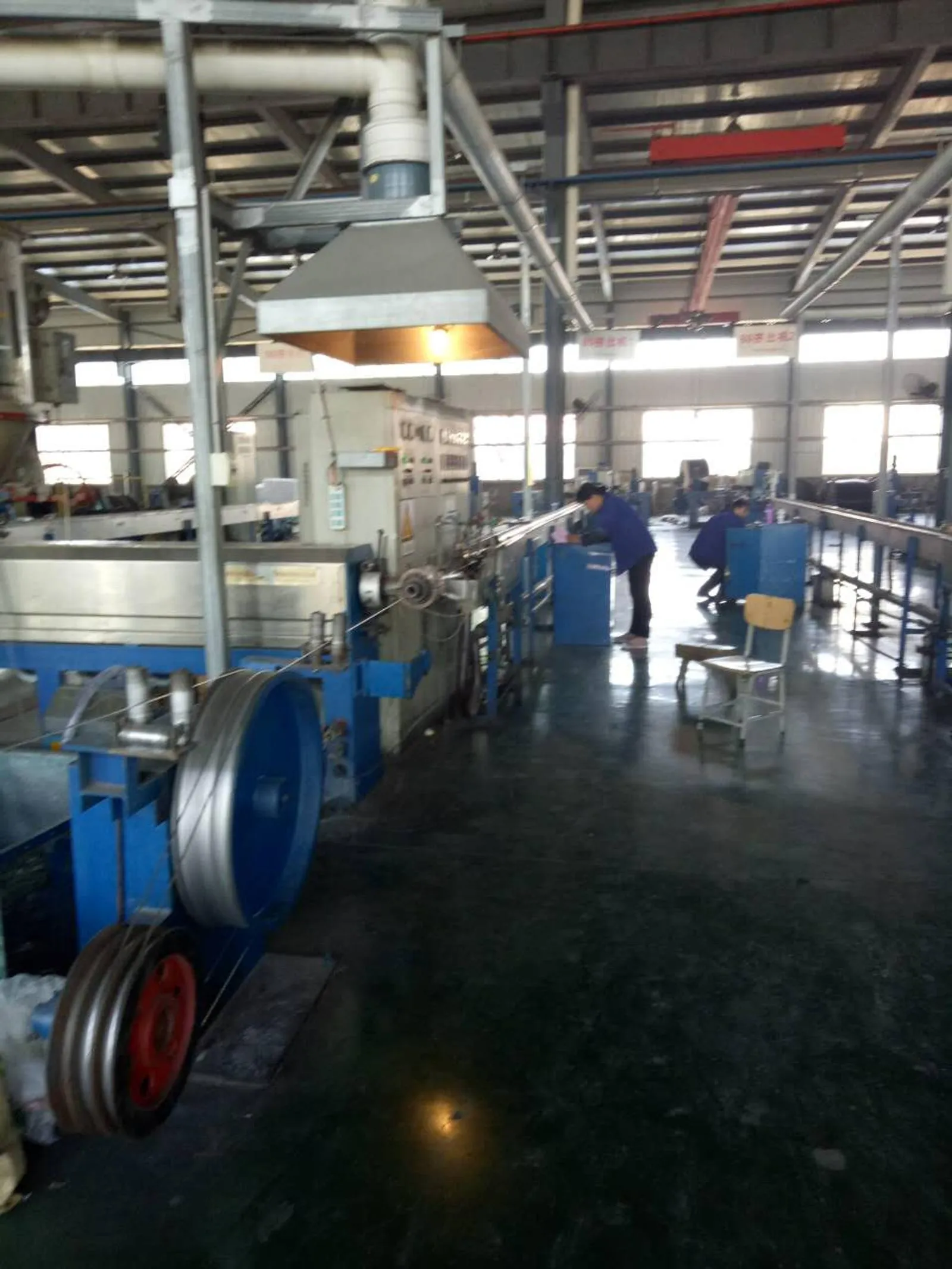
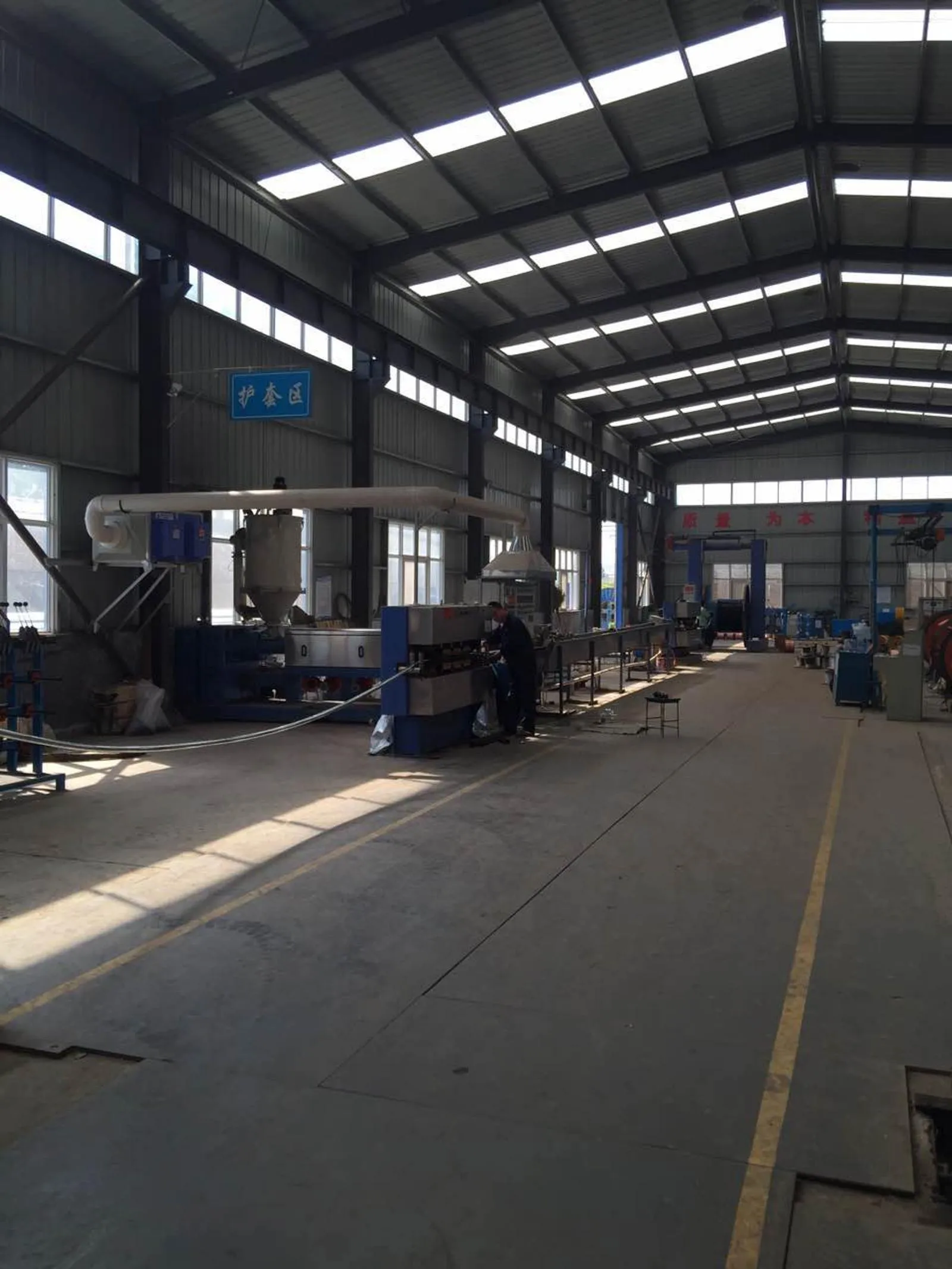
Our factory produces the full range of LSZH cables:
Product scope:
- WDZN-YJY / WDZ-YJY power cables: 1.5mm² to 630mm², 1 to 5 cores
- WDZN-BYJ building wire: 1.5mm² to 16mm²
- WDZN-KYJY / WDZ-KYJY control cables: 0.75mm² to 6mm², 2 to 61 cores
- WDZN-YJY22/23 armoured LSZH cables: 10mm² to 400mm²
- Medium voltage LSZH: 3.6/6kV to 8.7/15kV, WDZN-YJY type
Quality system:
- IEC 60754 / 61034 / 60332 / 60331 type-tested at KEMA (Netherlands) and SGS (Guangzhou)
- CB Scheme certificate available for cross-border acceptance
- ISO 9001:2015 quality management
- Every production batch: oxygen index test, halogen content spot check, 100% high-voltage withstand test
Compound sourcing:
- LSZH sheath compound: imported HFFR (Halogen-Free Flame Retardant) polyolefin grades, LOI ≥ 32
- Mica tape: synthetic phlogopite mica from verified domestic suppliers, fire endurance pre-tested per batch
- Copper conductor: Grade A electrolytic copper per IEC 60228, verified by resistivity test
Pricing Guidance
LSZH cable pricing depends on three factors:
- Copper weight — This is 60–70% of total cost. Conductor size and core count drive the price
- LSZH compound premium — Adds 15–25% over equivalent PVC-sheathed cable
- Fire resistant (mica tape) premium — Adds another 10–15% over LSZH-only version
We do not publish fixed price lists because copper price fluctuates daily. Contact us with your bill of quantities for a firm FOB quote valid 7 days.
Typical price positioning:
- Our FOB China price for LSZH cable is significantly lower than equivalent European-manufactured product (Prysmian, Nexans, Leoni) at identical IEC specification
- Same test standards, same material grades, same accredited lab certification — contact us with your current supplier's quote for a direct comparison
- For projects > 50km total: additional volume discount applies
Lead Time and Logistics
| Order Type | Lead Time | Notes |
|---|---|---|
| Stock sizes (WDZN-YJY 1.5–95mm², 1–4 core) | 10–15 days | 500–1,000 m per size |
| Non-stock sizes (120–630mm², 5-core, armoured) | 10–15 days | Production scheduling required |
| Large project (> 100km mixed) | 20–35 days | Dedicated production line allocation |
| Medium voltage LSZH | 25–40 days | XLPE triple extrusion + mica taping |
Shipping: FCL (full container load) preferred for orders > 15 tons. 20GP container holds approximately 18–22 tons of cable depending on drum size. Mixed containers (LSZH + standard power + control cables) available — one shipment, one customs clearance.
Quality Assurance for International Projects
Pre-shipment inspection options:
- Third-party inspection (SGS/BV/Intertek) at our factory — buyer-arranged or we can coordinate
- Video inspection of production and testing — available for all orders
- Sample pre-approval: we ship 2m sample of each cable type before full production for buyer's lab verification
Documentation package (included with shipment):
- Type test reports (IEC 60754, 61034, 60332, 60331 as applicable)
- Routine test certificates per IEC 60502-1 Clause 15 (every drum)
- Material certificates (conductor resistivity, insulation/sheath compound properties)
- Certificate of Origin for customs clearance
- Packing list with drum numbers and cable lengths (verified by length counter + weight)
Frequently Asked Questions
What is the difference between LSZH and LSOH cable?
They are the same thing — different abbreviations for Low Smoke Zero Halogen / Low Smoke Zero Halide. LSZH is the most common designation in IEC standards and Asian markets. LSOH is more common in European documentation. Other variants: LS0H, OHLS, HFFR (Halogen Free Flame Retardant — refers specifically to the compound, not the cable). When specifying, reference the IEC test standards (60754 + 61034) rather than abbreviations to avoid confusion.
Can LSZH cable be installed outdoors?
Yes, but with consideration. Standard LSZH compounds have poor UV resistance compared to PVC or PE. For outdoor exposed installation, specify UV-stabilized LSZH compound (typically black with UV stabilizer additive) or protect the cable from direct sunlight using tray covers or conduit. For direct burial, LSZH-sheathed cables perform well — no UV issue underground. Many projects use PE outer sheath for the buried section and LSZH only inside the building.
Is LSZH cable more expensive than PVC cable?
Yes. LSZH sheath material costs more than equivalent PVC compound, but the impact on total cable price is moderated by copper content (which represents 60–70% of cost). On the finished cable, the LSZH premium typically adds 15–25% to the final price. For fire resistant LSZH (with mica tape), expect 25–40% over standard PVC/XLPE cable. The premium is justified by building code requirements and the cost of fire casualties — not a discretionary upgrade.
How do I verify if a cable is genuinely LSZH?
Three checks: (1) Request IEC 60754-1 test report showing halogen acid gas < 0.5%. (2) Request IEC 61034 report showing light transmittance ≥ 60%. (3) On-site: genuine LSZH cable is noticeably stiffer and heavier than PVC equivalent, with a matte/slightly rough sheath surface. If the cable is very flexible and glossy like standard PVC, question the compound. For critical projects, send a sample to an independent lab for halogen content verification.
What is the maximum continuous temperature for LSZH cable?
Standard LSZH power cables (XLPE insulated, LSZH sheathed) are rated 90°C continuous conductor temperature — same as standard XLPE cable. The LSZH sheath does not limit the thermal rating. Short-circuit temperature is 250°C for 5 seconds (limited by XLPE insulation; the LSZH sheath itself is rated to 150°C short-circuit). Some LSZH building wire (WDZN-BYJ with halogen-free polyolefin insulation rather than XLPE) may be rated 70°C or 90°C depending on compound grade.
What is the minimum order quantity for LSZH cable?
For standard sizes (1.5–95mm², 1–4 core WDZN-YJY): no minimum — we produce from 1 drum (typically 100m or 200m lengths). For non-standard sizes or armoured types: minimum 1km per specification is typical for production setup efficiency. Mixed orders combining multiple LSZH cable types are encouraged — we can produce your complete project bill of quantities in one production run.
Can you supply LSZH cable with CB certificate?
Yes. Our WDZN-YJY and WDZ-YJY cable designs hold CB Scheme test certificates issued through KEMA (Netherlands). CB certificate means the test report is recognized by 54 member countries — your local authority can issue national certification based on the CB report without requiring re-testing. This saves 3–6 months compared to applying for local certification from scratch.
Conclusion
LSZH cable specification is straightforward once you understand the distinction between smoke properties (IEC 60754 + 61034), flame spread resistance (IEC 60332), and circuit integrity during fire (IEC 60331). Most building projects need the complete package: WDZN-YJY for emergency circuits, WDZ-YJY for general circuits in fire-rated zones.
The key procurement decisions:
- Fire performance level — WDZ (flame retardant only) vs WDZN (fire resistant)
- Armour requirement — Unarmoured for tray/conduit, armoured for burial/exposed
- Test report verification — Always demand accredited lab reports, not just factory self-declaration
Ready to source LSZH cable for your project? Send your cable schedule (sizes, quantities, fire rating, destination port) to our engineering team. We respond with FOB pricing within 24 hours, including available type test reports and CB certificates. Metro and airport projects in the Philippines and Oman are typical LSZH destinations we ship to.
Related guides: