Key Takeaway
LSZH vs PVC cable compared: fire smoke, toxicity, cost, temperature rating, mechanical strength and standards. Practical guide to specifying the right cable sheath for buildings, tunnels and industrial projects.
Choosing between LSZH and PVC cable is one of the most common specification decisions procurement engineers and EPC contractors face — and getting it wrong is expensive. Specify PVC where LSZH is mandated, and the cable fails inspection or gets rejected on site. Specify the pricier LSZH everywhere out of caution, and you pay a premium on cable that a simple outdoor duct run never needed.
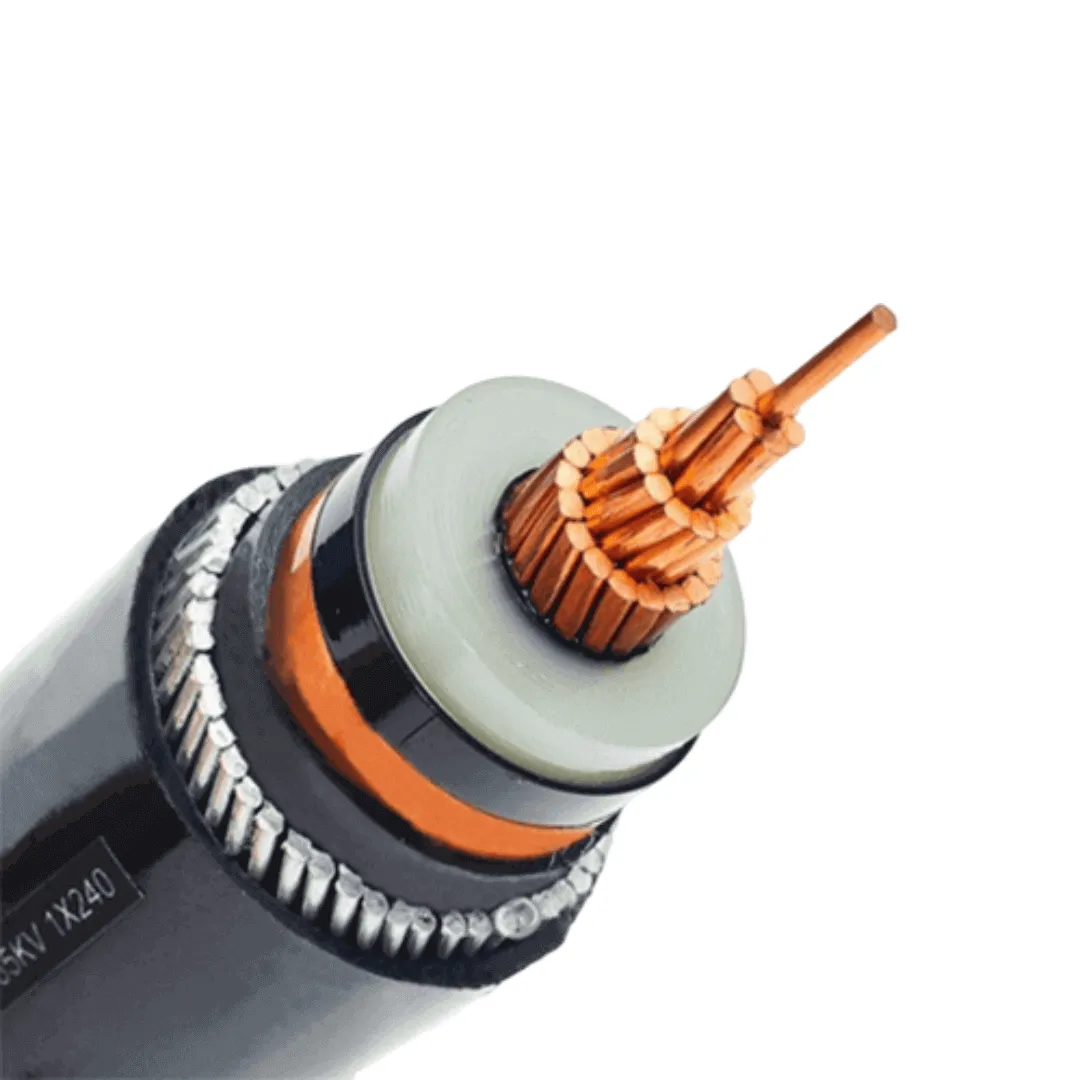
The two materials describe the cable's insulation and sheath compound, not the conductor or the armour. Both can carry the same current, use the same copper or aluminium conductor, and meet the same voltage rating. The difference is entirely in how they behave in a fire — and in cost, handling, and mechanical durability.
This guide breaks down the real differences: fire behaviour, smoke, toxicity, temperature rating, mechanical strength, cost, and the standards that govern each. It ends with a practical decision framework so you can specify the right cable for each part of your project instead of defaulting to one material everywhere.
LSZH vs PVC at a Glance
| Property | PVC Cable | LSZH Cable |
|---|---|---|
| Full name | Polyvinyl chloride | Low Smoke Zero Halogen |
| Halogen content | Contains chlorine | Zero halogen (no Cl, F, Br, I) |
| Smoke when burning | Dense black smoke | Low smoke, light transmittance ≥ 60% (IEC 61034) |
| Toxic gas | Releases hydrogen chloride (HCl) | No halogen acid gas (IEC 60754) |
| Flame retardance | Available (flame-retardant grades) | Standard, self-extinguishing (IEC 60332) |
| Typical temp rating | 70°C (standard), 90°C (heat-resistant grades) | 90°C (XLPE core), 70°C (PVC-equivalent core) |
| Mechanical strength | High, flexible, abrasion resistant | Slightly stiffer, more brittle at low temp |
| Moisture resistance | Excellent | Good, but some compounds absorb more water |
| Relative cost | Baseline (lower) | Higher (compound premium) |
| Best for | Outdoor, buried, ducted, industrial exposed runs | Enclosed/occupied spaces, tunnels, metro, high-rise |
The headline takeaway: PVC is cheaper and mechanically tougher; LSZH is safer in enclosed spaces where people evacuate through smoke. Neither is universally "better" — the right choice depends on where the cable is installed and who is exposed if it burns.
What PVC and LSZH Actually Are
Understanding the material chemistry explains every practical difference that follows.
PVC (Polyvinyl Chloride)
PVC has been the default cable insulation and sheath material for decades. It is cheap, flexible, easy to extrude, resistant to oils, chemicals and abrasion, and it performs well outdoors and underground. The polymer contains chlorine, a halogen, bonded into its molecular structure.
That chlorine is what makes PVC affordable and durable — but it is also the source of its fire problem. When PVC burns or is heated to decomposition (roughly above 200–250°C), the chlorine is released as hydrogen chloride (HCl) gas, which combines with moisture to form hydrochloric acid. The combustion also produces dense, dark smoke.
Standard PVC cable carries a 70°C conductor temperature rating. Heat-resistant PVC grades (PVC/C) can reach 90°C. It is governed by standards such as IEC 60502-1, BS 6004, and GB/T 12706.
LSZH (Low Smoke Zero Halogen)
LSZH — also written LS0H, LSOH, HFFR (Halogen-Free Flame Retardant), or OHLS — is a compound engineered specifically to remove the fire hazards of PVC. Instead of chlorinated polymers, it uses halogen-free polyolefin compounds filled with mineral flame retardants such as aluminium trihydroxide (ATH) or magnesium hydroxide.
When exposed to heat, these mineral fillers release water vapour, which cools the cable and dilutes flammable gases. The result:
- Zero halogen: no chlorine, fluorine, bromine or iodine. Tested per IEC 60754-1 (HCl emission < 0.5%) and IEC 60754-2 (pH ≥ 4.3, conductivity ≤ 10 µS/mm).
- Low smoke: light transmittance ≥ 60% during burning per IEC 61034 — people can still see exit signs.
- Flame retardant: self-extinguishing per IEC 60332-1 (single cable) and IEC 60332-3 (bunched cables).
LSZH is not a single material — it describes a performance category. The conductor and core insulation underneath can be XLPE (giving a 90°C rating) or a halogen-free thermoplastic (70°C). This is why you see designations like WDZ-YJY (halogen-free flame-retardant XLPE) and WDZN-YJY (halogen-free flame-retardant fire-resistant XLPE) in Chinese standard cables.
Fire Behaviour: The Core Difference
This is the reason LSZH exists, and the single most important factor in the decision.
Smoke Density
In a fire, most deaths are caused not by flames but by smoke inhalation and loss of visibility. Dense smoke disorients occupants, hides exit routes, and slows evacuation.
- PVC: produces thick black smoke. In an enclosed corridor or stairwell, visibility can drop to near zero within seconds of ignition.
- LSZH: produces minimal smoke. Per IEC 61034, at least 60% of light must still pass through — occupants can see exit signage and escape routes remain usable.
Toxic and Corrosive Gas
- PVC: releases hydrogen chloride (HCl). HCl attacks the respiratory system at low concentrations and forms hydrochloric acid on contact with moisture — including the moisture in human lungs and eyes. It also corrodes electronic equipment, steel structures and switchgear long after the fire is out. In data centres and control rooms, a single PVC cable fire can destroy equipment that the flames never touched.
- LSZH: emits essentially no halogen acid gas. Combustion products are far less toxic and non-corrosive, protecting both people and sensitive equipment.
Flame Spread
Here the two are closer than most buyers assume. Both PVC and LSZH are available in flame-retardant grades that pass IEC 60332. A flame-retardant PVC cable will self-extinguish just like LSZH. Flame spread alone is therefore not a reason to choose LSZH over PVC — the deciding factors are smoke and toxic gas, not whether the cable propagates flame.
One Critical Clarification
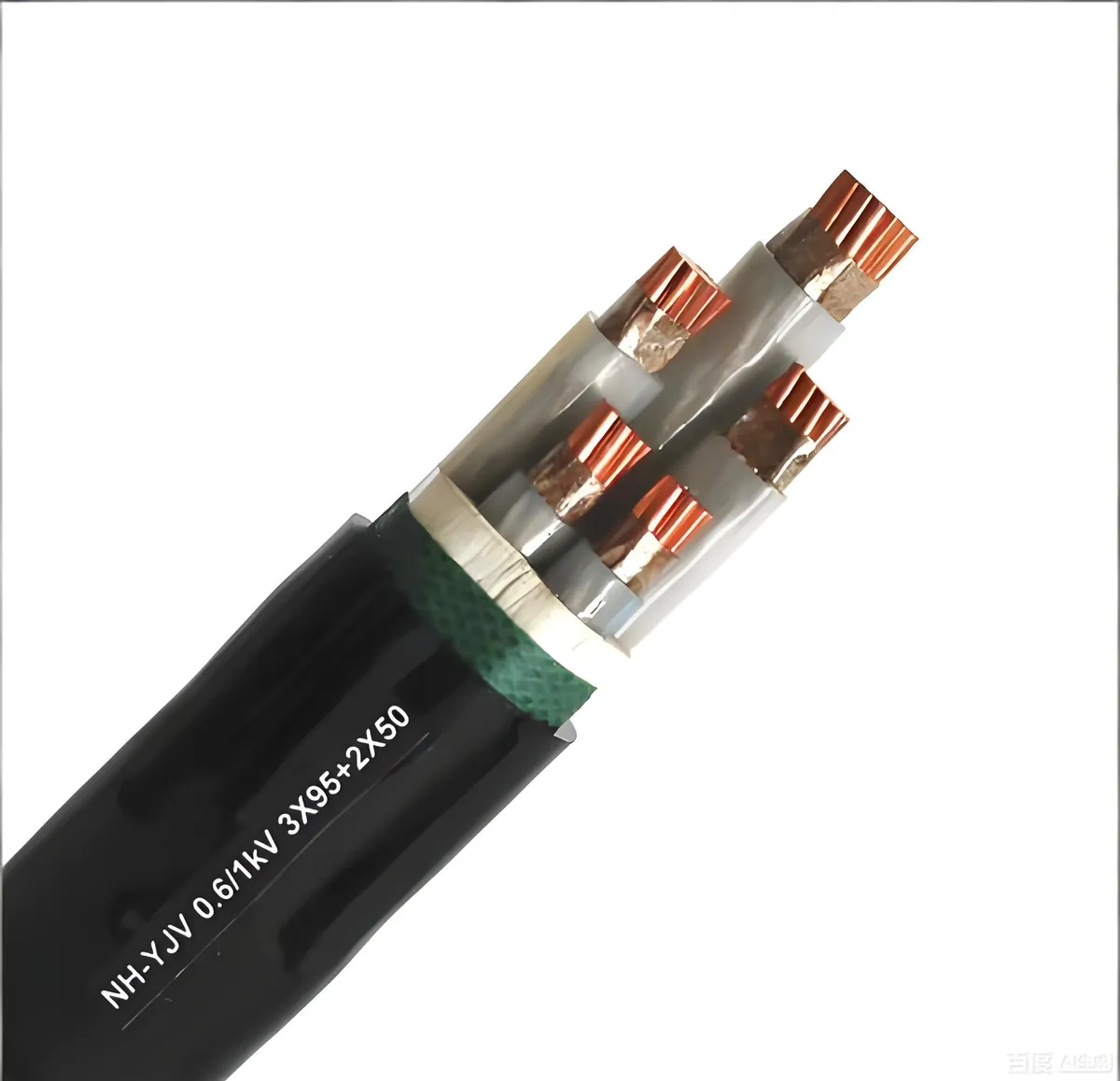
Neither standard LSZH nor PVC is automatically fire resistant (able to keep a circuit energised during a fire). Fire resistance requires a mica tape barrier or mineral insulation and is tested to IEC 60331 — a completely separate property. A cable can be LSZH and still burn through and lose circuit integrity. If you need the circuit to survive a fire (emergency lighting, fire pumps, smoke extraction), you need a fire-resistant construction such as NH-YJV or BTTZ, which is a different specification layer on top of the LSZH-vs-PVC choice.
Temperature Rating and Mechanical Performance
Beyond fire behaviour, the two materials differ in day-to-day handling and operating limits — factors that matter for installation and long-term reliability.
Temperature Rating
- Standard PVC: 70°C maximum conductor temperature in normal operation. This limits current-carrying capacity slightly compared to XLPE-cored cables.
- Heat-resistant PVC (PVC/C): up to 90°C.
- LSZH: depends on the core insulation. LSZH over XLPE (WDZ-YJY) gives 90°C, matching standard XLPE cable. LSZH over halogen-free thermoplastic gives 70°C.
For current rating, what matters is the core insulation temperature class, not the sheath. An LSZH-sheathed XLPE cable and a PVC-sheathed XLPE cable carry the same current. Do not assume LSZH automatically means higher ampacity — check the conductor insulation.
Low-Temperature Flexibility
- PVC: stays flexible in cold conditions and is easy to pull through conduit. Standard PVC is rated for installation down to around 0°C (special grades lower).
- LSZH: the mineral fillers make it stiffer and more brittle, especially in cold weather. Some LSZH compounds crack if bent sharply below 0°C. For cold-climate outdoor installation, this is a genuine handling disadvantage.
Mechanical Strength and Abrasion
- PVC: excellent abrasion resistance and toughness. Well suited to direct burial, dragging through ducts, and exposed industrial environments.
- LSZH: the high mineral filler loading reduces tensile strength and abrasion resistance compared to PVC. LSZH cables are generally better protected inside trays, conduit or trunking rather than exposed to mechanical abuse.
Moisture and Water Absorption
- PVC: excellent moisture resistance — a key reason it dominates outdoor and buried applications.
- LSZH: some halogen-free compounds absorb more water over time, which can affect long-term insulation performance in permanently wet locations. For submerged or continuously damp environments, PVC or a specifically water-resistant LSZH grade is preferable.
Cost: The Real-World Trade-Off
Cost is usually the reason buyers hesitate to specify LSZH everywhere.
LSZH compound is more expensive to produce than PVC because of the specialised halogen-free polymers and high mineral filler content, and it is harder to extrude cleanly (slower line speeds, more scrap). As a result, an LSZH cable typically costs meaningfully more than the equivalent PVC cable of the same size and voltage.
The exact premium varies with cable size, order volume, and copper price at the time of quotation, so we do not publish a fixed percentage — request a quote for a like-for-like comparison on your specific cable schedule.
What is consistent is the direction of the difference:
- The sheath and insulation compound is a smaller share of total cable cost than the copper conductor. On large-conductor power cables (where copper dominates cost), the LSZH premium as a percentage of total price is smaller. On small control and instrumentation cables (where the compound is a bigger share), the premium is more noticeable.
- The premium is almost never a reason to under-specify where regulations mandate LSZH. Fire safety codes are not optional, and a rejected cable pull costs far more than the compound premium.
- Where LSZH is not required — outdoor, buried, ducted runs away from occupied spaces — defaulting to LSZH is simply money left on the table.
The smart approach is not "LSZH everywhere" or "PVC everywhere." It is specifying each cable run for its actual environment — which is exactly what the decision framework below does.
Standards Governing PVC and LSZH Cables
Specifying correctly means citing the right standards. The two materials are governed by different test regimes.
Standards That Apply to Both
- IEC 60332-1 / IEC 60332-3: flame propagation — single and bunched cables. Both flame-retardant PVC and LSZH can pass these.
- IEC 60502-1: construction and testing of power cables 1–3 kV, applicable to both material types.
Standards Specific to LSZH Performance
- IEC 60754-1: measures halogen acid gas emission (HCl content). LSZH passes with < 0.5%; PVC fails badly.
- IEC 60754-2: measures the pH and conductivity of combustion gases (corrosivity). LSZH must show pH ≥ 4.3 and conductivity ≤ 10 µS/mm.
- IEC 61034-1/2: measures smoke density under burning. LSZH must maintain ≥ 60% light transmittance.
These three tests — IEC 60754-1, IEC 60754-2 and IEC 61034 — are what a genuine LSZH cable must pass and a PVC cable cannot. When you specify LSZH, cite IEC 60754 and IEC 61034 explicitly and demand the test reports. A cable simply labelled "LSZH" without these reports is unverified.
Chinese Standard Designations (GB/T)
For reference when reading factory datasheets:
- PVC power cable: VV (PVC insulated, PVC sheathed), YJV (XLPE insulated, PVC sheathed)
- Flame-retardant PVC: ZR-YJV / ZC-YJV (ZA/ZB/ZC = flame-retardant categories A/B/C)
- LSZH (halogen-free low smoke): WDZ- prefix — e.g. WDZ-YJY (halogen-free flame-retardant XLPE), WDZN-YJY (halogen-free flame-retardant fire-resistant XLPE)
Note that in the WDZ designation the outer letter Y (for the sheath) indicates a halogen-free polyolefin sheath, replacing the V (PVC) sheath in a standard YJV cable.
Regional Equivalents
- UK / BS: BS 6724 (LSZH armoured/unarmoured) vs BS 5467 / BS 6004 (PVC). BS 7846 covers LSZH fire-resistant.
- Europe / CPR: the Construction Products Regulation Euroclass system (B2ca, Cca, Dca) increasingly drives LSZH adoption in the EU, rating cables on heat release, smoke (s1–s3), flaming droplets (d0–d2) and acidity (a1–a3).
- US / NEC: uses its own CMP/CMR/CM plenum and riser ratings rather than the LSZH label directly.
For a fuller cross-reference, see our cable standards by country guide.
Which to Specify: A Decision Framework
Instead of choosing one material for the whole project, decide per installation zone. The controlling question is: if this cable burns, are people or sensitive equipment exposed to the smoke and gas?
Specify LSZH When:
- Enclosed occupied spaces: high-rise buildings, offices, hotels, hospitals, schools. Anywhere people evacuate through corridors and stairwells.
- Underground and confined spaces: tunnels (road, rail, metro), subways, basements, car parks. Smoke has nowhere to disperse and evacuation is slow.
- Public transport and crowds: airports, stations, stadiums, shopping malls, theatres.
- Sensitive equipment areas: data centres, control rooms, telecom exchanges, laboratories — where corrosive HCl gas destroys electronics.
- Any project where the specification or local fire code mandates halogen-free / low smoke cable. Increasingly this is the default in the EU, UK, Middle East high-rise, and modern infrastructure tenders.
PVC Is Acceptable (and More Economical) When:
- Outdoor installations away from occupied buildings.
- Direct burial and underground ducts where any fire is contained and no one is present.
- Industrial plant exposed runs where mechanical toughness and abrasion resistance matter more than smoke — and where LSZH's brittleness is a liability.
- Cold-climate outdoor pulls where PVC's low-temperature flexibility eases installation.
- Wet or submerged locations where PVC's superior moisture resistance is an advantage.
- Temporary installations and general-purpose wiring with no fire-safety mandate.
The Practical Reality on Most Projects
A well-engineered project uses both: LSZH inside the building envelope, tunnels and occupied spaces; PVC (or XLPE/PVC) for the incoming supply, outdoor switchyard, and buried feeder runs. This meets fire codes where they apply and controls cost where they do not. The mistake is treating it as an all-or-nothing choice.
Common Misconceptions to Avoid
"LSZH means the cable won't burn." False. LSZH describes smoke and halogen behaviour, not fire resistance. Standard LSZH cable will still burn through and lose circuit continuity. For circuits that must survive a fire, you need an IEC 60331 fire-resistant construction — see our IEC 60331 specification guide.
"LSZH carries more current than PVC." Not inherently. Current rating comes from the core insulation temperature class (XLPE 90°C vs PVC 70°C), not the sheath label. An LSZH cable with a 70°C core carries no more current than a 70°C PVC cable.
"Flame-retardant and low-smoke are the same thing." No. Flame retardance (IEC 60332) stops the fire spreading along the cable. Low smoke and zero halogen (IEC 61034 / 60754) is about what the cable emits while burning. Flame-retardant PVC exists — it self-extinguishes but still produces toxic black smoke.
"LSZH is always the safer choice, so specify it everywhere." Safer in enclosed occupied spaces, yes. But its brittleness, lower abrasion resistance and higher water absorption can make it the worse choice for exposed outdoor, buried or wet industrial runs — where it also wastes money.
How to Write the Specification Correctly
To avoid ambiguity and get accurate quotes, a good cable specification states four things independently:
- Conductor and size: e.g. copper, 4 × 25 mm² + 1 × 16 mm².
- Core insulation and voltage: e.g. XLPE, 0.6/1 kV.
- Sheath material / fire behaviour: e.g. "LSZH sheath, halogen-free, compliant with IEC 60754-1/2 and IEC 61034; flame retardant to IEC 60332-3." Or for PVC: "PVC sheath to IEC 60502-1, flame retardant to IEC 60332-1."
- Fire resistance (only if required): e.g. "circuit integrity to IEC 60331-1, 90 min." — a separate requirement layered on top.
Stating these separately prevents the classic mistakes: assuming LSZH implies fire resistance, or assuming a fire-resistant cable is automatically low-smoke. Always demand the third-party type test reports for the standards you cite — a label alone is not proof.
Frequently Asked Questions
Is LSZH better than PVC cable?
Neither is universally better. LSZH is safer in enclosed, occupied spaces because it produces little smoke and no toxic halogen gas when burning. PVC is cheaper, mechanically tougher, more flexible in the cold and more moisture-resistant, making it better for outdoor, buried and exposed industrial runs. Choose based on the installation environment, not a blanket rule.
What is the main difference between LSZH and PVC cable?
The material chemistry of the sheath and insulation. PVC contains chlorine (a halogen) and releases dense smoke and corrosive hydrogen chloride gas when burned. LSZH uses halogen-free compounds that produce minimal smoke and no halogen acid gas. Electrically, with the same conductor and core insulation, they perform identically.
Does LSZH cable cost more than PVC?
Yes. LSZH compound is more expensive and harder to extrude than PVC, so the finished cable costs more. The premium is larger (as a percentage) on small cables where the compound is a bigger share of cost, and smaller on large power cables where copper dominates. Request a quote for a like-for-like comparison on your sizes.
Is LSZH cable fire resistant?
No — not by itself. LSZH addresses smoke and halogen emission, not circuit survival in a fire. A cable must have a mica tape barrier or mineral insulation and pass IEC 60331 to be fire resistant. Many cables are both LSZH and fire resistant (e.g. WDZN-YJY), but the two properties are specified separately.
Can I use PVC cable indoors?
You can where no fire-safety code prohibits it, but in enclosed occupied buildings, tunnels and public spaces, most modern codes require LSZH precisely because PVC smoke and HCl gas endanger occupants during evacuation. Check the project specification and local fire regulations before defaulting to PVC indoors.
Which cable do I need for a high-rise building or tunnel?
LSZH as the baseline for all cabling in occupied areas, corridors and stairwells, plus fire-resistant (IEC 60331) cable for emergency circuits — fire pumps, emergency lighting, smoke extraction and alarm systems. See our fire resistant cable specifications guide for the full application breakdown.
How do I verify a cable is genuinely LSZH?
Demand the third-party type test reports for IEC 60754-1, IEC 60754-2 and IEC 61034 in the manufacturer's own name. A cable printed "LSZH" without these accredited reports is unverified. A reputable factory provides them on request.
Source LSZH and PVC Cable from One Factory
Specifying the right material is only half the job — you also need a manufacturer that can supply both, with the test reports to prove compliance. As a China cable manufacturer with 45 years of production history, we produce PVC (VV, YJV), flame-retardant (ZR-YJV), LSZH (WDZ-YJY) and fire-resistant (WDZN-YJY, NH-YJV, BTTZ) cables on the same lines — so a single project order can be split correctly across zones without juggling multiple suppliers.
Every LSZH cable ships with accredited IEC 60754 and IEC 61034 test reports; every fire-resistant cable with IEC 60331 type test data. Send your cable schedule — sizes, quantities, per-zone fire requirements and destination port — to our engineering team, and we respond with FOB pricing within 24 hours, including the relevant type test reports and CB certificates.
Related guides:
- LSZH Cable: Sizes, Specifications & China Manufacturer Guide
- Fire Resistant Cable: Specifications, Standards & Sourcing Guide
- IEC 60331 Fire Resistant Cable: Complete Specification & Testing Guide
- BTTZ Mineral Insulated Cable: Price, Sizes & How to Source
- Cable Insulation Types: PVC vs XLPE vs EPR Comparison
- Cable Standards by Country: IEC, BS, NEC Guide