Key Takeaway
BTTZ mineral insulated cable (MICC) sourcing guide. Sizes from 1.5-400mm², unlimited fire resistance, 50+ year lifespan. IEC 60702 compliant. Factory direct from China manufacturer.
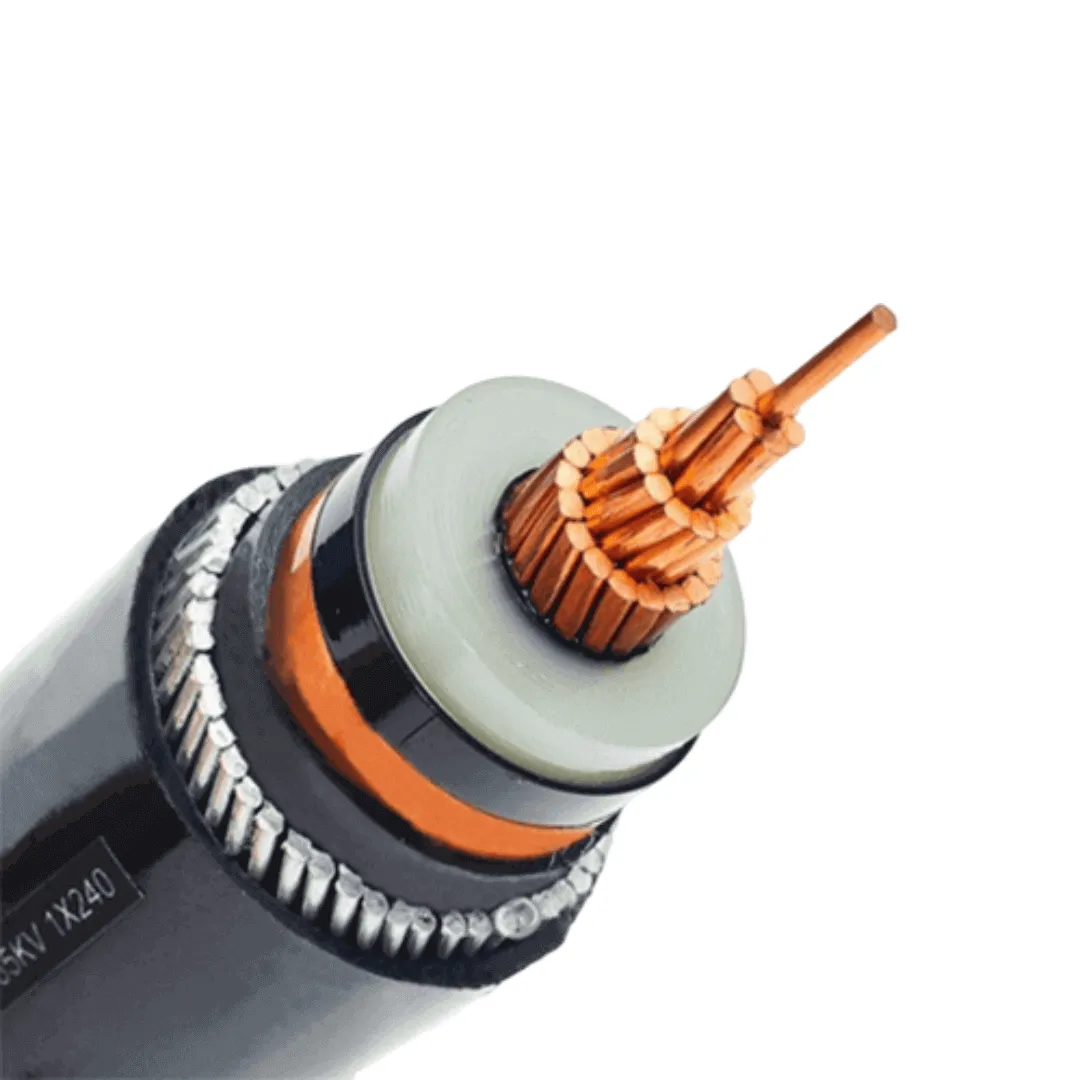
BTTZ cable is the only fire resistant cable that provides unlimited fire survival duration. Where mica-tape cables (NH-YJV, WDZN-YJY) are rated for 90 or 180 minutes, BTTZ has no time limit because it contains zero organic material. The cable is entirely inorganic: copper conductors, compressed magnesium oxide insulation, and a seamless copper sheath.
This makes BTTZ the specification choice for the most critical circuits in a building — circuits where failure during fire is simply not an option, regardless of fire duration. But it comes with trade-offs: higher cost, rigid construction, and specialized installation requirements.
This guide covers BTTZ cable construction, available sizes, what drives pricing, installation considerations, and how to source from a China manufacturer with confidence.
What is BTTZ Cable — Construction & Working Principle
BTTZ is a Chinese cable designation where each letter identifies a construction element: B = fixed wiring cable (布线 Bùxiàn), T = copper conductor (铜 Tóng), T = copper sheath (铜), Z = heavy-duty type (重型 Zhòngxíng). Internationally, this cable type is known as MICC (Mineral Insulated Copper Clad) or MI cable, manufactured to IEC 60702-1 / BS EN 60702-1.
Cable Construction (Inside to Outside)
-
Copper conductor(s): Solid annealed copper rod(s), Class 1 per IEC 60228. Single-core versions use one central conductor; multi-core versions have conductors arranged symmetrically within the sheath.
-
Magnesium oxide insulation (MgO): Highly compressed, anhydrous magnesium oxide powder fills all space between conductors and sheath. MgO has:
- Melting point: 2,852°C — far above any building fire temperature
- Excellent dielectric properties at high temperatures
- Thermal conductivity sufficient for heat dissipation
- Completely inorganic — cannot burn, decompose, or produce smoke
-
Seamless copper sheath: A continuous, welded or drawn copper tube forms the outer protection. This provides:
- Mechanical protection equivalent to armour
- Complete moisture barrier (hermetically sealed)
- Earth continuity path (the sheath can serve as circuit protective conductor)
- Fire barrier — copper melting point is 1,085°C
Why BTTZ Survives Fire Indefinitely
In a standard building fire (ISO 834 curve reaches ~1,000°C at 60 minutes), BTTZ remains functional because:
- Copper sheath melts at 1,085°C — above standard fire test temperatures
- MgO insulation melts at 2,852°C — fire cannot damage it
- No polymer insulation exists to burn, char, or produce conductive residue
- The cable literally cannot fail unless the fire melts copper — which standard fires do not achieve
This is why fire codes worldwide specify BTTZ/MICC for circuits that must survive the full duration of a fire, not just 90 or 120 minutes.
BTTZ Cable Sizes & Specifications
Voltage Ratings
- Light Duty (500 V): For fire alarm circuits, emergency lighting, control wiring
- Heavy Duty (750 V per GB/T 13033, or 1000 V per BS EN 60702-1): For power circuits — motor feeds, distribution boards, emergency power supplies
Available Conductor Sizes
| Application | Cores | Cross-section Range | Typical Use |
|---|---|---|---|
| Power supply | 1 core | 1.5 – 400 mm² | Main feeder, motor supply |
| Power distribution | 2 core | 1.5 – 25 mm² | Single-phase circuits |
| 3-phase power | 3 core | 1.5 – 25 mm² | 3-phase motor, pump supply |
| 3-phase + neutral | 4 core | 1.5 – 16 mm² | Distribution with neutral |
| Control / alarm | 7 core | 1.5 – 2.5 mm² | Fire alarm loops, control signals |
Note: Multi-core BTTZ above 25 mm² becomes very rigid and heavy. For larger power circuits, single-core BTTZ in trefoil arrangement is standard practice.
Key Technical Parameters
| Parameter | Value | Standard Reference |
|---|---|---|
| Conductor material | Solid annealed copper, Class 1 | IEC 60228 |
| Insulation material | Compressed MgO powder | IEC 60702-1 |
| Sheath material | Seamless copper tube | IEC 60702-1 |
| Max continuous temperature | 250°C (at copper sheath) | — |
| Max short-circuit temperature | 1000°C (limited by copper softening) | — |
| Insulation resistance | ≥100 MΩ at 500 V DC (20°C) | IEC 60702-1 |
| Voltage withstand | 2 kV DC for 1 min (light duty) | IEC 60702-1 |
| Fire resistance | Unlimited duration | No organic material to degrade |
| Expected lifespan | 50+ years | No polymer ageing mechanism |
| UV resistance | Unaffected (all inorganic) | — |
| Waterproof | Yes (hermetic copper sheath) | — |
Comparison with Other Fire Resistant Cable Types
| Property | BTTZ (Mineral Insulated) | NH-YJV (Mica Tape + XLPE) | Silicone + Mica |
|---|---|---|---|
| Fire duration | Unlimited | 90–180 min | 90–120 min |
| Max service temp | 250°C continuous | 90°C continuous | 180°C continuous |
| Flexibility | Rigid (single bend only) | Flexible | Semi-flexible |
| Sheath | Copper (serves as earth) | PVC or LSZH | Silicone rubber |
| Moisture resistance | Hermetic seal | Good (but not hermetic) | Moderate |
| Typical cost | Highest | Moderate | Moderate-high |
| Installation skill | Specialized (trained installers) | Standard electrician | Standard electrician |
| Termination | Cold-shrink seal or epoxy pot | Standard lugs | Standard lugs |
For projects where 90-minute fire resistance is sufficient, NH-YJV or WDZN-YJY offers better value. See our Fire Resistant Cable Manufacturer Guide for details on mica-tape fire resistant cables.
BTTZ Cable Pricing — What Makes It Expensive
BTTZ is the most expensive fire resistant cable type per meter. Understanding the cost structure helps you budget accurately and negotiate effectively:
1. Copper Content is Very High
Unlike polymer-insulated cables where copper is only the conductor, BTTZ uses copper for both conductor AND outer sheath. The copper sheath alone can weigh more than the conductors, depending on cable size.
Approximate copper weight comparison (single-core 25 mm²):
- YJV 1×25 mm²: ~250 kg copper/km (conductor only)
- BTTZ 1×25 mm²: ~650–800 kg copper/km (conductor + sheath)
This means BTTZ contains roughly 2.5–3× more copper per km than equivalent polymer-insulated cable. With copper priced per ton on LME, the raw material cost alone is 2.5–3× higher.
2. Manufacturing Process is Specialized
BTTZ production requires:
- High-purity anhydrous MgO powder (moisture content must be extremely low — wet MgO causes insulation breakdown)
- Precision tube drawing equipment to reduce copper sheath diameter while maintaining concentricity
- Multiple drawing passes with intermediate annealing
- Strict moisture control throughout manufacturing (MgO is hygroscopic)
- End-seal welding to prevent moisture ingress before installation
This is not a high-speed extrusion process like polymer cable. Production rates are much lower, and equipment is more specialized.
3. Pricing Factors Summary
| Factor | Impact on Price |
|---|---|
| LME copper price | Dominant — typically 70–80% of cable cost |
| Conductor size | Larger = more copper = higher cost per meter |
| Number of cores | More cores = larger sheath diameter = more copper |
| Voltage grade | Heavy duty (1000V) requires thicker insulation layer = larger OD |
| Order volume | Lower prices for full-container orders (500+ km total) |
| Termination kits | Budget separately — cold-shrink or epoxy pot seals add per-end cost |
BTTZ cable pricing is always quoted based on current LME copper settlement. Request a quotation with your cable schedule for accurate pricing.
4. Total Cost of Ownership Perspective
While BTTZ has the highest purchase price per meter, it offers:
- 50+ year lifespan vs 25–30 years for polymer cables
- Zero maintenance — no insulation degradation monitoring needed
- No replacement cost for the life of the building
- Insurance premium benefits in some markets (highest fire rating)
- Smallest cable diameter for given current rating (high-temperature operation allows higher current density)
For a 50-year building life, the annualized cost of BTTZ can be competitive with polymer cables that require mid-life replacement.
Where BTTZ Cable is Specified — Applications
Building Fire Safety (Life-Critical Circuits)
Building codes worldwide mandate BTTZ or equivalent for:
- Firefighter elevator supply — must operate for entire duration of firefighting operation
- Stairwell pressurisation fans — keep smoke out of escape stairs for unlimited time
- Fire pump supply — maintain water pressure as long as fire persists
- Emergency generator feeder — connect generator to critical distribution boards through fire zones
- Fire command centre power supply — incident commander needs power for entire operation
High-Rise and Supertall Buildings
For buildings over 100 m height, many codes (including UAE Civil Defence, Singapore SCDF, Hong Kong FSD) specify BTTZ for:
- Rising mains in fire-rated shafts
- Circuits crossing multiple fire compartments
- Circuits where replacement during building life is impractical (embedded in structure)
Tunnels and Underground Infrastructure
- Metro station power supply to critical ventilation
- Road tunnel circuits where fire duration is unpredictable
- Underground car parks — emergency extraction fan circuits
Industrial and Oil & Gas
- Refineries and petrochemical plants — emergency circuits in fire zones
- Power stations — nuclear safety-related circuits require unlimited fire rating
- Data centres — circuits to fire suppression control and UPS transfer switches
Heritage and Special Buildings
- Museums, archives, historical buildings — where cable fire performance must be absolute and maintenance-free
- Hospitals — operating theatre supply, life support system circuits
- Prisons — where circuit integrity during disturbance is critical
Installation Considerations — What Buyers Need to Know
BTTZ is not a plug-and-play cable. Procurement engineers should understand installation requirements before specifying, because they affect project cost and programme:
Minimum Bend Radius
BTTZ has a rigid copper sheath that can only be bent once at each point. The minimum bend radius depends on cable outer diameter:
- Single bend: 6× cable outer diameter (typical)
- The cable cannot be re-bent at the same point without risk of sheath cracking
This means cable routes must be carefully planned. Unlike flexible polymer cables, BTTZ cannot be easily re-routed after installation.
Termination (Sealing)
Every cable end must be sealed to prevent moisture from entering the MgO insulation. MgO is hygroscopic — if moisture gets in, insulation resistance drops and the cable fails electrical testing.
Termination methods:
- Cold-shrink seal: Heat-shrinkable boot over cable end with sealing compound. Quicker to install.
- Epoxy pot seal (gland pot): Cable end potted in epoxy resin within a brass gland. More robust for harsh environments.
- Screw-on seal: Factory-fitted brass end cap for temporary protection during storage and transport.
Termination kits are purchased separately and must be specified for the correct cable size and gland entry.
Skilled Labour Requirement
BTTZ installation requires trained personnel who understand:
- Bending techniques (hydraulic benders for larger sizes)
- Moisture protection during installation (never leave ends exposed overnight)
- Termination procedure (getting the seal wrong = insulation failure after commissioning)
- Megger testing procedure after installation (standard is 500 V DC megger)
Impact on Project Programme
Budget for:
- Higher installation labour cost (specialized skills)
- Longer installation time per meter vs polymer cable
- Termination kit procurement lead time
- Potential re-testing if moisture ingress occurs during installation
Despite these considerations, BTTZ remains the correct specification for circuits requiring ultimate fire performance and building-lifetime durability.
Standards & Certification
International Standards
| Standard | Scope |
|---|---|
| IEC 60702-1 | Mineral insulated cable construction and testing |
| IEC 60702-2 | Mineral insulated cable terminations (fittings) |
| BS EN 60702-1 | UK/EU adoption of IEC 60702-1 |
| BS 6387 CWZ | Fire resistance category: C (950°C flame), W (water spray), Z (mechanical shock) — BTTZ passes all three |
| GB/T 13033 | Chinese national standard for mineral insulated cables |
| IEC 60331 | Fire resistance test — BTTZ exceeds all IEC 60331 requirements by design |
BS 6387 Fire Classification — What CWZ Means
BS 6387 is often referenced in specifications for BTTZ. It defines three test categories:
- C: Flame resistance at 950°C for 3 hours (circuit integrity maintained)
- W: Fire resistance with water spray — cable exposed to 650°C flame for 15 minutes, then 650°C flame with water spray for another 15 minutes (simulates sprinkler activation during fire)
- Z: Fire resistance with mechanical shock — cable exposed to 950°C flame for 15 minutes, then 950°C flame with mechanical impact (struck by steel bar) every 30 seconds for another 15 minutes
BTTZ cable passes C, W, and Z simultaneously — earning the CWZ classification. This is the highest fire survival rating available for any cable type.
Our BTTZ Certifications
- Type test reports per IEC 60702-1 (construction verification, insulation resistance, voltage withstand)
- Fire resistance test reports exceeding IEC 60331 requirements
- GB/T 13033 compliance certification
- ISO 9001:2015 quality management (manufacturing facility)
- CCC certificate for mineral insulated cable products
Sourcing BTTZ from China — What to Verify
Not all Chinese cable factories manufacture BTTZ. It requires specialized equipment that polymer cable factories do not have. When sourcing BTTZ from China, verify:
1. The Factory Actually Makes MI Cable
BTTZ manufacturing requires:
- MgO powder processing equipment (drying, grading)
- Tube filling and compacting machinery
- Multi-pass tube drawing lines (reducing OD while maintaining insulation density)
- Intermediate annealing furnaces
- End-seal welding equipment
- Moisture-controlled storage for finished product
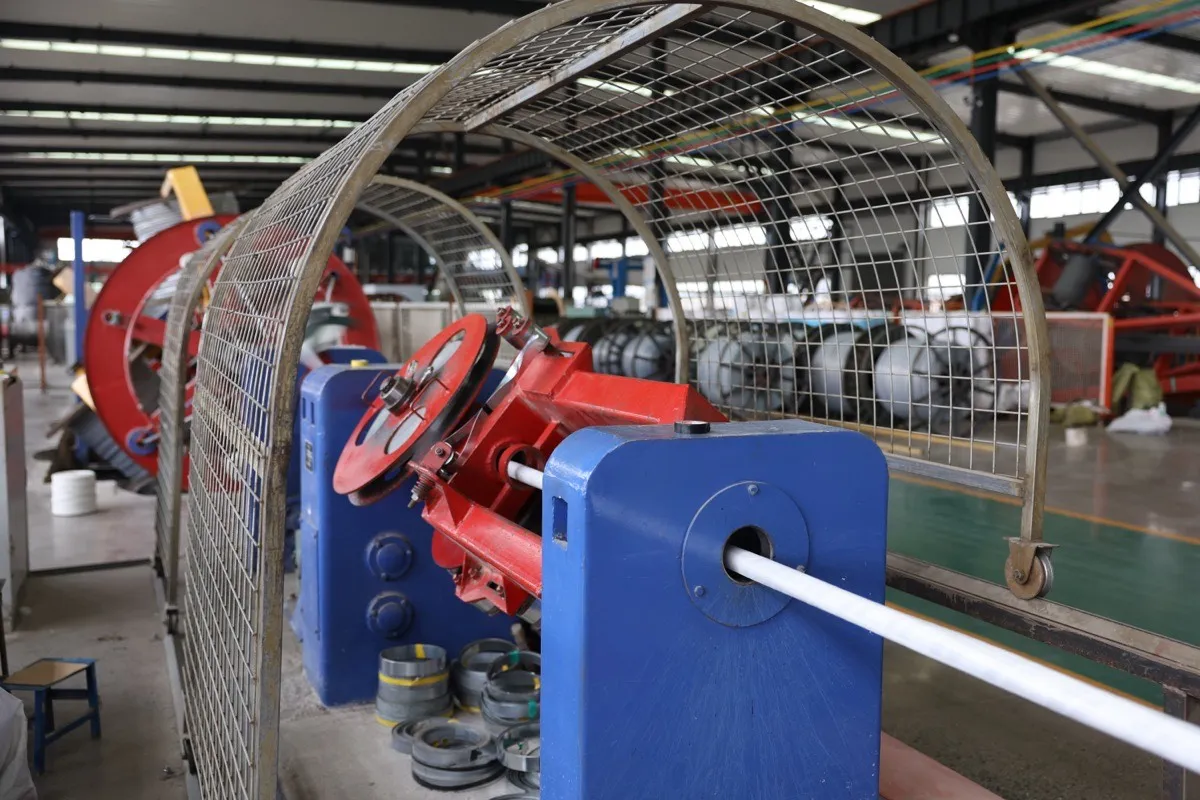
Ask for photos or video of these specific production steps. A factory that only makes polymer cable and resells BTTZ from another source cannot show you this equipment.
2. MgO Quality Control
MgO insulation quality is critical. Key checks:
- Moisture content of incoming MgO powder (must be extremely low — measured by Karl Fischer titration or loss-on-ignition test)
- Insulation resistance of every finished drum (must exceed 100 MΩ at 500 V DC)
- High-voltage withstand test per IEC 60702-1
Ask the manufacturer what their incoming MgO moisture specification is, and how they test it. A genuine BTTZ manufacturer will have a clear answer.
3. Sheath Concentricity and Wall Thickness
The copper sheath must maintain minimum wall thickness around its entire circumference after drawing. Eccentric (off-centre) conductors mean thin spots in the sheath that can crack during bending.
Quality manufacturers use:
- X-ray or ultrasonic measurement during production to verify concentricity
- Minimum wall thickness verification per IEC 60702-1 requirements
- Bend test samples from each production batch
4. Seal Quality for Export Shipment
BTTZ shipped by sea faces humidity risk during ocean transit. Verify:
- Every drum end has factory-sealed brass end caps
- Additional moisture barrier wrapping for sea freight
- Silica gel desiccant packs inside drum wrapping
- Wooden drum construction rated for ocean container transport
5. Termination Kit Supply
A complete BTTZ order should include matching termination kits. Verify the manufacturer can supply:
- Correct gland size for each cable OD
- Pot seals or cold-shrink terminations as specified
- Installation instructions and recommended torque values
- Spare seals (budget 10–15% spares for installation wastage)
BTTZ vs Flexible Mineral Cable (BBTRZ / BTTRZ / YTTW)
Chinese manufacturers also offer "flexible mineral insulated cable" variants. These are NOT the same as rigid BTTZ:
| Property | BTTZ (Rigid) | BBTRZ / BTTRZ (Flexible) |
|---|---|---|
| Insulation | Compressed MgO powder | Mica tape + mineral compound wrap |
| Sheath | Seamless copper tube | Copper tape wrap or corrugated copper |
| Flexibility | Rigid — single bend | Flexible — can be routed like polymer cable |
| Fire duration | Unlimited | Typically 180 min (some claim unlimited) |
| Moisture seal | Hermetic | Not hermetic — relies on outer sheath |
| Standard | IEC 60702-1 / GB/T 13033 | Various China enterprise standards |
| International recognition | Fully recognized worldwide | Limited recognition outside China |
| BS 6387 CWZ | Passes | Typically does not pass water spray (W) test |
Important for export projects: If your specification references IEC 60702-1, BS EN 60702-1, or BS 6387 CWZ, you need rigid BTTZ — not flexible BBTRZ. Flexible mineral cable may satisfy Chinese domestic codes (GB/T 34926) but is not equivalent to IEC 60702-1 MICC.
Clarify this with your manufacturer during quotation. If they offer "BTTZ" but describe it as "flexible" or "easy to bend," they are likely quoting BBTRZ/BTTRZ, which is a different product.
Frequently Asked Questions
What is the difference between BTTZ and MICC?
They are the same product. BTTZ is the Chinese designation (per GB/T 13033). MICC (Mineral Insulated Copper Clad) is the international/British designation (per BS EN 60702-1 / IEC 60702-1). The construction is identical: solid copper conductor, compressed MgO insulation, seamless copper sheath.
Can BTTZ cable be used outdoors?
Yes. The copper sheath provides complete protection against UV, moisture, and chemical exposure. BTTZ is one of the few cable types suitable for direct exposure to weather without any additional protection. However, bare copper will oxidise (turn green) over time — this does not affect performance but can be addressed with PVC over-sheath if aesthetics matter.
What is the maximum operating temperature?
250°C at the copper sheath for continuous operation. This is far above any polymer-insulated cable (maximum 90°C for XLPE). In practice, this high temperature rating means BTTZ can carry higher current density for a given conductor size — potentially allowing smaller cable sizes for the same circuit.
Is BTTZ cable suitable for direct burial?
The copper sheath provides mechanical protection and moisture barrier suitable for direct burial in many soil conditions. However, in aggressive soils (acidic, high chloride content), the copper sheath can corrode over decades. For aggressive soil conditions, specify PVC over-sheath (BTTZ with LSF or PVC outer covering).
What happens if the seal fails and moisture enters?
MgO is hygroscopic — it absorbs moisture from air. Wet MgO has drastically reduced insulation resistance (from over 100 MΩ to potentially less than 1 MΩ). The cable will fail megger testing and cannot carry current safely until dried out. Drying is possible (by heating the cable with low current) but is time-consuming and may not fully restore performance. This is why proper sealing during and after installation is critical.
How long does a BTTZ cable actually last?
In practice, 50+ years is proven — many buildings from the 1960s and 1970s still have functioning original BTTZ installations. The cable has no organic degradation mechanism (no polymer to age, crack, or become brittle). Lifespan is limited only by external corrosion of the copper sheath, which in indoor protected environments is effectively indefinite.
Related Fire-Rated Cable Guides
- IEC 60331 Fire Resistant Cable: Specification & Testing Guide
- Fire Resistant Cable Specifications & Standards Guide
- How to Import Cable from China: 7-Step Buyer's Guide
Order BTTZ Cable — Factory Direct from China
We manufacture rigid BTTZ mineral insulated cable per IEC 60702-1 / GB/T 13033. Our BTTZ production includes dedicated MgO processing, tube drawing lines, and moisture-controlled storage.
What to include in your inquiry:
- Cable schedule: conductor size, number of cores, quantity per size (meters)
- Voltage rating: 500 V (light duty) or 750 V / 1000 V (heavy duty)
- Outer finish: bare copper or PVC/LSF over-sheath
- Termination kits: type (cold-shrink or pot seal) and quantity
- Destination port and shipping terms (FOB/CIF)
- Required test reports and certifications
What you receive with quotation:
- Unit price per meter (based on current LME copper price)
- Technical datasheet with outer diameter, weight, and current ratings
- Applicable type test report references
- Lead time and production schedule
- Termination kit pricing and availability
For projects where rigid BTTZ is specified alongside flexible fire resistant cables (NH-YJV, WDZN-YJY), we can supply the complete fire cable package from one factory — simplifying procurement and ensuring consistent quality documentation.
For more on flexible fire resistant cable options in our range, see:
- Fire Resistant Cable Manufacturer Guide
- LSZH Cable: Sizes, Specifications & Sourcing Guide