Key Takeaway
Source fire resistant cable direct from China manufacturer. NH-YJV, BTTZ mineral insulated, LSZH fire cable. IEC 60331 certified, KEMA tested. Factory pricing for bulk orders.
When a fire breaks out in a building or tunnel, every second the emergency circuit stays alive matters. Fire resistant cables maintain circuit integrity for 90–180 minutes under direct flame at 830°C — keeping fire alarms, emergency lighting, smoke extraction fans, and sprinkler pumps running while occupants evacuate.
This guide covers what to look for when sourcing fire resistant cables from a China manufacturer: product types, IEC testing standards, the critical difference between fire resistance and flame retardancy, pricing factors, production capacity, and how to verify you are buying from an actual factory rather than a trading company.
What Makes a Cable "Fire Resistant" — The IEC 60331 Standard
Fire resistance is not the same as flame retardancy. A flame retardant cable (IEC 60332) limits fire spread along the cable. A fire resistant cable (IEC 60331) continues to carry current while engulfed in flame.
The IEC 60331 series defines how this is tested:
| Standard | Scope | Test Condition |
|---|---|---|
| IEC 60331-1 | Cables ≤ 0.6/1 kV, diameter > 20mm | 830°C flame + mechanical shock, 90 min |
| IEC 60331-2 | Cables ≤ 0.6/1 kV, diameter ≤ 20mm | 830°C flame + mechanical shock, 90 min |
| IEC 60331-3 | Small cables in metal enclosure | 830°C flame + shock in enclosure |
| IEC 60331-21 | General test procedure for power cables | 830°C ± 40°C, circuit integrity verified |
| IEC 60331-23 | Data/signal cables | 830°C, signal transmission maintained |
The key requirement: the cable must maintain electrical continuity throughout the entire fire exposure period. The circuit must not trip, short, or lose voltage.
How Fire Resistance is Achieved
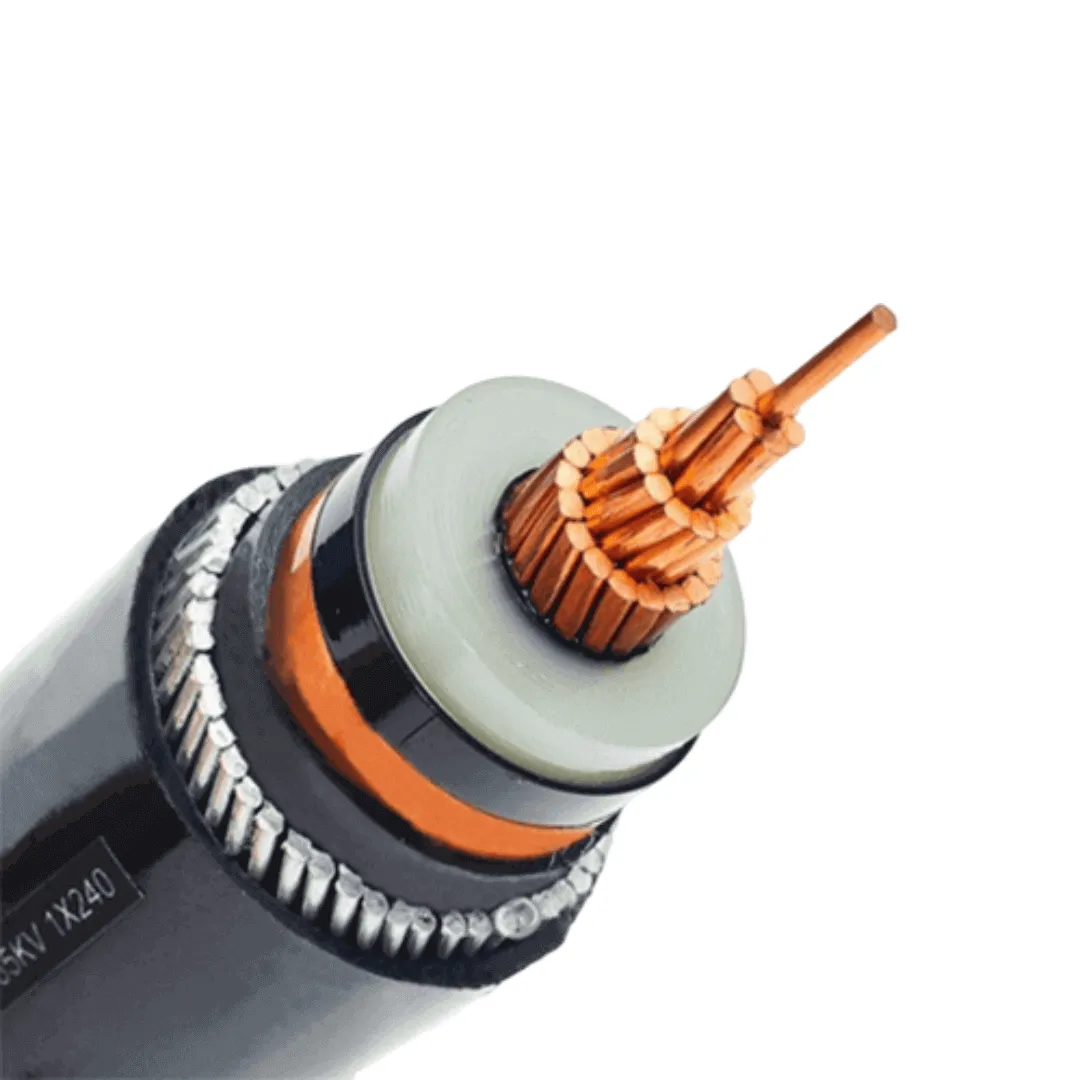
The critical component is the mica tape barrier wrapped around each conductor. Mica (muscovite or phlogopite) withstands temperatures above 1000°C without melting or decomposing. When the outer sheath and insulation burn away, the mica layer remains intact, keeping conductors electrically isolated and functional.
Different cable constructions achieve fire resistance through different approaches:
- NH-YJV / WDZN-YJY: XLPE insulation with mica tape wrap under insulation. Cost-effective for 90 min fire resistance at 0.6/1 kV.
- BTTZ / MICC (Mineral Insulated): Copper conductors inside compressed magnesium oxide powder inside seamless copper sheath. Inherently fire resistant — the construction itself withstands fire without any organic material.
- Silicone Rubber Fire Cable: Silicone insulation with mica tape forms a ceramic-like residue when burned, maintaining circuit integrity.
Fire Resistant vs Flame Retardant — Critical Buyer Distinction
Many procurement teams confuse these two ratings. They are fundamentally different and specifying the wrong one can be a life-safety failure:
| Property | Fire Resistant (IEC 60331) | Flame Retardant (IEC 60332) |
|---|---|---|
| Purpose | Keep circuit alive during fire | Stop fire from spreading along cable |
| Test method | Cable energized, 830°C flame applied, must maintain continuity | Cable de-energized, flame applied, measure burn distance |
| Result | Circuit still works after 90 min in fire | Fire does not spread beyond specified distance |
| Construction | Requires mica tape barrier around each conductor | Standard insulation + FR sheath is sufficient |
| Cost | Higher (mica tape material + specialized wrapping process) | Lower (standard FR compound materials) |
| Typical use | Emergency circuits that must operate during fire | General circuits where fire propagation must be limited |
Critical point: A cable can be flame retardant but NOT fire resistant. It will not spread fire, but its circuit will fail within minutes of fire exposure. For emergency systems, flame retardancy alone is insufficient — you need fire resistance (IEC 60331).
Conversely, all our fire resistant cables also pass IEC 60332-3 Category A (flame retardant, bundled installation). They provide both properties.
Chinese designation decoder:
- ZR- = Flame retardant only (阻燃). Example: ZR-YJV
- NH- = Fire resistant (耐火). Example: NH-YJV
- WDZN- = Low-smoke halogen-free + fire resistant (无卤低烟耐火). Example: WDZN-YJY
- WDZ- = Low-smoke halogen-free + flame retardant only (无卤低烟阻燃). Example: WDZ-YJY
When your specification says "fire rated cable" or "fire survival cable," you need the NH- or WDZN- variant, not just ZR-.
Fire Resistant Cable Types We Manufacture
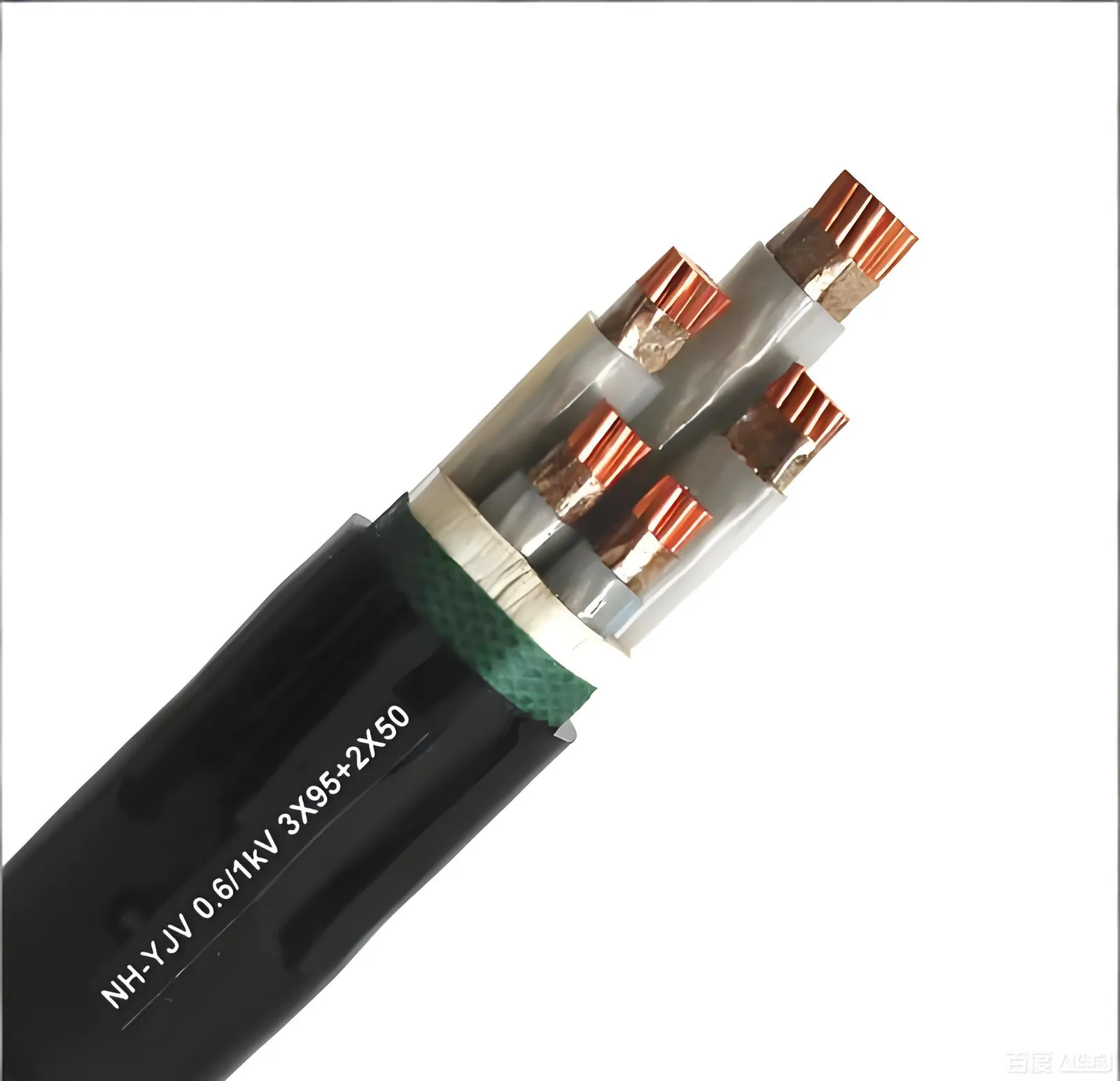
NH-YJV — XLPE Insulated Fire Resistant Power Cable
The most commonly specified fire resistant cable in commercial and industrial buildings. "NH" prefix (耐火) in Chinese standard designation indicates fire resistant rating per GB/T 19666.
Construction:
- Conductor: Stranded copper, Class 2 per IEC 60228
- Fire barrier: Synthetic mica tape (phlogopite glass-backed), minimum 2 layers with ≥40% overlap
- Insulation: XLPE (cross-linked polyethylene), 90°C continuous rated
- Sheath: PVC (flame retardant grade per IEC 60332-1)
- Voltage: 0.6/1 kV
Available specifications:
- Single core: 1.5 mm² to 400 mm²
- Multi-core: 2, 3, 3+1, 4, 4+1, 5 cores
- Cross-sections for multi-core: 1.5 mm² to 300 mm²
- Armoured variants: NH-YJV22 (steel tape), NH-YJV23 (steel tape + PE outer sheath)
Detailed dimensional datasheets (outer diameter, weight per km, current ratings) provided upon request for your specific cable schedule. Dimensions vary by core configuration and manufacturer tolerance per GB/T 12706.
Fire performance: IEC 60331-1/-2, maintains circuit integrity for ≥ 90 minutes at 830°C with mechanical shock applied during test.
LSZH variant (WDZN-YJY): Same fire-resistant construction with halogen-free polyolefin sheath instead of PVC. Required in enclosed public spaces — metro stations, airports, hospitals. Passes additional requirements:
- IEC 60754-1: halogen acid gas emission < 0.5%
- IEC 60754-2: pH ≥ 4.3, conductivity ≤ 10 µS/mm
- IEC 61034: smoke density — light transmittance ≥ 60%
For a detailed guide on LSZH cable specifications and sizing, see our LSZH Cable: Sizes, Specifications & Sourcing Guide.
BTTZ — Mineral Insulated Copper Cable (MICC)
BTTZ (copper conductor, copper sheath, magnesium oxide insulated) is the premium fire resistant cable. Unlike mica-tape cables that achieve fire resistance through an added barrier, BTTZ's entire construction is inherently inorganic and non-combustible.
Construction:
- Conductor: Solid or compacted copper rod
- Insulation: Compressed anhydrous magnesium oxide (MgO) powder
- Sheath: Seamless drawn copper tube (outer protection)
Key properties:
- Service temperature: -40°C to +250°C continuous (copper sheath limit)
- Fire survival: Unlimited duration — no organic material exists to burn or degrade
- Voltage rating: 750 V (light duty) or 0.6/1 kV (heavy duty)
- Waterproof: Copper sheath provides complete hermetic seal
- Expected lifespan: 50+ years (no organic degradation mechanism)
Available configurations:
| Designation | Cores | Cross-section Range |
|---|---|---|
| BTTZ | 1 core | 2.5 – 400 mm² |
| BTTZ | 2 core | 2.5 – 25 mm² |
| BTTZ | 3 core | 2.5 – 25 mm² |
| BTTZ | 4 core | 2.5 – 25 mm² |
| BTTZ | 7 core | 1.5 – 6 mm² |
Limitations to consider:
- Rigid construction — cannot be bent repeatedly after installation
- Requires trained installers and specialized termination kits (cold-shrink or epoxy seal)
- Higher cost per meter than NH-YJV (justified for critical circuits requiring unlimited fire survival)
- Minimum bend radius larger than polymer-insulated cables of equivalent size
Silicone Rubber Fire Resistant Cable
Silicone insulation combined with mica tape provides fire resistance through a different mechanism: when exposed to fire, silicone rubber converts to silicon dioxide (a ceramic), forming a rigid insulating shell around conductors.
Typical applications:
- Emergency lighting circuits
- Fire alarm signal loops
- Smoke detector wiring
- Ships and offshore platforms (excellent flexibility and vibration resistance)
Available sizes: 1.5 mm² to 25 mm², 2–7 cores. More flexible and easier to install than BTTZ, making it popular for retrofit fire alarm installations where tight routing is required.
Fire Resistant Cable Pricing — What Drives the Cost
Fire resistant cable costs more than standard power cable of the same cross-section. The premium comes from mica tape material and additional manufacturing steps. Here is what determines the price you receive in a quotation:
1. Copper Conductor Cost (60–70% of total cable cost)
Copper is the dominant cost driver. Cable pricing tracks the LME (London Metal Exchange) copper settlement price directly. This means cable prices change weekly or even daily.
How conductor cost is calculated:
- Copper weight per km = number of cores × cross-section (mm²) × copper density (8.89 kg/dm³) ÷ 1000
- Example: 4×25 mm² = 4 × 25 × 8.89 / 1000 = 0.889 tonnes copper per km
- At current LME copper price, multiply by the day's settlement price to get raw material cost
We do not publish fixed prices because copper fluctuates daily. Every quotation is calculated based on the copper price on the date of order confirmation. Request a quote with your cable schedule for current pricing.
2. Mica Tape Premium Over Standard Cable
Synthetic mica tape (phlogopite paper backed with glass cloth) is the material that provides fire resistance. It adds cost above equivalent non-fire-rated cable:
- Typical premium: 15–25% above equivalent YJV (non-fire-resistant) cable of the same size
- Two-layer mica wrap with 50% overlap is standard for 90-minute rating
- Mica tape quality directly affects fire test pass rate — this is not a component to source cheaply
3. Sheath Material Selection
- PVC sheath (NH-YJV): Standard, lower cost
- LSZH sheath (WDZN-YJY): Halogen-free compound costs more than PVC. Adds approximately 15–25% premium on the finished cable compared to PVC sheath version. Processing is more demanding — LSZH has a narrower extrusion temperature window and higher scrap rate.
4. Cable Size and Order Volume
- Larger cross-sections: lower price per kg of copper content (faster production, better material utilization)
- Minimum order: typically 1 km per size for standard specifications, 3–5 km for custom configurations
- Full container (20GP holds approximately 18–22 tons of cable) optimizes freight cost per kg
5. Testing and Certification Costs
- Routine test per IEC 60502-1 (every production drum): included in unit price
- Type test reports (IEC 60331 fire resistance): available from our test archive, no additional charge for standard products
- Third-party witness testing (SGS, Bureau Veritas, Intertek): additional cost per inspection visit, typically arranged for orders requiring independent verification
Factory Capacity & Production Process
Manufacturing Sequence for Fire Resistant Cable
Our fire resistant cable production follows this sequence:
- Wire drawing: 8 mm copper rod drawn down to target conductor wire diameter
- Stranding: Individual wires stranded to Class 2 configuration per IEC 60228
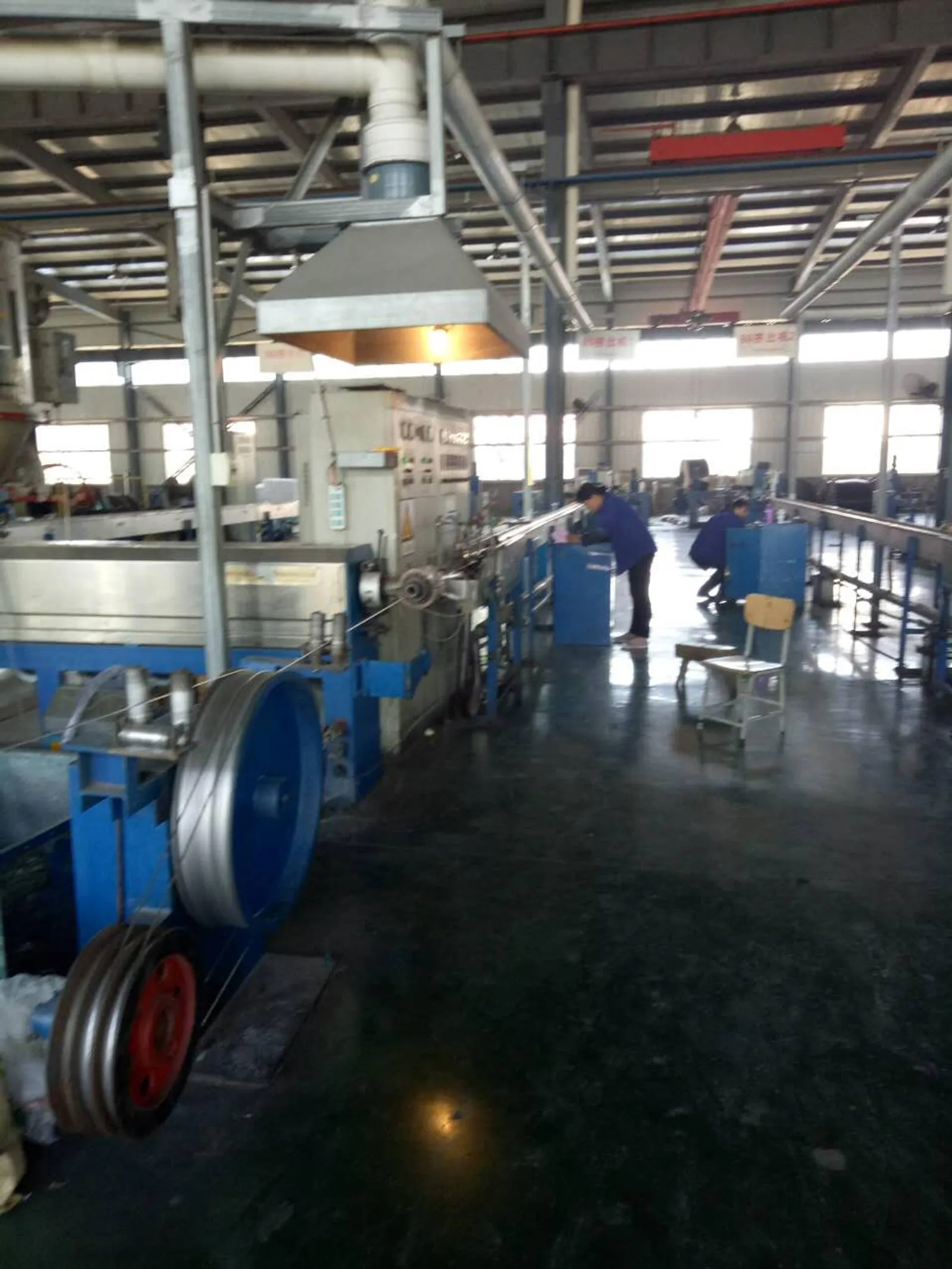
- Mica taping: Dedicated mica tape wrapping machine applies 2–3 layers at controlled tension with minimum 40–50% overlap per layer
- Insulation extrusion: XLPE cross-linking via CCV (Catenary Continuous Vulcanization) line
- Cabling: Multi-core lay-up with filler and binding tape
- Sheathing: PVC or LSZH compound extrusion
- Routine testing: Every drum undergoes electrical testing per IEC 60502-1 — voltage withstand (3.5 kV for 5 min), insulation resistance (≥100 MΩ·km at 20°C), conductor resistance verification
Quality Control at the Mica Taping Stage
The mica tape wrapping step is where fire resistance is won or lost:
- Tape tension monitoring: Too loose creates gaps that cause failure under fire. Too tight causes tape fracture during cable bending.
- Overlap verification: Minimum 40% overlap per layer is mandatory. Optical sensors on wrapping machines provide real-time overlap measurement.
- Sample fire testing: Production batches undergo in-house 830°C flame testing replicating IEC 60331 conditions before shipment clearance. Any batch failing internal fire test is scrapped.
- Mica tape incoming inspection: Each incoming mica tape batch is tested for tensile strength, dielectric breakdown voltage, and high-temperature integrity before release to production floor.
How to Verify a Real Factory vs Trading Company
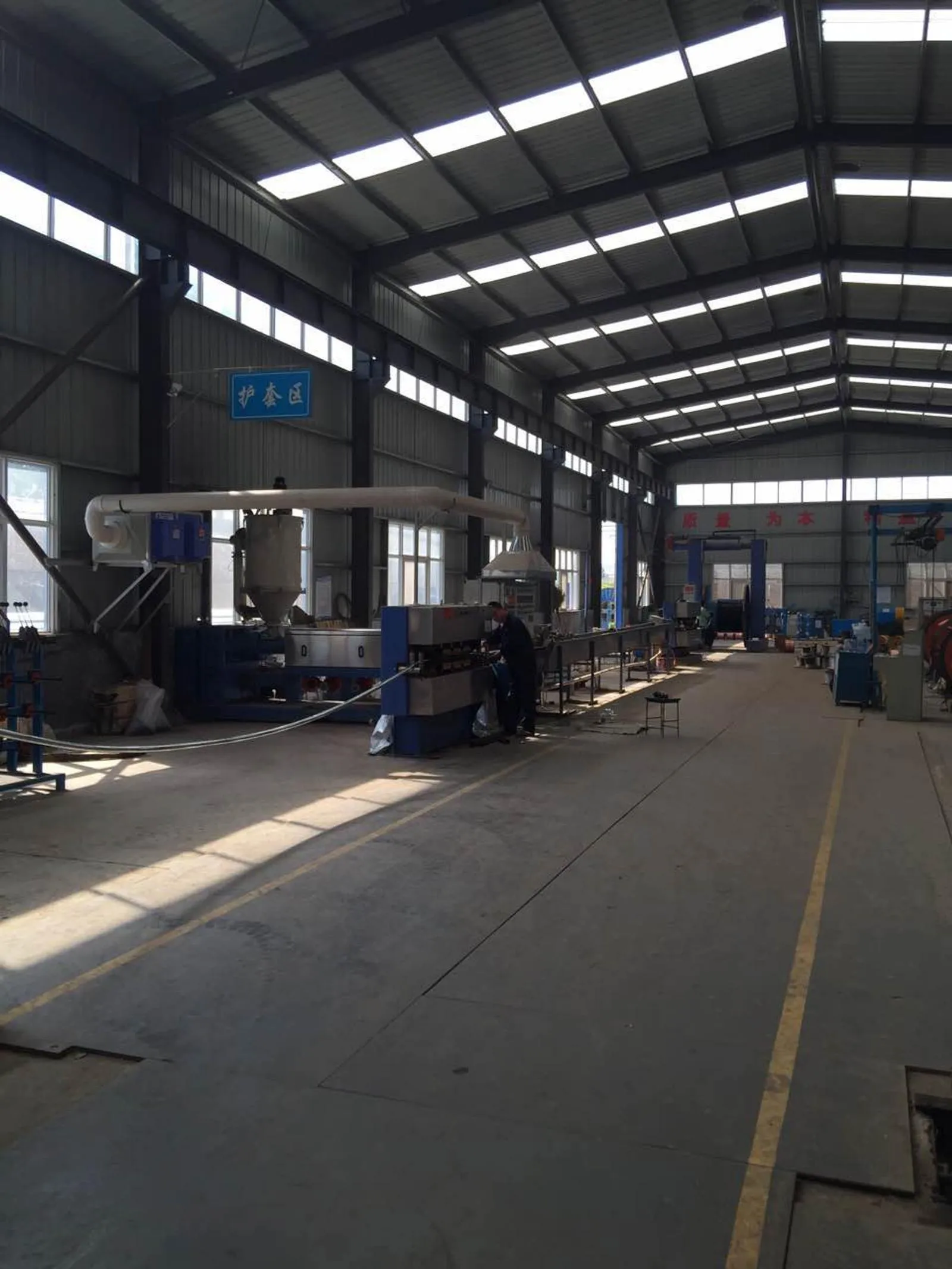
The Chinese cable market has thousands of trading companies listing "factory direct" on Alibaba and Made-in-China. Here is how to distinguish a real manufacturer from a reseller:
1. Request Type Test Reports in Their Own Name
A genuine manufacturer will have IEC 60331 type test reports issued by accredited laboratories (KEMA/DNV, CESI, CQC, or national labs). The report must show:
- The manufacturer's name and actual factory address
- Cable construction details matching what you are ordering
- Test duration (90 min minimum) and flame temperature (830°C)
- Clear PASS result with recent test date
Trading companies cannot provide original type test reports bearing their own name — they may offer copies of their supplier's reports, which means you have no direct quality relationship.
2. Ask to See Mica Tape Wrapping Equipment
This is the specific distinguishing equipment for fire resistant cable production. Not every cable factory has it. A genuine fire resistant cable manufacturer can show you:
- Mica tape wrapping machines (multiple heads for different core sizes)
- Mica tape raw material warehouse (rolls of phlogopite/glass composite tape)
- Fire test records for the construction you are buying, either from their own furnace or from the accredited laboratory they use
3. Check Chinese Business License (营业执照)
The scope should include "电线电缆制造" (wire and cable manufacturing). A trading company will only list "销售" (sales) or "贸易" (trade). This document is publicly searchable on China's National Enterprise Credit Information System.
4. Verify Production Certifications Match Factory Address
- CCC (China Compulsory Certification): Required for fire resistant cables sold in China. The certificate specifies the factory production address — it cannot be transferred to another location.
- ISO 9001: Should reference the manufacturing facility address, not a sales office in a different city.
- KEMA/CB Scheme: International certificates reference the specific manufacturing plant.
5. Request Historical Routine Test Data
Every production drum generates a routine test report with date, operator, and measured values. A factory can provide historical routine test data showing consistent, ongoing production. A trader has no production history to show.
International Standards & Market Requirements
Fire resistant cables are specified differently depending on the destination market and local building codes:
| Market | Primary Standard | Key Test | Notes |
|---|---|---|---|
| International (IEC) | IEC 60331-1/-2/-21 | 830°C, 90 min, with mechanical shock | Most widely adopted globally |
| China (GB) | GB/T 19666 + GB/T 12706 | 830°C, 90 or 180 min | NH- prefix designation system |
| UK (BS) | BS 7846, BS 8519, BS 8491 | 830°C, 120 min + water spray + shock | BS 8491 adds water jet spray during fire — more severe than IEC |
| Australia/NZ | AS/NZS 3013 | Multiple classification levels | Defines FRL (Fire Resistance Level) — 30/60/120 min categories |
| Middle East (Gulf) | IEC 60331 (adopted directly) | Per project specification | Often 90–120 min; LSZH mandatory in most Gulf states including Oman |
Our Test Certifications
- IEC 60331-1 and IEC 60331-2 type test reports — issued by accredited third-party laboratory, covering power cables up to 0.6/1 kV
- IEC 60332-3 Category A — vertical flame spread resistance (bundled cable installation)
- IEC 60754-1/-2 and IEC 61034 — for LSZH variants (halogen content, acidity, smoke density)
- GB/T 19666 — Chinese national standard for fire resistant and flame retardant cable classification
- ISO 9001:2015 — quality management system covering manufacturing facility
- CCC (China Compulsory Certification) — for fire resistant cable product categories
All test reports are available during the quotation stage. We provide complete documentation packages meeting tender requirements for Gulf, African, and Southeast Asian utility projects, including the Philippines, as well as construction projects.
Application Scenarios — Where Fire Resistant Cable is Mandatory
Fire resistant cable is a code requirement (not optional) in these applications per most national building codes and fire safety regulations:
Emergency Power Circuits
- Fire alarm and detection systems
- Emergency lighting (escape route illumination)
- Smoke extraction and ventilation fan power supply
- Sprinkler pump and fire hydrant pump supply
- Firefighter elevator (fireman's lift) supply
- Emergency public address and voice alarm systems
- Pressurisation fan supply for stairwell smoke control
High-Rise Buildings (>32 m height or >10 floors)
Building codes in most jurisdictions (IBC, BS 5839, local fire codes) require fire resistant cables for:
- Vertical risers supplying emergency loads above 32 m height
- Circuits crossing fire compartment boundaries
- Cables routed through escape corridors and lobbies
- Circuits serving refuge floors
Tunnels and Underground Structures
- Metro and subway traction power auxiliary circuits
- Road tunnel ventilation jet fan power supply
- Tunnel emergency lighting circuits
- Underground car park smoke extraction circuits
Industrial and Oil & Gas Facilities
- Emergency shutdown (ESD) system circuits
- Fire and gas detection system wiring
- Emergency generator and UPS feeder cables
- Critical process control circuits in petrochemical plants
- Power supply to firewater pumps
How to Write a Fire Resistant Cable Specification
When writing your procurement specification or cable schedule:
- State fire duration explicitly: "Cable shall maintain circuit integrity for minimum 90 minutes when tested in accordance with IEC 60331-1" (or specify 120/180 min per project requirement)
- Specify LSZH if required: "Outer sheath shall be halogen-free per IEC 60754-1 and low-smoke per IEC 61034"
- Conductor material: Always copper — aluminium is unsuitable for fire resistant cables (aluminium melting point 660°C vs copper 1085°C; aluminium fails before the fire test completes)
- Installation condition: Note whether cable must function under mechanical shock during fire (IEC 60331 includes this requirement by default)
- Armour requirement: If direct burial or mechanical protection is needed, specify SWA (steel wire armour). Note that armour provides mechanical protection but does not contribute to fire resistance — the mica tape provides that independently.
Ordering Process — Inquiry to Delivery
Step 1: Send Your Cable Schedule
Provide:
- Cable type required (NH-YJV, WDZN-YJY, BTTZ, or silicone)
- Cross-section and number of cores for each line item
- Quantity per size (meters or km)
- Required test standards (IEC, BS, AS, or GB)
- Destination port and preferred shipping terms (FOB or CIF)
Step 2: Technical Confirmation & Quotation
We provide:
- Cable construction confirmation matching your project specification
- Applicable type test report references
- Unit pricing based on current LME copper settlement price
- Estimated lead time based on current production schedule
Step 3: Production & Quality Assurance
- Production starts after deposit (standard terms: 30% T/T advance, 70% against B/L copy)
- Third-party inspection arranged if required (buyer-nominated inspector welcome)
- Routine test reports generated for every production drum
- Production photos and progress updates available during manufacturing
Step 4: Shipping & Documentation Package
Complete export documentation includes:
- Commercial invoice and detailed packing list (with drum numbers, lengths, net/gross weights)
- Certificate of origin (for preferential tariff applications where applicable)
- Type test reports (IEC 60331, IEC 60332, IEC 60754, IEC 61034 as applicable)
- Routine test certificates (per drum — conductor resistance, insulation resistance, voltage withstand)
- Material safety data sheet (MSDS)
- Shipping marks applied per buyer specification
Delivery: FOB Shanghai/Ningbo standard. CIF to any global destination port available. Typical lead time: 15–30 days for standard sizes, 30–45 days for large volumes or custom specifications.
Frequently Asked Questions
What is the minimum order quantity for fire resistant cable?
For standard NH-YJV in common sizes (1.5–240 mm²): minimum 1 km per size per order. For BTTZ mineral insulated cable: minimum 500 m per specification. Custom configurations (non-standard core count, voltage rating, or special sheath colour): minimum 3 km. These minimums reflect production setup economics — shorter lengths are technically possible but cost per meter increases significantly.
Can you supply fire resistant cable with steel wire armour (SWA)?
Yes. NH-YJV22 (steel tape armour) and NH-YJV23 (steel tape armour + PE outer sheath for direct burial) are standard products. The fire resistant mica tape layer is applied directly to each conductor core regardless of whether the cable has external armour. Armour adds mechanical protection; mica tape provides fire resistance — they are independent functions.
What is the difference between NH-YJV and WDZN-YJY?
Both provide the same 90 min fire resistance. The difference is sheath material:
- NH-YJV: PVC sheath — standard, lower cost, suitable for industrial and outdoor use
- WDZN-YJY: LSZH sheath — halogen-free, low-smoke, required by code in enclosed public spaces (metro, airports, hospitals, shopping centres)
The "WDZ" prefix means low-smoke halogen-free (无卤低烟), and "N" means fire resistant (耐火).
Do you have KEMA or third-party fire test reports?
Yes. Our fire resistant cables hold type test reports from accredited international laboratories covering IEC 60331-1 (830°C, 90 min, with mechanical shock) for cables rated 0.6/1 kV. Reports are available for review during the quotation stage — before you commit to an order.
What is typical lead time?
- Standard sizes in production schedule: 15–25 days
- Standard sizes requiring dedicated production run: 25–35 days
- Large orders (>50 km total across sizes): 35–45 days
- BTTZ mineral insulated cable: 30–45 days (specialized production line with lower throughput)
Can the cable achieve 120 or 180 minutes fire resistance?
Yes. 120-minute and 180-minute ratings are achieved by increasing mica tape layers (3 layers for extended duration) and using higher-grade mica tape formulations. State your required duration in the specification and we will confirm the appropriate construction.
Related Fire Resistant Cable Guides
Understand the specs & standards:
- IEC 60331 and BS 6387 requirements explained
- IEC 60331 Fire Resistant Cable: Specification & Testing Guide
- Fire Resistant Cable for High-Rise & Tunnel Projects
Compare & source:
Get Factory Direct Pricing for Your Project
We are a fire resistant cable manufacturer with dedicated mica tape wrapping lines and XLPE CCV extrusion. Our in-house fire testing is batch production control, used alongside — never in place of — accredited third-party IEC 60331 type test reports. Direct supply means no trading company margin between our production line and your project site.
Send your cable schedule for a detailed quotation including:
- Unit price per meter calculated on current LME copper price
- Technical datasheet with dimensions and current ratings for each cable in your schedule
- Applicable type test reports (IEC 60331, IEC 60332, IEC 60754/61034)
- Delivery timeline to your specified port
For technical questions about fire resistant cable selection, our engineering team can review your project specification and recommend the appropriate cable type and construction.