Key Takeaway
Ten verified China SWA armoured cable suppliers compared: which SWA cable manufacturer holds real BS 5467 evidence, which publishes an MOQ, and which steel armoured cable factory takes mixed-specification orders. For project buyers in Africa, South Asia, Southeast Asia and the Middle East.
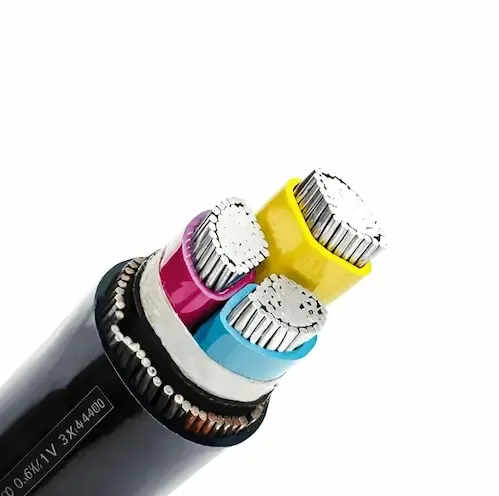
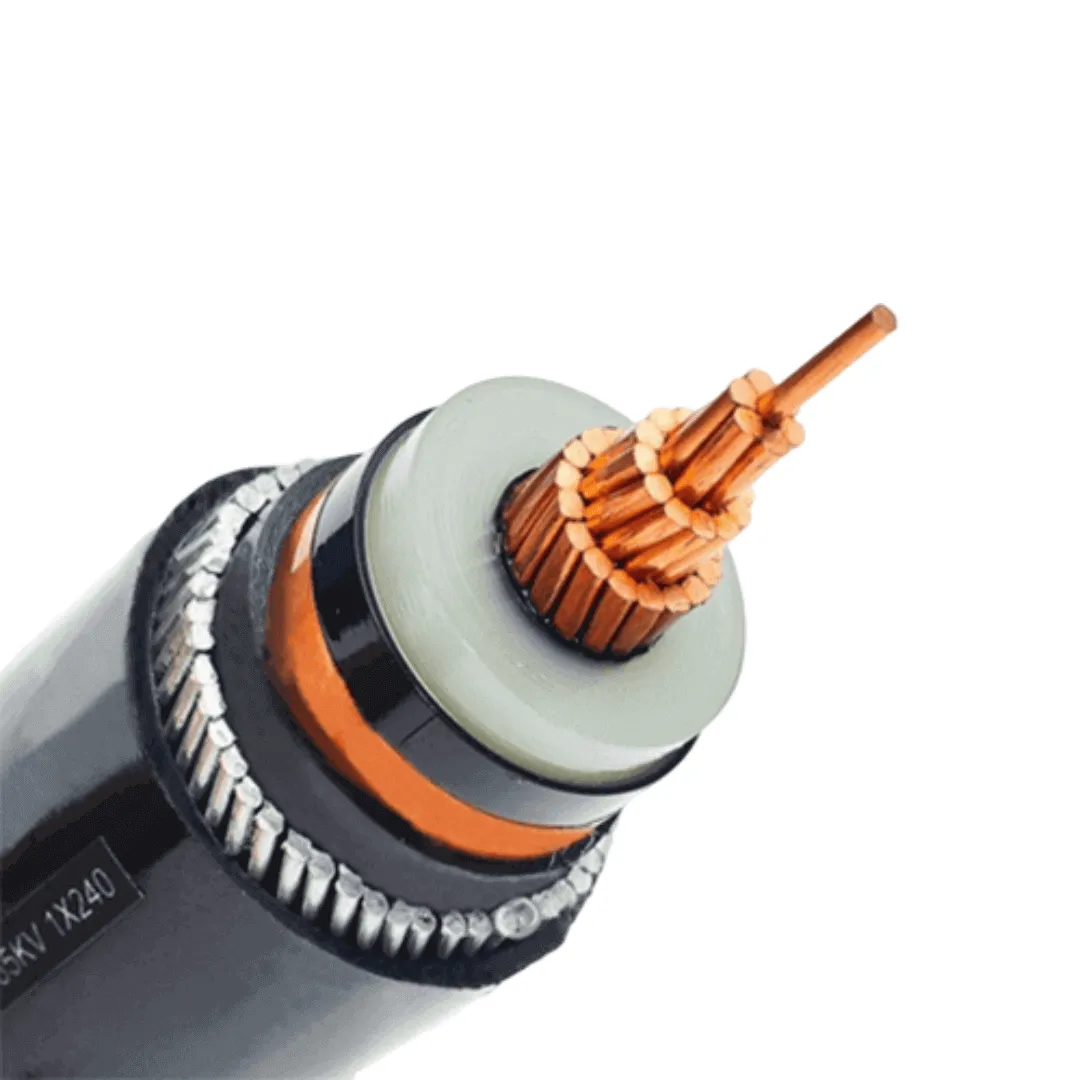
Steel wire armoured cable is the workhorse of project distribution in Africa, South Asia, the Middle East and Southeast Asia. It goes directly into the ground, takes mechanical abuse, and gets written into consultant specifications against BS 5467 or IEC 60502-1 more often than any other single construction. If you need the construction and standards background first, start with our SWA cable buyer reference; this article is the manufacturer comparison.
The problem for buyers is that searching for an SWA cable manufacturer in China returns a mix of genuine factories, trading companies with rented photos, and B2B listings quoting "US$0.1–99 per metre." This guide compares 10 real manufacturers, ranked by what matters when you actually have to place an order: armour capability, standards scope, export track record, and the order size each one is structured to handle.
Every company here has a verifiable registered entity and a published armoured cable product line. We checked business registration records, annual reports for listed companies, and manufacturer product catalogues rather than relying on marketplace listings. Where a steel armoured cable factory could not be verified, it was left out — including one well-ranked English-language "Chinese factory" website that turned out to be a trading operation.
What We Checked Before Ranking Anyone
| Criteria | What we checked |
|---|---|
| Armour capability | Whether SWA (galvanized steel wire), STA (steel tape) and AWA (aluminium wire) are a distinct product line or a single model buried inside a generic power cable listing |
| Standards scope | Published conformity to IEC 60502-1, GB/T 12706, and where genuinely held, BS 5467 / BS 6346 — separating third-party type test certificates from "we can manufacture to" capability claims |
| Voltage range | Verified against published model tables, not marketing copy |
| Export record | Overseas revenue from annual reports where the company is listed; named projects and destination-country approvals otherwise |
| Typical order profile | Whether the factory is structured for tender-scale, container-scale, or flexible mixed-load orders |
Two things we deliberately did not do. We did not rank by revenue alone, because the largest Chinese cable groups treat low-voltage SWA as a side product and will often decline small enquiries. And we did not copy MOQ or FOB figures from B2B marketplaces — the reason is explained in the next section.
What MOQ Should You Expect From a Chinese SWA Supplier?
Search for SWA cable pricing and you will find marketplace listings quoting "US$0.1–99 per metre, min. order 500 metres." A range spanning three orders of magnitude is not a quotation. It is a placeholder a trading company entered to satisfy a platform form field.
There is a real reason established factories do not publish either price or MOQ, and it is worth understanding before you send enquiries.
Why no published price. Copper is the dominant cost in SWA cable and it settles daily against the LME. Galvanized steel wire armour adds a second commodity input. Any published per-metre figure would be stale within a week, so the industry convention is quotation against specification.
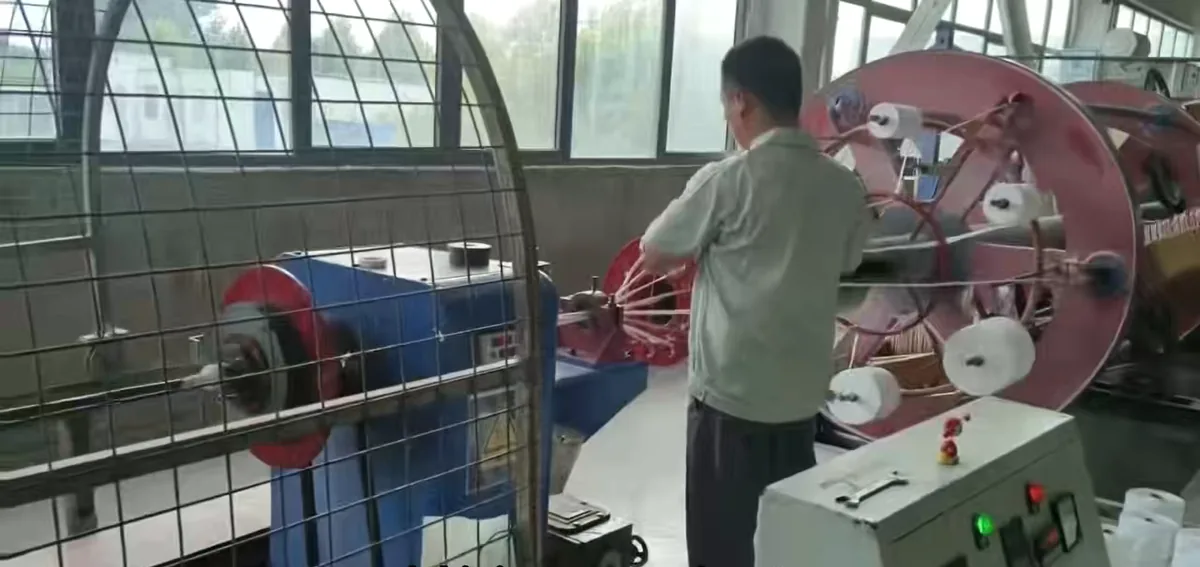
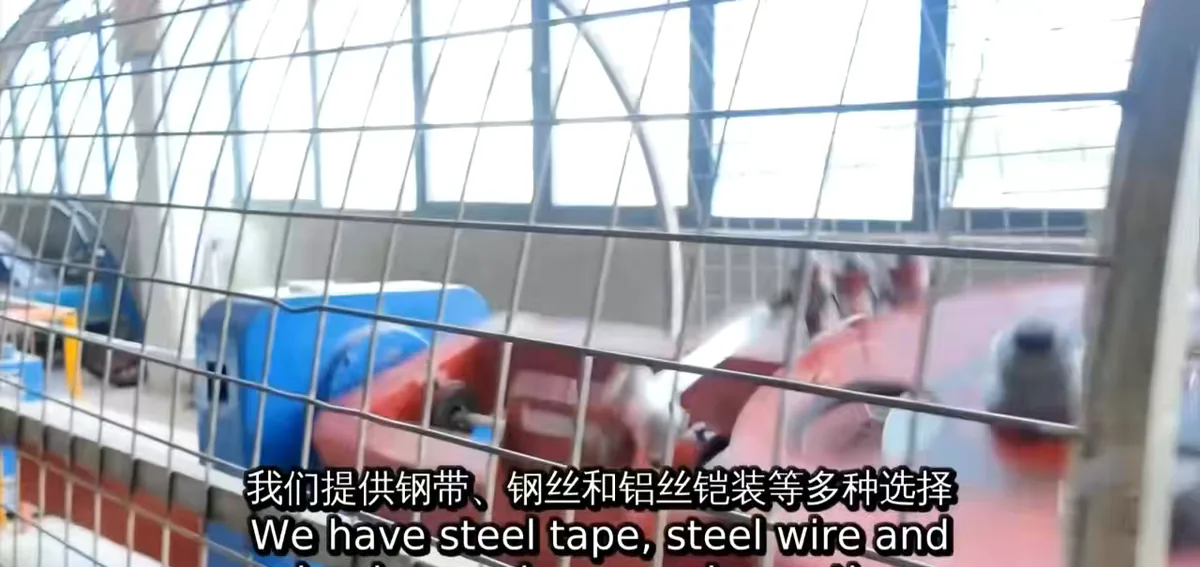
Why MOQ exists at all. This one is physical, not commercial. Steel wire armouring runs on a dedicated machine that lays galvanized wires helically around the laid-up cable core. Changing to a different wire diameter or cable outer diameter means stopping the line, swapping the armouring wire pack, and re-setting lay length and tension. That changeover is unproductive machine time regardless of how much cable follows it. So the minimum order is really the volume needed to justify one changeover — which is why very small single-specification orders carry a price penalty rather than a flat refusal.
In practice Chinese SWA suppliers fall into three order profiles:
| Order profile | What it means | Who it fits |
|---|---|---|
| Tender-scale | Structured around utility tenders and EPC contracts, usually via agents. Small enquiries often go unanswered. | Utilities, EPC main contractors |
| Container-scale | Will quote a full container of one or two specifications. | Distributors, larger projects |
| Flexible / mixed-load | Will combine several specifications in one container and quote a stated MOQ. | Project buyers, importers building stock |
When you send an enquiry, give the standard (BS 5467 or IEC 60502-1), voltage, core count and conductor size, quantity in metres, delivery term, and required test documentation. A factory that answers with a specification-linked quotation is quoting. One that answers with a per-metre figure before asking what you need is reselling.
All order profiles in the comparison table below are indicative and based on published company information and order structure — not quotations. Only one entry states a specific MOQ, because it is the only one for which we have a first-party figure.
Comparison: 10 China SWA Armoured Cable Suppliers Ranked
| # | Manufacturer | Base | Armour line | Standards on record | Export position | Typical order profile |
|---|---|---|---|---|---|---|
| 1 | Hengtong Group | Suzhou, Jiangsu (SSE 600487) | SWA and STA listed on LV and MV product pages | IEC, GB/T, SANS via African subsidiary; no BASEC certificate found | Overseas revenue 22.2%; owns Aberdare Cable (South Africa) and Aberdare Technologies (India) | Tender-scale |
| 2 | Huatong Cable | Tangshan, Hebei (SSE 605196) | Armoured SWA & AWA is a top-level product category, six dedicated product pages | Declares conformity to BS 5467, BS 6346, BS 6343, IEC 60502-1; third-party marks are UL, CSA, TÜV, CE, PSB, CRCC, CCC | Overseas 74.5% of revenue; plants in Tanzania and Cameroon; Iraq pipeline EPCC | Container-scale |
| 3 | Huanghe Cable (our plant) | Xinxiang, Henan | YJV32 / YJV72 SWA and YJV22 STA, published size and current-rating tables | Manufactured to IEC 60502-1 and GB/T 12706; BS 5467 equivalent constructions on request | Nigeria, Kenya, Philippines, Saudi Arabia, UAE, Iraq; dedicated export arm since 2016 | Flexible / mixed-load — MOQ 500–1,000 m per specification, 2,000–5,000 m for custom builds |
| 4 | Caledonian Cables | Jinan, Shandong (Chinese entity, UK-headquartered group) | Full BS-referenced armoured range including 6942X / 6943X / 6944X / 6945X | Strongest BS record in this table, including a TÜV mark referencing BS 5467; BS 6883 and BS 5308 families | Named projects: Mauritius airport, Sri Lanka airport, Angola, Chad, Singapore metro | Container-scale, specification-led |
| 5 | Jiangnan Cable | Yixing, Jiangsu | YJV22 / YJV32 / YJV33 across the LV and MV range | IEC 60502 and GB/T 12706; states capability to build to British standards, no BASEC certificate found | Exports reported at RMB 370 m for H1 2025 (municipal figure) | Tender-scale |
| 6 | Shangshang Cable | Liyang, Jiangsu | YJV32 / 33 / 42 / 43, fine and heavy wire armour, plus LSZH and fire-resistant variants | Product pages cite GB/T 12706.1, IEC 60502-1, BS 5467 and AS/NZS 5000.1 | Large domestic project base; overseas order record still thin | Tender-scale |
| 7 | Tongda Cable | Luoyang, Henan (SZSE 002560) | SWA and AWA on MV pages (6.6–33 kV), YJV32 / VV32 / VLV32 on LV, KYJV32 control | IEC and AS/NZS 1429.1 on product pages; no BS 5467 record found | States exports to 90+ countries including Africa, Middle East, Southeast Asia | Container-scale |
| 8 | Guangzhou Nanyang Cable | Guangzhou, Guangdong | YJV32 / YJLV32 SWA, YJV22 / YJLV22 STA, plus non-magnetic 62 / 72 series | GB/T 12706, YB/T 024, IEC; KEMA at EHV level; AS/NZS route, not British | Australia, India, Greece; Australian subsidiary | Tender-scale |
| 9 | Qingdao Hanhe (Hanlan) | Qingdao, Shandong (SZSE 002498) | Armour present, but weighted to steel tape and submarine wire armour rather than LV SWA | GB/T 12706, KEMA at 220 kV and 500 kV, CNAS-accredited lab, ISO, CCC | Strong in HV and submarine work | Tender-scale |
| 10 | Guangdong Jinlianyu (JENUIN) | Sanshui, Foshan, Guangdong | Armoured cable is a standalone category: multi-core SWA, single-core AWA, and steel tape constructions | Holds BASEC product certification for its LV range (certs 288/001/001 and PCR-288, covering BS 7889, BS 6004, BS EN 50525 series) and SAA for Australia. No BASEC certificate covering BS 5467 or BS 6346 armoured cable was found | SAA approval points to Australian market work; named African or South Asian projects not verified | Container-scale |
Figures are indicative and drawn from company filings, product catalogues and official announcements at the time of writing. They are not quotations. Where a company states conformity to a standard without holding a third-party type test certificate, this table says so — that distinction decides tenders, and it is explained in the certification section further down.
1. Hengtong Group — Largest Group, With a Real Commonwealth Route
Suzhou, Jiangsu · Shanghai Stock Exchange 600487
Hengtong is the largest company here by revenue (RMB 66.9 billion in 2025, 17,124 staff) and one of the few Chinese cable groups that entered the Commonwealth market by buying into it rather than exporting into it. It owns Aberdare Cable in South Africa and Aberdare Technologies in India, which is the practical reason its product pages carry SANS references alongside IEC.
On armour, the low-voltage page lists CU/XLPE/PVC/SWA/PVC and multi-core constructions with steel wire armour; MV pages carry steel wire armoured entries too. Overseas revenue is 22.2 percent of turnover, so exports are real but secondary to its domestic grid and optical-fibre business.
Consideration for buyers. No BASEC certificate was found, and the BS references on its pages are generic rather than tied to a BS 5467 type test. Hengtong is built around utility tenders and its own overseas subsidiaries, so a distributor-scale enquiry for mixed sizes usually gets routed to an agent rather than quoted by the plant.
2. Huatong Cable — Strongest Export-Led SWA Record
Tangshan, Hebei · Shanghai Stock Exchange 605196
Judged purely on published SWA evidence and export orientation, Huatong is the benchmark in this comparison. Armoured SWA & AWA is a top-level category on its English site with six dedicated product pages, each citing BS 5467, BS 6346, BS 6343 and IEC 60502-1 — an armour range presented as a business in its own right, not an afterthought.
The export figures back that up. In 2025 it reported RMB 5.44 billion overseas revenue against RMB 1.87 billion domestic, meaning 74.5 percent of turnover comes from outside China — the inverse of the usual Chinese cable-maker profile. It runs plants in Tanzania and Cameroon and supplied an EPCC crude oil pipeline project in Iraq. Total revenue RMB 7.53 billion, 3,209 staff, 459 patents.
Consideration for buyers. Its declared standards scope is wider than its certificate scope: verified third-party marks are UL, CSA, TÜV, CE, PSB, CRCC and CCC, with no BASEC certificate on record. Voltage range verified against published tables is 0.6/1 kV to 35 kV — see the SWA armoured cable construction range for how that maps onto YJV32 and YJV72. As a listed exporter working at project scale, it is set up for container and tender business rather than small mixed loads.
3. Huanghe Cable — Mixed-Load Orders With a Published MOQ
Xinxiang, Henan · our own plant
We are including ourselves at number three, and it is worth saying plainly why not number one: two companies on this list are larger, and one has a stronger British-standard certificate record. What we offer is a different thing — the order structure most project buyers and importers actually need.
The armour range is published with size and current-rating tables: YJV32 and YJV72 steel wire armoured, YJV22 steel tape armoured, copper and aluminium conductors, LSZH and fire-resistant variants — the full construction list sits on our power cable range. Cable is manufactured to IEC 60502-1 and GB/T 12706, with BS 5467 equivalent constructions available on request. Our export arm has run since 2016, shipping to Nigeria, Kenya, the Philippines, Saudi Arabia, the UAE and Iraq.
The difference is that we publish our MOQ. 500 to 1,000 metres per specification for standard constructions, 2,000 to 5,000 metres for custom builds. Every other entry above reads tender-scale or container-scale because that is how those plants are structured — none of them publish a figure. We also combine several specifications in one container, which is exactly what large plants decline, because each armour changeover costs them line time.
Consideration for buyers. We hold ISO 9001, ISO 14001, ISO 45001, CCC and CB Scheme certification. We do not hold a BASEC certificate. If your tender specifically requires BASEC-certified armoured cable, tell us at enquiry stage — we will say honestly whether we can meet it, and two companies in this comparison serve you better on that one point.
4. Caledonian Cables — Deepest British-Standard Catalogue
Jinan, Shandong · Chinese manufacturing entity within a UK-headquartered group
Caledonian has the most complete BS-referenced armoured catalogue of any manufacturer here. Its product pages run the full BS 5467 model series — 6942X, 6943X, 6944X, 6945X — alongside the BS 6883 offshore and BS 5308 instrumentation families, and its certificate page carries a TÜV mark referencing BS 5467.
The named project list is unusually specific for a Chinese-based plant: Mauritius airport, Sri Lanka airport, government buildings in Chad and Angola, Singapore metro. Those are exactly the Commonwealth-specification projects SWA gets written into.
One point of transparency, since it affects how you read this entry. The manufacturing entity is registered in Jinan, Shandong and the factory address on the UK site matches the Chinese business registration line for line, so this is a real plant rather than a rebadged trading site. But the group is UK-headquartered with a Hong Kong entity and a Shanghai office, so it is a foreign-invested structure rather than a domestic Chinese manufacturer in the same sense as the others on this list.
Consideration for buyers. Specification-led and priced accordingly. If you are buying to a British standard and the certificate matters more than the unit price, this is a strong option. If you are price-sensitive or need flexible quantities, it is not the one.
5. Jiangnan Cable — Yixing Cluster, Utility Scale
Yixing, Jiangsu · privately held
Jiangnan sits in the Guanlin cluster at Yixing, historically the densest concentration of cable capacity in China. Its published range covers YJV22, YJV32 and YJV33 across low and medium voltage, with capability up to 500 kV. Exports were reported at RMB 370 million for the first half of 2025 in a municipal government release.
One correction worth carrying, because outdated listings still repeat it: the operating entity is Wuxi Jiangnan Cable, and parent Jiangnan Group was taken private and delisted from the Hong Kong exchange in May 2023. Anyone citing a current HKEX listing for this company is working from stale data.
Consideration for buyers. Its pages state capability to build to British standards but no third-party BS certificate is on record, so treat British-standard supply as something to confirm with a type test report rather than assume. Order structure is utility and tender oriented.
6. Shangshang Cable — Broadest Steel Wire Model Range
Liyang, Jiangsu · privately held
Of the domestic manufacturers here, Shangshang has the widest published steel wire armour model range: YJV32, YJV33, YJV42 and YJV43 covering both fine and heavy wire armour, with and without inner sheath, plus aluminium-conductor YJLV32 to 43, LSZH WDZ-YJY33/43, fire-resistant series and heavy wire armoured mining cable. Its English pages cite GB/T 12706.1, IEC 60502-1, BS 5467 and AS/NZS 5000.1 together, and state Multi-core: galvanized steel tape (DSTA), or galvanized steel wire (SWA).
Consideration for buyers. The domestic project record is large but the overseas order record is thin — its own English site lists nine project categories, all within China, and its first named Malaysian order was described as a first. Certifications listed on the English site (KEMA, SASO, DEKRA) appear without certificate numbers and are absent from the Chinese site, so treat them as company statements pending documentation. Armoured constructions themselves are published at 0.6/1 kV and 1.8/3 kV.
7. Tongda Cable — Wide Export Footprint, Overhead Specialism
Luoyang, Henan · Shenzhen Stock Exchange 002560
Tongda publishes steel wire armour across the range rather than as an isolated model: CU(AL)/XLPE/CWS/SWA/PVC Three Core 6.6~33kV and single-core AWA on the MV pages, N2XRY (YJV32), VV32 and VLV32 at low voltage, and KYJV32 and KVV32 armoured control cable. Both the 22 steel tape and 32 steel wire series are present, which is what separates it from several larger groups that only build steel tape.
Its official channels state exports to more than 90 countries covering Africa, the Middle East and Southeast Asia, and it runs a four-language site with English, Spanish, French and Russian sales coverage.
Consideration for buyers. Its commercial centre of gravity is overhead conductor and railway contact wire rather than armoured distribution cable, so SWA is part of the range rather than the flagship. No BS 5467 record was found; the only British standard on the site is BS 6485 for overhead covered conductor, which is unrelated to armoured cable.
8. Guangzhou Nanyang Cable — Non-Magnetic Armour and MV Depth
Guangzhou, Guangdong · privately held, founded 2001
Nanyang's armour range is the most technically varied here. Alongside standard YJV32 and YJLV32 steel wire and YJV22 and YJLV22 steel tape, it builds the 62 and 72 series with non-magnetic copper wire and copper tape armour — the construction specified for single-core circuits where steel armour would cause eddy-current losses. That is a genuine engineering capability, not a catalogue line. Capability extends to 500 kV, and it appears in the 2025 China wire and cable top 20.
Exports verified include Australian wind projects, India and Greece, supported by an Australian subsidiary.
Consideration for buyers. Its overseas standards route is AS/NZS, not British — no BS 5467 evidence was found. Two data points also need care: the group is unrelated to the Shenzhen-listed entity that once carried the Nanyang cable name (that business left the listed group in 2020), and the revenue figure quoted on some pages is a group slogan rather than an audited plant figure. For Australian and Pacific specifications it is well placed; for BS-specified African tenders it is not the natural fit.
9. Qingdao Hanhe (Hanlan) — HV and Submarine Specialist
Qingdao, Shandong · Shenzhen Stock Exchange 002498
Worth clearing up first: Hanhe and Hanlan are the same company. The listed entity is Qingdao Hanhe Cable Co., Ltd.; Hanhe is its brand and the name of its controlling shareholder. The site title carries both.
Its credentials are the strongest at high voltage of anyone here — KEMA type tests at 220 kV and 500 kV, a CNAS-accredited laboratory, ISO 9001/14001/45001 and CCC.
Consideration for buyers. Its centre of gravity is HV and EHV land cable plus submarine cable, not low-voltage SWA. The mid- and low-voltage category lists only nine models, most without armour suffixes, and the wire armour it does build is largely submarine armour, which is a different construction from BS 5467 land SWA. Include it in your shortlist for HV or submarine work; for volume LV SWA there are better matches on this list.
10. Guangdong Jinlianyu (JENUIN) — The Only BASEC Certificate Number Here
Sanshui, Foshan, Guangdong
Jinlianyu is the only manufacturer in this comparison with a BASEC product certificate we could verify by number: 288/001/001 and PCR-288, valid to 2027, covering BS 7889, BS 6004 and the BS EN 50525 series. It also holds SAA approval for Australia. Armoured cable is a standalone category on its English site, with multi-core steel wire armoured and single-core aluminium wire armoured constructions listed.
Consideration for buyers. Read that certificate scope carefully, because it is narrower than it first appears: the BASEC certificates cover its non-armoured LV range, and no BASEC certificate covering BS 5467 or BS 6346 armoured cable was found. So it can legitimately say it holds BASEC certification, but not that its SWA is BASEC-certified. If a tender demands BASEC-certified armoured cable specifically, ask for the certificate covering the armoured construction before you commit. Named African or South Asian projects were not verified.
Common SWA Sizes Chinese Factories Stock
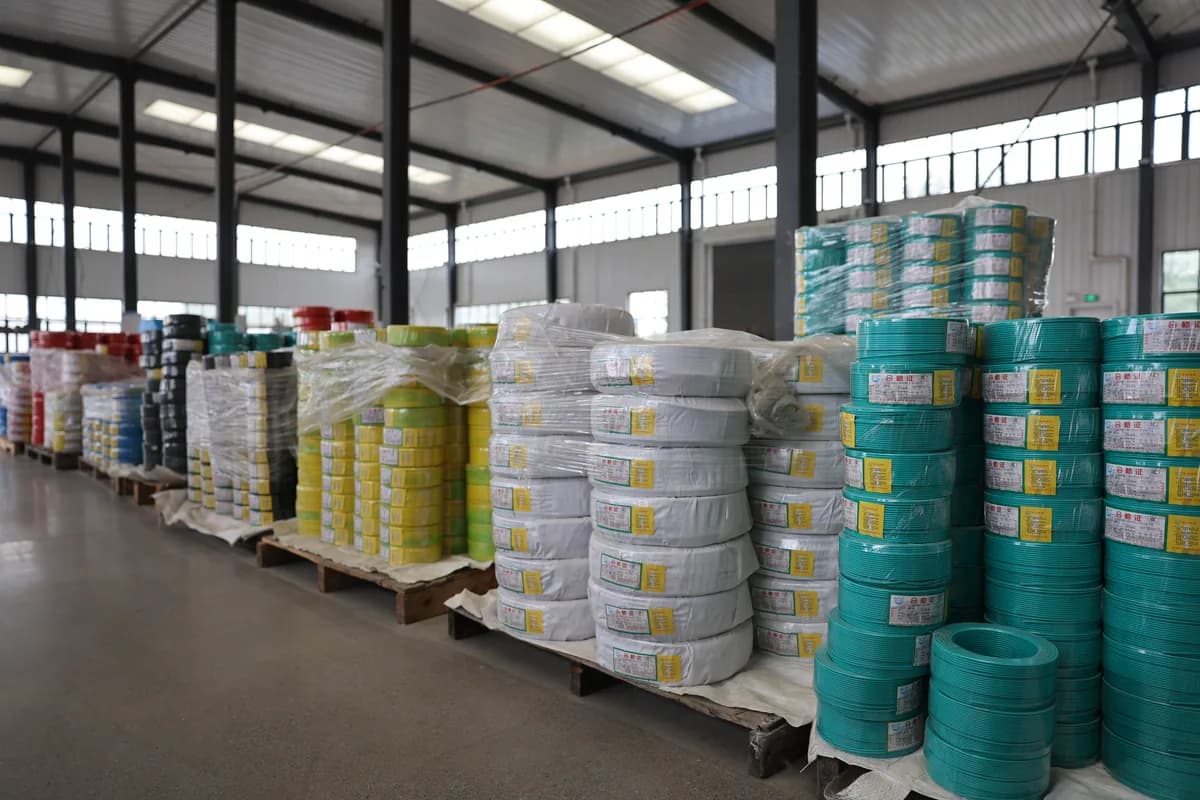
Across the ten manufacturers above, the constructions that are consistently held or produced on short cycles are a narrow set. If your requirement sits inside this band, you will get faster quotations and better pricing from any of them. Everything in this table is a standard construction for us, which is where the 500 metre minimum applies rather than the custom-build figure.
| Construction | Conductor | Typical use |
|---|---|---|
| 3 core × 4 mm² | Copper | Small submains, pump and lighting circuits |
| 4 core × 16 mm² | Copper | Distribution boards, small motor feeds |
| 4 core × 25 mm² | Copper | Building submains, direct burial |
| 4 core × 95 mm² | Copper or aluminium | Substation to building feeders |
| 3 core × 185 mm² | Aluminium | LV distribution runs, industrial plant feeders |
| 4 core × 185 mm² | Aluminium | Main incoming supply, long feeder runs |
Source: based on our own stock profile and published factory catalogues.
Anything outside this set is a made-to-order run, which is where MOQ and changeover economics start to matter. Full size, current rating and voltage drop tables are in our SWA cable sizing guide — this list is only about what factories are set up to produce quickly.
How to Check an SWA Cable Manufacturer Before You Pay
Ranking tells you who to shortlist. It does not tell you whether the specific batch shipped to you was built to specification. Four checks separate manufacturers that hold up under inspection from those that quote well and cut corners in production.
Conductor DC resistance. This is the single most useful number on a test report because it is where undersized conductors show up. IEC 60228 sets a maximum resistance per mm² at 20°C for each class of conductor. A conductor that measures above the limit is short of copper, no matter what the drum print says. Ask for the measured value against the standard limit, not a pass/fail tick.
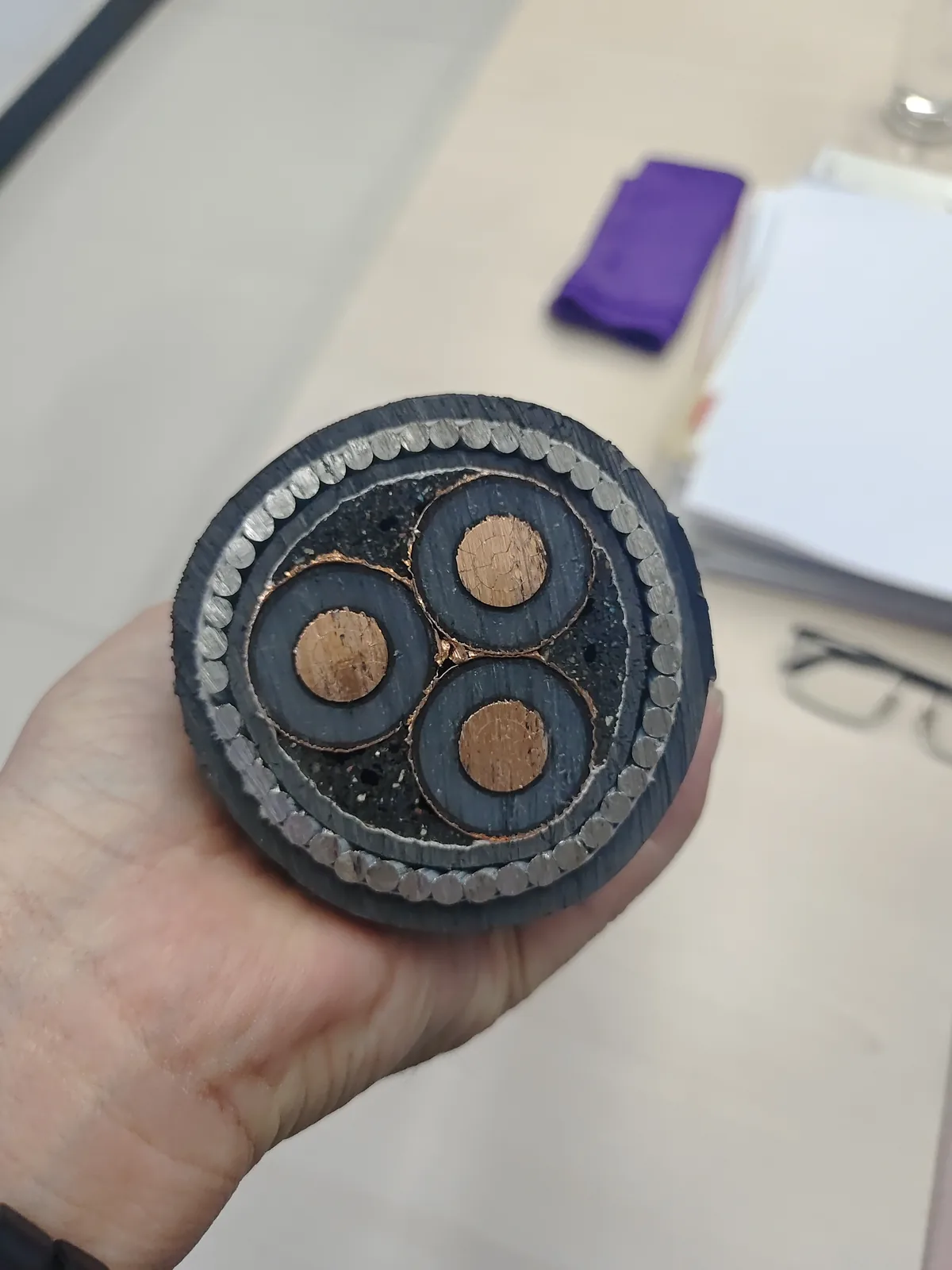
Galvanized wire armour: count, diameter and zinc coating. BS 5467 and IEC 60502-1 both fix the armour wire diameter against the cable diameter under the armour, and the wires must cover the core with a defined gap limit. Three things get quietly reduced: wire diameter, wire count, and the zinc coating mass. The first two you can count and measure on a 300 mm sample. Zinc coating needs a lab, and it is the one that determines whether the armour survives ten years in wet ground.
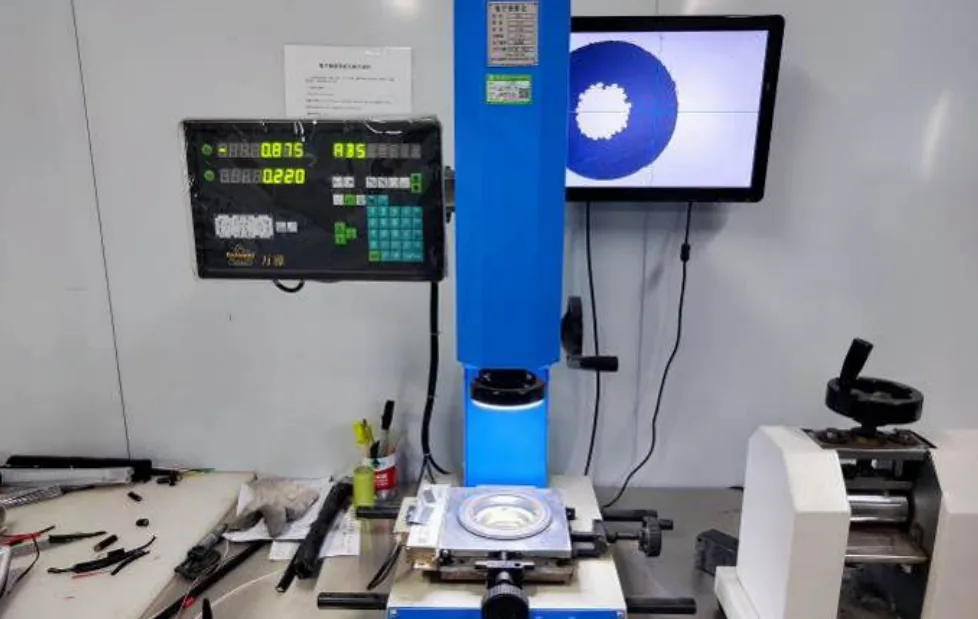
Insulation and sheath thickness. Measured at the thinnest point, not the average. Standards specify a minimum at any point plus a mean value, and a cable can pass on average while being thin somewhere along the run.
Routine test reports on your batch. Routine tests are run on 100 percent of production — conductor resistance, voltage test, insulation resistance. They are batch-specific. Type tests are design validation and can be years old. A manufacturer that sends you a type test report when you asked for routine tests on your production run is answering a different question.
If a factory hesitates on any of the four, that is your answer. Established plants produce these documents without discussion because they generate them for every batch anyway. Our own test certificates and type test reports are published for this reason — and for what to check when the cable arrives on site, see the SWA installation guide.
Which Certification Your Destination Market Actually Requires
A manufacturer's certificate list is only relevant if it covers the country your cable is landing in. Four regions dominate SWA demand and each runs a different gate, which is why a supplier that is strong for Kenya may be useless for Saudi Arabia.
| Region | Gate | What it means in practice |
|---|---|---|
| East and West Africa | KEBS (Kenya), SONCAP (Nigeria), SABS/NRCS (South Africa), TBS (Tanzania) | Pre-export verification of conformity. Inspection happens in China before loading, against the destination standard. Without the certificate the container is refused or destroyed at arrival, not held. |
| Gulf | SASO/SABER (Saudi Arabia), ESMA/ECAS (UAE) | Product registered in an online platform against a Gulf technical regulation, then a shipment certificate per consignment. Registration sits with the importer but needs manufacturer test reports. |
| South Asia | BIS (India), PSQCA (Pakistan), BSTI (Bangladesh) | India's BIS scheme requires factory registration and is the hardest gate here for a foreign plant. Many Chinese suppliers simply do not hold it. |
| Commonwealth-specification projects anywhere | BASEC or an equivalent third-party BS 5467 type test | Not a national import gate but a tender requirement. This is the one where declared conformity is routinely mistaken for certification. |
The pattern to take away: African markets check the shipment, Gulf markets check the registration, South Asia checks the factory, and Commonwealth tenders check the certificate scope. Ask which of the four applies to you before comparing suppliers, because the answer changes the shortlist. Standard-by-standard detail is in our SWA cable standards guide.
Why a Henan Plant Will Quote 500 Metres and a Jiangsu Plant Will Not
Where a plant sits matters less than what its order book forces it to do. That single difference decides whether your enquiry gets a quotation or gets handed to an agent.
The Jiangsu belt around Yixing holds the largest groups in this comparison, and they were built for domestic grid tenders — thousands of kilometres of one specification, awarded annually. A container holding four different sizes does not fit that production model, so it gets declined or passed to a trading company. That is not a criticism of those plants. It is what their lines are optimised for.
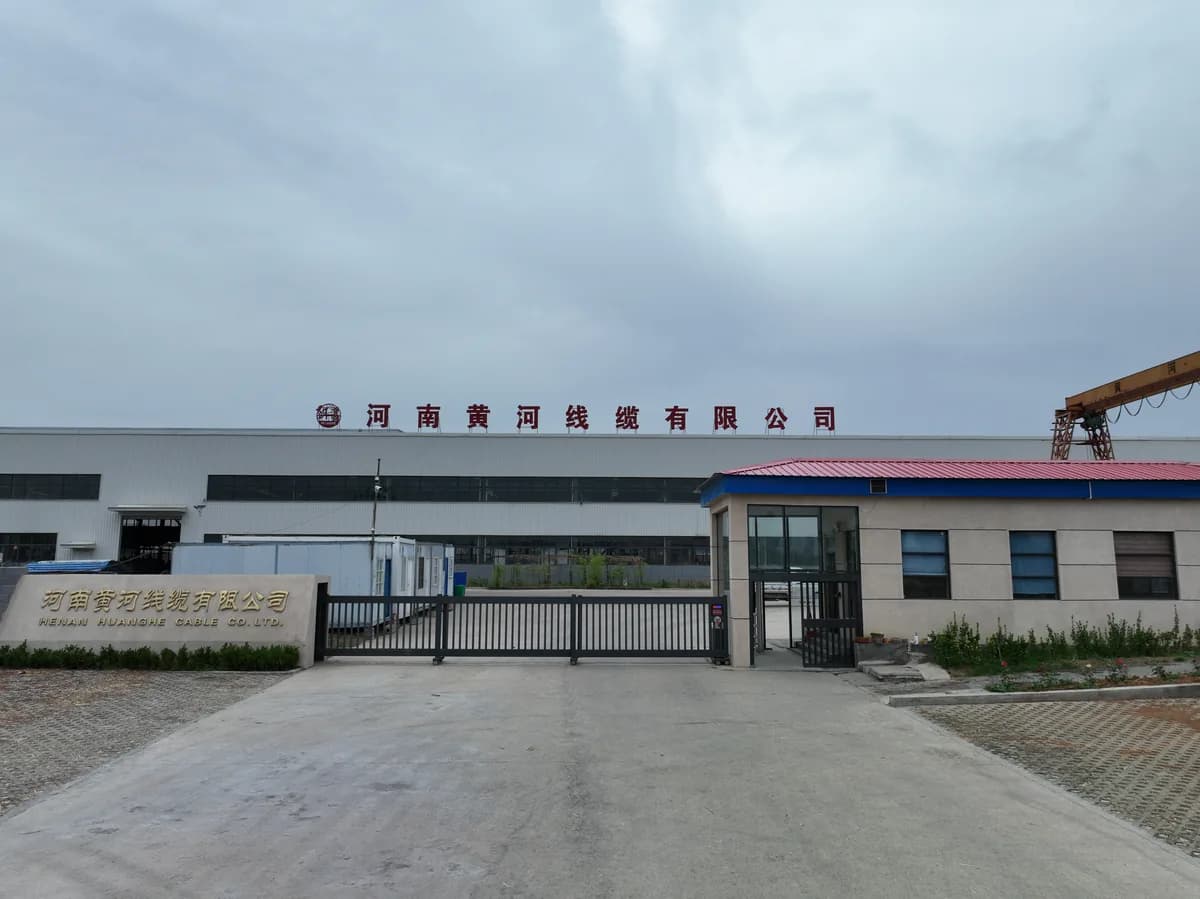
Huanghe runs on the opposite structure. Henan's cable industry grew on domestic infrastructure work rather than tender monopolies, which produced mid-sized plants that keep lines loaded by taking varied orders rather than repeat volume. Armouring, insulation and sheathing sit under one roof on a single site, so moving from 4 × 25 mm² to 3 × 185 mm² is a scheduled changeover instead of a disruption. That is the reason we publish 500 to 1,000 metres per specification and combine several constructions in one container while tender-scale plants will not — it is production structure, not a favour, and it is the one thing on this page a larger competitor cannot simply decide to match. The trade-off is an inland haul to Qingdao or Tianjin: a few days, not freight you notice at container scale.
How to Use This Ranking
The ranking is not a single order of merit, because the right supplier depends on what constrains your order.
- Tender requires BASEC or a third-party BS 5467 certificate. Start with Caledonian Cables (4) and Huatong (2). Check the certificate scope covers armoured construction, not just the LV range — that is the trap at number 10.
- Container-scale, one or two specifications, price-led. Huatong (2), Tongda (7) and Jinlianyu (10) are structured for this.
- Mixed specifications, moderate quantity, need a stated MOQ. This is the gap the large plants leave open, and it is where we sit at number 3.
- HV, EHV or submarine work. Qingdao Hanhe (9) and Hengtong (1).
- Australian or Pacific specification (AS/NZS). Guangzhou Nanyang (8) and Jinlianyu (10).
Whichever way you go, send the same specification to three of them and compare what comes back. The reply tells you more than the ranking does: a factory answers with a specification-linked quotation and asks about test documentation, while a reseller answers with a per-metre price.
Frequently Asked Questions
Who is the largest SWA cable manufacturer in China?
Hengtong Group is the largest by revenue (RMB 66.9 billion in 2025). But largest and best-suited are not the same question, and for SWA they point in different directions: at that scale armoured low-voltage cable is one line inside a catalogue built around grid infrastructure and optical fibre, and a mixed-size enquiry from a distributor rarely reaches the plant that would produce it. If what you need is a factory that quotes your specification directly, publishes its minimum order and puts several constructions in one container, that is the profile at number 3 — Huanghe, where SWA is a core export line rather than a catalogue entry.
Which Chinese manufacturers hold genuine BS 5467 certification?
Very few, and we are not one of them — worth saying plainly, because this is the claim most often overstated. Caledonian Cables holds a TÜV mark referencing BS 5467, the clearest third-party armoured evidence here. Guangdong Jinlianyu holds real BASEC certificates (288/001/001, PCR-288), but their scope covers non-armoured LV cable, not BS 5467 armoured construction — a distinction that fails tenders. Most of the rest declare conformity without holding a third-party type test certificate at all. What we do instead is verifiable per shipment: manufactured to IEC 60502-1 and GB/T 12706, BS 5467 equivalent constructions built to order, and routine test reports issued on your production batch rather than a certificate photograph from someone else's run.
Can one factory ship several SWA specifications in one container?
This is where the ten split most sharply. Tender-scale plants will not, because each change of conductor size or armour wire diameter is a line changeover, and their economics assume long single-specification runs. Huanghe is built the other way round: several constructions loaded into one container against a published per-specification minimum, with one set of test documentation covering the whole shipment. For a distributor or contractor covering a range of circuits, that is usually the difference between one shipment and four suppliers.
What MOQ do Chinese SWA cable manufacturers require?
Most will not tell you, because MOQ follows armouring line changeover economics rather than a published policy — tender-scale plants want tender volumes, container-scale plants want a full container of one or two sizes. Of the ten manufacturers compared here, Huanghe is the only one that publishes a figure: 500 to 1,000 metres per specification, 2,000 to 5,000 metres for custom builds. A supplier that states its minimum before you ask has already told you which order sizes it is built to handle.
Is it safe to buy SWA cable from a B2B marketplace listing?
The listing is not the problem; the absence of verification is. Ranges like "US$0.1–99 per metre, min. order 500 metres" are form-field placeholders, and a large share of listings belong to trading companies rather than plants. Verify the registered entity, ask for routine test reports on your batch, and confirm destination-market certification before paying a deposit — all three are things we answer in writing before an order, and any of the ten here should be held to the same test. Our guide to common scams when buying cable from China covers the specific patterns.
How do I tell a real factory from a trading company?
Ask three things a trading company cannot answer cleanly: what armour wire diameter it would use for your construction, whether it can send routine test reports from a recent batch of the same specification, and which port it loads from. A plant answers all three immediately — ours are 500 metres upward, yes, and Qingdao or Tianjin. Also check the entity name on the contract matches a manufacturing licence rather than a trading scope; one well-ranked English-language "factory" site in our research failed on exactly that check and was removed from this list.
Does SWA cable from China meet IEC 60502-1?
Established manufacturers build to IEC 60502-1 or to GB/T 12706, which is closely aligned with it. The useful question is not whether the factory can meet the standard but whether the batch shipped to you did — which is what routine test reports on your own production run demonstrate, and why we issue them per order rather than pointing at a certificate. Our standards comparison above sets out where IEC 60502-1, BS 5467 and GB/T 12706 diverge in armour and sheath requirements.
What makes prices differ between manufacturers?
Copper content dominates and settles daily against the LME, so quotations are short-dated. Beyond the metal, the variables are conductor class, armour wire diameter and zinc coating, sheath compound (PVC versus LSZH), and order size against changeover cost. That last one is why the same specification can come back cheaper from a mid-sized plant than from a much larger group: a 2,000 metre order that is routine for us is an interruption for a tender line, and the quotation reflects it. Cost drivers are broken down in our SWA cable price guide.
Request a Comparison Quote
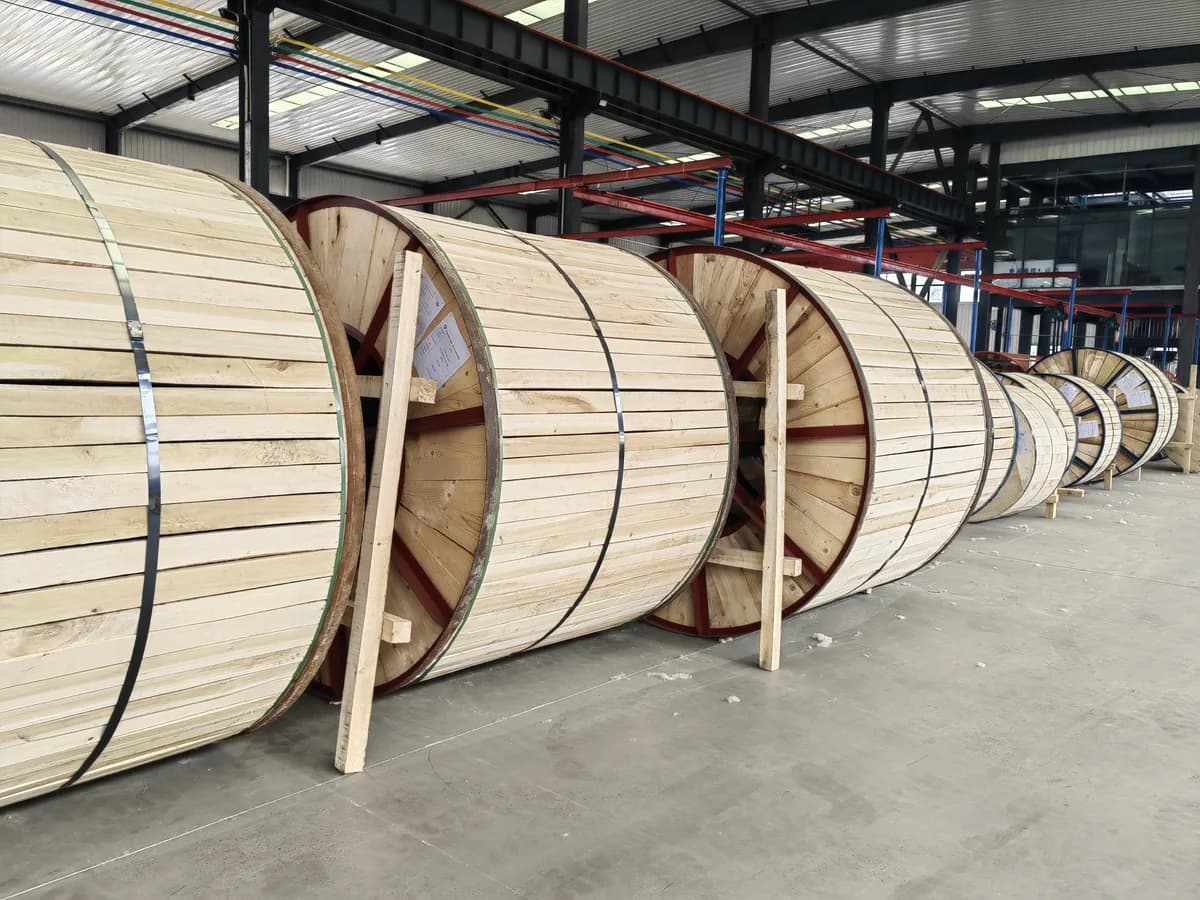
If you want a like-for-like comparison rather than a single number, send the same specification to three of the manufacturers above and include us in the set. What to put in the enquiry:
- Standard required (BS 5467, IEC 60502-1, or the destination-market standard)
- Voltage rating, core count and conductor size
- Quantity in metres per specification
- Destination port and country
- Test documentation required (routine test reports, type test, BASEC or destination certification)
We will tell you plainly where we fit and where one of the other nine serves you better — including on BASEC, where we do not hold a certificate.