Key Takeaway
Detailed comparison of Chinese and Indian cable manufacturers covering production capacity, pricing, quality standards, export logistics, and how to choose the right sourcing origin for your power cable project.
When international buyers — utilities, EPC contractors, distributors, and industrial end-users — need to source power cables, two manufacturing origins dominate the conversation: China and India. Both countries have massive cable industries, both export globally, and both can produce to IEC, BS, NFC, and other international standards.
But they are not interchangeable. The differences in industry structure, production scale, raw material access, pricing dynamics, logistics infrastructure, and quality control systems are significant enough to affect your project's cost, timeline, and long-term cable performance.
This guide provides a factual, data-driven comparison to help procurement professionals make an informed sourcing decision. We operate as a Chinese cable manufacturer (Huanghe Cable Group, Henan Province), so we are transparent about our perspective — but the comparison is grounded in verifiable industry data.
Industry Scale: China Dominates Global Production
The scale difference between China's and India's cable industries is not marginal — it is structural.
China's cable industry:
- World's largest producer and consumer of wire and cable products
- Accounts for approximately 39% of global insulated wire and cable production by volume (2024 data)
- Market size estimated at $398 billion in 2025
- Over 10,000 cable manufacturing enterprises nationwide
- Major production clusters in Jiangsu, Zhejiang, Anhui, Henan, Shandong, and Guangdong provinces
- Full vertical integration available: from copper smelting and aluminium rod production through to finished cable
India's cable industry:
- One of the world's largest markets, primarily driven by domestic demand
- Organized sector dominated by Polycab, KEI Industries, Havells, RR Kabel, and Finolex
- These top players hold approximately 50% market share among organized manufacturers
- Market size estimated at $18–22 billion
- Strong growth trajectory driven by domestic electrification and infrastructure investment
- Export-oriented production is a smaller percentage of total output compared to China
What this means for buyers:
China's industry is roughly 15–20× the size of India's cable sector. This scale translates directly into supply chain depth, equipment availability, raw material purchasing power, and the ability to handle large-volume export orders without disrupting domestic commitments.
For an international buyer placing a $500K–$5M cable order, a large Chinese manufacturer treats this as routine production. For many Indian manufacturers, a similar export order may compete with domestic demand commitments, potentially affecting lead times.
Production Capability Comparison
Equipment and Technology
Chinese cable manufacturers (mid-to-large scale):
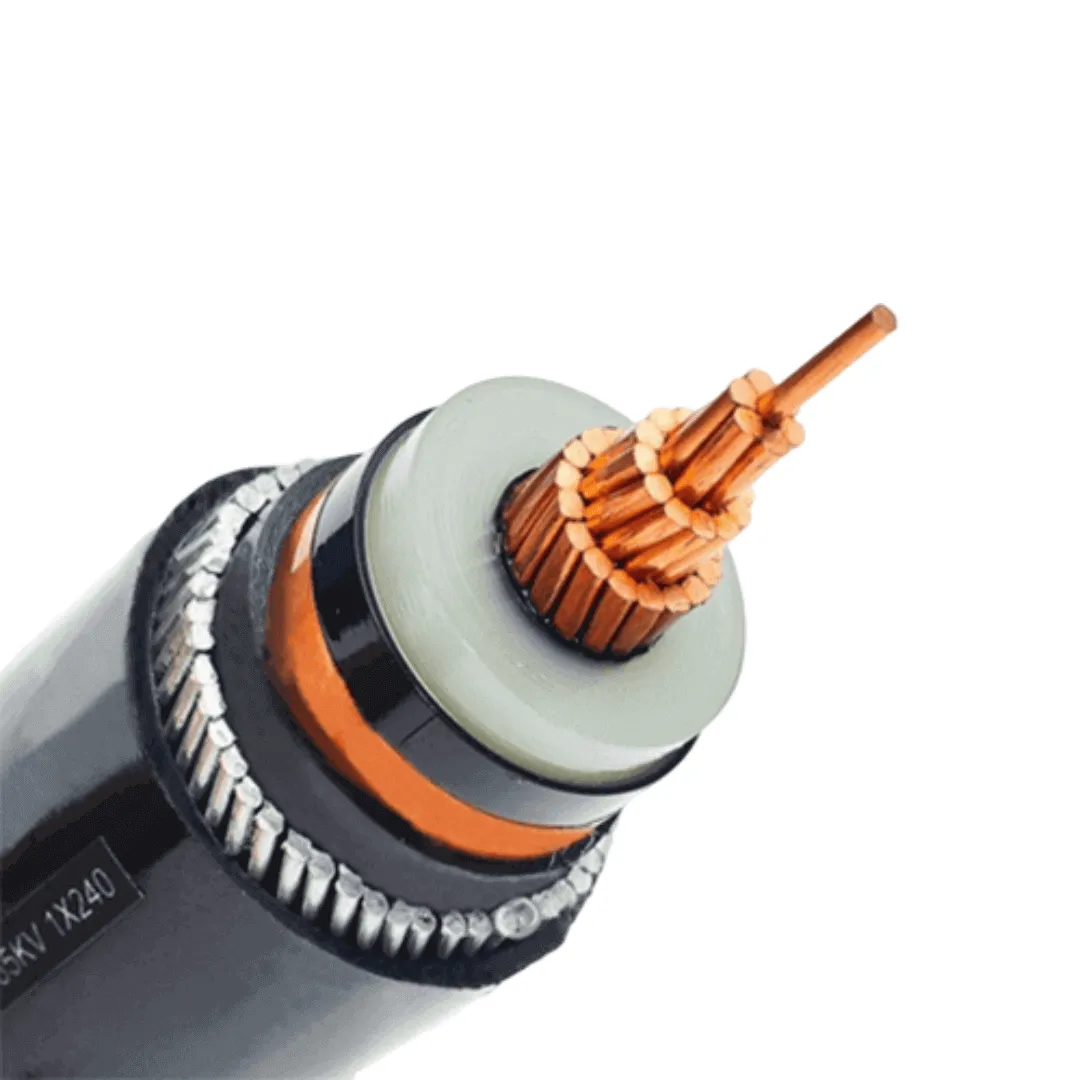
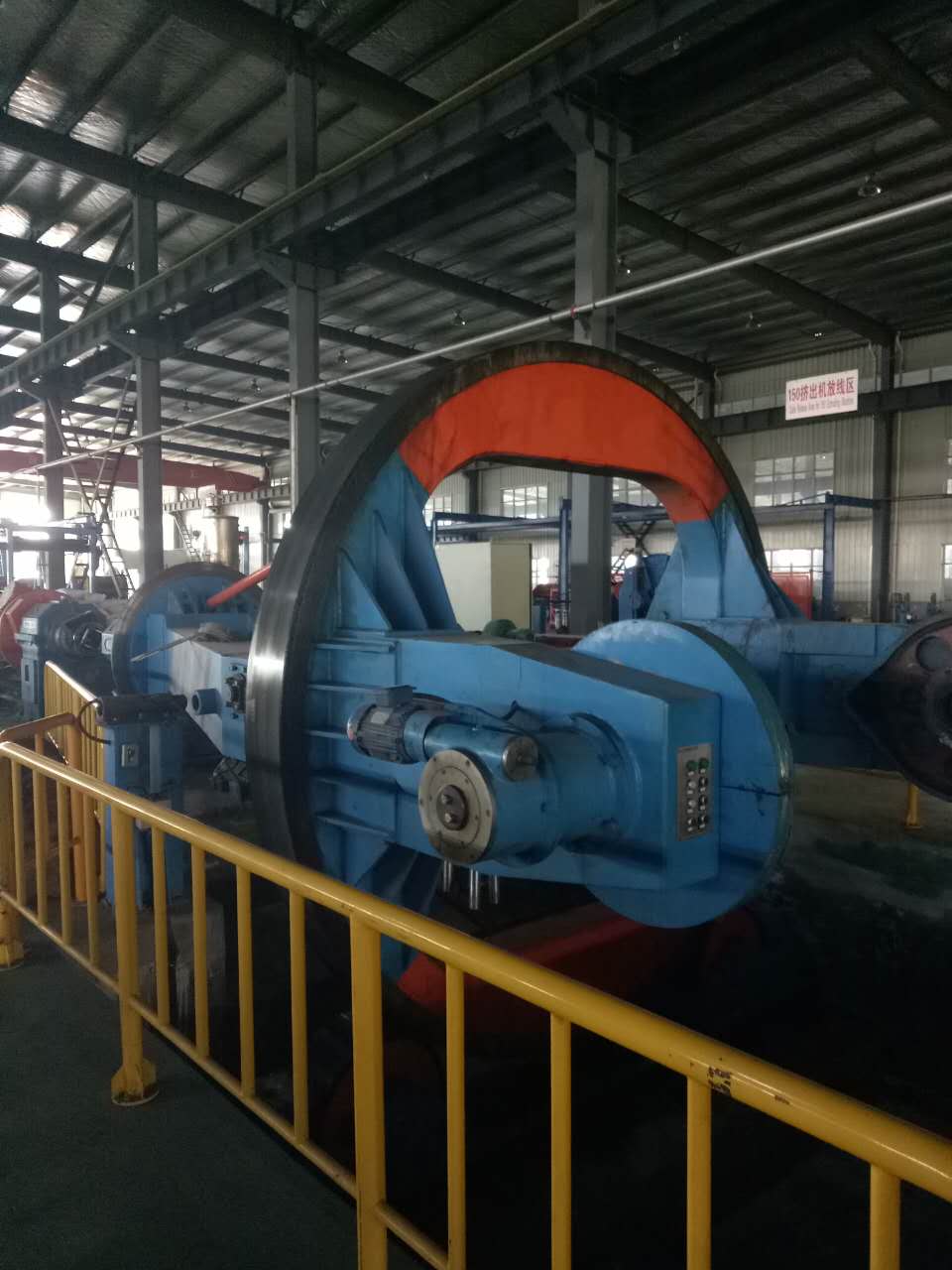
- CCV (Catenary Continuous Vulcanization) lines for XLPE insulation — standard equipment
- VCV (Vertical Continuous Vulcanization) for high-voltage cables (66kV+)
- Imported and domestic extrusion lines (Maillefer, Rosendahl, and domestic equivalents)
- In-house conductor drawing, stranding, and compacting
- Automated quality inspection systems (online partial discharge monitoring, eccentricity measurement)
- Typical large factory: 20–50+ production lines spanning LV, MV, and specialty cables
Indian cable manufacturers (top-tier organized players):
- Modern production lines at Polycab, KEI, Havells, and RR Kabel
- CCV lines available at major manufacturers
- Significant recent capex investment (Polycab invested ₹2,200+ crore in FY24–25 expansion)
- In-house conductor processing at major players
- Smaller manufacturers may rely on older equipment or outsource some processing
Key difference: China has a much deeper bench of mid-tier manufacturers with modern equipment. In India, cutting-edge capability is concentrated in the top 5–6 companies. Below that tier, equipment quality drops more steeply.
Product Range
| Cable Type | China Availability | India Availability |
|---|---|---|
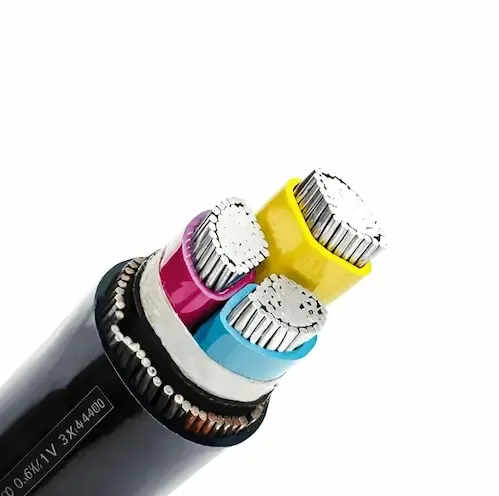
| LV power cable (0.6/1kV XLPE/PVC) | Universal — every manufacturer | Universal among organized players |
| MV cable (up to 35kV) | Widely available, hundreds of qualified factories | Available at top-tier manufacturers |
| HV cable (66kV–220kV) | Available at 20+ specialized manufacturers | Limited — Polycab, KEI (recent entry) |
| EHV cable (220kV+) | Specialized factories (Hengtong, ZTT, Baosheng) | Very limited domestic capability |
| Submarine cable | Available (Hengtong, ZTT, Orient Cable) | Limited |
| 0.6/1kV PVC power cable | Universal — massive production base | Universal among organized players |
| PV DC cable (solar cable) | Major global supplier, TUV-certified factories common | Growing segment |
| ABC cable (aerial bundled conductor) | Large-scale production, export staple | Available at major players |
| Aluminium alloy conductor (AAAC/ACSR) | Major production base globally | Available but smaller scale |
| Fire resistant / LSZH | Widely available | Available at major players |
| Rubber cable (mining, marine) | Common | Available |
| Control cable | Universal | Universal |
China's advantage: Broader specialization at every voltage level, and the ability to source the entire cable scope for a large project (LV + MV + HV + overhead + control + fiber optic) from a single region — reducing coordination complexity.
India's advantage: Strong in standard LV and MV power cables for domestic-standard projects. Indian manufacturers are deeply familiar with IS (Indian Standard) specifications, which share DNA with IEC standards.
Pricing: Where Cost Differences Come From
Cable pricing is primarily driven by raw material costs (copper and aluminium account for 60–75% of cable cost). Both China and India purchase metals on international markets, so raw material costs are broadly similar. The differences come from:
Manufacturing Cost Structure
China — cost advantages:
- Scale economies in equipment utilization (higher throughput per line)
- Lower per-unit cost of XLPE compound (domestic production by Wanma, Borealis-licensed local plants)
- Highly competitive domestic market drives efficiency (10,000+ manufacturers competing)
- Provincial government incentives for export-oriented manufacturing
- Established logistics infrastructure (factory → port is often well-optimized)
- Lower electricity costs in key manufacturing provinces (Henan, Anhui)
India — cost advantages:
- Lower labor costs for manual operations (termination, packaging, loading)
- Lower land costs in some manufacturing zones
- Government incentives for domestic production (Production Linked Incentive scheme)
- Rupee depreciation has made Indian exports more competitive in recent years
Typical Price Positioning
Without quoting specific numbers (which depend on copper prices, order volume, and specifications), the general pattern observed by international buyers:
- Standard LV cable (0.6/1kV XLPE): China is typically 5–15% lower FOB for equivalent specifications
- Armoured cable (SWA/STA): China is typically 8–18% lower due to scale in steel wire/tape processing
- MV cable (11kV–33kV): China is 10–20% lower — the gap widens because MV production requires more specialized equipment, where China's scale advantage is more pronounced
- Overhead conductor (ACSR/AAAC): China is highly competitive — often the lowest-cost global source for bare overhead conductors
- Small orders (under $50K): Price difference narrows or may favor India depending on logistics
Important caveat: Pricing comparisons must be on a like-for-like basis. A lower quoted price is meaningless if the cable has thinner insulation, undersized conductors, or inferior raw materials. Always compare based on confirmed datasheets and test reports, not just price per meter.
Total Landed Cost Considerations
| Cost Element | China (typical) | India (typical) |
|---|---|---|
| FOB cable price | Generally lower | Generally higher |
| Ocean freight (to Africa/Middle East) | Competitive (major shipping lanes) | Often lower to East Africa, comparable to Middle East |
| Shipping time to Middle East | 18–25 days | 7–14 days |
| Shipping time to East Africa | 25–35 days | 14–21 days |
| Import duty at destination | Varies by country/FTA | Varies — some countries have bilateral agreements |
| Packaging (drum + container) | Standard included | Standard included |
| LC/payment terms | Flexible — T/T, LC at sight, 30/60/90 day LC common | LC at sight common, T/T less flexible for new buyers |
Geography matters: For buyers in East Africa (Kenya, Tanzania, Mozambique) and South Asia, India's proximity creates a freight and lead-time advantage. For buyers in West Africa, the Americas, Southeast Asia, or Central Asia, China's shipping routes are equally or more efficient.
Quality and Standards Compliance
Standards Capability
Both Chinese and Indian manufacturers can produce cables to IEC standards. The practical differences:
Chinese manufacturers:
- Deeply experienced with IEC 60502, GB/T 12706 (which is technically equivalent to IEC 60502)
- Wide range of international standard experience among export-focused factories
- Less familiar with IS (Indian Standards) or specific ASTM/UL standards — requires confirmation
- Some factories hold CB scheme certificates for international mutual recognition
Indian manufacturers:
- IS standards (closely aligned with IEC) are the baseline
- IEC 60502 production is standard at major players
- BS standards capability at export-oriented manufacturers
- BIS certification (mandatory for domestic market) ensures baseline quality discipline
- Indian labs often NABL-accredited (equivalent to ISO 17025)
Quality Control Reality
This is where buyer due diligence matters most:
China — quality landscape:
- Top-tier manufacturers (large groups with export track record): quality is excellent, often surpassing requirements
- Mid-tier manufacturers: variable — some are very good, others cut corners
- Bottom-tier/trading companies: high risk of substandard product (thin insulation, recycled copper, no proper testing)
- Critical action: Always conduct a factory audit or use third-party inspection (SGS, BV, TUV) before first order
- The competitive pressure from 10,000+ manufacturers creates both excellence (at the top) and a race to the bottom (among low-end players)
India — quality landscape:
- Top-tier organized players (Polycab, KEI, Havells, RR Kabel): consistent quality, strong QC systems
- BIS certification creates a higher floor for quality among organized manufacturers
- Smaller unorganized manufacturers (which make up ~50% of the Indian market) may have quality issues
- Export orders from major players are generally reliable
- Advantage: The smaller number of serious export players makes it somewhat easier to identify reliable partners
Testing and Certification
| Testing Aspect | Chinese Factory (export-grade) | Indian Factory (top-tier) |
|---|---|---|
| In-house HV test | Yes, to 2× rated voltage | Yes |
| Partial discharge test (MV) | Yes, per IEC 60502-2 | Yes |
| Conductor resistance check | Routine (100%) | Routine (100%) |
| Third-party type test reports | Available (NQI, CQC, or international labs) | Available (NABL labs, CPRI, ERDA) |
| Factory audit accessibility | Open to buyers and inspection agencies | Open at major players |
| CB scheme certificate | Available at some factories | Available at some factories |
| Product consistency batch-to-batch | High at audited factories | High at major organized players |
Logistics and Lead Time
Production Lead Time
| Order Size | China (typical) | India (typical) |
|---|---|---|
| Standard LV cable, 20–50 km | 15–25 days | 20–35 days |
| Standard LV cable, 100+ km | 20–35 days | 30–45 days |
| MV cable, 10–30 km | 25–40 days | 30–50 days |
| Custom specification | 30–50 days | 35–60 days |
China's advantage: Faster production due to higher line utilization, more shifts (many Chinese factories run 24/7), and less competition between domestic and export orders at large factories.
India's consideration: Major domestic players prioritize large domestic utility orders. Export orders may queue behind domestic commitments, especially during India's infrastructure boom cycle.
Shipping Infrastructure
China:
- 7 of the world's 10 busiest container ports are in China
- Frequent sailings to virtually every global destination
- Established cable-specific logistics (heavy-lift for drums, proper securing)
- Factory-to-port truck times: typically 2–8 hours in eastern provinces
- Common export ports: Shanghai, Ningbo, Qingdao, Tianjin, Shenzhen
India:
- Major ports: Mundra (Gujarat), JNPT (Mumbai), Chennai, Visakhapatnam
- Good connections to Middle East and East Africa
- Improving infrastructure but congestion remains an issue at some ports
- Factory-to-port times vary significantly by manufacturing location
- Fewer direct sailings to some destinations (Central Asia, South America)
Packaging and Container Loading
Both origins use similar packaging standards:
- Wooden or steel cable drums (to IEC 61427 or equivalent)
- Container-optimized drum sizes
- Non-returnable drums standard for export
- Fumigation treatment (ISPM-15) for wooden packaging — standard from both origins
China advantage: More standardized export packaging practices due to decades of high-volume cable exports. Many Chinese factories have dedicated export packaging departments with experience across different destination requirements.
Communication and Business Culture
Language
China:
- English proficiency in export sales teams: moderate to good at export-focused factories
- Technical discussions may require patience — engineering staff often more comfortable in Chinese
- Written communication (email, WeChat) is generally effective
- Arabic and French speakers available at some larger export departments
India:
- English proficiency: generally high — India's business language is English
- Technical discussions are easier to conduct in English
- Documentation and correspondence in English is natural
- Clear advantage for buyers who prefer English-language communication
Business Practices
China:
- Faster response times (many factories respond within hours on WeChat/WhatsApp)
- More flexible on payment terms for repeat buyers
- More willing to accept small MOQ for first orders (to build relationship)
- Factory visits are straightforward to arrange
- Negotiation culture: price-focused, efficiency-driven
- Relationships built through repeated transactions
India:
- Professional B2B communication style
- Standard payment terms (LC at sight common for first orders)
- MOQs may be higher for export orders at large players
- Factory visits possible but scheduling may take longer
- More formal procurement processes at large companies
Risk Factors
Supply Chain Risks
| Risk Factor | China | India |
|---|---|---|
| Geopolitical/trade tensions | Higher — tariffs, sanctions risk in some markets | Lower — generally neutral trade positioning |
| Currency volatility impact on pricing | RMB relatively stable, managed float | INR more volatile, can create pricing uncertainty |
| Raw material supply disruption | Lower — domestic copper smelting, aluminium production | Higher — imports significant proportion of copper |
| Natural disaster/weather disruption | Regional (floods in Henan/Zhejiang occasionally) | Regional (monsoon season affects logistics) |
| Power supply disruption | Rare but occurred in 2021 (energy rationing) | More frequent in some industrial zones |
| Port congestion | Rare at major Chinese ports | Occasional at Indian ports |
| Quality fraud risk | Real at unvetted factories | Lower at organized players, present in unorganized sector |
Geopolitical Considerations
This is increasingly relevant for certain buyer segments:
- Government/utility projects in some countries may have procurement policies that favor or restrict specific origins
- US market: Anti-dumping duties on certain Chinese cable products create a clear cost barrier; Indian cables face fewer trade restrictions for the US market
- African Union / bilateral agreements: Various countries have preferential trade agreements that may favor one origin over another
- EU market: Carbon border adjustment mechanism (CBAM) may affect comparative costs in coming years
Practical advice: Check your destination country's import duty schedule and any applicable anti-dumping measures before comparing landed costs. A 15% dumping duty can completely invert the price advantage.
Decision Framework: When to Source from China vs India
Source from China when:
- Price sensitivity is high and the order is medium-to-large volume (>$100K)
- Full product range needed from one origin (LV + MV + overhead + control)
- Production speed matters — Chinese factories generally deliver faster
- MV and HV cables are needed — deeper bench of qualified manufacturers
- Bare overhead conductors (ACSR, AAAC, AAC) — China is the global production base
- Your destination is in West Africa, Southeast Asia (Malaysia, Singapore, Thailand, Laos), Central Asia (Kazakhstan, Mongolia, Azerbaijan), or South America
- You have a reliable sourcing agent or have conducted factory audits
Source from India when:
- Destination is East Africa or Middle East — shorter transit time
- English communication is essential and your team cannot manage Chinese-language interactions
- Geopolitical restrictions limit China-origin products in your market
- Small-to-medium orders where freight savings offset any price premium
- Relationship with a specific major manufacturer already established
- Your project requires IS-standard cables (Indian Standard)
- US or EU market where anti-dumping duties apply to Chinese cables
- You prefer fewer, larger manufacturers as partners (easier due diligence)
Consider dual-sourcing when:
- Your annual cable procurement exceeds $1M
- Supply continuity is critical (cannot afford single-source failure)
- Different cable types in your scope suit different origins (e.g., overhead from China, LV armoured from India)
- You want price competition between qualified suppliers
How to Verify a Chinese Cable Manufacturer
Since we are a Chinese manufacturer, here is our honest advice on how to evaluate any Chinese factory (including us):
Before First Order
- Request business license (营业执照) — verify on the national enterprise credit system
- Request production license (生产许可证) — mandatory for cable production in China
- Ask for CCC certificate — the Chinese compulsory product certificate
- Request type test reports from an accredited lab for your specific cable specification
- Conduct a factory visit or hire a third-party inspection company (SGS, BV, TUV, CWB) to audit
- Ask for export reference projects — specific countries, quantities, and cable types supplied
- Request sample for your own lab testing if order value justifies it
During Production
- Request production progress photos/videos at key milestones
- Arrange pre-shipment inspection — test conductor resistance, insulation thickness, and HV withstand on finished drums
- Verify drum marking matches your order specification and destination requirements
Red Flags to Watch For
- Factory shows a showroom but cannot show production lines
- No in-house testing laboratory
- Cannot provide type test reports from an accredited (CNAS/CMA) lab
- Price is significantly below all other quotations (>20% lower)
- Claims to produce everything from fiber optic to EHV cable in a small facility
- Reluctant to allow factory audit
- Trading company posing as manufacturer (check if they have actual production equipment)
Our Position: Why Buyers Choose Huanghe Cable
We are straightforward about what we offer:
Production capability:
- 0.6/1kV PVC power cables
- 0.6/1kV to 35kV XLPE power cables
- PV DC cables (solar cable, TUV certified)
- ABC cables (aerial bundled conductor)
- Bare overhead conductors (ACSR, AAAC, AAC)
- Control cables, rubber cables, fire-resistant cables
- Copper and aluminium conductors, 1.5mm² to 800mm²
- Full armour options (unarmoured, STA, SWA, AWA)
Standards:
- IEC 60502-1 and IEC 60502-2
- GB/T 12706 (technically equivalent to IEC 60502)
- Other international standards available on request
Export experience:
- Regular shipments to Africa (Nigeria, Kenya, Tanzania, Ghana, South Africa, Cameroon)
- Middle East (Saudi Arabia, UAE, Oman, Iraq)
- South Asia (India-linked projects, Bangladesh, Pakistan, Sri Lanka)
- Southeast Asia (Philippines, Vietnam, Cambodia, Malaysia, Singapore, Thailand, Laos)
- Central Asia (Kazakhstan, Mongolia, Azerbaijan)
Verification welcome:
- Factory audit by your team or third-party inspectors
- Full type test reports available for all standard products
- Pre-shipment inspection arranged at buyer's request
- Video factory tour available for remote assessment
Interested in this product?
Request a Competitive Quote for Your Cable ProjectFrequently Asked Questions
Is Chinese cable quality as good as Indian cable quality?
At the top tier, quality is comparable. Both Chinese and Indian major manufacturers produce cables that fully comply with IEC standards and pass identical test protocols. The difference is in the mid-tier: China has more manufacturers overall, which means more variation in quality. The solution is proper vendor qualification — factory audit, type test verification, and pre-shipment inspection.
Which country offers better prices for power cable?
China generally offers lower FOB prices for medium and large orders, primarily due to larger scale economies and intense domestic competition. The gap ranges from 5–20% depending on cable type and order volume. However, total landed cost depends on freight, duties, and payment terms — calculate the full picture for your specific destination.
Can Chinese manufacturers produce cables to Indian Standards (IS)?
IS standards are closely aligned with IEC standards, so technically the production is similar. However, most Chinese manufacturers are not IS-certified and do not hold BIS marks. If your project specifically requires IS-certified cable, sourcing from India is more straightforward. If you are an Indian buyer or contractor working the other direction, our India cable supply page sets out exactly which routes are open without an ISI mark and which are not.
How do I avoid quality problems when buying cable from China?
Three steps: (1) Qualify the factory before ordering — audit or third-party inspection, verify test reports from accredited labs. (2) Specify requirements clearly in a written purchase order with referenced standards and test requirements. (3) Conduct pre-shipment inspection — measure conductor resistance, insulation thickness, and voltage withstand on finished drums before shipment.
What is the minimum order quantity for Chinese cable manufacturers?
This varies significantly. Large manufacturers may have MOQs of 5–10 km per specification for standard products. For a first trial order, many export-oriented factories will accept 2–5 km per size to build the relationship. Very small orders (under 1 km) are generally not economical for direct factory procurement from either China or India.
Are there anti-dumping duties on Chinese cables?
Some countries have imposed anti-dumping duties on specific Chinese cable products. The US has duties on certain aluminium and steel wire products from China. The EU has investigated but not broadly applied cable-specific duties. Check your destination country's current duty schedule — this changes periodically and varies by product classification (HS code).
How long does shipping take from China to Africa?
Typical ocean freight times: to West Africa (Lagos, Tema, Douala) 30–40 days; to East Africa (Mombasa, Dar es Salaam) 25–35 days; to South Africa (Durban) 25–30 days; to North Africa (Alexandria, Casablanca) 20–28 days. From India, subtract approximately 7–14 days for East African destinations.
Can I visit the factory before ordering?
Yes — reputable manufacturers in both China and India welcome factory visits. In China, most cable manufacturing is clustered in accessible provinces (Henan, Jiangsu, Zhejiang, Anhui) with good transport links. We recommend combining a factory visit with checking the production floor, testing lab, and reviewing existing inventory/work-in-progress for similar specifications.
Interested in this product?
Get Factory Details and Arrange a VisitConclusion: Make the Decision Based on Data, Not Assumptions
Both China and India are legitimate sources for quality power cables. The right choice depends on your specific situation:
- Project location and freight economics
- Order volume and required product range
- Standard requirements and certification needs
- Communication preferences and procurement team capabilities
- Geopolitical and duty considerations for your market
- Your ability to conduct vendor qualification
Do not choose based on assumptions or stereotypes about either country's manufacturing quality. Choose based on verified factory capability, confirmed test reports, and total landed cost analysis for your specific project.
If you are evaluating Chinese manufacturers for your cable procurement, we are happy to provide technical datasheets, type test reports, factory audit access, and competitive pricing for comparison. Contact our export team with your specifications.
Interested in this product?
Contact Our Export TeamRelated Resources
- XLPE Power Cable: Complete Specifications, Types & Sourcing Guide — detailed XLPE cable specifications and factory selection criteria
- How to Import Cable from China: 7-Step Buyer's Guide — step-by-step import process, documentation, and logistics
- Medium Voltage Cable (11kV, 33kV & 35kV) Manufacturer Guide — MV cable specifications and sourcing considerations
- 4 Core Armoured Cable: SWA/STA Specifications — complete size chart for armoured power cables
- ACSR Conductor: Complete Guide — overhead conductor specifications and selection