Key Takeaway
Source NH-KVV fire-resistant and ZR-KVV flame-retardant control cable from a China factory. IEC 60331 & IEC 60332 compliant, GB/T 9330. Specification and sourcing guide for oil & gas, power and infrastructure projects in Africa, the Middle East & Southeast Asia.
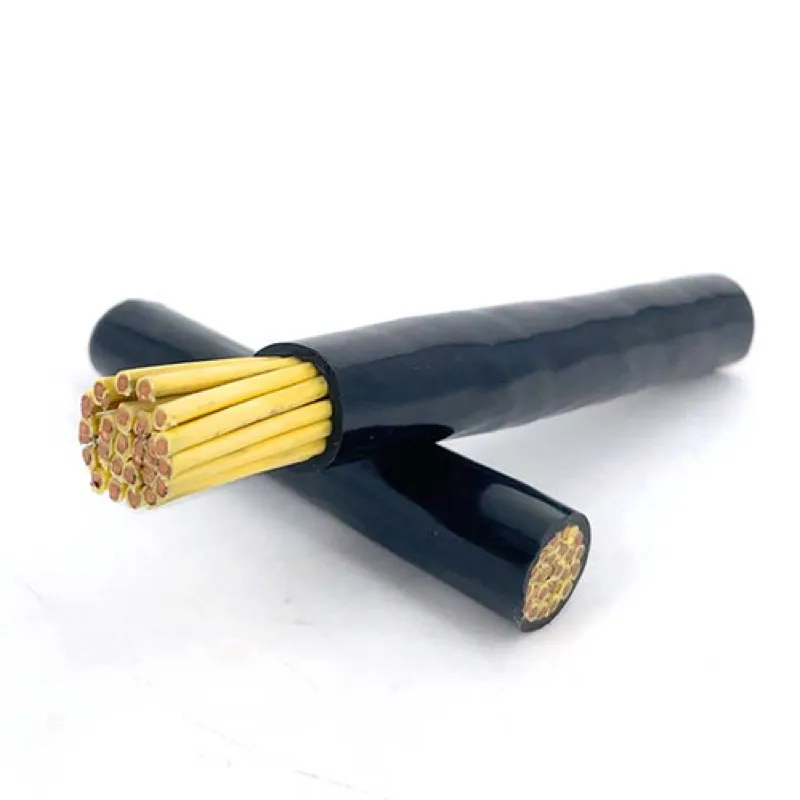
When a fire starts in a substation, an oil-and-gas facility, or a plant room, the control cables are what decide whether the site shuts down safely or goes dark. An emergency-shutdown valve that has to close, a fire pump that has to start, a gas-detection loop that has to keep reporting — every one of those functions runs on a control cable, and a standard PVC control cable stops conducting within minutes of a fire reaching it. That is why project specifications across Africa, the Middle East and Southeast Asia increasingly call for fire-resistant (NH-) and flame-retardant (ZR-) grades on the control cable schedule, not just on the power cables.
This is a sourcing guide for those two grades in control cable form. It explains the difference between flame-retardant and fire-resistant (they are not the same thing, and confusing them is a specification error that fails a project inspection), maps the real standards to the real product codes, and gives procurement teams a specification they can put straight into a purchase order — with the market-specific detail that decides whether the cable survives the site it is installed on.
Flame-Retardant vs Fire-Resistant: The Distinction That Fails Inspections
The two terms sound interchangeable and they are not. Ordering the wrong one is the single most common fire-cable specification error, and it is caught either at inspection (best case) or during an actual fire (worst case).
Flame-retardant (ZR-, to IEC 60332) means the cable resists spreading a fire. If a flame reaches the cable, the cable does not act as a fuse to carry the fire along the cable route to the next room. It self-extinguishes and limits flame propagation. What it does not promise is that the circuit keeps working — a flame-retardant cable can stop conducting in a fire while still not spreading the flames. Its job is containment, not continuity.
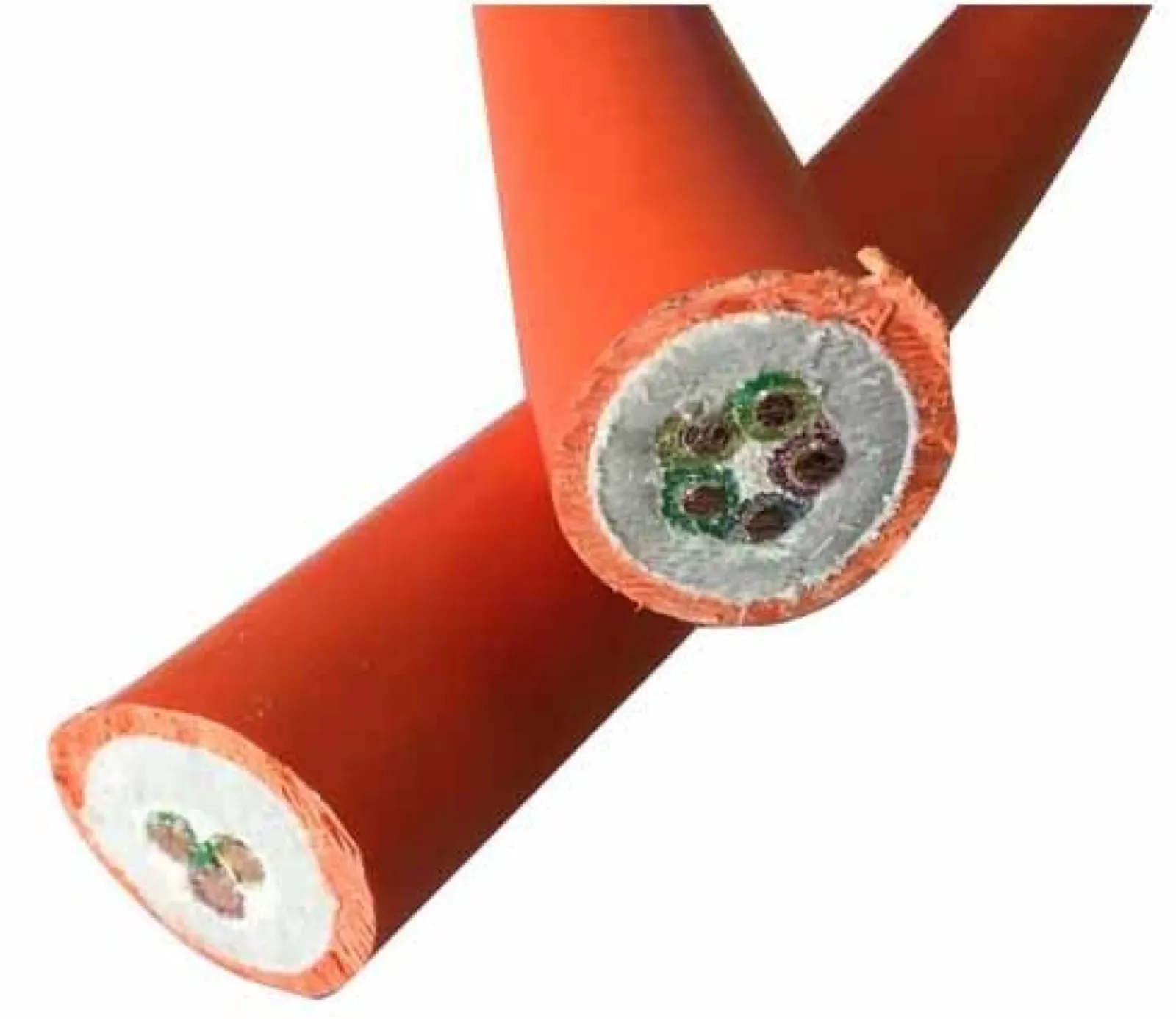
Fire-resistant (NH-, to IEC 60331) means the cable keeps working during a fire. This is circuit integrity: the conductors keep carrying signal or power for a defined period (typically 90 minutes under the IEC 60331 flame) even as the fire burns the cable. This is achieved with a mica tape barrier wrapped over each conductor — when the polymer insulation chars away, the mica layer holds its position and keeps the conductors insulated and alive.
The practical rule for a control cable schedule:
- Use ZR- (flame-retardant) as the baseline grade for any cable in an enclosed, cable-dense, or high-occupancy area — it stops the cable route becoming a fire highway. This is now the default grade most substation and industrial customers specify.
- Use NH- (fire-resistant) where the circuit itself must survive and keep functioning during the fire — emergency shutdown (ESD) loops, fire-and-gas detection, fire-pump control, smoke-extraction and jet-fan control, and any safety-instrumented function that has to operate while the fire is happening.
- Combine them: a cable can be both, and low-smoke-halogen-free (WDZ-, LSZH) can be added on top so the cable neither spreads flame, nor stops working, nor fills an escape route with toxic smoke.
A cable that is fire-resistant is almost always also flame-retardant, but a flame-retardant cable is not automatically fire-resistant. When a specification says "fire-rated control cable" without stating the standard, this is the first thing to clarify before quoting — IEC 60332 (flame-retardant) and IEC 60331 (fire-resistant) are different tests with different pass criteria.
Reading the Cable Code: Prefixes and Base Types
Chinese control cable codes are systematic. Once you can read the prefix and the base type, you can specify any variant precisely — and verify that what arrives matches what you ordered. The base control cable is KVV (PVC-insulated, PVC-sheathed control cable to GB/T 9330); the fire performance is added as a prefix per GB/T 19666, the general rule for flame-retardant and fire-resistant wires and cables.
The prefixes (fire performance):
- ZR- — flame-retardant (zuran), to IEC 60332-1 / IEC 60332-3 for bundled cables. Sub-grades ZR-A / ZR-B / ZR-C denote the bundled-cable category (ZR-A is the most demanding, largest bundled volume).
- NH- — fire-resistant (naihuo), to IEC 60331. Mica tape barrier, circuit integrity under fire.
- WDZ- — low-smoke halogen-free flame-retardant (wu lu di yan zuran, LSZH). Add to either grade for enclosed and high-occupancy areas where smoke toxicity matters.
- WDZN- — LSZH and fire-resistant combined — the top grade for tunnels, metro, and high-rise safety circuits.
The base types (construction) — see our KVV control cable types guide for the full comparison:
- KVV — standard control cable, solid/standard-stranded conductor, no screen
- KVVP — screened (copper braid or tape) for EMI protection
- KVVR — flexible, fine-stranded (Class 5) conductor — our KVVR cable
- KVV22 / KVV32 — steel-tape / steel-wire armoured, see our armoured control cable product page
Putting it together — real codes you will see on a schedule:
- ZR-KVV — flame-retardant standard control cable (the everyday industrial baseline)
- NH-KVV — fire-resistant control cable for safety circuits
- NH-KVVP — fire-resistant and screened (a fire-and-gas signal loop near VFDs)
- NH-KVV22 — fire-resistant and steel-tape armoured (a buried ESD circuit)
- WDZN-KVVP — LSZH, fire-resistant, screened (a screened safety signal in a metro tunnel)
Every one of these is a legitimate, buildable construction to GB/T 9330 and GB/T 19666. The prefix stacks logically onto the base type, so you specify exactly the combination of fire performance, screening, flexibility, and armour the circuit requires — no more, no less.
How a Fire-Resistant Control Cable Is Built
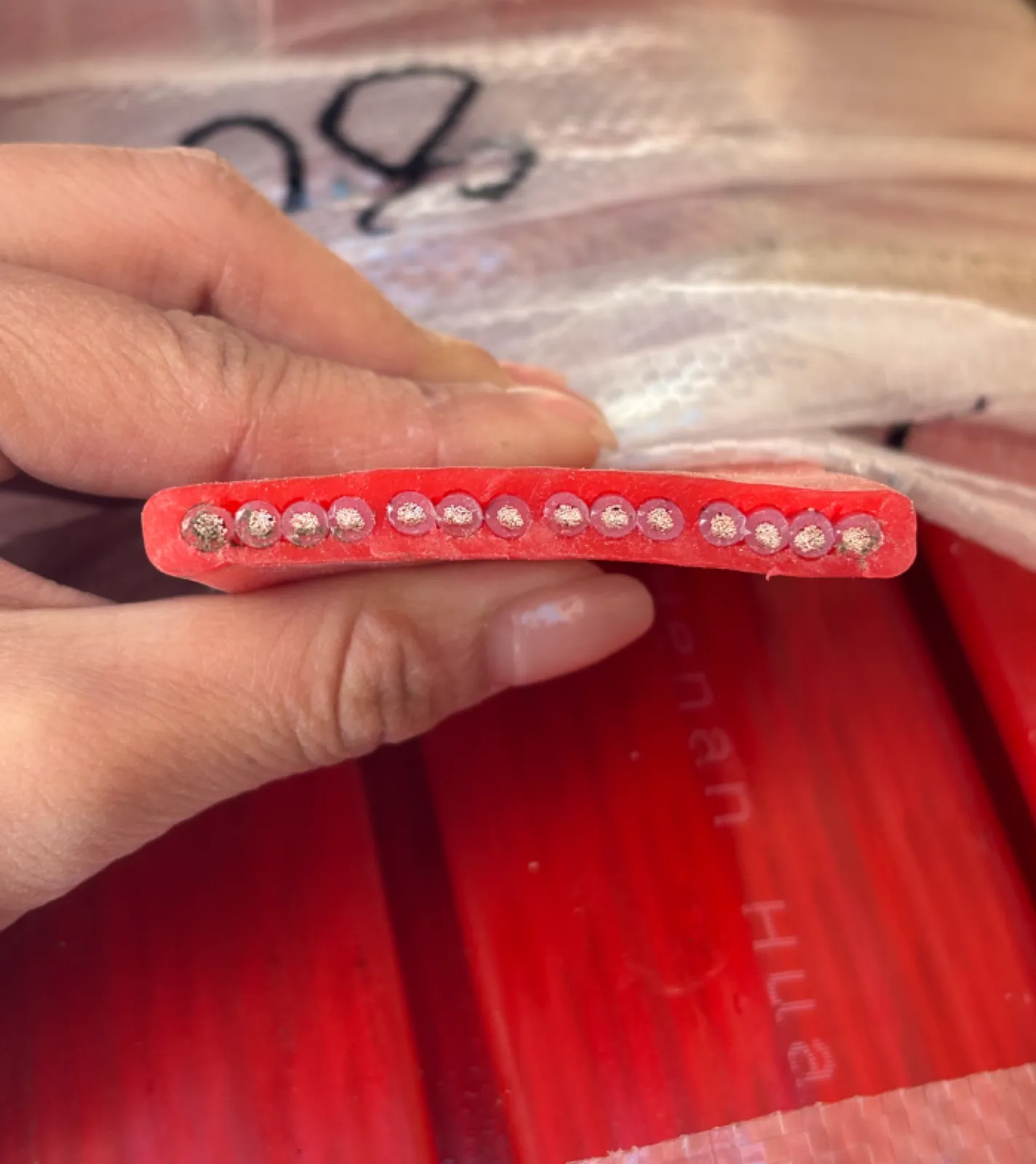
The difference between NH-KVV and standard KVV is a single layer that does almost nothing in normal service and everything in a fire.
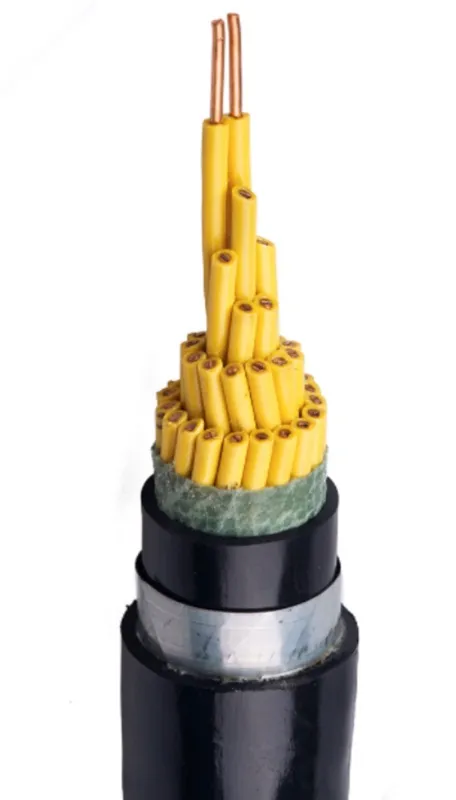
The mica tape barrier. Wrapped directly over each copper conductor, under the PVC insulation, is a mica-glass tape. Mica is a mineral that stays stable and electrically insulating at temperatures that destroy PVC. In normal operation it is inert. In a fire, as the PVC insulation chars and burns away, the mica tape holds its position around the conductor and keeps the cores from short-circuiting or going open — so the control signal keeps flowing. This is the mechanism behind the IEC 60331 circuit-integrity requirement, and it is why a fire-resistant cable cannot be faked with a thicker or "better" PVC: without the mineral barrier, there is no fire resistance.
Everything else stays recognisable as a control cable. Copper conductors (solid/stranded for NH-KVV, fine-stranded for NH-KVVR), individual core insulation, laid-up bundle, optional copper screen (NH-KVVP), optional steel armour (NH-KVV22/32), and an outer sheath — standard PVC, or LSZH for the WDZ- grades. Core counts run 2 to 61, conductor sizes 0.75mm² to 10mm², exactly as for standard control cable. The mica barrier is added without changing the cable's electrical behaviour in normal use.
Why flame-retardant (ZR-) is different and simpler. ZR-KVV does not need a mica barrier. Its flame-retardancy comes from the compound of the insulation and sheath — formulated so that when the flame source is removed the material self-extinguishes rather than continuing to burn. This is why ZR- grade adds far less cost than NH-, and why ZR- makes sense as a blanket baseline while NH- is reserved for the specific circuits that must survive.
Standards and Test Criteria You Should Ask For
A fire-cable claim is only as good as the test evidence behind it. These are the standards that matter for control cable, and what each one actually proves — ask for the test report against the specific sub-part, not just a generic "fire-rated" statement.
IEC 60332 — flame propagation (the ZR- claim):
- IEC 60332-1-2 — single vertical insulated wire/cable, flame-propagation test. The baseline flame-retardant test for an individual cable.
- IEC 60332-3-23 (Category C) — bundled cables, vertical tray flame-spread test. This is the one that matters for cable-dense installations, because cables rarely burn alone. The bundled categories run from A (most demanding, 7 L/m of non-metallic material) through B (3.5 L/m), C (1.5 L/m) to D (0.5 L/m); ZR-A / ZR-B / ZR-C map to these bundled-volume categories.
IEC 60331 — circuit integrity (the NH- claim):
- IEC 60331-2 — the current test for cables of overall diameter ≤20mm, which covers control cable. The cable is subjected to a flame at 830°C ± 40°C for at least 90 minutes while energised, with mechanical shock applied at intervals, and must maintain circuit integrity throughout. Passing means the control signal survived the fire for that period. (The older sub-parts IEC 60331-21 / 60331-23 are still seen on legacy certificates; their method was consolidated into IEC 60331-1/-2, so ask which edition a test report is against.)
- Related national and project standards — BS 6387 (categories C/W/Z for flame, water, and mechanical shock) and BS 8491 are frequently called up in Middle East and Commonwealth-influenced specifications; confirm which the project requires.
Supporting standards (apply to all control cable):
- GB/T 9330 — the Chinese national standard for PVC control cable construction.
- GB/T 19666 — the general rule for flame-retardant and fire-resistant wires and cables (defines the ZR-/NH-/WDZ- prefixes).
- IEC 60228 — conductor classes (Class 1/2 solid/stranded, Class 5 flexible); the conductor-resistance test to this standard is the definitive proof of copper cross-section and purity.
For the LSZH grades, add IEC 60754 (low halogen / acid gas emission) and IEC 61034 (low smoke density) — these are what "low-smoke halogen-free" actually means in test terms, and are required for enclosed public spaces such as metro and high-rise across all three markets. See our related IEC 60331 fire-resistant cable specification guide for the full breakdown of the sub-parts and pass criteria.
Where These Cables Go: Applications in Africa, the Middle East & Southeast Asia
The demand for fire-rated control cable in these three markets is driven by specific project types, and knowing which grade each demands turns a vague enquiry into a precise order.
Oil, gas and petrochemical (Middle East, West & North Africa). This is the largest driver of NH- fire-resistant control cable. Emergency shutdown (ESD) systems, fire-and-gas (F&G) detection loops, and burner-management circuits must keep functioning during a fire long enough for the plant to reach a safe state. These are almost always NH-KVVP (fire-resistant plus screened, because the signals are low-level and the environment is electrically noisy), and frequently NH-KVV22 where the run is buried or exposed across a facility. Gulf and North African refinery, terminal, and gas-processing projects specify these by default, including oilfield work in Iraq.
Power generation and substations (all three markets). Substation secondary wiring, protection and control circuits, and auxiliary systems use large volumes of control cable. ZR-KVV is the baseline for the general secondary wiring (flame containment in cable-dense switch houses), with NH-KVV on the circuits that must operate during a fault-driven fire. Grid-expansion projects across sub-Saharan Africa and Southeast Asia are steady consumers, including our long-running supply into Bangladesh power projects.
High-rise buildings and metro/tunnel (Gulf cities, Southeast Asian megacities). Fire-pump control, smoke-extraction and jet-fan control, and emergency lighting control are life-safety circuits that must survive a fire — NH- grade, and increasingly WDZN- (LSZH plus fire-resistant) because enclosed escape routes cannot tolerate toxic smoke. Dubai, Riyadh, Jakarta, Kuala Lumpur, Manila, and Ho Chi Minh City high-rise and metro projects drive this demand, usually under BS 8491 / BS 6387 influenced specifications.
Infrastructure and industrial plant (Southeast Asia, Africa). Cement works, water and desalination plants, ports, and airports use fire-rated control cable on their safety and process-critical circuits — see our infrastructure construction cable notes. The grade follows the same logic: ZR- as the general baseline, NH- on the safety-instrumented functions.
The environmental factors from these markets stack on top of the fire grade: high ambient temperature (Gulf, Sahara, tropical Southeast Asia) erodes temperature margin, coastal humidity (West Africa, Southeast Asian monsoon) demands attention to sheath and screen termination, and both point toward stating the full site conditions in the enquiry so the correct sheath and grade are quoted.
Choosing the Right Grade: A Decision Path
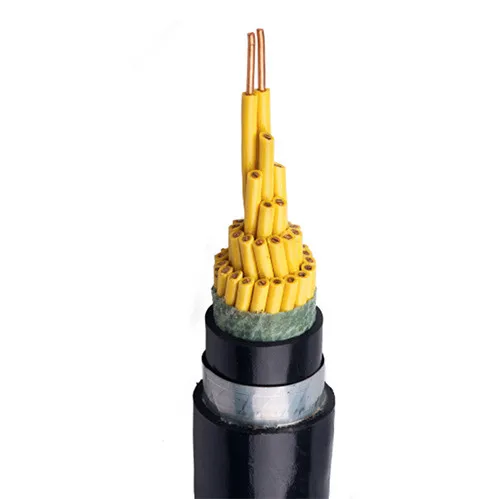
Specify a fire-rated control cable in three layered decisions, from the outside in:
-
Fire performance — does the circuit spread fire, or must it survive fire?
- General wiring in an enclosed/dense area, no survival requirement → ZR- (flame-retardant)
- Safety circuit that must operate during a fire (ESD, F&G, fire pump, smoke control) → NH- (fire-resistant)
- Enclosed public space where smoke toxicity matters → add WDZ- (LSZH), giving WDZ- or WDZN-
-
Base construction — screening, flexibility and armour:
- Low-level signal near EMI (VFDs, power cables) → screened, -KVVP
- Cable that flexes in service → flexible, -KVVR
- Buried or mechanically exposed run → armoured, -KVV22 / -KVV32
- Otherwise → plain -KVV
-
Core count and size: 2–61 cores, 0.75–10mm² (1.5mm² and 2.5mm² most common for control and instrumentation).
Worked examples:
- ESD valve signal, buried across a refinery, low-level, EMI-heavy → NH-KVVP22, 4×1.5mm²
- Substation general secondary wiring, enclosed switch house → ZR-KVV, 12×2.5mm²
- Metro smoke-extraction fan control, enclosed escape route → WDZN-KVV, 7×2.5mm²
- Fire-pump control on a moving/serviceable connection → NH-KVVR, 4×2.5mm²
The grade and the construction are independent choices — you are not locked into a limited catalogue. State both, plus core count and size, and the cable is fully specified.
What to Put in Your Purchase Order
A fire-rated control cable enquiry that a factory can quote without going back and forth — and that arrives as the cable the project actually needs — states all of the following:
- Fire grade: ZR- (flame-retardant), NH- (fire-resistant), WDZ- (LSZH), or a combination such as WDZN-
- Governing standard: IEC 60332-1 / 60332-3 category for ZR-; IEC 60331 (and BS 6387 / BS 8491 if the project calls them up) for NH-; IEC 60754 / 61034 for LSZH
- Base type: KVV / KVVP / KVVR / KVV22 / KVV32 (screening, flexibility, armour)
- Core count and conductor size: e.g. 4 × 1.5mm² (2–61 cores, 0.75–10mm²)
- For screened types: braid vs tape, coverage %, individual + overall vs overall only, drain wire
- Sheath: standard PVC or LSZH (LSZH is mandatory for the WDZ- grades)
- Site conditions: ambient temperature, indoor/outdoor, buried/tray/conduit, humidity
- Quantity and drum requirements: length per type, maximum drum length, marking
Quality Checks That Separate Real Fire Cable from a Claim
Fire-rated cable is exactly the category where cutting corners is invisible until the fire — which is why the test evidence matters more here than anywhere else on the cable schedule:
- IEC 60331 test report (NH- grades) — the circuit-integrity evidence. Confirm the tested duration and flame temperature, and that the report covers the construction you are buying.
- IEC 60332 test report (ZR- grades) — the flame-propagation evidence; confirm the sub-part (60332-1 single vs 60332-3 bundled category).
- Mica tape presence and quality (NH-) — the mica barrier is the working part of a fire-resistant cable. It cannot be verified by looking at the finished cable, which is exactly why a credible test report and a factory you can audit matter.
- Conductor resistance to IEC 60228 — proves the copper cross-section and purity; ask for measured values, not just pass/fail.
- LSZH verification (WDZ- grades) — IEC 60754 (halogen/acid gas) and IEC 61034 (smoke density) evidence.
- Sheath print and marking — grade prefix, base type, standard, core/size, meter marking and year, so the installed cable can be verified on site against the schedule.
Fire performance is the one specification you cannot inspect out of a finished reel. Buy it from a real factory, not a middleman — one that can show the test reports and stand behind them.
Frequently Asked Questions
What is the difference between NH-KVV and ZR-KVV control cable?
ZR-KVV is flame-retardant (to IEC 60332): it resists spreading a fire along the cable route and self-extinguishes, but does not guarantee the circuit keeps working. NH-KVV is fire-resistant (to IEC 60331): a mica tape barrier over each conductor keeps the control circuit operating during a fire for a defined period (typically 90 minutes). Use ZR- as the general baseline in cable-dense areas, and NH- on safety circuits that must function during a fire — emergency shutdown, fire-and-gas detection, fire-pump and smoke-control loops.
Is a fire-resistant control cable also flame-retardant?
Almost always yes — a fire-resistant (NH-) cable is normally also flame-retardant. But the reverse is not true: a flame-retardant (ZR-) cable is not automatically fire-resistant. They are proven by different tests (IEC 60332 for flame propagation, IEC 60331 for circuit integrity), so when a specification says "fire-rated" without a standard, confirm which test is required before ordering.
What standards apply to fire-resistant control cable?
IEC 60331 for circuit integrity (fire resistance), IEC 60332-1/60332-3 for flame propagation (flame retardancy), GB/T 9330 for the control cable construction, and GB/T 19666 for the flame-retardant/fire-resistant prefixes. BS 6387 and BS 8491 are often called up in Middle East and Commonwealth specifications, and IEC 60754/61034 apply to the low-smoke halogen-free (WDZ-/LSZH) grades.
Can fire-resistant control cable be screened, flexible, or armoured?
Yes. The fire prefix stacks onto the base construction: NH-KVVP is fire-resistant and screened, NH-KVVR is fire-resistant and flexible, and NH-KVV22/32 is fire-resistant and steel armoured. You specify the fire grade and the construction independently, so a buried, screened emergency-shutdown loop would be NH-KVVP22.
What does WDZ- or WDZN- mean on a control cable code?
WDZ- means low-smoke halogen-free flame-retardant (LSZH): the cable resists flame and emits little smoke or acid gas when it burns, which matters in enclosed public spaces. WDZN- combines LSZH with fire resistance (the N is for fire-resistant). WDZN- is the top grade for tunnels, metro, and high-rise safety circuits where the cable must survive a fire and not fill an escape route with toxic smoke.
Do you provide test reports and certification?
Yes. We supply the IEC 60331 (fire resistance) or IEC 60332 (flame retardancy) test reports for the grade ordered, conductor resistance results to IEC 60228, and LSZH evidence (IEC 60754/61034) for WDZ- grades. Because fire performance cannot be verified by inspecting a finished cable, we provide the test evidence with the order and welcome factory audits.
What core counts and conductor sizes are available?
Fire-rated control cable is available from 2 to 61 cores, with conductor sizes from 0.75mm² to 10mm² — the same range as standard control cable, since the fire grade is added without changing the core geometry. The 1.5mm² and 2.5mm² sizes are most common for control and instrumentation duty.
Get a Project Quotation
We manufacture the full range of fire-rated control cable — ZR- flame-retardant, NH- fire-resistant, and WDZ-/WDZN- low-smoke halogen-free — across every base construction (KVV, KVVP screened, KVVR flexible, KVV22/32 armoured), at our factory in Henan, China, to GB/T 9330, GB/T 19666, IEC 60331 and IEC 60332.
Send your cable schedule with the details from the purchase-order checklist above and we will return:
- A technical datasheet with construction, dimensions, and ratings for each type
- The applicable test reports (IEC 60331, IEC 60332, IEC 60228 conductor resistance, IEC 60754/61034 for LSZH)
- A project-specific quotation based on current copper price and your quantities
- A delivery timeline to your specified port
Tell us the circuit — does it need to survive a fire or just not spread one, is it noise-sensitive, does it move, is it buried — and our engineering team will confirm the exact grade and construction before you commit to an order.
Related Guides
- LSZH Cable Specifications, Sizes & Supplier Guide
- Armoured Control Cable (KVV22/KVV32): Specifications, Core Counts & Direct-Burial Guide
- Fire Resistant Cable Manufacturer in China — Factory Price & Supply Guide
- IEC 60331 Fire Resistant Cable: Complete Specification & Testing Guide
- Fire-Resistant Cable for High-Rise & Tunnel Projects