Key Takeaway
Size solar DC cable (PV1-F / H1Z2Z2-K): 2.5–16mm² current ratings, voltage drop and temperature derating for hot climates in Asia, Africa & Middle East.
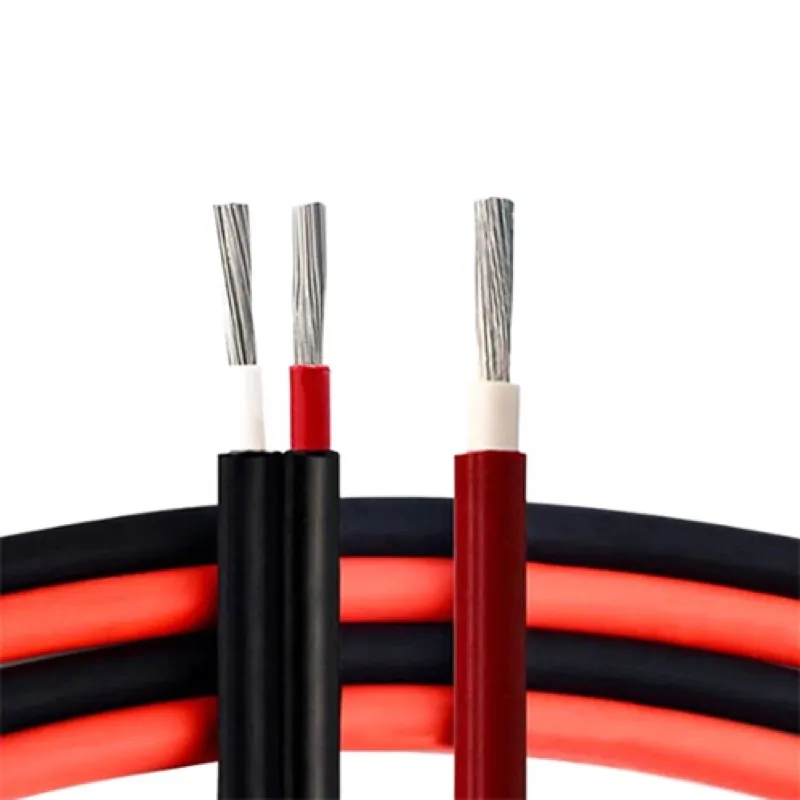
Sizing the DC cable that links your solar panels to the combiner box and inverter is not a place to guess. Undersized cable overheats, wastes energy as voltage drop, and can fail years before the 25-year design life of the system. Oversized cable ties up capital you did not need to spend. For solar projects across Southeast Asia, Africa, and the Middle East — where ambient temperatures routinely push past 40°C and cable runs on ground-mount farms stretch for hundreds of metres — getting the size right is both a safety requirement and a cost decision.
This guide walks procurement engineers, EPC contractors, and solar installers through exactly how to size solar DC cable: the real current ratings for each cross-section, how to calculate voltage drop over a run, and how to apply temperature and grouping derating so the cable performs in the field, not just on paper. Every figure below comes from the published specifications of PV1-F / H1Z2Z2-K cable manufactured to EN 50618 and IEC 62930.
We manufacture PV1-F / H1Z2Z2-K solar cable at our factory in Henan, China — TÜV and EN 50618 certified, in cross-sections from 2.5mm² to 16mm².
What Makes Solar DC Cable Different from Ordinary Cable
Solar DC cable is not interchangeable with standard building wire or PVC power cable. It is engineered for a specific and demanding job: carrying direct current outdoors, in full sun, for a quarter of a century. Three properties set it apart and every one of them affects how you size it.
- Cross-linked insulation (XLPO), not PVC. PV1-F uses cross-linked polyolefin insulation rated for continuous operation at +90°C conductor temperature, with short-term tolerance far higher. Ordinary PVC softens and degrades under sustained heat and UV, which is why PVC-insulated cable has no place in a rooftop or desert solar array.
- 1.5kV DC rating, not 600V AC. PV1-F is rated 1.0/1.5kV DC (1.8kV DC peak). Modern utility-scale strings run at 1,500V DC, and the insulation must be qualified for that voltage class under DC stress, which behaves differently from AC.
- 25-year UV and weather life. The halogen-free XLPO sheath is formulated to resist ultraviolet radiation, ozone, and moisture for 25 years of outdoor exposure — matching the panels it connects.
Because the insulation tolerates +90°C, PV1-F carries more current than a PVC cable of the same copper size. That higher base rating is the starting point for every sizing calculation, but it must then be derated for real installation conditions, which is where most sizing mistakes happen.
PV1-F Solar Cable Current Rating Chart (2.5–16mm²)
The table below gives the published current ratings for single-core PV1-F / H1Z2Z2-K cable with tinned copper conductors, rated 1.5kV DC. These are the manufacturer's rated current values in free air, before any project-specific temperature or grouping derating is applied.
| Section (mm²) | Conductor Stranding | Overall OD (mm) | Weight (kg/km) | Current Rating (A) | Resistance @20°C (Ω/km) |
|---|---|---|---|---|---|
| 2.5 | 50×0.26mm | 5.4 | 44 | 36 | 7.98 |
| 4 | 56×0.31mm | 6.1 | 60 | 46 | 4.95 |
| 6 | 84×0.31mm | 6.8 | 80 | 58 | 3.30 |
| 10 | 77×0.41mm | 8.1 | 125 | 79 | 1.91 |
| 16 | 126×0.41mm | 9.3 | 185 | 105 | 1.21 |
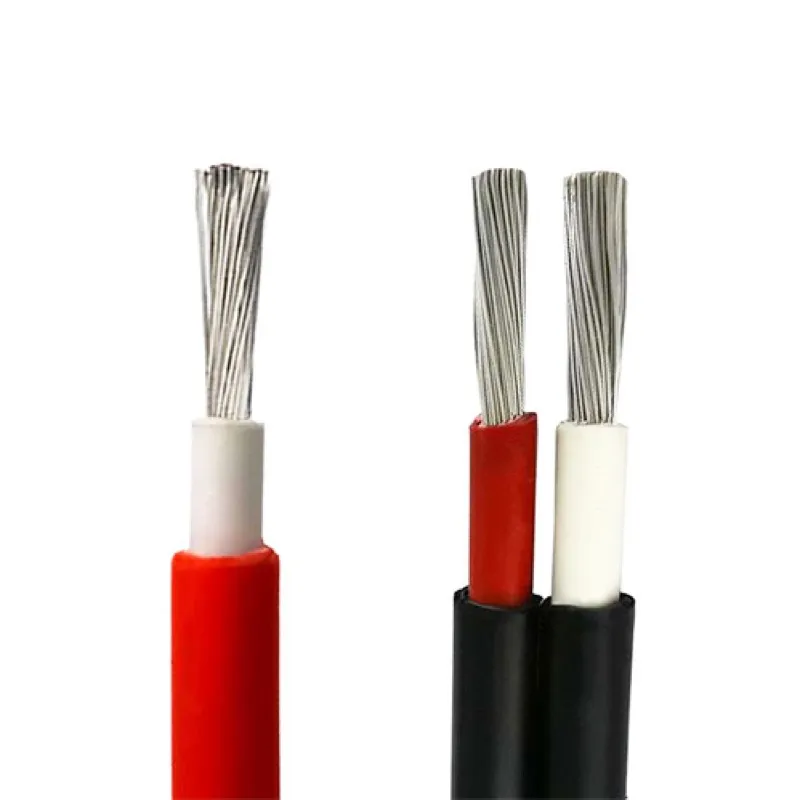
All conductors are tinned copper, stranded to Class 5 for flexibility, with 0.7mm + 0.7mm double insulation (Class II, no earth conductor required). The tinning is not cosmetic — it prevents copper oxidation at MC4 connector contacts and inside junction boxes where moisture accumulates over decades.
The 4mm² and 6mm² sizes are by far the most common in the field. A single 60-cell or 72-cell panel produces a short-circuit current (Isc) in the range of 9–14A, so a 4mm² conductor rated 46A has ample margin for a single string — the reason 4mm² is the default choice for module-to-module and string-to-combiner runs on most rooftop and commercial systems. 6mm² steps in for longer runs or higher-current strings where voltage drop, not ampacity, becomes the limiting factor.
How to Size Solar DC Cable in Four Steps
Sizing is not just "pick a cable that carries the current." A cable can be rated for the current and still be wrong for the job if voltage drop is excessive or if the installation conditions cut its real capacity. Work through these four steps in order.
Step 1 — Determine the Design Current
For a solar string, the cable must be sized for the maximum current it will ever carry, not the nominal operating current. The governing standards (IEC 62548 and the local equivalent) require the string cable to be rated for 1.25 × Isc of the module, and many designers apply a further 1.25 factor for continuous-duty and irradiance-enhancement margin, giving up to 1.56 × Isc.
For a module with Isc of 11A:
- Minimum cable rating = 1.25 × 11A = 13.75A
- Conservative rating = 1.56 × 11A = 17.2A
Even the conservative figure sits well under the 36A rating of the smallest 2.5mm² cable — which confirms that for single strings, ampacity is rarely the constraint. Voltage drop usually decides the size.
Step 2 — Calculate Voltage Drop
Voltage drop is the real driver of solar DC cable sizing. Every metre of cable has resistance, and on a DC circuit that resistance turns useful energy into heat. Industry practice keeps total DC-side voltage drop below 1% (strict) to 3% (maximum acceptable) of the array voltage, because any energy lost in the cable is energy the system never sells or stores.
The DC voltage drop for a two-wire run (positive + negative) is:
Vdrop = 2 × L × I × R / 1000
where L = one-way cable length in metres, I = current in amps, and R = conductor resistance in Ω/km from the table above. The factor of 2 accounts for the current travelling out on the positive conductor and back on the negative.
Worked example: a 6mm² cable (R = 3.30 Ω/km) carrying 10A over a 40m one-way run:
Vdrop = 2 × 40 × 10 × 3.30 / 1000 = 2.64V
On a 600V string that is 0.44% — comfortably inside the 1% target. On a lower-voltage 48V battery circuit, the same 2.64V would be 5.5%, far too high, and you would step up to 10mm² or 16mm². This is why the same cable size can be right for one part of a system and wrong for another: voltage drop scales with current and length but the percentage that matters depends on the circuit voltage.
Step 3 — Apply Temperature Derating
This is the step most often skipped, and the one that matters most in Southeast Asia, Africa, and the Middle East. The current ratings in the table assume a reference ambient. When a cable is run in direct sun on a rooftop in Riyadh, Lagos, or Jakarta, the air around it — and the surface it is clipped to — can sit at 60–70°C before the sun even loads the conductor. The hotter the environment, the less current the cable can safely carry, because the conductor is already close to its 90°C limit.
Apply a derating factor based on the actual ambient temperature. The figures below follow the ambient-temperature correction factors of IEC 60364-5-52 (Table B.52.14) for 90°C-rated insulation, which is the basis for PV1-F's XLPO compound:
| Ambient Temperature | Derating Factor (approx.) |
|---|---|
| 30°C | 1.00 |
| 40°C | 0.91 |
| 50°C | 0.82 |
| 60°C | 0.71 |
| 70°C | 0.58 |
| 80°C | 0.41 |
A 4mm² cable rated 46A, installed where the ambient reaches 70°C, delivers a real capacity of 46 × 0.58 = 26.7A. Still fine for a single string, but the margin has shrunk by nearly half — and this is before grouping derating.
Step 4 — Apply Grouping Derating
When several cables are bundled together in a tray, conduit, or trunking, each one heats its neighbours and none can shed heat as freely as a single cable in open air. Apply a grouping factor. The values below are typical engineering figures in line with the grouping correction factors of IEC 60364-5-52 (Table C.52.3); confirm against the exact installation method for your project:
| Number of Grouped Circuits | Grouping Factor (approx.) |
|---|---|
| 1 | 1.00 |
| 2 | 0.85 |
| 3–4 | 0.80 |
| 5–6 | 0.75 |
| 7–9 | 0.70 |
On a ground-mount solar farm where a combiner box gathers a dozen string cables into a single tray before the trunk run, both temperature and grouping derating apply together. The final usable current is:
I_usable = I_rated × k_temp × k_group
A 6mm² cable rated 58A, at 50°C ambient (k = 0.82) grouped in a tray of six circuits (k = 0.75), delivers 58 × 0.82 × 0.75 = 35.7A. That number — not the 58A headline rating — is what you size against.
Sizing Table: Recommended Cable Size by Run Length
The table below is a practical starting point for a single string carrying about 10A, targeting under 1% voltage drop on a 600V DC system. Always confirm against your own string voltage and current.
| One-Way Run Length | Recommended Size | Voltage Drop @10A |
|---|---|---|
| Up to 20m | 4mm² | ~1.98V (0.33%) |
| 20–40m | 6mm² | ~2.64V (0.44%) |
| 40–70m | 10mm² | ~2.67V (0.45%) |
| 70–120m | 16mm² | ~2.90V (0.48%) |
| Over 120m | 16mm² + review string voltage | — |
Longer runs on utility-scale ground-mount farms — common across the desert solar projects of the Middle East and North Africa — are exactly where 10mm² and 16mm² earn their place. On a rooftop system with short module-to-inverter distances, 4mm² handles almost everything.
Sizing for Hot Climates: Southeast Asia, Africa & the Middle East
The derating factors above are not academic in these three regions — they are the difference between a system that lasts 25 years and one that fails early. A few field realities shape cable selection:
- Sustained high ambient. In the Gulf states, summer air temperatures exceed 45°C and rooftop surface temperatures under panels can reach 70–80°C. Designers there routinely size up one step from what a European calculator suggests, because the temperature derating is so severe.
- Humidity and salt in coastal Southeast Asia. In Indonesia, the Philippines, Vietnam, and coastal West Africa, high humidity and salt-laden air attack terminations. This is where tinned copper pays for itself — bare copper oxidises at MC4 contacts and resistance climbs over time. Every PV1-F conductor we supply is tinned.
- Sand and UV in North Africa and the Middle East. Blowing sand abrades sheaths and relentless UV degrades anything not formulated for it. The 25-year UV-rated XLPO sheath is the baseline requirement, not an upgrade.
- Long trunk runs on utility farms. The large ground-mount projects driving demand in Egypt, South Africa, Saudi Arabia, and the UAE push cable runs into the hundreds of metres, which forces larger cross-sections on voltage-drop grounds alone.
The practical rule for these markets: calculate the size for a temperate climate, then apply the real ambient derating for your site, and expect to move up one cross-section on longer runs. It costs a little more copper up front and saves years of system life.
Common Solar DC Cable Sizing Mistakes
- Ignoring temperature derating. Sizing off the 60°C reference rating and installing in a 70°C rooftop environment is the single most common error. The cable is rated 46A; it delivers 27A. Overload follows.
- Forgetting the factor of 2 in voltage drop. DC runs use two conductors. Calculating drop for a single conductor length halves your answer and undersizes the cable.
- Using AC-rated or PVC cable to save money. PVC has no UV life outdoors and no 1.5kV DC qualification. It fails inspection and voids panel and inverter warranties.
- Sizing on ampacity alone for long runs. A 4mm² cable may carry the current fine at 100m, but the voltage drop will be unacceptable. Length decides size more often than current does.
- Skipping grouping derating at combiner boxes. A dozen cables in one tray each lose 25–30% of their rating. Size the trunk accordingly.
Standards That Govern Solar DC Cable
Sizing figures only mean something if the cable is built to a recognised standard. PV1-F / H1Z2Z2-K cable is manufactured and certified to:
- EN 50618 — the European harmonised standard for cables for photovoltaic systems, defining the H1Z2Z2-K designation, the 1.5kV DC rating, and the 25-year life requirement.
- IEC 62930 — the international standard for electric cables for photovoltaic systems, rated 1.5kV DC.
- TÜV 2 PfG 1169/08.2007 — the TÜV test specification widely referenced in tenders across our target markets.
- UL 4703 — PV Wire standard for North American projects, available on request.
- GB/T 32129 — the Chinese national standard for photovoltaic cable.
When you request a quote, ask for the TÜV certificate and test report — reputable manufacturers supply them with every shipment. Cable that cannot produce current test data against these standards should not go into a 25-year asset.
How to Specify Solar DC Cable When You Order
Give your supplier these six data points and you will get an accurate quote and the right cable:
- Cross-section — 2.5, 4, 6, 10, or 16mm² (from your voltage-drop calculation)
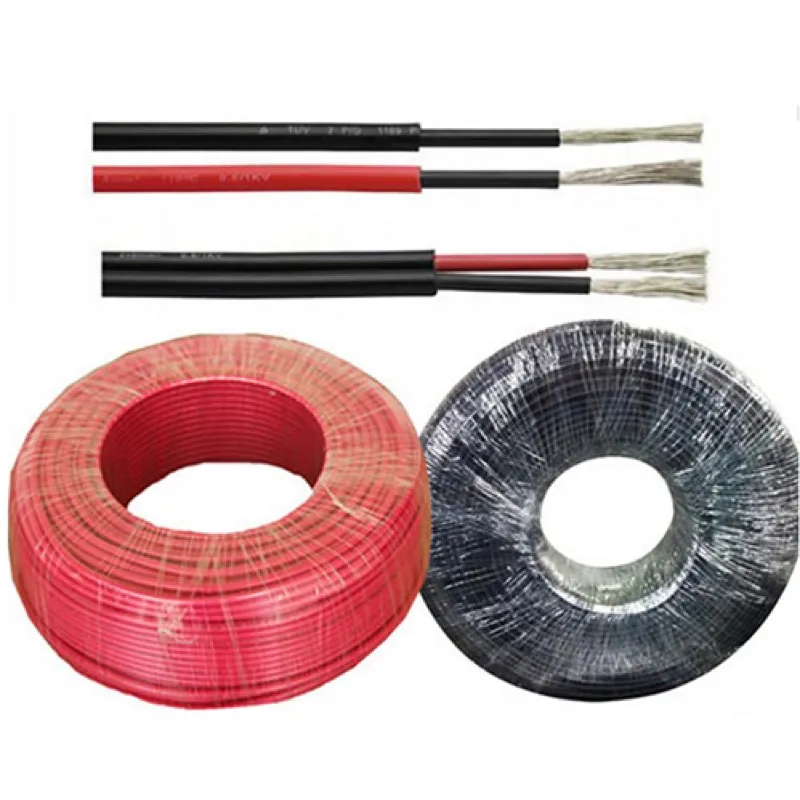
- Configuration — single-core, or twin-core flat for simplified installation
- Voltage rating — 1.5kV DC for utility strings; confirm your system voltage
- Colour — black (negative), red (positive); blue on request
- Standard/certification — EN 50618 / IEC 62930 / TÜV, and UL 4703 if shipping to North America
- Total length per colour — for accurate drum planning and freight
For pricing, request a quote — solar cable pricing tracks the copper market and moves with order volume, so a current quotation against your bill of materials is more accurate than any published figure.
Frequently Asked Questions
What size solar cable do I need for a single string?
For most single-string rooftop and commercial runs, 4mm² PV1-F is the standard choice. It is rated 46A — far above the 13–17A design current of a typical string — so the size is decided by voltage drop, not ampacity. Only when the run exceeds roughly 40m, or on low-voltage battery circuits, do you step up to 6mm² or 10mm².
What is the current rating of 4mm² and 6mm² solar cable?
Single-core PV1-F is rated 46A at 4mm² and 58A at 6mm², measured in free air at the EN 50618 reference temperature. These are base ratings — apply temperature and grouping derating for your actual installation, which in a 70°C rooftop environment can reduce the usable current by 40% or more.
How do I calculate voltage drop for solar DC cable?
Use Vdrop = 2 × L × I × R / 1000, where L is the one-way run length in metres, I is the current in amps, and R is the conductor resistance in Ω/km. The factor of 2 accounts for both the positive and negative conductors. Keep total DC-side voltage drop under 1% for an efficient system, and never above 3%.
Do I need to derate solar cable for hot climates?
Yes, and it is critical in Southeast Asia, Africa, and the Middle East. Cable current ratings assume a reference ambient; when rooftop temperatures reach 60–70°C, apply a derating factor of around 0.71 at 60°C or 0.58 at 70°C. Skipping this step is the most common cause of undersized, overheating solar cable.
Can I use ordinary PVC power cable for solar DC wiring?
No. PVC cable has no UV resistance for outdoor life, is not qualified for 1.5kV DC stress, and degrades within 3–5 years in sun and heat. Using it voids panel and inverter warranties and fails code inspection. Solar DC circuits require PV1-F / H1Z2Z2-K cable to EN 50618.
What is the difference between PV1-F and H1Z2Z2-K?
They are the same cable. PV1-F is the older TÜV designation; H1Z2Z2-K is the harmonised European designation under EN 50618. Both describe cross-linked, halogen-free, double-insulated DC solar cable rated 1.5kV. Cable carrying both markings meets the international standard.
Get a Quote on EN 50618 Solar DC Cable
We manufacture PV1-F / H1Z2Z2-K solar cable in 2.5–16mm² single-core and 2×4mm² / 2×6mm² twin-core, TÜV and EN 50618 certified, with tinned copper conductors and 25-year UV-rated XLPO insulation. We supply solar EPC contractors, distributors, and developers across Southeast Asia, Africa, and the Middle East.
Send us your bill of materials — cross-section, length per colour, and destination — and we will return a current quotation with certificates. Contact us for a quote or explore the full PV1-F solar cable specifications and twin-core solar cable options.
For the wider picture on cable selection for solar and renewable projects, see our cables for solar & renewable energy projects guide. And before you accept any supplier's EN 50618 claim, read what a cable certificate actually proves so you know which test reports to demand.